Fall Foliage in Washington State: Where and When to See Peak Color
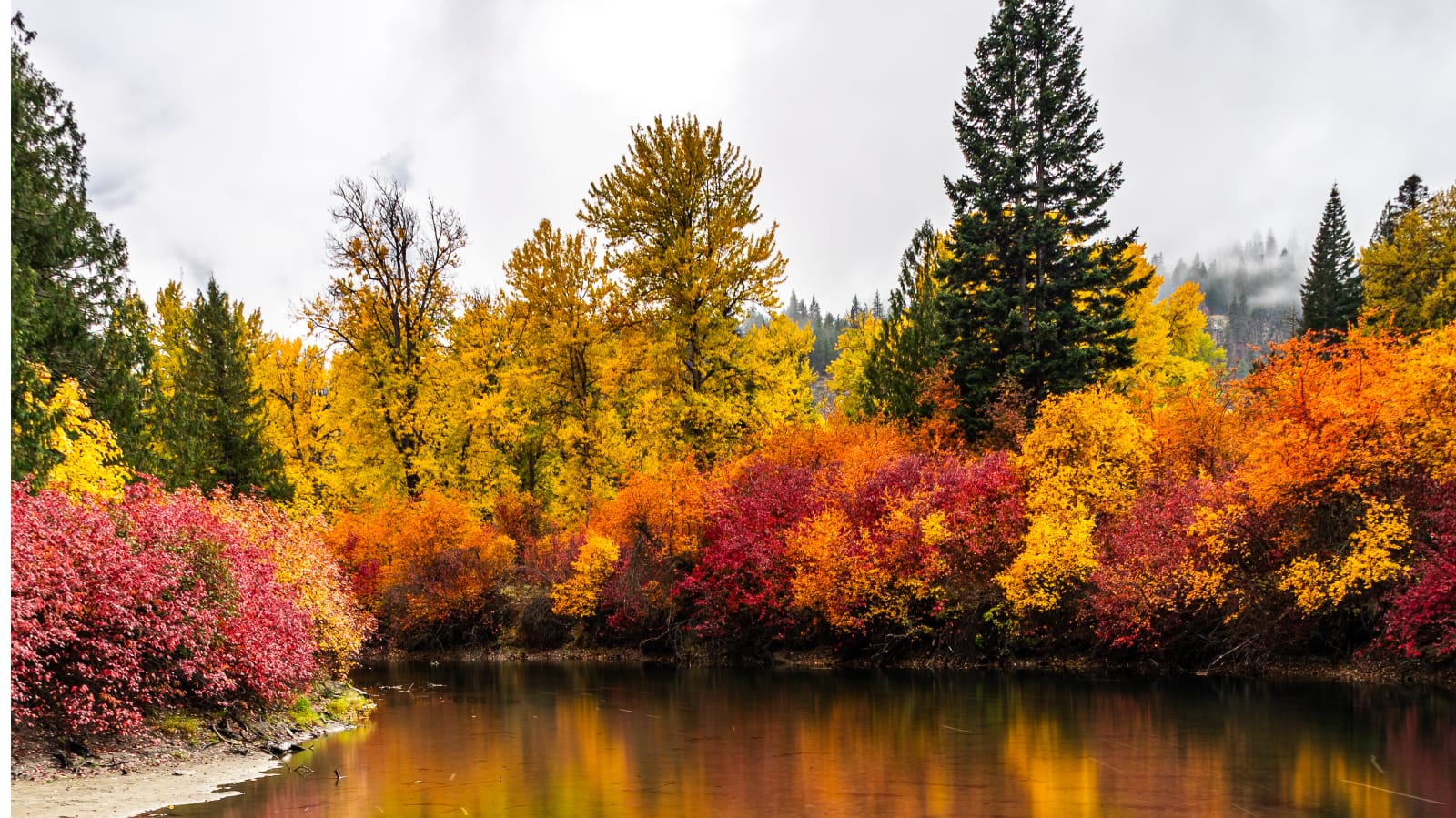
Washington does fall in two acts, and most people only catch one. The gold goes first and high: alpine larches torching the North Cascades in the first two weeks of October. The red and orange come later and lower: maple country along the highway corridors and in the city parks, peaking in the middle of the month and holding on toward Halloween.
This guide maps fall foliage in Washington State across the whole season in one place: what turns when, where each act plays out, and how to plan a couple of weekends so you catch both. The windows shift a little every year with heat and frost, so treat the dates as targets, not promises.
When Is Peak Fall Color in Washington?
The short answer: larches peak in the high country during the first two weeks of October, and the lowland maples peak from the middle of October into early November. Vine maple starts the show on the mountain slopes as early as the middle of September, and city color in Seattle regularly holds until Halloween.
| The act | Where it plays | Typical window |
|---|---|---|
| Vine maple and huckleberry | Mountain slopes and meadows | Mid to late September |
| Golden larches | Highway 20, the Methow, the Enchantments | First two weeks of October |
| Lowland maples | Highway 2, Snoqualmie Pass, Seattle | Mid October to early November |
Act One: The Larches Go First
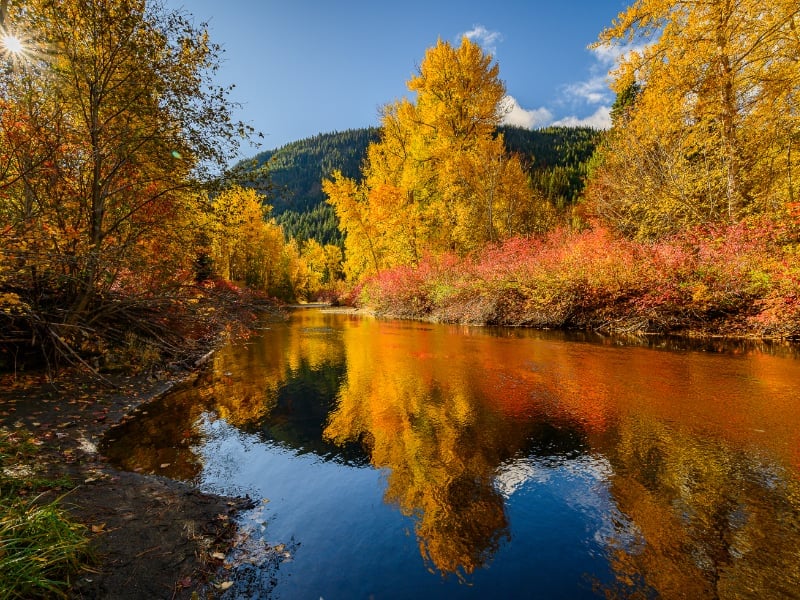
The alpine larch is Washington’s fall celebrity, a conifer that turns luminous gold and then drops its needles like a deciduous tree. Larches only grow at elevation, mostly east of the Cascade crest, which is why act one plays out high and east.
The famous stretch is the North Cascades in the fall, where Highway 20 strings together the marquee larch hikes: Maple Pass Loop, Blue Lake, and Cutthroat Pass, all reachable from trailheads right off the road. Expect full parking lots by sunrise on the first two October weekends. Weekdays are a different sport entirely.
Base yourself in Winthrop and the Methow Valley to do it right, or work the southern larch country in the Lake Chelan Sawtooth high country from Lake Chelan. The Enchantments above Leavenworth hold the most photographed larches in the state, though the core zone requires a permit won by lottery.
Act Two: The Maples Bring It Home
While the larches finish up high, the color wave rolls downhill. Bigleaf maple, vine maple, and cottonwood carry the season from the middle of October on, and they grow everywhere the larches do not: river canyons, highway corridors, and city parks.
Tumwater Canyon on Highway 2 is the classic drive. The Wenatchee River runs through a corridor of maples that lights up in mid October, with Leavenworth waiting at the top of the canyon for a bratwurst reward. If the timing lines up, Oktoberfest in Washington fills those same October weekends. The whole Stevens Pass Greenway earns its name this time of year.
On Interstate 90, Snoqualmie Pass turns in mid October, and Gold Creek Pond is closed for a multi year restoration project, so treat it as one for a future trip and check the conditions page before you count on it. At Mount Rainier, the Stevens Canyon road pairs red huckleberry meadows with big mountain views in late September and early October, and Artist Point at Mount Baker does the same trick with the most dramatic backdrop in the state.
In Seattle, the Washington Park Arboretum peaks in late October and often holds color into November, which makes it the season’s last call.
A Weekend Plan for Catching Both
Spend the first or second weekend of October east of the crest: drive Highway 20, hike a larch trail, sleep in Winthrop or Chelan. Then take a weekend in the back half of the month on the west side corridors: Highway 2 through Tumwater Canyon, Snoqualmie Pass, or the Arboretum if you want color without a windshield. If you only get one outing, the larches are the act people cross state lines for.
If October is your favorite month, you are in good company. Read A World With Octobers for the love letter version, and our guide to photographing autumn in Washington for how to bring the color home.
Fall Color Region by Region
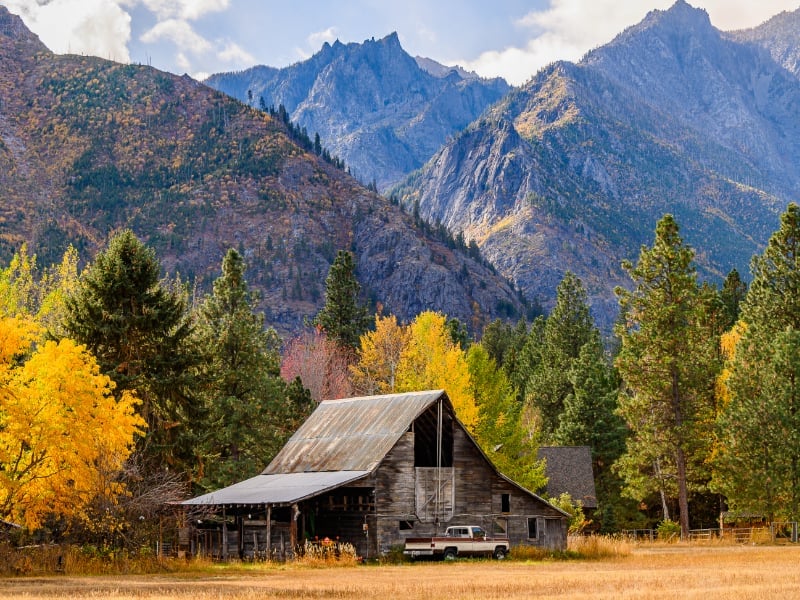
The two acts above cover the larch corridor and the Highway 2 maples, the trips people plan a year ahead. But fall color runs the whole width of Washington, and some of the best of it sits in the regions the crowds drive past. Here is where to see fall foliage across the rest of the state.
Mount Rainier and Chinook Pass
Rainier turns before almost anywhere else. From late September into the first week of October, the subalpine meadows at Paradise go crimson as the huckleberry brush colors up under the mountain, and the Skyline Trail loops right through it. Over at Chinook Pass, the Naches Peak Loop is the easy classic, a little over 3 miles around a ridge that frames the mountain through gold and red, with Tipsoo Lake mirroring the whole scene from the roadside. Come at sunrise on a still morning and the lake does the work for you.
The North Cascades Beyond the Larches
Highway 20 is the larch highway, but do not drive past Diablo Lake. The overlook sits right off the road, and the water holds an unreal turquoise from glacial silt that looks imported from somewhere farther north. Framed by the first gold on the slopes above in mid October, it is the most photographed pullout on the pass for a reason. Pair it with a larch hike and you have caught both the gold and the blue in one morning.
The Teanaway and the Central Cascades
The larches do not stop at the Enchantments. South of Leavenworth, the Teanaway country above Cle Elum holds its own gold, and Lake Ingalls is the marquee walk, a rugged climb of about 9 miles that ends at a granite basin ringed with larch and, often, a mountain goat or two. Fire closures reach this drainage some years, so check the conditions page before you commit to the drive. The drive over Blewett Pass on Highway 97 is the low effort version, larch stands lighting up on both sides of the road through the first half of October.
Greater Seattle and Tacoma
You do not have to leave the city for fall color. The Washington Park Arboretum, covered above, is the marquee, but it has company. Kubota Garden in Rainier Beach turns its Japanese maples a deep red through late October and asks nothing but a free walk to see it. In Tacoma, Point Defiance Park layers bigleaf maple gold over its loop road and a quiet Japanese garden. These are the ones to know when you want fall foliage near Seattle without a mountain drive, and they hold color later than anywhere else in the state.
Eastern Washington and Spokane
The dry side gets its own fall, and it is better than its reputation. Around Spokane, the Iller Creek loop in the Dishman Hills turns with aspen and gold shrubs through early October. Roll south into the Palouse and the story is cottonwoods tracing the creek bottoms across gold farm country, best seen from the top of Steptoe Butte, where the view runs for miles. Farther north, the western larch of the Selkirks and the Colville National Forest lights whole hillsides gold around Sullivan Lake, a cousin of the alpine larch that grows low and is far easier to reach.
The Columbia River Gorge
The Washington side of the Gorge is the quiet one, and fall is its best season. Highway 14 runs the north bank past oak and bigleaf maple, with Beacon Rock State Park as the anchor stop and Catherine Creek farther east where the color meets open sky and river. It is an easy day from Vancouver or Portland and a genuinely different landscape from the wet west side, sun on the water and warm color on the slopes. A Discover Pass covers the state park stops.
The Olympic Peninsula
The Peninsula does fall in a mossy, rain forest key all its own. Highway 101 is the loop, and the stretch from Sequim around to the Hoh strings together the best of it. Lake Crescent holds bigleaf maple gold against deep blue water, and the maples along the river valleys glow against the evergreen backdrop the Peninsula is known for. It is a longer trip, but the reward is fall color with almost nobody else around.
Passes, Roads, and the Fine Print
Most larch trailheads on Highway 20 sit on national forest land and use the Northwest Forest Pass. State parks and DNR lands, including many of the best lowland stops, require the Discover Pass instead. Check who manages your trailhead before you go so you carry the right one.
The North Cascades Highway typically stays open through October, but WSDOT closes it for the winter when avalanche season arrives, sometimes in early November. Check pass conditions before any late season larch trip. And remember that the color calendar moves: a hot dry summer or an early frost can shift these windows by a week or more.
Current Peak Conditions
Updated October 18, 2026: the high country has turned, and the color is moving downhill. Larches along Highway 20 peaked in the first half of October and are now past their best, with hikers at Blue Lake reporting muted gold and plenty of dropped needles by the middle of the month. If you still want larches this year, go this week and expect patchy snow and ice near the top. Vine maple and huckleberry on the mountain slopes are done or close to it.
For the next few weeks, the best color is in the lowlands. City and valley maples on the west side started turning in the second week of October and should peak from now into early November, which makes this the stretch for parks and gardens like Kubota Garden in Seattle and Point Defiance Park in Tacoma.
Getting there: Highway 20 was open in mid October, but the Blue Lake and Maple Pass lots fill by midmorning even on weekdays, and cars parked along the highway have become a real hazard, so go early or go midweek. Wildfire closures are still in place in parts of the Cascades through October 31, including north of Lake Wenatchee and around Lake Kachess and the Cooper River. At Mount Rainier, Sunrise Road is open only to walkers and cyclists for the rest of the year.
Color moves a little every year with summer heat and the first frost, so before a trip it pays to check live rather than trust a calendar. Start with our Washington travel conditions page, which tracks fire closures, smoke and road status in one place through the season. Then three quick reads:
Washington Trails Association trip reports are the closest thing the state has to a live color map. Search the trail you want on wta.org and sort by most recent, where hikers post dated photos of exactly what is out.
The WSDOT North Cascades Highway camera and pass report covers anything on Highway 20, both for how the color is coming along and for whether the road is still open for the season.
The timing windows in this guide are your baseline: vine maple from the middle of September, larches in the first two weeks of October, and lowland and city maples from mid October into early November.
This section is refreshed as the season turns. Between updates, the windows above are your baseline, and the conditions page carries anything that has closed.
Frequently Asked Questions
The Rest of a Washington Fall
Color is one part of the season. Our guide to 25 things to do in Washington this fall covers the orchards, corn mazes, cider houses, hot springs and crab season that come with it.
When is peak fall foliage in Washington State?
There are two peaks. Golden larches peak in the high country during the first two weeks of October, and lowland maples peak from mid October into early November. Vine maple starts turning in the mountains by the middle of September.
Where can I see golden larches in Washington?
The North Cascades Highway corridor has the most accessible larch hikes: Maple Pass Loop, Blue Lake, and Cutthroat Pass. The Methow Valley near Winthrop, the Lake Chelan Sawtooth high country, and the Enchantments near Leavenworth are the other strongholds.
What is the best fall color drive in Washington?
Highway 20 through the North Cascades in early October for larches, and Highway 2 through Tumwater Canyon near Leavenworth in mid October for the best maple corridor in the state. Snoqualmie Pass on Interstate 90 is the easiest quick trip from Seattle.
Do I need a pass to see fall foliage in Washington?
It depends on who manages the land. National forest trailheads, including most larch hikes, use the Northwest Forest Pass. Washington State Parks and DNR lands require a Discover Pass. Roadside pullouts and city parks like the Washington Park Arboretum are free.
Is the North Cascades Highway open in October?
Usually yes. WSDOT typically keeps Highway 20 open through October and closes it for the winter when avalanche danger builds, often in November. Always check WSDOT pass reports before a late October trip.
Where is the most stunning fall foliage in Washington State?
For sheer drama, the golden larches along the North Cascades Highway in the first two weeks of October are the ones people cross state lines for, with Maple Pass Loop and Diablo Lake the marquee stops. For color that lasts and needs no mountain drive, the Washington Park Arboretum in Seattle holds red and gold maples into November.
When can you see fall color at Mount Rainier?
Rainier is one of the earliest shows in the state. The subalpine meadows at Paradise turn red with huckleberry from late September into the first week of October, and the Naches Peak Loop at Chinook Pass peaks in that same window. Go early in the day for still light and open parking.
Where can I see fall foliage near Seattle?
The Washington Park Arboretum is the classic, peaking in late October and holding into November. Kubota Garden in Rainier Beach and Point Defiance Park in Tacoma add deep red Japanese maples and gold bigleaf maple, all free and reachable without leaving the city.
Before you go
That is the whole idea behind the Explore Washington State Card. Free to carry, with a little something waiting at participating places when you visit. Your zip code is a vote for which towns we sign up next, and our weekly Washington travel newsletter starts landing right away.
Get your free card- About the Author
- Latest Posts

Explore Washington State has been covering the real Washington for more than a decade. State parks, small towns, back roads, rest stops, and the people who make this place worth exploring. What started as a hyperlocal project covering individual communities grew into a full media project with more than 340 podcast episodes, a weekly newsletter with over 6,300 subscribers, and coverage of all 146 Washington State Parks. The content here comes from people who have actually been to these places: locals, regulars, and lifelong Washington residents who care more about getting it right than getting clicks.