
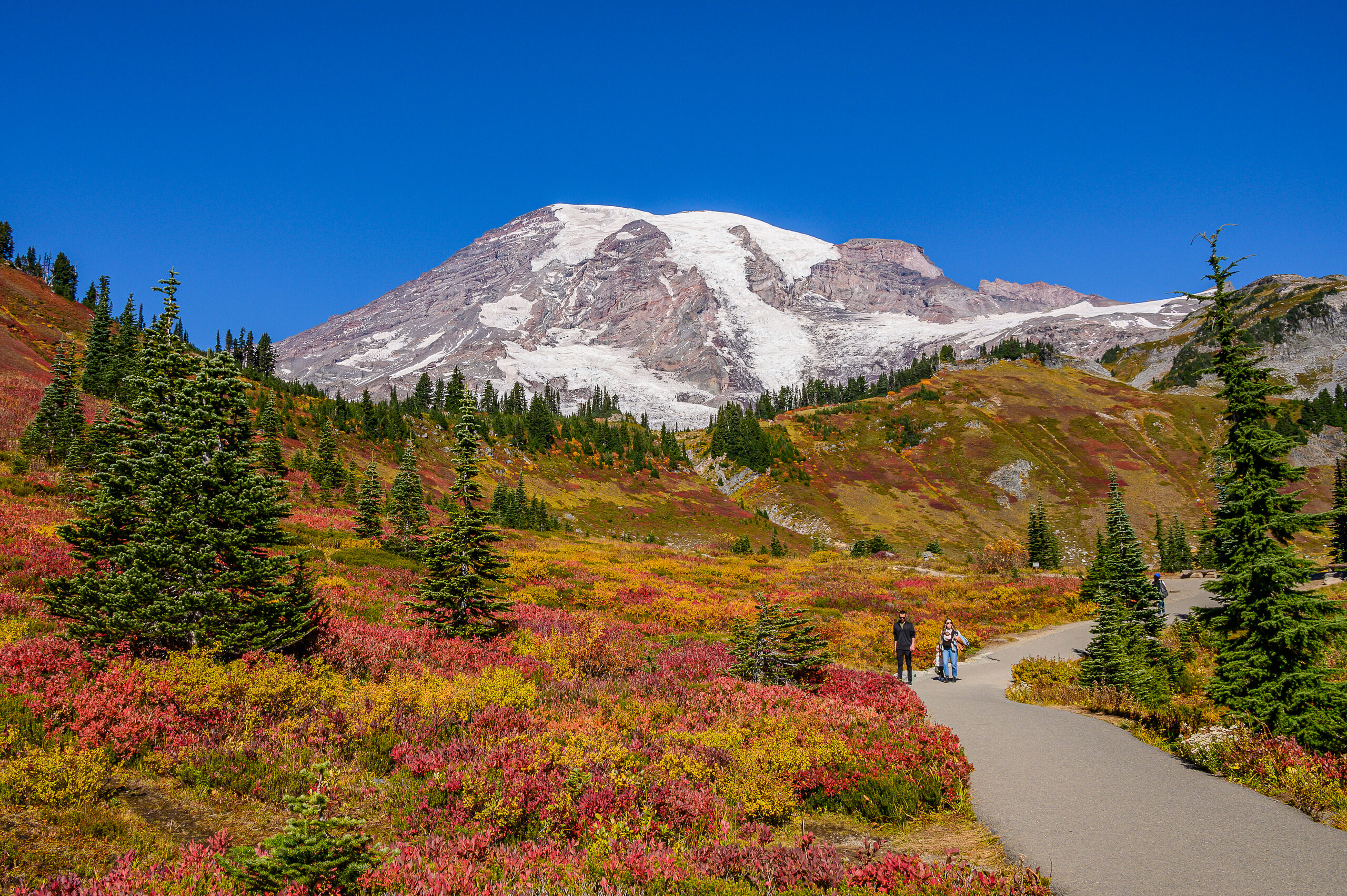
Best Fall Hikes in Washington: 15 Trails for Peak Color
Fall is the best hiking season in Washington, and it is not close. The bugs are gone. The air goes sharp. The summer crowds thin out after Labor Day, and for two or three weeks the high country runs pure gold. If you only hike a handful of times a year, these fall hikes in Washington are the stretch to spend them on.
There are two flavors of fall color here, and knowing the difference is half the trip. The first is the alpine larch: a deciduous conifer that grows high and east of the crest, turns electric gold, and drops its needles by the third week of October. That window is short and it is worth planning your life around. The second is the slower burn of the meadows and the lowland maples, which hold color later and lower and give you something to hike well into November. For the full picture of when and where the season peaks statewide, see our guide to fall foliage in Washington.
Below are the 15 best fall hikes in Washington, grouped by that logic: the golden larch hikes first, then the meadow and mountain walks, then the easy lowland options. Distances and gains are starting points. Check current conditions before you drive.
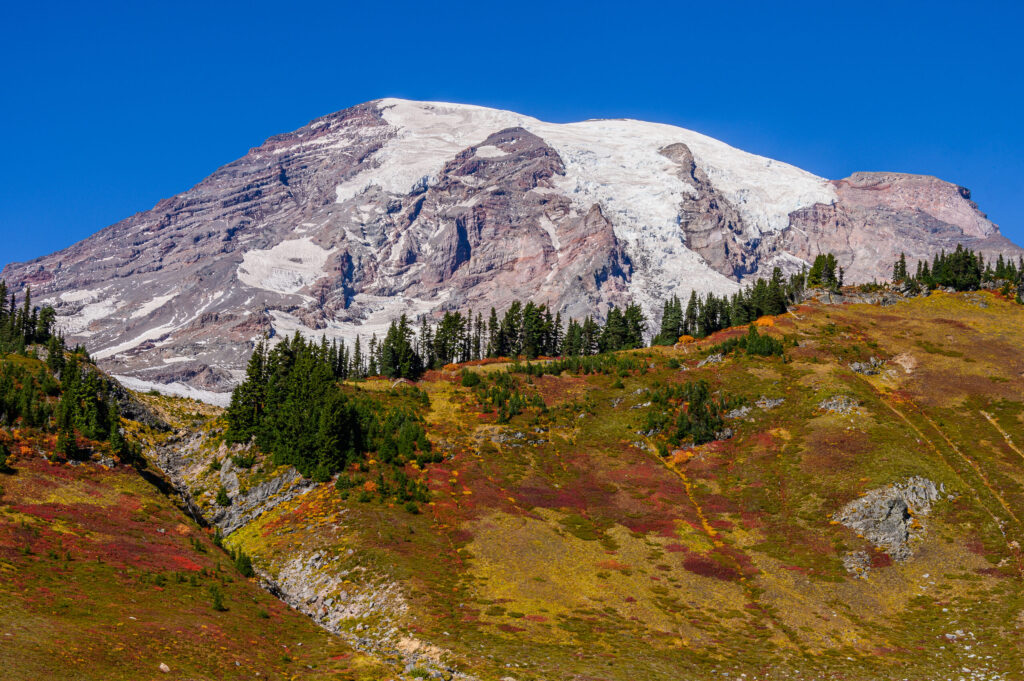
How to time your fall hikes in Washington
Elevation is the whole game. The higher and farther east you go, the earlier the color turns.
The alpine larches peak the first two weeks of October, up between roughly 4,000 and 7,500 feet on the east slopes. The subalpine meadows at Mount Rainier and Mount Baker, where huckleberry and mountain ash go red and orange, turn a little earlier, in late September into early October. The lowland maples and cottonwoods hold latest, from the middle of October into early November, and they are your rain plan when the high country ices over.
One thing nobody tells you: the mountain highways that reach the best larch trails are seasonal, and they can close before the color is done. Highway 20, which serves Maple Pass, Blue Lake, and Cutthroat Pass, shuts for winter as soon as the snow makes it unsafe, usually in late November but sometimes earlier. In 2026 it did not even open until mid June because of washout repairs. Check the WSDOT mountain pass page before you commit to a drive.
For live trail status, nothing beats recent WTA trip reports. Read the last two or three before any fall hike. They will tell you where the larches actually are this week and whether the trail already has snow.
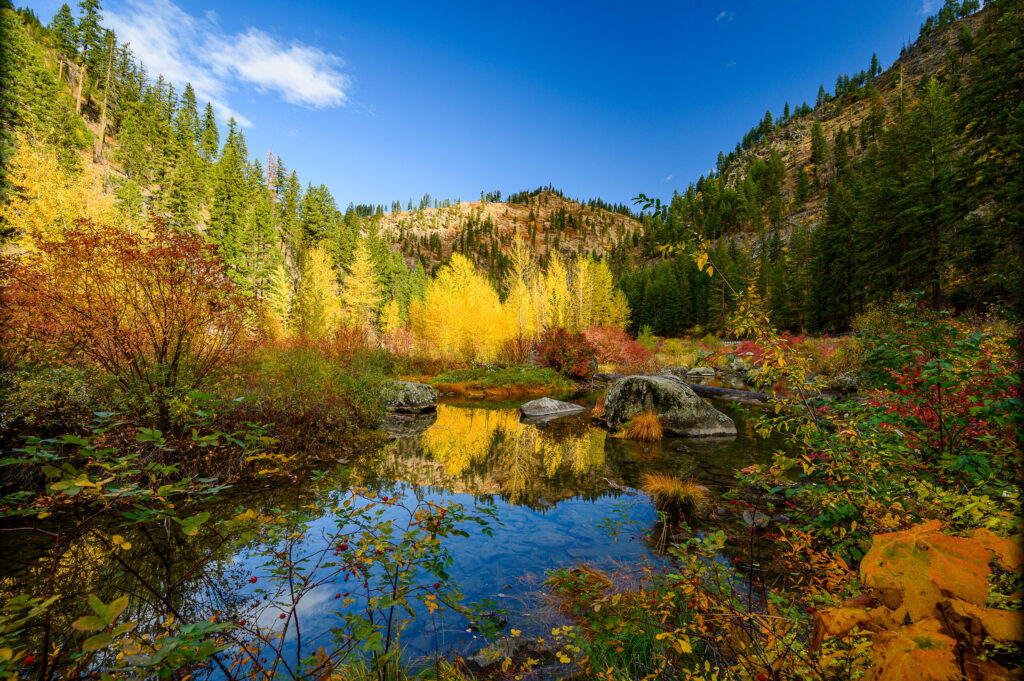
Golden larch hikes
High country, east of the crest, peaking the first two weeks of October. These are the trails people drive across the state for, which means you will not have them to yourself.
1. Maple Pass Loop, North Cascades. About 7.2 miles round trip, 2,000 feet, moderate. Northwest Forest Pass. This is the signature larch loop, and for good reason: you climb through forest to a ridgeline at 7,000 feet with larches glowing in every direction and two alpine lakes below. Hike it clockwise so you finish on the descent through the thickest gold. It is also the single most crowded fall trail in the state.
2. Blue Lake, North Cascades. About 4.4 miles round trip, 1,050 feet, easy to moderate. Northwest Forest Pass. The short one. A gentle climb ends at a jewel of a lake sitting under larch and the granite spires of the Liberty Bell group. If you are driving Highway 20 and do not have a full day, this is the one to grab. Families do fine here.
3. Cutthroat Pass, North Cascades. About 10 miles round trip, 2,000 feet, moderate. Northwest Forest Pass. Longer and quieter than Maple Pass, with a steady grade on the PCT that pays off in miles of larch and big open views of Cutthroat Peak and Early Winters Spires. If Maple Pass looks like a parking lot, come here instead.
4. Lake Ingalls, Teanaway. About 9 miles round trip, 2,600 feet, hard. Northwest Forest Pass. The east side classic, with Mount Stuart standing across the basin and larches ringing the lake in gold. Two things to know: the resident mountain goats are habituated to people, so give them room, and dogs are not allowed past the Esmeralda Basin junction. Worth every foot of the climb.
5. Yellow Aster Butte, Mount Baker. About 7.5 miles round trip, 2,550 feet, hard. Northwest Forest Pass. Tarns, larch, and a full wall of Mount Shuksan and Mount Baker across the valley. It earns its difficulty rating on the final push, but the meadow of little ponds up top is one of the best lunch spots in the North Cascades.
6. Goat Peak Lookout, Methow. About 3.7 miles round trip, 1,400 feet, moderate. No pass at the trailhead. A short, steep climb near Winthrop to a staffed fire lookout at 7,000 feet, with the whole gold Methow Valley spread out below and the North Cascades filling the horizon. Big reward for the mileage, and a good one to introduce newer hikers to the high country. Pair it with a night in Winthrop.
7. Grasshopper Pass, Harts Pass. About 9.5 miles round trip, 1,200 feet, moderate. Northwest Forest Pass. High, gentle, and gold, reached by one of the highest drivable roads in the state. That road is the catch: Harts Pass Road is narrow, unpaved, and has no guardrails where you would most want them. Know your vehicle and your nerves before you go. If both are up for it, the walking itself is easy and the larch ridge runs for miles.
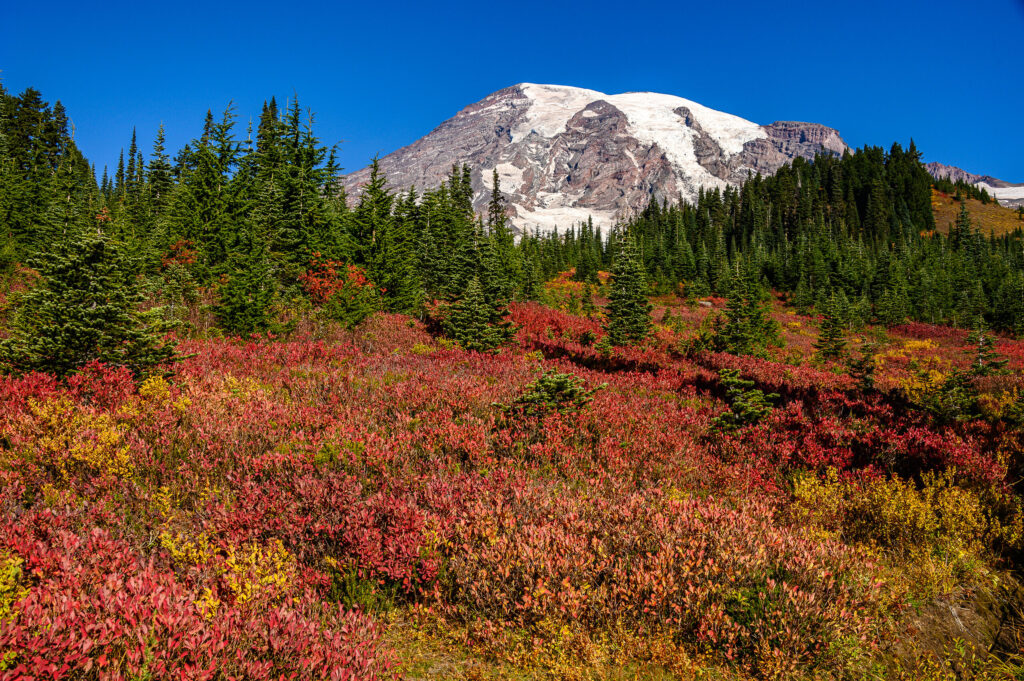
Meadow and mountain hikes
Rainier and the Cascades, late September into October. This is where the huckleberry and mountain ash turn the ground crimson under the big peaks. Good news for 2026: Mount Rainier has cancelled its timed entry system for the year, so no reservation is needed for Paradise or Chinook Pass.
8. Naches Peak Loop, Chinook Pass. About 3.4 miles round trip, 600 feet, easy. No pass on the loop. The easy Rainier classic, and one of the best short hikes in the state in any season. Huckleberry goes red and frames Mount Rainier across the whole east half of the loop, with Tipsoo Lake at the trailhead. Highway 410 to the pass is seasonal and usually closes by early November, so this is a September and October trip.
9. Skyline Trail, Paradise at Mount Rainier. About 5.5 miles round trip, 1,700 feet, moderate. National park entrance. The main route out of Paradise on the mountain’s south side, climbing through subalpine meadows that go gold and crimson under the glaciers. It is steeper and busier than Naches, but the payoff at Panorama Point is the mountain at arm’s length.
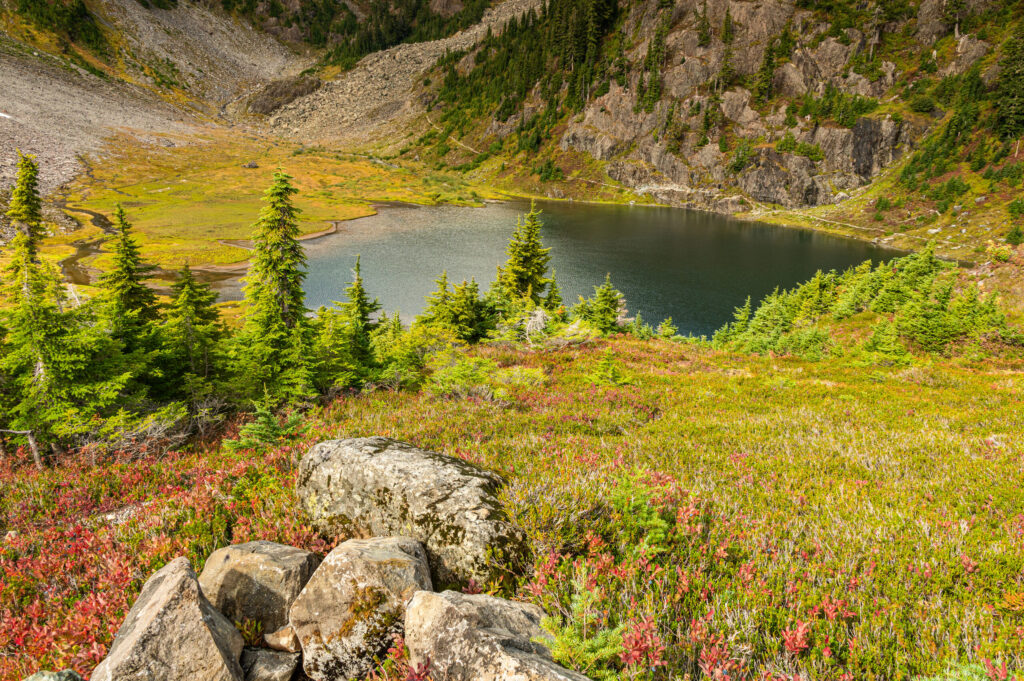
10. Chain Lakes Loop, Mount Baker. About 7 miles round trip, 1,800 feet, moderate. Northwest Forest Pass. Blueberry meadows on fire between Mount Baker and Mount Shuksan, strung along a chain of small alpine lakes. It starts from Artist Point at the end of the Mount Baker Highway, which is snow dependent at both ends of the season, so confirm the road is open before you drive up.
11. Sheep Lake and Sourdough Gap, Chinook Pass. About 6 miles round trip, 1,100 feet, easy to moderate. No pass. A gentle grade on the PCT straight off the highway into gold basins, with a quiet lake at the halfway point that makes an easy turnaround for families. Push on to Sourdough Gap for the wide views if legs allow.
Lowland and easy walks
Mid October into early November, lower and closer to home. When the high country ices over, this is where the color moves. All good for families and short days.
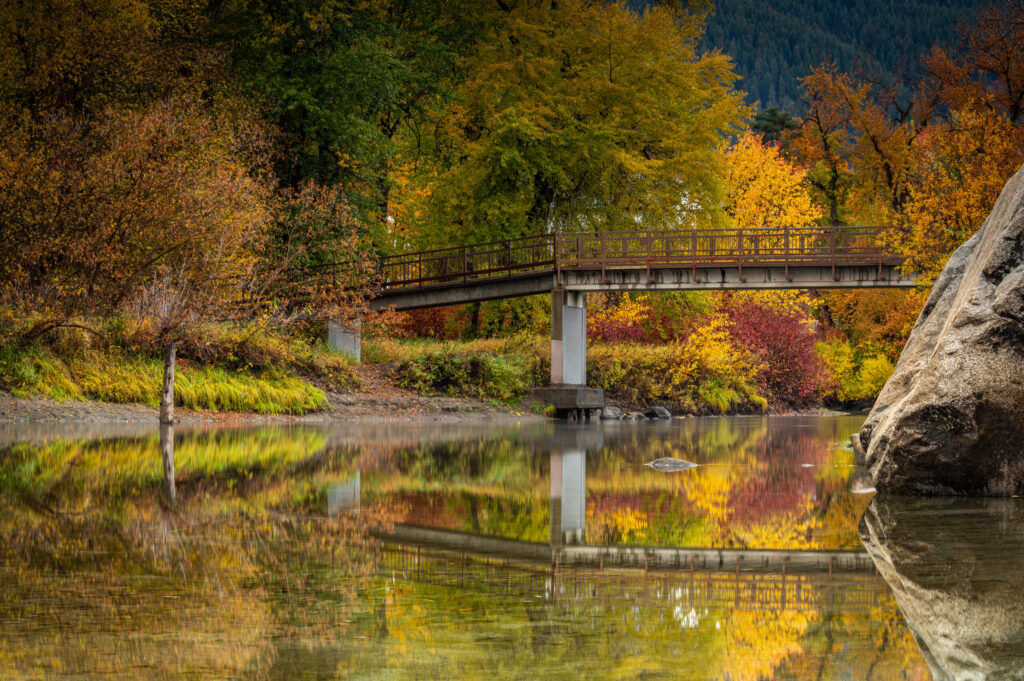
12. Gold Creek Pond, Snoqualmie Pass. About 1 mile, flat, easy. Northwest Forest Pass. A paved loop around a mirror pond with maples and larch reflected in the water. It is the easiest color on this list and the most accessible, wheelchair and stroller friendly, an hour from Seattle. Go at first light for the still water.
13. Old Sauk River Trail, Darrington. About 6 miles round trip, 240 feet, easy. No pass. Bigleaf maple arching over an old growth river walk along the Sauk. Nearly flat the whole way, glowing gold and green in October, and quiet on a weekday. One of the best low effort fall walks in the Cascades foothills.
14. Iller Creek Loop, Spokane. About 5.2 miles round trip, 1,200 feet, moderate. No pass. The east side entry, and proof that fall color is not just a west side thing. Aspen, larch, and shrub go gold over the Dishman Hills, with a rocky viewpoint called the Rocks of Sharon up top. The closest good fall hike to Spokane.
15. Twin Falls, North Bend. About 2.6 miles round trip, 500 feet, easy. Discover Pass. The quick lowland maple option closest to Seattle, in Olallie State Park off Interstate 90. A short walk through bigleaf maple to a two tier waterfall that runs hard once the fall rains start. Not the flashiest trail here, but the easiest to fit into a busy Saturday.
How to check current trail conditions
Fall conditions change fast. A trail that was gold and dry on Saturday can have four inches of snow by the next weekend, and a highway that was open can close overnight. Two habits keep you safe and pointed at the color.
Read recent WTA trip reports for your target trail. The last two or three tell you where the larches actually are, whether the trail has snowed in, and how bad the parking situation has gotten. And check the WSDOT mountain pass report for Highway 20, Highway 410, and the Mount Baker Highway before you drive, because all three are seasonal and none of them cares about your plans.
What to bring on a fall hike in Washington
Fall hiking is not summer hiking with a jacket. Pack for it.
Layers first, because a sunny trailhead at 40 degrees can be a windy, freezing ridge at the top. Traction matters up high: after early October, the larch trails can hold ice and packed snow even when the valley is dry, so bring microspikes for the alpine hikes. Daylight is short and getting shorter, so a headlamp lives in the pack whether you plan to use it or not. And carry the Ten Essentials, every time, because fall is when people get caught out. The margin for error shrinks with the daylight.
Frequently asked questions
When is the best time for fall hikes in Washington?
Larches peak the first two weeks of October up high, the Mount Rainier and Mount Baker meadows turn in late September, and lowland maples hold from the middle of October into early November. Elevation drives the timing: the higher and farther east you go, the earlier the color.
Where are the best larch hikes in Washington?
Maple Pass Loop, Blue Lake, and Cutthroat Pass off Highway 20 in the North Cascades, plus Lake Ingalls in the Teanaway near Cle Elum. All four sit on the east side of the crest, where alpine larches grow between about 4,000 and 7,500 feet and turn gold the first two weeks of October.
What is the easiest fall color hike in Washington?
Gold Creek Pond at Snoqualmie Pass is a flat, paved mile with larch and maple mirrored in the water. The Naches Peak Loop at Chinook Pass is a close runner up at about 3.4 miles with easy grade and Mount Rainier in view the whole way.
Do I need a pass for fall hikes in Washington?
Most mountain trailheads use the Northwest Forest Pass, which is about $30 a year as of 2026. State park trailheads use the Discover Pass, about $10 a day or $45 a year. Mount Rainier charges a national park entrance fee of about $30 per vehicle. Always confirm current rates before you go.
Go while it is gold
The fall window in Washington is real but it is short. The larches do not wait, the highways close on their own schedule, and the first hard snow ends the high country for the year. Pick a trail, watch the trip reports, and go on the first clear weekend that lines up. For the full season overview and the best drives, valleys, and towns for color, start with our guide to fall foliage in Washington. Then point the car east and get up there while it is still gold.
Before you go
That is the whole idea behind the Explore Washington State Card. Free to carry, with a little something waiting at participating places when you visit. Your zip code is a vote for which towns we sign up next, and our weekly Washington travel newsletter starts landing right away.
Get your free card- About the Author
- Latest Posts

Explore Washington State has been covering the real Washington for more than a decade. State parks, small towns, back roads, rest stops, and the people who make this place worth exploring. What started as a hyperlocal project covering individual communities grew into a full media project with more than 340 podcast episodes, a weekly newsletter with over 6,200 subscribers, and coverage of all 146 Washington State Parks. The content here comes from people who have actually been to these places: locals, regulars, and lifelong Washington residents who care more about getting it right than getting clicks.
- Photographer

Lisa’s motto is to “Live life with Strength, Love, and Adventure!” It is even tattooed on her arm as a daily reminder! Born and raised in Washington, and now living on Puget Sound on her boat, MV Our Dance, she seeks out any adventure outdoors: kayaking down a waterway, hiking and backpacking along endless trails, listening to the waves crash while sleeping on the beach, biking a gorgeous trail, or just casting off lines and see where the Salish Sea takes her, but she is doing it all, camera in one hand and her husband’s hand in the other!
As a local and world travel, landscape and portrait photographer, Lisa has a burning passion for photography and living a purposeful life. She loves sharing what she sees, feels, and experiences to bring the World to people who cannot see it themselves and then to inspire others to seek out their own beautiful places and adventures. After her son’s suicide, she is determined and driven to share and remind everyone that there IS still beauty and good in this world!


