
Washington State Ferry Guide: Everything Visitors Need to Know
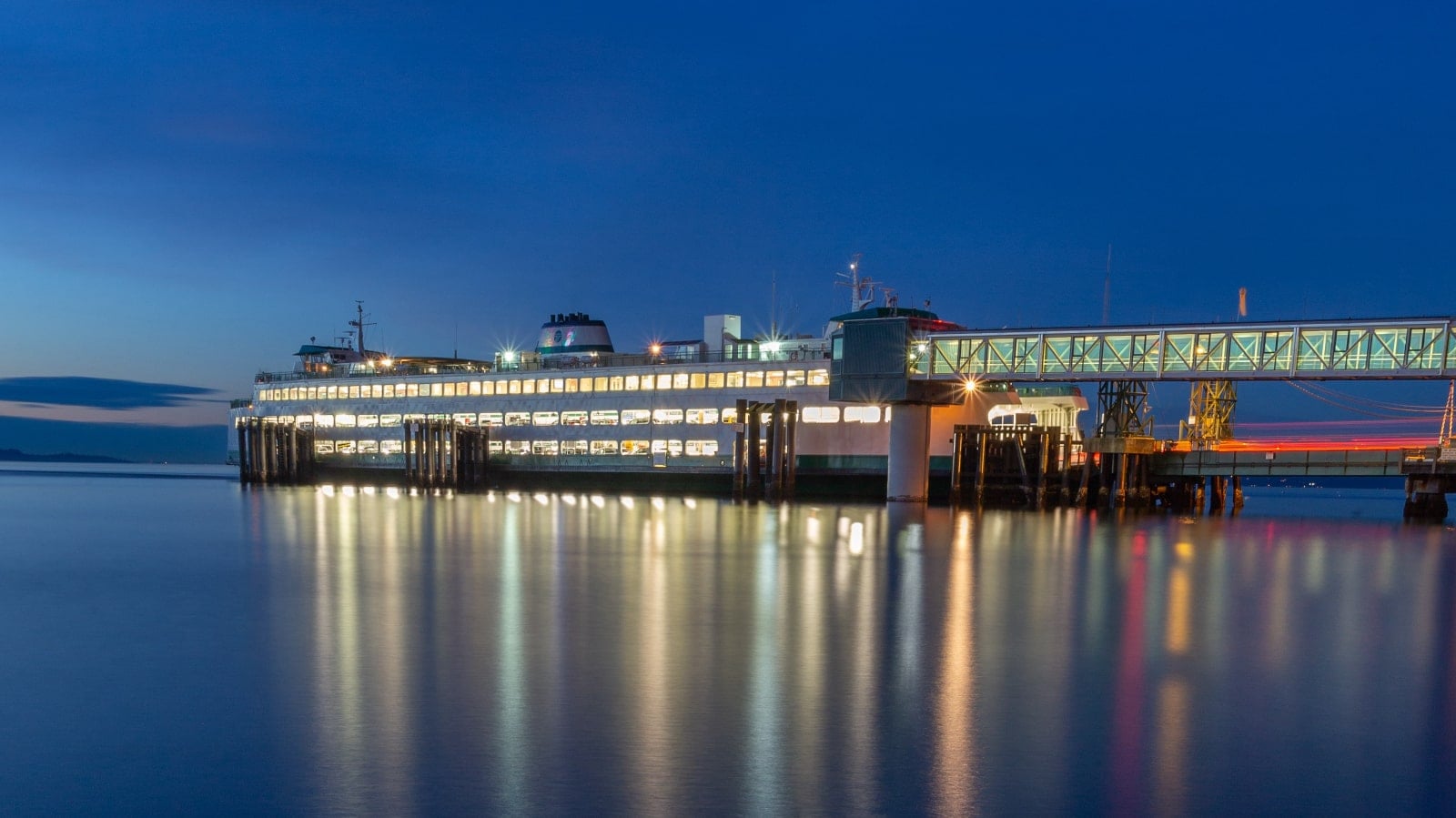
The Bainbridge Island ferry pulls away from Colman Dock and clears Elliott Bay in about ten minutes. If you are standing on the outdoor deck when it does, you get the full Seattle skyline receding behind you and the Olympic Mountains ahead. It is one of the best views in Washington State and it costs around the price of a coffee shop lunch to stand there.
Washington State Ferries is the largest ferry system in the United States. It connects 10 terminals across Puget Sound and the Salish Sea, linking communities that would otherwise require long drives around the water. For visitors, it is the main way to reach Bainbridge Island, the San Juan Islands, Port Townsend, Vashon Island, and Whidbey Island. The ferries also serve daily commuters, but this guide is written for people who are doing it for the first time or the first time in a while.
Washington State Ferry Routes at a Glance
Washington has more ferry routes than most visitors realize. The ten routes operated by Washington State Ferries cover Puget Sound and the Salish Sea. Three additional routes, run by Pierce County and two county governments in different parts of the state, round out the picture.
Washington State Ferries
Seattle (Colman Dock) to Bainbridge Island. A crossing of about 35 minutes. The most popular tourist route on the system and the most scenic for the Puget Sound segment. Arrives in downtown Winslow, which is a short walk from the dock. This is the easiest day trip in Washington State.
Seattle (Colman Dock) to Bremerton. A crossing of about 60 minutes. The longest car ferry route on Puget Sound, with mountain and water views in both directions. Bremerton has the USS Turner Joy museum ship and a waterfront worth a few hours.
Anacortes to San Juan Islands. The system’s most complex route, with stops at Lopez Island, Shaw Island, Orcas Island, and Friday Harbor on San Juan Island. The crossing to Friday Harbor takes up to three hours depending on the sailing. Vehicle reservations are strongly recommended in summer. The islands are also prime territory for spotting orcas and humpbacks. Our Washington whale watching guide covers the best viewing points from shore and water.
Port Townsend to Coupeville (Keystone, Whidbey Island). A crossing of about 30 minutes connecting the Olympic Peninsula to central Whidbey Island. If you are heading to or from Port Townsend or continuing south through Whidbey Island toward Deception Pass State Park, this is the connector that makes the loop possible. Vehicle reservations are available and worth booking ahead in summer.
Edmonds to Kingston. A crossing of about 30 minutes, north of Seattle. Quieter than the downtown terminals and a good option if you are coming from the north end of the metro area.
Mukilteo to Clinton (Whidbey Island). A crossing of about 20 minutes. Short, frequent, and the main entry point to south Whidbey Island.
Fauntleroy (West Seattle) to Vashon Island and Southworth. This is a triangle route. Some sailings go Fauntleroy to Vashon Island only, about 15 minutes. Others continue on to Southworth on the Kitsap Peninsula, adding another 10 minutes. Check the schedule for your sailing before you board.
Point Defiance (Tacoma) to Tahlequah (Vashon Island). A crossing of about 15 minutes connecting the north end of Tacoma, near Point Defiance Park, to the south end of Vashon Island. Less busy than the Fauntleroy crossing and a good option if you are coming from the south end of the metro area.
Other Washington Ferry Routes
Pierce County Ferry: Steilacoom to Anderson Island (and Ketron Island). Operated by Pierce County, not WSF. Runs from the Steilacoom dock, about 30 miles south of Seattle, to Anderson Island and includes stops at Ketron Island on some sailings. Anderson Island is a quiet residential island with no commercial center to speak of. The ferry is the only way on and off. The crossing takes about 20 minutes, with ten to fourteen runs per day depending on the day of the week. For schedules and fares, see piercecountywa.gov.
Wahkiakum County Ferry: Puget Island to Westport, Oregon. The last regularly scheduled car ferry on the lower Columbia River. From Cathlamet, a short bridge puts you on Puget Island, and the Oscar B crosses from the island to Westport on the Oregon side. The crossing takes about 10 to 12 minutes, with departures from the Washington side on the hour from 5 AM to 10 PM, 365 days a year. Cash only, and a car under 22 feet costs $6. This ferry has been running in some form since 1925 and is the only Columbia River crossing by water between the Astoria-Megler Bridge and Longview. For anyone driving the lower Columbia River corridor, it is worth the detour.
Keller Ferry: Lake Roosevelt, Eastern Washington. A free state-operated ferry crossing on Lake Roosevelt, the reservoir behind Grand Coulee Dam, carrying State Route 21 between Ferry County and Lincoln County. On demand service, no schedule, no fare. Operates from 6 AM to midnight seven days a week. The M/V Sanpoil holds 20 cars and crosses in about 10 minutes. About 60,000 vehicles use it each year. If you are driving SR-21 through Eastern Washington, you will take this ferry whether you planned to or not. The highway does not go around the water. The Keller Ferry Rest Area is one of the more unusual rest stops in the state.
Victoria, BC from Seattle. If you are hoping to reach Victoria, British Columbia, that route is not operated by Washington State Ferries. The Victoria Clipper is a separate private passenger ferry running from Pier 69 in Seattle to Victoria.
Foot Passenger or Car?
Many visitors do not realize they can walk on.
Foot passengers board at the same terminal as vehicles, pay significantly lower fares, and skip the vehicle line entirely. No reservation is required on any route. You show up, buy a ticket, and get on.
For a day trip to Bainbridge Island, leave the car in Seattle. Downtown Winslow is a short walk from the dock. Cafes, shops, and the waterfront are all accessible on foot. The same logic applies to Vashon Island if you are staying close to the landing area.
The San Juan Islands are a different calculation. If you want to explore beyond Friday Harbor on San Juan Island, or move between islands with any real flexibility, a car makes the trip significantly easier. The Port Townsend to Coupeville route is also primarily a vehicle connector for people continuing through Whidbey Island or onto the Olympic Peninsula.
General rule: for day trips, walk on and save the parking fees and vehicle fare. For explorations of several days in the San Juan Islands or the Olympic Peninsula loop, bring the car.
How to Reserve a Spot
Foot passengers do not need reservations on any route. Buy a ticket at the terminal kiosk, through the WSF app, or online before you go.
Vehicle reservations are available on two routes: Anacortes to the San Juan Islands, and Port Townsend to Coupeville. On the San Juan Islands route in summer, vehicle reservations are close to necessary. Weekend sailings fill up well in advance. Book at WSFerry.com as early as you can.
For all other routes, vehicles board on a first come, first served basis. In summer and on holiday weekends, vehicle lines can back up significantly at the Seattle and Anacortes terminals. Build in extra time or take the earlier sailing.
For vehicles, plan to be in the toll lane at least 20 minutes before your sailing. Walk on passengers should arrive at least five minutes before departure.
Current fares are posted at WSFerry.com. Prices change periodically, so check there rather than relying on figures in any article, including this one. As of March 2026, a 3% surcharge applies to credit and debit card purchases. An ORCA card or cash avoids it.
If you miss your sailing as a foot passenger on most routes, you simply board the next one. Vehicle situations vary by route.
What to Expect on Board
The ferries are large. On the major routes you will find indoor seating with booths and rows of chairs, a cafeteria with coffee and hot food, and outdoor deck access on multiple levels.
Go outside. Even in the rain. The indoor cabin is comfortable but the views are the point. The Olympic Mountains, the Cascades, the islands, the shipping traffic. None of that happens through a window coated in salt spray.
The cafeteria food is honest. Coffee, sandwiches, chowder, that sort of thing. It is a ferry galley, not a restaurant. Calibrate accordingly.
There is something about a ferry crossing that resets you. For years I commuted daily between Vashon Island and Tacoma on the Point Defiance run, and those fifteen minutes on the water worked like a switch. Work mode on the way over, home mode on the way back, and the change happened somewhere in the middle of the channel whether I asked for it or not. I have not made that commute in years and I still miss it. That is the honest case for riding a ferry even when you do not need to be anywhere. It is not lost travel time. It is the reset.
Cell service drops during some crossings, particularly in the middle of the Sound. Download anything you need before you board. Even the Bremerton crossing, which takes about 60 minutes, goes faster than you expect when you are watching the water.
Tips for First Time Riders
Go outside, even if it is cold. The views do not happen from a window seat.
Disable your car alarm before you drive on board. The motion of the ferry on the water can trigger sensitive alarms. Once the boat is moving, there is not much anyone can do about it.
Dogs are welcome on the outdoor decks on leash. Most ferries do not allow pets in the indoor passenger areas.
Parking at Colman Dock in Seattle is expensive. Take the Link Light Rail to the waterfront or use a rideshare to reach the terminal. For the Bainbridge run especially, you do not need the car anyway.
Buy your ticket before you get in line. Available online, through the WSF app, or at terminal kiosks. Do not wait until you are at the booth.
Summer weekends are busy. Vehicle lines at Seattle and Anacortes can be long. Morning sailings move faster. Friday afternoon sailings to the San Juan Islands in July are not the ones to show up to without a reservation.
Seasickness. Puget Sound crossings are generally calm. The San Juan Islands routes can be rougher, particularly in winter. The outdoor deck is better than the enclosed cabin if motion affects you.
Frequently Asked Questions
How much does the Washington State Ferry cost?
Foot passenger fares currently run between roughly 9 and 11 dollars depending on the route. Vehicle fares vary significantly by route and vehicle size. Check current fares at WSFerry.com. Prices update periodically and a direct link is more accurate than any printed figure. As of March 2026, a 3% surcharge applies to credit and debit card purchases. Paying with an ORCA card or cash avoids the surcharge.
Do I need a reservation for the Washington State Ferry?
Foot passengers do not need reservations on any route. Vehicle reservations are available on the Anacortes to San Juan Islands route and the Port Townsend to Coupeville route. On the San Juan Islands route in summer, book a vehicle reservation as early as possible. All other routes board vehicles on a first come, first served basis.
Can I walk on the Washington State Ferry without a car?
Yes. Walk on passengers board at the same terminal as vehicles and pay a significantly lower fare. No reservation required on any route. For day trips to Bainbridge Island or Vashon Island, walking on is the better option. You skip the vehicle line, pay less, and do not need to worry about parking on either end.
Is the Washington State Ferry worth it?
Yes, and not just as transportation. The Bainbridge Island crossing alone, with the Seattle skyline behind you and the Olympic Mountains ahead, is worth doing even if you turn around and come back. The San Juan Islands route is one of the more scenic ferry experiences in the country. Go outside and watch the water.
What is the most scenic Washington State Ferry route?
Seattle to Bainbridge Island for a short crossing with strong views in both directions. The Anacortes to San Juan Islands route for sustained scenery over a longer trip, especially through the island archipelago. Both are worth doing for the ride itself, not just the destination.
Before you go
That is the whole idea behind the Explore Washington State Card. Free to carry, with a little something waiting at participating places when you visit. Your zip code is a vote for which towns we sign up next, and our weekly Washington travel newsletter starts landing right away.
Get your free card- About the Author
- Latest Posts
Explore Washington State has been covering the real Washington for more than a decade. State parks, small towns, back roads, rest stops, and the people who make this place worth exploring. What started as a hyperlocal project covering individual communities grew into a full media project with more than 340 podcast episodes, a weekly newsletter with over 6,300 subscribers, and coverage of all 146 Washington State Parks. The content here comes from people who have actually been to these places: locals, regulars, and lifelong Washington residents who care more about getting it right than getting clicks.


