Olympic National Park
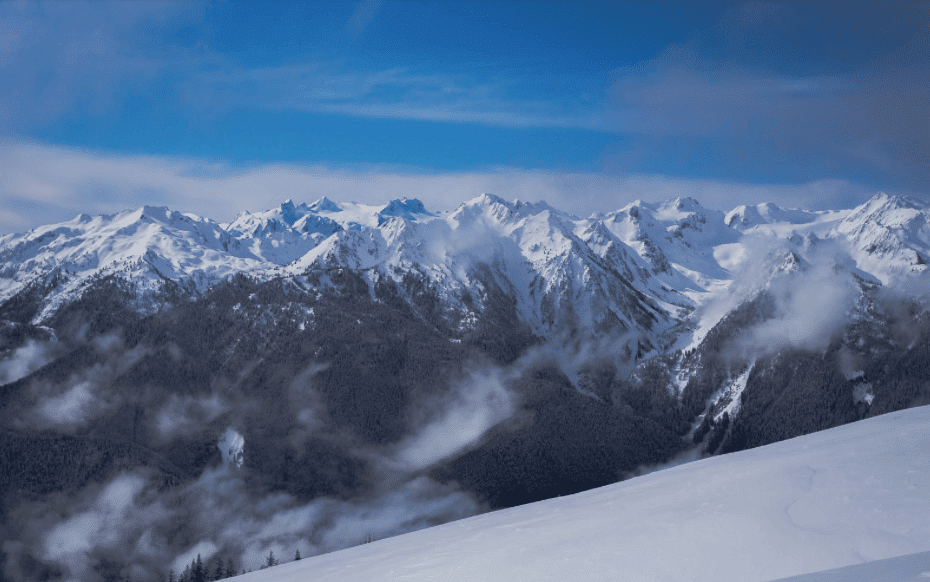
Glaciated peaks, a 73 mile Pacific coastline, and the wettest temperate rainforest in the lower 48 all live inside one park, and no single road crosses the middle. Plan to drive the loop, and plan to stop more than you think.
Olympic National Park covers 922,651 acres on Washington’s Olympic Peninsula and is the only park in the state that combines glaciated mountains, old growth temperate rainforest, and a long stretch of wild Pacific coastline inside a single boundary. It is also the only Washington national park designated a UNESCO World Heritage Site, and 95 percent of its acreage is protected as wilderness. That combination is rare anywhere in the United States and unique on the West Coast.
The park has no road that crosses through the middle. Highway 101 wraps around the perimeter for roughly 380 miles and every entrance is a spur off that loop. Hurricane Ridge is the high country gateway above Port Angeles. The Hoh Rain Forest sits at the end of an 18 mile spur off 101 near Forks. Lake Crescent and Sol Duc are inland off 101 west of Port Angeles. Kalaloch, Ruby Beach, Rialto, and Second Beach line the coast between Forks and the Quinault Reservation. La Push, the Quileute homeland just outside the park boundary, is the closest town to the wilderness coastline. Lake Quinault and the Quinault Rain Forest sit at the southwestern corner.
This means a real Olympic trip is not one drive. It is a series of in and out visits to different entrances, each with its own ecosystem, its own weather, and often its own season. Hurricane Ridge is alpine and at its best in July through September. The Hoh is rainforest and rewards anyone willing to put on a rain shell from October through April. The coast works year round, with winter storms drawing photographers and summer afternoons drawing tide pool walkers. Most first time visitors try to see all of it in three days, which is possible but rushed. Five days is closer to right.
Olympic is the only national park in Washington that touches saltwater. The fact that you can stand in old growth rainforest at sunrise and on a beach littered with sea stacks by sunset is not marketing. It is the geography.
Hiking in Olympic National Park
Marymere Falls: A Half Hour That Earns the Picture
Hurricane Hill: The Easiest Big View in the Park
Sol Duc Falls: The Park's Most Photographed Waterfall
Rialto Beach to Hole in the Wall: A Tide Dependent Walk
Mount Storm King: A Half Mile of Ropes and an Earned View
Second Beach: The La Push Coastal Walk That Most People Miss
Ruby Beach: Sea Stacks, Tide Pools, and a Half Mile Walk In
Hoh River Trail to Five Mile Island: The Quiet Half of the Rainforest
High Divide and Seven Lakes Basin Loop: The Park's Signature Backpack
Camping in Olympic National Park
Kalaloch Campground
Mora Campground
Hoh Rain Forest Campground
Sol Duc Hot Springs Campground
Fairholme Campground
Heart O' the Hills Campground
A 7 day pass is $30, but the America the Beautiful pass usually pays for itself
Olympic charges $30 per vehicle for a 7 day entrance pass, or $55 for an Olympic only annual pass. If your trip includes Mount Rainier or any other federal recreation site, the $80 America the Beautiful interagency annual pass is the better math. It covers all national parks, plus Northwest Forest Pass trailheads on Olympic National Forest land adjacent to the park, plus any Bureau of Land Management or US Fish and Wildlife site for one calendar year from the month of purchase. Buy it before you go and skip the entrance station line.
Where to Base Yourself for Olympic National Park
Olympic has no single gateway. Each entrance has its own town and each town has its own personality.
Port Angeles is the largest gateway and the closest to Hurricane Ridge. It is also the only town inside the park boundary that has a full visitor center and a working harbor with the daily ferry to Victoria, BC. Use Port Angeles as a base for Hurricane Ridge plus Lake Crescent and the Sol Duc Valley. EWS has a complete Port Angeles visitor guide with lodging, food, and itinerary suggestions.
Sequim is 17 miles east of Port Angeles, in the rain shadow of the Olympic Mountains, and is dramatically drier than the rest of the Peninsula. It is more a Peninsula destination than a park gateway, but it is worth a half day on a longer trip. The Sequim Lavender Festival in mid July is the regional draw. The Dungeness Spit is the longest natural sand spit in the United States and runs through Dungeness National Wildlife Refuge, where migratory shorebirds and bald eagles are commonly seen from the trail.
Forks is the Highway 101 town closest to the Hoh Rain Forest, the coast at La Push, Rialto, Second Beach, and Mora Campground. It is the practical base for any rainforest plus coast trip. Lodging is utilitarian. The town leans into its Twilight novel association but the real draw is location.
Lake Quinault sits at the southwestern corner of the park, with lodging at the historic Lake Quinault Lodge and a quiet rainforest experience that is easier to access than the Hoh. EWS covers the area in Spending a Weekend at Lake Quinault and the Lake Quinault Bike Loop.
Hood Canal towns including Quilcene, Brinnon, and Hoodsport sit on the eastern side of the Peninsula on Highway 101. Hood Canal is technically outside the main park experience but is a natural overnight stop on a counterclockwise loop. EWS covers a weekend at Hood Canal with Mike’s Beach Resort and Olympic Oyster Co.

Getting to Olympic National Park
The most common approach from Seattle is by ferry plus highway. The Bainbridge Island ferry from Seattle’s Colman Dock crosses to Bainbridge in about 35 minutes, then State Route 305 connects to Highway 3 and Highway 104 across the Hood Canal Floating Bridge to Highway 101. From the ferry terminal to the Olympic National Park Visitor Center in Port Angeles is roughly 2 hours of driving. The total trip from downtown Seattle, including the ferry, runs about 3 hours under good conditions.
The driving alternative bypasses the ferry by going south on I-5, west on Highway 16 across the Tacoma Narrows Bridge, then north on Highway 3 to meet 101. This route takes about 3 hours 15 minutes from Seattle to Port Angeles and is more reliable on busy ferry weekends, especially in summer.
From Wenatchee or Spokane, plan on a long day. Wenatchee to Port Angeles via Highway 2 and the Edmonds-Kingston ferry runs about 5 hours. Spokane to Port Angeles via I-90 is closer to 7 hours.
For visitors flying in, Sea-Tac is the closest major airport. Once at the park, a personal vehicle is essential. There is no continuous public transit between entrances. Clallam Transit runs a seasonal bus to Hurricane Ridge from Port Angeles in summer, but trail to trail access requires a car.
Planning Your Visit
July through September gives you the most reliable weather, full Hurricane Ridge access, and snow free trails at higher elevations. August is the busiest month and worth booking lodging months in advance. June is variable, with snow lingering above 4,000 feet most years and meadows just starting to bloom. September is the quiet sweet spot, with empty trails and stable weather through about the third week.
Late October through April is the rain season, and that is the right time to see the Hoh and Quinault rainforests at their fullest. Lake Crescent stays accessible year round. Hurricane Ridge Road shifts to a Friday through Sunday plus holiday Monday schedule in winter, and tire chains are required on every vehicle. The road can close at any time for weather. The coast works year round but is at its most dramatic in winter, when storm waves rearrange the driftwood at Rialto and Kalaloch overnight.
A realistic three day itinerary covers Hurricane Ridge plus Lake Crescent on day one, the Hoh Rain Forest plus Ruby Beach on day two, and Sol Duc plus a coastal beach walk on day three. Five days adds Lake Quinault, more time on the coast, and room for a longer hike like Mount Storm King or High Divide. Skip Staircase for now. The southeast corner of the park is closed indefinitely due to the 2024 Bear Gulch Fire impacts. Confirm current closures at nps.gov/olym before any trip.
Seasonal Events and Highlights
Find a Cabin Near Olympic National Park
Skip the campground lottery. Browse privately owned cabins close to the park on Washington Staycations.
More from EWS on Olympic National Park
Frequently Asked Questions
What is Olympic National Park known for?
Olympic is one of the few national parks in the world that protects three distinct ecosystems inside one boundary: glaciated alpine peaks, old growth temperate rainforest, and a 73 mile stretch of wild Pacific coastline. It is also a UNESCO World Heritage Site and one of the wettest places in the contiguous United States, with the Hoh Rain Forest receiving roughly 12 to 14 feet of rain per year. The combination of those features inside a single park is the reason it draws three to four million visitors annually.
How much does it cost to enter Olympic National Park?
A 7 day vehicle pass is $30. An Olympic only annual pass is $55. The America the Beautiful interagency annual pass at $80 covers Olympic plus Mount Rainier, North Cascades, and every other federal recreation site for one calendar year from the month of purchase. Visitors 62 and older qualify for a $20 senior annual pass or an $80 senior lifetime pass. Active military, fourth graders, and visitors with permanent disabilities receive free passes.
How do you get to Olympic National Park from Seattle?
The fastest route is the Bainbridge Island ferry from Seattle’s Colman Dock, then State Route 305 to Highway 3 to Highway 104 across the Hood Canal Floating Bridge, then Highway 101 to Port Angeles. The total trip is about 3 hours including the 35 minute ferry crossing. The driving alternative goes south on I-5 then west across the Tacoma Narrows Bridge and is about 3 hours 15 minutes. A car is required once at the park. There is no continuous public transit between entrances.
When is the best time to visit Olympic National Park?
July through September gives the most reliable weather and full Hurricane Ridge access. August is busiest. June is variable with snow lingering above 4,000 feet. September is the quiet sweet spot. Late October through April is the rainforest season, when the Hoh and Quinault are at their fullest. The coast works year round, with winter storms drawing photographers and summer afternoons drawing tide pool walkers. Hurricane Ridge Road runs a Friday through Sunday plus holiday Monday schedule in winter, and tire chains are required.
What are the best hikes in Olympic National Park?
Hurricane Hill is the easiest big view in the park, a 3.2 mile paved round trip from the end of Hurricane Ridge Road. The Hall of Mosses in the Hoh is a 0.8 mile loop that captures everything the rainforest is known for. Mount Storm King above Lake Crescent is the hardest day hike most visitors attempt, with a fixed rope scramble to the summit. Sol Duc Falls is a flat 1.6 mile walk to the park’s most photographed waterfall. Rialto Beach to Hole in the Wall is a tide dependent 4 mile coastal walk. The High Divide and Seven Lakes Basin Loop is the signature multi day backpack at 18 miles with 4,000 feet of gain.
Are there grizzly bears in Olympic National Park?
No. Only American black bears live in Olympic National Park. Grizzly bears have not been documented on the Olympic Peninsula in modern records. The park’s black bear population is healthy and active in summer, especially in berry season at higher elevations. Bear canisters are required for all overnight backcountry trips. Day hikers do not need bear spray for grizzlies but should still hike alertly and store food properly at coastal campsites where raccoons and bears both raid coolers.
What is the best town to stay in to visit Olympic National Park?
The answer depends on which side of the park you want to spend time on. Port Angeles is best if Hurricane Ridge, Lake Crescent, and Sol Duc are the priority. Forks is best for the Hoh Rain Forest, Rialto, Second Beach, and the western coast. Lake Quinault is best for the southwestern rainforest. Sequim is best for a rain shadow base if visiting in shoulder season. For a full park loop, plan two bases: one in Port Angeles for the north and one in Forks or Lake Quinault for the west and south.
Which is better, Olympic or Mount Rainier?
They are different parks, not competing ones. Mount Rainier is a single mountain experience with day hike access to the highest active volcano in the Cascade Range and meadows at Paradise that bloom from late July through August. Olympic is a multi ecosystem park where the appeal is the variety: glaciated peaks, rainforest, and coast in one trip. If a visitor has only one weekend and wants the Mount Rainier photograph everyone associates with Washington, Rainier is the answer. If they want to walk in old growth rainforest, stand on a beach with sea stacks, and see alpine wildflowers in the same trip, Olympic is the answer. Many EWS readers visit both on the same week long Washington trip.