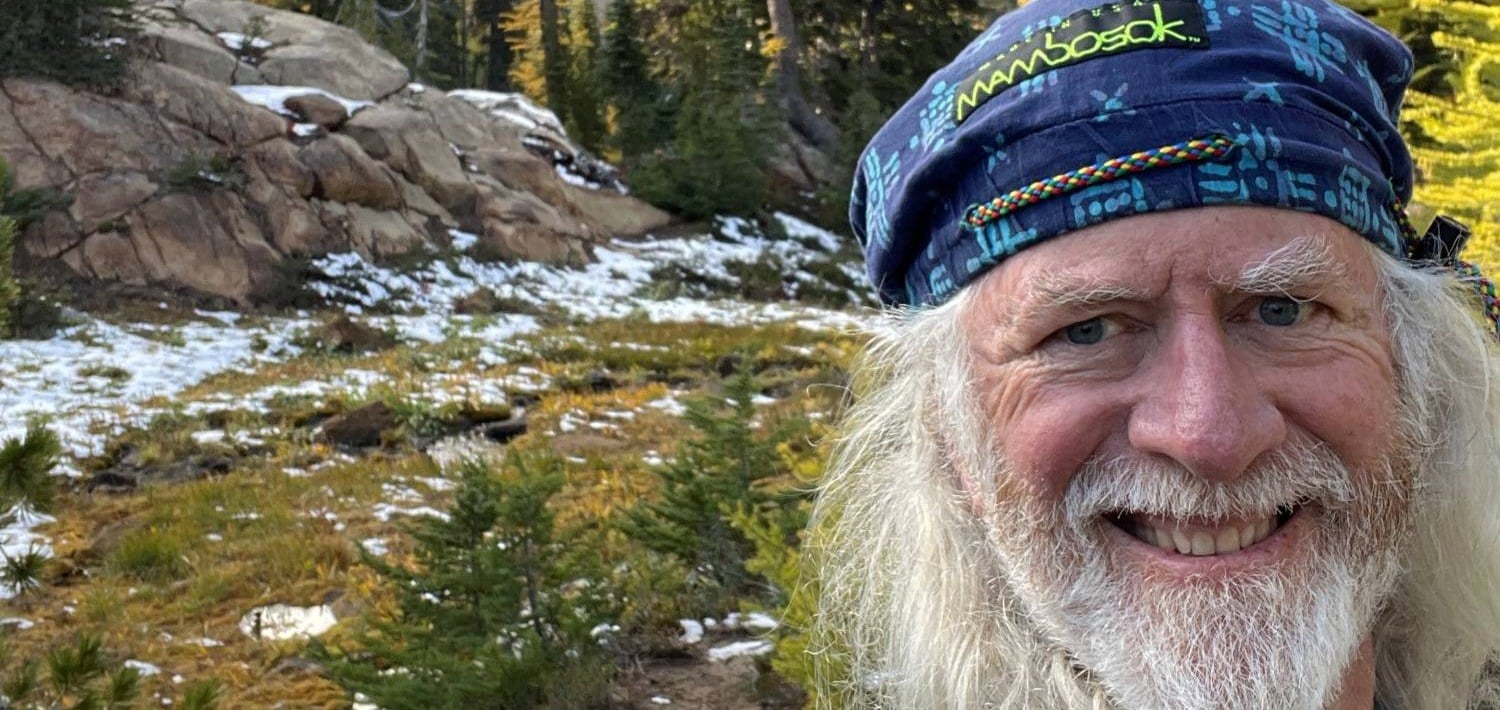
Scott Griffith, Washington State Parks, on the Palouse to Cascades Trail
Top photo courtesy of Scott Griffith.
Scott Griffith has worked for Washington State Parks since 1981, when he started as a park aide at Fort Ebey on Whidbey Island. Today he is the agency’s statewide Interpretive Program Manager, and he has known the Palouse to Cascades State Park Trail since he walked parts of it as a Boy Scout.
The trail runs 251 miles on the old Milwaukee Road, from Cedar Falls near North Bend to the Idaho border. In this episode he explains how a railroad turns into a state park, goes through the trail one section at a time, and gives the advice State Parks wishes every rider heard first: it is not one continuous route yet, so plan it in pieces.
The Palouse to Cascades Trail, section by section
The trail comes in three sections, and they are three different trips.
West, 18 miles, Cedar Falls to the Snoqualmie Tunnel. The busiest stretch and the easiest one to reach from Seattle. The headliner is the Snoqualmie Tunnel, 2.3 miles long and completely dark. Griffith’s picture of a summer weekend: hundreds of headlamps moving through it. Bring a real light and a jacket. Our West section guide has the trailheads.
Central, 107 miles, the tunnel to the Royal City cut off. Past the restored South Cle Elum Depot, through Cle Elum and Kittitas, across the Yakima Training Center, where you self register at the Renslow or Doris trailheads, and over the Columbia River on the Beverly Bridge, dedicated in 2022. Our Central section guide covers the stops.
East, 126 miles, Warden to the Idaho border. The most remote section, and the one people underestimate. State Parks asks you to register online before you go. Carry your own water, plan on no cell service, and expect gaps that are not open and some miles on quiet county roads. Our East section guide has more.
How a railroad became a state park
The Milwaukee Road quit in 1980, and the state picked up the corridor one parcel at a time. Griffith worked on it as a student, when the state was still deciding what to do with it. He walks through the trail’s long list of names, from the John Wayne Pioneer Trail to Iron Horse State Park, before it became the Palouse to Cascades State Park Trail in 2018.
He also covers saving the Beverly Bridge, the bridges that went missing, why the surface is gravel and not pavement (and why the Columbia Plateau Trail, still on its big railroad ballast, rides so much rougher), and who keeps 251 miles of old railbed in shape.
His advice: do it in chunks
Griffith’s honest take is the most useful part of the episode. Do not get on your bike in North Bend expecting to ride to Idaho. Treat it the way some people treat the Pacific Crest Trail: pick a section you can do in a day, ride it, and come back for the next one.
If you only have a Saturday, his plan is the tunnel from Hyak, at its east end. Worth it. Just go before November 1, when the tunnel closes for the winter.
Before you go
- Snoqualmie Tunnel: closes November 1 for the winter and reopens about May 1, weather dependent. Bring a headlamp and a jacket.
- Discover Pass: needed to park at the trailheads, $45 a year or $10 a day. Our Discover Pass guide explains where it applies.
- East section (Warden to the Idaho border): register online before you go.
- Yakima Training Center stretch: self register at the Renslow or Doris trailheads.
- Day use only. Dogs on leash, horses welcome, no fires.
- Closures and detours change often. Check the State Parks trail page before every trip.
Also in this episode
What a park ranger one does, how the Discover Pass pays for the parks, the Kittitas Cafe, the story told at Willie Keil’s Grave, and his favorite state parks: Deception Pass, and a remote one in the Blue Mountains, Fields Spring. Then coffee and lunch in Wenatchee (Mela Coffee Roasting Co., Zebra, and The Taproom by Hellbent Brewing at Pybus Public Market), and the question every guest gets: cake or pie.
Links
- Palouse to Cascades State Park Trail: our trail guide
- Washington State Parks: Palouse to Cascades State Park Trail
- Things to do in Cle Elum: our Cle Elum guide
- The card from the mid episode spot: the Explore Washington State Card
- Every episode of the show: the Exploring Washington State podcast
Related episodes
- A thousand campers a night: inside Lake Chelan State Park, more from inside Washington State Parks
- Greasy fingerprints on a beam: inside Fort Flagler and Fort Worden, two state parks with deep history
- Inside Cascade Bicycle Club with Paul Tolmé, for riders planning their next route
Remember, there’s always more to explore.
Scott Griffith Washington State Parks Episode Transcript
Scott Griffith:
The North Bend of this tunnel is just mayhem. I mean, it’s just so many people. I love that tunnel when you go through there on the weekend. But when you go through there, there’s hundreds of headlamps and just the thrill of going through a two, I think two and a quarter mile tunnel in the dark. [Editor’s note: The Snoqualmie Tunnel is 2.3 miles long.]
[Sponsor message: the Explore Washington State Card]
Scott Cowan:
Everyone, this episode is with two Scotts today. You know me and the other Scott today is Scott Griffith. He is the interpretive program manager for the Washington State Parks in the eastern region or is it statewide?
Scott Griffith:
Actually statewide.
Scott Cowan:
Okay, so statewide. Scott, welcome.
Scott Griffith:
Thank you.
Scott Cowan:
I’ll turn the mic over to you. Why don’t you set us up with your, well, first question, how long have you been with the state parks?
Scott Griffith:
Sure. Well, I’ll start a few decades ago. I grew up in Seattle and I found this summer job opportunity on Whidbey Island at this brand new state park called Fort Ebey. And so the summer of 81, I took my Volkswagen Bug to Fort Ebey. It just opened and I was a park aide. So I’m one of those people, Scott, who started in 81 and worked their way up and up and up, went from a summer job to a seasonal job to a career seasonal to all the way up through many a parks. And I don’t know if we raise these people anymore, but I’m a career state park person.
That was, you know, as many years ago, I have 500 plus months of experience with state parks.
Scott Cowan:
Oh, well, I thought we were getting an expert today. Oh my gosh. Five, 500 months. All right. So you started in 81.
Scott Griffith:
Yes.
Scott Cowan:
I believe in a conversation you and I had on the phone, you went to the UW.
Scott Griffith:
I did go to the University of Washington.
Scott Cowan:
And what, what, what did you major in at the U?
Scott Griffith:
That’s a good, that’s a great question. Absent knowing what I wanted to major in, I was pondering with a bachelor’s in psychology, which I quickly realized is not a good vocation. I would have to continue my studies. So I went to the, I started again and thought, what do I want to be doing? And I went to the forestry school and I was taking a forestry 101 class. And at the time they had many disciplines in forestry. They had silviculture, they had, you know, logging, they had planning. They also had recreation. And I took a, on a Friday afternoon, a professor, Grant Sharp came in and he talked about this internship.
And so that’s where it led me to Fort Ebey. And little did I know that I would be pursuing a career as a park ranger, which I’ve spent a good portion of my career as a park ranger.
Scott Cowan:
So you were a park ranger.
Scott Griffith:
I was a park ranger.
Scott Cowan:
Clarifying thing on a park rangers. There’s different park ranger one, two, three, right?
Scott Griffith:
There are.
Scott Cowan:
And is there a four? I think there is, but that’s more like administrative.
Scott Griffith:
It’s the area manager would be a four.
Scott Cowan:
So is a park ranger one, a law enforcement agent? They are limited, limited, limited. Okay.
Scott Griffith:
They were, they were a new creation. And unfortunately, Scott, you have someone who’s been with the agency since 81. So you’ll, I can talk about 17 variations of how we’ve done staffing, maybe 18.
Scott Cowan:
By the end of the episode 19.
Scott Griffith:
That’s right. But I can tell you the ranger one is a fixture that we created after the Discover Pass.
Scott Cowan:
Okay.
Scott Griffith:
At the time we had ranger two threes and fours. I won’t explain to you what happened to the ones that disappeared.
Scott Cowan:
They were extinct.
Scott Griffith:
But we, the Discover Pass was new. As you remember, 2012, we started Discover Pass fish and wildlife DNR in state parks as [Editor’s note: The Discover Pass has been required since July 1, 2011.] a major component to our revenue during a budget crisis. And guess what? When you don’t enforce a fee, people don’t pay it.
Scott Cowan:
Okay.
Scott Griffith:
And so we’re in a position where we created this position to primarily enforce and educate around the Discover Pass. The money, the majority of the money goes to state parks. About 84% of the any Discover Pass raise was important to our well being and survival.
Scott Cowan:
Right.
Scott Griffith:
So the ranger ones do not do criminal citations. They’re just enforcing one rule, Discover Pass. It’s a whack infraction. And they issue, they don’t do any interactions toward, they don’t issue, they issue to a car.
Scott Cowan:
Similar to what you’d find at a parking meter person that was not engaging a person, asking for ID, running their plates.
Scott Griffith:
They’re just, so that’s the one is a relatively new fixture.
Scott Cowan:
So they’re handling an infraction, if you will.
Scott Griffith:
Correct.
Scott Cowan:
Okay. So then Park Ranger 2 and 3 are law enforcement?
Scott Griffith:
They are. They’re fully commissioned.
Scott Cowan:
Okay.
Scott Griffith:
The same authority as you’d find for a county or a city or state patrol. They are fully commissioned. They go to a BLEA academy. They are armed and commissioned with the full authority to enforce all laws in state parks.
Scott Cowan:
In state parks. Okay.
Scott Griffith:
Any laws. And the physical arrest. And we aren’t high on the numbers of how many arrests we do in the parks, but we’re capable of dealing with any situation in the campground.
Scott Cowan:
Okay.
Scott Griffith:
You hear a lot, Scott, you hear that most state parks are little cities.
Scott Cowan:
Right.
Scott Griffith:
And we do not, we handle things on our own within the park.
Scott Cowan:
Okay.
Scott Griffith:
So including all law enforcement.
Scott Cowan:
Okay. So you were a park ranger?
Scott Griffith:
I was.
Scott Cowan:
Okay. So, well, first off, you were an intern and then you were seasonal and then you became a park ranger. At what point, so I’m going to guess somewhere along that, that’s, when did you decide, like, this is a good fit for me? Like, I think I want to be around 500 months from now.
Scott Griffith:
Dude, that’s a great question. And I, actually, I was getting my 30 year pin. I was in Winthrop and I was getting my 30 years of state park service. And I thought, you know, I haven’t really declared that this is my vocation. So what I did, I spoke to our commission. I thanked them for the pin, the accolades all around. And I said, I am, I am publicly declaring that I’m a, I’m a recreational professional. And so I think, you know, I don’t know if it happens to many people. I think you, you just stay with the company. And at some point you turn back and you think, I think I’m going to work for Boeing my whole life.
Or I think I’m going to work for UPS and I started driving truck and now I’m in management. It just was never a question. I didn’t have these aspirations that I wanted to be where I am now at the interpretive program manager. I just enjoyed the agency.
Scott Cowan:
I enjoyed its mission.
Scott Griffith:
I enjoyed the people I worked with. And so it just was a natural evolution of just promoting. And at the time when I was single at, you know, I have a Volkswagen bug at Fort Ebey. I was very portable and our agency is a big agency, lots of parcels and properties. And I was very easy. And until I, my life got more complicated to move around. And so it was very appealing as a young man to move to all over the state. And then, you know, I got dogs and I got a cat and I got a wife. They got kids. I got foster kids.
Scott Cowan:
It gets more complicated, but a little harder to move the entourage.
Scott Griffith:
But I, I, when you mentioned that I, I didn’t say at year 15, I’m going to stay with this. I was always thinking this is working for me now. And here I am 500 plus months later thinking, I think this is it. I think this is what I’ll be doing.
Scott Cowan:
This is my career.
Scott Griffith:
I, I do a lot of hiring, um, uh, assistance with hiring in the agency. And I don’t know if we hire these type of people anymore. I, it’s often to say, what are you going to do in five years? And they say, I’m just going to try out this Ranger thing.
Scott Cowan:
Well, we’re, we look about similar age. Yes. And so I remember growing up that my grandfather, his advice to me was get a, get a union job and save 10% of your pay. That was, cause that’s what he did.
Scott Griffith:
Very wise.
Scott Cowan:
My dad worked for Nabisco for 38 or 39 years. Okay. I went to college. You went to college. I, my friends that I met in college, still in touch with a lot of them. We’ve all bounced around. I don’t know. I have two friends. Well, actually that’s not true. I have one friend. He, he went, he, he graduated college. He went to work for Boeing. He retired from Boeing in HR.
Scott Griffith:
Yeah.
Scott Cowan:
Another friend of mine has had a very nice career, but he, he went from Boeing to PACCAR to Microsoft. But those are the most stable of my friends. Maybe that says something about my friendships, but do your friends that you went to college with? Are you the outlier?
Scott Griffith:
I am. I, I, I am.
Scott Cowan:
I am.
Scott Griffith:
I am. I, I, you know, I had a choice too. I should tell you when I went to state parks and I pursued this park management degree, I could have gone to the national parks.
Scott Cowan:
Right.
Scott Griffith:
They were hiring seasonals. Philadelphia Bell. I mean, excuse me, there was Liberty Bell, Philadelphia or the Everglades. I had choices.
Scott Cowan:
Right.
Scott Griffith:
But no, I am an outlier that you would be with the same place, the same.
Scott Cowan:
Yeah.
Scott Griffith:
I’m pretty loyalist. I’m kind of a loyalist. I still have the same car insurance company I had when I was 24. I’m that breed of person. So that’s a little bit of who I am in terms of, I wasn’t tempted to bounce. Like I said, good people and, and just a great mission. And, and, and I also, as I grew up in Seattle, Washington is a big place. That’s it. I don’t need to get to learn the national park services. There’s so much in this state.
Scott Cowan:
Well, you said the Everglades and I’m thinking swamp. So that doesn’t sound good to me. I think you said Liberty Bell. I’m thinking humid. That doesn’t sound good to me. Washington is like, you know, you’ve got, you’ve got not quite the, the extremes.
Scott Griffith:
Yeah.
Scott Cowan:
All right. So kind of touched on you, you, you started, you’re a park ranger and then you moved over into the, the interpreted, well, I’m probably skipping some things, but what, for the listener who’s probably gone to a state park and they’ve interacted with a ranger and I made air quotes around that, the person with the hat, the interpreting centers, what, what’s kind of the history of the states doing these interpreting centers at certain locations and how do they differ or do they?
Scott Griffith:
Yeah. Wow. What a, what an excellent question. The, the unique thing about state parks is how we acquired any one parcel, how and when and why is probably a story unto itself.
Scott Cowan:
I think so.
Scott Griffith:
There was no playbook for that. You know, we’ve had parcels donated to us. We’ve had legislative mandates to acquire a property. You know, we’ve, we’ve purchased properties because they thought they were appealing and we’ve, we’ve leased properties, not because we thought we’ve been approached by other landowners saying we’d like to partner with you to lease these properties. So I’m, well, there’s probably not a single playbook to interpretive facilities. And I, I, they all have a different story on why they were developed, who believed in them, why were they created? And, you know, and some were CCC facilities. I think of Ginkgo here at Vantage down the river from where we’re speaking now that was created by the CCC, a beautiful visitor center, epic location.
And we didn’t necessarily go and say, you know, it’d be a great idea, blah, blah, blah. It was just, you know, on the lookout for areas to develop and stories to tell. There’s always been legislatively a desire for our agency to tell stories and tell our history and portray it in these places. So it’s a great question. I, if it’s a, I could have a lengthy answer because each, each interpretive center has a different story.
Scott Cowan:
Well, how many interpretive centers are there?
Scott Griffith:
Yeah, it’s, there’s a.
Scott Cowan:
Or is that up for interpretation?
Scott Griffith:
No. Yeah. Very good. It is up for interpretation. So it’s how you define it. I think I could name you our major ones. I probably would, I’m at risk of forgetting one of them. So maybe I shouldn’t do that. It’s about, it’s 11 or so. When you think of interpretive center, do you think, should there, could I be, could I be engaged for an hour or five minutes? We have some that are telling one very finite story, beautiful stories, small stories, but they’re not full service. We don’t have staff there. We don’t have restrooms. We don’t have, you know, it’s one of them is an old kitchen shelter deception pass, which is telling the story of the CCC, a beautiful story, but it’s not a destination interpretive center.
It’s an interpretive feature. So what we call a center is typically, if it’s going to be staffed, indoor heating, air conditioning, restrooms.
Scott Cowan:
So like Federation Forest.
Scott Griffith:
Exactly. Well, yeah. Which isn’t necessarily staffed all the time, but yeah, that’s a good example of one.
Scott Cowan:
Or what’s the one? St. Helens.
Scott Griffith:
Yes. Mount St. Helens Visitor Center. And that’s unique too, that when you asked about the story, that was built by the Forest Service quite quickly after the eruption of Mount St. Helens, operated by the Forest Service, a beautiful building. It’s been relatively recently that we are fully operating that building. And so, and that’s unique, but yeah, they’re all quite unique. I could go through them. And the Goldendale, another example in Eastern Washington here is the Goldendale Observatory, which you’re aware of. That’s a crazy unique story. I mean, it wasn’t, it wasn’t, it was astronomers looking for a place to house their telescope. And the story is, short of it, they were just having, they were frustrated.
They were having, at the cafe in Goldendale, someone overheard them and thought, and accorded them to be placing it there. So, and then state parks eventually became the manager of this facility and overseeing it. So they all have really unique stories. And most of them, I should tell you too, on our state park website, have the park histories, tell the stories of these interpretive centers. Because the Federation is unique too. It was a, it was an organization of a, a woman’s organization who, who spearheaded this. So there’s so many different versions of how they were created.
Scott Cowan:
Didn’t they move? Wasn’t it there some move also that they were in this location and then they moved it?
Scott Griffith:
I think so. I think it was some, I read, I was reading as it was like, you know, one outcome of you talking to me today is I’m going to connect you as someone who could tell you the glorious history of that facility. We have, we have exhibits people and we have historians who study these because they’ll be doing interpretive panels to honor these sites and they are well aware. And, you know, so the history of all of them is quite remarkably different. We tell those stories at the centers. I feel like now I should be listing them all to you.
Scott Cowan:
I might come back and do that. We’ll, we’ll, we’ll work. We’ll, that’ll be future content. Okay.
Scott Griffith:
Good.
Scott Cowan:
So, so how we got connected though was I, uh, the state had put out, I’m on a mailing list and the state had announced that there was going to be another, uh, public online meeting.
Scott Griffith:
Yes.
Scott Cowan:
We’ll call it a meeting, webinar, whatever it’s a term, uh, presentation about the Palouse to Cascades trail. Yes. Are you guys, it seems like you’re doing those annually now.
Scott Griffith:
We are doing them annually.
Scott Cowan:
So I raised my hand and I said, Hey, I’d love to have somebody sit down with me and talk about the, about the trail on my, my show. And I was talking to a guy and I, I feel bad cause he was so helpful.
Scott Griffith:
He’s a statewide trails coordinator, Paul Knowles.
Scott Cowan:
Paul Knowles. Yes. And he was so helpful and he was so enthusiastic. I thought, okay, great. I found my guy. And he comes back and goes, no, it’s not going to be me. Oh, he goes, it’s Scott. And there was another gentleman.
Scott Griffith:
It was probably a David. We have a historian too. David Bean.
Scott Cowan:
Yes. And so you, you instantly, you were copied on the email and you instantly responded with kind of your, uh, your kind of, you kind of started telling stories right away and I’m like, this is awesome. And then, so we’re sitting down, but the, the bulk of this episode is really talking about the Palouse to Cascades.
Scott Griffith:
Great.
Scott Cowan:
I could sit down and talk to you about state park history and all sorts. We could make a whole series of this, but for today. Today. Can you, cause I’m very confused.
Scott Griffith:
Yes.
Scott Cowan:
I am very confused about the, the Palouse to Cascades trail. Is there a simple way to describe how it came to be?
Scott Griffith:
I will. I will give you a simple version.
Scott Cowan:
Okay.
Scott Griffith:
And then if you’re ready for a, about a dozen asterisks, I’ll pile them on.
Scott Cowan:
Perfect. Let’s, let’s do it.
Scott Griffith:
I, if you don’t mind, I want to give a quick context to my connection with this trail. Um, and I, you know, it’s not often you say it’s a personal and a professional connection, but I was talking a moment ago to you about going to the University of Washington.
Scott Cowan:
Right.
Scott Griffith:
Well, prior to that, um, and getting into public recreation, I was, uh, I was a boy scout and, uh, going on our backpacking trips. And my first connection with the, the railroad along the Milwaukee road was going to a, I think a net lake near, uh, Snoqualmie Pass. And on a good day backpacking to net lake, you would catch a train.
Scott Cowan:
Right.
Scott Griffith:
At the time they de electrified. And as a, uh, I wasn’t a wayward boy scout, but not too far from when the trail crosses the now Palouse Cascades trail is the tunnel 50 or classic two put two plus mile tunnel. And for a boy scout looking for something to do, you get it. You fill in the blanks, Scott.
Scott Cowan:
I kind of want to go.
Scott Griffith:
But I, so my first connection with those, when it was a rail line and, uh, and remembering vivid memories of going up to the, the West portal of the cascade tunnel 50. And just wanting to play chicken so bad, but deep down, I’m not that great of adventurous. I never made it that far into the tunnel.
Scott Cowan:
Okay.
Scott Griffith:
And if you’ve been in the tunnel.
Scott Cowan:
I haven’t.
Scott Griffith:
Oh my, I’ll get you there. Um, but so I had a connection with this place. The other interesting thing at the university of Washington, when I was going there, um, the state just acquired this trail. And so our professor sent us a university of Washington van and a gas card, as I remember.
Scott Cowan:
And, uh, and six students.
Scott Griffith:
And we got to go up there and as much as we could drive what had just been surplus. They just taken all the rail off of it.
Scott Cowan:
Okay.
Scott Griffith:
And so we got to drive around. And the question for us on our paper, I still have it. It’s not in front of me is what, what’s this, what should the state do? You know, what should the state do with this parcel? And so I have photos, slides, color slides, uh, with other students. And we traveled as far as the Beverly bridge.
Scott Cowan:
Okay.
Scott Griffith:
And our job was to say, what, what are the options before the state? They got this parcel. And so I just wanted to share with you that. And then fast forward, when, uh, I came to region, we’re in the Eastern region here in East Wenatchee. Um, one of the oversights of my professional oversight was the Palouse to Cascades trail. And so the webinar you went to, I used to lead them.
Scott Cowan:
Okay.
Scott Griffith:
And you know, I used to lead them because a lot of confusion about this trail and we were getting so many emails, so many inquiries they’re managed by three separate park managers. That’s confusing too.
Scott Cowan:
Right.
Scott Griffith:
Um, it’s, and, and so I just thought, you know, I’ve been to these things where you just come together and you give, let people join. It’s a Q and a, we started those years ago, um, just to have a central point. They used to be quarterly. Um, we’re probably moving now to yearly where in the early days, there was so much confusion about the, do we need permits to use it? What’s going on here? Am I trespassing? Do I need a Discover Pass? Uh, why is the surface bad? So I just wanted to set up your question, um, on, I have a fair amount of history at the trail.
I think I probably driven, biked, walked for most of the portions from, um, the Idaho border to, uh, Rattlesnake Lake, uh, North Bend or trailhead there.
Scott Cowan:
So I just, I don’t know if I, my voice projects credibility, but I want to give you, I’m connected to this place. I’ll vouch for you. I’ll vouch for you.
Scott Griffith:
I’m connected. But this, the simple of it is that, um, and I, I go back to, we dedicated the Beverly Bridge. We’ll get to that problem. We talk about that, which is, I think one of those things you never thought you’d see in your lifetime, this massive bridge caught in the Columbia.
Scott Cowan:
Yeah.
Scott Griffith:
And you just thought, oh, who’s going to spearhead this? That, that the governor’s office spearheaded it. Um, the, the, there’s a, uh, there’s, there’s a trail group that advocates for our trail, um, a friend’s group. And, uh, they petitioned hard to get this funded. It was, it’s a $5 million project. [Editor’s note: The Beverly Bridge project cost $5.5 million, and the bridge was dedicated April 8, 2022.] We did not ask for this. I told you about the interpreter series that come in different ways. The improvements was, it’s a DNR owned bridge and, uh, through DHAP and DNR and ourselves, we did those improvements. Anyway, I was at the dedication.
I helped kind of lead the dedication and, and old Ralph Munro was there and we had a visionary back in the early eighties when that thing went surplus, they had a dream. So I don’t know if the dream is for today, but they got into the mix to purchase this parcel, which was extremely visionary.
Scott Cowan:
Well, question I have, you just, you just, I warned you that my brain in, you know, the Beverly bridge, this never would have thought, but who is responsible for maintaining so that thing sits in water?
Scott Griffith:
It does.
Scott Cowan:
And bridges need attention.
Scott Griffith:
They do.
Scott Cowan:
Is that state parks?
Scott Griffith:
Yeah. It’s DNR technically, the DNR was the first land owner of that parcel.
Scott Cowan:
Okay.
Scott Griffith:
And we, I don’t know if we want to get down to the, how we progressively changed ownership. We could, it’s not the most exciting tale, but DNR, uh, it owns the bridge, um, as, as, uh, and so, but when we did the development, we did an inspection of all those, all those supports, the, that bridge was fully inspected from head to toe down underwater. And so, but we are by agreement responsible for its maintenance. Now it’s a pretty solid construction. It’s a concrete slabs on the bridge. It doesn’t need a lot of day to day. Um, the other unique thing we have agreement with a Grant County PUD, they have some lines that run on it.
Scott Cowan:
So they, they assist us with the maintenance as well.
Scott Griffith:
So, but we do our rangers try to go over it once a week and, uh, it’s a pretty hardened surface. Uh, um, it’s pretty remote, but we have rangers based at Vantage. So we do the maintenance of it, which is pretty modest. We, when we do the design, we try not to make it too many fancy things.
Scott Cowan:
Uh, you know, well, it’s not like it’s heavy traffic going across it, you know, human, human traffic is not.
Scott Griffith:
No.
Scott Cowan:
Yeah.
Scott Griffith:
Yeah.
Scott Cowan:
So, okay. So, all right. You’ve been involved with the trail for 500 months. Um, you, or more actually, but wasn’t at least up in Snoqualmie, wasn’t it called like John Wayne or Iron Goat? [Editor’s note: The Iron Goat Trail is a different trail, near Stevens Pass. This trail’s former names were the John Wayne Pioneer Trail and Iron Horse State Park.]
Scott Griffith:
No, you’re right. It’s great. No, no, no. You’re totally right.
Scott Cowan:
So this is where I get really confused. It’s like, so I went to central and the trestle that’s east of Allen, east of Kittitas, but before Vantage, the one that goes over the.
Scott Griffith:
Yes. Yes.
Scott Cowan:
I think that thing’s been renamed like three or four times. I’m kind of kidding, but it’s like, okay. So.
Scott Griffith:
The Renslow trestle.
Scott Cowan:
Okay. That’s all right. There, I know what I’m saying. But what, so when the state started this, acquiring it, was it the John Wayne trail? Was that his first?
Scott Griffith:
They, I think the first name probably would have been the Milwaukee road trail. I mean, just a simple, it was the Chicago, Milwaukee, St. Paul, I think in Pacific trail. I think the Milwaukee road was just a, you’ll see in legislation in the RCW, you’ll see it named as Milwaukee road corridor.
Scott Cowan:
Okay. Okay.
Scott Griffith:
And so that’s how it first started. We had another strong advocacy group called the John Wayne pioneer trail riders, and they would do cross state rides, and they were a strong advocate for this parcel too. I should say that they were pushing, the state, the organization still exists. It’s a great organization. And they were the ones that helped us get the, the, the iron horse is kind of a classic railroad term.
Scott Cowan:
Right.
Scott Griffith:
They petitioned that we use the John Wayne trail for a variety of reasons, and we adopted it. It was the Iron Horse State Park with the John Wayne trail.
Scott Cowan:
We named the trail John Wayne trail. Okay.
Scott Griffith:
And they were, they were advocating for that. They, there’s lots of history on why, when we changed the name, the original people from, they still, they, they testified, they were at our commission meeting when we changed the name of the trail.
Scott Cowan:
Okay.
Scott Griffith:
And because they, that’s what they were seeking to do. There’s, there’s not really any connection with John Wayne or the, or him or his family toward the parcel.
Scott Cowan:
Right.
Scott Griffith:
It was just the spirit of their, the spirit of their ride, the spirit of their ride and across the state. So yeah, we, yeah, you’re right. And that, that was the early name. And I, we have changed it. We had, I wish I’d brought them with me, Scott. I’ll, I, I don’t know if you have notes to these, but I should put, there was five other names suggested before our commission and one was quite amusing, but it does not come to me. They had, that’s them to choose from.
Scott Cowan:
Okay. There were suggestions.
Scott Griffith:
They sought public opinion on what it should be called. The Palouse to Cascades, it describes it. People thinks it should go west east, but the trail, the train, you were, you were going to ask that.
Scott Cowan:
I was going to ask that. I was going to ask that. Because the, you know, the joke, Seattle gets whatever it wants in the state, so shouldn’t it be Cascades to Palouse? I mean, but I prefer the other way, frankly.
Scott Griffith:
Yeah. Yeah.
Scott Cowan:
Okay. So, all right, so a question I have is, or an observation, is the train station in South Cle Elum.
Scott Griffith:
Yes.
Scott Cowan:
Has a lot of design, boards out there of information.
Scott Griffith:
Yes.
Scott Cowan:
But they’re named Iron Horse still.
Scott Griffith:
They are. That’s.
Scott Cowan:
So I was, when I went there for the first time, I was like, am I in the right place? I’m confused. And so I have to imagine that, so how many miles is the trail?
Scott Griffith:
I’m just going to say 250.
Scott Cowan:
250.
Scott Griffith:
If you want to get it, we can get a lot of people in this room where we can argue that there’s, with a big asterisk by it, we might get to that. Okay. I think it’s technically 251.
Scott Cowan:
Okay. So we’ll round it. It’s a round number of 250.
Scott Griffith:
We’ll do that.
Scott Cowan:
So there’s, there’s a, I mean, that’s 250 miles to maintain.
Scott Griffith:
Yeah.
Scott Cowan:
Of all sorts of facilities and trail and trestles, and we’ll probably cover a lot of that. Yeah. When I, the first time I went to the South Cle Elum train station, and I’ve never timed it when it’s open.
Scott Griffith:
Right.
Scott Cowan:
It’s never, so I walk around out there and I look around and, you know, I think it’s, it’s kind of fascinating, but there’s a train station in Kittitas now that looks like it’s getting close.
Scott Griffith:
You’re good. I, I can fill you in on both.
Scott Cowan:
Perfect. So how do I want to do this? In, when, when the first parcel was obtained, where did that parcel start and finish?
Scott Griffith:
Good question. It, it, it started at, well, first the, the, the central part at the Rattlesnake Lake, it, it, it abuts, the rail line went to the city of Seattle, one of their two main watersheds, you may know, Cedar Lake. [Editor’s note: The Cedar River Watershed. The trailhead is at Rattlesnake Lake.]
Scott Cowan:
Okay.
Scott Griffith:
And so when the railroad went bankrupt, there was people, and we’ll get into this because there’s gaps in the trail. We’re going to talk about gaps.
Scott Cowan:
Okay.
Scott Griffith:
And I’m going to tell you why. When it went to bankruptcy, some very wise people said, I would like to purchase my private, access to my private beach on Rock Lake. The city of Seattle said, we would like to protect our watershed. I don’t think we want recreationalists walking through our watershed. And so you’ll find a big, large gate at the city of, they have a beautiful visitor center there at the, at our, at our Rattlesnake Lake trailhead. So we, that portion was state parks. And for some reason I didn’t, it ended in Thorp. Our first development was there to Thorp. Why Thorp? There’s some question.
Oh, I know what it was. Wow. It’s coming through for me. I don’t, as a, you probably remember the same Black Angus.
Scott Cowan:
Oh yeah, Stuart Anderson.
Scott Griffith:
Yes, yes, yes. Stuart Anderson. He owned a huge cattle ranch. It was very public. As you go over I-90 and you, he had signs home of the, well, he thought Thorp would be a great spot to end that trail. Yeah. The, the trail, if it continued past Thorp, would enter into his ranch land and we’ll get into neighbors and conflicts and possessions. But, uh, so the Thorp to, um, North Bend was kind of our first, uh, portion. Um, obviously no, no desire to go into the watershed. That was by anyone. Um, I mean, it’s a beautiful area.
Scott Cowan:
Right.
Scott Griffith:
But, uh, that was our first leg of the trail. Um, lots of challenges, um, lots of challenges and we’ll get to those, but, uh, it was our first portion. At the time, I don’t think you were hearing a lot of people saying, oh, the Cross State Trail, what’s this wonderful opportunity. Um, that, that section, uh, posed its own challenges, but each section does, but we had pretty much one neighbor, which was nice. We’ll talk about neighbors, the U S forest service.
Scott Cowan:
Oh, okay.
Scott Griffith:
And so they, uh, uh, you know, we, we speak their language.
Scott Cowan:
It seems like there might be a good neighbor.
Scott Griffith:
Yeah. They’re a good neighbor. They, we get them, they get us. We don’t, you know, we, it didn’t, it didn’t take a lot of mitigation on weight. What are you doing? Um, it was complimentary. And then the other huge element, and we’ll, this will, when we get back to, uh, South Cle Elum Depot, we can talk about this. Um, we had a gift at the time as well. Um, AT&T WorldCom, um, this whole thing of fiber was coming around and, uh, you know, I, it’s not a secret, but if you take this portion of trail, we’re talking about Scott, you’ll see these conspicuous orange markers with AT&T on them and every 15 miles or so, you’ll see this conspicuous little bunker shed.
There’s a major fiber line going along that. And so serve them quite well that they partnered with us, um, to construct a fiber line along that entire portion.
Scott Cowan:
So do they have an easement?
Scott Griffith:
We have an easement and we didn’t give it to them. We we’ve charged. So we negotiated a fee. So when you look at what helped us in the early day, um, uh, having a, uh, an easement for the, uh, fiber line was, uh, it’s benefits us to this day.
Scott Cowan:
No, it does. Oh, yeah.
Scott Griffith:
And now that being said, we have to maintain it and we have to let them have access to it.
Scott Cowan:
Sure.
Scott Griffith:
And, uh, but they’re a good partner. So, uh, um, that, that helped us in the early days when you asked about, we’ll get to that when it comes to the depot as well.
Scott Cowan:
Okay. So, so AT&T, so let me, let me pull on that thread just one more time.
Scott Griffith:
Please.
Scott Cowan:
So the fiber line basically rattlesnake Lake, how far does it go?
Scott Griffith:
I think it joins the interstate before you get to Thorp. So I think at that point it follows DOT right away.
Scott Cowan:
Then it jumps in. Yeah.
Scott Griffith:
It goes over. But, uh, but I, and I don’t know why I’ve been advantageous to them versus following on 90. It just was, we were doing construction. It was, you know, they, they wouldn’t have probably a simpler, probably cheaper. You got to figure that too.
Scott Cowan:
Well, I’m sure it was less expensive for me.
Scott Griffith:
It was in, um, yeah, but it’s a, uh, but it’s a, it’s a good relationship. You’ll see a big fiber going under the trail and, uh, and it doesn’t impact our recreational users in any regard.
Scott Cowan:
Not at all. I mean, I guess it would if there was, you know, an AT&T truck out there to inspect or repair something. But how often does that happen? Not too often. Yeah.
Scott Griffith:
And they’re good at letting us know and us letting them know. So yeah, that was the early part.
Scott Cowan:
Okay.
Scott Griffith:
I could talk about, um, the, the depot because as long as we’re talking about partners, I want to talk about that. If we go back to that, um, the South Cle Elum Depot, um, was, and we’ll get to the funding and what we haven’t done and what we have done along the trail perhaps. But, um, the Cascade Rail Foundation, um, is a nonprofit group that formed a lot of old Milwaukee road employees and rail enthusiasts. And there was this dilapidated depot called South Cle Elum Depot, dilapidated.
Scott Cowan:
Yeah.
Scott Griffith:
And, and, you know, why would anyone have looked at it? I don’t know when the, this rail line stopped passenger service, probably the early seventies. [Editor’s note: The last Milwaukee Road passenger train ran in May 1961. The railroad quit in 1980.] I think the last train went through in 1980, a freight train. So dilapidated, literally, uh, and, and it wasn’t necessarily historic. The South Cle Elum Depot wasn’t this beautiful Union Station or Grand Central. It was this little simple station. But this group, um, raised money locally to about a million dollars to invest in that depot and bring it up to speed. They came to our agency at the time.
Um, I think it was, uh, Don Hawk was our director and they said, um, we signed a very unique agreement with them is that if you do all this work, we will let you have use of this facility. So when you talked about visiting the interpretive center there, that’s actually not run by us. Um, the Cascade Rail Foundation generously did these magnificent improvements. They’ve added a cafe. There’s a museum in there. Uh, we, we don’t really dictate their hours. Um, we do have some, I mean, it’s our building, but we’ve given them, uh, at the time we gave them a, uh, uh, I think it was a 25 year lease, uh, at no fee because of the investment they put in that building.
So the, the, the colors, the beauty of the floor, um, a lot of that’s their work and we’ve renewed that agreement too. So that’s not one of our facilities. They run it by staff. They used to do great fundraisers out there. Used to do a brews and rails. And what was it called? It was a, it was a brew fest at the facility. Um, the, that was a major yard on the railroad. So you, that is an interpretive, uh, we do interpret the roundabout.
Scott Cowan:
There was a round table, excuse me.
Scott Griffith:
Um, a lot of facilities there. So if you walk there, you’ll see, uh, learn a lot about that area.
Scott Cowan:
Right.
Scott Griffith:
And the, and the key one, which I don’t think we need to be distracted on this. You can talk to a STEM teacher or something on this. That was an electrification station. There was a major station at South Cle Elum Depot where they converted the AC to DC to run the train. So it’s a beautiful old building. You can’t get in it. You might buy special permission. Oh, um, but if you’ve noticed there, there’s this massive structure, um, West, that’s an electrification station, which we own one of most of them were destroyed, but that’s one that still exists.
Scott Cowan:
Okay. I was wondering what that building was. Okay. So, yeah. So, all right. So we got the first leg from Rattlesnake to Thorp.
Scott Griffith:
Yeah.
Scott Cowan:
I’m kind of being facetious here, but I’m going to guess that we didn’t acquire all the parcels going from West to East. I’m going to guess that there was some patchworking here.
Scott Griffith:
There was patchworking.
Scott Cowan:
Okay.
Scott Griffith:
Yeah.
Scott Cowan:
What was the next parcel obtained then?
Scott Griffith:
It would have been continued from there on. Now, and I, let me, uh, is this a good time to introduce some, I’m looking at up in the air, like I’m gazing off.
Scott Cowan:
This is a good time.
Scott Griffith:
Um, the, um, there’s, there’s major hurdles on the trail. Um, and one was, um, I told you about the bankruptcy court. We had people join, uh, purchase property during the bankruptcy court. Um, we also, during, um, during the, uh, during the, during the, during them removing rail, the salvaging component, there’s some great stories on this trail. There was, there was, there was bridges mysteriously being disappeared.
Scott Cowan:
There was bridges.
Scott Griffith:
We’ve had trestles burned and natural fires and, uh, man caused fires.
[Section not transcribed]
Scott Griffith:
Um, the other is that we will get to this. Um, the Department of Defense, uh, owns the Yakima training center. This railroad went through at the time when the railroad was built, it was farmland and there was sheep, uh, sheep pasturing.
Scott Cowan:
Okay.
Scott Griffith:
But so we had, you know, uh, trestles missing, trestles burned out. We had, uh, bridges that can’t be used, the Beverly bridge. We had the Renslow trestle, which we, we just can’t just invite people to go over this abandoned, uh, with, with rail ties. It was the only thing looking down at I-90, you’d have railroad ties. You couldn’t, I’ve, I’ve walked these when we owned them, but we had to guard them from public use. So Beverly bridge, Renslow trestle, the Boylston tunnel, the, the federal training center gaps where people have bought, um, there’s, and there’s a major gap. I, we haven’t mentioned this yet. When you, when you go, uh, east of Beverly bridge up to the rock Creek road, it becomes active rail line.
Oh, so we’ll talk about confusion about the trail and you probably didn’t know that.
Scott Cowan:
No, I didn’t. [Editor’s note: The active rail line runs from Royal Slope Junction to Warden, about 36 miles. The trail meets it at Crab Creek Road.]
Scott Griffith:
I won’t, uh, there is a large gap from Rock Lake to, uh, um, to Warden where, [Editor’s note: The active rail line runs from Royal Slope Junction to Warden, about 36 miles. The trail meets it at Crab Creek Road.] uh, it’s a rail line. And so some of the can, and then you go farther east to Rock Lake, you go farther east where there’s trestles missing and you can’t, you can’t get across features of the park. Um, and so, and we’ve had fires come about where we’ve wiped out trestles with a natural fires. Um, so I probably went around your question, but the next parcels were where can we develop a continuous trail and Thorp, Thorp to Ellensburg.
Oh, I should mention too, uh, central Washington university, they took over the, it went right through the campus. This rail line went right through the campus to their coal plant.
Scott Cowan:
That’s right. It did.
Scott Griffith:
And so it went by what is now their surplus and they had a coal plant and it went right zap through it. So at Water Street, Central wisely said, we don’t need, I mean, looking back, it would have been nice from the, to have it, but they purchased that. So we had this also this huge gap in Ellensburg that we technically didn’t know where to go. So we’d get to, I think it’s Water Street at the West side. We go, now what do we do? And so, uh, um, and then it rejoins at the fairgrounds on the East side. I can’t think of the name of the street, but the fairgrounds that picks that up as our parcel.
So we have a gap of the campus.
Scott Cowan:
Okay.
Scott Griffith:
And we formed a coalition with the county and the central Washington to find a bridge the gap. We’ve named some roads, but so that, so that we were faced with what, what’s the next section we can develop? What’s the next chunk we can develop?
Scott Cowan:
Right.
Scott Griffith:
And by develop, what does that mean? Not paving it.
Scott Cowan:
Be nice if you weren’t biking and walking down ballast, six inch chunks of ballast. That’s a little rough. It’d be nice for you as a visitor to have water and maybe a restroom on occasion. Oh, that’s dumb.
Scott Griffith:
But we can, we can talk about that. So the next gap would have been to Thorp to Ellensburg. Beyond Ellensburg to about Kittitas, we talked about that deep, it was a pretty easy grade, easy fix. We’ve, we gated all that. That became problematic from there on. We, the era of dealing with the Department of Defense on allowing our people to walk through their trading center had some wrinkles to it.
Scott Cowan:
And, uh, yeah. So let’s, let me, let’s go there because this is part that really, really confuses me. Okay.
Scott Griffith:
And that’s good.
Scott Cowan:
Do you have to get permission from the military to access that part?
Scott Griffith:
Technically, no. Technically, no.
Scott Cowan:
We, we rephrase. Should you? Yeah.
Scott Griffith:
Yeah. That, the, um, that has a rich history with the relationship of us going through the training center. Um, at, at one point it was being, um, it was being volleyed around that the, it’s run out of JBLM, the authority of that base. At one point they thought, we, we just don’t do this. We don’t allow recreationalism through training centers. So the discussion was always that that’s a high Pentagon decision. That’s not local. It got a lot. If you, if you research Google this thing or however you research this, there was a lot of animosity back there from the public on the military, not allowing this trail.
Um, so back and forth and back and forth, we finally came up with a management, a memo of understanding, which was assigned anywhere outside of the, someone at JBLM, the commander overseeing this. And it allowed us to go through it with a lot of conditions understood. And so when you enter it, there’ll be a bulletin board. They’ll let you know that you’re entering it and they’ll give about 12 conditions of your entry. One is registering and dropping it in the box. Um, it, it, it lets you know that, um, the priority of this facility is military training.
Scott Cowan:
Okay.
Scott Griffith:
And, uh, be pleased to be advised that if they’re training, uh, they take priority. It also lets you know there’s no services. Um, it lets you know, um, when you’ll leave the federal property and it just asks you register. And it gives conditions similar to what you would, Scott, for hours in terms of fires, camping, staying on the trail. Um, and so it’s a, it’s a great agreement. We meet with them once a year. Um, they, they allow our fine recreational list to go through there. It’s a pretty arid and barren place.
Scott Cowan:
Well, how many, how many miles is that?
Scott Griffith:
I think that’s about 22.
Scott Cowan:
So it’s about a 20, 20, 20 mile, we’ll just call it round numbers, 20 mile stretch of pretty barren, arid.
Scott Griffith:
Yes.
Scott Cowan:
And not Washington at its best, in my opinion, has nothing to do with the military presence, but not Washington at its best. It’s kind of that arid center of the state thing. So where I might’ve misunderstood was that the registration is literally kind of, I’ll say, I’m making air quotes from voluntary because you’re going to put your name in and put it in the box and you’ll continue on.
Scott Griffith:
You will.
Scott Cowan:
I guess where you might get in trouble in, in the theoretical world is that a, an MP might stop you and go, so did you register? I did. And your name? Oh, I put Mickey Mouse. Yeah, well, we might have a little bit of a, that might ruffle some feathers, but so I guess it’s kind of, um, it’s like the give a penny, take a penny jar, just do your right thing, put your name in and do your thing.
Scott Griffith:
I think the key, and we’ll get farther East, I think the key to the registration was, we just want you to be aware of the rules.
Scott Cowan:
Right.
Scott Griffith:
And if you took the time to grab a pen and write your name, you, we’ve acknowledged that you’re aware you’re entering a federal facility.
Scott Cowan:
Right.
Scott Griffith:
Whose prime, primary purpose is to train people.
Scott Cowan:
Train people.
Scott Griffith:
And I, so we, and a history of doing this, we haven’t had any, um, any difficulties with that. I think people are pretty smart about that. You know, the, the no trespassing federal property signs are pretty, they’re not really friendly. When you leave the trail, you know, you know, um, you can’t casually wander off.
Scott Cowan:
Oh, I didn’t know. And the other, the other thing we joke about whether, um, you know, I’ve been on it several times.
Scott Griffith:
I’ve always joked that I think they’re aware of my presence and I think they might even see me. And so I don’t think there’s any, um, they’re good. You would want that. So we always joke because there’s power lines running through there with little devices on the power lines. That’s what we think they are. But I think they’re aware of our presence. And now that, and that being said, the trail is along the I-90 portion. It’s not in the, probably the most active part of the base training.
Scott Cowan:
No. And so it’ll, it’ll almost a perimeter, but, uh, well, in, in most, in my experience with, with military facilities like that, they’re very large, but the active area that training is going on is centralized, not centralized, but you know, you’ve got a border around.
Scott Griffith:
Yeah.
Scott Cowan:
I grew up by JBLM or Fort Lewis back in the day. Oh, totally, totally. And so I, yeah. And at the campus, the entrance to the facility is more towards Selah when you come into the main facilities.
[Section not transcribed]
Scott Cowan:
Right.
Scott Griffith:
They, uh, and so there was about six, uh, crossings in the, um, military. Now our agreement said, if you don’t let us go through here, you’ll find an alternative route. And, and, uh, we, you know, we never held them to the thing, but when it burned, that was closed for several years. Um, now they were, the trestles that were burned were, we call them, uh, agricultural trestles. Their nature was so that sheep could go under them.
Scott Cowan:
Okay.
Scott Griffith:
Their nature was not water.
Scott Cowan:
Okay.
Scott Griffith:
We’re not dealing with massive waterways and all the permitting that goes with that. There were, there were agricultural crossings. The railroad wanted to give safe passage for all the basically sheep that were in there. So the military to their credit, uh, and we worked with them, they’ve, they created passage again.
Scott Cowan:
Okay.
Scott Griffith:
And so when you go through there, you won’t find trestles. They just filled and fill. And so, uh, but it, it led to a fill of questionable surface and we’ll get to surface. Okay. So they were a good partner. We reopened it, um, and all the way through, um, it with a, with a surface, the only asterisk and we, all these asterisks.
[Section not transcribed]
Scott Griffith:
And so, uh, but it’s a good partner. Uh, I would encourage you to register and I’d encourage you to read the rules when you go through that. It’s if we get to the point of what’s a, uh, you know, uh, you know, is it a great part of the trail?
Scott Cowan:
It’s part of the trail, right?
Scott Griffith:
It’s, it’s, it’s, with chances you’ll see a rattlesnake in summer. Sure. Uh, chances you’ll get hot. Sure.
Scott Cowan:
Uh, chances you’ll feel like you’re on the moon. Yeah.
Scott Griffith:
And chances you’ll say biking on sand is not fun.
Scott Cowan:
Not in 105 degrees, no water, rattlesnakes. No, does not. See, this is dead. That’s not for me. That’s, I’m not going to go experience it.
Scott Griffith:
No. And it’s, it’s a problem when you look at, will this be a statewide trail? You have to overcome that. And I’ve, I’ve been driving down by, uh, the Beverly bridge in that area. And I’ve seen people coming off this stretch, Scott, and I just, and they’re just laying on the side of the road. And I’m like, what, you know, I was a scout group once. And I said, what’s going on? We got through it. We went over, we went through the, we went through this portion of the trail and now we can say we’ve done it. Uh, was it, it’s, it’s a unique, it’s ecosystem is pretty arid.
It’s pretty, uh, and, uh, and, uh, but they, they checked it. We’ve done it.
Scott Cowan:
Right. Um, you should get t shirts or something. You should get t shirts.
Scott Griffith:
So, uh, we’ve done it, check it, been there, done that. So, uh, that’s just one area of, uh, um, probably some confusion to the surfacing. And then, am I trespassing? No, you’re not.
Scott Cowan:
We have an agreement. And, uh, I think that’s- But you could be if you went over here. Yeah, you could be quite quickly. So how wide is the, is the, uh, do you know?
Scott Griffith:
The trails are, we don’t, it’s how wide is the surface?
Scott Cowan:
Yeah.
Scott Griffith:
It’s typically, I mean, we try to keep, 12 foot is somewhat of a standard, it’s probably like eight feet in there, uh, probably about eight, 10 feet in sections.
Scott Cowan:
Yeah.
Scott Griffith:
And it’s, and it’s rough. I, uh, I’ve driven through there. This is, I’ve driven through there with someone, fortunately it wasn’t a driver and we managed to get three flat tires in a vehicle. That’s not something you want to do when you’re driving. So, because it’s rough ballast, it’s sharp ballast. And it’s not harmful to pedestrians or bikers. It’s better now, but you know, in the old days, think of all the metal debris that would have been on this trail.
Scott Cowan:
Oh yeah.
Scott Griffith:
Spikes and debris and, and really sharp rocks. But, you know, like I said, you know, chances you’ll see a rattlesnake. Good. I don’t want to scare you from it, but some great owls. I have some great photos in there and there’s some nice cuts, uh, and some beautiful views as you’re coming down on the Columbia river. So, uh, but it’s a, uh, and a nice grade too. It was kind of a grade from the Columbia river up to the top here at Boylston tunnel was a pretty steady grade. So it’s, it’s going, going from East to West would not be that easy.
Scott Cowan:
So I’d recommend West down. West down. All right.
Scott Griffith:
Yeah.
Scott Cowan:
Wow.
Scott Griffith:
And, uh, but yeah, that’s, that’s one of many. Well, there’s more challenges.
Scott Cowan:
Beverly bridge.
Scott Griffith:
Sure.
Scott Cowan:
I’m still, I’m still confused because it’s going across the Columbia. It’s a good stretch of, that’s a good stretch. That’s a good stretch. It’s not, it’s a good size bridge.
Scott Griffith:
Yes, yes, yes.
Scott Cowan:
When I drive and I drive, what highway is that? Is that I, I drive underneath the, Oh, what is that?
Scott Griffith:
When you’re going south to the, I know where you’re going.
Scott Cowan:
Yeah. I don’t know. I go to try cities.
Scott Griffith:
Yeah. Yeah.
Scott Cowan:
No, no.
Scott Griffith:
Yeah.
Scott Cowan:
And what appears to me though, is I, and I’ve never figured out how to access the Beverly bridge on the east side. I had to think direction where I’m at on the east side, but it looks like there’s gates on it.
Scott Griffith:
Yes.
Scott Cowan:
So is it open?
Scott Griffith:
Yes. It’s a good question. I, I, um, so the, the trail and you know, the, the trail has so many unique challenges. Well, I should start with this. We’re, state parks is really good at, you give us 40 acres of woods on the shoreline. We know what we’re doing.
Scott Cowan:
We got this. We got this. You got this.
Scott Griffith:
We got a bathroom, maybe a campground, a few trails. We got this. Um, we, we weren’t really experienced at giving us a railroad.
Scott Cowan:
It wasn’t, it wasn’t in the book.
Scott Griffith:
Wasn’t in the book. And we’ve got a few, we’ve got the, we might talk about the Columbia Plateau trail, Klickitat trail, the Willapa Hills trail. We’ve got them, but it, it, I don’t know if we ever asked for any of them. And, and if here’s the deal, I should have started with this. Railroads, it doesn’t take too much imagination to imagine what a railroad was designed to do. Uh, and, and when we’re building railroads, there’s not, if anyone that worked for Milwaukee road said, Oh, don’t forget, this might be a recreational trail someday. So we should just do, we should have trail heads every 10 miles.
We should have water sources. We might want to have future spots for that. He would have been fired. You’re, we’re building this to get a large piece of metal from Chicago to Seattle.
Scott Cowan:
Right. So it is fast and cheap and cheap and competing with other great rail lines.
Scott Griffith:
So I, I set that up is because when we, you know, when we get, we have a right of way that’s sometimes 50 feet, sometimes a hundred feet. Okay. And so, and, and so when our public says, well, it’s great. You opened the Beverly bridge. Where are the trail heads? We don’t own that property. You know, we don’t own our property in Beverly is, is a finite footprint. And so, um, the element of, do we have the land to do it is a primary question. So in the case of Beverly, I know this very well. Um, the, the, the money we were given to develop the Beverly bridge was to develop, to cross, to improve the bridge, to cross the bridge.
Scott Cowan:
Right.
Scott Griffith:
It’s interesting trivia and you may not even be able to find this in the legislation. You might. The caveat in the legislation, this is weird trivia. They wanted us to consider allowing it for vehicle drivers because of the ranch, the app, the Apple ranch that was on the West side of the Beverly bridge served a lot of residents from Mattawa. Some, a legislator wrote in there that we will consider allowing some form of vehicle traffic on the Beverly bridge for, for workers to the farm to save about an hour of commute.
Scott Cowan:
Right. Going up to I-90, crossing advantage. Right, right.
Scott Griffith:
And so we had to, you had to do a study on whether it was feasible to allow people to drive. I know it’s really funny, but they were looking out for the local people.
Scott Cowan:
Right. Okay.
Scott Griffith:
You know, and, and they, but back to the bridge is that the money was to make a crossing. It was not to build a trailhead, not to build a restroom, not to add a, you know, not to add a feature.
Scott Cowan:
A parking lot.
Scott Griffith:
Yeah, a parking lot. And so it was hard to explain to people we’re developing a bridge. We have the, if you need a trailhead, a parking lot, a restroom, that’s a different line item, that’s a different budget request. So we added, on the military property, we have portable toilets at the West End, on the East End. We had no opportunities, no funds to develop anything. The other thing is Beverly’s, Beverly had limited water system. We actually looked into it. They’re, they’re tapped out.
[Section not transcribed]
Scott Cowan:
And there’s a new house going up, right? I think just right by the bridge, actually.
Scott Griffith:
Yeah. Um, Beverly was thrilled to get this.
[Section not transcribed]
Scott Griffith:
Beverly was thrilled. We had open houses. One of my favorite moments is I talked to engineer. Um, he was a very engineer guy and I said, we’re going to have a pop up tent in Beverly. We’re going to have pop and popcorn and we’re going to tell people what’s going on because they, they hadn’t seen activity on that thing since the eighties. So, and we had a pop, they were very excited because they thought more people, maybe I can sell some water, business opportunity. But again, we don’t have property in there. We’d have a massive property. So there’s no trail. But I had to face a scrutiny that you, you went to one of the, I think the webinars that we have and the public said, well, where are we going to park?
And I said, well, you know, park here. It’s going to be on this person’s yard, you know, park here. We don’t, we can’t encourage trespass.
Scott Cowan:
Right.
Scott Griffith:
You probably heard that word. And so we do have a gate there. The gate is to restrict people from driving on it at early days of the recreational activity of Beverly for some was ATVing across the bridge. Okay. Fun. Death defying. Real Korea so ties to your ATV. It was probably pretty fun, probably great stories, but we had to kind of restrict with wire and gates for ATV use. We don’t allow that on that portion of the trail, but I, I did have to face this criticism. Where do we park? So fish and wildlife has two trailheads farther East.
Scott Cowan:
One is about four miles, Nunnally Lake.
Scott Griffith:
And I just, we worked in agreement with fish and wildlife, our, our partner agency with the state. And we had permission to do maintenance on their restroom. There’s a pit toilet, permanent pit toilet.
Scott Cowan:
Okay.
Scott Griffith:
And we were signing an agreement that people could park there to use our trail. So not well signed, but it is on our maps. You’ll find Lake, Nunnally Lake is the first trailhead of two. So it’s a fishing access to a lake, but you can park there and use the trail.
Scott Cowan:
So I’ve always, what I’ve, every time I drive that way, I keep thinking I should stop, park and walk across and come back. That’d be kind of fun for me. That’s, that’s about the extent of Scott’s outdoor activities is let’s walk across the Columbia.
Scott Griffith:
It’s 0% grade too.
Scott Cowan:
You’ll do great. Yeah, no, I can handle it. And I’m like, well, where am I going to park?
Scott Griffith:
Yeah.
Scott Cowan:
And I keep seeing this gate from the road and I’m like, is it, is it? So my reservation is, translation, my laziness is that, well, there’s a gate up there and I don’t know where to park, so I’m not going to do it, but I kind of want to, because the idea of walking across the Columbia.
Scott Griffith:
It’s very cool.
Scott Cowan:
I can’t think of another, not going to walk across the Vantage Bridge because I don’t think I’m allowed to. I guess I have walked across the Columbia here in when, on the, what’s the name of the bridge that’s, oh, the, it’s a, it’s named after a gentleman. I can’t think of the name of it. I’ve walked across that.
Scott Griffith:
Yeah.
Scott Cowan:
So I have walked. I guess I don’t need to do that. No, I’m just kidding. But you know, the idea is like, well, this would be kind of fun to do. And I’m like, I know that’s the trail.
Scott Griffith:
Yeah.
Scott Cowan:
Where’s the, okay. And so you’ve answered that. So about four miles.
Scott Griffith:
Yeah. But I should say this too. On the, on the West side, you’ll be parking. We don’t sign it well. It’s, it’s a big parking lot with a pit toilet.
Scott Cowan:
Okay.
Scott Griffith:
About a three quarters of a mile beyond the bridge. You can park at a military parking lot.
Scott Cowan:
Okay.
Scott Griffith:
And we don’t sign it. It’s kind of desolate, but that, that would be a bit of a walk to get out there. That’s as close as you can get on the West side. On the East side, we did purchase a small parcel by that gate that you see. People could park in front of the gate. I think we have a no parking sign just for maintenance access.
Scott Cowan:
We don’t want you parking there in three days.
Scott Griffith:
And there is no designated parking in Beverly. It is a, it’s a, it’s a, we’re aware of it. Maybe we’ll get some funds to develop a parking lot there. There was a lot of pressure to develop a parking lot there because the trail riders will sometimes camp there on their cross state, the John Wayne Pioneer trail riders. We will allow camping in that large area. I, I, I, we just didn’t have the funds to develop a parking lot and it’s a hardened gravel surface, but I wanted the, to be unobstructed by cars.
Scott Cowan:
People drive warned you.
Scott Griffith:
Yeah.
Scott Cowan:
We’re going to jump backwards because we overlook something I want to know more about. Kittitas, the rail station in Kittitas. Sure. So I, have you ever been to the Kittitas Cafe?
Scott Griffith:
Oh, I’ve eaten their food. I was at an event at, okay, I was at an event at the depot and it was brought there. We went and got, it’s great food.
Scott Cowan:
Yeah, great food.
Scott Griffith:
I was surprised.
Scott Cowan:
No, it’s a, it’s a kind of a, it’s, it’s kind of a pleasant little surprise that you, you know, so shout out to the Kittitas Cafe. Yes. So I went in there. So one of the things I mentioned to you before we hit record is my goal is that I really do want to go to all 146-ish state parks. I’m going to help you. And so I knew that there was, there was signage that said, you know, Palouse to Cascades, I almost said Palouse to Columbia, Palouse to Cascades. I go, well, I’m going to go check this out. So I drive into Kittitas and here’s the train station that’s under renovations.
Yes. And I went into town and went to the Kittitas Cafe, which was a very pleasant surprise. Kind of cute little, small little downtown area. So what’s going on with the, with the, with the depot there? Sure. Is it the same organization?
Scott Griffith:
No, it’s not. That’s, that’s, that’s an interesting one. That is a, we actually put forward the request for that. We put forward the request for our capital budget to improve that. And so, and I think, and it’s been sitting vacant like South Cle Elum, a similar, a similar design, very simple. You know, you didn’t, you didn’t expect extravagance.
Scott Cowan:
No.
Scott Griffith:
You expected to just put your luggage out of the rain or snow.
Scott Cowan:
Exactly.
Scott Griffith:
So it’s a pretty modest facility, but the, the city. The city of Kittitas is, is always looked to improve that area. They had, they would maintain the lawn there for us. There’s a nice little grass area.
Scott Cowan:
I don’t know if it’s back yet. And a few trees. I don’t think it’s back at the time of this recording. It will be, it will be the, it was kind of the central plaza of the beautiful town of Kittitas.
Scott Griffith:
So they were used to, what was the event they would hold, drag racing down main street and the fans would sit in our park there. So we’ve had a great relationship with the city. They, they actually, at one point we had an agreement that they wanted to be the lead on seeking funds to do the improvements there, but that’s passed. But as a result of that, I think some legislative embracing the opportunity for that town, they did this improvement to the center. It was a million, I think million plus dollar improvement. We were very careful around the historic recreation of the, of the depot. So it just took a while that some of our projects by their location and the nature of the work there was historic preservation.
So I think it’s close to done. [Editor’s note: State Parks lists the Kittitas depot as being restored.] I’ve heard the sidewalks are in the roof is on. I think I’ve been inside the facility. I think it has some few minor details left. It’ll, it’ll have a restroom inside, probably not open to the public routinely, but I think we hope to have some sort of opportunity to have a meeting room there or maybe have an interpreter there. We have interpreters in that park area, park interpreters that might do programs there. So not, not a lot of rich rail history there in terms of the town. It’s just, it’s a stop, but you’ll just find another restored.
It’s a modern meeting room. And then the waiting area is restored to how it was. And so, but we were, we took care. I think we had some problems. We actually had to elevate the building or something there. We had some snag.
Scott Cowan:
I read something. It was, yeah. I mean, anytime you renovate an old building, nothing ever goes as, you know, nothing’s, something’s not square. Something was, they did something in a way that’s no longer allowed.
Scott Griffith:
Right. Totally, totally, totally.
Scott Cowan:
For, let me ask you this. Did, did you have to make, is that building ADA compliant? Yes, it is. Absolutely. So when they built it, there was no ADA. So now, trying to get to the restroom, you have to make it ADA compliant. So, yeah.
Scott Griffith:
The other thing, you know, the challenges of the trail, the good news is the bridges and trestles were built for zillions of tons.
Scott Cowan:
Yes.
Scott Griffith:
So we have no problem there. But all the facilities were designed to be, not to last as long as they have. I don’t think when they built the, I don’t think the, when they were building these Kittitas Depot, I don’t think the project guy said, okay, build this thing the last 200 years. No, I mean, I don’t know how far they were thinking out, but they were thinking, we need to get passenger service to compete with the big dogs.
Scott Cowan:
And we want, we need these stations.
Scott Griffith:
And the unique thing about that, it’s another unique challenge about this railroad line. If you look at others across the state, they were developing communities. The Beverly didn’t exist. Beverly was a town created by the Chicago Milwaukee Road to be a point of, there was a, in fact, speaking of sheep, there was a spur line that went north of the trail specifically to load sheep on the rail cars. And there, and you’ll find later at a Warden that there was an ice making plant right on the trail. The railroad developed a lot of these little towns, which is good and bad, but some were plotted out and developed and others didn’t really take off.
But I can, we can name towns like Smyrna. They just had to have support facilities along the trail, A, for the electrification and B, for the maintenance. But it wasn’t like our Columbia Plateau Trail does not have a lot of towns along the route. They just chose a great route. This railroad created town sites along the way to service the railroad and to be future communities. So a lot of our old maps in this building, Scott, will have plotted out roadways that never came to be.
Scott Cowan:
That never came to be. Yeah.
Scott Griffith:
So these communities are a large measure named by the railroad. Beverly was named by the Chicago Milwaukee Road. They named this town and they created the streets. And you’ll probably find Main Street, First Street, and Railroad Street on many of these. But anyway, the depots, like I was saying, there was none. There was one at Beverly that just didn’t exist. It was common for them to be burned or broke down. I think the fact of South Cle Elm was in a neighborhood, Kittitas in a neighborhood.
Scott Cowan:
Right.
Scott Griffith:
There was other depots that just don’t exist along the trail too. But no, we’re proud to have a few that we’ve restored and can show you what life would have been like.
Scott Cowan:
And for you to sit there and imagine waiting for your train to come along. From Chicago. Yeah.
Scott Griffith:
Yeah.
[Sponsor message: the Explore Washington State Card]
Scott Griffith:
Okay.
Scott Cowan:
So from Beverly, so the Beverly Bridge, the next stretch in acquisitions, what came next?
Scott Griffith:
So again, these would have been DNR parcels from Beverly all the way to the Idaho border. And the term we would have used in the old days is held for future development, right? And DNRs was more like, it was more like a warning, no dangerous crossings, use at your own risk.
Scott Cowan:
Right, right.
Scott Griffith:
It was public land.
[Section not transcribed]
Scott Griffith:
And so in eastern Washington, a lot of it was being farmed, cow crossings, sheep crossings, vehicle crossings, moving their water supply, irrigation supply lines, cutting under and over it. We have every example of trespass. When the railroad stops operating, they rip out the rails. I mean, I own land too. I own a little chunk here in Natchee. If my neighbor’s not doing anything for 20 years, I might start growing vegetables on it. You might. So it was pretty unmaintained for recreational purposes. A lot of some of my favorite photos, or when we get toward Rock Lake, it really improvised gates and crossings. I mean, at one spot, the farmer had used a box springs mattress with all the cloth disintegrated.
Picture this is springs. And they were using those to keep people off this portion of the trail, to keep them off, protect the cows, and to keep people off. There was a lot of makeshift things happening east. So it was kind of a held for future development. We weren’t encouraging people to use it. It wasn’t our property, DNR. But in 2006, there was legislation to convert the property from Lind to the Idaho to state parks ownership and management. At that time, I think it was spurred by a big issue in eastern Washington is noxious weeds. And when you leave a 50 to 100 foot swath of land uncontrolled for weeds, you’re going to impact some agricultural impacts.
So the impetus at the time was in 2006, state parks, you get Lind to the Idaho border. Guess what? Take care of it. And I think they viewed that we were a better weed steward than DNR for some reason. So we acquired that, but we didn’t change our posture. This is undeveloped. There’s huge gaps in it. There’s huge debris. The surface is not improved. And so that was the next leg. I should say, between Lind, we have a big gap. We talked about this infamous gap.
Scott Cowan:
I told you about Active Rail Line on the gap during the bankruptcy, a short line railroad company that served Royal Slope, the port of Royal Slope, actually.
Scott Griffith:
I’ve talked to them. Because I used to, every five years, call the port of Royal Slope and say, hey, if you’re done with your railroad, I got an idea. But they service the town of Royal City and some other small towns in that area. It’s an active spur line. They told me to the number how many freight trains go on that line out of Tri Cities. They bring in fertilizer, mainly. They don’t pull out crops, but they bring supplies for the crops. So before we got to Lind, there’s a section from Warden to Lind that we acquired, too. But there is a big gap. It’s one of the confusions about the trail, Scott, is that don’t get on your bike in North Bend and expect a bike to Idaho.
Scott Cowan:
You’ve got some challenges. Yeah.
Scott Griffith:
And it’s probably, I host, just on a side note, I host people who bike adventure. I’m on a website. You can find my home. I host some that are doing bike touring. It was a bad year because of the smoke, by the way.
Scott Cowan:
Right.
Scott Griffith:
But I’ve hosted many by just happenstance that are using this trail. They probably use about half of it. They’re staying on roads. They’re doing the part we talked about in the military barrier. They’re doing the Beverly Bridge. They’re finding roads. And they’re chatting with other people. So the purists don’t necessarily need to be on our trail. They will find a county road, a quiet county road. And that’s one of the misconceptions that you can just always be on our trail. You’re going to have to be off and on. Some logically, because you just don’t like biking to find more miles. And some the surface. Just some following other people.
But that was our next acquisition to lend to Idaho border. I’m going to mention one thing. You mentioned permits. On that portion, we do require some registration. Simple, cost free. Go to our website. Click. Just tell us. The origins of that are when the state got the trail, the legislation required this section that we have a registration system. Because the farmers wanted to know who’s going to be going through their backyard. And so it’s seen as punitive. I have to register to be on this trail. It’s an attendance keeping. It’s a safety thing. It’s the farmers. I shouldn’t say all farmers. There’s lots of people that live on this section of the trail.
They just wanted to have access to how many people are using their trail. And will there be people in my backyard if I’m spraying?
Scott Cowan:
Right.
Scott Griffith:
If I’m, yeah, spraying is a good one. Or if I’m harvesting, I need to turn my harvester around. I’d just like to know. So there is a registration component that still exists that we enforce from Lind to the Idaho border. [Editor’s note: State Parks asks for online preregistration for the East section, Warden to the Idaho border.]
Scott Cowan:
Do you have an approximate number of people that use the trail on an annual basis?
Scott Griffith:
We do. I don’t. Yeah, we do.
Scott Cowan:
We use a pretty passive little meter on the trail that counts people. A little rope thing you roll over time.
Scott Griffith:
Yeah, it’s not a rope.
Scott Cowan:
Yeah, we actually progress two ways.
Scott Griffith:
It’s an infrared that counts. And you can calibrate it to people or horses or vehicles.
Scott Cowan:
Okay.
Scott Griffith:
We do it. They’re all along the trail. I don’t have the numbers in front of me. And I don’t know if you can access them on our website.
Scott Cowan:
But we do keep counts.
Scott Griffith:
We keep counts.
Scott Cowan:
Do you think it’s trending upward?
Scott Griffith:
Yeah, I think it is.
Scott Cowan:
I think it is.
Scott Griffith:
We do. I didn’t bring them with me today, Scott. I apologize. But it is. Our commission, when they’re trying to develop this master plan and get this master plan before them, one of the commissioners like to say, he’s a local gentleman, a commissioner. And I remember him thinking, he came from the Midwest. He believed in what a trail can do for a community. He always brought numbers. Trail users don’t come in there to vandalize, to pick your apples, to harvest your wheat. They come hungry. They might have a flat tire. They might want it overnight. He always championed the economic benefit of this trail. But likewise, he said, since it’s not contiguous, let’s just look at the experience along each portion.
And so I think that’s how you’ll see state parks packaging this. If you need to do a cross state trail, we can help you. But that’s pictures of experiences. What is the King County experience?
Scott Cowan:
Going up Saquamie in the Evergreen Forest.
Scott Griffith:
What is the Lind to Malden experience? What’s the Tico Trestle experience? So when you look at attendance, I think we’ll find very localized things. The Tico Trestle is another great improvement we made. The town namesake, it’s just the icon of the town. It’s a beautiful trestle. We improved it. We had a great celebration when we opened it. Pouring rain.
Scott Cowan:
Of course.
Scott Griffith:
Choruses and everything. But it’s a picture of their town. It’s a trestle. But I think what you’ll find, like many cities, it’s just a fun local feature. You could go there this morning. I bet we’d find people walking their dogs, walking themselves, just going on a three mile hike. I think you’ll find a lot of regionalized use. When I was on the military portion by Kittitas last, just a lot of people taking a morning run. So I think what you’ll find is really, you won’t find one user from North Bend to Idaho.
Scott Cowan:
You’ll find just lots of localized use, pockets of use.
Scott Griffith:
And we don’t put traffic, the counters, we don’t put pedestrian counters by design every one mile.
Scott Cowan:
We just put them at major trailheads and major access points.
Scott Griffith:
So yeah. But Eastern’s not quite there. And like I told you before, because of these big chunks of, and the other thing I should mention too, that all these challenges of this great parcel we oversee is when you get to Idaho, you enter private land. So how the state’s treated these parcels is quite different. So you get to the Idaho border, and I’ve been there. Guess what? Public ends. And I can’t tell Idaho what to do. And I think there’s portions of an actual rail line when you get farther in. I won’t say the town. I’ll probably be wrong. But so that’s another challenge when you look at this cross state thing.
We can get you to Idaho, and then you can just say, I made it.
Scott Cowan:
You made it.
Scott Griffith:
Turn around. Go back. Because you’re now trespassing. And it’s pretty rough when you get into the Idaho section. But another one of the many challenges.
Scott Cowan:
What do you hope to see? So you keep, OK, I’ve got two questions. I’ve got to pick one. Let’s talk about the surface.
Scott Griffith:
Yeah, it’s the surface.
Scott Cowan:
Is there an in state goal, in state, not in state, in state goal for a consistent surface from Rattlesnake to Idaho?
Scott Griffith:
Yeah, there is. There is. And let me start two feet under our consistency. The railroad had a goal to get big, heavy metal things to Seattle, Tacoma, and take advantage of local rock and local ballast, and create local ballast. And the substrate, when we go a couple feet under, it’s as varied as, this is varied. So there’s no, we can’t expect that when we go to improve a section of trail, it’s going to be sound, solid, you know. It was sound and solid for doing what its purposes were. But we have to start with, how far down do we have to go to recreate our surface?
Because it’s not just laying gravel on top. It’s creating the whole substrate.
Scott Cowan:
OK.
Scott Griffith:
And so, but the standard is, the standard we shoot for, and I’ve got, in this building, there’s an engineer that’s 20 feet away from me. They can come in here and talk about surfacing for an hour and a half, if you want that. But the standard, I think, is a five eighths minus, crushed, embedded, hardened. You’ll find that, especially keen in the Western Washington portion, and portions from the Snoqualmie Tunnel to Thorp, and Thorp to Kittitas. That’ll be a standard. It’s just a hardened, five eighths minus, crushed rock. Our desire is not to pave it. You know, some, but that’s our standard. And it’s, there’s a lot of trail surfacing experts in the state.
There’s a lot of opinions about it. But our standard is a hardened gravel surface. It’s capable of a mountain bike. But the problem, the challenge we have, Scott, is that a lot are just really poor surfacing. And we just, it’s a costly thing. We’ve, on the Columbia Plateau Trail, which we might give a plug for that, let’s do a shout out for the Columbia Plateau Trail, which goes from Pasco to Spokane, a contiguous property, I should mention. And it’s one of the intriguing stories. I’ll come back to the surfacing, because I live to talk about surfacing. But one of the really fascinating things about this trail is I would always come to a public meeting, and we’ve had so many, about right to, we’re restricting people’s right to farm.
We’re restricting all these. I’ve been in Ellensburg at angry public meetings, because we wouldn’t allow combines to drive down our trail. That’s another side story. We actually do now, by permit, unique to that county. But when I would go to public meetings, I’d say, you know, we’ve got this great trail. It starts in Pasco, near one of our parks, and it ends up in Spokane. And it’s, we own every inch of it. We got it in 1999. It’s got these magnificent trestles. It’s got these magnificent features. It goes through some beautiful stretches. And we’ve improved portions of it. But for the most part, it’s held for future development.
We’ve done the Snake River portion, and we’ve done the area up by Spokane, up by Cheney. Beautiful trail. And I always wanted to raise my hand and said, there’s this trail, too. Why are we forgetting to invest in this trail? I was always intrigued by that. And some legislators would say, you have a cross state trail. Why are you investing in this? Why are you continuing to pour your money into this when you have this beautiful thing? One legislator at a meeting actually said, get me from Beverly down to Pasco. You find that route, and you’ve got your cross state trail. You know, you’ve got it.
You’ve got it because it’s a continuum. But I thought of it because of-
Scott Cowan:
I might just point out there’s this thing called Hanford. There is. I just don’t know that we’re going to do that.
Scott Griffith:
Yeah, that’s funny. The fear of Hanford. You would have to surpass that. The interesting thing on the rail history is that if you’re at the west side of the Beverly Bridge, it’s line split. And they had a line specific for Hanford. So there’s an old rail surface. If you’re taking the back roads and squint and imagine, the Chicago Malky Road sent one down to Hanford.
Scott Cowan:
They did.
Scott Griffith:
So yeah, they did. There was a Hanford spur, and that’s the Hanford Y, the railroad turf.
Scott Cowan:
When you cross the west side of the bridge.
Scott Griffith:
So there was Hanford. It benefited the railroad financially, I am sure, to get things down to Hanford in the 40s.
Scott Cowan:
In the 40s, well, yeah. That was, I mean, we could talk about Hanford. That’s a crazy, gross story. But anyway, okay.
Scott Griffith:
But the surface, I bring it up because the Columbia Plateau Trail has huge ballast, and it’s just really difficult. It’s almost not possible to drive portions of it. We have to keep it weed free. But at one section, we actually experimented with making our own gravel. We tried a portion down by the Snake River Junction, where we brought machines in there with a capital project and created gravel on site. Turned the big rock into small and created our surface. But ultimately, 5-8s minus is probably the layman’s term for what we would lay on the trail. And it is one of the biggest frustrations. If you look at our maps that we provide, our website, and the Plus Cascades group have them, too, you’ll find we’re trying to mark on the maps the surface type.
Scott Cowan:
Okay.
Scott Griffith:
Because it’s really frustrating to bike on sand and bike on heavy ballast.
Scott Cowan:
And we try to keep, if you know the term goat heads, the little puncture rides, we try to keep those free and clear.
Scott Griffith:
So we are trying to mark on our maps with a color coding on the nature of the surface you’ll find. But 5-8s minus, it’s compatible with horses, wagons, bikes, pedestrians. It’s a pretty universal surface and probably relatively inexpensive, a pretty common fixture. But it is one of our criticisms. It’s like, you know, I didn’t expect this. I didn’t expect. So we’re trying to be really clear on the surfacing expectations. Very little pavement, if any. I mean, obviously, the hardened surface is on the bridges.
Scott Cowan:
But that’s a standard. Approximately how many parks employees are involved in the trail? I mean, maintenance of a 250-mile trail.
Scott Griffith:
Yeah. It’s not.
Scott Cowan:
So it’s just not one guy going. No, it’s not.
Scott Griffith:
So we divide our state parks into 24 distinct areas. I could name them all for you. We don’t need that. But this is under the jurisdiction of three park managers, Ranger 4s. We talked about that earlier. Who have dedicated journey level maintenance people under them. We also have Ranger 1s. We talked about them. Although I mentioned that they’re Discover Pass fixtures, they’re also just a very versatile, uniformed employee to just do public education. So the maintenance is, there’s several components to the maintenance. There’s a portion where to put up gates, to put up signs. You saw the gates.
Scott Cowan:
Those are put in by our people.
Scott Griffith:
There’s a first go, one time cost of maintenance, signing, painting, just bumper blocks in a parking lot. But the ongoing maintenance for these is mostly weed control, spraying. We contract out a fair amount of it, but we do some of our own. And then just maintaining culverts, more important in King County. In fact, you know a few blowouts in King County because of culvert issues. So the maintenance will be probably a staff member, a maintenance person, or a ranger overseeing weed spraying, culvert clearing, and probably some safety signing, making sure they’re up. It’s not a huge maintenance cost as you would look at a sophisticated bike trail system or a campground or the restrooms.
And we have very few restroom facilities along them. To our criticism, we have some. You know, it’s funny, you come up with names in life, and it doesn’t mean anything. We have CXTs. It’s a company, but we call them CXTs. They build these fortified pit toilets. They’re concrete bunkers. And we have a few of those along the way. They’re just very fortified. We own a few. We’ve put some in. But so maintenance is just trail surface. And then another portion of overseeing the trail is just public contact. We just try to keep out watching for trespassing or illegal hunting. Or dirt bike usage or something. So, but that’s, but they’re coming probably, some are as close, some of the trail runs right near their backyard.
Olmstead Place is in Kittitas, and that’s where the staff is, and Lake Easton, and Advantage at Wanapum. So some are right there. Others are probably traveling an hour or two on the eastern end. They’re coming out of Dayton, probably. Dayton is where the maintenance staff is located. And some out of Spokane. And so I’m trying to think of the other leg. And then out of Lake Sammamish State Park, they’re servicing the western portion up to the tunnel. That’s a different. So they’re coming from all over. Their goals are the same in terms of keeping this weed free on the surface. Weed free, just all vegetation and noxious weed control.
Keeping the culverts clean. And then the restroom cleaning. There are a few campsites in the King County portion. We were fortunate enough in our early development, if you’re on that, you’ll see little self registration stations to put a tent. It’s by a water source. You can filter the water. There’s some delightful spots in King County and on the eastern portion of the tunnel. So the maintenance is not a huge challenge. We get big storms and culverts plug. That’s a big thing.
Scott Cowan:
The railroad, private, dedicated people. Or we had some trestle fires. Totally trestle fires. There’s a lot of things that you can’t plan for those. I guess you can kind of try to be preventative around them type thing. Totally. But there’s that.
Scott Griffith:
That’s, yeah.
Scott Cowan:
And if memory serves me, is there a construction project going on somewhere on the east side of the trail right now?
Scott Griffith:
Yeah, there is. So we have the Malden fire, the massive fires. We are just kicking off the trestles. They were metal trestles. There’s so many different designs. But the wood infrastructure burned out. So we’re doing three, I think, east of the town. And then we’ve also done a trail improvement. Excuse me. The trestles are west of the town. So it’s an area that we’re doing that. And we’ve done some trail work east of there. But that’s exciting. And that’s a town that’s been really supportive of our work there. They know that the fire was devastating in that town. And they know there’s some economic fatality to make these improvements.
It’s a beautiful stretch of the trail. It’s not all arid and following a river and a creek. And it’s nice. But yeah, that’s a major work. I’m scratching my head. That’s a major work we have going on right now. Yeah.
[Section not transcribed]
Scott Griffith:
It was a creosote bridge. But we have a beautiful concrete structure over Crab Creek. [Editor’s note: The Crab Creek trestles were lost in the 2019 Crab Creek Fire.] It’s a beautiful feature. And that’s recently done, too. And so, but again, it takes you to Crab Creek Road, where you meet a rail line, and you enter the trail. But I don’t know what the hope. We haven’t mentioned Rock Lake is one of the most beautiful features of the, it’s along the south shore of Rock Lake. And there’s private inholdings right in the middle of it. And they were wise. The family said, we own spots on Rock Lake, and we have to cross the railroad to get there.
We’d like to just own the road to get there. And so there’s a big, right in the middle of Rock Creek. And there’s a few trestles, or just big wooden structures, and a few tunnels on Rock Lake. They’re hard to navigate.
[Section not transcribed]
Scott Griffith:
But that’s a big, that’s a big, hard area, too. And Ewan, there was a town of Ewan, there was a bridge that crossed the highway that’s been destroyed, too. And so we have this chasm to get off the grade surface, down to the road, across the road. So anyway, I thought of that, too, in terms of maintenance. We’re just keeping signs up. And that’s the major maintenance. It’s not, it’s probably not as labor intensive. And we don’t have, since we don’t have a lot of restrooms or water facilities, we did add a restroom at Ralston. It’s a little town of Ralston. We’ve added a restroom facility there.
So they have to keep an eye on that.
Scott Cowan:
Right.
Scott Griffith:
The other deficit we have, you weren’t asking for these, most parks should have some basic features like restrooms and maybe water. We don’t have a lot of water opportunities.
Scott Cowan:
Well, logically, how would you, how would you, I don’t understand, you know, yes, water would be great, but how does one get water in an arid area on a military parcel? I can scratch my head. Okay.
Scott Griffith:
Adding a water system to any park is doable, but it’s extremely expensive.
Scott Cowan:
And I, and I, I don’t mean to be, well, I probably do mean to be cynical here, but okay. So if I’m going to go on the Paloos to Cascade trail and I’m, let’s just say I am a completionist. I want to go from Idaho to rattlesnake.
Scott Griffith:
Okay.
Scott Cowan:
That’s, I want to do that.
Scott Griffith:
Good.
Scott Cowan:
I don’t think I’m just going to go, Hey, it’s Saturday. I’m going to get pack up and go. So I would like to think that the people that are using the trail are a doing some research and informing themselves.
Scott Griffith:
Yes.
Scott Cowan:
Okay. That’s, that’s number one. I’d like to do that. But I don’t, I don’t want to say they’re complaining, but if they’re complaining about the surface or the lack of toilets or the lack of water, does somebody complain when they’re climbing Mount Rainier that there’s not an elevator? The expectations.
Scott Griffith:
Yeah.
Scott Cowan:
And that’s why I’m, I’m hoping in some ways that this conversation, if somebody listens to it, we’re, we’re helping set their expectations so that they are, cause it sounds amazing in parts. And there’s a couple of parts there that I could, I could, I could skip the, I could skip that part. Okay. That’s fine. But the idea of the trail to me is for the most part, this was rail line.
Scott Griffith:
Yes.
Scott Cowan:
That stopped being active rail and we’re trying to create a recreational opportunity.
Scott Griffith:
Yes.
Scott Cowan:
Not a park, not many, not a golf course, we’re a recreational opportunity. Let’s enjoy what we have.
Scott Griffith:
Right.
Scott Cowan:
Now, I don’t know that I want to walk on the, on the, on the six inch rock. It doesn’t sound like enjoyable to me. No, no. But it sure sounds like a really intriguing and interesting. I’m going to go from the Kittitas station. I’m going to go walk five miles one direction. Okay. I’m going to go across the trestle. Come back. That’d be awesome. Go across the Beverly bridge. That’d be awesome. Very cool. Let’s just enjoy it.
Scott Griffith:
Yeah.
Scott Cowan:
And yeah, it’s not. Yeah.
Scott Griffith:
Yeah. I hear you. I, I think a good way of looking at it is, yeah, I mean, and whatever we seek when we recreate, if you want to check the box, you did this, we’ll help you do it.
Scott Cowan:
Right. We’ll help you do it. In fact, we don’t have sanctioned detours, but we’ll show you how to get around these things.
Scott Griffith:
And you can go online and find the best ways to go. We can help you do that. I think the best way is like, I want to go bike backpacking. I mean, I think the best way is look at, when you think of a park, you expect bathrooms, water. We talked earlier.
Scott Cowan:
Sure.
Scott Griffith:
You expect, and when you think of like, even a trail in the city, like the Burke Gilman, you know, you know, look, there’s a QFC.
Scott Cowan:
Look, you know what I mean?
Scott Griffith:
You’re on the, or look, there’s the University of Washington. Look, there’s a Ballard Locks. I mean, there’s a trail, you expect that. That’s just by fate that I went through a city. You have to say, this is not a trail that was built. You have to approach it by backpacking. The successful people I’ve seen using the whole thing on their bike are basically bike touring. They have a tent, they have water filters, they have solar chargers for their phone. They’re not afraid of no cell service. And just for the record, a lot of this trail will have zero cell service.
Scott Cowan:
Well, they’re self sufficient.
Scott Griffith:
Yeah, they’re self sufficient. So I think if you’re interested in doing the whole thing, we’ll help you do that. We’ll help you with our maps. The rangers will help you.
Scott Cowan:
They may not be with you the whole way, but I think you would just be, I’m going to do this and be somewhat self sufficient.
Scott Griffith:
I don’t think, you know, if this were a visual discussion, I would show you these arid places where they’re just nothing but sagebrush. You think, why am I here? It’s this barren land. I’ve got to do this for 12 miles over the road. They didn’t care. They were going 70 miles an hour.
Scott Cowan:
Right. Well, that’s where they made speed.
Scott Griffith:
But, you know, we can, I think the best approach is look at sections. I mean, some people do the, excuse me, I get the Cascade Trail, the Mexico to Idaho border.
Scott Cowan:
I just get so tangled with the language. The PCT?
Scott Griffith:
Yes.
Scott Cowan:
Okay.
Scott Griffith:
We got a PCT and we got a PTC. It’s always bothered me.
Scott Cowan:
It’s always got me.
Scott Griffith:
But anyway, I almost went there. Some people approach the Pacific Crest Trail as chunks. I’m going to do this chunk and this chunk. I think that’d be a great way of approaching this. I want to, I want to park by Beverly. I’ll find a parking spot. You know, it’s kind of desolate. Probably don’t leave a lot of stuff in your car. Okay. So I mean, you know, and I’m going to be, I’m going to take off.
[Section not transcribed]
Scott Griffith:
I did, I forgot to boast about something. Can I often boast about something? The Cow Creek trestle was also this, I think it was 4,000 feet. [Editor’s note: The Cow Creek trestle was about 1,400 feet long.] This trestle had just, when they were salvaging, it got removed. That was another gap. And it took the local staff and myself catching up with a farmer on his ground and saying, you know what? We want to, we want to fund a recreational easement and you can do these. And so the Cow Creek was, you’d go on this beautiful stretch of trail near Ralston and you’d come to this edge of this cliff and you’d look and think, now what?
[Section not transcribed]
Scott Griffith:
So I want to boast that our agency did a recreational easement. So in that case, Cow Creek, I think it’s March 1st, November. [Editor’s note: The Cow Creek bypass is open March 1 to October 31.] We close it for the winter. We work with a local farmer. We pay him a few dollars. He improves the road for us and he invites recreational users to get around Cow Creek. And it’s a delightful detour. It’s a little blurb on our map when you look at it because the trestle’s gone. We thought, can we overcome this? And I think the same can be said on some of these other parcels.
If we have a block, you could do an easement. And we have them in other spots where we sign a recreational easement. We pay them a few bucks and we keep our visitors on the trail and we sign it well. So the Cow Creek Crossing is courtesy of a few delightful, I think, third generation farmers from that area. We thought, you know, we can help you. And it was great. So I have great pictures of us doing a ribbon cutting in the middle of nowhere. It’s the Harder family, the two brothers. And we didn’t have any ribbon, but we found some tape in their truck and we found bolt cutters.
We did a remarkable ribbon cutting with the area manager, Audra Sims, to break through this recreational easement of us inviting our trail users onto private land for no fee. So we can make victories. I also like to view the whole trail as little opportunities to make inroads. I joke at Rock Lake, I thought, you know, we should just someday, maybe this landowner wants to sell us recreational easements. So there’s ways. I don’t know if it’s in our lifetime, but I still am optimistic that it’ll be a continuous trail. But it’s a lot of crossing your fingers. And anyway, I wanted to talk about the Cow Creek because some gaps can be overcome and can be, and we can make paths through them.
But yeah, I like your approach. I think I wake up on a Saturday morning and, you know, depending on where you’re traveling from, the North Bend of this tunnel is just mayhem. I mean, it’s just so many people. I love that tunnel. When you go through there on the weekend, I think we closed it on November 1st, by the way. We closed it because of the snow. But when you go through there and there’s hundreds of headlamps and just the thrill of going through a two, I think two and a quarter mile tunnel in the dark. [Editor’s note: The Snoqualmie Tunnel is 2.3 miles long.]
Scott Cowan:
In the dark.
Scott Griffith:
It’s so cool.
Scott Cowan:
Yeah, I want to do that.
Scott Griffith:
Yeah, you really should. And you can, if nothing else, walk into it and just feel the, and literally when you say the, it has a little bit of a turn on it. So at one portion, but when you say the light event of a tunnel, you’ll understand what they mean because literally the, it’ll be a speck and it’s really fun. But that section has path marathons on it, special events. Just the Hayek parking lot is one area where we have built hot, restrooms with hot water. So the Hayek, the Hayek one is our early development. Probably parking for a hundred cars and a heated restroom and you can join the trail to, it’s only a few minutes from the tunnel.
So if you’re going down I-90 and you take that Hayek exit, it is also our, in the winter, it serves as a, we keep it plowed because people cross country ski on the portion and they all, there’s a sled hill there. So that’s a nice parking lot.
Scott Cowan:
It’s one of our premier, the one at Rattlesnake Lake is good too for just services.
Scott Griffith:
There’s another deficit. I just remembered another deficit Scott on this trail. You know, during funding cycles in 2012, the governor thought the Discover Pass might [Editor’s note: The Discover Pass has been required since July 1, 2011.] be our ticket to some stable funding. And it has been to large measure. Thank you for all who support the Discover Pass. But the other thing that this trail has, all these strikes against it, thousands of neighbors, this railroad ballast, old buildings, burned trestles, gaps. The other is, unfortunately, not a lot of Discover Pass revenue comes from Eastern Washington plus Cascades Trail because we have no designated parking areas. And so when our commission’s facing decisions on where to invest in parcels and what its impact could be to our financial stability and well being, I think there’s one parking lot now where we actually have a Discover Pass sign up too that it’s required.
But they’re little four bumper blocks.
Scott Cowan:
So you’re not-
Scott Griffith:
No, we’re not doing like a Lake Sammamish or like the Hyak parking lot has a solar operated visa machine, which is- So the other thing is, it’s not a big revenue generator. And when you look at a Steamboat Rock State Park, which the camping just brings in, just does us well, this parcel does not have, this Eastern Washington does not have any fiber lines going on there. It doesn’t have any large parking lots. It doesn’t have mega campgrounds making great camping fees. It doesn’t have, you know, cell towers on it like Steptoe Butte. So it’s not a big revenue generator, which is difficult when you’re investing, you know, you would ask, policymakers would say, you’re putting millions into this.
What will you gain?
Scott Cowan:
Right.
Scott Griffith:
We just will be a better park system. The Beverly Bridge is not making us any more money. You see what I’m saying?
Scott Cowan:
I do.
Scott Griffith:
I see that. I wish that weren’t a reality in public recreation. I didn’t get into this profession to be making, you know, it’s not why I got into it, but it’s a reality before us. So that’s another core deficit that our trail has.
Scott Cowan:
I’d like to, not that you’re the expert, but maybe you know more than I do. Where are most, the Discover Pass, where is it, where do you obtain, how do I say it, how do I want to phrase it, where are they, who sells the most? Where are you selling these? Because like my last one, I got at a local retailer here in Wenatchee.
Scott Griffith:
Yeah.
Scott Cowan:
You can buy them online. You can buy them at the park sometimes.
Scott Griffith:
Yeah, you can. You know, it wouldn’t surprise you. We keep detailed records of that. Our favorite way is when you register your Washington State vehicle, you check the box and you say, I want to buy it right now.
Scott Cowan:
That’s easy and clean.
Scott Griffith:
There’s not a lot of administrative overhead to us for that. Every park that has staff should be capable and eligible to sell you one. Our region office here where we sit today will sell you one. The other option is we have, I don’t know, I equate them to parking meters in downtown Seattle. Do they still have them?
Scott Cowan:
There’s a little self pay where you bring your credit card.
Scott Griffith:
We have those in most parks too, where you could buy one with a kiosk, 24, I mean, we’re not open 24 hours, but during open hours.
Scott Cowan:
Park hours.
Scott Griffith:
And then, obviously, anywhere that sells fish and wildlife licenses, you could buy them at.
Scott Cowan:
There’s a Discover Pass webpage you could buy them at.
Scott Griffith:
Anytime you see a staff member in a state park in a uniform, they better tell you where to get one because the office should open up and sell you one.
Scott Cowan:
Sure.
Scott Griffith:
Yeah, licensing is the easiest way. In terms of where we make the money, it’s really changed over the years. When we started in 2012, where people buy them and how they buy them has really been changing. I think we’re finding more online, more vehicle, buying them with your vehicle, but we keep all those trends. And the demographics of the park may be the basis for where we sell them to if they’re on for day permits or yearly ones. But, yeah, we keep all that. Every park will sell you one.
Scott Cowan:
Right.
Scott Griffith:
Every park that has, again, they have to have a facility. The Pusca Cascades is not a park with an office.
Scott Cowan:
Yeah, I can’t buy one at Peshach and Pinnacles. No, you can’t.
Scott Griffith:
Totally, totally, totally.
Scott Cowan:
Right.
Scott Griffith:
And the undeveloped parks will not have an opportunity. In the old days, we would sell them out of our vehicle. We don’t do that anymore. The old days being when we were trying to convince everyone, please buy them.
Scott Cowan:
Right. Please don’t call them to Discovery Pass.
Scott Griffith:
Please call them. We were early educating and still do in terms of why is it different from a Forest Service Pass or the Golden Age Pass or the Passports.
Scott Cowan:
Yeah, there’s some passes that are confusing. Yes, but any park should sell you one.
Scott Griffith:
The kiosks, the self pay stations should do it. And I’m trying to think of our headquarters does. I don’t think any region office might. You just call. Ours, you call ahead and make them. We want to be able to support you in buying one. It’s a large measure of what supports our agency. And we tend to think you get some value out of it. Although I said Plus Cascades does not make money, we think it’s a benefit you’ve earned by having a disclaimer pass.
Scott Cowan:
Right. No, but it’s just not, I don’t want to say self supporting, but it doesn’t have the income opportunities that, say, Lincoln Rock does. Totally.
Scott Griffith:
Absolutely right.
Scott Cowan:
Yeah.
Scott Griffith:
Absolutely right.
Scott Cowan:
Because there’s no camping spots to reserve.
Scott Griffith:
There’s soccer fields at Lincoln Rock. There’s a beautiful basketball court and pickleball courts. There’s amphitheaters. There’s concert series there. So yeah, boat launch, you know, docks. Yeah. So again, it’s a little atypical for the standard park we provide.
Scott Cowan:
But anyway. Well, I want to, I think we have done a nice job of talking about the park. So I want to ask you a couple of questions, though. And I’m going to put you on the spot with a couple.
Scott Griffith:
Please.
Scott Cowan:
Do you, do you, will you validate my statement that at the time that we’re recording this, that there’s 146 state parks? I’m making air quotes as I say 146 state parks. Okay.
Scott Griffith:
I laugh because I could get 12. Okay. I get 12 state park people in this room.
Scott Cowan:
Okay.
Scott Griffith:
And we, okay, there’s several versions of state parks. We have heritage sites.
Scott Cowan:
Right.
Scott Griffith:
We have historic sites.
Scott Cowan:
Right.
Scott Griffith:
And we have recreational sites.
Scott Cowan:
Yeah.
Scott Griffith:
And we have.
Scott Cowan:
Memorial site.
Scott Griffith:
Yeah. So, oh, you know better than I.
Scott Cowan:
Yeah.
Scott Griffith:
And so, and I, I, if I should call our communication sections right now because I’d have you the answer that I tend to think the, a developed state park, um, by that meaning you can go in and find a person probably living there. A park office, a park shop.
Scott Cowan:
Okay.
Scott Griffith:
Staff on site, amenities, including running water, flush toilets.
[Section not transcribed]
Scott Griffith:
I want to say 125 developed state parks. [Editor’s note: Washington State Parks counts 124 developed state parks, and more than 140 state parks in all.]
Scott Cowan:
Okay.
Scott Griffith:
So when you mentioned the islands, you know, the San Juan Islands, um, you know, those are not developed. There are state park properties.
Scott Cowan:
Right.
Scott Griffith:
Um, we have an ELC, a, a ELC that Fish and Wildlife owns it. We run it called Camp Wooten. It’s a, it’s an ELC.
Scott Cowan:
It’s a state park feature, but it’s not a developed site. Well, there’s one. I like your number though. Well, I think if you go to the website.
Scott Griffith:
Yeah.
Scott Cowan:
They have 146.
Scott Griffith:
Yes.
Scott Cowan:
Parks. Perfect. Documented.
Scott Griffith:
Sure.
Scott Cowan:
For example, one that is missing.
Scott Griffith:
Yes.
Scott Cowan:
Is, is it Ronald MacDonald? The.
Scott Griffith:
Yes.
Scott Cowan:
Out of Curlew.
Scott Griffith:
Okay. I.
Scott Cowan:
So that, but, but here, here’s where I’m. I’m confused.
Scott Griffith:
Yeah.
Scott Cowan:
So I, I sat down with the park ranger up at Curlew and he’s talking about this thing. And I’m like, I don’t know anything about that. And I never, it’s not on your website. But then I went to Willie Keil’s grave site.
Scott Griffith:
Oh my word. I like you, Scott. That you’ve been to both those.
Scott Cowan:
No, I haven’t been to Ronald. Okay. Okay. But I’ve been to Willie Keil. But you know them both. I’m going to tell you, I’m going to tell you, I think the state could improve that. And I’ll explain why. That story, the Willie Keil story, you’re, you’re aware of the Willie Keil story, right?
Scott Griffith:
Yes.
Scott Cowan:
Okay.
Scott Griffith:
I want to run to my office and show you a picture.
Scott Cowan:
Okay. I want to see that. But that story to me is fascinating.
Scott Griffith:
It’s.
Scott Cowan:
I’ve lived here my entire life. I’m kind of a history. I’m not saying I’m knowledgeable, but I like history. I find history interesting to me. Okay.
Scott Griffith:
Yes.
Scott Cowan:
And I hear this story and I was probably, I heard this story. I was probably 60 years old when I heard the story for the first time. And I’m going, why, when I was in junior high and had to take Washington state history, how come this wasn’t mentioned? This is fascinating.
Scott Griffith:
It’s fascinating.
Scott Cowan:
And I go, I have to go to his, I have to go to this thing. I, I knew it wasn’t very big, but I got there and I was like, oh, come on. We could do better than this. I, and no shade on the state for that, but that, that story needs to be told. And it needs, there needs to be something more there. It’s on the website. The Ronald MacDonald one isn’t. So I, that’s why I’m asking how many. Okay. But here’s the question. Here’s my question. Long rambling. No, I love hearing. Have you been to all of the state parks?
Scott Griffith:
I have. I’ve now, there’s an asterisk by it and it took me, you know, 510 months to do it. I have, the asterisk is I’ve cheated. I’ve been to some like a squilchuk. No, excuse me, not, not Pilchuck.
Scott Cowan:
Pilchuck?
Scott Griffith:
As a teenager, not as a state park employee.
Scott Cowan:
But Pilchuck’s not a state park anymore. [Editor’s note: Mount Pilchuck is still listed as a state park.]
Scott Griffith:
Pilchuck, Mount Pilchuck.
Scott Cowan:
It’s not a state park.
Scott Griffith:
Okay. We’ll talk about that.
Scott Cowan:
It’s on the website.
Scott Griffith:
That’s odd. Okay. I will, I’ll research that for you. You’ll meet me again.
Scott Cowan:
No, no.
Scott Griffith:
So I have been to all developed parks.
Scott Cowan:
You’ve been to all developed parks.
Scott Griffith:
And a lot of the ancillary sites like, and again, as a, I used, I used to work as a camp counselor on San Juan. So I’ve been to Mesha and Susha as a camp counselor. I didn’t, I’ve never been there as a state park employer. So I’ve been there, been there most. You could stump me with a few properties because we have some properties.
Scott Cowan:
Okay. Right. Yeah.
Scott Griffith:
Acreage and up.
Scott Cowan:
So, so here’s my question. Yeah. It’s going to be hard and you’re probably going to punt. You can only go to one state park again.
Scott Griffith:
Oh my. Oh my.
Scott Cowan:
This is the one. Yeah. You can go to one more.
Scott Griffith:
So, yeah. Okay. When.
Scott Cowan:
Which is your favorite child? I mean, that’s kind of the equipment here.
Scott Griffith:
I think, I think when you look at your favorite, first off, I love, I’ll get to, I have an answer.
Scott Cowan:
Okay. I’m not going to change it. I’m not working toward an answer. I have it.
Scott Griffith:
Because often when I speak to public groups, I think parks are just a persona of who we are in our country. We, it’s good and bad.
Scott Cowan:
Our first, our fifth birthday party was probably the park, you know, our first time to learn a bike.
Scott Griffith:
We were probably in a public park.
Scott Cowan:
Sure.
Scott Griffith:
Our first time to, you know, smash a pinata. Maybe it was in our front yard. Might’ve been in a park or to play ourself. We are, we fundamentally know parks.
Scott Cowan:
Sure.
Scott Griffith:
And so I think the Americans in general are the highest, have the highest caliber of be able to critique a park.
Scott Cowan:
Okay.
Scott Griffith:
Because we know parks. Not true for all cultures.
Scott Cowan:
Okay.
Scott Griffith:
So I think when you say a park to people, they’re either picturing Green Lake or they’re picturing Mount Rainier.
Scott Cowan:
Sure.
Scott Griffith:
Or Mount Olympus. And I think it’s interesting because we fit in that niche. What is a, what’s, how does state parks differ from national parks? We do. From a county park, from Seattle City Park.
Scott Cowan:
I think we have some parcels.
Scott Griffith:
St. Edward’s a great example. Why is it a state park? You know, there’s interesting history on that. But when I think of a state park, I need, I need about five things.
Scott Cowan:
Okay.
Scott Griffith:
Okay. I need, I need an iconic Kodak moment. Do you remember the old days?
Scott Cowan:
There would be Kodak opportunities.
Scott Griffith:
I want it to be a stunning visual and maybe me in it. Pardon me. Maybe not. I want a, I need for myself, I need for myself, I need, I need a stunning piece of history. I wish we could talk about Ronald MacDonald’s graveside. I’m glad you know that. That is a stunning piece of our state history. So is Willie Keil. The other thing I need, this place is an important place to our state history, to our state. If it’s national, maybe it should be a national park. But it’s important and really important for some reason, geographically, our history, indigenous people’s usage of it, whatever happened there.
I need some sense of, wow, I’m at this place. And I, most of our users, and I’m not a part, I’d really like to have a staff member there. I don’t want to explore this place on my own. I want to hear, I want to hear about it.
Scott Cowan:
Okay.
Scott Griffith:
And the other, oddly, and I think our visitors need it, and it’s not my age, I’d like a nice, clean bathroom. You know what I mean?
Scott Cowan:
Yeah.
Scott Griffith:
It’s a lot of features you could go to, remote park service sites, and know that you’re not going to have a bathroom or water. Don’t even ask.
Scott Cowan:
Right.
Scott Griffith:
So my pillars are most, a welcoming staff, uniform staff. And it’s also things to do. My Epic State Park, which I’ll get to, will be places I could just camp there for three days and just have the time of my life.
Scott Cowan:
Okay.
Scott Griffith:
I’m predisposed, even here I am in East Wenatchee, I’m predisposed for saltwater. I’m getting to my answer. But the one that does it for me is Deception Pass State Park. It’s a, it’s iconic from so many levels. And you’ve been there?
Scott Cowan:
I have driven through it. I can’t say. So technically, yes, but I’ll answer no, I haven’t explored it. I want to explore it.
Scott Griffith:
It is, and I’ve, I’ve, I worked, I started on Whidbey Island. We would go north to get some supplies. It’s iconic from so many levels. I’m sorry to people at Cape Disappointment. You too are iconic. So I’m sorry to Riverside. You are. But to me, the smell, I need, I like saltwater.
Scott Cowan:
I like the smell of it.
Scott Griffith:
I like the feel of it. I like the environment of a saltwater environment. It’s got so much history. It’s just, it’s every, there’s so many beautiful spots of it. It has staff there to welcome us. They, they’re doing interpretation on the beach.
Scott Cowan:
Okay.
Scott Griffith:
It has an ELC, a lodge. Our, our Marine crew is based there. The crew that goes to, so even if you’re nerding out on park operations, you got it. Water systems, sewer systems, uh, collaborating with neighbors. It’s just an iconic spot. I think our visitation will probably tell that. So, uh, um, that’s mine. Oddly, I haven’t spent a ton of time there, but I, that would be an iconic.
Scott Cowan:
So I almost feel like you’re cheating because that, and I don’t, and I, because that is, that is one of the crown jewels of the, and no, there’s no wrong answer. So I’m going to give you another question.
Scott Griffith:
Excellent.
Scott Cowan:
What park do you think is, needs more, um, everyone knows Deception Pass, right? Yeah. Okay. So is there an under, I hate to use it because AI is that hidden gem phrase, which is sounding like your AI, but what, what park is what punches above its weight? Let’s, uh, awareness weight.
Scott Griffith:
Oh, I know it. I got it. And I used to work there. And here’s the, I, the dilemma this park faces is, uh, I call it, I, there’s a park I love. I’ve lived at two times and I’ve worked. And, uh, if I often said, if it was within two hours of interstate five, it would not be the same park it is. It’s remote. And it’s this, it’s the Southeast corner of the state. It’s called Fields Spring. It’s in the blue mountains.
Scott Cowan:
Okay.
Scott Griffith:
And, uh, it has, it’s, uh, it is overlooking Idaho and, and, uh, and Oregon.
Scott Cowan:
Okay.
Scott Griffith:
And it’s before you cross the grade down to the Grand Ronde river. Uh, uh, and it’s just a beautiful park. And maybe some of its beauty though, Scott, is because it’s not that visited. Um, so you will see, you’ll see, you could see a cougar, you could see a bear.
Scott Cowan:
Right.
Scott Griffith:
You’ll see deer, um, lots of bird life, tons of wildflower. You’ll be at the top of Puffer Butte at 4,500 feet looking and you’ll hear silence. It’ll be, it’ll be so, uh, quiet. You’re, you can’t, you know, you have to get used to it.
Scott Cowan:
The silence of the top of Puffer Butte.
Scott Griffith:
It’s just an, it’s just a beautiful spot. And I think because of its remoteness, because of its silence and because of a, it just has a great trail system. There’s cross country skiing. I, I don’t think people would, I’ve often seen people go there from Seattle to overnight. We have two great lodges there and they’re just, it’s such a commitment though. It’s on your way to nowhere. If you are, if you are at Pullman and you want a shortcut to Enterprise Oregon, you’ll zoom by it and you might stop by there and use the bathroom.
Scott Cowan:
Nice clean toilets, by the way, good bathroom, heated bathrooms.
Scott Griffith:
Um, but I think it’s just, it’s such, and it’s got some cool history.
Scott Cowan:
It’s Fields, it’s a homesteader there and, uh, it’s his water system as well.
Scott Griffith:
System is still there.
Scott Cowan:
Oh, wow.
Scott Griffith:
Um, and, uh, a lot of interesting history. I, there’s probably many like that.
Scott Cowan:
I, I, that was an easy one for me because it’s a, but it’s yours. Yeah, it’s a gem.
Scott Griffith:
And I think it’ll have, the only thing it’s, as humans, we like to be near water. If it, it doesn’t have any water near it. And so I don’t think it, from a destination point of view, you can hike the trails, see a few things. A day I’ve seen the trails. It’s not a huge park. It’s probably 400 acres. [Editor’s note: Fields Spring State Park is 826 acres.] So I just like it in terms of its silence and its solitude and its beauty. And it, and there’s some old, the nostalgia. Remember I told you I liked some nostalgia. One of the buildings there was hand built by the first range of their Clarence Butler.
His, uh, his badge is on display at the Soughton County Museum. Clarence Butler’s badge. And in the old days, we would hire you, Scott, to be a ranger. We’d send you off to Anatone, Washington. And you’d say, here’s 400 acres. Make us a park. He built his home.
Scott Cowan:
Really? With native logs. And it’s one of the little cabins there.
Scott Griffith:
I love the richness of the fact that Clarence Butler and his wife built the first building. So it’s just, that’s, and when you touch that log and think, Clarence Butler peeled this log and built this place under the supervision of someone who was probably in Olympia. So you can imagine his level of ingenuity and his oversight was, was all his. So it reflects to me a place in an era where, okay, gentlemen, um, go off there with your wife, build us a park and, and, you know, here’s a tractor and maybe some gas money for, or you have to borrow your tractor probably from the farm.
Anyway, that’s mine.
Scott Cowan:
Thank you for putting me on the spot. Okay.
Scott Griffith:
I did want to, I just got to pause and tell you, I, I just, I’m, I’m in awe that, you know, Willie Keil’s, uh, that’s cool. It’s a wonderful story. It’s a part of, in fact, I’m going to gift you something that your listeners can’t see it before we leave. I’m going to gift you one of the interpretive panels there. I’m going to print you the panel because it’s a remarkable story of folklore and courage and Western movement all in one. And the Randall McDonnell, I encourage you to study that more. I won’t.
Scott Cowan:
I think we own a hundred square feet there. Yeah. [Editor’s note: Ranald MacDonald’s grave has its own State Parks page as a heritage site.]
Scott Griffith:
So we don’t, we don’t list it as a park because it’s, I think it’s literally 10 feet by 10 [Editor’s note: Ranald MacDonald’s grave has its own State Parks page as a heritage site.] feet.
Scott Cowan:
Right. And well, that’s kind of what I thought the Willys was going to be as well.
Scott Griffith:
Yeah.
Scott Cowan:
So, all right.
Scott Griffith:
But explore Randall McDonnell, a fascinating story.
Scott Cowan:
Okay. It connects our state in so many ways to such rich history. All right. So now we’re going to wrap this up.
Scott Griffith:
Please. Please. No, no, no.
Scott Cowan:
No, no. I’ve enjoyed this. So I always ask my guests three questions. I always tell everybody that I’m going to tell you the first two and third one you’ve promised to play along. So first question is, where’s a great place to get coffee around here?
Scott Griffith:
Okay. So I, I, my bias, just like the parks, I tend to, I want local.
Scott Cowan:
That’s fine. I love that.
Scott Griffith:
I crave local.
Scott Cowan:
Okay. You know, let’s shop local.
Scott Griffith:
So, um, you know, Cafe Mela was the go to place. I do have a new, and I, I was going to call them this morning to see how they say the name of their business. It’s Zebra or Zebra.
Scott Cowan:
Oh, okay. So they’re downtown Monachi. Been there.
Scott Griffith:
I don’t drink coffee a lot. I love tea. They do their tea, right? They have loose leaf tea.
Scott Cowan:
Okay.
Scott Griffith:
Um, Mela has package. So the other thing I like that, you know, you know, this, like I have to tell anybody this. I’m not there just to have a coffee and leave. I want to hang out. I want to sit. I want to talk. I want it to be comfortable. I don’t want chairs that are plastic and they’re both comfortable places to hang out.
Scott Cowan:
They are. Have you been to, and I can’t pronounce the name, over here in the new trades district and over by Pangborn?
Scott Griffith:
No, I’ve heard about it.
Scott Cowan:
There’s a coffee shop there that’s specializes in Indonesian coffees, but they do tea as well. You might, you might like it because they do tea. I don’t, I, I, I’m not a tea drinker, so I can’t vouch for it, but I have a suspicion you’ll go there and be pleased.
Scott Griffith:
You’ve gifted me. The gift for me joining you today is going to try to do tea place.
Scott Cowan:
Thank you. That I can’t pronounce. And I apologize. So the other question is, where’s a great place for lunch?
Scott Griffith:
I, my go to in, in Onachi is a hell bent brewery in Pibus Market.
Scott Cowan:
Okay.
Scott Griffith:
I like their rice bowls. So I just, I just, I’m not, I, I think if I’m going to pay someone to make me food, make it like something I don’t, can’t make at home. So it’s the rice bowls.
Scott Cowan:
I love that. I like that attitude. I like that. See, my attitude about food is I want to eat or I can’t eat. So hell bent.
Scott Griffith:
Yes.
Scott Cowan:
Great. They’re in Seattle. I grew up near there. That’s some nostalgia there too. Right. Okay. So hell bent’s at Pibus. I wouldn’t go to hell bent in Pasco, let’s say, because I can go to the one in Wenatchee.
Scott Griffith:
Right.
Scott Cowan:
So my goal is like, if I go to Pasco, where can I eat here that I can’t eat in Wenatchee? Now the good news in, you know, here’s my backhanded slap about Wenatchee. There’s not a lot of food in Wenatchee that I, that it’s below, it doesn’t punch above its weight. Thank you. Okay. So it’s easy for me to say this, you know, so that’s my thing. But the way you just said about food that I’m not going to make at home. Okay. That’s, I like that. That’s even more of, I’d like that. Yeah.
Scott Griffith:
Or just commonplace burgers, pizzas.
Scott Cowan:
All right, third question, and this is the hard one, but you know, you answered your favorite state park, which I really didn’t think you would, I thought you would deflect. All right. So it’s a very simple question. Cake or pie and why?
Scott Griffith:
Oh, wow. Wow. You know, I think pies, because I think they, I think they offer tenfold the amount of options that cakes do.
Scott Cowan:
Okay.
Scott Griffith:
Because of all the different crusts, all the different fillings, all the things. So I would pie by pie.
Scott Cowan:
Pie?
Scott Griffith:
I hope I’m following a trend.
Scott Cowan:
Is that common for the people you interview? You know, the thing is, I keep saying this every episode that I’m going to go back and build a spreadsheet of all the answers. I never do this. So I have to ask a follow up question. Please. Why you gave me, but if it was one pie, what would it be?
Scott Griffith:
Oh my, I’m just a traditionalist. I’m sorry. Apple pie like my mom used to make it.
Scott Cowan:
Okay. So you answered. Okay. All right. Interesting. I will say in my, since I’m the guy asking the questions based on my memory, good luck with that. I would say that probably the number one answer is apple pie.
Scott Griffith:
Yeah.
Scott Cowan:
Okay. I think that’s a very, if I were going to place a bet, what’s this guest going to say? I’m probably going to put my money on apple pie. And when enough did I break even. My guest that I recorded with yesterday, she was apple pie as well.
Scott Griffith:
Oh my. Okay.
Scott Cowan:
So I keep working this premise and I think you, you, I’m going to ask you the question. I think you’re going to be the one person that confirms my premise that I think is growing up. Did you have cake or pie at home?
Scott Griffith:
Cake?
Scott Cowan:
I mean, cake was, cake was, cake meant a celebration or a party.
Scott Griffith:
Pie didn’t, pie was kind of like an everyday thing. Cake was a celebration. We’re having a cake.
Scott Cowan:
Okay. Happy birthday because it’s Easter.
Scott Griffith:
It’s because your grandma’s coming over.
Scott Cowan:
Okay. All right. See, I keep thinking that we are, our answers are based on our childhood.
Scott Griffith:
I know.
Scott Cowan:
And I’m going to just stop. See, I’m done. I’m not going to bring that up anymore because everybody, you, even you thought, I thought you were going to back me up and nope, done. My get out of jail free card with these episodes is always this. And this is, this is me putting all the work onto you.
Scott Griffith:
Okay.
Scott Cowan:
Full disclosure. Is there anything we should have discussed that we overlooked?
Scott Griffith:
Let me ponder those things about the trail.
Scott Cowan:
Or in general. I mean. Oh, no. I think, no, I, I think that, I think the trail we’ve covered it.
Scott Griffith:
I think we didn’t, we don’t need to talk about the name and the ability to name parks and what it means. What’s in a name.
Scott Cowan:
Right.
Scott Griffith:
I’m glad there was people that chose to do it. The John Wayne ponder trail didn’t ring true.
Scott Cowan:
Yeah. Iron horse, the iron goat, the, uh, the iron horse. [Editor’s note: The Iron Goat Trail is a different trail, near Stevens Pass.] I could see that more than the John Wayne part. Always. I didn’t understand it, but I wasn’t involved.
Scott Griffith:
No. And I think we even reached out to the estate when we renamed it to make sure we weren’t offending anybody, as I recall. Okay. We do a lot of great research. So, no, in terms of the, in terms of the trail, um, I think, uh, um, I think we’ve talked about what’s unique about it and, uh, what’s challenging about it. And, uh, should we call it a trail if it’s not continuous?
Scott Cowan:
Yeah.
Scott Griffith:
So.
Scott Cowan:
It’s an N.S. Trails. It is.
Scott Griffith:
Um, I think, uh, I mean, I think, um, the other part just, I just thought of this now. I mean, there’s so many stories along the trail that we’re trying, um, on the Beverly Bridge, we have some interpretive panels on the bridge because it’s a great, it’s been a great spot to talk about hydroelectricity or talking about, uh, you know, cross the Columbia
Scott Cowan:
River or the ecosystem.
Scott Griffith:
There’s, I just, the thing that’s wonderful about, there’s so many stories along the trail that we’re trying to take advantage of telling those stories. It’s an obligation to our agency to, you know, tell these stories. And so, uh, I think as you plan a portion of the trail, it’d be really fun for you to look at what’s unique about that ecosystem or about the history of that town. Or what, what labor did they use to build that tunnel or trail?
Scott Cowan:
Right.
Scott Griffith:
There’s really cool stories about our culture, uh, culture and our, uh, and our, um, our, our state when you do those. So I would say that I didn’t, I didn’t want to, um, omit the fact that, yeah, we’re trying to get people from A to B. There’s also remarkable stories. And, um, and unfortunately, you know, if, if, if, if I were to reinvent the agency, I’d have roving interpreters along the trail telling you the stories, um, cause they really come alive when someone tells them to you, but, uh, no, that’s, that’s all on the trail. I think, uh, it’s a remarkable resource, um, and, uh, there’s lots more to come.
The other thing I shouldn’t have mentioned, I think there’s a little, um, it’s probably something I should, you asked me, what should else I say is that this was developed in phases and we can’t have Lincoln County’s portion look like King County’s portion because you know what, we’re 40 years behind, 40 years behind that, that what you encounter when you go from Rattlesnake Lake to Thorp and beyond to Ellensburg was, was decades in the making. And so I always had to play with people. We know it’s not all the same because we didn’t acquire it at the same time. We didn’t get funding at the same levels and nor do we have it.
So I be patient around expecting it all to be the, this, the oneness, you know what I’m saying?
Scott Cowan:
But I would offer that what would work in King County wouldn’t necessarily work in Lincoln County and what works in, you know, Grant County wouldn’t work in, in, in Kittitas County. Well, geographically it’s, it’s, it’s, it’s not congruent.
Scott Griffith:
No, it’s not congruent.
Scott Cowan:
So yeah.
Scott Griffith:
Yeah.
Scott Cowan:
All right.
Scott Griffith:
I, that’s my thing. I think when I would often say at public meetings, people were 40 years behind, would just give us a chance. We just got this parcel in 2006.
Scott Cowan:
Right.
Scott Griffith:
It was in disrepair. It was not cared for. There’s major gaps. There’s major issues. And so that’s the thing. As you think about it, although it’s Palouse to Cascades, please think of it as Cascades to Palouse in terms of your patience with our developing it and, and creating a state park experience that we want to stand behind. So, yeah.
Scott Cowan:
Is there anything else about the entire Washington state parks universe that you want to add?
Scott Griffith:
There is not. Well, that’s, I couldn’t think of a more open ended question. There is not. I, I, you know, I, I told you when we started, I’m presently the interpretive program manager for the entire state. I, I oversee, um, uh, I, I work with the exhibits people with field interpreters, interpretive centers. Um, you know, I, I guess I should do a plug for this is that, uh, you know, what gets attention in state parks a lot of times is the people and the people problems and the sewer problems and the water problems and trees falling down. Um, you know, I always am advocating that no, I think that the commission even says that every park has a story and it’s just unfortunate that we have great rangers.
We have great maintenance folks have great administrators in the parks. You know that you’ve met them, but you know, I, I just am always champing that we have field interpreters, not too many. Uh, the stat I give, it’s a rough number. If you find a uniform person in a state park this last summer, the chances are one in 20 that it was an interpreter. I do, it’s, it’s hard. We, when it’s hard to push for more interpreters, but I’m always championing that, uh, the next great visitor center, uh, the next great hiring of an interpreter to be there exclusively. So when you come to the park, Scott, they’re there to welcome you, inform you, tell you the history and answer any question.
Try to stump them. I was watching a program yesterday, one of them talking about the stars.
Scott Cowan:
We have Goldendale Observatory, you know?
Scott Griffith:
So it’s a, uh, I, I look forward to continuing to trend toward that. You can’t ignore when your sewer system is out of compliance. You can’t ignore when you have people disobeying the law, uh, in a park or degradating the resource. Uh, but it’s, it’s always, I’m always making a pitch that we want to, um, have staff dedicated like a dry falls. When you get there, David wants to talk to you about the ice age floods.
Scott Cowan:
I wonder why.
Scott Griffith:
I like that. And they’re, and they’re not as distracted by the fact that, uh, there’s a car pitting its tires or there’s a fire in the campground. There’s someone screaming at the beach or that there’s a power line failing. I, I, I always advocate that for state parks, I’m always champing that, that we, uh, just appreciate your interpreters. We do have some professional people and they are wonderful people who, who love their parks and, and know that we hire them based on their love of the history, their love of the fauna, the flora, uh, their, their, their, their love of the story of Mount St. Helens.
And so, and it’s, it’s a unique discipline that they, they want to talk with you. In fact, I hope I can introduce them, some of them to you, um, because they’re delightful or, and we have an oral history department to our traditional, uh, uh, folk arts programs. So, um, we have, uh, folk and traditional arts, pardon me, but anyway, we, uh, just, I make a plug for them. We, we do, uh, um, it’s a, it’s, I don’t, I want people to think of an interpreter with, and they wear campaign hats now too. We were talking about early memories. They wear a campaign hat. They wear a hat.
Scott Cowan:
So it’s a great. Oh, the campaign hat. Is that what this is called? Yeah.
Scott Griffith:
I think it’s called that. I think that’s, I think that’s typically that style of hat would be called that. It probably has a military origins.
Scott Cowan:
I’m sure.
Scott Griffith:
Yeah. I was thinking cartoon origins, but we won’t look that up. No. But anyway, that’s, uh, um, yeah. And, uh, I think we’ve covered it. I appreciate all the time. I imagine if you had that much for every park, but they all have great stories and great.
Scott Cowan:
They do. And I’ve had, you know, I’ve had some great conversations with other park employees. Um, before this one, you know, and I got another one. I can’t say scheduled. We haven’t put a date yet, but I’ve got another, a ranger, uh, that’s lined up.
Scott Griffith:
Great.
Scott Cowan:
Um, and I, I genuinely hope that I will have many more.
Scott Griffith:
No, I am. So I would like to be your connection to many of those. And so, uh, I, I, um, we have great people that would love to tell the stories and rightfully so I’ll be very proud about the parcel that they oversee, the property they oversee.
Scott Cowan:
Well, thank you for taking the time. You’ve, you’ve been more than generous with your time. This is a long episode by my current standards, which is great. And I, I’m going to go back and not pick it apart. I mean, like that, but listen to it again and listen to things. And I’m sure I’ll come back. I should have asked him this. I should have asked him that. Maybe we could do another episode. And I can come back with my questions going, okay, we missed these things. And anyway, thank you so much.
Scott Griffith:
Thank you for listening and for your, and, and, and diving in. I appreciate that you know this parcel well, and I hope I answered some of the questions about the confusion.
Scott Cowan:
Oh, you did. And I don’t feel like I know it well. That’s the thing. I, I, one of the reasons why I was excited to do this is, and I don’t, it’s, it’s a, I think it’s a difficult trail park to wrap your head around because of its changing nature as it goes 250 miles.
Scott Griffith:
Absolutely.
Scott Cowan:
So can I, in some small way, help somebody who wants to go out and to take the trail? Maybe now they’ll go, oh, I want to start here or where I thought I wanted to start there or whatever, if it can help a listener, somebody get a little bit more enjoyment out of that, that park, then I’ve done way more than I ever hoped to do. That’s great.
Scott Griffith:
That’s great. That’s great. No, it was a pleasure to join you. Thank you.
Scott Cowan:
Thank you. Thank you. Thank you.
Before you go
That is the whole idea behind the Explore Washington State Card. Free to carry, with a little something waiting at participating places when you visit. Your zip code is a vote for which towns we sign up next, and our weekly Washington travel newsletter starts landing right away.
Get your free card- About the Author
- Latest Posts

Founder and editor of Explore Washington State, which he started on Anderson Island in 2010. A lifelong Washington resident who has lived in Tacoma, Ellensburg, Olympia and Seattle and now calls Wenatchee home, Scott curates every place we recommend and answers reader questions himself. He also hosts the Exploring Washington State podcast.


