
Greasy Fingerprints on a Beam: Inside Fort Flagler and Fort Worden
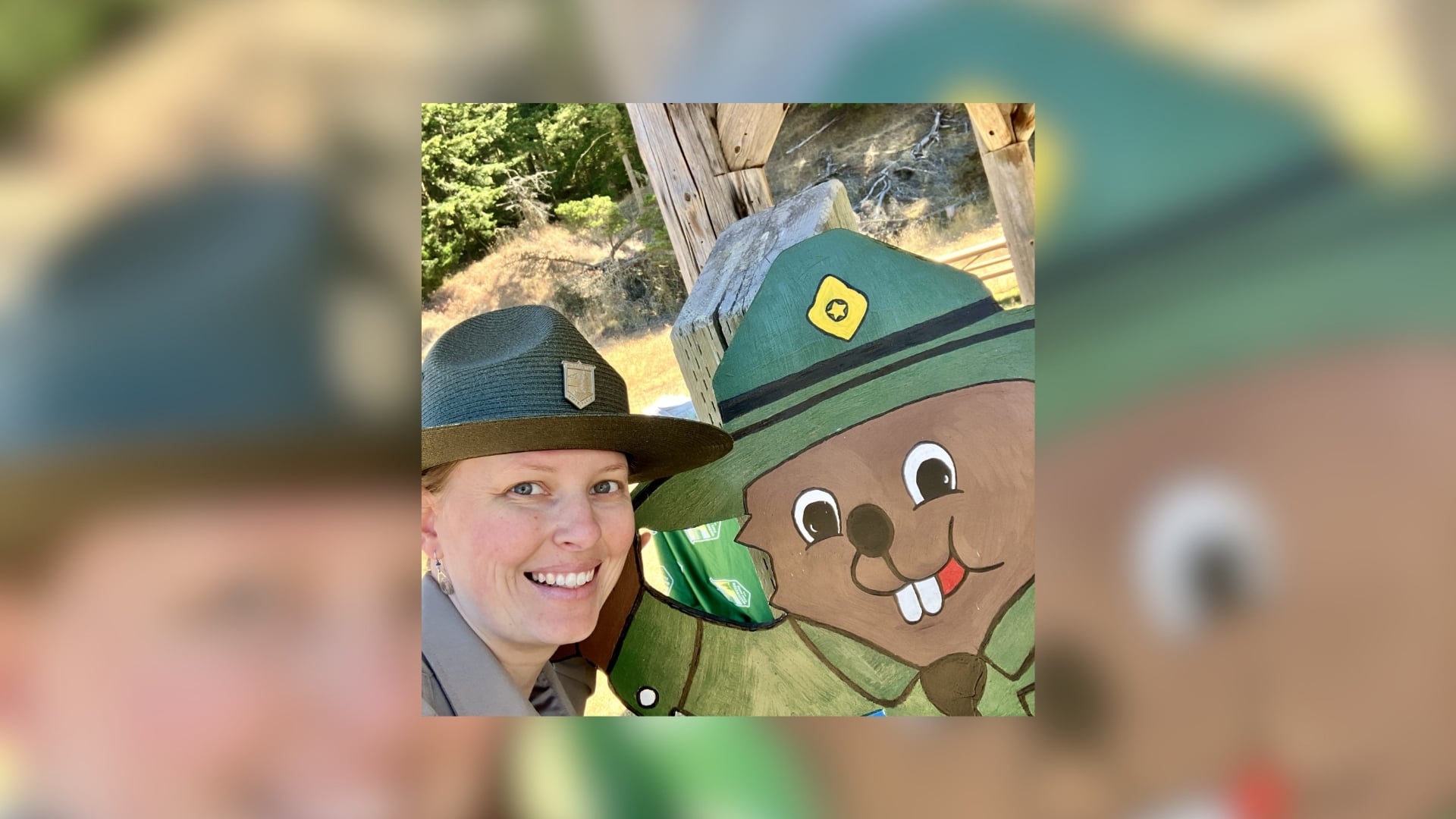
Kelsey Lang has one of the stranger commutes in Washington State Parks. She walks. She lives in ranger housing at Fort Flagler, which means her daughter grew up with a historic coastal fort for a backyard.
Interpretive specialist is the job title on paper. In practice she introduces herself to visiting kids as Ranger Kelsey, because that is what she looks like and it saves a long explanation. She describes herself as the educational ranger, and it fits.
She directly oversees two museums, the one at Fort Flagler and the Commanding Officer’s Quarters at Fort Worden. She also helps care for the Rothschild House in Port Townsend, which State Parks co manages with the Jefferson County Historical Society, and she works across what the agency calls the Olympic View area, which takes in Fort Townsend as well.
None of that was the plan. Kelsey grew up in central Florida, an hour north of Orlando. Her degree is in marine science with minors in biology and geology, and her early career ran through the ecotour industry, water quality monitoring, bird rookery surveys and seagrass beds for the Florida Department of Environmental Protection. Her husband is one of those people who genuinely loves rain, so he went looking for the rainiest place in the country that also had mountains. Washington came up. They applied for years, and when a job finally landed during COVID they moved with a dog who could not fly and a U Haul driven by a hired stranger.
The best story in this episode is a ceiling beam. The Fort Flagler museum sits in the old quartermaster storehouse, the building where the Coast Artillery kept supplies for the soldiers and families stationed out on Marrowstone Island. Across one beam in one of the rooms there is a scatter of greasy fingerprints at different heights.
A volunteer anthropologist spotted them a few years back and worked out the likely story. There was a lot of downtime in a storehouse. The men were at the end of an island with no bridge and no ferry off it. They finished their tasks, greased up their fingertips, and found out who could jump the highest.
“What do a group of guys do when they get bored? They have a jumping contest.”
Nobody has ever cleaned it off. Visiting kids still line up under the beam and try it, and it is higher than it looks.
The other thing most visitors walk straight past is happening underground. The concrete gun batteries have been aging for more than a century, rain works down through the cracks and pulls calcium carbonate out of the concrete, and it is recalcifying on the inside as stalactites and stalagmites. There are also flowstones, sheets that look like frozen waterfalls running down the walls. At Fort Flagler the drainage was altered when anti aircraft emplacements were added, so the seepage is heavier and the formations are bigger. Caves are forming inside the fortifications.
Much of the rest of the conversation is about how you make a museum feel like a place rather than a display case. Kelsey rebuilt both collections around human stories, pulled from oral histories and memoirs left by the families who actually lived at the forts. She built the scavenger hunts by following her eight year old daughter around each museum and writing down everything that caught her eye at that height, which is why adults find them unexpectedly hard. On the third floor of the Commanding Officer’s Quarters you can write an entry in the commander’s log, look out over the parade grounds through vintage style binoculars, and put on a parasol or a fake mustache at the selfie station.
There is also a footstool whose legs are literal deer legs with the hooves still attached, and a rug in the guest bedroom made from used silk underwear. Both are real, both are easy to miss, and both are on the scavenger hunt.
The conversation ranges wider than the two forts. Kelsey explains how the Junior Ranger program actually works and why adults keep asking for a version of their own, and she and Scott get into why so many Washington parks stay underappreciated despite the numbers. Her advice on that is the line worth keeping.
“The next time you pass a park sign, turn off down that road, go check out the park. Just do it. Because a lot of times they say, wow, I cannot believe all these years I have driven past it and never stopped.”
Fort Flagler, Fort Worden and Fort Casey together made up the Triangle of Fire, the three forts built to guard the entrance to Puget Sound. This episode is a good argument for treating the two on the Olympic Peninsula as more than a view and a picnic table.
A note on two numbers you will hear. Washington State Parks recorded more than 40 million visits in 2025, not the 36 million quoted from the sign in the episode, and Fort Flagler has 116 individual campsites rather than the 150 plus estimated in the conversation. Kelsey’s campsite pick, site 37 in the upper forested loop, is real and is worth the walk for the spacing between neighbors.
Kelsey Lang Fort Flagler and Fort Worden Ranger Episode Transcript
Scott Cowan [00:00:04]:
Welcome to the Exploring Washington State Podcast. My name is Scott Cowan, and I’m the host of the show. Each episode, I have a conversation with an interesting guest who is living in or from Washington State. These are casual conversations with real and interesting people. I think you’re going to like the show, so let’s jump right in with today’s guest. Well, I got to admit, everybody, I’m really rusty. Haven’t done this in 6 months. Kelsey, thank you for being the guinea pig.
Kelsey Lang [00:00:35]:
Absolutely.
Scott Cowan [00:00:35]:
I guess I could kind of blame you because you’re the one that reached out to me and said, hey, you don’t have links to these 2 things, put them on there. So anyway, so Kelsey Lang is an Interpretive Specialist II with Washington State Parks. Kelsey, welcome.
Kelsey Lang [00:00:53]:
Thank you.
Scott Cowan [00:00:54]:
First question I got for you just off the bat is, you know, every organization has titles, job titles. You know, we’ve got park rangers, we’ve got interpretive specialists. Are you a park ranger?
Kelsey Lang [00:01:05]:
Yeah. Um, so an interpretive specialist is technically what my job title is. However, I am dressed like a park ranger. I do summer programs with kids and introduce myself as Ranger Kelsey because That’s what I look like. So I kind of combine the titles in order to help people understand what it is that I actually do and just call myself an interpretive ranger because it kind of blends the 2 roles. I’m like the educational ranger, basically, is how I describe it. All right.
Scott Cowan [00:01:43]:
So I told you I was going to give you a chance to introduce yourself and I just threw you off with this first question. But What little I know about you is that you grew up in Florida and now you’re living on the Olympic Peninsula. Connect those 2 dots for me.
Kelsey Lang [00:02:01]:
Yeah. So my husband and I, we both grew up in Florida. And when we started a family, we realized that we didn’t want to put roots down in Florida. We were ready for literally the exact opposite. We wanted a new adventure. And though neither of us had ever been to Washington, that just seemed like where we should be in all the research we did. So for years, we tried applying to jobs and trying to make it work so we could get out here. And this job came up, applied, and here we are.
Scott Cowan [00:02:39]:
All right, well, Another question here. So Central Florida, to me, that seems like— is that like Orlando?
Kelsey Lang [00:02:48]:
Yeah, we grew up like an hour north of Orlando. Okay.
Scott Cowan [00:02:51]:
All right. So Disney World and all that stuff, and you went to college there. Florida and the Olympic Peninsula are very similar, obviously. I mean, just, they’re very similar.
Kelsey Lang [00:03:04]:
Basically the same place.
Scott Cowan [00:03:06]:
Yeah. I mean, hello. No, but all kidding aside, how does somebody living in Florida know to be looking at Washington State jobs?
Kelsey Lang [00:03:16]:
Um, gosh, it’s hard to think back on how I started that journey. Well, I think a lot of it had to do with we started thinking about the physical landscape of Florida. I grew up going to the Georgia mountains and like the Smoky Mountains, really liked that sort of environment. And for my husband, he’s one of those strange individuals that absolutely loves the rain. So when he looked up where’s the rainiest place that also has mountains, obviously Washington pops up. Kind of.
Scott Cowan [00:03:55]:
Yeah, kind of does.
Kelsey Lang [00:03:57]:
I think that’s kind of how the journey started, was just thinking about the physical aspects of the state. And, uh, yeah, that there’s just so much diversity to the ecosystems out here. And the, the weather is a big part of it for us. Having grown up in that heat, we were done with it. So, okay. Yeah.
Scott Cowan [00:04:23]:
So not that your husband’s a part of this, but what does he do? What is his employment?
Kelsey Lang [00:04:29]:
He is a stay-at-home dad. He homeschools our daughter.
Scott Cowan [00:04:33]:
Right on. Very cool. Very cool. So now per this public-facing bio, you packed up and moved from Florida to Washington State during COVID So you’re one of those brave souls that was out in public during COVID I’m guessing you— did you drive out here in a U-Haul or did you— how did you guys make the move?
Kelsey Lang [00:05:02]:
A combination. We packed everything in a U-Haul and we hired a guy who drove that for us because we also have a dog who’s Boston Terrier pit bull mix. So she can’t fly on an airplane. And we had all this stuff, but we weren’t sure about driving out ourselves doing the cross-country journey. So we flew, had all of our stuff transported and our dog. Um, but yeah, COVID was a really interesting time because all these years of, you know, trying to find a job out here, um, there started towards the middle to end of COVID a lot of jobs were popping back up. And that’s when I was like, now’s the time, I think, right? Um, so I started putting my name out there and it just worked. Okay.
Scott Cowan [00:06:02]:
You, from what I understand, you are the interpretive specialist for 2 state park museums.
Kelsey Lang [00:06:11]:
Yeah, it’s a little more complicated than that. There’s several museums, but 2 that I directly oversee. Yeah.
Scott Cowan [00:06:19]:
And that’s Fort Worden and Fort Flagler, correct?
Kelsey Lang [00:06:22]:
Yes.
Scott Cowan [00:06:23]:
Okay. And just out of curiosity, the other ones that you’re involved with, which ones are those?
Kelsey Lang [00:06:28]:
Yeah, so we also have the Rothschild House in Fort Townsend that’s associated with both Washington State Parks and the Jefferson County Historical Society.
Scott Cowan [00:06:41]:
Okay.
Kelsey Lang [00:06:41]:
So it’s a co-managed facility. They do like the day-to-day stuff, but we work together on the, you know, larger interpretive exhibits and the maintenance of the historic house and all of that.
Scott Cowan [00:06:57]:
Okay.
Kelsey Lang [00:06:58]:
Yeah. So we have the Rothschild House, the commanding officer’s quarters at Fort Worden, and Fort Flagler’s Museum. And then there’s also the Port Townsend Marine Science Center over at Fort Worden, which I don’t directly have anything to do with, but we collaborate on programs and stuff from time to time.
Scott Cowan [00:07:23]:
Yeah. This is the impossible question, and I’m saying this totally joking with you, okay? But which one’s your favorite? Which museum’s your favorite?
Kelsey Lang [00:07:32]:
Oh man. You can pass.
Scott Cowan [00:07:34]:
You don’t have to.
Kelsey Lang [00:07:35]:
I’m kidding. Yeah, it’s like kids, right?
Scott Cowan [00:07:38]:
Yeah, that’s why I asked you, because it was an impossible question. I was doing that. But of the 2, which one do you find yourself spending more time at?
Kelsey Lang [00:07:48]:
It has varied over the years.
Scott Cowan [00:07:50]:
Okay.
Kelsey Lang [00:07:51]:
The way that I work, I kind of pick a task and I focus in on it for a while. So initially I spent more time at Fort Flagler’s museum and then the following year focused more on the commanding officer’s quarters. And I’ve got them up to better quality, I feel, as far as their displays and how we’re Protecting the artifacts in the museum and the stories that we’re telling. And so now I’m kind of splitting my time pretty equally between the two.
Scott Cowan [00:08:24]:
And based on this public-facing profile, it may be out of date, so the next question may not be applicable. Are you using ranger housing at Fort Flagler?
Kelsey Lang [00:08:35]:
I am, yes.
Scott Cowan [00:08:37]:
So you live at Fort Flagler?
Kelsey Lang [00:08:40]:
Yes.
Scott Cowan [00:08:41]:
Unfortunate. The view there is just So I’m sorry you have to look at that. Oh my gosh. That’s got to be kind of cool. I mean, that’s got to be— and your kid growing up in that environment, I think you may be doing them some harm, honestly. You’re really kind of setting the bar really high for them. I mean, when you think about this, here, go play at the state park with these, all these things. So let’s just start with Fort Flagler and the museum there.
Scott Cowan [00:09:09]:
And you said you took a year at each of these basically, and you got them up to snuff. What do you mean? Elaborate. What was— and before you elaborate, what, if any, qualifications did you have to— so what was your background to get this job? I mean, this is— were you a Museum? I don’t know. Did you have museum programs in Florida? I mean, what’s your background? And so how did you land this cool-sounding position?
Kelsey Lang [00:09:47]:
Yeah, my career has been very interesting in that I’ve worked in many facets of the environmental field. My degree is actually in marine science with minors in biology and geology. So museum doesn’t immediately jump out at That, you know, not really. Yeah, not really. Um, but I started off in the ecotour industry in Florida, um, working for concessions and the National Wildlife Refuge and Parks. Um, and I worked for the Florida Department of Environmental Protection and did like water quality monitoring, bird rookery monitoring, um, studying seagrass beds and all that sort of stuff. Um, so went from, you know, kind of like your, your eco tour to your science, and then I went into education as an interpreter and program specialist. Um, so I’ve kind of wiggled around, um, but I, I did come with some experience working in interpretive centers.
Scott Cowan [00:10:54]:
Okay.
Kelsey Lang [00:10:54]:
Um, which museums and interpretive centers are slightly different. Um, But there’s some overlapping qualifications there. But a lot of what I’ve done with the museums, I’ve had to learn. We have a curator of collections for state parks, Alicia, and I’ve worked very closely with her to learn protocols for how to handle our artifacts and how to preserve them properly, display them properly. So this position has really grown my knowledge tremendously.
Scott Cowan [00:11:31]:
Okay. Okay. So you started with the Fort Flagler Museum, spending most of your time there. Was it in— I mean, I don’t want to say it was in disrepair, but what have you done to it? How have you made it a better experience for the public?
Kelsey Lang [00:11:49]:
Yeah. So Fort Flagler’s museum is really kind of been— it’s been a grassroots sort of progress, starting with rangers and admin staff at Fort Flagler back in the day and volunteers jumping in to help. And because we had all of these cool things left over by the military, and then over time people started donating stuff to us too. And back in the day, they thought we should have a place to show people all of this cool stuff, right?
Scott Cowan [00:12:22]:
Right.
Kelsey Lang [00:12:23]:
So it was very unofficially pieced together, still providing a really cool experience for people to see these things that otherwise they would not have been able to see. So my main goal when I got here was to start with organizing what we have on display, putting like items together to create a thematic display, a thematic experience. And then I started doing research surrounding those objects, trying to find stories that would relate to them to really sort of bring that human connection to what you’re looking at. So largely what I’ve done there is just rearrange the artifacts on display to create a more thematic experience, add in some more human stories. And try to make it an exciting experience for all ages. Uh, we have a scavenger hunt that people can do, which I put together with my daughter a few years ago. I followed her around the museum and I wrote down everything that stood out to her, you know, from her eyesight.
Scott Cowan [00:13:38]:
How old was she about that, about that time?
Kelsey Lang [00:13:41]:
She was roughly about 8 years old when we did that. About 8.
Scott Cowan [00:13:44]:
Okay. So that’s kind of a cool age, very curious and Yeah. All right. Very good.
Kelsey Lang [00:13:48]:
Yeah. And so the way that I designed the scavenger hunts is based on her perspective of the museum, a kid’s perspective. And I associated pictures as well as like some questions. So depending on the age level that grabs the scavenger hunt, you know, they don’t necessarily have to be able to read. You know, the parents can direct them to find the pictured object, right? But if they’re older or if you’re an adult that grabs the scavenger hunt, you can challenge yourself a little bit more by trying to answer the questions on there. And I have found that it’s actually quite challenging for adults to do this, even though it was designed for kids. And you would think, okay, I can do this, right? A kid can do it, I can do it. But because she was looking from a lower perspective, you know, the kids’ eyes see things differently than what we do as adults.
Scott Cowan [00:14:45]:
Right.
Kelsey Lang [00:14:45]:
So it’s kind of fun to have the adults come in and do it too and actually get a little bit challenged by it.
Scott Cowan [00:14:55]:
All right, well, on the Fort Flagler Museum page, on the state’s page here, well, I got a couple of questions. Number one, the Junior Ranger packet. What’s going on with that? How are we getting kids? What’s the state parks doing? to engage kids?
Kelsey Lang [00:15:15]:
We have a lot of different avenues to engage kids, and the Junior Ranger program is definitely one of them. So when you come in the museum and ask us about our Junior Ranger program, which we have a flyer, you know, telling people, so you don’t have to come already knowing about it, we have these booklets that are designed for kids to teach them about parks. What is state parks? What do we do at state parks? What types of ecosystems do we have within our park systems? What type of, or what can you do as far as stewardship to help our parks? So the goal of the Junior Ranger program is to try to teach kids about the importance of parks.
Scott Cowan [00:16:05]:
Okay.
Kelsey Lang [00:16:05]:
And it’s got various types of activities. There’s another scavenger hunt in there that kids can do. Uh, and when you complete the number of pages equal to your age, you can earn a little badge. And so that’s super fun.
Scott Cowan [00:16:19]:
What’s interesting to me is I’m, I’m on the Junior Ranger page and in the last 18 months or so, I’ve done a I would like to think that I’m fairly knowledgeable about the parks and what’s kind of, you know, I mean, more than the average guy off the street. I can tell you that there’s about 146 state parks, blah, blah, blah, boom. And I can kind of go, there’s, I think, 14 of them on the Columbia River. I can rattle off a bunch of stats and facts. And I’m looking at this junior ranger thing, which I was not, I’m a little old for it. I mean, I have to do like 60+ pages to get a badge. I mean, that’s just not fair.
Kelsey Lang [00:17:00]:
We need to make a bigger book. I know, come on.
Scott Cowan [00:17:01]:
You got You got to have a senior program now.
Kelsey Lang [00:17:05]:
Right.
Scott Cowan [00:17:05]:
But I’m looking at— this seems like a massive amount of parks that are participating in this. I had no clue. I’m like looking at these going, wow. And I haven’t been to a fair number of these. Not that you’re going to— do you know anything about Brooks Memorial?
Kelsey Lang [00:17:24]:
I have been to Brooks Memorial. Yeah, it’s a beautiful state park. Actually reminds me a lot of Georgia, oddly enough.
Scott Cowan [00:17:32]:
Really?
Kelsey Lang [00:17:32]:
Where parks I used to go to growing up. Yeah.
Scott Cowan [00:17:35]:
Okay. So I mean, I’m looking at these going, I mean, these, some of these are very cool parks. I mean, that I’ve been to that, like, I, I love Fort Worden. I think I, I went to Fort Worden as a kid and, and, and I think that’s probably my first experience at a state park many, many years ago. Um, predating The Officer and the Gentleman popularity that it, it had that boom, I think, you know, because of that movie. But I’m looking at some of these going, I’ve never, I’ve never been here. I’ve never been here. And I’m like, this is cool.
Kelsey Lang [00:18:01]:
Yeah.
Scott Cowan [00:18:03]:
So can a kid— so is each Junior Ranger booklet for the specific park?
Kelsey Lang [00:18:12]:
Not necessarily.
Scott Cowan [00:18:14]:
Okay.
Kelsey Lang [00:18:14]:
Some of them do have specially designed booklets for their parks.
Scott Cowan [00:18:20]:
Does Fort Flagler and Fort Worden have specially designed books, booklets?
Kelsey Lang [00:18:23]:
We do not. We have the standard Junior Ranger booklet, and there’s been a lot of behind-the-scenes talks about maybe updating our Junior Ranger program. We’re not quite there yet, but your, your comment about a senior book is something that’s on our mind too, because—
Scott Cowan [00:18:40]:
Large print, please.
Kelsey Lang [00:18:42]:
Large print. Not just kids want to earn that badge. We recognize adults want to too, but we want to keep those booklets for the kids that come. But yeah, we, we’ve been thinking about how can we expand the program and maybe reach more audiences. Yeah.
Scott Cowan [00:19:00]:
So at either of these 2 parks, at Flagler or, or Worden, uh, do you guys do the first day hikes there? Do you have— are you okay? So I went on my first, first day hike this year at, um, at Steamboat Rock. Okay. And I think the reason all the adults were there is they wanted that pin. I mean, they were like there for the pin. And I think people were like cutting in line to get their— I’m kidding. But, you know, they were like, I’m going to get my pin. And if they go out, I’m going to get the pin. And that was wonderful.
Scott Cowan [00:19:32]:
That was the first time I’d done that. And my wife and I went and it was really cool. And nothing says fun like walking around in January in Central Washington, you know, luckily the weather was really mild. But in fact, it was so mild that the ones that had the snowshoeing, they didn’t do it because there wasn’t snow on the ground.
Kelsey Lang [00:19:51]:
Right. Oh, wow.
Scott Cowan [00:19:52]:
But I think this Junior Ranger booklet, the fact that you may be, you know, considering a senior something to engage adults— we’ll call it adults, let’s be fair, it’s just adults, you don’t have to pick on me— um, and, you know, all the things that the parks are doing to— I don’t want to say— well, I’m going to use the word market too. I mean, I, I, it, but it’s like I think that the Washington State Parks are underappreciated because of under-awareness.
Kelsey Lang [00:20:30]:
Yeah.
Scott Cowan [00:20:30]:
Some of the parks— I interviewed the park ranger at Lake Chelan and he told me, and I was flabbergasted, 1,000 campers a night during summer. They have 1,000 people camping at that one park in a night. And I was just like, Yikes. That’s just crazy to me, right?
Kelsey Lang [00:20:51]:
Yeah.
Scott Cowan [00:20:51]:
But some of these parks you go to— and I went— have you ever been to, um, Fort Simcoe?
Kelsey Lang [00:20:57]:
I haven’t been to Fort Simcoe yet, no.
Scott Cowan [00:21:00]:
I was the only person there. I was walking, I was walking around the park, and it’s got some really cool, you know, old buildings, kind of like, you know, of the period a little earlier than Fort Worden and all that, and There was nobody. No, there was— I couldn’t go in the buildings. They’re set up, but they weren’t— they were closed to the public that day. And but I’m the only person walking around this, this park. And not that it should have been packed, that wouldn’t have been fun either. I mean, but it’s like, I just feel like they’re underappreciated. Have you been to Sacagawea?
Kelsey Lang [00:21:32]:
I haven’t been to Sacagawea yet either. No, I haven’t explored most of the eastern side of the state actually.
Scott Cowan [00:21:39]:
It has nothing to do with where you’re at weather-wise. Okay, so Sacagawea is in Pasco, so Tri-Cities. Fun fact for you, Tri-Cities gets less rain annually than Phoenix, Arizona.
Kelsey Lang [00:21:53]:
Wow.
Scott Cowan [00:21:53]:
Okay, so it’s desert. It’s, you know, it’s desert. And Sacagawea is right at the confluence of the Snake and the Columbia. It’s got great water views. The museum there is really cool. The one last time I walked through that museum, it was me and one other person.
Kelsey Lang [00:22:12]:
Oh my goodness.
Scott Cowan [00:22:13]:
They’re not, you know, they’re— I feel like they should—
Kelsey Lang [00:22:16]:
I—
Scott Cowan [00:22:16]:
it’s not like I’m not— this isn’t a complaint, okay? This isn’t like, you guys need to do more. It’s more needs to be done. People, people need to hear about these parks. Yes, Worden’s popular, um, Deception Pass, and nobody goes there, right? Um, but Or what’s the other one I’m thinking of? Cape Disappointment. Those don’t need promotion, if you will. But Alta Lake, for example, that’s a really cool one that’s by me and beautiful on the lake. There’s a golf course right next to it if you’re into golf, all these things, right?
Kelsey Lang [00:22:53]:
Mm-hmm.
Scott Cowan [00:22:55]:
So I love the fact that the ranger booklet there is to get kids excited, So that maybe when mom and dad, or mom says, hey, we’re gonna go to Birch Bay, and, uh, and say, I don’t want to go, they’ll be excited to go and it’ll be more fun for everybody that goes, right?
Kelsey Lang [00:23:13]:
Yeah.
Scott Cowan [00:23:13]:
So I love this that you guys are doing this stuff. So very cool.
Kelsey Lang [00:23:17]:
Yeah. And I, I’d like to add, I think you can download the Junior Ranger booklet online if I remember correctly. And so there is a mail-in option. You can mail in your completed pages to earn your badge or bring them in to whatever park is closest to you. Okay, so really people of all ages can do the booklet. It’s designed for kids, but if you wanted to earn your badge, you could print off those pages and go down to your local park and say, hey, I did it. Right.
Scott Cowan [00:23:52]:
No, and this is cool. I didn’t— I just clicked on the link where I can, um, I’m looking at the booklet now, the, you know, And, uh, yeah, this is cool.
Kelsey Lang [00:24:01]:
Yeah. Um, I, I would say too that as I’ve been trying to get more in-person programming at the parks in my area, which is what we call the Olympic View area, so it also covers, um, Fort Townsend, for example. Um, so Fort Worden, Fort Flagler, Fort Townsend are the biggest parks that we have here. One of the comments that I hear frequently is, we’ve seen the sign as we drive down the highway, but we’ve never actually been out here. And a lot of times they’re locals that are saying that too. So my recommendation is the next time you pass a park sign, turn off down that road, go check out the park. Just do it. Because a lot of times they’re like, wow, I can’t believe all these years, you know, we’ve lived down the road or I’ve driven past it on my way to work and I’ve never stopped.
Kelsey Lang [00:24:59]:
So just do it.
Scott Cowan [00:25:02]:
So I’m on the kids thing, right? And so here I tell you that I think more of us need to know about this. There’s a statement, whatever the raccoon’s name is, that’s the mascot.
Kelsey Lang [00:25:13]:
I think it’s— is that Belle maybe?
Scott Cowan [00:25:15]:
I don’t know, but Belle sign. More than 36 million people visit Washington State Parks each year. That’s crazy. That’s a lot of people. And yet I can go to Fort Simcoe and be by myself.
Kelsey Lang [00:25:26]:
Right.
Scott Cowan [00:25:27]:
So I think— and you can go different times of year.
Kelsey Lang [00:25:31]:
The park—
Scott Cowan [00:25:32]:
well, you live at Fort Flagler. It changes.
Kelsey Lang [00:25:36]:
It does.
Scott Cowan [00:25:36]:
So I am going to put you on the spot. You have to answer this question. Do you promise to answer this question?
Kelsey Lang [00:25:40]:
I promise.
Scott Cowan [00:25:41]:
You live at Fort Flagler. What’s your favorite season of the year to be there?
Kelsey Lang [00:25:47]:
My favorite season is the fall.
Scott Cowan [00:25:51]:
Okay.
Kelsey Lang [00:25:52]:
And why? Specifically when the rain starts coming back in and the fog starts coming back in. Ooh, the rain. It slows down. It gets really quiet. The fog makes it all moody and cool. Okay. All right.
Scott Cowan [00:26:09]:
What about Fort Worden? What’s your favorite season for Fort Worden?
Kelsey Lang [00:26:13]:
For Worden, probably summer. There’s just a happy vibe during the summertime, even though that’s the busiest time of year. The beaches are just so beautiful. That water is so inviting and everybody’s just having a good time. It’s really nice to see.
Scott Cowan [00:26:35]:
It’s interesting that you You almost went, not polar opposites, but you like the moody, I’m going to make fun of you, dreary fall. And yet you like the summer over here. So it’s like it kind of balances out. Okay.
Kelsey Lang [00:26:53]:
All right.
Scott Cowan [00:26:55]:
2 questions, same question, but for 2. And I’m going to ask this for both parks. So question number 1, what’s something about the Fort Flagler Museum that you think everybody should know about? What’s overlooked by most visitors? What’s the secret? Something secret, not secret, but you know what I’m saying? What’s underappreciated that you think needs to be showcased?
Kelsey Lang [00:27:25]:
Sure. Really good question. I think One of the coolest things in that museum is part of the building itself. It’s not even an artifact that we have on display. In one of the rooms, across a beam on the ceiling, there are a bunch of greasy fingerprints.
Scott Cowan [00:27:52]:
Okay.
Kelsey Lang [00:27:53]:
So the building itself was the old quartermaster storehouse during the Coast Artillery days. So that’s where they kept all of their supplies for the soldiers and the families that lived out there. That was their storehouse. So there’s been a— we had an anthropologist serve as a volunteer a few years ago, and he found these fingerprints, got really excited about them. And of course, we’re speculating here. We don’t actually know the story behind it, but— He said it’s very likely that there was a lot of downtime for these soldiers working in the storehouse. And so what do a group of guys do when they get bored? They have a jumping contest. And so when you look at the beam, you see these fingerprints at all different levels, and, you know, they’re all kind of like grouped together.
Kelsey Lang [00:28:52]:
So you can really just kind of stand there and picture these bored soldiers living at the end of an island with no escape because there’s no bridge, there’s no ferry back in the day. They finished all their tasks for the day and they’re like, let’s grease up our fingertips and see who can jump the highest, right? It’s just, it’s really cool to stand there. Um, and we’ve had a couple of kids too, you know, kind of jump up and join in on the fun because it looks much higher than it actually is.
Scott Cowan [00:29:23]:
So 2 things. Number one, you’re absolutely correct. I can envision, you know, bored soldiers finding ways of entertaining themselves, right? And, but here’s the question I have is, so that was back in what era? What year do you think this was? You can assign it a year.
Kelsey Lang [00:29:40]:
Sure. It’s tough to say. Um, the, uh, the fort was active right at the turn of the 20th century. So construction started 1897. You know, they would have had their first men there by like You know, if I’m getting my dates correct, maybe 1900, 1902. And then it lasted through 1953.
Scott Cowan [00:30:07]:
So sometime in the last 120 to— 75 to 120 years. And nobody thought to clean the beam?
Kelsey Lang [00:30:17]:
Right?
Scott Cowan [00:30:18]:
That’s where my brain’s going. How come? Not that this is a bad thing. It’s really cool that this is the story. But you guys, you guys made a museum and here’s this beam with greasy fingerprints on it and we leave it. I think that’s awesome. I really do. So that, that’s where my brain went when you were telling the story. It’s like, nobody cleaned this? Okay.
Kelsey Lang [00:30:39]:
Right.
Scott Cowan [00:30:39]:
So the other question, part 2 of this follow-up question is, what’s something about the park in general now that you think has got a cool story that maybe is Overlooked.
Kelsey Lang [00:30:55]:
Okay. Um, okay, so one of the neat— neatest features personally that I think, um, of the batteries is the formations of stalactites and stalagmites. So as the concrete batteries or gun emplacements have been aging, the water from all of our rain is trickling down through the cracks, pulling out all of that calcium carbonate, and it’s recalcifying on the interior as like a cave, as these stalactites and stalagmites. So I feel like those are things we often trip over when we go and explore the batteries, but we don’t really give it a second thought.
Scott Cowan [00:31:45]:
Right.
Kelsey Lang [00:31:47]:
Especially over at Fort Flagler, they did some modification to the structures when they added anti-aircraft gun emplacements, which affected the drainage, the runoff of where the water was going. So we get a lot more seepage through the cracks, and we’ve got some pretty big stalactites and stalagmites growing up from the floor, and then also what’s called flowstones. Which look like these frozen waterfalls coming down the sides of the walls. So I just think that is super cool.
Scott Cowan [00:32:24]:
Now they don’t have greasy fingerprints on them though, do they?
Kelsey Lang [00:32:27]:
No greasy fingerprints over there. Okay.
Scott Cowan [00:32:29]:
All right. I asked this question of the park ranger who is the park ranger at Lake Curlew, Curlew Lake. I don’t know that you’re going to be able to answer this one, but I think it’s, I think if you can, I think it would be fun. First part of the question you should be able to answer. How many camping sites are at Fort Flagler? Approximately, it’s like 130 or so, isn’t it? It’s—
Kelsey Lang [00:32:56]:
yeah, maybe, maybe even more than that, 150 plus.
Scott Cowan [00:33:00]:
Okay. All right. If you were going to camp there, what’s the campsite you want?
Kelsey Lang [00:33:09]:
I definitely want in the upper campground, the forested campground.
Scott Cowan [00:33:14]:
Okay.
Kelsey Lang [00:33:17]:
We just redid the road leading into the upper campground, so 1 through— I think it’s 13— have been completely redone and are really cool. But I personally prefer the ones on the back So I think those are like maybe 30 to 34, something like that. I like the forested ones.
Scott Cowan [00:33:45]:
So you have to pick one. I’m gonna, I’m gonna try to get you. Because he— here’s the thing, this was really funny. He picked one and he described it and why he picked it. So I, I— and I thought that was— I was very surprised that he went to nothing. I hope you go to this much detail, but let’s, let’s see.
Kelsey Lang [00:34:05]:
I have to pull up the map so I can remember which number it is.
Scott Cowan [00:34:09]:
So he picked one and the reason he picked it was it was not— he didn’t pick it because it wasn’t ADA, but he pointed out that it wasn’t ADA. You had to climb up this hill and basically when you got to the campsite itself, you had an unobstructed view of the lake. So from your tent, because it’s a tent site, you had this beautiful— you were just looking out and he sent me a picture from there and it’s like, yeah, this is a great view. So yeah, you can pick one campsite, and we’re gonna, we’re gonna promote this as the ranger’s— ranger pick, tongue-in-cheek, but ranger pick.
Kelsey Lang [00:34:46]:
Okay, I really like site 37.
Scott Cowan [00:34:49]:
Okay, so why?
Kelsey Lang [00:34:51]:
It’s on the back corner of the upper campground loop, and it has the furthest distance between your neighbors, so you, you feel like you’re Alone, you get more of a sense of that sort of remoteness that you might want. I personally want when I go camping.
Scott Cowan [00:35:15]:
Right. And fair enough. Okay, so Site 37, Kelsey approved. We’re gonna put it— we’re gonna have you put a sign up there. All right.
Kelsey Lang [00:35:23]:
All right.
Scott Cowan [00:35:24]:
So Fort Flagler, we started there. Now we gotta move over to Fort Worden. But before we do Fort Worden, I’m gonna mix up my order of questions that I normally ask a guest. Because I think my next question’s going to require a Port Townsend-specific answer.
Kelsey Lang [00:35:39]:
Okay.
Scott Cowan [00:35:39]:
So Fort Worden’s just out of town. You know, it’s town, but it’s just out of town of Port— I think Fort Worden is Port Townsend. I mean, they’re like one and the same to me.
Kelsey Lang [00:35:48]:
Okay.
Scott Cowan [00:35:49]:
So I ask my guests 3 questions every episode. I’m gonna give you 2 of them right now. So I kind of prepped you for this, right?
Kelsey Lang [00:35:57]:
Mm-hmm.
Scott Cowan [00:35:59]:
I love coffee. Port Townsend’s a really cool town. Where’s a great place for me to get coffee in Port Townsend?
Kelsey Lang [00:36:07]:
Okay, so to answer this question, I have to take my ranger hat off because I can’t have favorites as a government employee. But Kelsey’s recommendation is Conduit Cafe. Okay, Uptown. Yep, yep, they’re really cool. It’s like a combo art gallery, um, coffee shop, and they have great coffee, great bagels, and food.
Scott Cowan [00:36:37]:
Okay, if you’re going in there, not in your Ranger garb— just kidding, you can go— what, what’s the beverage that you’re ordering?
Kelsey Lang [00:36:46]:
Oh, I just go for an iced latte. I don’t do anything fancy, just Espresso and milk and you’re good to go.
Scott Cowan [00:36:55]:
All right, all right. Conduit Cafe. Now you may answer the same thing again, but we’ll see. So it’s about lunchtime, and after I’ve had my coffee, I want to grab something to eat. Where’s a great place in Port Townsend to grab lunch?
Kelsey Lang [00:37:07]:
There’s a bunch of good places, but again, my personal opinion, um, I really enjoy Tommyknocker’s downtown and the Whiskey Mill. Both great spots.
Scott Cowan [00:37:23]:
And, um, if you’re going for lunch today, since we’re recording this before lunch, what would you have for lunch today?
Kelsey Lang [00:37:31]:
Hmm, maybe get some of that gooey mac and cheese from Tommyknocker’s. So good. Their bowls are always overflowing. It’s amazing.
Scott Cowan [00:37:42]:
Okay, those were— those suggestions were from Kelsey Lang Yes. And I think, by the way, I warned you, I’m frozen. So this is— you get to look at me now the rest of this episode with whatever.
Kelsey Lang [00:37:58]:
At least my mouth—
Scott Cowan [00:37:59]:
yeah, at least my mouth isn’t hanging wide open. Okay, so let’s go to Fort Worden. That’s probably the one most people are more familiar with. Now, there’s 3 Triangle of Fire State parks, you know, like Fort Casey, Fort Flagler, and Fort Worden. So we’re not going to talk about Casey today because, you know, that’s not in your neighborhood. But Worden, talk about the museum there. What have you— you know, what, what if— is it basically the same thing? Did you curate and get— bring, bring things out? And did you— more importantly, did you take your daughter there to do a scavenger hunt?
Kelsey Lang [00:38:36]:
Yes, I did. Okay. She helped me as well as we have another ranger with younger kids. And so I got their perspective as well and combined all of the ideas to make those scavenger hunts.
Scott Cowan [00:38:50]:
Okay.
Kelsey Lang [00:38:52]:
But the Commanding Officers’ Quarters Museum kind of had a similar start. So there was a local heritage group which was all volunteers back when Fort Worden first became a state park. And they really wanted to preserve that house and turn it into a museum. So they orchestrated most of what you see today, actually, as far as the collection goes. They got donations and went antiquing too. So the nature of the commanding officer’s house is that that’s where the families lived. Right.
Scott Cowan [00:39:31]:
Right.
Kelsey Lang [00:39:31]:
And so between 1904 when the house was built and 1953 when the fort was decommissioned, we had over 30 families that lived in that house.
Scott Cowan [00:39:42]:
Really?
Kelsey Lang [00:39:43]:
Yeah.
Scott Cowan [00:39:43]:
I guess that makes sense though. I mean, that’s— yeah, okay, that’s 50-ish years. Yeah, okay, that makes sense.
Kelsey Lang [00:39:48]:
All right. Yeah. So with, you know, military culture, you get transferred to a lot of places, right? And when you move, you move your stuff. So there’s not very much in the house that’s quote unquote original to the house because each family would have moved their belongings with them. So anyways, I digress a little bit here, but the volunteers put the museum together back in the late ’70s, early ’80s, and ran that for quite some time, and then it eventually transitioned over to the Jefferson County Historical Society, and they had worked with State Parks for many years to open that museum and curate the collection direction. And then I think it was back in 2024, we had a meeting talking about the Rothschild House and this museum and kind of where their direction was headed and our direction was headed. And we both agreed that it would make sense for us if we continued our partnership with the Rothschild House, but then we, state parks, would just— Continue on our own. take over, um, the commanding officer’s quarters.
Kelsey Lang [00:41:01]:
So since then, I’ve been working to change up the, the rooms a little bit.
Scott Cowan [00:41:08]:
Mm-hmm.
Kelsey Lang [00:41:08]:
Um, but primarily my efforts have been in updating the stories told in the house. So almost all of the, the signs and the little display panels have new stories that are either oral histories, quotes from oral histories, or quotes from memoirs that we have. So you get, again, this human connection to the house, to the items in the house. You kind of understand what it was like for people who actually lived at the fort. And I think that has really helped people connect with the museum when they can see what it was like. And there’s some interesting stories there because life at a fort in the military, it was very socially structured. So your family, your officer family life was going to be very different than like your noncommissioned officers. family life, and then very different from the enlisted men.
Kelsey Lang [00:42:19]:
Right. So they had a much higher quality of living. Of course, they had this huge 3-story house, they had electricity, indoor plumbing, which was like, you know, living so well for the early 1900s especially. But we— yeah, there’s a lot of neat stories that have been passed down, either written down or orally recorded. That we’re now sharing with folks.
Scott Cowan [00:42:47]:
I’m looking at one of the photographs and I’m only going to read this one sentence. And it’s in the upper corner of the photo, it says, Anders’ log. So I’m going to guess it says Commander’s log, the little sign. And so you see this journal open on a desktop or a table and it says, dear future reader, It’s May 10th today, Saturday evening. The weather is gloomy and cloudy. I— and there’s more to it. And but I really wonder what was going through that individual’s mind to be documenting every day for a future reader, you know?
Kelsey Lang [00:43:34]:
So It’s, it’s really interesting that you point out that picture in particular because that is actually, um, an interactive station in the museum. So that is something that a park visitor wrote.
Scott Cowan [00:43:50]:
Oh, yeah. So it’s not some commander back in the 1930s writing this. It was— okay.
Kelsey Lang [00:43:59]:
Yeah, but that’s not as cool.
Scott Cowan [00:44:01]:
I was making up this story in my head about, you know, the The fort’s commander, and it’s gloomy on Saturday. And anyway, okay.
Kelsey Lang [00:44:09]:
But I think that entry is so perfect because we, we put a few writing prompts up to try to get people like in that mindset. What would people have been journaling about back in the day? So you can come in and, you know, pretend to be the commander or, you know, just look out the window and from your own perspective, what do you see right then? But Yeah, we’ve been fortunate to have a handful of memoirs and stories that are shared in addition to then you being able to record your own story in the house.
Scott Cowan [00:44:46]:
And the other thing I have to point out is there’s a photo here, and it’s got— and so you’ll know which photo I’m talking about. It’s a There’s some, like, I don’t know what they are, um, but it’s the— it’s got the writing prompts, uh, piece of paper. Okay. And so there’s some stamps or something below it. Oh, what are those?
Kelsey Lang [00:45:12]:
They’re silhouettes. Um, yeah, so we, we wanted to kind of, um, I had an intern a year ago and we wanted to put some silhouettes up on the windows. So as you’re—
Scott Cowan [00:45:26]:
Oh, no, no, no, that’s not what I’m talking about.
Kelsey Lang [00:45:28]:
Oh, no?
Scott Cowan [00:45:28]:
The metal things.
Kelsey Lang [00:45:31]:
Oh.
Scott Cowan [00:45:31]:
Laying on— they almost look like binoculars.
Kelsey Lang [00:45:33]:
Oh, they are. Yes, those are binoculars. They’re, um, like vintage style, so those are fun to play with. They’re not actually antique, they’re just in the antique style.
Scott Cowan [00:45:45]:
Okay.
Kelsey Lang [00:45:46]:
Um, but we have this room on the 3rd floor of the museum where you can sit down at the commander’s log and write your own entry. You can Look out over the parade grounds with the binoculars. And then there’s a selfie station too. So we’ve got some dress-up items. We’ve got some fans and a cane and a parasol and, you know, a few other things, mustaches that you can play dress-up with and take some photos. So we’re trying to, we’re trying to bring life into the museum because a staged house museum can be very stiff. static. It can be something that you just walk in, you walk out.
Kelsey Lang [00:46:26]:
But we’re trying to appeal to wider audiences, make it interactive, and breathe a little bit of life into it.
Scott Cowan [00:46:33]:
So my takeaway from this photo, though, was what an unfortunate view to look out of.
Kelsey Lang [00:46:37]:
I know.
Scott Cowan [00:46:38]:
I mean, you’re looking out over, like you said, the parade grounds and the barracks on the other side. I stayed in those barracks across the, across the parade grounds. I was a camp counselor for my school district when I was in my junior my summer between junior and senior year of high school, and the 6th graders got to go to Fort Wharton. So imagine 300 or 400 6th graders running around that place for a week with us being in charge of them. I mean, anyway, we stayed in the barracks across the playgrounds from this view. And it’s just an unfortunately beautiful view. It’s a magnificent The park’s beautiful. I love Fort Worden.
Scott Cowan [00:47:21]:
All right, so new question to put you on the spot, but I’ll let you answer it for either Fort Flagler or Fort Worden. But famous people, have there been— were there any famous military people of notoriety that we are aware of that were Stationed at either of these 2 places? Folks, I don’t prepare these questions. They pop into my head. The guest just has to suffer. Sorry, Kelsey. This is the way my brain works.
Kelsey Lang [00:47:56]:
I wouldn’t say there was anything, anyone like truly famous. The Coast Artillery Corps was such a niche chapter of the Army’s history. Its heyday was really late 1800s to early 1900s. As soon as airplanes were in existence, their purpose really kind of evaporated because they’re designed to protect against ships, right? Not airplanes. So because it was such a short history and we didn’t have any Like, major— we didn’t have battles. There was never any war between our forts and an enemy, excuse me. So a lot of this history that we present has been widely unknown to people. So no.
Scott Cowan [00:49:01]:
So no, you know, Teddy Roosevelt didn’t make an appearance, or we Are we aware of? And I would think over that many years that a president, it would be very likely to me that a president would have gone there. I mean, especially if he went out to Fort Lewis at that time. Now it’s JBLM, but it was Fort Lewis back then.
Kelsey Lang [00:49:21]:
Yeah, I don’t know actually the answer to that question. It seems like they would have at some point. And these forts were across the country. They weren’t just here in Puget Sound. So it’s possible that a president or a much more widely known general, um, had visited, uh, these forts, um, whether here or more likely somewhere else. But I don’t actually know.
Scott Cowan [00:49:46]:
Okay, I stumped the park ranger.
Kelsey Lang [00:49:48]:
You got me.
Scott Cowan [00:49:49]:
Wasn’t trying to do that.
Kelsey Lang [00:49:50]:
Um, it happens.
Scott Cowan [00:49:51]:
Yeah, that’s— and, or you could have made something up and I would have gone along with you, by the way.
Kelsey Lang [00:49:55]:
No, I could have said Definitely do that.
Scott Cowan [00:49:58]:
All right, so back to my 2 questions for you. At the Commanding Officers Museum, what’s— we don’t probably have greasy handprints on the beams here, so what do we— what does this museum have that people might just walk past, that they’re overlooking?
Kelsey Lang [00:50:19]:
Well, the scavenger hunt points out a few really cool items. that people typically overlook. One of the weirder things we have is our footstool in the commanding officer’s study. And it is quite literally a footstool in that the legs of the stool are made of deer legs. They even have like the little hooves on them still.
Scott Cowan [00:50:49]:
Oh, that’s not creepy. That’s not creepy at all.
Kelsey Lang [00:50:52]:
Right? That’s a really interesting piece. And then we also have a rug in the guest bedroom called a moss rug, and the scavenger hunt asks, what is a moss rug made of? And our little display answers that question, which is moss rugs are made of used old silk underwear. Oh, so people use their resources wisely back in the day. Uh, they didn’t, they didn’t have a lot, and when things break, you find new uses for them, right? You’ve probably heard of like rag rugs.
Scott Cowan [00:51:38]:
Yeah, my mom has lots of them.
Kelsey Lang [00:51:40]:
Yeah, yeah. But yeah, people are always looking for a green mossy rug, and it’s, it’s like black and red and It’s made of silk undies. I—
Scott Cowan [00:51:52]:
that may be the most bizarre thing you’ve shared this entire, entire episode. And that’s, that’s— I— you could have asked me that question and you, you know, no, I would have— no, no, no clue. No clue. Okay, so this— we kind of did a look back at your, you know, you got these museums I don’t want to say put back together. That’s not the right word, but you’ve been updating and curating and trying to move the user experience forward all the time.
Kelsey Lang [00:52:25]:
Mm-hmm.
Scott Cowan [00:52:27]:
What’s the next year or 2 look like? What do you hope for? You might not be able to say anything, but what do you hope for? Fort Flagler got something that you— please tell me you’re not going to clean up the greasy fingerprints.
Kelsey Lang [00:52:41]:
No.
Scott Cowan [00:52:42]:
Okay, cool. But what’s on the horizon for these 2 museums?
Kelsey Lang [00:52:50]:
Both need some really big work done. The commanding officer’s quarters, we have a long maintenance to-do list for upkeep, like the paint on the walls and both interior and exterior. So that’s probably where our efforts will go in the future for a while at that museum is just a lot of slow, painstaking maintenance work. And then over at Fort Flagler, my long-term goals is really to completely redo the museum. So I’ve I’ve been working on plans, you know, behind-the-scenes plans to try to get us to that point. But that’s gonna be a long time coming. Okay.
Scott Cowan [00:53:45]:
All right. In an effort to be fair, I asked you about your favorite camp spot at Fort Flagler. What about Fort Worden?
Kelsey Lang [00:53:55]:
Hmm.
Scott Cowan [00:53:55]:
Have you camped at Fort Worden before?
Kelsey Lang [00:53:58]:
I actually have not camped at Fort Worden. So I’d have to go just based off of looks.
Scott Cowan [00:54:08]:
Sure, that’s okay.
Kelsey Lang [00:54:09]:
Um, let me once again pull up my map here so I can remember all of the numbers. Down at the beach campground, there’s on the, the far end of the loop sites 38 and 39 are right next to a little pathway that lead directly out to the beach itself.
Scott Cowan [00:54:36]:
Okay.
Kelsey Lang [00:54:37]:
And the vegetation is kind of high on the backside of them, so it blocks a lot of that wind that comes from the north, which is nice.
Scott Cowan [00:54:49]:
Um, so wind is nice, or are you saying that blocking the wind is nice?
Kelsey Lang [00:54:52]:
The blocking of the wind is nice. It can get Quite strong there in the evening. Yeah, all throughout the summer too, not just in the winter. It really picks up. So those ones are kind of nice because they— there you get sort of that natural shelter from the vegetation, and then you’ve got a walkway directly to the beach next to your site, which is fun.
Scott Cowan [00:55:12]:
Okay, I’m gonna wrap this up because we could go on and on, but let’s wrap this up.
Kelsey Lang [00:55:18]:
I’m gonna—
Scott Cowan [00:55:18]:
I never asked this question before, so this is a new one. Let’s see how it lands. Which park would your daughter pick?
Kelsey Lang [00:55:30]:
Ooh, she probably would have a hard time answering because she always has a hard time giving me a straight answer when it comes to picking a favorite something. But if, if I get into her mind, she would probably say Fort Worden because that’s closer to where all of her friends live. So then there’s potential for her friends to come hang out.
Scott Cowan [00:55:54]:
Well, and what a great place for the kids to hang out at. I mean, hello. Wow. All right. Okay, so we’ll, we’ll wrap this up, but before I ask you the final big, big question, when you’re not being an interpretive park ranger, what do you like to do? So you kind of live out there in the Olympic Peninsula, there’s not a lot to do outdoors there. I mean, it’s—
Kelsey Lang [00:56:21]:
I’m kidding.
Scott Cowan [00:56:23]:
So what do you guys like to do? What have you found that’s been cool and different? Well, I mean, just the fact that we have elevation is different than Florida. So what do you guys like to do when you’re off duty?
Kelsey Lang [00:56:40]:
Yeah, that’s a really Good point. The fact that we have elevation is— it will never get old for us growing up in such a flat place. So we’re pretty simple in that everything excites us. We really like to get out and explore the area locally. So we’ve just within like an hour to 2-hour sort of radius, have been slowly visiting all of the parks and natural areas that we can. So that’s what we do. We get out, we go outside, we enjoy that elevation, enjoy the rain.
Scott Cowan [00:57:24]:
Yeah, okay, so you’re just— that’s just— no, I’m just kidding. I mean, there are people that actually enjoy the rain. And even though I live in Wenatchee, I grew up in the Tacoma-Puyallup area, so I’m very familiar with the west side. Is there a state park that you haven’t been to yet that you— is on the must-see list for you?
Kelsey Lang [00:57:48]:
Oh boy, I really would like to visit all of them. Um, we’ve— as we’ve been driving, like I said earlier, when we see a sign We look it up and go check it out. So there’s not really a structured to-do list for what is next. It just kind of depends on where we’re heading. We recently went down and visited Millersylvania and Rainbow Falls, and I think it’s called Tolmie, which—
Scott Cowan [00:58:27]:
Yeah.
Kelsey Lang [00:58:27]:
Those were all Absolutely incredible. Um, really cool histories to those parks too. Um, yeah.
Scott Cowan [00:58:35]:
Okay.
Kelsey Lang [00:58:36]:
Just slowly trying to see them all.
Scott Cowan [00:58:38]:
All right. So here’s the question I warned you about. You agreed. I’m going to remind you, you agreed that you would answer this question no matter how hard it is for you, right?
Kelsey Lang [00:58:49]:
I agreed.
Scott Cowan [00:58:50]:
Okay. And you have to answer it, but you also have to give a reason why.
Kelsey Lang [00:58:55]:
Okay.
Scott Cowan [00:58:56]:
Okay, so there’s— I’m setting the ground rules. Are you ready?
Kelsey Lang [00:58:58]:
Ready.
Scott Cowan [00:58:59]:
Cake or pie?
Kelsey Lang [00:59:03]:
Cake. I, I love icing so very much. And that is a part of cake. But I also love bread. Like, bread is a huge weakness for me, and cake is just sweet bread. So Cake.
Scott Cowan [00:59:22]:
And if you could pick one cake, what would it be?
Kelsey Lang [00:59:26]:
Oh shoot, that’s an even harder question. There’s so many good cakes. Uh, it depends on my mood too. I don’t know, I’m kind of feeling a spice cake right now.
Scott Cowan [00:59:42]:
Spice cake.
Kelsey Lang [00:59:42]:
Okay. Yeah. All right.
Scott Cowan [00:59:44]:
See, some people can answer that question just like Boom. Other people are like, you’re asking me to pick between my left arm or my right arm.
Kelsey Lang [00:59:51]:
Right.
Scott Cowan [00:59:52]:
Other people are like, it’s cake, and I will fight you if you disagree with me. You know, it’s so funny to get these answers from people. I will say, and I keep— I’ve been saying this for more than a year, I need to go back through all the episodes and keep track. of what people’s answers are.
Kelsey Lang [01:00:16]:
Yeah, we need a tally. Put it up on your website. Who’s winning?
Scott Cowan [01:00:20]:
Yeah, well, I— well, there’s no winning here, right? There’s no— there’s no— there’s no— well, there’s no losing here, okay? There’s no losing here. I do think, just because I’m the one that asks the question every time, right? So I’m present for the answers. I think pi’s winning. Oh, and I think Apple pie is winning as the number one choice.
Kelsey Lang [01:00:45]:
Okay.
Scott Cowan [01:00:46]:
I do not recall anybody saying spice cake.
Kelsey Lang [01:00:51]:
Oh.
Scott Cowan [01:00:51]:
So I do not— there’s been plenty of people say cake, but— and plenty of people say frosting. Okay, so I mean, you know, right there you would have been just like in the, in the second tier of, you know, apple’s gonna still probably win, but right after that you’re probably frosting and cake.
Kelsey Lang [01:01:05]:
Nice.
Scott Cowan [01:01:05]:
But spices, probably you are in a category of 1 at this moment. Probably my guess. And there’s no wrong answer. Well, actually, there is. Pumpkin pie is wrong. I’m sorry. It’s just, it’s just wrong. There’s, there’s no way I’ll ever agree that that’s OK.
Scott Cowan [01:01:20]:
But, you know, it’s my show. It’s my questions. I get to, and, you know, I get, but you, you’re entitled to your opinion. And as long as it’s not pumpkin.
Kelsey Lang [01:01:28]:
That’s awesome.
Scott Cowan [01:01:32]:
What didn’t I ask you that I should have? Is there anything you want to leave the listener with as we wrap this one up?
Kelsey Lang [01:01:41]:
Yeah, go on to Washington State Parks’ website, parks.wa.gov, and check out our events calendar because in addition to the museums, we also have free public events that are going to be happening starting in my parks mid-June and running through August. So we’ll have in-person junior ranger programs, we’ll have evening programs like ranger talks or campfire talks, and you’ll also see some pop-up exhibits and pop-up programs happening throughout the summer as well. So keep an eye on that events calendar. I try to keep it up to date so you always know what’s happening, um, if we have an event or program. And yeah, come find me in the parks, learn something new.
Scott Cowan [01:02:39]:
Okay. I, I really appreciate your time. I’m looking at the events calendar right now and I’m gonna— I’m kidding when I say this, but Gardner Cave monopolizes the calendar.
Kelsey Lang [01:02:52]:
Yes, there’s more than just the cave. The cave is amazing though.
Scott Cowan [01:02:56]:
I know, but I’m laughing because we used to have an events calendar on the website, right? And we were pulling in date— they weren’t pushing it out. This is no shade. I’m not throwing shade, but we were pulling in and they run the tour multiple times a day. So we’d have Gardner Cave tour, Gardner Cave. People were like, what the heck is going on here? And I’ve never been there, and I want to go up there and check that one out. I think that would be pretty cool.
Kelsey Lang [01:03:27]:
Yeah, absolutely.
Scott Cowan [01:03:28]:
But I’m looking at yours and everything that you guys got canceled right now because of some construction work.
Kelsey Lang [01:03:35]:
Yeah, yeah, I’m pretty bummed about that. Um, we were, we were hoping to open up the historic hospital at Fort Flagler to the public this summer. We had moved in game tables. We have pool table, we have air hockey table.
Scott Cowan [01:03:52]:
Oh.
Kelsey Lang [01:03:53]:
Yeah, because the hospital started off as a hospital, but in the later years turned into a rec center for the soldiers. So we were trying to provide that as a fun public opportunity, but unfortunately the there’s an issue with the decking around the hospital, and that had to all be ripped up, and it’s gonna take pretty much the whole summer.
Scott Cowan [01:04:18]:
So these are, these are 100-plus-year-old, 100-plus-year-old buildings. I mean, they, they, they’re— I don’t want to say they’re fragile, but they are. They constantly need maintenance. So you will always have maintenance. Something at your parks will always be under Oh, absolutely.
Kelsey Lang [01:04:38]:
Yes. But keep an eye out for that opportunity because once this gets fixed, we want to provide it.
Scott Cowan [01:04:44]:
Awesome. That’d be really cool. That’s, that’s kind of cool that you’re turning it into that. So, well, Kelsey, thank you for sitting down with me today. Um, I really enjoyed this and continue your, your good work. Those are 2 great parks. Once again, the Washington State Parks in general are just— I haven’t been to one that’s— I’ve been to some that aren’t like Have you ever been to Peshastin Pinnacles?
Kelsey Lang [01:05:05]:
No.
Scott Cowan [01:05:06]:
So it’s right off the highway into Wenatchee, right? And it’s, it’s these— it’s this really cool rock formation there, but you got to be in shape to probably really enjoy Peshastin Pinnacles. It’s, it’s for like rock climbers. Well, I’m— okay, you know, my idea of rocks is gravel in my driveway that I walk on. I mean, so I’m not— that’s not my wheelhouse, but it’s a really cool park for that, but not for me. But all these parks have, across the state, every park that I’ve been to has got something really cool. And as I get to talk to more park rangers and interpretive specialists and people with the park system, every one of you has had some really cool stories to tell. And I just, I just think it’s fascinating. So thank you again for taking time to sit with me today.
Kelsey Lang [01:05:53]:
Absolutely. Thank you.
Scott Cowan [01:05:56]:
Hope you enjoyed the show. You can reach me on Twitter @ExploreWAState. I’d love to hear your comments. You can also visit our website at explorewashingtonstate.com. If you know anyone who would like the show, it’d be amazing if you’d share the show with them. This is the biggest way that we grow this show, good old word of mouth. Glad you were here with me today, and I hope to have you listening to the next episode. See you then.
Scott Cowan [01:06:21]:
See you then.
Before you go
That is the whole idea behind the Explore Washington State Card. Free to carry, with a little something waiting at participating places when you visit. Your zip code is a vote for which towns we sign up next, and our weekly Washington travel newsletter starts landing right away.
Get your free card- About the Author
- Latest Posts
Explore Washington State has been covering the real Washington for more than a decade. State parks, small towns, back roads, rest stops, and the people who make this place worth exploring. What started as a hyperlocal project covering individual communities grew into a full media project with more than 340 podcast episodes, a weekly newsletter with over 6,200 subscribers, and coverage of all 146 Washington State Parks. The content here comes from people who have actually been to these places: locals, regulars, and lifelong Washington residents who care more about getting it right than getting clicks.


