25 Things to Do in Washington This Fall
Fall is the best season in Washington and it’s also the one that catches people out. The weather turns on a Tuesday, the light gets good, and some years the smoke rolls in and changes the plan you made three weeks ago.
So this list is built to survive that. Twenty five things in three groups: what to do when the sky is clear, what to do when it isn’t, and what to eat while the harvest is on. Almost none of them depend on one specific weekend or one specific road being open.
Print it, stick it on the fridge, and see how many you get through before the clocks change.
Part of Our Washington Things To Do Guide
This fall list is one season of a bigger guide. Our things to do in Washington State hub covers the whole year: state parks, coast towns, museums, farmers markets, bookstores and the places worth a drive, browsable by season and by interest.
When does fall actually start in Washington
Depends who you ask, and the two answers are three weeks apart.
Meteorological fall starts September 1, which is the one that matches how the weather behaves here. The equinox lands in the third week of September, which is the one the calendar uses. In practice most of Washington gets its real turn somewhere in between: the first genuine rain after the dry months, and the first morning you can see your breath.
East of the Cascades it arrives earlier and leaves faster. On the coast it barely arrives at all until October, and then it stays until May. If you want it month by month, we keep a Washington in September guide.
Get Outside
Ten things for the days the sky is clear.
Pick apples at a working orchard
There’s a difference between an orchard that sells apples and an attraction that sells an apple experience, and you’ll know which one you’re standing in within about a minute. A working orchard has a sorting line running, bins stacked four high, and somebody who’ll tell you that this row is better than that row and why. Go in October when the later varieties come in. Ask what they’re picking today rather than what’s on the sign, because the sign was printed in August.
Walk a beach in a storm coat
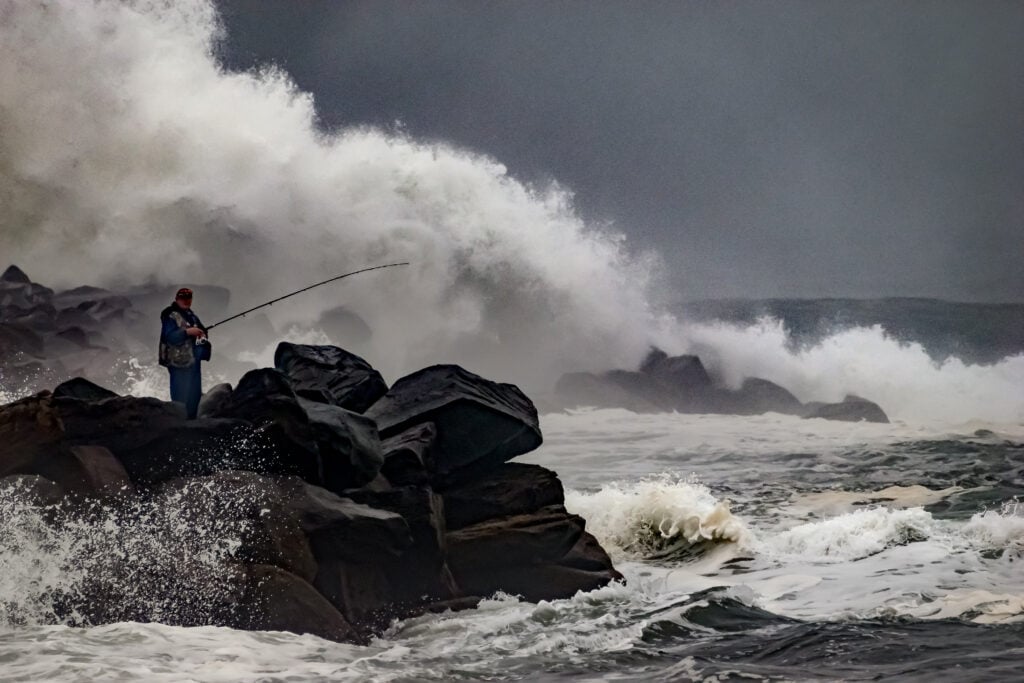
The coast is better in October than it is in July and almost nobody agrees with that yet. The crowds are gone, the light goes low and interesting by three in the afternoon, and the weather people avoid is the thing worth showing up for. Wind, driftwood, a horizon that turns gray and silver instead of blue. Take the coat you actually own rather than the one that looks good, and check the tide tables before you plan a long walk, because a beach that’s wide at ten can be gone by two.
Watch salmon climb a fish ladder
This is the most reliably good free thing to do in Washington in the fall, and it works in the rain, which matters more than it sounds. Salmon run the ladders from roughly September into November depending on the river and the species. You stand at a window below the waterline and watch fish that went to the ocean and came back throw themselves upstream. Kids who are bored by scenery are not bored by this. Go on a weekday morning if you can, because the viewing windows are small and a weekend crowd means waiting your turn.
Hike to a waterfall after the first real rain
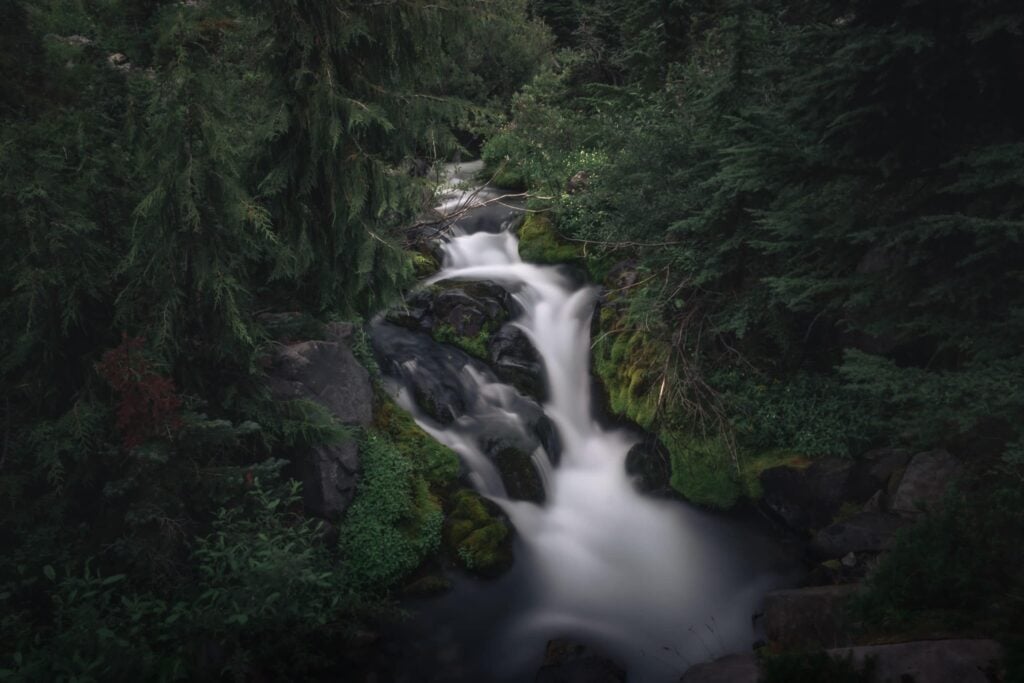
Washington waterfalls in late summer are often a thin trickle over a rock that was clearly something better once. Give it two days after the first real fall rain and the same trail is a different place. Pick something low elevation so you’re not fighting early snow, and expect mud. What you get is volume and sound without the summer parking problem, and moss that looked tired in August has gone green again.
Ride a ferry with no plan for the other side
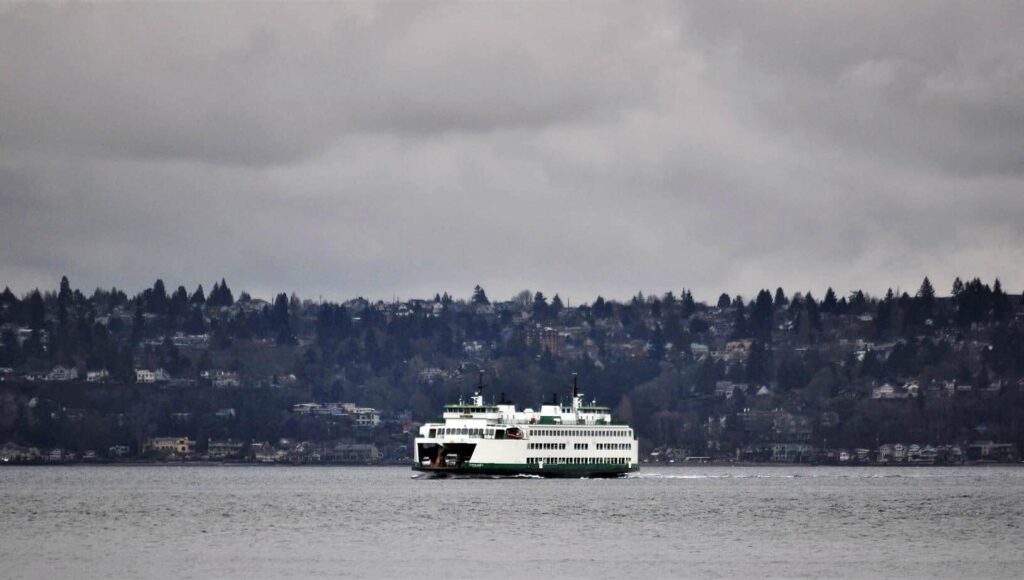
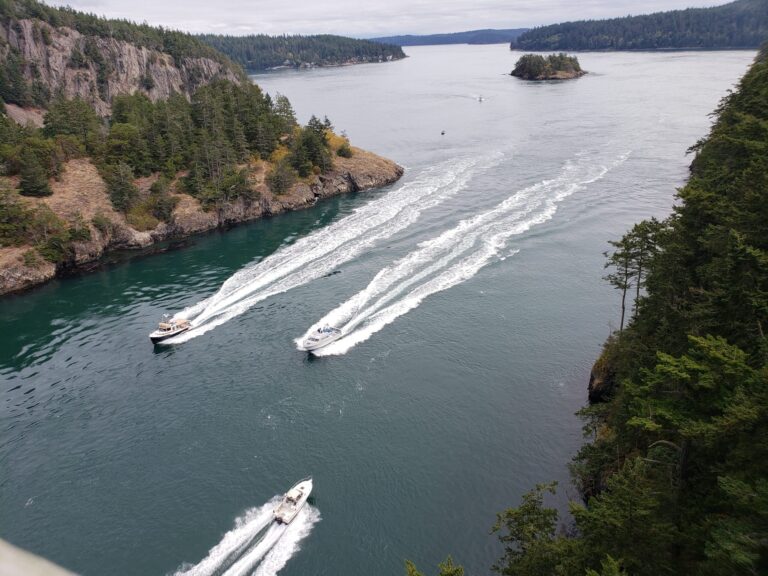
Buy a walk on ticket, get on, and figure out what happens next when you land. The ferry system’s at its best in fall when the deck isn’t full and you can stand outside without waiting in line for a spot at the rail. Take the crossing for the crossing. Walk off, find somewhere to eat, walk back on. It’ll cost you an afternoon and not much money, and it’s the easiest way in this state to feel like you went somewhere without driving three hours to do it.
I did this once to Vashon with no plan beyond getting off the boat. I walked the shops, drank coffee, then drove the rest of the island and sat around in its parks. It was the whole afternoon and it cost me a ferry ticket.
Get lost in a corn maze after dark
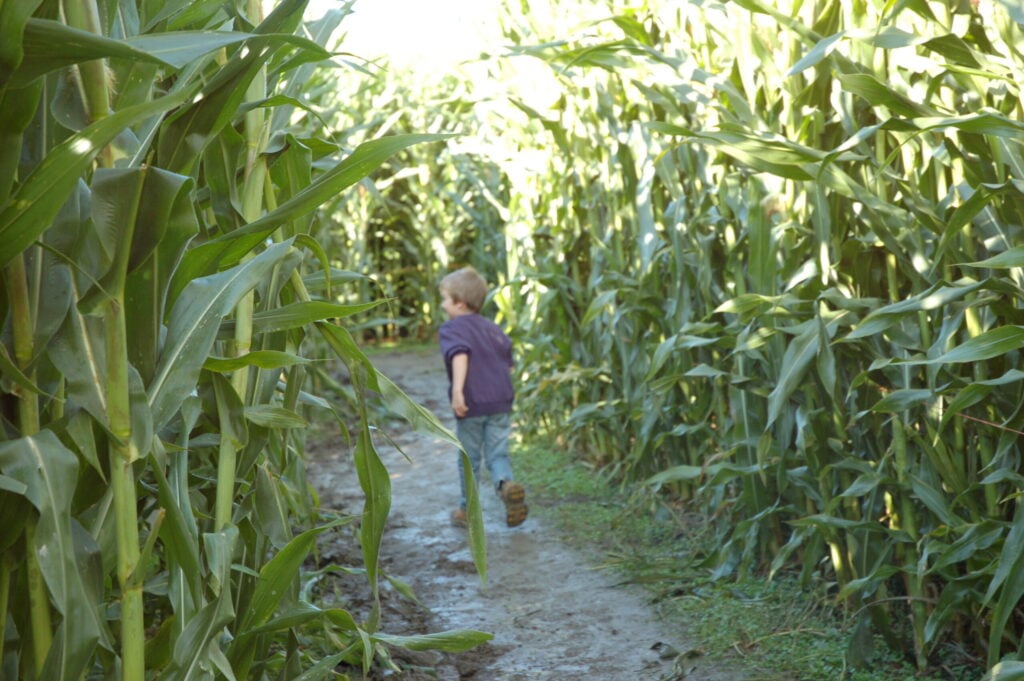
A corn maze in daylight is a pleasant twenty minutes. The same maze after sunset with a flashlight is a different thing entirely, and most farms run flashlight nights through October. Corn’s taller than you are and sound doesn’t travel the way you expect, so a group splits up faster than anyone plans for. Bring a real flashlight instead of a phone, because you’ll want the battery later, and wear boots you don’t mind ruining.
Drive a larch route while they’re gold
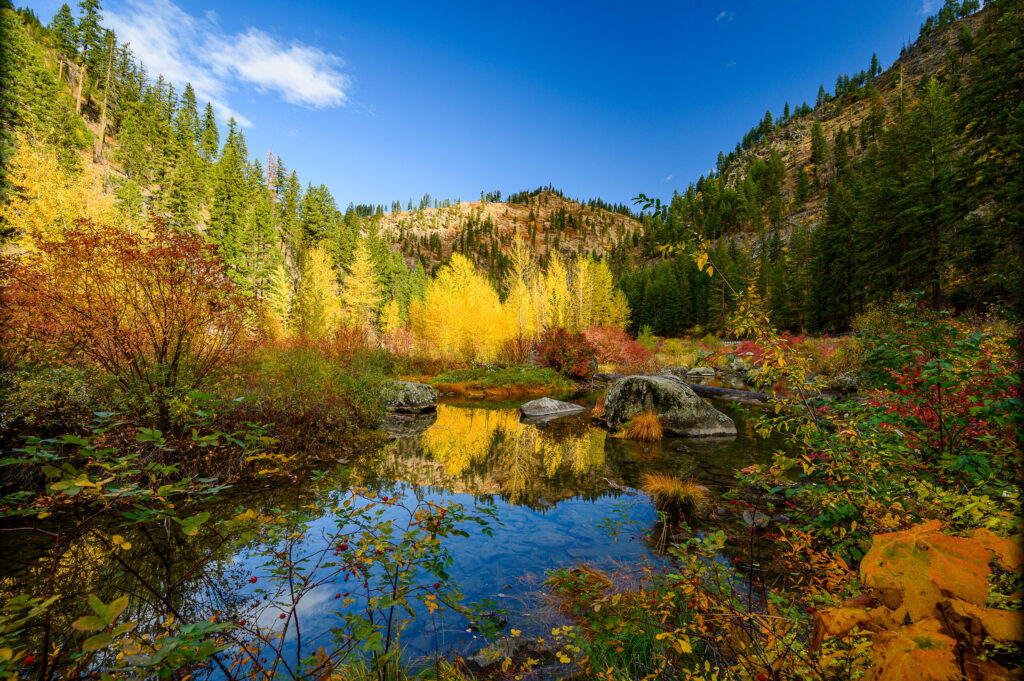
Larches are conifers that turn gold and drop their needles, which isn’t what a conifer is supposed to do, and Washington has them in the high country east of the Cascade crest. The window’s short, usually late September into the middle of October, and it moves with elevation and with the year, so treat any date you read as a rough guide and not a promise. Check current travel conditions before you commit to a route, because access up high changes fast this time of year. If color is the whole reason you’re going, our fall foliage guide goes deeper on where and when.
Stand somewhere high enough to see the first snow on a volcano
There’s a morning every fall when the mountain is suddenly white again and it wasn’t the day before. You don’t need to climb anything to see it. Plenty of ordinary places give you the view: a city park, a highway pullout, a parking lot on the right side of town. The trick is knowing where your local one is before that morning shows up, because the clear window after the first snow is often a day or two before the weather closes back in.
Watch hydroplanes race on a mountain lake
Hydroplane racing in Washington usually means Seafair, unlimited boats and a crowd on Lake Washington. This is the other version and it’s the better one for a day out. The Pearrygin Lake races run October 3 and 4 at Pearrygin Lake State Park outside Winthrop: smaller boats, a small lake with mountains on every side, and close enough that you watch from the bank with a chair and a thermos instead of from behind a fence a quarter mile off the water. Racing runs 11am to 4pm both days and watching costs nothing.
Two things nobody tells you. Campsites at Pearrygin go early for this weekend, so book ahead if you’d rather not drive back over the pass in the dark. And watching is free but parking isn’t: this is a state park, so you’ll need a Discover Pass on the dash, which is $45 for the year or $10 for the day. The annual one pays for itself in five visits and you’ll use it again before spring.
Spend a day in a town you’ve only ever driven through
Everyone’s got three or four of these. Towns on the way to somewhere else that you’ve passed forty times and never once stopped in. Pick one and give it a whole Saturday. Park once and walk. The rule that makes this work is that you’re not allowed to leave until you’ve eaten a meal and been inside at least three buildings. Most of these towns turn out to have one genuinely good thing in them, and nobody doing fifty five on the way through ever finds it.
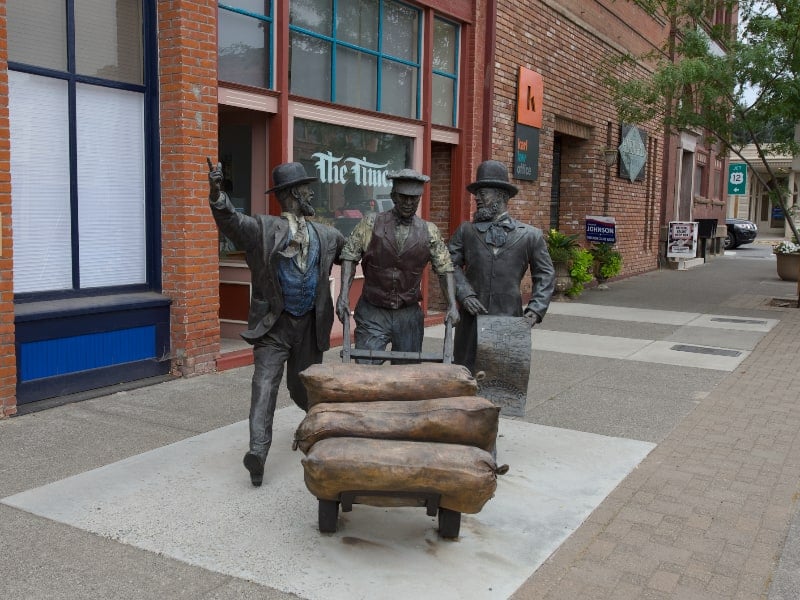
Waitsburg is mine. I stopped on a whim and spent an hour just looking at storefronts that somehow read as modern and retro at once. The coffee and the sandwich were fine and I could not tell you now where I got them. What stayed with me is the public art: bronze figures out on the sidewalk pushing a cart, and more of it around town, in a place small enough that somebody had to decide it was worth paying for.
Get Inside
Eight things for rain, smoke and short days.
Spend an afternoon in an independent bookstore
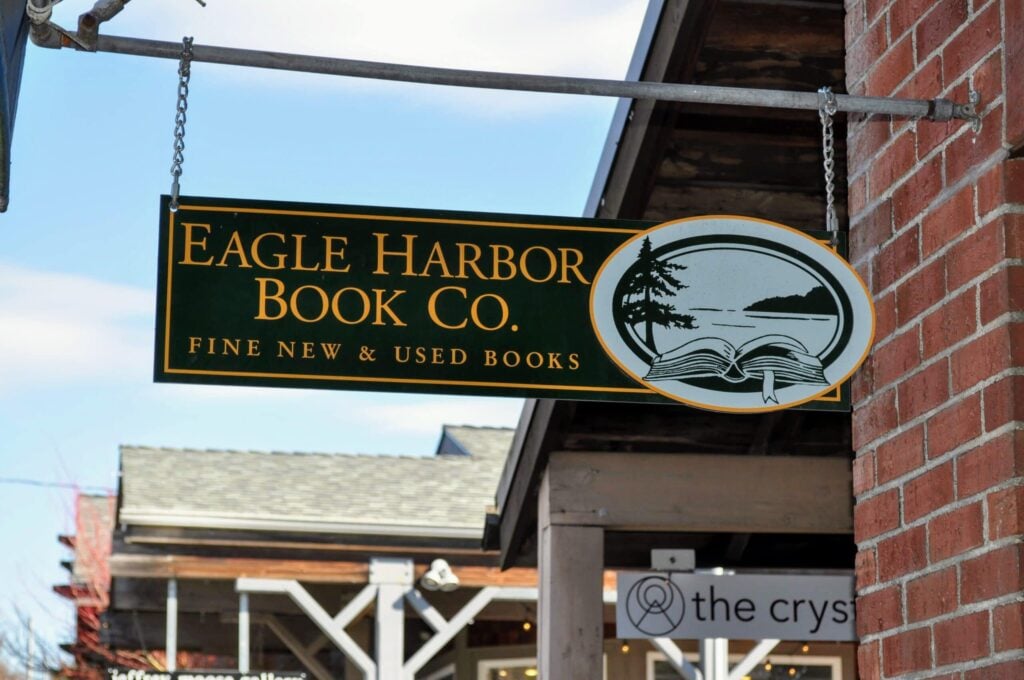
An independent bookstore in a small Washington town does the one thing a search box can’t, which is put a book you weren’t looking for in front of you. Go in without a title in mind. Give it long enough to work, because the find is almost never on the front table. Buy the thing you picked up twice and put down twice. The measure of a good visit is walking out with something you couldn’t have named on the way in. We keep a running list of Washington bookstores if you need somewhere to start.
At A Book For All Seasons in Leavenworth I picked up a hardback of Table for Two by Amor Towles and had no idea he had published it. A Gentleman in Moscow is one of my favorite books ever written, and no search box was going to tell me about this one, because I was never looking for it.
Sit two hours in a coffee shop you’ve never been to
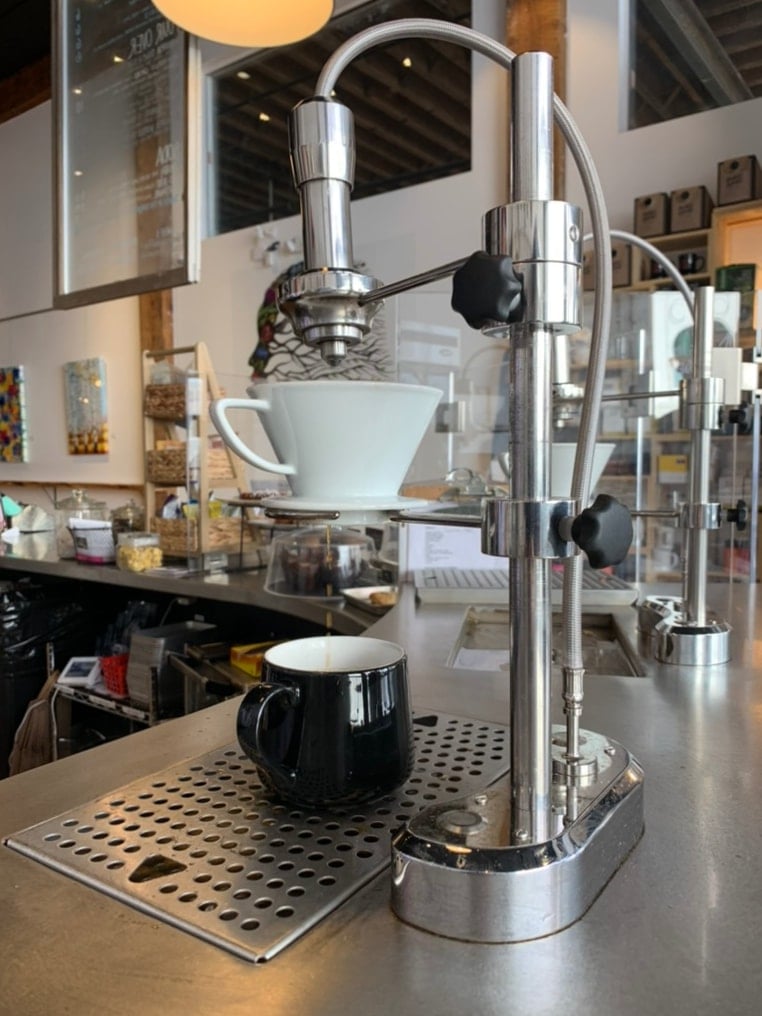
Not a cup to go. Two hours, sitting down, somewhere new. Bring a book or don’t, but the point is staying long enough to notice the place: who comes in, what the staff are like, whether the regulars have a table they think of as theirs. Washington’s got a deep bench of independent coffee shops outside Seattle and almost none of it gets written about. Pick a town, find the one that isn’t a chain, and stay put.
The first time I did this was at First Ave Coffee in Spokane, where the pour over bar is four brewing stations in a row, all chrome, and they grind the beans for your cup while you stand there. Somebody had left a newspaper on the table. I read it.
Visit a small town museum run by volunteers
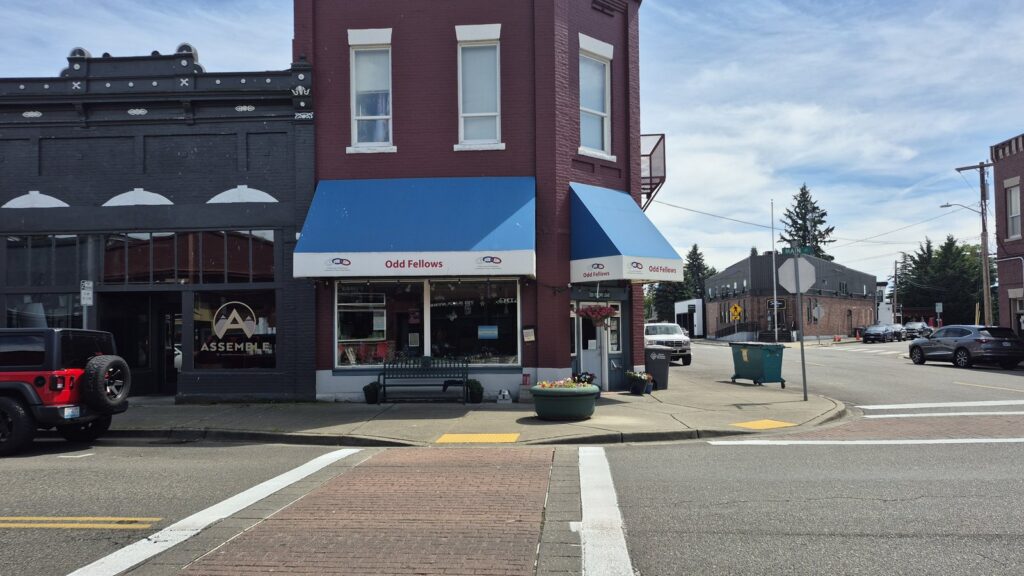
These are usually one room, often in an old bank or a church, staffed by somebody who’s lived in the town their whole life. Admission is a donation jar. Some are the town explaining itself: the fire, the mill, the flood, the family who ran everything for sixty years. Others are one subject, held onto by the people who care about it most. Either way, ask one question and you’ll get twenty minutes. Check the hours before you drive, because a lot of them run on a volunteer schedule and close for the season around the end of October.
The Odd Fellows Museum in Buckley is one room on the ground floor with the lodge hall still working upstairs, and it’s packed with material from Odd Fellows lodges all over Washington. Much of it is old ritual paraphernalia that looks deeply strange if you don’t know the order. I asked the docent one question and got the history of Odd Fellowship in Washington and most of the rest of the world.
Soak somewhere hot while the air is cold
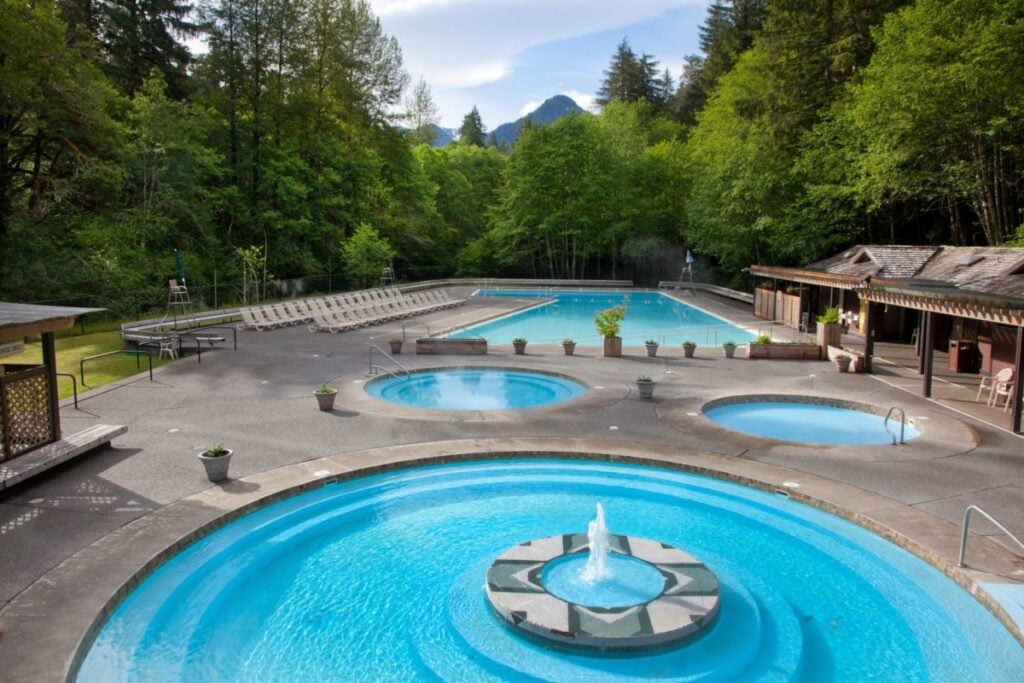
Hot water’s wasted in July. The right time is a cold gray day when the contrast does the work for you. Washington runs the full range from developed resorts to a few basic pools that take real effort to get to. Book ahead for anywhere with a name you recognize, because fall weekends fill up. Go midweek if your schedule allows it, because it’s a completely different experience with four people in the water instead of forty.
See something in a historic theater
Washington kept more of its old theaters than most states, and a lot of them are still working as movie houses, music rooms and community venues instead of sitting dark. See anything. The film or the band is almost beside the point. What you’re there for is the room: the ceiling, the balcony, the fact that people have been sitting in that space since before anyone alive can remember. Look up when you walk in, because that’s where the money went.
Eat at the diner the locals name first
Ask two people in a town where they eat and you’ll get the same answer, and it won’t be the place with the best photos online. Go there. Order whatever the menu is obviously proud of. These places are usually busiest at breakfast and often better then. It’s also the cheapest research you can do on a town, because a room full of locals at eight in the morning tells you more than an afternoon of walking will.
Tour a cidery or a distillery
Washington grows a lot of apples and a growing share of them end up in cider instead of on a grocery store shelf. This is the all weather stop, which is why it’s in this section rather than the one above. Worth knowing before you go: the hard cider in a tasting room is not the fresh pressed cider further down this list. They share a name and very little else. Ask which apples are in the glass and where they grew. It’s a better question than it sounds, the person pouring is usually glad to be asked, and it will change what you notice in the next one. Then buy a bottle before you leave, because a tasting room is where the money actually works for them.
Give one rainy Saturday to a single museum, properly
The mistake is trying to see all of it. Pick one museum, give it a whole afternoon, and make peace with the fact that you won’t see everything. Sit down in front of things. Go back to the room you liked. Washington has serious museums and most of them are quiet on a wet Saturday, which is the best possible condition for looking at anything.
MOPOP in Seattle is the one I’d give a rainy Saturday to. They put it at more than 140,000 square feet across three floors, so you won’t see all of it, which is exactly what makes it right for this. Go to the music and listen to something you’ve never heard of. And book it as a Washington resident: there’s a year round 15% discount on admission, you pick your date and then choose the WA Resident option at checkout.
Eat Your Way Through It
Seven things while the harvest is on.
Stand in a winery during crush and smell it
Crush is the few weeks in fall when the fruit comes in and a winery stops being a tasting room and turns into a working building. Bins, hoses, forklifts, and the whole place smelling like fermenting grapes, which is a smell you won’t forget afterward. The timing moves with the year and the variety, roughly late August into October. Call ahead and ask if they’re crushing this week, because that one question is the difference between seeing it and missing it by four days.
Drink cider pressed the same week
Fresh cider and grocery store cider are two different drinks sharing a name. The fresh one is cloudy, tastes like the apple it came from, and is usually unpasteurized, which is why it has a short shelf life and also why it’s better. Farm stands and orchards press through the fall and sell it by the jug. Drink it cold and drink it soon.
I buy it at farm stands when I remember to, and honestly it’s sweeter than I’d choose. The flavor does pop though, in a way the shelf stable stuff never manages. The better version is to buy a box of apples and press it at home. We’ve done that a few times and with kids around it stops being a drink and becomes the whole afternoon.
Go to an Oktoberfest and stay for the band
Washington does Oktoberfest at every scale from a church hall to an event that takes over a whole town for three weekends. The mistake is treating it as a drinking event and leaving after an hour. Stay for the band. The music’s what turns a beer tent into an evening, and the good ones are genuinely good. Buy the ticket that comes with a seat if there is one, because standing for four hours stops being fun sooner than you think it will.
Buy from a farm stand honor box and leave the money
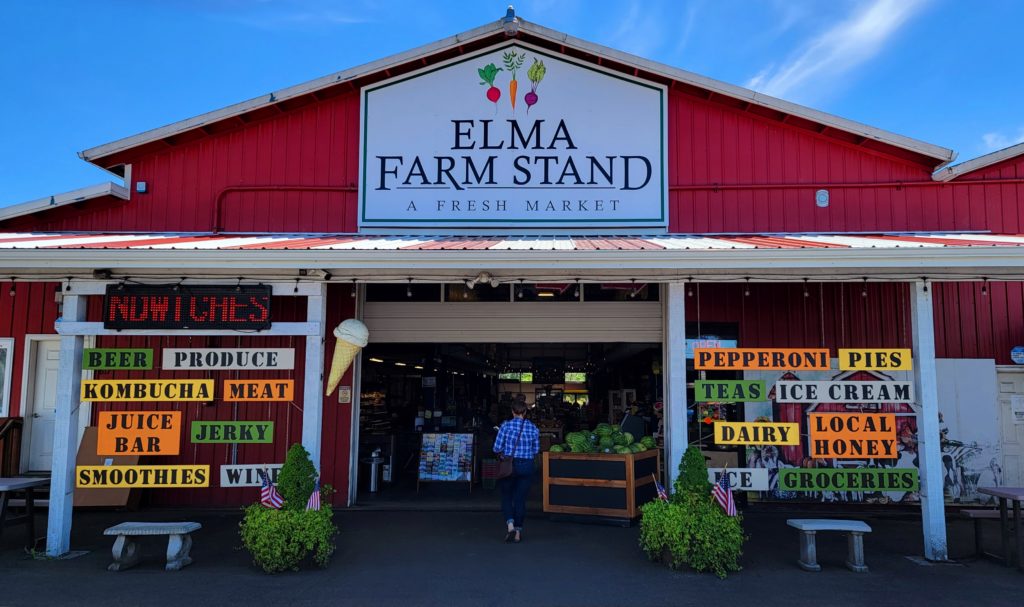
An unattended table with produce on it and a coffee can for the money is a real thing across rural Washington and it’s worth going out of your way for. Take what you want, leave the money, leave the right amount. There’s no better argument for a place than a stand that’s run on trust for years and is still there. Keep small bills in the car through the fall, because the one time you find a good one you’ll have nothing but a card.
Buy a whole box of apples, not a bag
A bag is a snack. A box is a season. Orchards sell bulk boxes and seconds through the fall, and the fruit is better for not having sat in a truck. Ask which variety keeps, because it really does vary: Fuji, Granny Smith, Rome and Winesap are the long keepers. Then give them somewhere cold. The extension services put ideal storage close to freezing at high humidity, which is why an unheated garage works and a kitchen counter does not.
Eat Dungeness crab in the month it’s best
Washington crab is at its best when the weather’s at its worst, which is most of the point. Seasons and areas open and close and the rules aren’t the same everywhere, so check the current regulations instead of assuming last year still applies. If you’re not catching your own, buy it somewhere that sells it cooked the same day, on the coast or on the Sound. Eat it with bread and butter and nothing clever.
Bake something with what you picked
This is the last item and that’s on purpose. Everything else here ends when you drive home. This one ends in your kitchen, with the apples from the box or the berries you froze in August. It doesn’t have to be good. The point is the loop closing: you went somewhere, you brought something back, and you turned it into a thing you ate in November when the weather was miserable and you needed reminding that the year had a good part.
One more thing
Somewhere in these twenty five you’re going to walk into a place that makes the whole day. A bookstore, a diner, a cidery, a museum with one room and a donation jar. Whichever one it turns out to be.
When it happens, tell us who it was.
We’re building a directory of independent Washington businesses our readers actually name, and every one of them got there because somebody was standing in it and thought it was worth mentioning.
Frequently Asked Questions
When does fall start in Washington State?
Meteorological fall begins September 1 and the equinox falls in the third week of September, so there are two answers about three weeks apart. In practice Washington turns somewhere between the two: the first sustained rain after the dry months and the first cold morning. East of the Cascades it comes earlier, and on the coast it holds off until October and then stays a long time.
What is there to do in Washington in the fall?
More than the color. Apple orchards and cider pressing run through October, salmon climb the fish ladders from September into November, the coast is better and emptier than it is in summer, and the indoor half of the season is genuinely good: independent bookstores, small town museums, historic theaters and hot springs. This guide is twenty five of them, split by whether the sky is clear.
When is peak fall color in Washington State?
It moves with elevation and with the year, so no date is reliable. High country larches usually turn from late September into the middle of October, and lower elevation maples and cottonwoods follow through October and into November. Check current conditions before committing to a drive rather than trusting a date from last year.
Is fall a good time to visit Washington State?
It is arguably the best time. Summer crowds are gone, harvest season is at its peak, and the weather is more interesting than it is difficult if you dress for it. The one thing to plan around is that mountain access changes quickly in fall, so check conditions before any high elevation trip.
- About the Author
- Latest Posts

Founder and editor of Explore Washington State since 2017. A lifelong Washington resident who has lived across Tacoma, Ellensburg, the west side, and now Wenatchee, Scott curates the most comprehensive guide to experiencing Washington State. He also hosts the Exploring Washington State podcast.