National Parks in Washington State: Mount Rainier, Olympic and North Cascades
Washington State is home to three national parks, and no other state in the lower 48 fits this much variety into a single weekend of driving. Mount Rainier, Olympic, and North Cascades all sit within about three hours of Seattle, yet each one feels like a different country. One is built around a single glaciated volcano. One holds rainforest, alpine ridgeline, and wild Pacific coast inside one boundary. One protects more glaciers than anywhere else in the country outside Alaska.
This guide compares all three Washington national parks side by side, then walks through each one in detail: what to see, when to go, what it costs, and how to plan the trip. If you only have time for one, the comparison below will help you choose. If you want all three, they link up into one of the best road trips in the Pacific Northwest.
How the three parks compare at a glance
| Park | Best season | Signature sight | From Seattle | Entry fee |
|---|---|---|---|---|
| Mount Rainier | July to September | Paradise wildflower meadows | About 2 hours | $30 per vehicle, no timed entry in 2026 |
| Olympic | June to September | Hoh Rainforest and Pacific coast | About 2.5 hours | $30 per vehicle |
| North Cascades | July to October | Diablo Lake overlook | About 2.5 hours | Free |
One pass covers all three. The America the Beautiful annual pass costs $80 and gets you into every national park in the country, which pays for itself fast if you visit more than two federal sites in a year. Note that the Washington Discover Pass is a separate thing entirely. It covers Washington state parks, not national parks, and the two are easy to confuse. Many of the best trailheads near these parks sit on adjacent national forest land that asks for a Northwest Forest Pass, which runs $5 for a day or $30 for the year, so the federal annual pass is often the one to carry.
Mount Rainier National Park
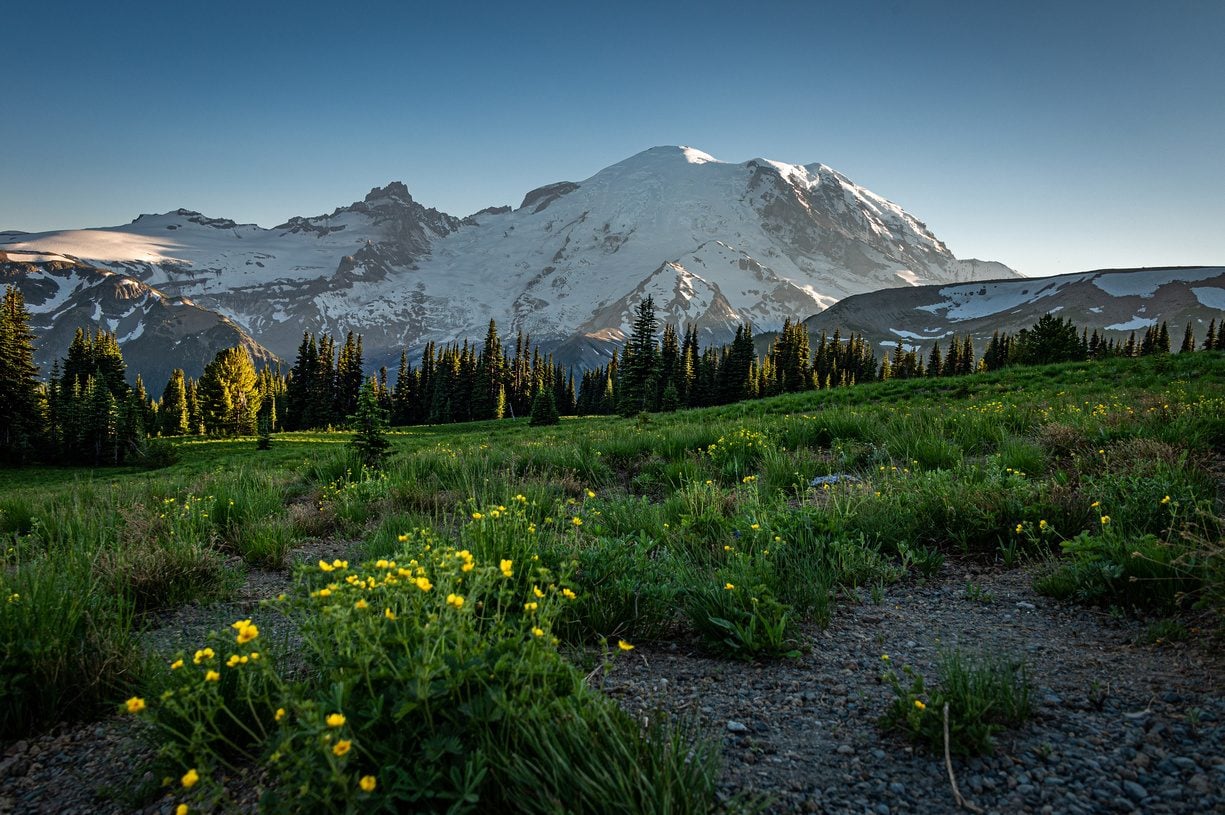
Mount Rainier is the one you already know from the skyline. At 14,410 feet it is the tallest peak in the Cascades and the most heavily glaciated mountain in the lower 48. The park wraps around the mountain on every side, but most first visits center on two areas: Paradise on the south side and Sunrise on the northeast.
Paradise and the summer wildflower meadows
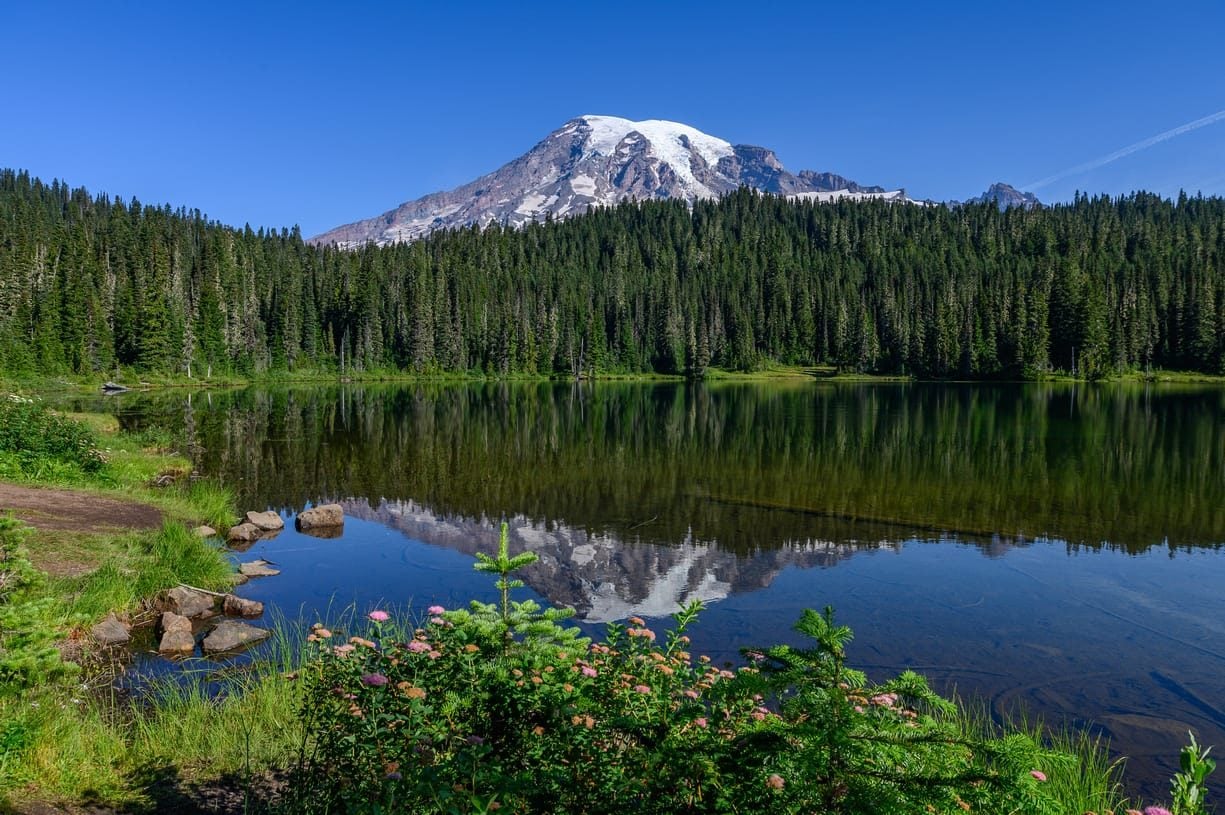
Paradise is the busiest area and the best introduction. The subalpine meadows erupt with lupine, paintbrush, and avalanche lily from mid July into August, with the mountain rising straight behind them. The Skyline Trail loop climbs to Panorama Point for the classic view, while shorter paved paths suit anyone who wants the meadows without the elevation. For a full breakdown of the routes from the Paradise lot, see our guide to the Paradise trails.
Sunrise and the quieter northeast side
Sunrise sits at 6,400 feet, the highest point you can reach by car in the park, and it opens later in summer because of lingering snow. The views across the Emmons Glacier rival Paradise and the crowds are thinner. The road typically opens in early July and closes by early fall.
Getting in, fees, and where to stay
Mount Rainier does not require a timed entry reservation in 2026. The pilot system that ran in 2024 and 2025 has been dropped, so entry is first come first served. The tradeoff is parking, which fills by mid morning at Paradise in peak summer, so the park recommends arriving before 7am or after 4pm. Entry is $30 per vehicle for seven days. We keep our Mount Rainier entry guide current as the policy changes. To sleep inside the park, the historic Paradise Inn and National Park Inn book out months ahead; see where to stay inside the park. The mountain town of Packwood is the practical base on the south side, about 2 hours from Seattle.
Read the full Mount Rainier National Park guide.
Olympic National Park
Olympic is the shape shifter. Inside one boundary it covers temperate rainforest, a mile high mountain ridge, and roughly 70 miles of wild Pacific coastline, none of them joined by a single road through the middle. You drive the perimeter on US-101 and dip in to each zone. That makes Olympic the park that rewards the most time and the hardest one to see in a day.
The Hoh Rainforest
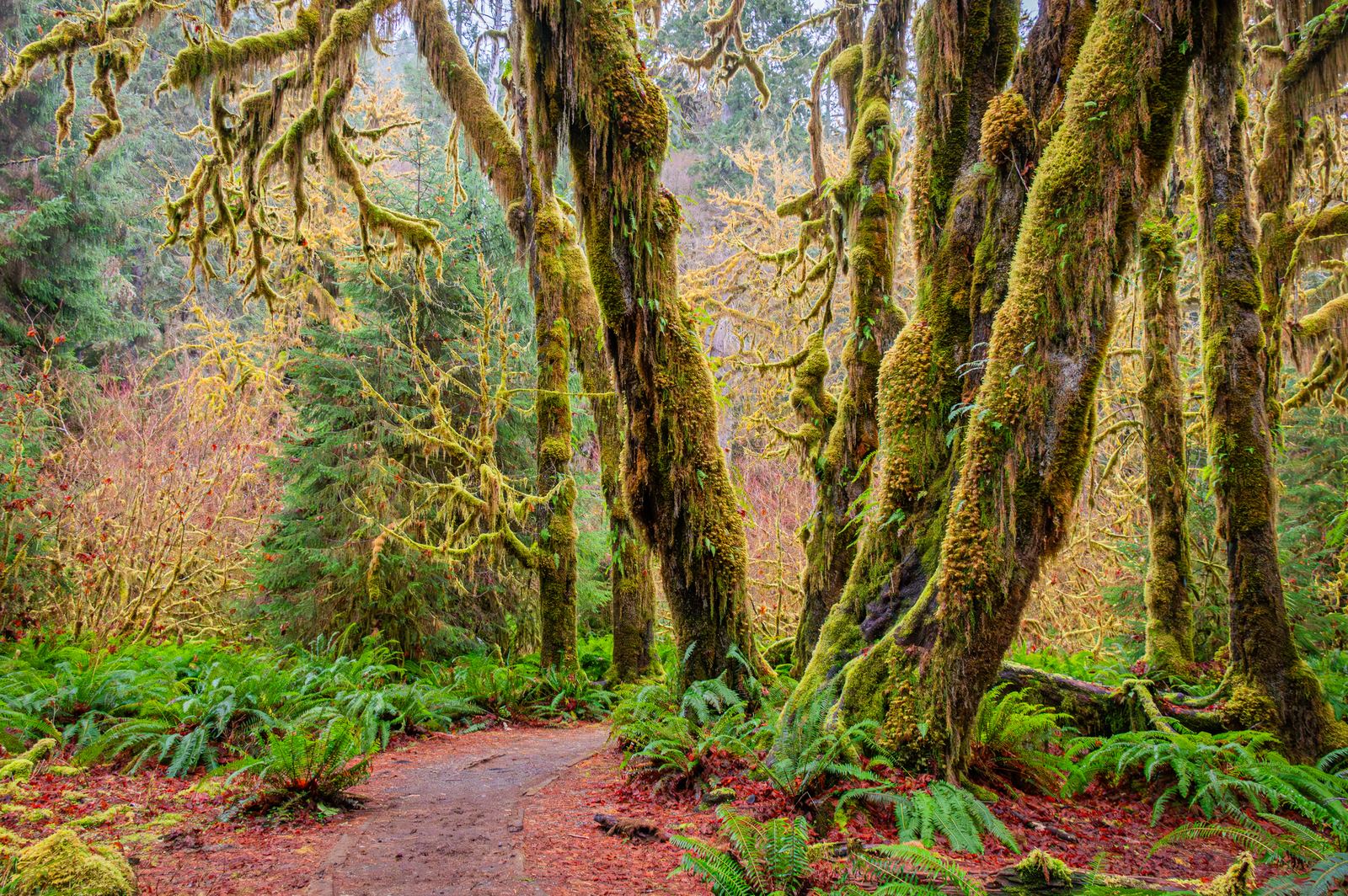
The Hoh is the headline, one of the largest temperate rainforests in the country, where Sitka spruce and bigleaf maple drip with moss and the Hall of Mosses trail loops through it in under a mile. Access is the catch. The Upper Hoh Road has washed out repeatedly in recent years. A bomb cyclone tore it up in November 2024 and closed the Hoh through the winter, and it reopened in May 2025 after the state put $623,000 toward emergency repairs. As of the National Park Service update on July 19, 2026, the Hoh Rain Forest is open, trails, parking areas and restrooms included, with the visitor center running daily from 9am to 5:30pm. Parking is the real constraint now rather than the road: the park recommends arriving before 8am or after 5pm, because waits at the entrance station can run up to two hours in peak summer. Campground reservations are required June 12 through September 6, 2026. Our Hoh Rainforest guide covers whether it is worth the drive.
The Pacific coast
The coastal strip is the Olympic that surprises people. Ruby Beach and Rialto Beach deliver sea stacks, bleached driftwood, and tide pools, and they sit about an hour from the Hoh, so the two pair naturally. Time your visit for low tide if you want the tide pools. There is more in our roundup of must see spots on the Olympic Peninsula.
Hurricane Ridge, Sol Duc, and Lake Quinault
For the high country, Hurricane Ridge above Port Angeles gives you alpine views about 45 minutes off US-101. Sol Duc Falls is a short forest walk to one of the prettiest waterfalls in the park. On the south side, Lake Quinault anchors a rainforest valley with a historic lodge and an easy bike loop.
Fees and where to stay
Entry is $30 per vehicle for seven days. Lodging ranges from the lakeside lodges at Lake Crescent and Kalaloch to the rustic resorts and lodges around the peninsula. Hurricane Ridge is about 2.5 hours from Seattle including the ferry; the Hoh is closer to 4 hours by the time you round the peninsula.
Read the full Olympic National Park guide.
North Cascades National Park
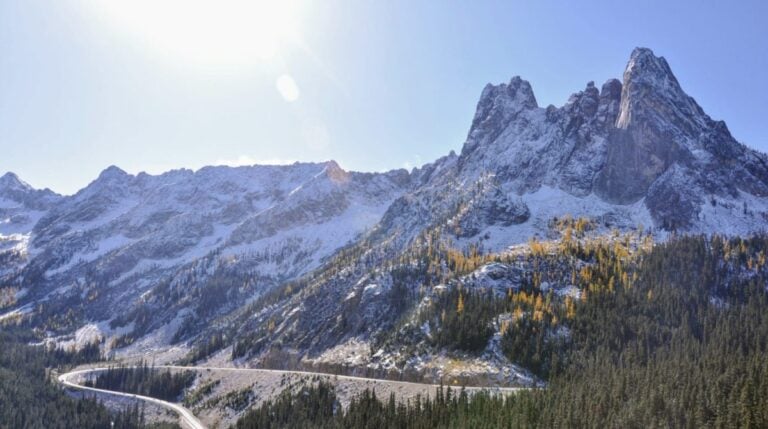
North Cascades is the wild one, and in most years the least visited national park in the lower 48, despite sitting two and a half hours from Seattle. It protects more than 300 glaciers, more than any park in the country outside Alaska, and the scenery rivals the Alps. The low visitor numbers come down to one thing: there is no resort village and no entrance booth, so it does not register as a destination the way Rainier does.
Diablo Lake and the SR-20 corridor
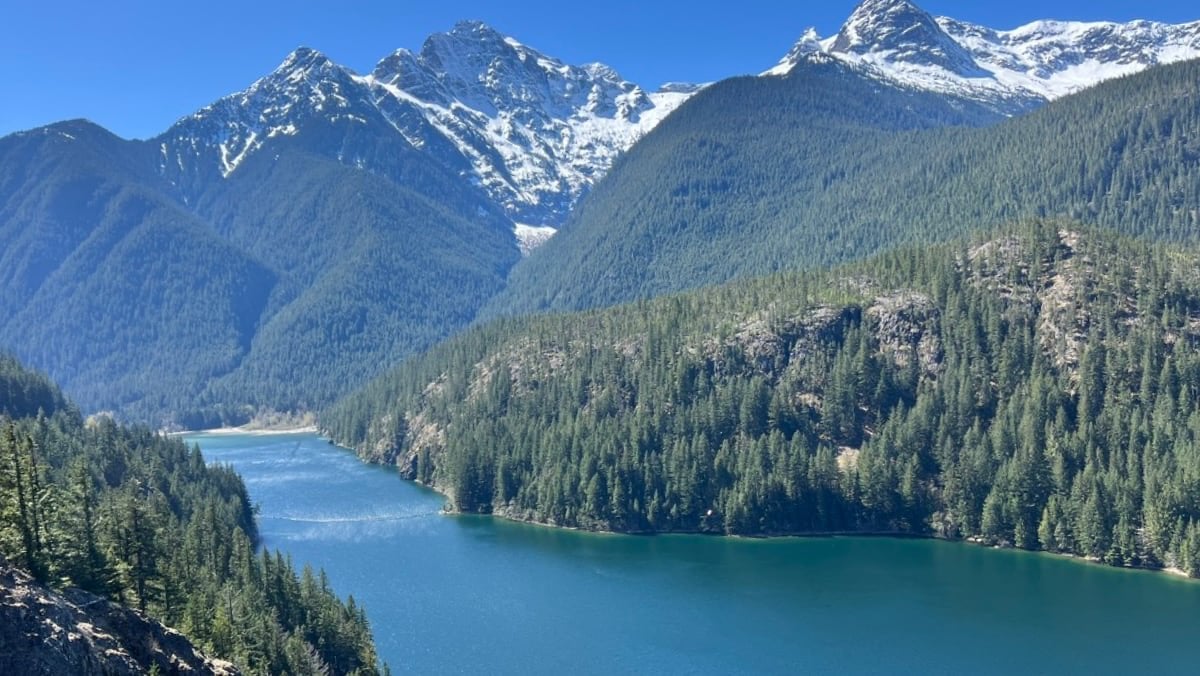
Most people experience the park from the North Cascades Highway, SR-20, which runs right through it. The Diablo Lake Overlook is the signature stop, where glacial flour turns the water an unreal shade of turquoise. Our Diablo Lake guide covers the overlook, the trails, and the summer boat tours.
Hiking and when the road opens
The high country is snow free roughly July through October, which is the window for the classic hikes like Cascade Pass and Maple Pass. SR-20 closes over the passes every winter, usually from late November until spring, so check the road status before a shoulder season trip. See summer in the North Cascades and, for larch and maple color, fall in the North Cascades.
Free entry and how to plan it
North Cascades charges no entrance fee, one of only about 20 national parks that are free year round. Trailheads in the surrounding national forest may still ask for a Northwest Forest Pass, which is $5 for a day or $30 for the year. There is little lodging inside the park itself, so most visitors base in Marblemount or Winthrop or turn it into a full weekend. Birders should not skip the SR-20 corridor.
Read the full North Cascades National Park guide.
Nearby and worth the detour
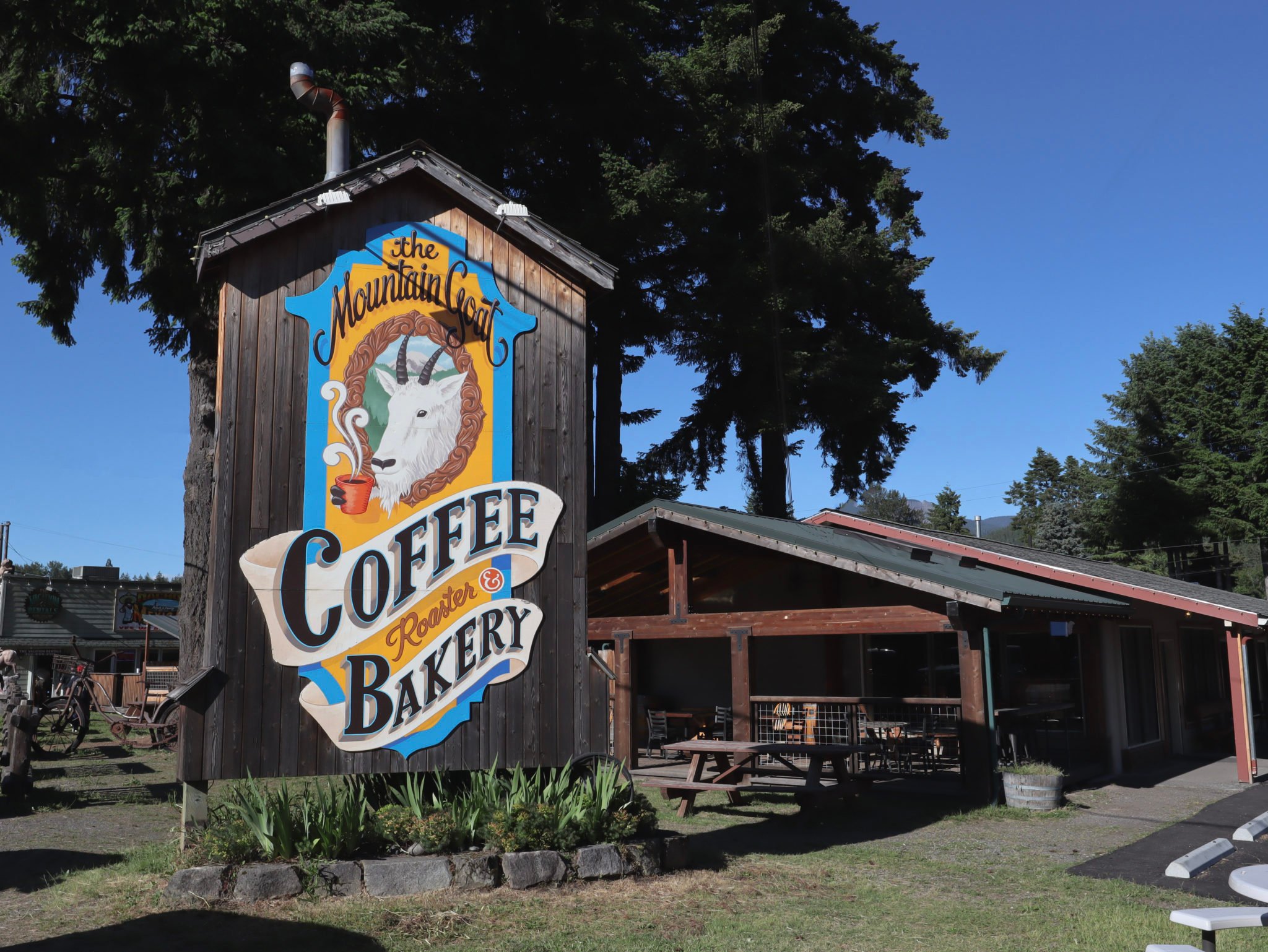
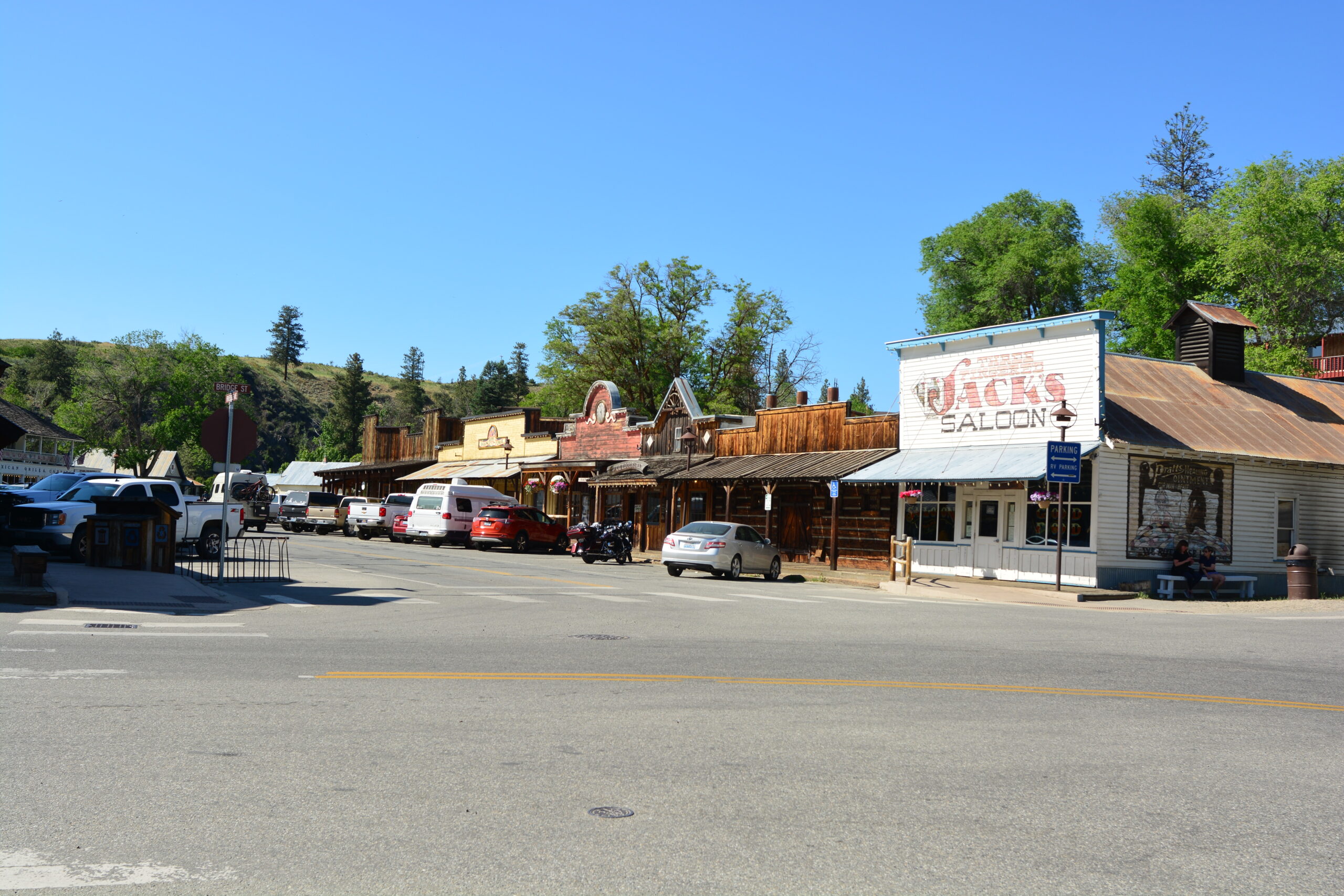
Beyond the famous overlooks, all three parks hide quieter corners. For ideas off the main stops, see our list of hidden gems in Washington national parks. The gateway towns are worth a stop in their own right too: Packwood for Rainier, Port Angeles and Forks for Olympic, and Marblemount or Winthrop for North Cascades.
Planning your visit to Washington national parks
When to go
July through September is the safe window for all three parks. That is when the Paradise and Sunrise roads at Rainier are clear, SR-20 is open through the North Cascades, and the Olympic high country is snow free. June can still hold snow at elevation. October brings gold larch and maple color to the North Cascades, but the passes can close early once the snow arrives.
Can you visit all three in one trip
Yes, and it is one of the great Northwest road trips. A loop from Seattle hitting all three runs five to seven days at a comfortable pace. The natural order is Rainier, then down and around to Olympic on US-101, then north to the Cascades, though any direction works. Budget more time for Olympic than the other two, because nothing inside it is close to anything else.
Passes and fees
If you are visiting two or three parks, buy the $80 America the Beautiful pass rather than paying per park. North Cascades is free, while Rainier and Olympic are $30 per vehicle each. Remember the Washington Discover Pass is for state parks, not these, so it will not get you through a national park gate.
Mount Rainier, Olympic, or North Cascades: which should you choose?
If a single trip is all you have, here is the short version. The three parks reward different travelers, and the right pick comes down to what you most want to see and how far you are willing to drive once you arrive.
Choose Mount Rainier if you want the iconic view
Rainier is the most concentrated of the three. You can park at Paradise, step into the wildflower meadows with the mountain filling the sky, and feel like you got the full national park experience in a day. It is the easiest to reach from Seattle and the best choice for a first visit, a short window, or anyone chasing the postcard shot. The catch is summer crowds, so go early or late in the day.
Choose Olympic if you want the most variety
No other park in the state, and few in the country, packs rainforest, alpine ridgeline, and ocean into one boundary. If you want to walk under moss draped trees in the morning and stand among sea stacks by afternoon, Olympic delivers that range. It asks for more time and more driving in return, since the zones sit far apart on US-101, but it gives the richest trip of the three.
Choose North Cascades if you want solitude and big mountains
For jagged peaks, glacier fed lakes, and almost no crowds, North Cascades wins. The Diablo Lake overlook alone justifies the drive, and the hiking in late summer is some of the best in the state. It is the pick for return visitors and anyone who would rather trade visitor center amenities for quiet. Just plan around SR-20, which closes over the passes in winter.
Frequently Asked Questions
How many national parks are in Washington State?
Washington has three national parks: Mount Rainier, Olympic, and North Cascades. The state also holds national historical parks, national recreation areas, and national forests, but those three are the designated national parks.
Which Washington national park is the best to visit?
It depends on what you want. Mount Rainier is the most iconic and best for summer wildflowers. Olympic offers the most variety, with rainforest, mountains, and coast in one park. North Cascades is best for solitude and dramatic glaciated peaks with no crowds.
Are Washington national parks free?
North Cascades is free to enter. Mount Rainier and Olympic each charge $30 per vehicle for seven days. If you plan to visit two or three, the $80 America the Beautiful annual pass covers all national parks and pays for itself quickly.
When is the best time to visit Washington national parks?
July through September is the reliable window for all three. That is when the high country is snow free, the Paradise and Sunrise roads at Rainier are open, and SR-20 is clear through the North Cascades. June can still hold snow at elevation.
Can you visit all three Washington national parks in one trip?
Yes. A loop from Seattle hitting Mount Rainier, Olympic, and North Cascades runs five to seven days at a comfortable pace. Budget more time for Olympic because its rainforest, coast, and mountain zones are spread far apart.
Do you need a reservation for Mount Rainier in 2026?
No. Mount Rainier dropped its timed entry reservation system for 2026, so entry is first come first served. Parking still fills by mid morning at Paradise in peak summer, so arrive before 7am or after 4pm.
Before you go
That is the whole idea behind the Explore Washington State Card. Free to carry, with a little something waiting at participating places when you visit. Your zip code is a vote for which towns we sign up next, and our weekly Washington travel newsletter starts landing right away.
Get your free card- About the Author
- Latest Posts

Explore Washington State has been covering the real Washington for more than a decade. State parks, small towns, back roads, rest stops, and the people who make this place worth exploring. What started as a hyperlocal project covering individual communities grew into a full media project with more than 340 podcast episodes, a weekly newsletter with over 5,700 subscribers, and coverage of all 146 Washington State Parks. The content here comes from people who have actually been to these places: locals, regulars, and lifelong Washington residents who care more about getting it right than getting clicks.