
Manito Park Spokane: When to Go and What Actually Blooms
The Saturday Verdict: worth a Saturday from mid May through September. Worth about ninety minutes the rest of the year, and the greenhouse is the reason.
Here is the thing nobody puts on the sign. Manito Park in Spokane is not one park you visit. It is five separate gardens running on five separate schedules, and the month you show up decides almost everything about what you see.
Roughly 30,000 annual flowers go into Duncan Garden every year. Not one of them is in the ground before the middle of May.
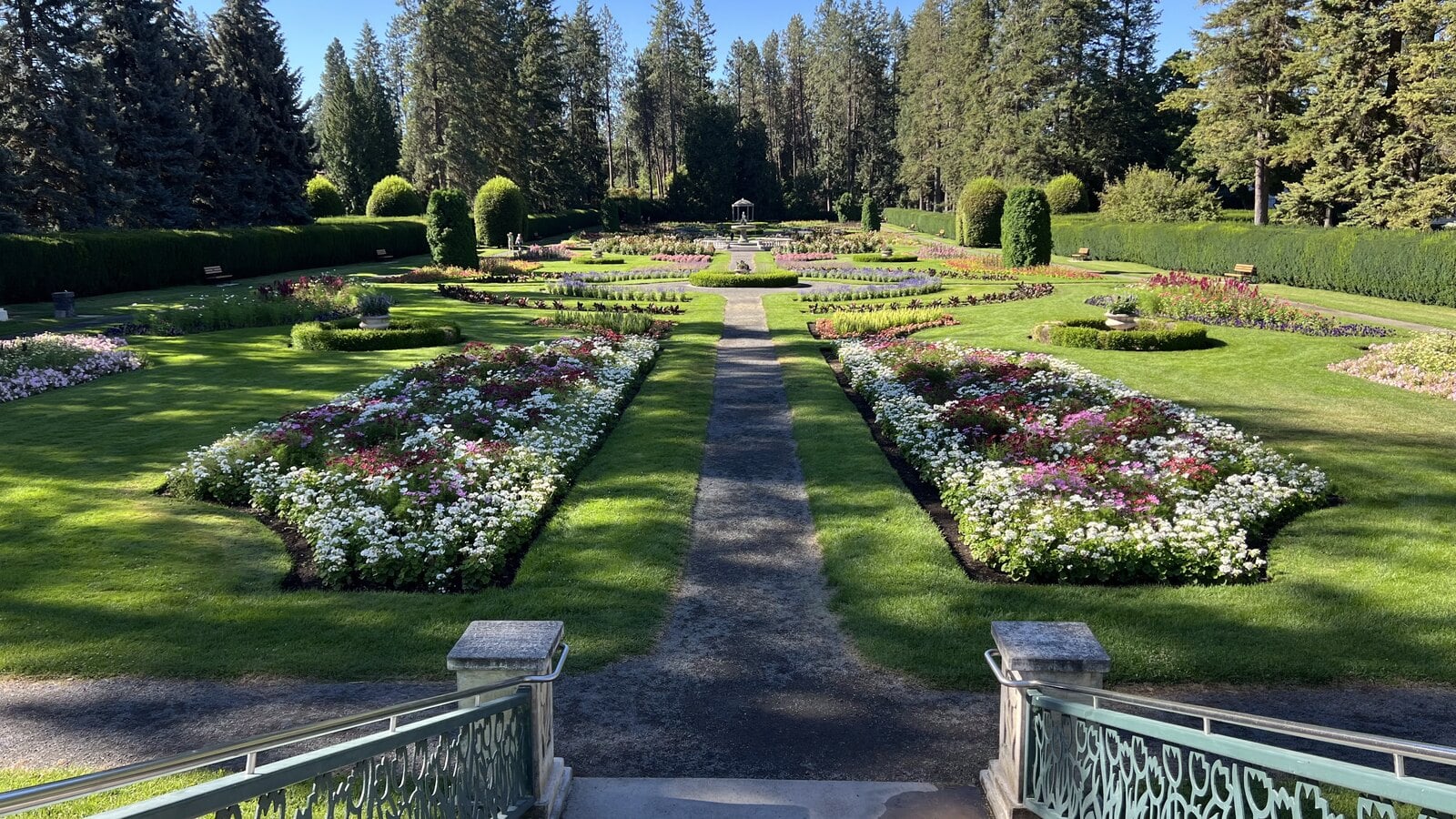
That matters because Duncan Garden is the picture. It is the one on the postcards, the one in the Instagram geotag, the formal terraced garden with the fountain and the sixty three symmetrical beds. People see that photograph, drive up the South Hill in April, look down at three acres of turned soil, and wonder what the fuss was about.
So this guide is organized around the calendar rather than around a map. What blooms when, which gardens are worth the walk in which month, and what stays open when the flowers are gone.
Manito Park Was a Zoo Until 1932
Start here, because it explains the layout better than any map does.
Francis Cook bought 160 acres on the bluff above Spokane in the 1880s and ran a streetcar line up to it to sell lots. He called it Montrose Park, after the wild roses growing on the hillside. The 1893 financial panic wiped him out. The mining money that followed, in the person of Jay P. Graves, handed the land to the city, and in 1903 it was renamed Manito, from an Algonquian word meaning spirit. The city formally dedicated the park in 1904.
Two years after that, Spokane started collecting animals.
The Manito zoo ran from 1905 to 1932. At its peak it held elk, deer, bison, coyotes, an ostrich, an emu, a golden eagle, cougars, bobcats, and black, brown, grizzly, and polar bears.
It sat in the middle of one of the wealthiest neighborhoods in the city, which went about as well as you would expect. There were escapes. There were complaints about the smell. In July 1923 a nine year old girl named Elizabeth Harris reached through the bars to feed the polar bears a piece of bread and they took her arm off. She survived. So did the bears. When the Olmsted Brothers delivered their landscape plan for Spokane’s park system in 1913, they recommended closing the zoo outright: not enough room, too much money.
The Depression finished it. In 1932 the city said it could no longer feed the animals, and on January 8, 1933 it started working through the list. Homes were found for some of them. The ones with nowhere to go were shot: three buffalo, two grizzlies, and a polar bear, all of it inside the city, some of it in the South Hill blocks around the park.
What is worth knowing is where the gardens went afterward. Rose Hill sits on the old elk and deer enclosure. The Lilac Garden replaced the buffalo exhibit. The Ferris Perennial Garden went in on open ground at the edge of the zoo that sat unused for eight years after the animals were gone.
You are not walking through a botanical garden that happens to have history. You are walking through a zoo that got planted over. Once you know that, the odd elevation changes and the retaining walls stop looking decorative.
The park went on the National Register of Historic Places in December 2015.
The Five Gardens, and When Each One Peaks
The Gaiser Conservatory is in the table too, because it is the answer every month the gardens are not.
| Garden | Peak window | Worth the walk in |
|---|---|---|
| Ferris Perennial Garden | June through September | March through October |
| Lilac Garden | Mid May to early June | Late April through June |
| Rose Hill | June, second flush in September | June through September |
| Duncan Garden | Mid August to early September | June through September |
| Japanese Garden | Late April, then October | April through October |
| Gaiser Conservatory | Indoor, no peak | All twelve months |
Joel E. Ferris Perennial Garden
This is the one that carries the shoulder seasons, and it is the garden most visitors walk past on their way to something else.
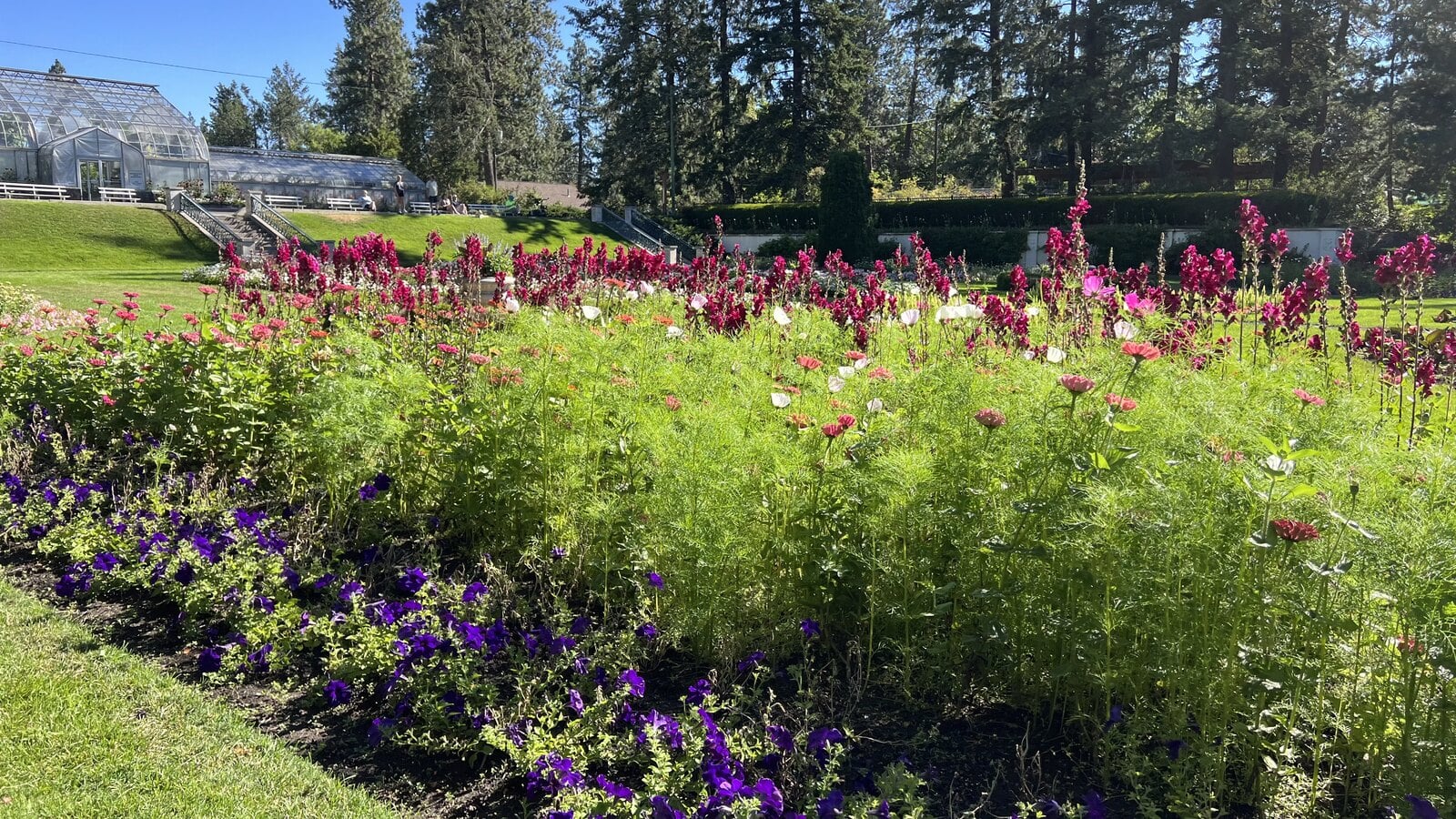
Two and a half acres, more than 600 varieties of perennials, sitting just north of the greenhouses. John Duncan laid it out in 1940, eight years after the zoo emptied, and it was named in 1960 for Joel E. Ferris, a park board member and Spokane civic figure. Because it is planted with perennials rather than annuals, it is the first outdoor garden at Manito to show color in spring, running from bulbs and primroses in March all the way to asters in October.
Worth knowing: alongside the daylilies and peonies there is a paperbark maple, a bristlecone pine, and an ironwood. The tree collection here is better than the flower beds most months.
Good for: early spring, late fall, and any visit where you want something to look at when the showpiece gardens are between acts.
Not good for: high drama. It is an informal garden and it reads that way.
The Lilac Garden
Spokane is the Lilac City and this is why. John Duncan brought 128 named lilac cultivars out from Rochester, New York in 1912, and the garden they grew into sits on the ground where the zoo kept its buffalo. By the 1930s the collection was large enough that the city built a festival around it, first held in 1938. Today the garden holds roughly 125 plants representing close to 100 named cultivars across 23 species, which makes it one of the more serious lilac collections in the West.
Timing is everything and the window is short. Across all the cultivars, something is in flower from late April through the end of June, because the garden includes early bloomers, Korean miniatures, Asian tree lilacs, and late varieties. But the main display, the one worth planning a drive around, is mid May into early June. In recent years it has landed in the week or two after Bloomsday. Check the Friends of Manito or the city garden page before you commit to a date, because a warm April pulls it forward.
Good for: mid May, and the smell more than the sight. Go in the morning before the heat flattens it.
Not good for: July. The lilacs are green shrubs by then and there is nothing to see.
Rose Hill
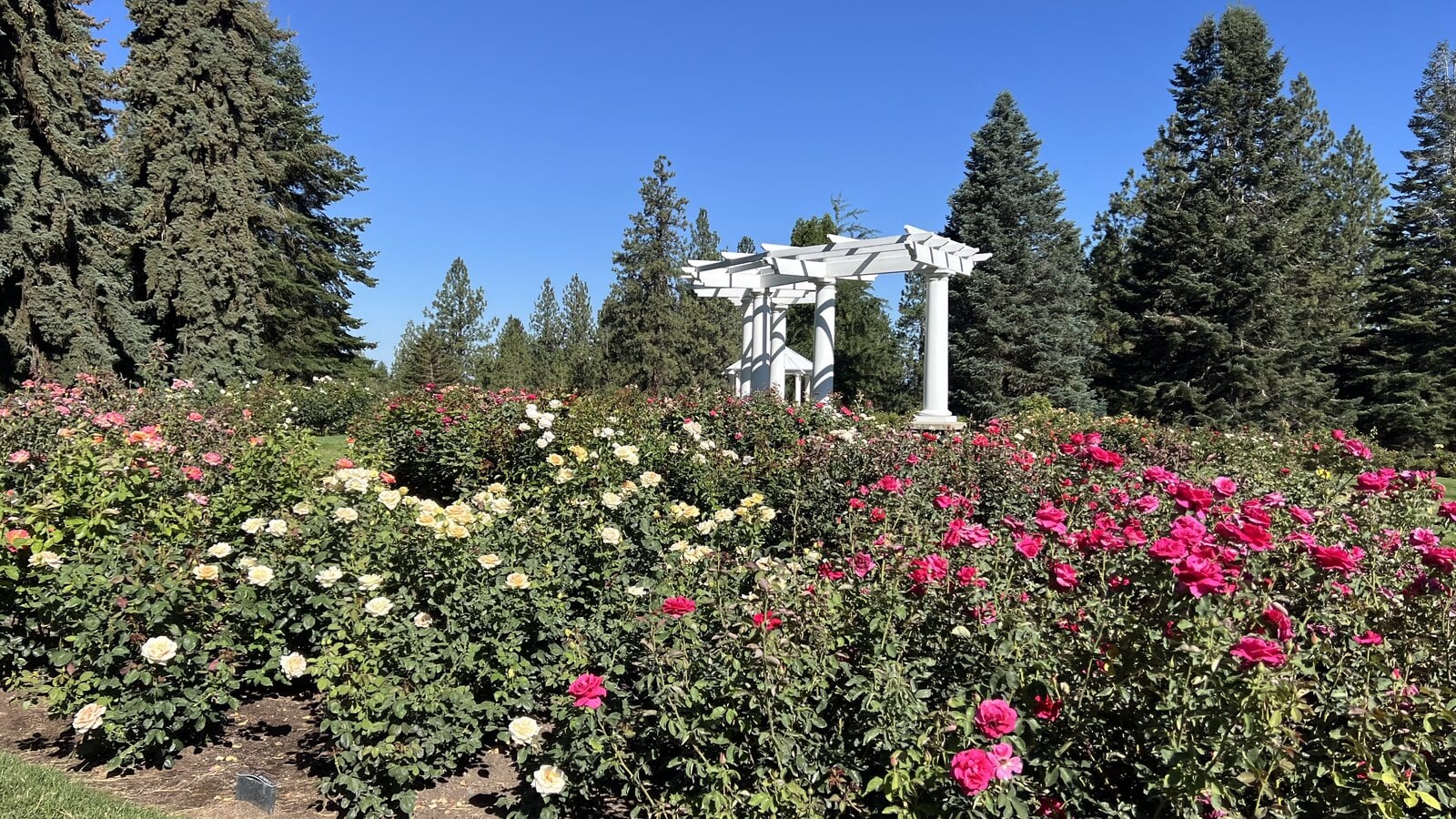
In 2007 All-America Rose Selections named Rose Hill the best rose display garden in the country, and before that organization wound down the garden had taken its Outstanding Maintenance Award twenty years running. It started in 1948 with about 250 bushes and was finished in 1953. It now holds more than 150 varieties across hybrid teas, grandifloras, floribundas, miniatures, and a separate old fashioned rose section on the west side.
June is the month. That is when the first flush comes in heaviest. There is a second, smaller flush in September that most people miss entirely, and September roses at Manito come with better light and about a third of the crowd.
The dahlia trial garden next door starts in July and gets genuinely good in August and September. If you are coming in late summer for Duncan Garden, Rose Hill and the dahlias are a hundred yards away and you should not skip them.
Good for: June for volume, September for quality.
Not good for: anything before Memorial Day. The bushes are pruned hard and you are looking at canes.
Duncan Garden
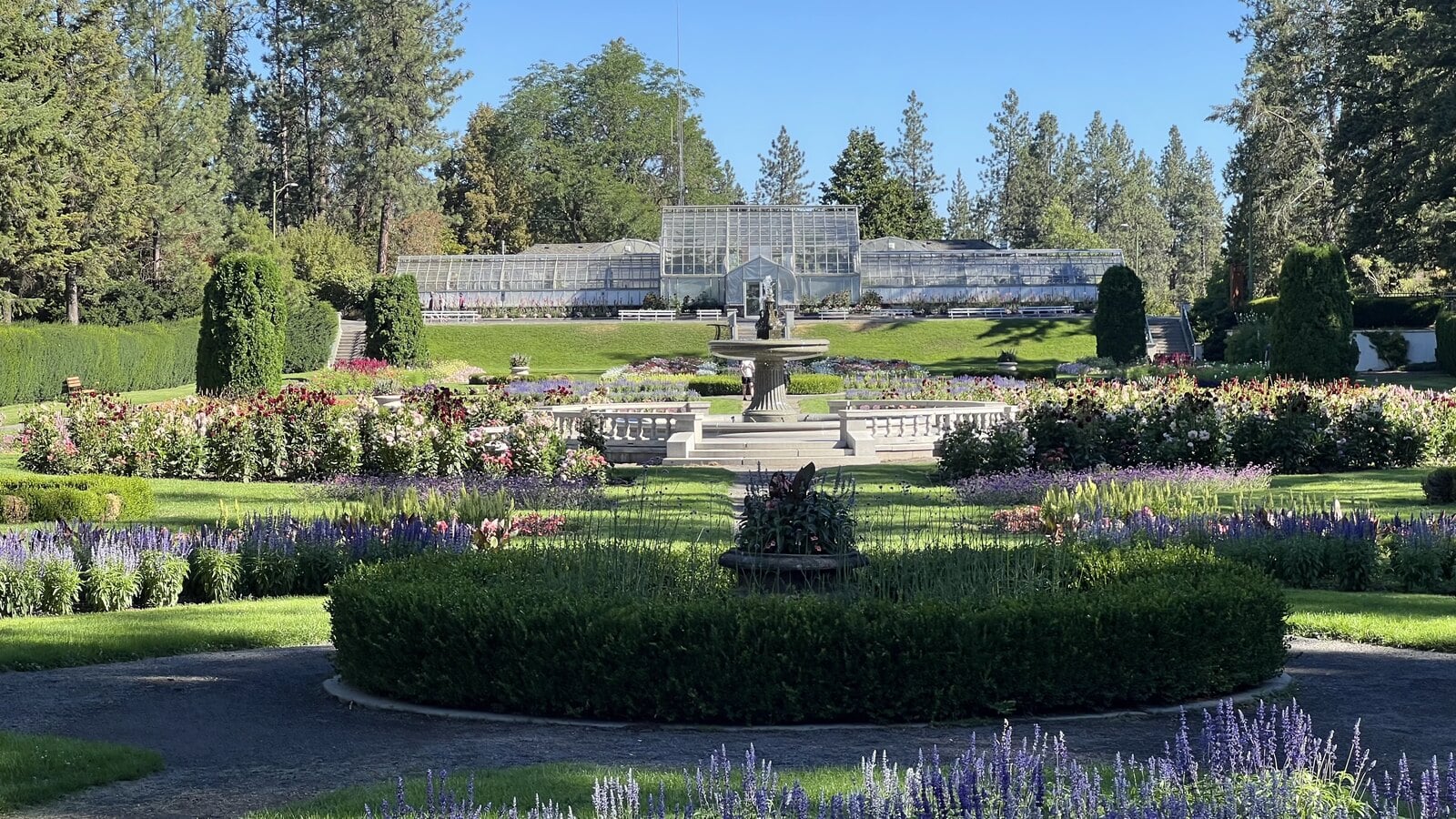
The showpiece, the postcard, and the reason people are disappointed in April.
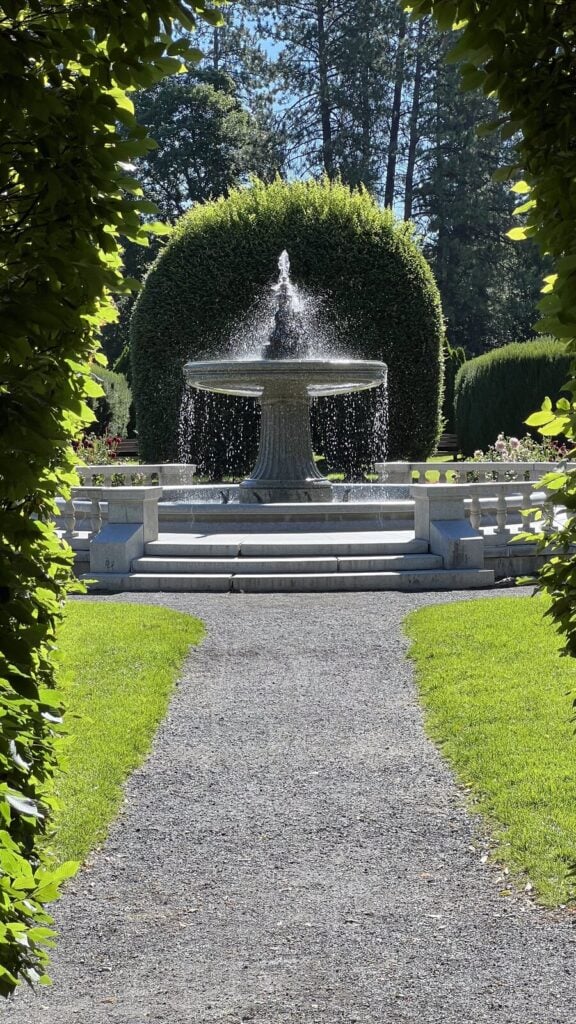
Three acres, formal European Renaissance layout, sixty three beds, a granite fountain, and about 30,000 individual annual plants dropped in every single year. John Duncan designed it in 1912 and it is the most deliberately theatrical thing in the park. It started out as the Sunken Garden, and it is sunken for an unglamorous reason: superintendent Charles Balzer hauled the soil out of it to build other parks around the city. When it is on, it is the best formal garden in eastern Washington and it is not a close contest.
One thing nobody tells you: the beds are not planted until the middle of May, because Spokane’s frost risk runs late, and the garden is not fully in until the end of the month. From November through mid May you are looking at bare soil and mown turf. Then it needs the summer to fill in. Peak is mid August into the first part of September.
Photograph it from the upper terrace looking down the long axis toward the fountain. That is the composition everyone is trying to get and most people shoot it from the wrong end.
Good for: mid August through early September. Late July is acceptable.
Not good for: March through May, when it is a field.
Nishinomiya Tsutakawa Japanese Garden
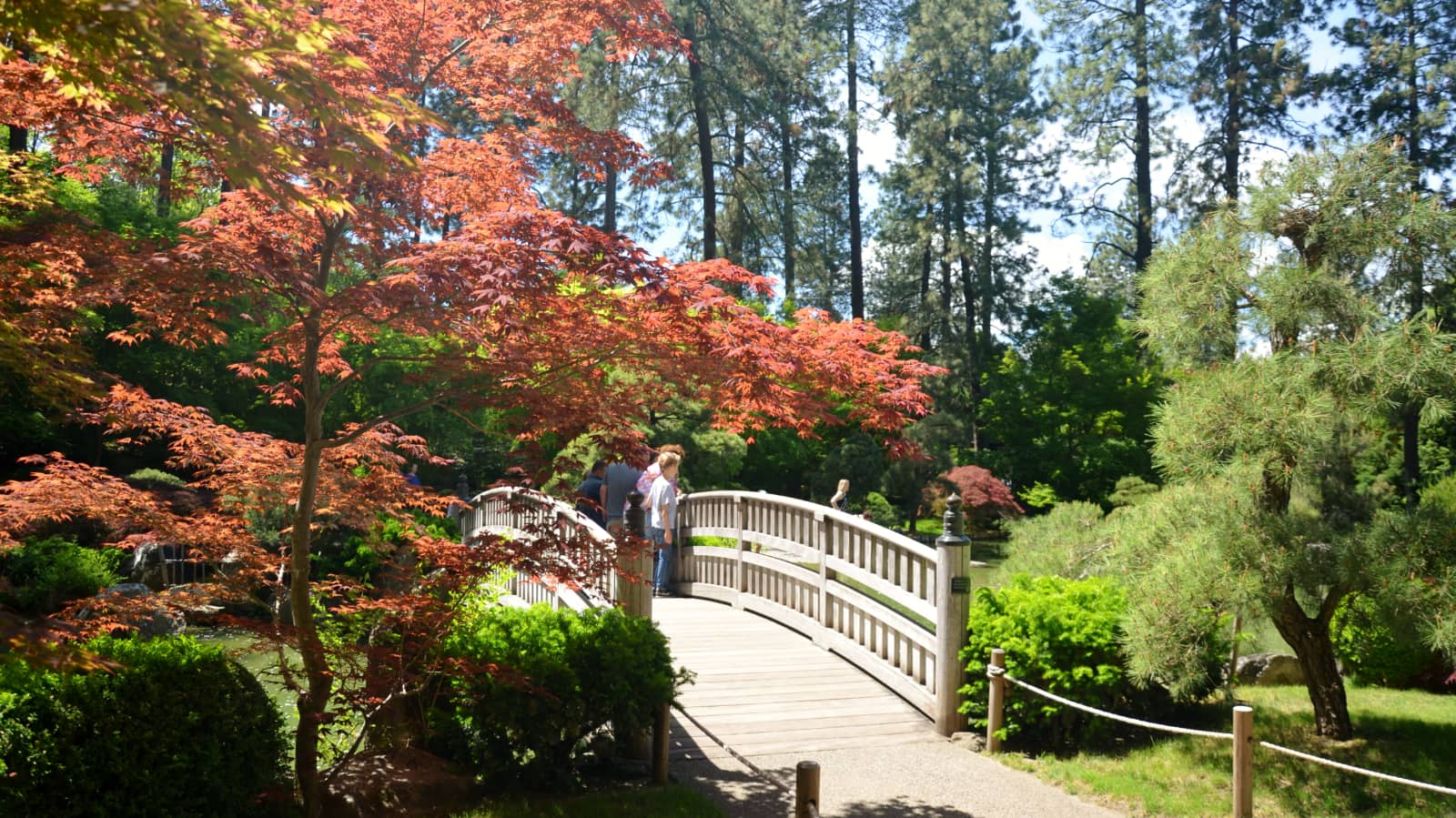
Completed in 1974, built to mark Spokane’s sister city relationship with Nishinomiya, Japan. Koi pond, stone lanterns, a small waterfall, and a level of maintenance that stands out even in a park this well kept.
It runs on its own schedule and that trips people up. The garden opens in early April and closes in October, and daily hours are 10 a.m. to 6 p.m., which is a considerably shorter window than the rest of the park. Show up at 8 a.m. for the morning light and you will find the gate closed.
Two more things. Dogs are not allowed inside, at all, which is the only place in Manito where that is true. And the garden is at its best twice: late April, when the flowering trees go, and again in October when the maples turn. Midsummer it is green and pleasant and not the reason you came.
Good for: late April and October. Bring patience if you want photographs without people in them.
Not good for: early mornings, winter, and anyone walking a dog.
The Gaiser Conservatory
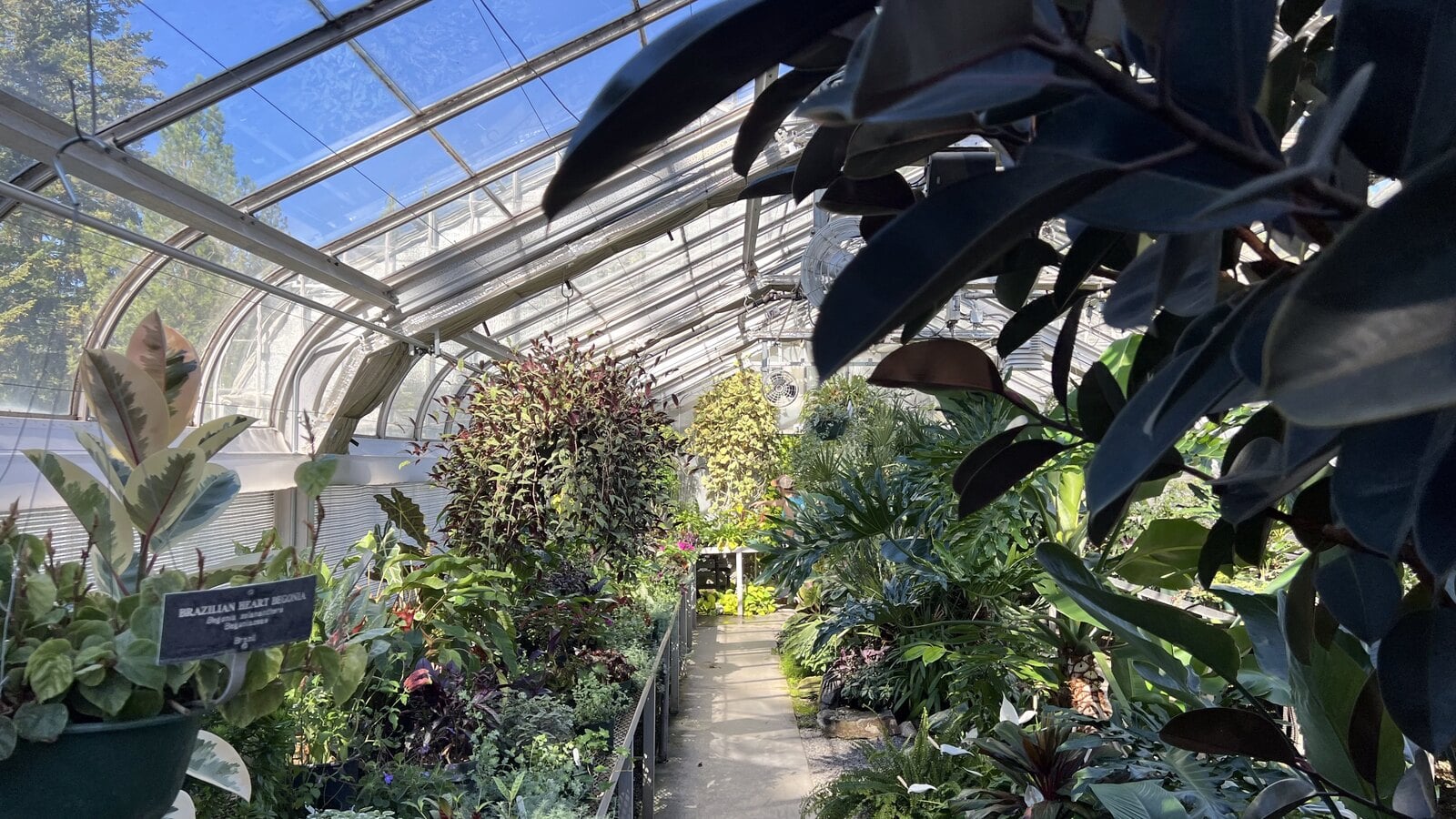
A glass greenhouse in the middle of the park, free, and the single most underrated thing at Manito.
The city’s first greenhouse stood near East 18th and Grand. In 1912 it was replaced by a new one on this site, built to a Lord & Burnham design. Ahead of Expo ’74 the city rebuilt that building as a near replica of the 1912 original, swapping metal framing for the old redwood. Dr. David Gaiser, a longtime park board member, funded the central dome expansion, and the building took his name in 1988.
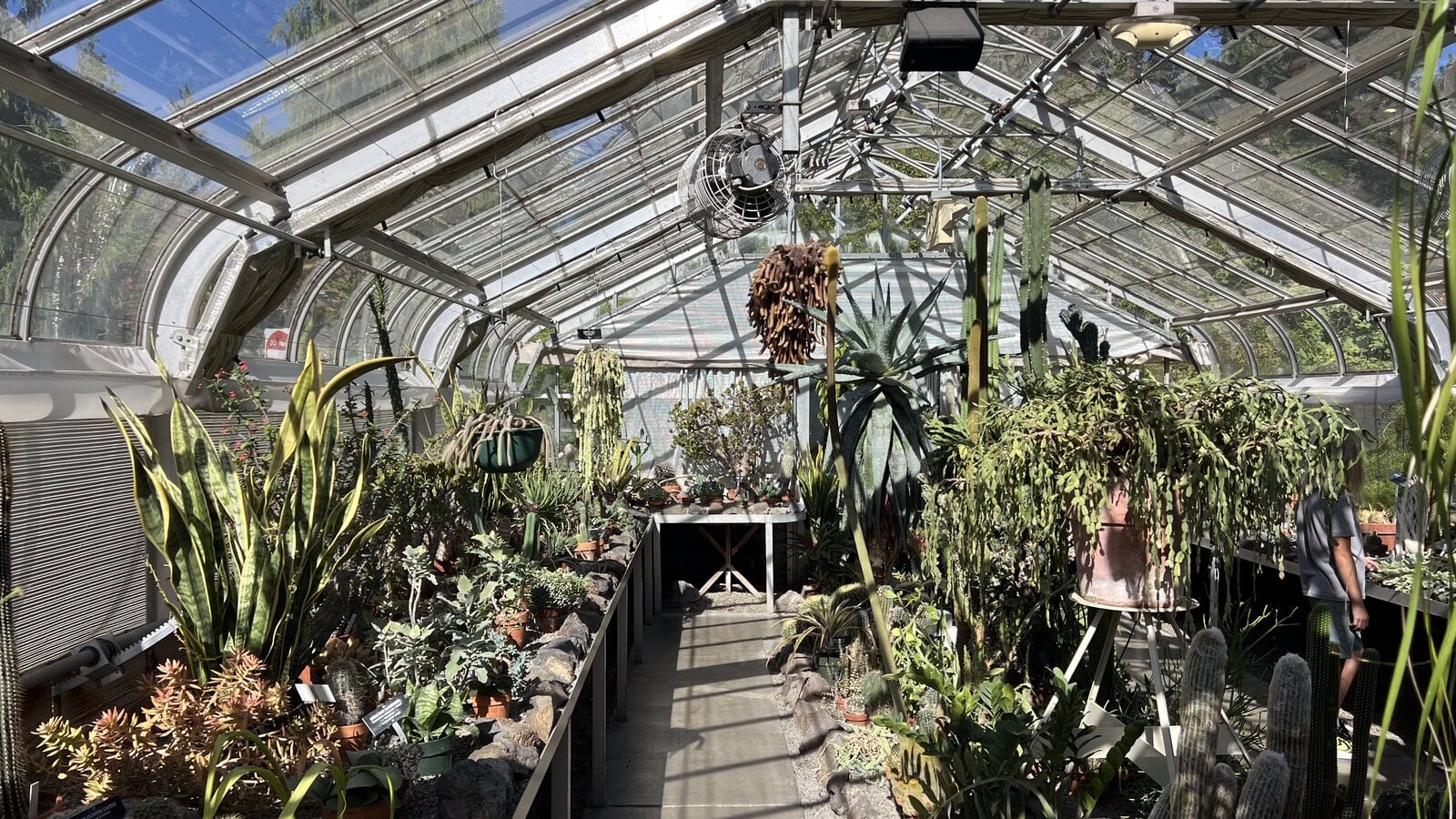
Inside there are tropical, subtropical, and temperate collections: palms, ficus, citrus, orchids, bromeliads, cacti and succulents, a large banana tree, a staghorn fern more than a decade old, and a Norfolk pine that has been in there for decades. Staff rotate the displays as things come into flower. Winter and early spring bring forced tulips, daffodils, and hyacinths. December is poinsettias, some of which are more than ten years old and are nothing like the throwaway plants you buy at a grocery store.
Worth knowing: it is closed on Wednesdays. Listed hours are 9 a.m. to 3:30 p.m. daily otherwise, plus closures on Thanksgiving, Christmas, and New Year’s Day. More people have driven up the South Hill on a Wednesday for this building than would like to admit it.
Manito Park in Winter
Between November and March the gardens are asleep, and the park is still worth a stop. It is just a different visit.
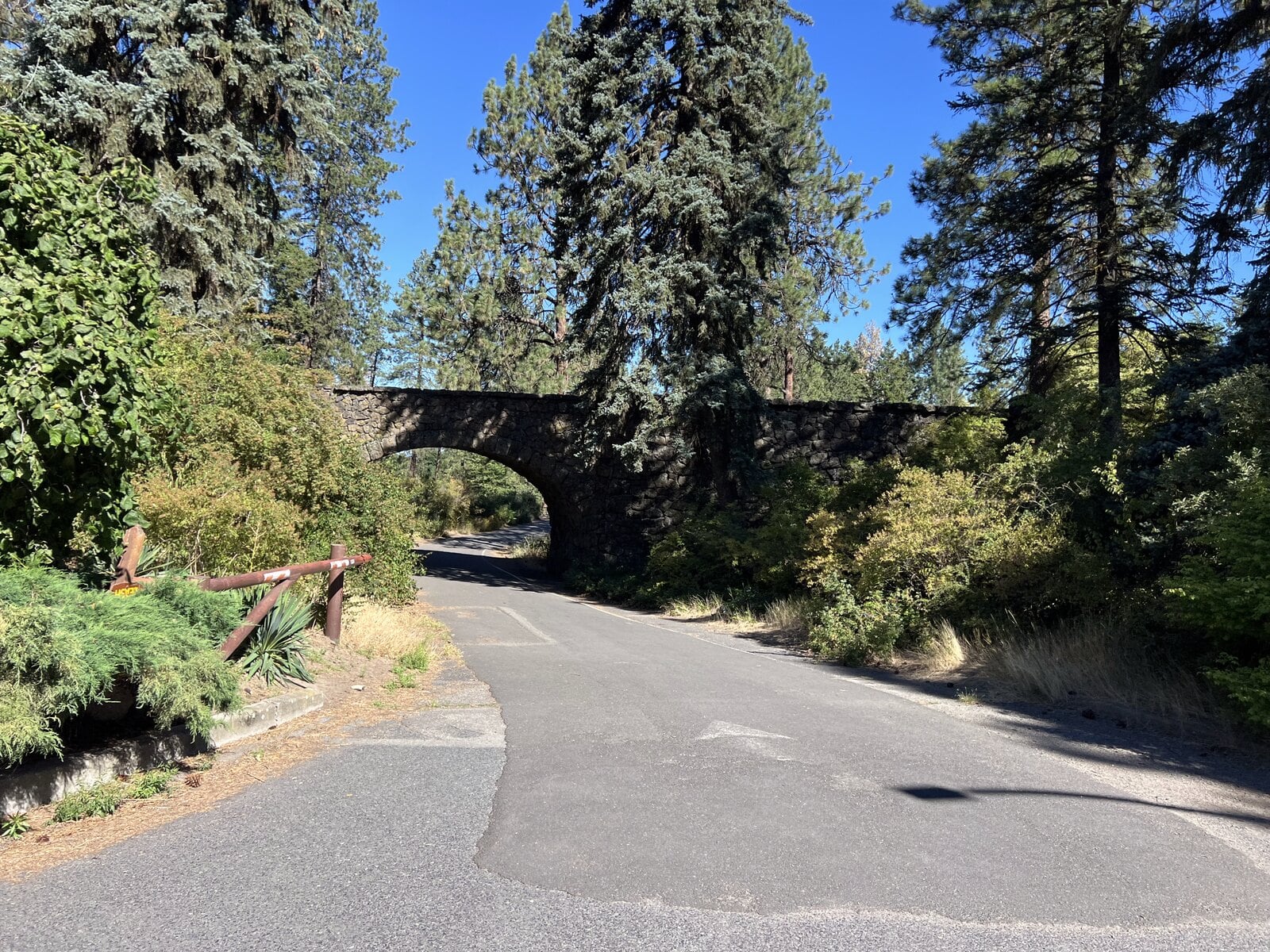
One thing nobody tells you: Manito has two gated drives and they run on different winter schedules. Only one of them shuts. The Loop Drive gate between 21st Avenue and Park Drive closes outright from November 1 through March 31, and the south playground and splash pad lot closes with it. The conservatory loop stays open, but from November 1 until daylight saving comes back the gate runs 8 a.m. to 3:30 p.m., which is the same minute the conservatory itself closes. Turn up at three and you have twenty minutes. Come earlier, or park on the surrounding streets and walk in.
What winter gets you: Mirror Pond in the northwest corner freezes hard enough in a cold snap that people skate on it, the Lower Manito sledding hill is one of the better runs inside city limits, and the conservatory is warm, humid, free, and full of green things while everything outside is gray.
Bring a thermos. There is no cafe open in the park to bail you out until late May.
Planning Your Visit
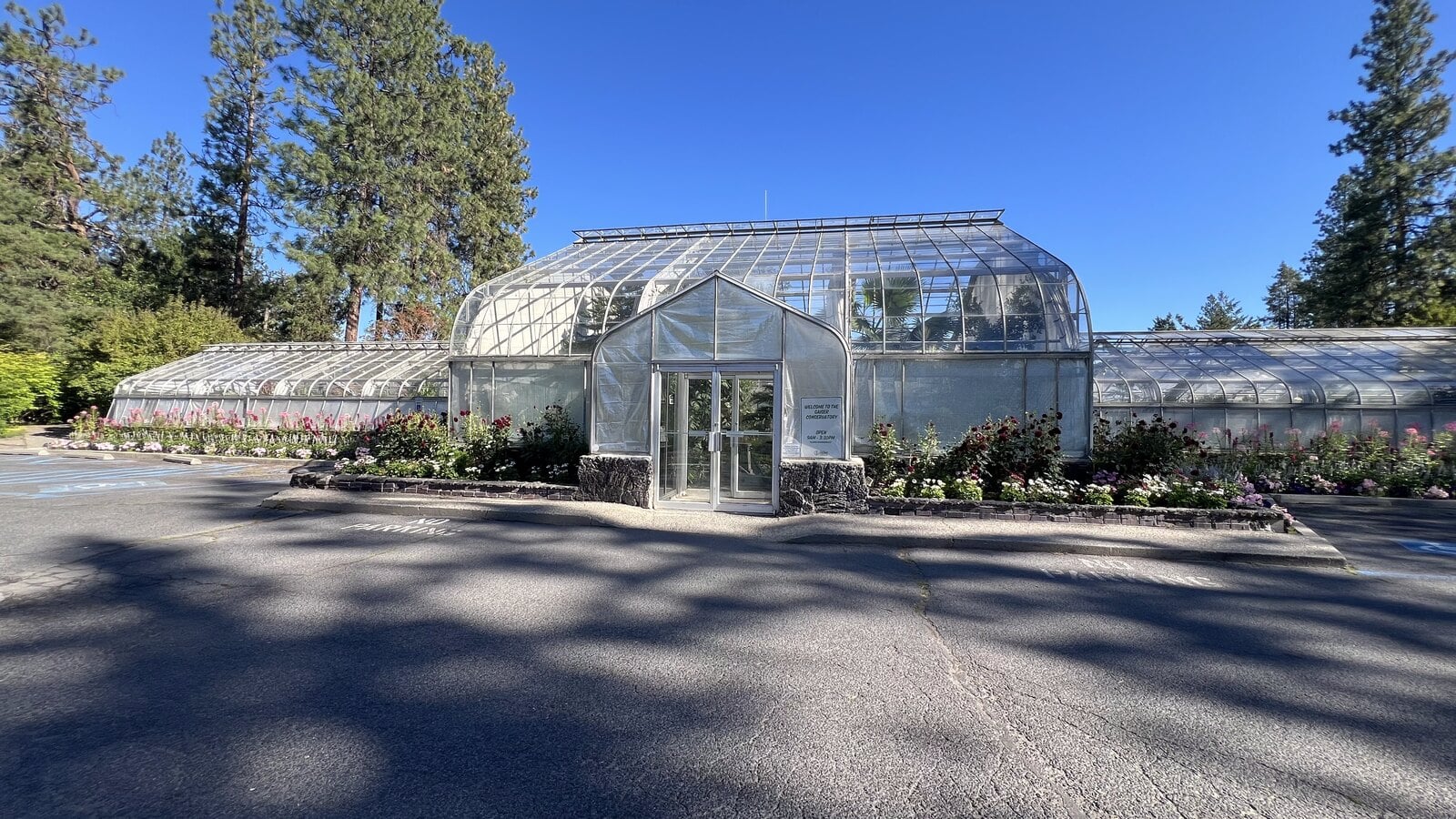
Manito Park is at 1702 S Grand Blvd, on the South Hill, which is the residential bluff that climbs straight up from downtown Spokane. It is about five minutes from the center of the city.
Hours. City parks are open 6 a.m. to 10 p.m. The park itself is free, all five gardens are free, the conservatory is free, and parking is free. The gated interior drives run 8 a.m. to 8 p.m. from April 1 through October 31. In winter the 21st Avenue to Park Drive loop closes completely, and the conservatory loop shortens to 8 a.m. to 3:30 p.m.
Parking. There are lots at the gardens and along the loop in season. On a warm summer Saturday, and especially during the mid May lilac window, they fill. Street parking on the surrounding residential blocks is the fallback and it is a short walk from anywhere.
How long it takes. Ninety minutes covers all five gardens and the conservatory at a normal walking pace. Three hours if you want to sit, shoot photographs, and eat. The park runs about 98 acres but the gardens are clustered tightly, so you are not covering much ground between them.
With kids. There are two playgrounds. The upper one suits elementary age kids, the lower one is built for toddlers and has a splash pad that runs in summer. Mirror Pond has ducks and geese and will hold a small child’s attention longer than any garden will.
Dogs. Welcome on leash throughout the park, and owners are expected to clean up. The Nishinomiya Tsutakawa Japanese Garden is the one exception: dogs are not permitted inside it at all, service animals excepted.
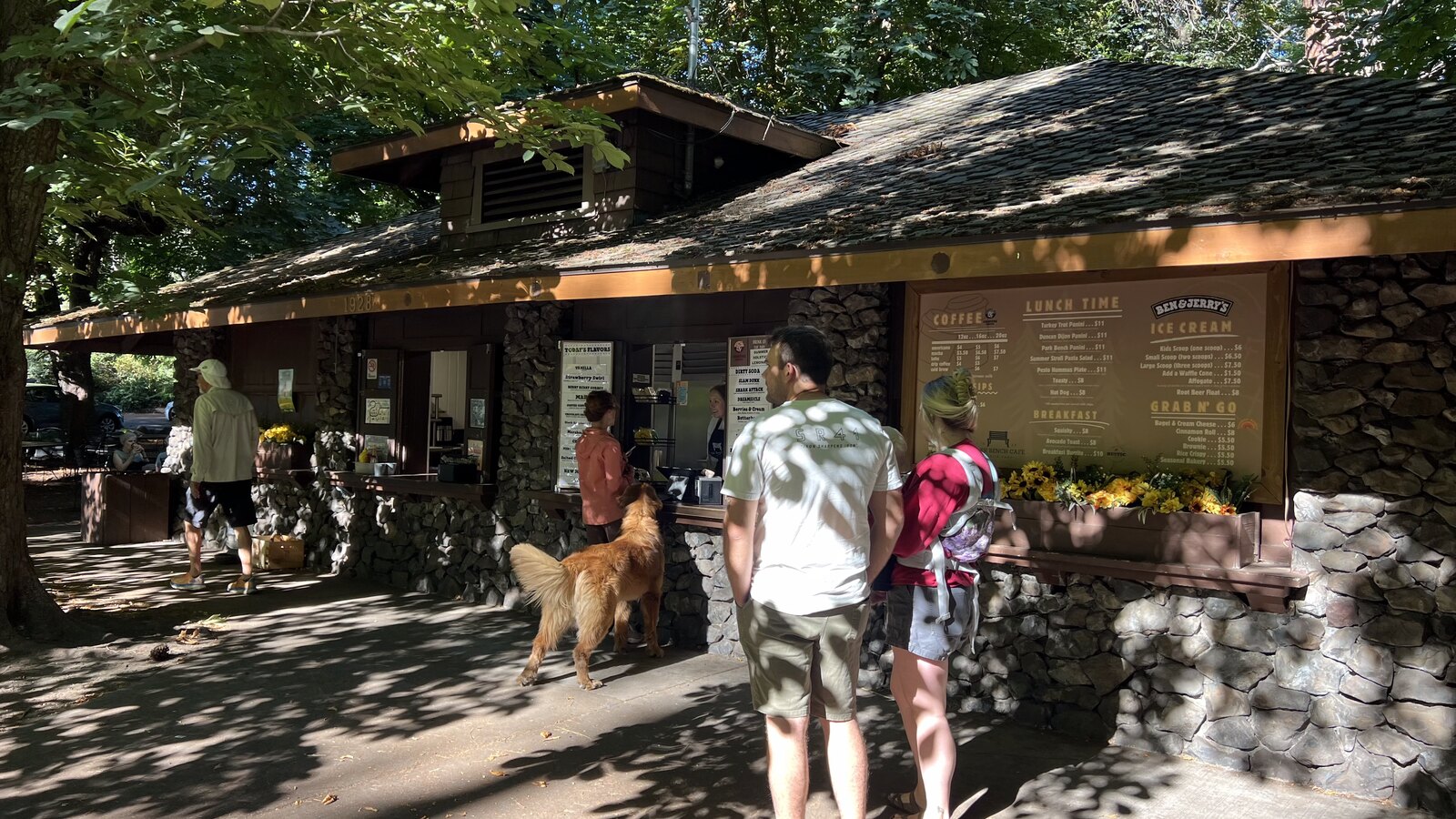
Food in the park. The Park Bench Cafe sits between Mirror Pond and the Ferris Perennial Garden and has been operating in some form since 1923. It runs late May through September only, and serves pastries, sandwiches, wraps, salads, and espresso. Casual pricing. Outside that window there is nothing to eat inside the park.
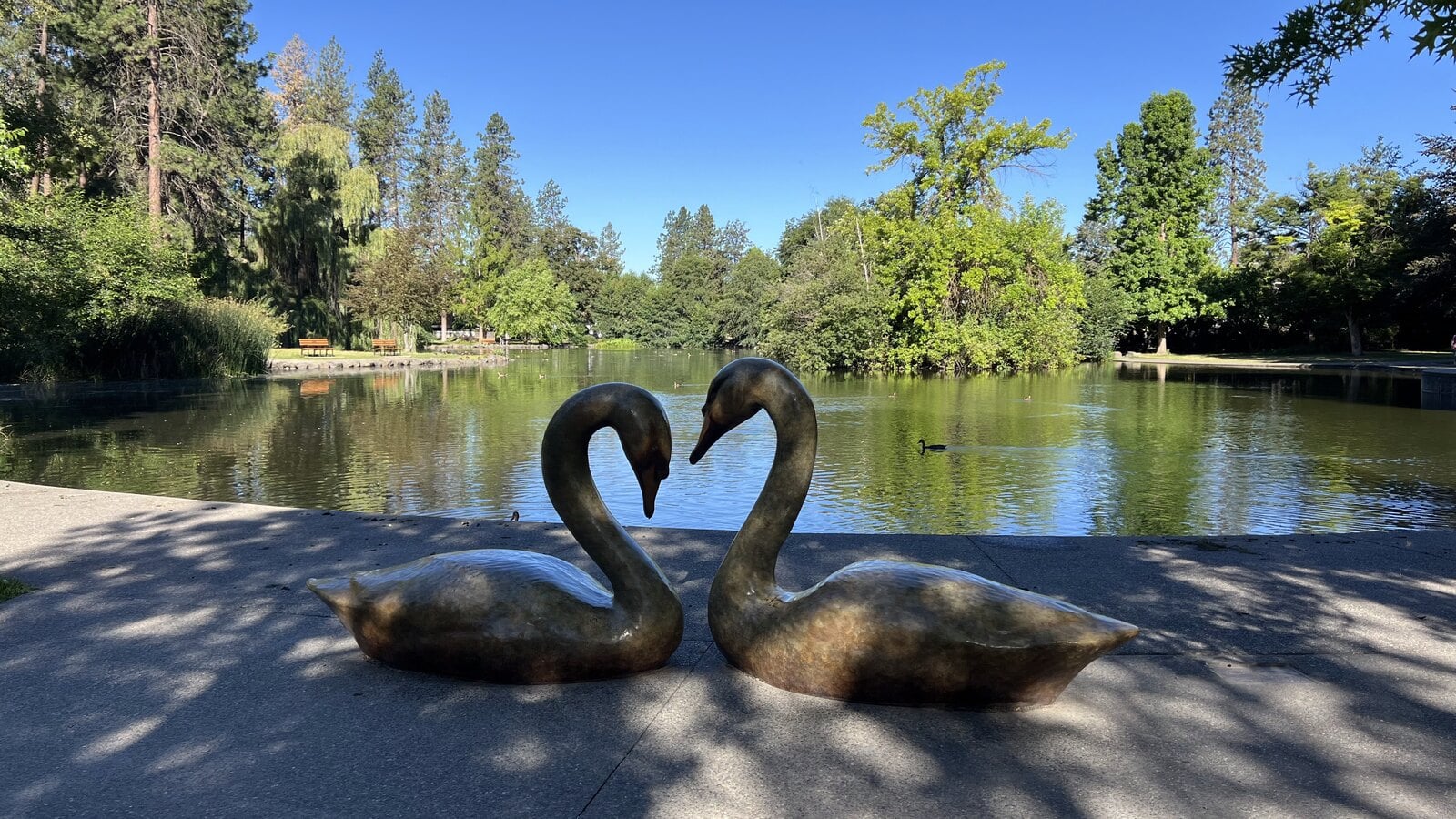
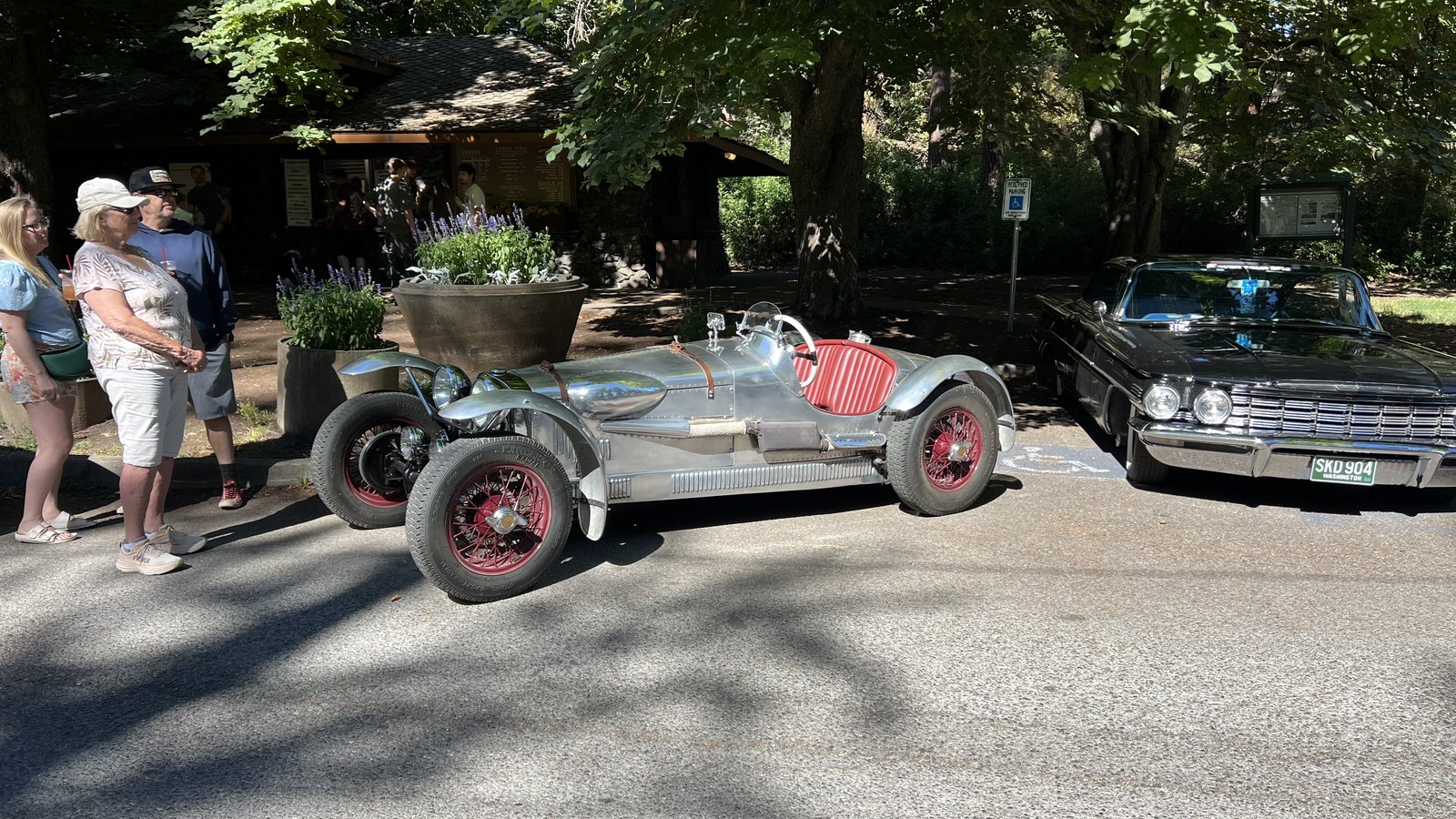
The last Sunday of the month, the Park Bench Cafe lot is not a parking lot. It is a car show. I came for the gardens on the last Sunday of July and found about fifty cars lined up along the lane, mostly European, with a couple of sixties Camaros and Corvettes mixed in, camp chairs open on the grass and a crowd standing around with coffee. The one that stopped me was a bare aluminum speedster on red wire wheels, no badges on it anywhere, and nobody standing around it knew what it was.
It gets going around 8. When I left at 10:30 a few were already pulling out. If you are visiting on a last Sunday, come early or plan to park on the street, and give the cars ten minutes on your way in.
Where to Eat Near Manito Park
Two places within a few minutes, both verified operating.
Rockwood Bakery, 315 E 18th Ave, is the neighborhood answer. It sits in a converted 1912 corner market a few blocks off the park, and it is the closest thing to a proper bakery within walking distance of the gardens. Casual pricing, breakfast and coffee.
The local move: Rockwood is closed Sunday and Monday. Which means the obvious plan, Sunday morning at the gardens followed by coffee and a pastry, does not work. Do it on a Saturday and it does.
Manito Tap House, 3011 S Grand Blvd, is the sit down option, about ten blocks south on the same street the park fronts. Pub food with a long draft list, mid range for dinner. It is the right call if you have spent two hours walking and want to stop moving.
Making a Day of It in Spokane
Manito on its own is a morning. Pair it with something and you have a Saturday.
Downtown is five minutes away and works well as the second half of the day. Our guide to spending a day in downtown Spokane covers Riverfront Park, the falls, and the Looff Carrousel, and the full Spokane city guide has the rest.
If the gardens put you in the mood to keep walking, there are five more parks and hikes around Spokane worth the drive, and Mount Spokane State Park is about an hour northeast if you want elevation and a longer day. A Discover Pass is required for day use up there, which is not the case at Manito.
In September and October, Green Bluff is twenty minutes north and hits its apple and pumpkin stretch at almost exactly the same time Duncan Garden and the dahlias are peaking. That is the best single Saturday combination in Spokane County and almost nobody plans it that way.
And if the zoo story stuck with you, there is more of it in our piece on the history of Spokane.
Go in February
Everyone tells you to see Manito in spring. Spring is when the park is most photographed and least reliable, and half the people who take that advice end up standing over an empty Duncan Garden wondering where the flowers are.
Here is the visit worth making instead, at least once. Drive up the South Hill on a gray February morning, get there before three because that is when the gate comes down, walk in past the bare beds and the pruned rose canes, and open the door of the Gaiser Conservatory. It is warm. It smells like dirt and citrus. There are forced hyacinths coming up in trays and a banana tree pressed against the glass and a fern older than some of the people looking at it. Outside the windows it is thirty four degrees and the whole park is brown.
It is free, it is ten minutes from downtown, and it is open right now. Go see it.
Before you go
That is the whole idea behind the Explore Washington State Card. Free to carry, with a little something waiting at participating places when you visit. Your zip code is a vote for which towns we sign up next, and our weekly Washington travel newsletter starts landing right away.
Get your free card- About the Author
- Latest Posts

Founder and editor of Explore Washington State since 2017. A lifelong Washington resident who has lived across Tacoma, Ellensburg, the west side, and now Wenatchee, Scott curates the most comprehensive guide to experiencing Washington State. He also hosts the Exploring Washington State podcast.


