Washington State Bird: Where to Spot the Willow Goldfinch
The Washington state bird is the Willow Goldfinch, also known as the American Goldfinch, officially designated by the Washington State Legislature in 1951.
Picture a small, brilliant yellow bird clinging to a thistle stalk, wings flashing black as it launches into the sky in its signature looping flight. That is the Willow Goldfinch, and in Washington State, it is more than a pretty sight. It is the official state bird, and once you know what to look for, you will find it everywhere from Eastern Washington farmland to your own backyard.
| Quick Facts | |
|---|---|
| Common Name | Willow Goldfinch (American Goldfinch) |
| Scientific Name | Carduelis tristis |
| Designated | 1951 · RCW 1.20.086 |
| Size | 4.3 to 5.1 inches |
| Best Time to See | April through August (breeding plumage) |
| Year Round? | Yes, statewide |
What Is the Washington State Bird?
The Washington state bird is the Willow Goldfinch, also known as the American Goldfinch (Carduelis tristis). It was officially designated by the Washington State Legislature in 1951 under RCW 1.20.086, but the story goes back further than that.
In 1928, Washington schoolchildren participated in a statewide vote to choose a state bird. The goldfinch won by a wide margin. It then took the legislature another 23 years to make it official law. Cheerful, adaptable, and genuinely stunning in breeding plumage, the Willow Goldfinch is a fitting symbol for a state that takes its natural landscapes seriously.
Why Does Washington Call It the Willow Goldfinch?
You will notice Washington uses the name Willow Goldfinch rather than American Goldfinch, which is what the rest of North America uses. This comes down to an old taxonomic distinction. When Washington schoolchildren first voted for the state bird in 1928 and the legislature made it official in 1951, ornithologists recognized several regional subspecies of the American Goldfinch. The Pacific Coast population was classified as Spinus tristis salicamans, with salicamans derived from the Latin word for willow, reflecting this subspecies’ preference for willow dominated riparian habitat.
Modern taxonomy has since folded this subspecies back into the broader American Goldfinch species (Spinus tristis), but Washington kept its original state designation. So Willow Goldfinch and American Goldfinch refer to the same bird. Washington’s version just comes with a better story.
How to Identify the Willow Goldfinch
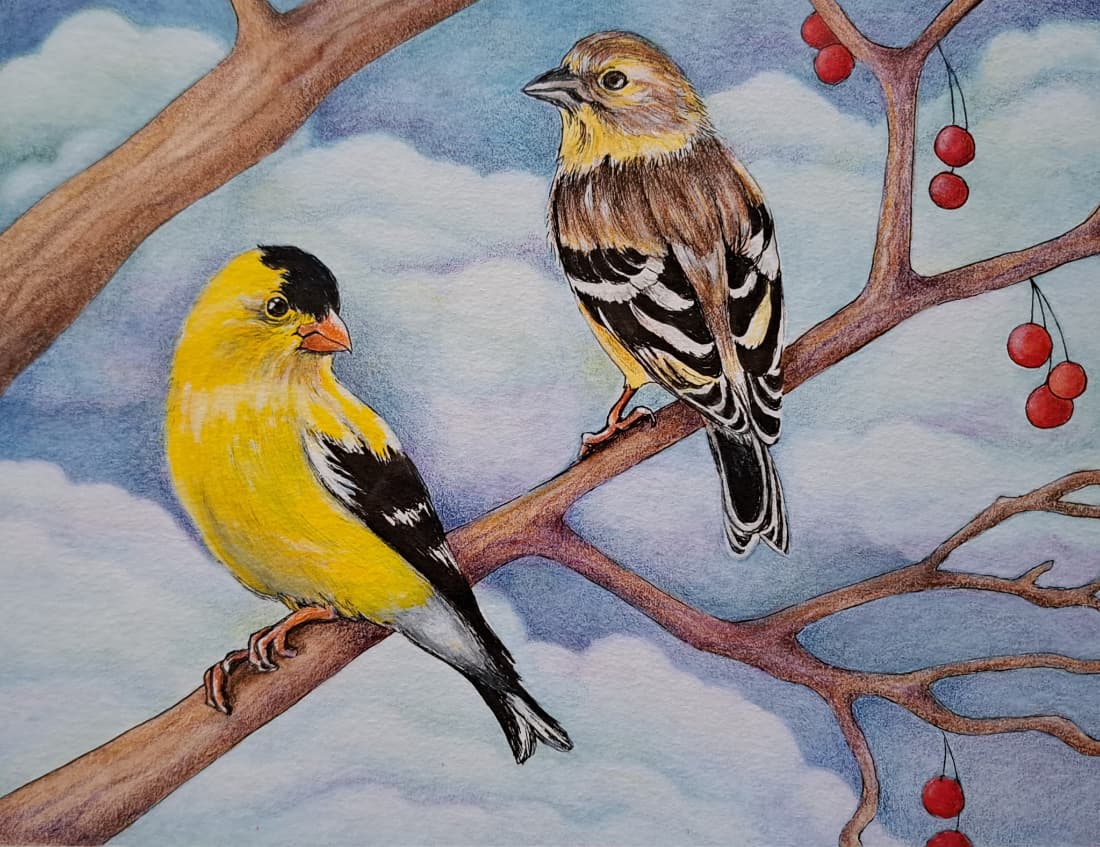
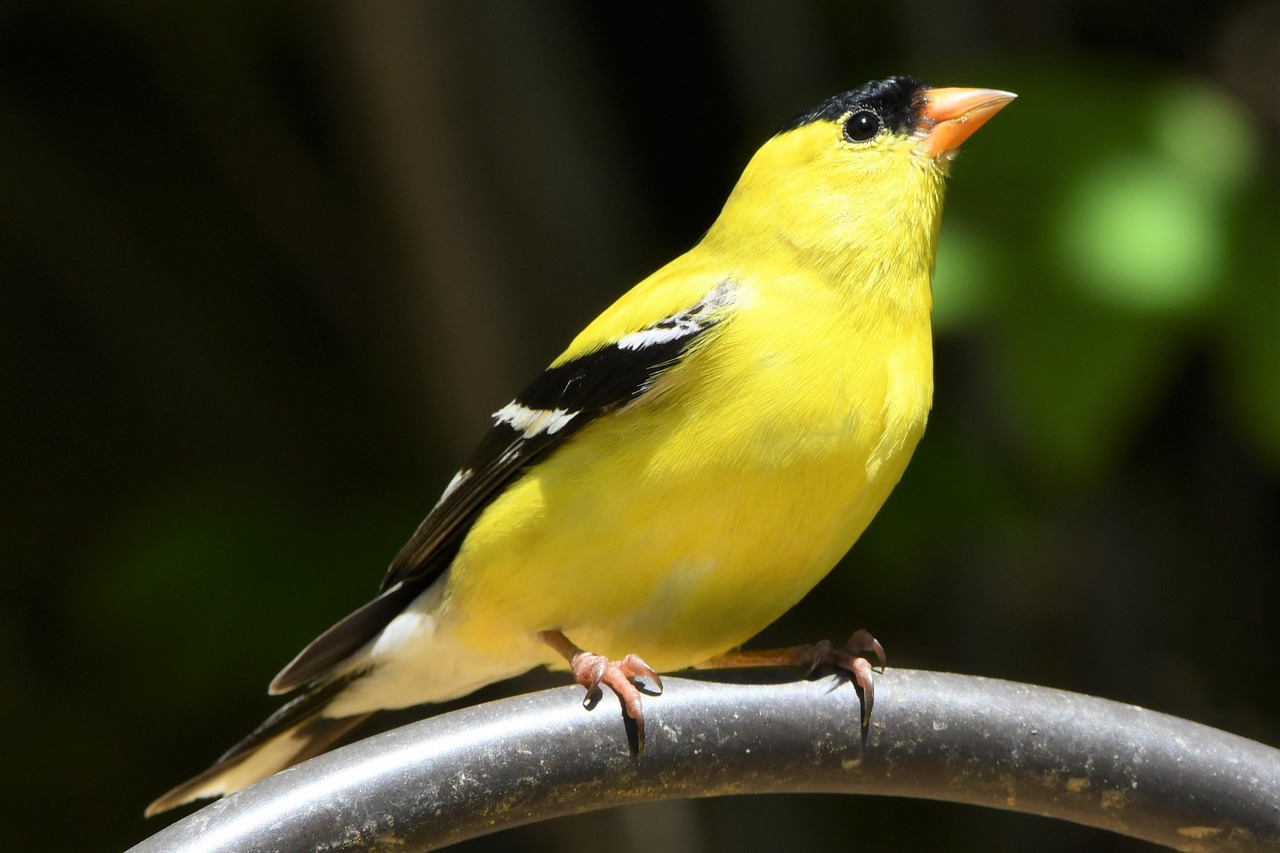
The Willow Goldfinch is small but unmistakable when the males are in full breeding color. Here is what to watch for:
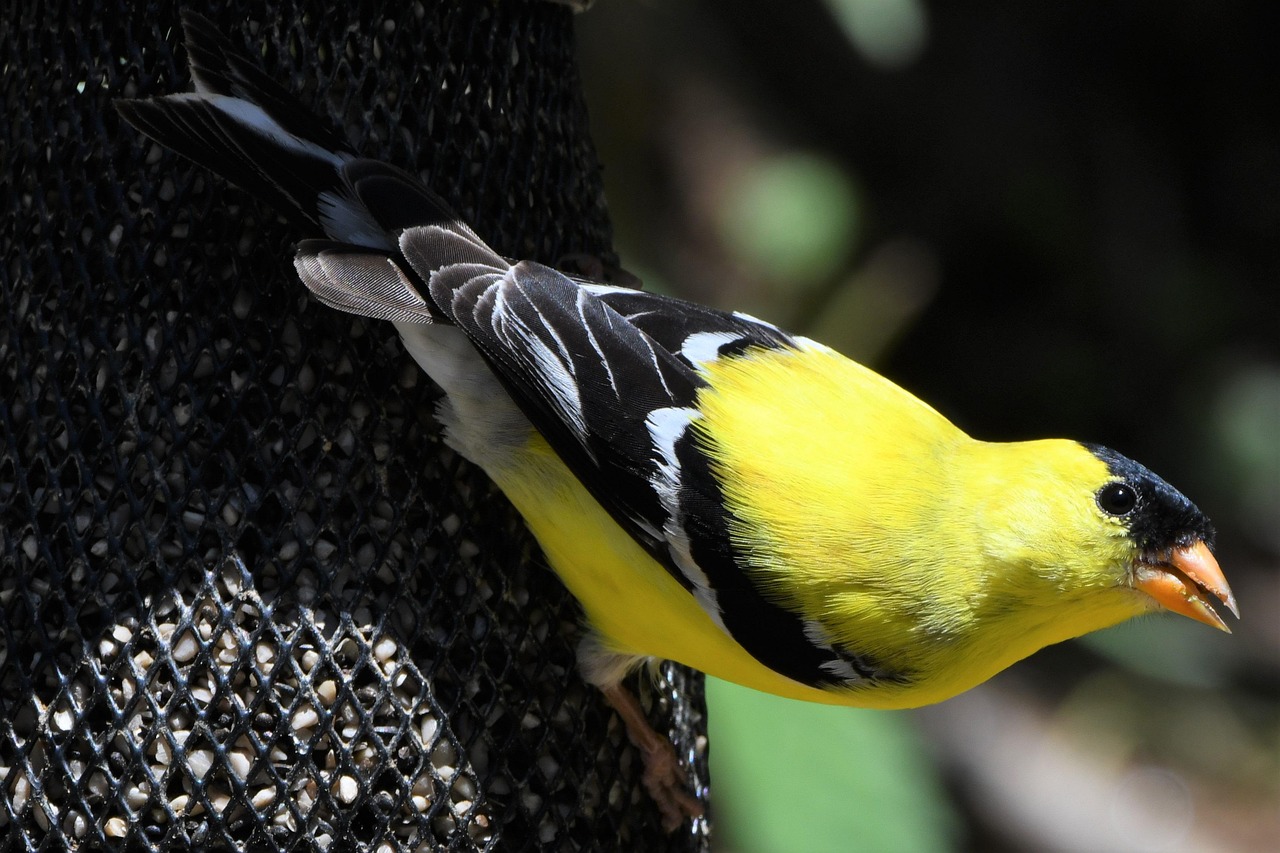
- Males in breeding season (April through August): Bright canary yellow body, jet black wings with white wing bars, and a bold black patch on the forehead. Many people call them wild canaries, and it is easy to see why.
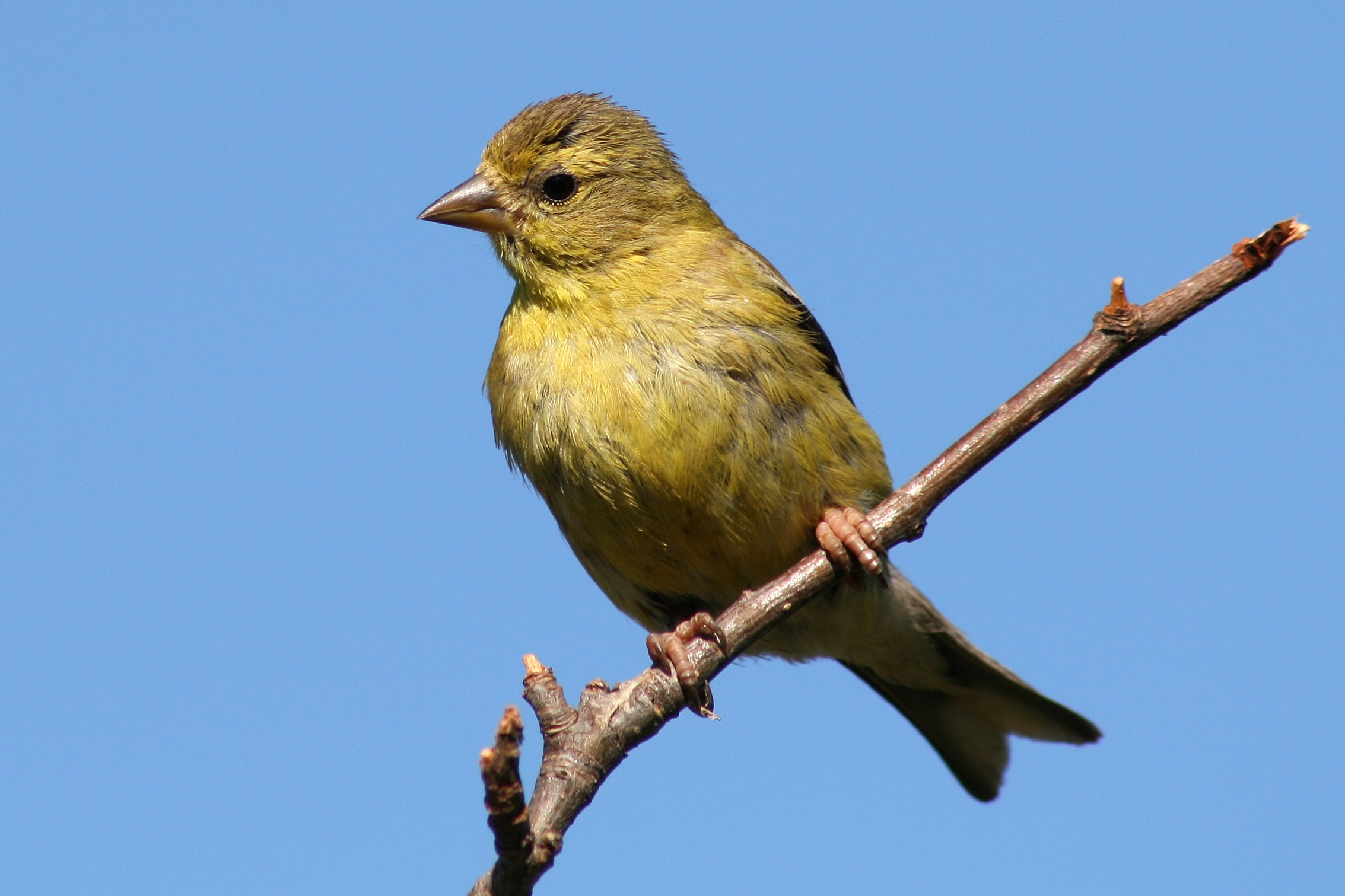
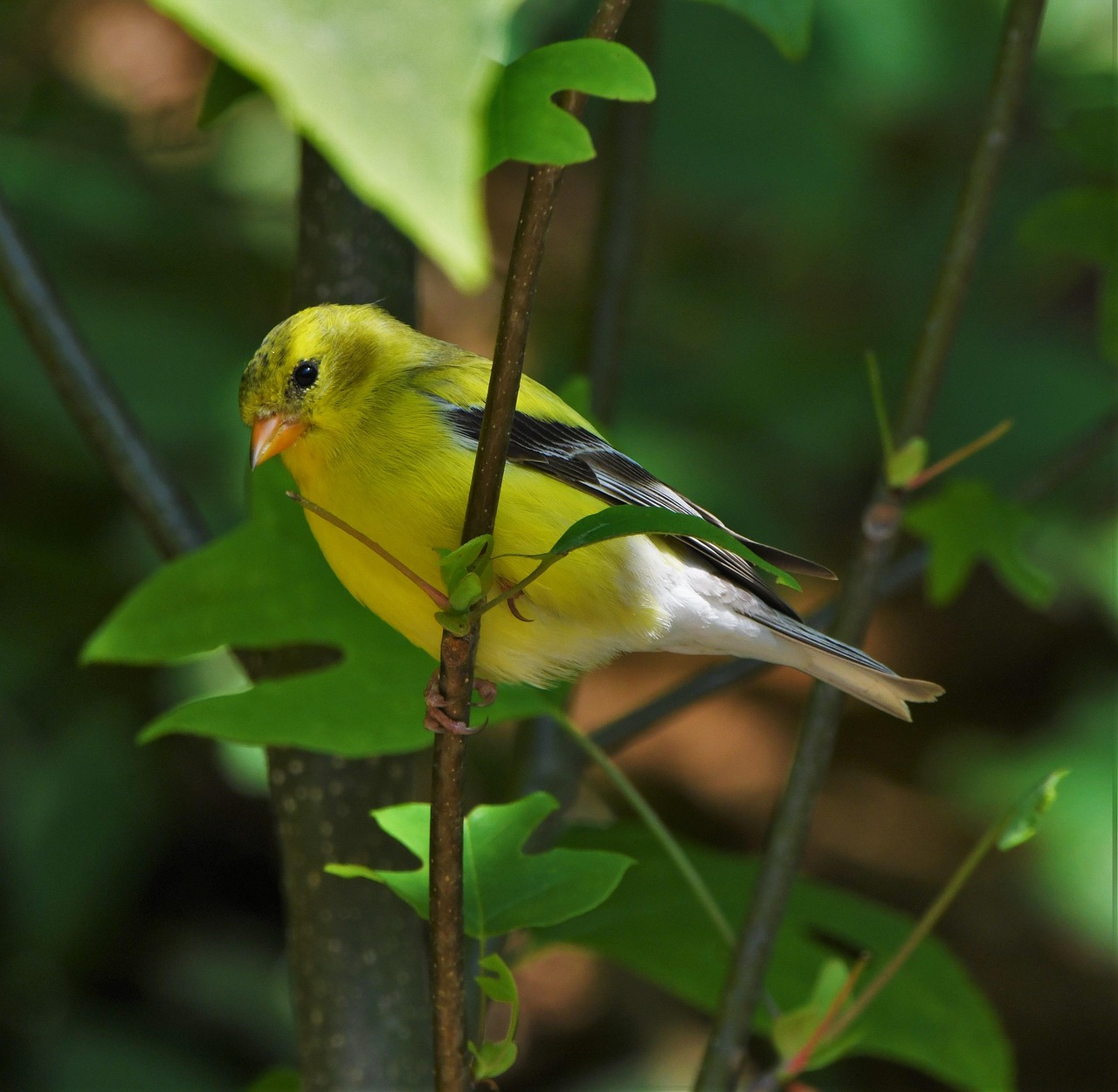
- Females: Olive yellow throughout, softer and more muted than the males, without the black forehead. Still striking in the right light.
- Winter plumage (both sexes): The yellow fades to a brownish olive. The birds are still recognizable by shape and behavior, but far less vivid.
- Size: Small, roughly 4.3 to 5.1 inches in length, similar in size to a sparrow.
- Flight: One of the most reliable identification clues. Goldfinches fly in a bounding, looping pattern that rises and falls with each wingbeat, like a gentle roller coaster. Once you have seen it, you will always recognize it.
- Call: A cheerful series of twitters and whistles. Males sing year round, even deep into winter, which makes them easy to locate by ear.
What Does the Willow Goldfinch Sound Like?
The Willow Goldfinch has one of the most recognizable calls in Washington birding. During flight it gives a distinctive four note call that birders phonetically describe as po-ta-to-chip, rising and falling in a bouncy rhythm that matches the bird’s undulating flight pattern. Once you hear it, you will notice it everywhere.
The song itself is a long, rambling series of twitters and warbles, often including a distinctive upward-sweeping sweeeee note. Males sing persistently through the breeding season from late spring into summer. Females also call, though less frequently. At a nyjer feeder, expect a cheerful chorus of short contact calls as birds jostle for position.
Where to Find the Washington State Bird
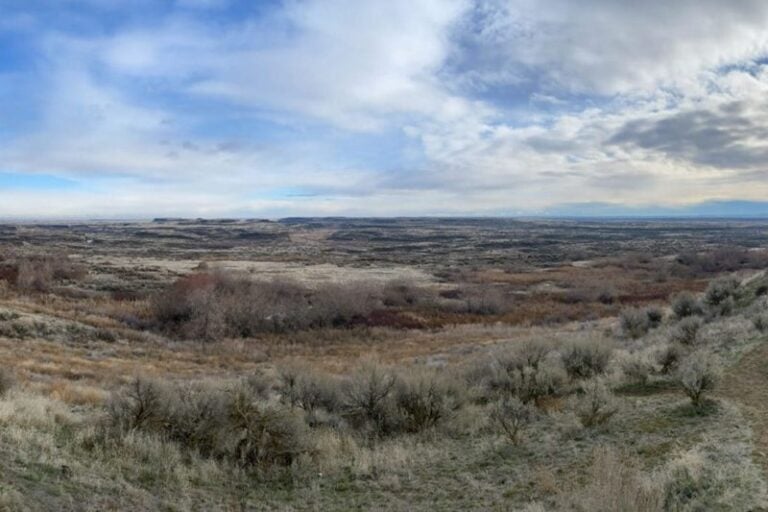
The Willow Goldfinch is a year round resident across Washington State. It is not picky about habitat and turns up in a wide range of open landscapes including grasslands, weedy fields, river corridors, orchards, parks, and garden edges. Anywhere you find abundant thistle and native wildflowers, you have a good chance of finding goldfinches.
Some of the best specific locations in Washington:
- Ridgefield National Wildlife Refuge (Clark County): Open fields and wetland edges in the Columbia River lowlands. One of the most reliable sites in southwestern Washington for goldfinches and a long list of other songbirds.
- Conboy Lake National Wildlife Refuge (Klickitat County): Wide open meadows and a quieter, less visited experience. Excellent for watching flocks gather in late summer and fall.
- Eastern Washington farmland: Weedy roadsides, grain field edges, and riparian corridors throughout the Columbia Basin and Palouse region support large populations, especially in late summer.
- River corridors statewide: Anywhere you find willows, alders, and open grassy areas near water, goldfinches are likely nearby.
- Your own backyard: Put up a nyjer (thistle) seed feeder and there is a very good chance a Willow Goldfinch will find it within days.
When to See the Willow Goldfinch
Washington goldfinches are present year round, but timing matters if you want to see them at their most spectacular.
April through August is the peak period. This is when males are in full breeding plumage, the brightest yellow of the year, and when the birds are most active and vocal. If you want a photo that does justice to this bird, this is your window.
Late summer through early fall brings flocks together in weedy fields before some individuals begin moving south. This is a great time to watch larger numbers feeding in groups, especially in open agricultural areas.
Winter goldfinches are subtler, more brownish and quieter overall, but they are still here. Look for small flocks visiting nyjer feeders or picking at dried seed heads standing in gardens and fields.
How to Attract the Willow Goldfinch to Your Backyard
This is one of the easiest birds to bring into your yard, and one of the most rewarding to watch up close.
- Nyjer (thistle) feeder: A tube feeder loaded with nyjer seed is the single most effective setup. Goldfinches are strongly attracted to it and will return consistently once they find it.
- Hulled sunflower seed: A platform or tube feeder with sunflower chips is a solid second option that attracts a wide range of songbirds alongside goldfinches.
- Native plants: Plant native thistles, coneflowers, black eyed Susans, and asters and then let the seed heads stand through winter rather than cutting them back. The birds will harvest directly from the plants.
- Fresh water: A clean birdbath with regularly changed water attracts goldfinches along with dozens of other species.
- Skip the pesticides: Goldfinches eat almost exclusively seeds and raise their young on seeds. A garden that supports native plants and avoids chemicals is the best long term habitat you can offer.
Interesting Facts About the Willow Goldfinch
A few things about Washington’s state bird that may surprise you:
- One of the latest nesters in North America: The Willow Goldfinch delays breeding until July or August, timed specifically to when thistles are producing both seeds and the soft down the female uses to line her nest. Most songbirds are raising their second brood by the time goldfinches are building their first.
- A seed only diet: Unlike most songbirds that feed insects to their young, goldfinches raise their chicks on an almost entirely seed based diet. This makes them unusual among North American passerines and is one reason cowbird chicks rarely survive in goldfinch nests.
- Partial migration: Washington birds are year round residents, but goldfinches that breed farther north pass through the state seasonally. Winter flocks often include a mix of local birds and migrants from Canada.
- An exceptionally tight nest: The female builds a compact, tightly woven cup so dense it can actually hold water. Nests are tucked into the forks of shrubs or small trees, usually well hidden by surrounding foliage.
Other Washington State Symbols
The Willow Goldfinch shares its official status with a group of symbols that reflect the full range of Washington’s natural character. The state flower is the Coast Rhododendron, the state tree is the Western Hemlock, and the state fish is the Steelhead Trout. If you are exploring Washington wildlife and nature beyond the state bird, the state parks system offers some of the best opportunities to encounter these species in their native habitats across the Pacific Northwest.
Keep Exploring Washington Wildlife
Frequently Asked Questions
What is the Washington state bird?
The Willow Goldfinch, also known as the American Goldfinch, has been Washington’s official state bird since 1951.
What does the Washington state bird look like?
In breeding season, males are bright canary yellow with black wings and a bold black forehead patch. Females are olive yellow and considerably more muted.
Where can I see the Washington state bird in Washington State?
Ridgefield and Conboy Lake National Wildlife Refuges are two of the most reliable spots. Weedy fields and river corridors across Eastern Washington also support large populations year round.
What does the Washington state bird eat?
Almost exclusively seeds, especially thistle and sunflower. The Willow Goldfinch is one of the only North American songbirds that raises its young on seeds rather than insects.
When was the Willow Goldfinch named Washington’s state bird?
Washington schoolchildren chose the goldfinch in a 1928 statewide vote. The legislature made it official 23 years later in 1951.
Is the Willow Goldfinch the same as the American Goldfinch?
Yes. Washington uses the name Willow Goldfinch based on an older subspecies classification (Spinus tristis salicamans) that has since been merged back into the broader American Goldfinch species. Washington kept its original designation, so the two names refer to the same bird.
Before you go
That is the whole idea behind the Explore Washington State Card. Free to carry, with a little something waiting at participating places when you visit. Your zip code is a vote for which towns we sign up next, and our weekly Washington travel newsletter starts landing right away.
Get your free card- About the Author
- Latest Posts

Explore Washington State has been covering the real Washington for more than a decade. State parks, small towns, back roads, rest stops, and the people who make this place worth exploring. What started as a hyperlocal project covering individual communities grew into a full media project with more than 340 podcast episodes, a weekly newsletter with over 6,300 subscribers, and coverage of all 146 Washington State Parks. The content here comes from people who have actually been to these places: locals, regulars, and lifelong Washington residents who care more about getting it right than getting clicks.