Visiting the Hoh Rainforest: Is It Worth the Drive?
The Saturday Verdict: Worth it. But plan to stay overnight.
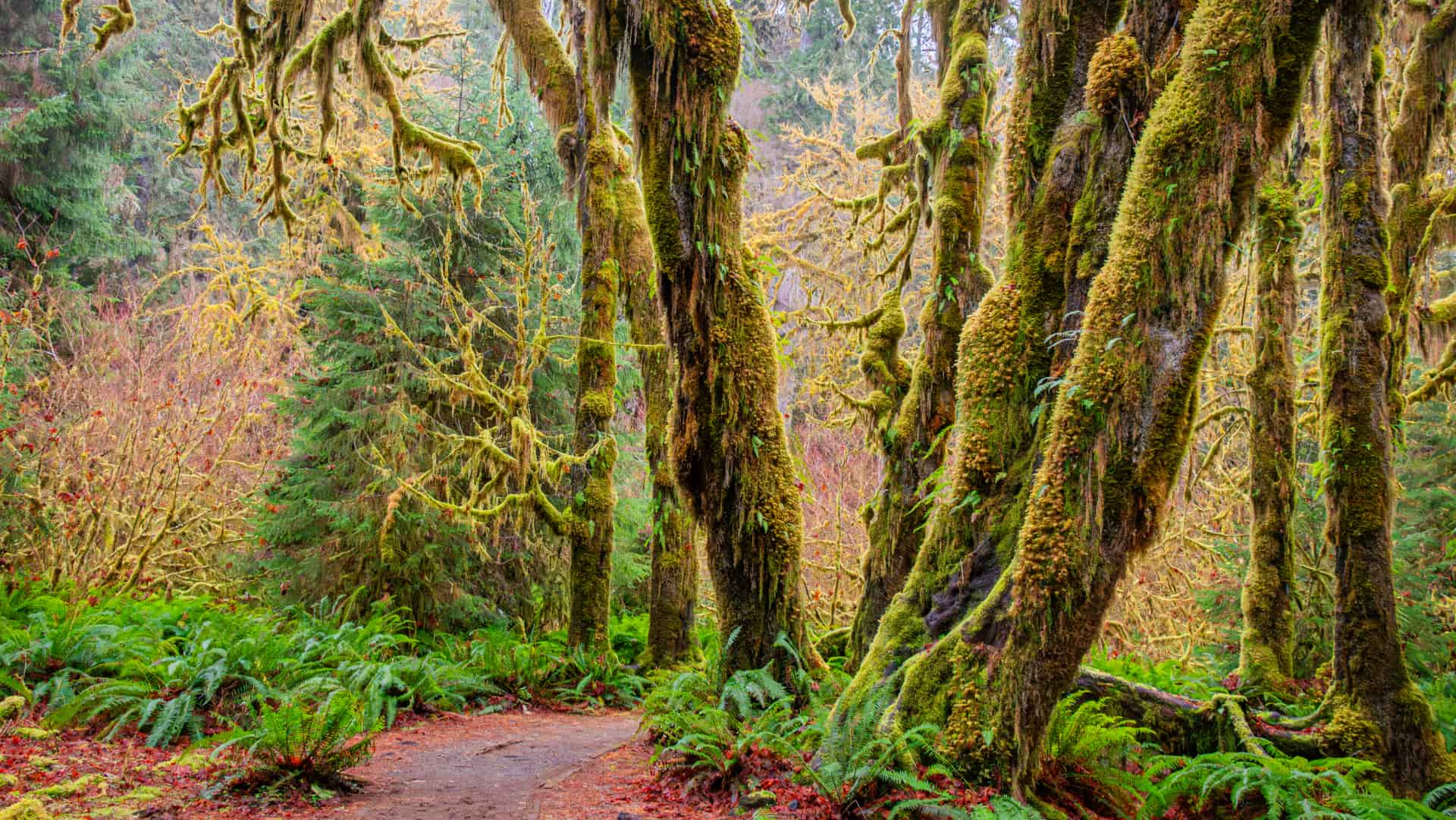
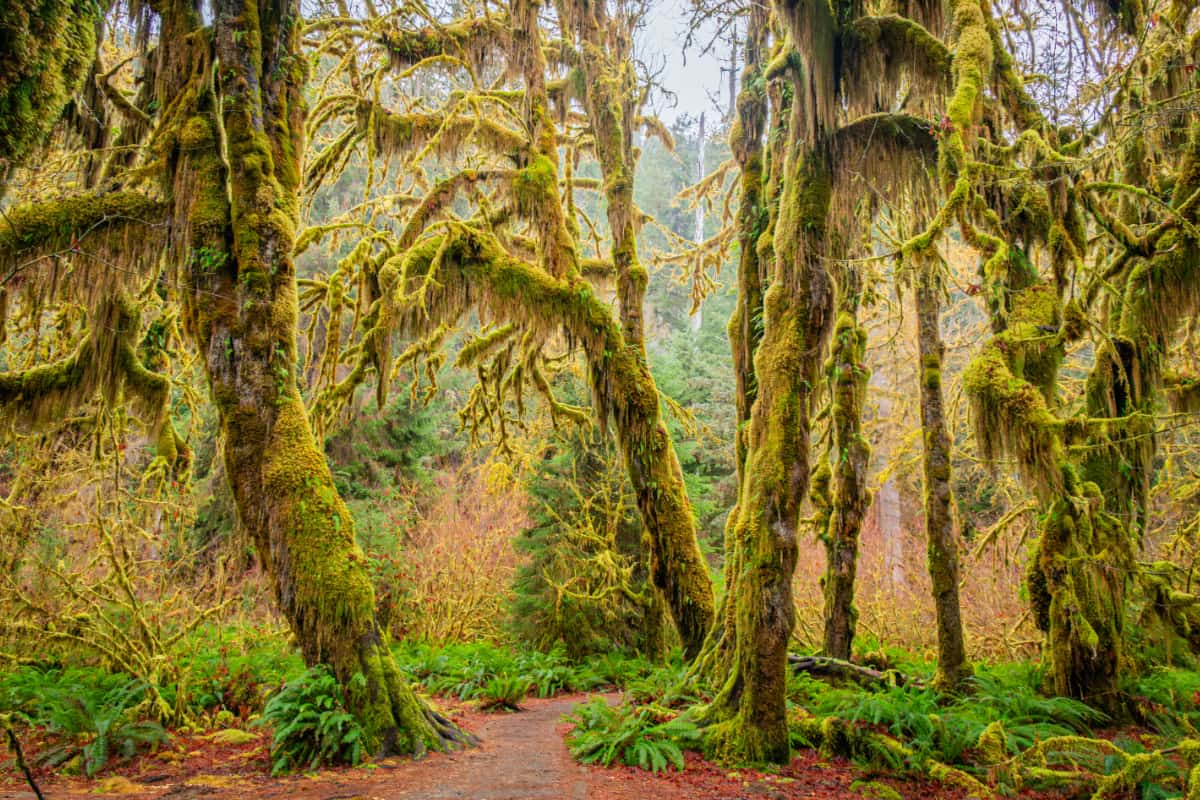
Visiting Hoh Rainforest means stepping into the wettest place in the contiguous United States. 140 inches of rain per year. Sitka spruce trees over 300 feet tall wrapped in so much old man’s beard lichen they look like something from a film set. Roosevelt elk wandering through a forest floor so green it almost reads as artificial.
It is genuinely one of the strangest, most impressive landscapes in Washington State. And the drive is 4.5 hours from Seattle.
The Hoh is one of four rainforests on the Olympic Peninsula, and the only one UNESCO recognizes as both a World Heritage Site and a Biosphere Reserve.
That distance matters. This guide is going to be honest about it.
Hoh Rainforest: At a Glance
- Drive from Seattle: 4.5 hours (Bainbridge ferry or Olympia route — both clock out the same)
- Entrance fee: $30 per vehicle for a 7-day pass. America the Beautiful annual pass ($80) pays for itself after two Olympic visits.
- Best time to visit: May (green moss, lighter crowds) or October (solitude, fall rain, no lines)
- Top trails: Hall of Mosses (0.8 mi loop), Spruce Nature Trail (1.25 mi, best for elk), Hoh River Trail (up to 17 mi one way)
- Summer crowds: Parking fills by 10 AM. Expect a 1 to 2 hour entrance wait from 9 AM to 5 PM. Arrive before 9 or after 5.
- Overnight: Hoh Campground (reserve June 12 through September 6 on Recreation.gov) or Forks, 18 miles west on Highway 101
- Road status: Upper Hoh Road reopened May 2026 after flooding closed it in December 2024. Check NPS alerts before driving out.
- Dogs: Not allowed on Hall of Mosses or Spruce Nature Trail. Allowed on Hoh River Trail on leash.
- Time needed: Half a day minimum. The two short loops run about two hours combined; add a morning for the Hoh River Trail or a real shot at seeing elk.
- Cell service: None. No signal at the visitor center or on the Upper Hoh Road. Download maps and directions before you turn off Highway 101.
- Reservations: None to enter the park or hike the trails. Only the Hoh Campground needs one, and only in summer.
- Accessible option: The Hoh Visitor Center Mini Trail is an 800 foot packed gravel loop with a gentle grade, benches, and van accessible parking. Hall of Mosses and Spruce Nature Trail are not wheelchair or stroller friendly.
How Far Is the Hoh Rainforest from Seattle?
Four and a half hours, minimum. Both routes clock out at roughly the same time: the Bainbridge Island ferry or the drive south through Olympia. There is no shortcut. The Hoh Visitor Center sits at the end of 19 miles of two lane road off Highway 101, on the western edge of the Olympic Peninsula.
Do not let anyone tell you this is a day trip. You can do it in a day if you are willing to drive nine hours round trip for two hours of hiking. Some people do. But if you are driving from Seattle and back in the same day, you will spend more time in the car than in the rainforest.
The right move: one night in Forks (18 miles west on 101) or a site at the Hoh Campground, then a full morning in the forest before you head back. Bring a full thermos. Whatever you brew, get it sorted before you leave. There are no services once you turn off Highway 101 onto the Upper Hoh Road.
The Road Just Reopened: Here Is What Happened
If you have been watching this destination, you may have noticed that the Hoh Rainforest was effectively closed for most of winter and spring 2026.
In December 2024, a bomb cyclone sent the Hoh River flooding over its banks and washed out sections of the Upper Hoh Road, which is the only vehicle access to the visitor center and campground. Jefferson County, which maintains the road, had to close it entirely. For nearly five months, the rainforest was unreachable by car.
The road reopened in May 2026 after $623,000 in emergency funding from Governor Ferguson’s Strategic Reserve Fund and another $27,000 in private donations paid for repairs. Most guides online were written before the closure or during it. Check the NPS alerts page for current conditions before you drive out. This road has a history with the river.
What You Will Actually Find
The centerpiece of any visit is the Hall of Mosses. It is 0.8 miles, easy terrain, and takes most people between 30 and 60 minutes to walk. Bigleaf maple trees draped in club moss form a canopy that, on an overcast day, glows an almost impossible shade of green. The light does something strange in there. Even if you have seen photos, the actual scale of the trees stops you.
But here is what the photos do not show: on a summer weekend, you are walking this trail in a crowd. The parking lot fills before 10 AM. On peak days, there is a 1 to 2 hour wait at the entrance station.
Go in the morning, in shoulder season, or both.
The Trails: What to Hike and in What Order
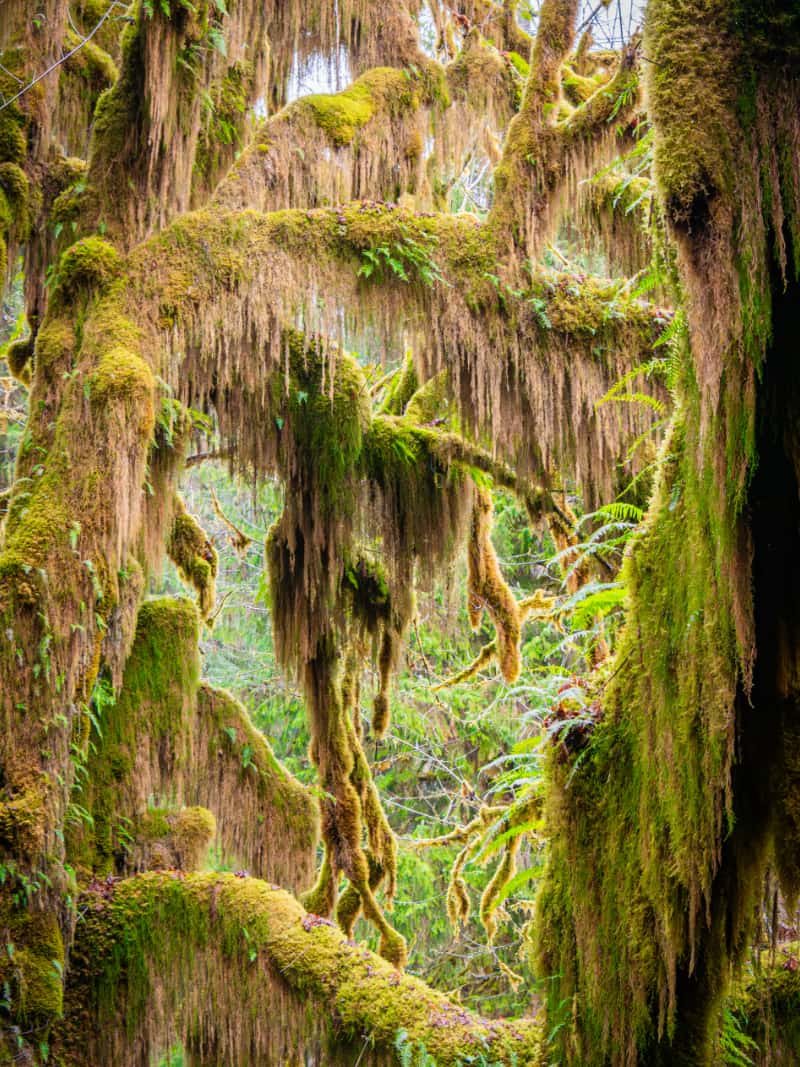
Hall of Mosses is the reason most people drive out here, and it earns the trip. The 0.8 mile loop starts and ends at the visitor center parking lot. No dogs allowed. No elevation to speak of. If you are visiting with kids or grandparents, this is the hike.
Spruce Nature Trail gets overlooked because Hall of Mosses gets all the attention. Do not skip it. The 1.25 mile loop follows the Hoh River through a stretch of alder and cottonwood forest that gives way to open meadow. Roosevelt elk use these meadows. If you want to actually see elk and not just their tracks, this trail gives you a better shot than the moss loop. Take it before you go back to the car.
Hoh River Trail is for people who want more than a morning. The trail runs 17 miles one way to Blue Glacier at the base of Mount Olympus. Day hikers routinely walk the first 5 miles in to the river access points and turnaround. If you have a full day, this is how you use it. The crowds thin out within the first two miles.
If you are building out a full peninsula itinerary, the hike to Sol Duc Falls is a 90-minute drive east on Highway 101. The round trip is 1.6 miles and the falls are genuinely impressive. It pairs well with a Hoh overnight.
The One Thing Nobody Tells You
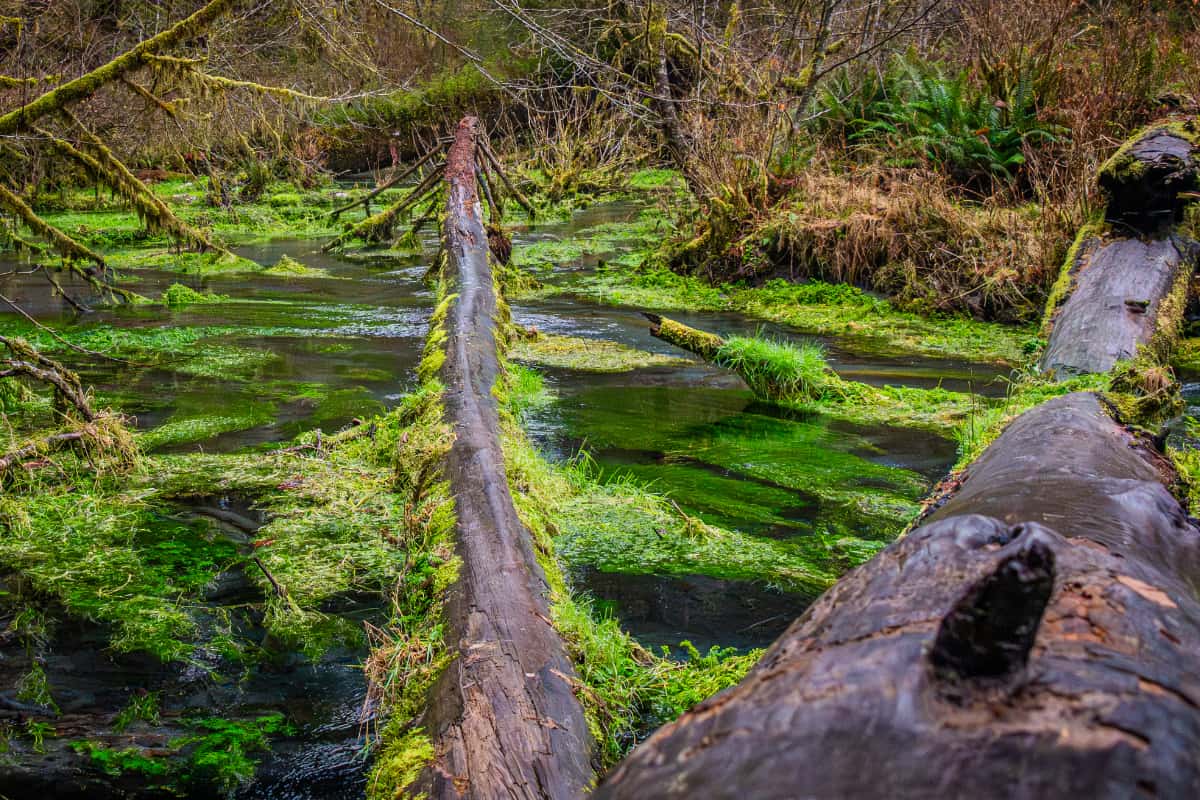
At mile 3.2 on the Hoh River Trail, above Mount Tom Creek Meadows, there is a small red stone sitting on a log covered in moss. It marks what acoustic ecologist Gordon Hempton identified as the quietest place in the United States.
He calls it One Square Inch of Silence.
Hempton, who won an Emmy for his sound recordings of natural environments, spent years documenting noise pollution across the country. His conclusion: there are only 10 to 12 places left in the United States where you can stand outside and hear genuinely natural silence. No distant highways. No aircraft. No machinery. The Hoh is one of them.
Or was. For years, F-18 Growlers from Naval Air Station Whidbey Island regularly flew over the Olympic Peninsula during training exercises, and their noise reached the rainforest. Hempton filed formal complaints. It became a whole thing.
Even with the occasional aircraft, what you hear at that spot on the Hoh River Trail is something most people in Washington State will go their entire lives without hearing: Roosevelt elk bugling, the river running, birds calling. Walk the first three miles of the Hoh River Trail and you will understand what Hempton was protecting.
Most people who visit the Hoh never leave the Hall of Mosses parking lot. That is a loss.
When to Go
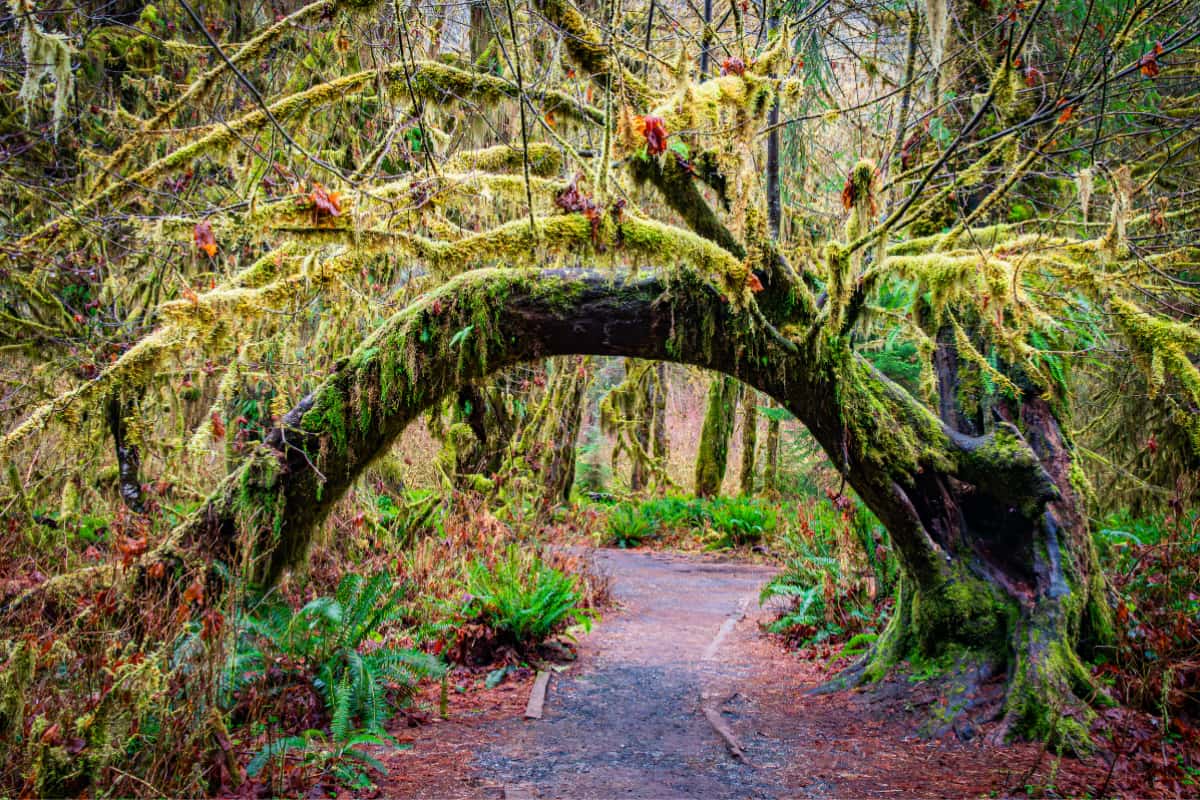
Timing matters when visiting Hoh Rainforest. Spring (April through early June) is the best balance for most people. The road has typically cleared of winter damage, the bigleaf maples are leafing out, the moss is saturated and vivid green, and the crowds are lighter than summer. Go in May if you want the forest at its most photogenic and the parking lot at its most manageable.
Fall (September through October) is the local’s pick. The summer crowds are gone. The moss is still green. Rain is increasing, which means the forest sounds the way it should. If you camp here in October, you will have the campground mostly to yourself.
Summer (July through August) is peak season. The forest looks great. So does the entrance line. Expect a 1 to 2 hour wait at the pay station between 9 AM and 5 PM. Arrive before 9. Or after 5, which is also beautiful because the afternoon light does interesting things in the trees.
Winter is for people who genuinely want to be alone in one of the quietest places on earth. The campground goes first come, first served. The trails are often muddy. Bring waterproof boots regardless of forecast. If the weather cooperates, a winter morning on the Hall of Mosses trail with no other people in sight is something you will not forget.
The Parking and Crowds Reality
The visitor center lot is the only option. When it fills, there is no overflow. The entrance road does not have shoulder parking.
The practical rule: arrive before 10 AM in summer, or plan for the entrance wait. The wait is for the pay station, not the parking lot itself, but it also signals that the lot will fill soon.
The entrance fee is $30 per vehicle for a seven day pass. If you plan to visit more than one national park this year, the America the Beautiful annual pass is the better buy at $80. It covers every national park in the country for a full year and pays for itself after two visits to Olympic alone.
You can pick up the America the Beautiful Pass here. When you buy through our link, a small commission supports Explore Washington State at no extra cost to you.
If You Are Staying Overnight
Hoh Campground is the obvious choice. It sits right next to the trailhead. Some sites back up to the Hoh River. For summer, book early on Recreation.gov. The reservation season runs June 12 through September 6, 2026. A loop sites open 6 months in advance and go fast. If you missed the window, check the B loop, which becomes available just 4 days before arrival and often has cancellations.
Outside the reservation season, the campground is first come, first served. Shoulder season camping here is genuinely good.
Forks is 18 miles west on Highway 101. It has a handful of motels, a good diner, and a grocery store. Expect it to be busier than usual this summer given how much pent-up demand the road closure created.
If you want to extend the trip, Lake Quinault is 90 minutes south on Highway 101. Another old growth rainforest, historic lodge options, and far fewer crowds.
Make a Weekend of It: The Olympic Peninsula Loop
Once you have driven 4.5 hours to reach the Hoh, the smart move is to make it the centerpiece of a loop rather than an out and back. Highway 101 wraps the entire western peninsula, and some of the best coastline and old growth in Washington State sits within an easy drive of the Upper Hoh Road turnoff. Here is how the pieces fit together.
Forks is 18 miles north on Highway 101 and the natural base for the night. Yes, it is the Twilight town, and you can lean into that or skip it entirely. Either way it has the motels, the diner, and the last real grocery store before the coast.
Rialto Beach and Second Beach sit about 30 minutes west of Forks near La Push. These are the sea stack beaches that show up on every Washington coast postcard: Rialto for the driftwood and the Hole in the Wall, Second Beach for the sunset.
Ruby Beach and Kalaloch are south of the Hoh on Highway 101. Ruby Beach is the most photographed stretch of the whole Olympic coast, and the Kalaloch bluff holds the famous Tree of Life, a spruce still growing while the ground washes out beneath its roots.
Lake Quinault is 90 minutes south, a second old growth rainforest with a historic lodge and a fraction of the Hoh crowds.
Sol Duc Falls is 90 minutes east toward Port Angeles, a short walk through the trees to one of the prettiest waterfalls in the park, with hot springs nearby.
Put them together and you have a two or three day loop that justifies the drive far better than any single stop. Start at the Hoh first thing in the morning when it is quietest, then work your way around the peninsula from there.
Frequently Asked Questions
Is the Hoh Rainforest worth visiting?
Yes. It is one of the most genuinely strange landscapes in Washington State. 140 inches of rain per year produces something that looks nothing like anywhere else in the country. The Saturday Verdict: worth an overnight trip. The 4.5 hour drive from Seattle is too much for a day trip unless you are already on the Olympic Peninsula.
How far is the Hoh Rainforest from Seattle?
Approximately 4.5 hours, whether you take the Bainbridge Island ferry or drive through Olympia. Both routes come out about the same. Plan for at least one night in Forks or at the Hoh Campground.
What is the best time to visit the Hoh Rainforest?
Fall and winter for solitude and true quiet. Spring (April through early June) for the greenest moss and the most photogenic light. Summer means crowds, a 1 to 2 hour entrance wait between 9 AM and 5 PM, and parking that fills by 10 AM. Come in May or October and you get the forest without the line.
Do you need a reservation to visit the Hoh Rainforest?
No reservation is required to visit the rainforest or hike the trails. You need a National Park pass or pay the Olympic National Park entrance fee ($30 per vehicle as of 2026). Camping at Hoh Campground requires a reservation via Recreation.gov from June through September.
Are dogs allowed at the Hoh Rainforest?
Dogs are not allowed on the Hall of Mosses Trail or the Spruce Nature Trail. They are allowed at the campground and on the Hoh River Trail if kept on leash. Leave your dog at home if the Hall of Mosses is the main reason you are going.
Is the Hoh Rainforest open right now?
Yes. The Upper Hoh Road reopened in May 2026 after being closed since December 2024, when flooding washed out sections of the road. Jefferson County completed repairs using $623,000 in emergency state funding. Check the Olympic National Park alerts page before driving out.
How long do you need at the Hoh Rainforest?
Plan for at least a half day. The two short loops, Hall of Mosses and Spruce Nature Trail, take about two hours combined. Add a morning if you want to walk part of the Hoh River Trail or give yourself a real chance at seeing elk. Because it is a 4.5 hour drive from Seattle, most people pair the visit with an overnight in Forks or at the campground rather than rushing in and back out.
Is there cell service at the Hoh Rainforest?
No. There is no reliable cell signal at the visitor center, on the trails, or along the Upper Hoh Road. Download your maps, directions, and any reservation details before you turn off Highway 101, and let someone know your plans if you are hiking the Hoh River Trail.
Can you drive through the Hoh Rainforest?
No. The Upper Hoh Road dead ends at the visitor center and campground, where you park and explore on foot. The road in is about 18 miles of two lane pavement off Highway 101 and is the only vehicle access, so you drive to the forest, not through it.
What animals live in the Hoh Rainforest?
Roosevelt elk are the headliner, and the meadows along the Spruce Nature Trail are your best chance to see them. The forest is also home to black bears, black tailed deer, river otters, the occasional cougar, and salmon and steelhead in the Hoh River. At ground level, watch for banana slugs, which can reach six inches long and quietly do the work of breaking down the forest floor.
Is the Hoh Rainforest wheelchair accessible?
The two famous loops, Hall of Mosses and Spruce Nature Trail, are not wheelchair or stroller friendly. The accessible option is the Hoh Visitor Center Mini Trail, an 800 foot packed gravel path with a gentle grade, trailside benches, and van accessible parking at the trailhead. The visitor center itself is also accessible.
The Hoh has been closed since December 2024. It just reopened. If you have been driving past the Highway 101 turnoff for years and telling yourself you will get there eventually, this is the month to stop telling yourself that and just go.
- About the Author
- Latest Posts

Explore Washington State has been covering the real Washington for more than a decade. State parks, small towns, back roads, rest stops, and the people who make this place worth exploring. What started as a hyperlocal project covering individual communities grew into a full media project with more than 340 podcast episodes, a weekly newsletter with over 5,300 subscribers, and coverage of all 146 Washington State Parks. The content here comes from people who have actually been to these places: locals, regulars, and lifelong Washington residents who care more about getting it right than getting clicks.