
Clallam County, Washington · Olympic
Forks
The wettest town in the lower 48 gets 120 inches of rain per year, and that rain is why the Hoh Rainforest exists and why the rivers running through it hold some of the best wild salmon and steelhead fishing in the Pacific Northwest.
POPULATION
~4,000
RAINFALL
120 inches/year
FROM PORT ANGELES
57 miles via US-101
COUNTY
Clallam
KNOWN FOR
Hoh Rainforest, La Push
HOH RAINFOREST
31 miles south
Forks sits on the western edge of the Olympic Peninsula in Clallam County, about 57 miles west of Port Angeles on US-101. The city has a population of roughly 4,000 and receives about 120 inches of rain per year, making it the wettest incorporated town in the contiguous United States. The rain is not incidental: it is the reason the Hoh Rainforest exists 31 miles to the south, and the reason the rivers running out of the Olympic Mountains carry wild salmon and steelhead runs that have made the Forks area one of the most productive fishing destinations in Washington for decades.
Forks became internationally known in the 2000s as the setting for Stephenie Meyer’s Twilight series, and the town has leaned into that identity with characteristic directness: the Forks Outfitters sells Twilight merchandise, and the local chamber of commerce maps out Twilight filming locations for visitors who make the drive specifically for that reason. The actual appeal of Forks for most visitors is different: it is the most practical base camp for Olympic National Park’s western side, providing access to the Hoh Rainforest, La Push and the Quileute tribal beaches, Rialto Beach, Ruby Beach, and Kalaloch.
La Push is 14 miles west on the Quileute Reservation, with three distinct ocean beaches accessible by short trails. Rialto Beach, 14 miles northwest, has dramatic sea stacks and driftwood. Ruby Beach, 27 miles south on US-101, is one of the most photographed beaches on the Pacific Coast. All of these are within a 45-minute drive of Forks in any direction.
Getting Here
Forks is about 4 to 4.5 hours from Seattle. The most practical route is the Edmonds to Kingston ferry, then north through Poulsbo, west on US-101 through Port Angeles and Lake Crescent, and south to Forks. The all-drive route via Tacoma and Hood Canal adds about 30 minutes. A car is essential; there is no public transit to or within the Forks area, and the distances to rainforest trailheads, beaches, and fishing access points are too great to manage without a vehicle.
From Port Angeles, Forks is 57 miles west on US-101, about 1 hour through the Lake Crescent corridor. The road passes Lake Crescent, a deep glacial lake inside Olympic National Park, which adds a natural stop to the drive. From Quinault and the south, US-101 connects up the coast through Kalaloch and north to Forks.
Forks has a small commercial strip on US-101 with gas stations, a grocery store, and basic services. Cell service is limited outside of town. Download offline maps for the Olympic Peninsula before leaving the Port Angeles area.
Things to Do
Nature
Hoh Rainforest
The Hoh Rainforest Visitor Center is 31 miles south of Forks at the end of Upper Hoh Road. The Hall of Mosses Trail (0.8 miles) is the defining experience: Sitka spruce and big leaf maple draped in club moss that creates one of the most atmospheric forest environments in North America. The Spruce Nature Trail (1.2 miles) follows the Hoh River through old-growth. Plan 3 to 4 hours for the drive and both trails. The campground at the visitor center is first-come, first-served. EWS has a full guide at the Visiting the Hoh Rainforest article.
Coast
La Push and the Quileute Beaches
Three ocean beaches on the Quileute Reservation 14 miles west of Forks. First Beach is directly in the village with unobstructed Pacific views and offshore sea stacks. Second Beach (0.7 mile trail) and Third Beach (1.4 mile trail) require short hikes through old-growth forest to reach the sand. The trails to Second and Third Beach are among the most dramatic short approaches to a Pacific beach in Washington. Sea stacks, tide pools, and the full Pacific horizon reward the walk.
Coast
Rialto Beach
A large pebble beach at the end of Mora Road, 14 miles northwest of Forks. Enormous driftwood logs line the upper beach. Walking north 1.5 miles along the shoreline reaches Hole in the Wall, a natural arch carved through a rock headland by wave action. The arch is accessible at low tide and impassable at high tide; check tide tables before walking out. One of the most dramatic Olympic National Park coastline experiences in a manageable day hike format.
Nature
Forks Timber Museum
A small museum on US-101 in Forks covering the logging industry that built the town, with historic equipment including a 1921 Willamette steam donkey, vintage logging trucks, and photographs from the era when Forks was the timber capital of the Olympic Peninsula. The museum provides the industrial context for understanding why the town looks the way it does and why the debate over old-growth logging still matters here.
Recreation
Hoh River Fishing
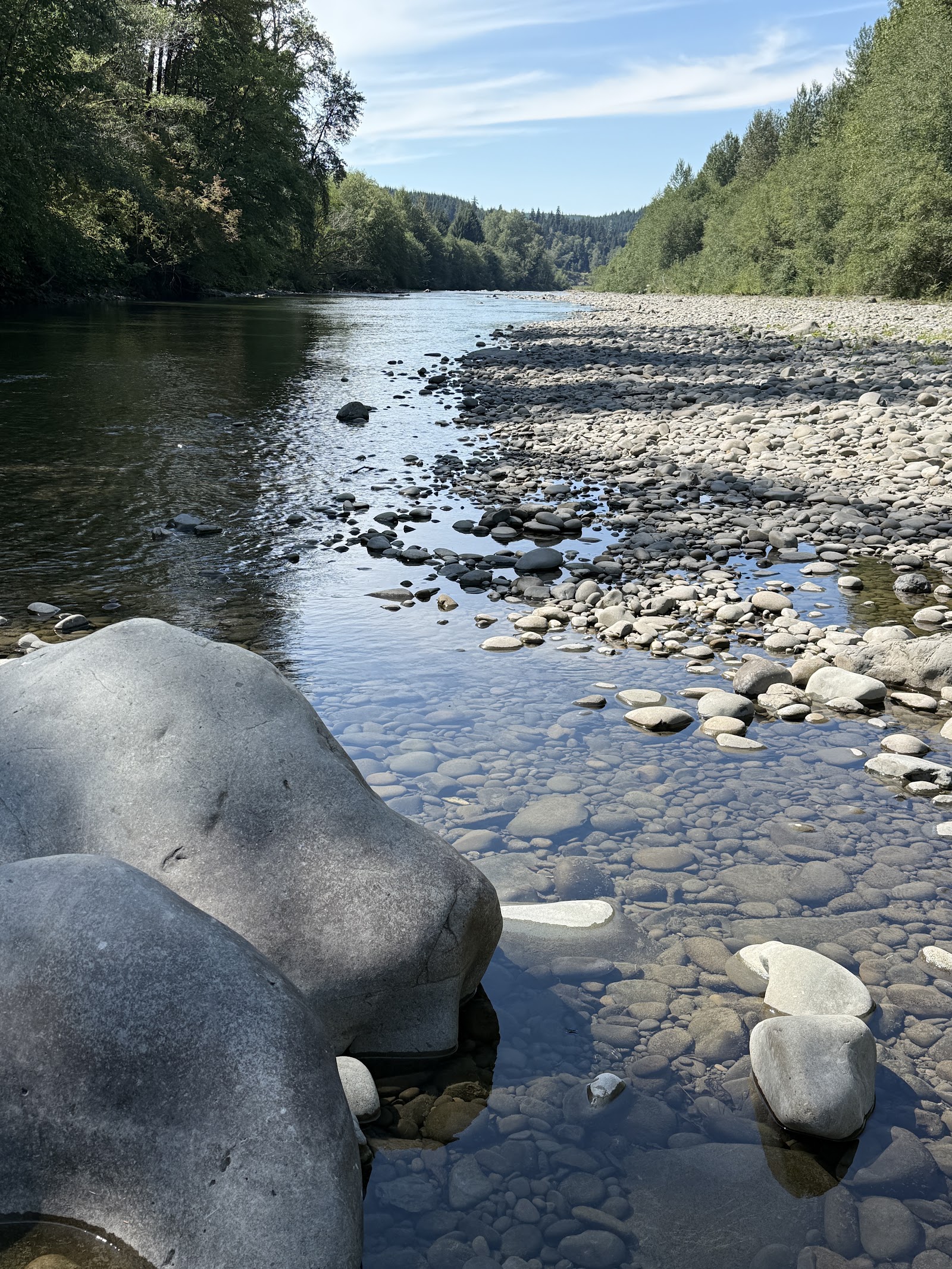
The Hoh River runs 56 miles from the Olympic Mountains to the Pacific, passing through and near Forks. It supports wild Chinook, coho, and winter steelhead runs that make it one of the premier river fishing destinations in Washington. The lower river is accessible from several public access points near Forks. Guided fishing trips are available through local outfitters who work the Hoh, Bogachiel, Calawah, and Sol Duc rivers.
Coast
Ruby Beach
The most accessible and photographed of the Kalaloch beaches, 27 miles south of Forks on US-101. A short trail from the highway parking area descends to a beach with reddish sand, multiple offshore sea stacks, Cedar Creek meeting the ocean, and tide pools at low tide. The combination of sea stacks, driftwood, and the creek outlet makes Ruby Beach visually complex and consistently striking at any light. A mandatory stop on the southbound drive.
History
Twilight Film Locations
Forks, Washington is the fictional hometown of Bella Swan in Stephenie Meyer's Twilight series. The Forks High School, the Swan house, and several other locations from the books have real-world counterparts in the Forks area, and the local chamber of commerce provides a self-guided tour map. The town has embraced the association with characteristic directness: it is a meaningful part of local tourism revenue, and visitors who come specifically for Twilight are welcomed without apology.
Nature
Bogachiel State Park
A small state park on the Bogachiel River 6 miles south of Forks on US-101, with a campground, river access, and old-growth forest. The Bogachiel River supports wild steelhead and salmon runs and is one of the best bank-fishing rivers accessible directly from the highway corridor near Forks. The state park provides a quieter alternative to the Olympic National Park campgrounds and is rarely crowded outside of summer holiday weekends.
“Forks is the wrong destination if you came for the Twilight locations. It is the right base camp if you came for the Hoh, La Push, and Rialto Beach.”
Explore Washington State
Where to Stay
Kalaloch Lodge
An NPS-operated lodge 27 miles south of Forks on the Pacific coast inside Olympic National Park, with lodge rooms, cabins, and the Seacrest House overlooking the ocean. The location directly above the beach puts you closer to the Pacific than any other lodging in this section of the park. Kalaloch is the base camp for Ruby Beach and the Kalaloch beach loop. Book months ahead for summer.
Book at Kalaloch LodgeQuileute Oceanside Resort
Lodging directly on First Beach at La Push, 14 miles west of Forks on the Quileute Reservation. Cabins and motel rooms with immediate access to the beach and Pacific views. The resort is tribally owned and operated and is the closest lodging to the La Push beaches.
Book at Quileute Oceanside Resort3 Rivers Resort
A fishing resort on the Bogachiel River just outside Forks with RV sites, tent camping, vacation cabins, and a small restaurant. The on-site guide service covers the Hoh, Bogachiel, Calawah, and Sol Duc rivers. The most practical fishing-focused lodging in the Forks corridor.
Book at 3 Rivers ResortFind a Cabin Near Forks
Find a Cabin Near Forks
Food & Drink
Sully’s Drive-In is the classic Forks roadside institution, serving burgers and milkshakes in a format unchanged for decades. The kind of place that exists because Forks is a small logging and fishing town, not because it is trying to be a tourist destination.
River’s Edge Restaurant at La Push, 14 miles west on the Quileute Reservation, serves American comfort food with ocean proximity and a view.
Creekside Restaurant at Kalaloch Lodge, 27 miles south of Forks on US-101 inside Olympic National Park, is the most atmospheric dining option in the area, with Pacific Ocean views and fresh local seafood. Open to non-guests.
3 Rivers Resort Restaurant on the Bogachiel River has a small restaurant serving the fishing and camping crowd that anchors the resort. Practical for visitors staying at the cabins and campground.
Festivals & Events
April
Forever Twilight in Forks Festival
An annual fan festival celebrating the Twilight book and film series, held in Forks each fall (traditionally in September but recently moved to various dates). The event draws Twilight fans from around the world and includes film location tours, author and cast appearances, and Twilight-themed activities throughout the town.
June
Olympic Peninsula Salmon Derby
Fishing derby events on the Olympic Peninsula rivers that coincide with the summer salmon runs, typically organized through local fishing clubs and outfitters. The Hoh, Bogachiel, Queets, and Sol Duc rivers all support the summer runs.
October
Fall Steelhead Season Opens
October marks the beginning of the winter steelhead run on the Olympic Peninsula rivers. The Hoh River is particularly productive in fall, and the period from October through January is when the serious fishing community descends on Forks. Not a scheduled festival, but a reliable seasonal gathering that fills the motels and resorts on fall weekends.
Day Trips
Hoh Rainforest (31 miles south via Upper Hoh Road): The visitor center is at the end of a 19-mile paved road off US-101. The Hall of Mosses Trail (0.8 miles) is the defining Hoh experience: old-growth Sitka spruce and big leaf maple draped in club moss that creates a green cathedral effect. The Hoh River Trail extends 17 miles into the backcountry. Plan 3 to 4 hours minimum for a round-trip drive and the Hall of Mosses. EWS has a full guide at Visiting the Hoh Rainforest.
La Push and Quileute Beaches (14 miles west): Three ocean beaches on the Quileute Reservation accessible by short trails from parking areas. First Beach is directly in La Push village with full Strait views and sea stacks. Second and Third Beach require 0.7 and 1.4 mile trail approaches through old-growth forest. All three are open to the public. A Makah Recreation Pass is NOT required here (that is Cape Flattery); standard Olympic National Park access applies for Second and Third Beach.
Rialto Beach (14 miles northwest via Mora Road): A dramatic pebble beach with enormous driftwood logs and views of the Quillayute Needles sea stacks offshore. The walk north to Hole in the Wall, a natural arch carved through a headland, is 1.5 miles one-way along the beach. One of the most dramatic beach walks in Olympic National Park.
Ruby Beach (27 miles south via US-101): The most photographed beach on the Washington coast, with deep reddish sand, multiple sea stacks, tide pools, and the Cedar Creek outlet to the ocean. A short trail from the highway parking area puts you on the beach in 5 minutes.
Planning Your Visit
June through September is the best window for Forks and the Olympic Peninsula west side. Highs reach the upper 60s to mid-70s, the ocean beaches are at their clearest, and the rivers run lower and clearer for summer fishing. Even in summer, rain is possible at any time; bring waterproof layers regardless of the forecast.
Fall (October through November) is steelhead season, when the rivers fill and the serious fishing begins. The rainforest is at its most dramatic in rain, which fall delivers reliably. Wildlife viewing improves in fall: elk are in rut in October, and Roosevelt elk herds are active throughout the western Olympic foothills.
Winter and spring are for committed visitors. The coast is accessible year-round, and storm watching from the Kalaloch beach or La Push in January and February delivers Pacific swells and weather that the summer crowd never sees. The Hoh River Trail to the blue glaciers of the Olympic high country is accessible June through October at the summit elevations.
Plan two nights minimum based in Forks. Day 1: Hoh Rainforest. Day 2: La Push beaches and Rialto. A third day adds Ruby Beach and Kalaloch. Four or more days open Sol Duc Hot Springs and the Quinault Rain Forest to the south.
More Forks on EWS
Planning a Washington trip?
That is the whole idea behind the Explore Washington State Card. Free to carry, with a little something waiting at participating places when you visit. Your zip code is a vote for which towns we sign up next, and our weekly Washington travel newsletter starts landing right away.
Get your free cardFrequently Asked Questions
What is Forks, Washington known for?
Forks is known as the setting for Stephenie Meyer’s Twilight series and, more substantively, as the base camp for the western side of Olympic National Park. The Hoh Rainforest (31 miles south), La Push beaches (14 miles west), Rialto Beach, and Ruby Beach are all accessible as day trips from Forks. The city receives about 120 inches of rain per year, making it the wettest incorporated town in the contiguous United States and explaining why the rainforest and the salmon rivers of the Olympic Peninsula exist in this form.
How do you get to Forks, Washington?
From Seattle, Forks is about 4 to 4.5 hours. The most practical route uses the Edmonds to Kingston ferry, then drives north through Poulsbo, west on US-101 through Port Angeles and Lake Crescent, and south to Forks. A car is essential; there is no public transit to or within the Forks area. From Port Angeles, Forks is 57 miles west on US-101, about 1 hour.
Is it worth staying in Forks?
Yes, if you are spending multiple days on the western Olympic Peninsula. The Hoh Rainforest, La Push, Rialto Beach, Ruby Beach, and the Olympic rivers are spread across a large area, and Forks sits near the center. Day trips from Port Angeles or Seattle to any of these destinations are possible but leave little time for the actual experiences. Two nights in Forks opens all four major destinations without rushing.
What beaches are near Forks?
La Push (14 miles west) has three distinct ocean beaches on the Quileute Reservation: First, Second, and Third Beach. Rialto Beach (14 miles northwest) has dramatic driftwood and the Hole in the Wall arch 1.5 miles north along the shore. Ruby Beach (27 miles south on US-101) is one of the most photographed beaches on the Pacific Coast, with sea stacks and tide pools. Kalaloch (34 miles south) has five accessible beaches within a short stretch of highway.
What is the Hoh Rainforest and how far is it from Forks?
The Hoh Rainforest is a temperate rainforest inside Olympic National Park, one of only a few in the world. It receives 140 inches of rain per year and supports old-growth Sitka spruce and big leaf maple draped in club moss. The visitor center is 31 miles south of Forks via US-101 and Upper Hoh Road. The Hall of Mosses Trail (0.8 miles) is the most visited trail and takes about 30 to 45 minutes. EWS has a full guide at the Visiting the Hoh Rainforest article.