
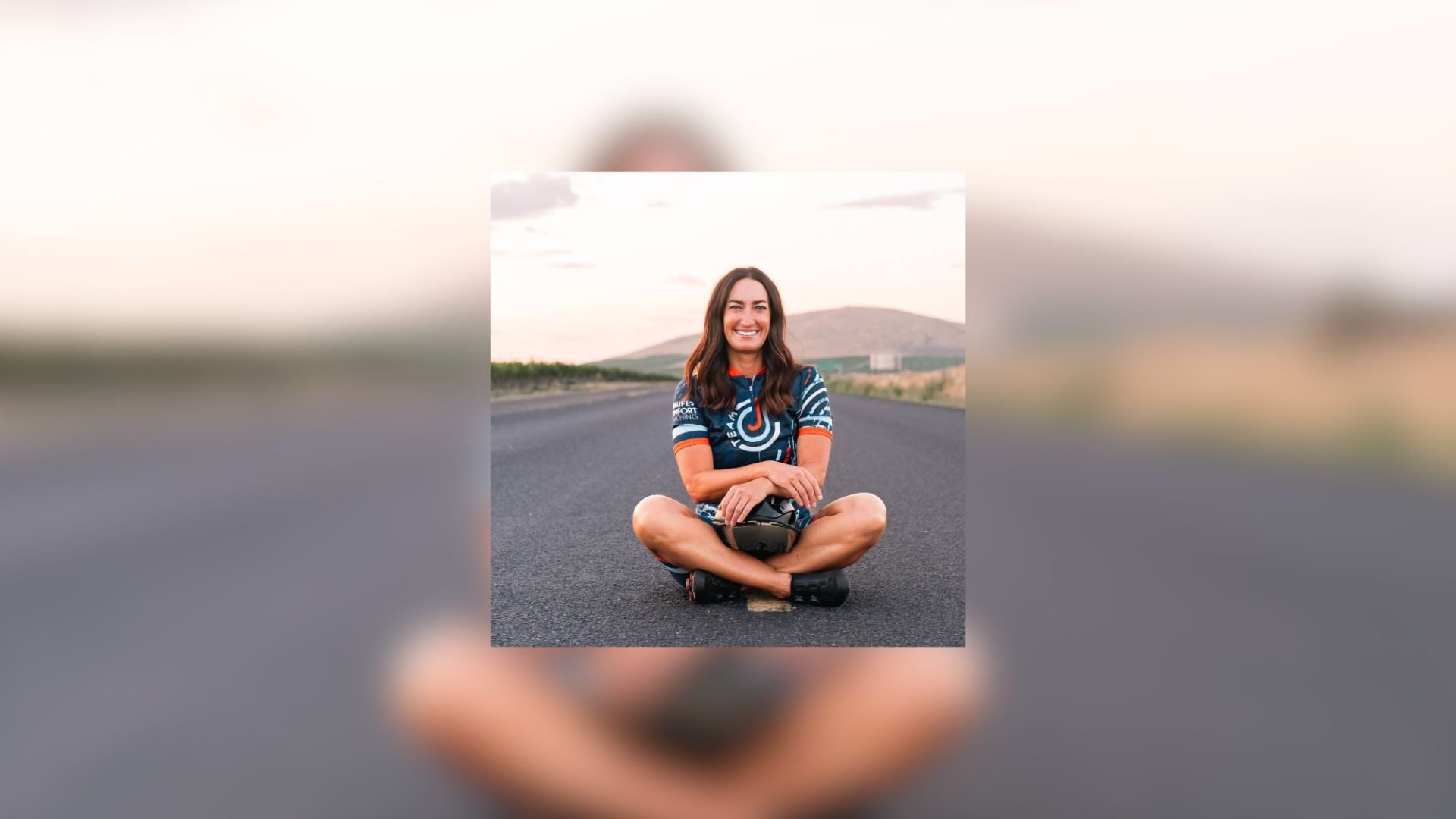
How Athlete & Coach Jennifer Comfort Prepares to Conquer the 2025 Tri Cities Ironman
The Tri Cities Ironman 70.3 is no ordinary race. It is a test of endurance, grit, and mental strength — and for Jennifer Comfort, it is also home turf. As both a seasoned competitor and a dedicated coach, Jennifer has spent years helping athletes prepare for one of the Pacific Northwest’s most challenging events. In this episode of the Exploring Washington State Podcast, she shares the stories, strategies, and hard-earned lessons that make the Ironman experience unforgettable.
From her humble first triathlon in 2005 — where she doggy paddled the swim, borrowed a heavy old bike from her parents’ garage, and crossed the finish line both exhausted and proud — to competing in Ironman World Championships around the globe, Jennifer’s journey is a testament to what persistence can achieve.
Listeners will get an insider’s perspective on:
- Training for a 70.3 — why preparation is more than just logging miles
- Race day fueling — from energy gels to the surprising mid-race Coca Cola boost
- The mental game — staying focused when fatigue and doubt creep in
- Coaching first timers — how she guides athletes toward not just finishing, but finishing proud
- Spectator tips — the best places to watch the swim, the bike transitions, and those emotional final moments at the finish line
Jennifer also opens up about the highs and lows of endurance sports, from chafing and cramps to the emotional rush of crossing the finish line after hours of pushing your limits.
Whether you are an athlete, a fan of the Ironman, or simply love stories of people pushing beyond their comfort zones, this conversation delivers equal parts inspiration and practical insight. And for those heading to the Tri Cities this September, you will walk away with a new appreciation for the community spirit that surrounds race day.
Here are some links to learn more
Jennifer Comfort Ironman Tri-Cities 2025 Episode Transcript
Welcome to the Exploring Washington State Podcast. My name is Scott Cowan, and I’m the host of the show. Each episode, I have a conversation with an interesting guest who is living in or from Washington state. These are casual conversations with real and interesting people. I think you’re going to like the show. So let’s jump right in with today’s guest. All right, my guest today. Well, yeah, let’s just jump right in.
Scott Cowan [00:00:30]:
Jennifer Comfort is a crazy person. I’m just going to put it out there. She, Jennifer and I are going to talk about. That’s just how it’s going to be. Jennifer, I warned you. Here’s the thing, folks.
Jennifer Comfort [00:00:47]:
Best intro I’ve ever heard.
Scott Cowan [00:00:49]:
Jennifer is going to be participating in the Ironman 70.3 in Tri Cities in September. And if that’s not enough, she’s also a coach to coach people to do these types of things. Jennifer, look at me. I struggle to get off the couch. You’re about to go and participate in this half Ironman event, and I call you crazy, but at the same time, I’m very, very envious. So. So first off, long intro. Welcome to the show.
Jennifer Comfort [00:01:20]:
Thank you so much for having me. And some days I struggle to get off the couch, too.
Scott Cowan [00:01:25]:
I bet you my streak of days struggling is far longer than your streak of day struggling. So I was approached by Visit Tri Cities to talk about this, and I’ve talked to Kevin, and his episode will probably come out after yours, but I’ve already talked to him. So I have kind of the. The Tri Cities, the. The community’s view of it, how it’s an. It’s a positive impact for the Tri Cities region and all of this. And I wanted to talk to a participant because, I mean, I mean, honest, honestly, I do think it’s kind of like, crazy that people push themselves to do this type of endurance activity. So what I want to know before we.
Scott Cowan [00:02:13]:
We talk about this year’s specific Ironman, I want to know about you and why you do this. How did you get started in this? Did you, you know, did you struggle to get off the couch one day and go, I’m going to get up and run an Ironman? Or, you know, you know, what. What happened? How did you get here?
Jennifer Comfort [00:02:31]:
Excuse me. I had a very circuitous route to this sport and lifestyle. I am just a normal person. Uh, when I did my First Triathlon in 2005, it was one year after my first child was born. I was going to the gym just to try to stay healthy, you know, just do some Little exercise here and there, nothing, nothing crazy, maybe an hour a day or whatever, just normalish. And a friend there said, hey, you should try this local triathlon in a couple months here in trace cities. And I’m like, I, I don’t even know what triathlon is. I don’t know what you’re talking about.
Jennifer Comfort [00:03:11]:
So I come from a soccer background. That’s what I grew up playing. And so I’d been athletic and I’d fallen out of health and wellness during, for quite a while. So as I’m regaining my health after my first child and I didn’t even know what a triathlon was. So do some research, do a little bit of training. But really I just kind of showed up and, and did it. I, I doggy paddled. I never stuck my face in the river.
Jennifer Comfort [00:03:39]:
I was terrible. Luckily there was a current to get me to the finish of the swim. I borrowed a bike out of my parents garage that was. Probably weighed more than I weighed. The chain fell off. It was, I mean it was just an absolute. I wish I could go back and actually watch myself now doing this. I mean, I can’t even imagine what I looked like.
Jennifer Comfort [00:04:01]:
And then I did. It was a 5k run, so 3 miles. I did have a little bit of running fitness at that point, a tiny bit. So. And I got done with that First Triathlon in 2005 and. Which is still, it’s right here, part of the 70.3 half Ironman course that same race uses. And I finished and I just said, oh my gosh, that was. I was proud of myself actually.
Jennifer Comfort [00:04:27]:
And I also knew that, wow, I was really not very good at all. I was terrible, in fact, awful. And I saw the real triathletes standing over on the side and I was like, I want to be like them. Like that looks cool to me. And, and I just started. I hired a coach, or a swim coach specifically. I got a real bike and it just escalated from there. Fast forward 10 years.
Jennifer Comfort [00:04:56]:
I’m, I’m racing all over the world in half Ironman world championships in Australia and France and etc. But it was, it would, yeah, that’s kind of my origin story in this sport.
Scott Cowan [00:05:08]:
I saw online that the swimming was your weakness at the beginning, that you, yes, you doggy paddled, you didn’t want to put your face in the river and all of that. And I, and I, as you’re probably going to find out throughout most of this episode, I’m going to be chuckling a lot. And I started chuckling at this. And I’m. But one of the things that’s super impressive to me is that I’m just thinking, you know, you said bike from your family’s garage, and I’m thinking some old, you know, 10 speed from the 70s or 80s. Like you said, it weighs more than you do. And, you know, the tires were probably not even properly inflated and the seat was really uncomfortable. You know, had probably, if you were lucky, a big basket on the front of it or something.
Scott Cowan [00:05:46]:
Just, you know, just for fun.
Jennifer Comfort [00:05:48]:
Precisely.
Scott Cowan [00:05:49]:
I’m just. I’m just so impressed, though, with the. With the tenacity. And I think that might be the one word that I attach to this sport is tenacity, because sanity is not a word I can attach to this sport.
Jennifer Comfort [00:06:09]:
Fair enough.
Scott Cowan [00:06:09]:
I don’t mean that in a bad way.
Jennifer Comfort [00:06:10]:
I’m just like, no, no, Absolutely. Fair enough. Yeah.
Scott Cowan [00:06:15]:
So you just had a child a year. Ish. Before, and you were recovering. I don’t want to say recovering, but, you know, you’re getting your body back.
Jennifer Comfort [00:06:24]:
In shape from having recovery.
Scott Cowan [00:06:25]:
Yeah. And all this. And he’d played soccer before, so you were athletic. So it wasn’t like you just got off the couch, put down the ding Dongs, and said, I’m gonna go do this. Right. I mean, okay, so you completed it. How long was. How long did it take you to do the first triathlon? Do you remember?
Jennifer Comfort [00:06:41]:
Oh, that’s a good question. I don’t remember at all. I mean, probably maybe an hour and a half. Ish. It was a sprint triathlon, so a shorter distance than the half. Ironman. That’s here in September. Yeah.
Scott Cowan [00:06:59]:
All right. I saw online that you’ve qualified for the Boston Marathon. Do you have any intentions. Have you ever run it, or do you have intentions to go and run the Boston Marathon?
Jennifer Comfort [00:07:10]:
I don’t know. The year that I qualified, I think. Oh, I had. Had three. I had three kids at that point. So it just. And it just didn’t work out with my life, with our life situation and what we had going on with our schedule. My husband has a very demanding job, and I couldn’t get away to do it.
Jennifer Comfort [00:07:29]:
So I am happy that I have qualified in the past, but right now, I don’t have intentions of going and racing it. My true love for running, what I am passionate. Passionate about now is trail running, which is a very different style of running than road racing, which the Boston Marathon is. So most of the running or running races that I do now are on trails.
Scott Cowan [00:07:54]:
All right, Iron Man, I’m sorry. When I say the word, I either think of, you know, Robert Downey Jr. Or Ozzy Osborne. Both. Both just pop, you know, I just can’t. I just. I’m sorry. That word just triggers these two things.
Scott Cowan [00:08:12]:
They kind of conflict, and I pa. But how much. Okay, so the. The Ironman race is happening in Tri Cities, and I don’t have the date right in front of me, and that’s horrible. It is September 21st.
Jennifer Comfort [00:08:30]:
You got it? Yes.
Scott Cowan [00:08:31]:
Okay, so we’re recording this in August. You’re obviously in training mode, right?
Jennifer Comfort [00:08:37]:
Yes.
Scott Cowan [00:08:39]:
Walk me through now. You’re. You’re involved. You. You were involved. We’ll probably talk about this, but the Tri Cities was angling to have an Ironman race pre Covid. You were involved in maybe helping pick out the courses and things like that. So you’ve been involved in the community locally, in Tri Cities.
Scott Cowan [00:08:56]:
But I want you to forget that, and I want you to go, oh, there’s an Ironman in Tri Cities coming up in September. When would you start training to participate in this Ironman experience?
Jennifer Comfort [00:09:13]:
It’s a little bit nuanced, depending on what one’s athletic background is.
Scott Cowan [00:09:18]:
Okay, yours. You’re a coach. You’re a healthy, active participant in this sport. How much prep time does it take you?
Jennifer Comfort [00:09:29]:
Oh, gosh, I’m the worst person to ask because my buildups right now are not what I recommend for athletes to do. My personal buildup is about three to four months. If somebody is just getting into the sport or really training to gun for a world championship spot or to get a pr. A personal record, I would recommend six months.
Scott Cowan [00:09:54]:
Six months. All right.
Jennifer Comfort [00:09:55]:
Yeah.
Scott Cowan [00:09:56]:
So at that pace, does that mean you’d only be participating in two of these annually or.
Jennifer Comfort [00:10:03]:
It depends. I mean, this distance is demanding, and most athletes, and all my athletes, I recommend doing shorter races to prep for this one.
Scott Cowan [00:10:12]:
Okay.
Jennifer Comfort [00:10:13]:
Because every single time we race, we learn something, myself included, after 20 years in the sport. So in triathlon, there’s four different distances in triathlon, so each one is a swim, a bike, and a run. But within that, there’s a sprint, an Olympic, a half Ironman, which we’re having in September, and then a full Ironman. So building up to that half Ironman, doing a sprint or an Olympic, or maybe a couple of both throughout those six months is really helpful.
Scott Cowan [00:10:43]:
Okay. Have you ever completed a full Ironman? Have you participated and completed a full Ironman?
Jennifer Comfort [00:10:50]:
I’ve done three. Yeah.
Scott Cowan [00:10:51]:
You’ve done three. Wow. I’ve got so many. I mean, there’s so many questions here, but. Well, I guess I’ll ask this question. So you’ve completed three full ironmen.
Jennifer Comfort [00:11:01]:
Yes.
Scott Cowan [00:11:01]:
What’s the recovery like after that?
Jennifer Comfort [00:11:05]:
It takes a while. Yes, a full recovery. I mean, it’s at least one. Well, I did mow the lawn the day after, but that was. And wearing my medal.
Scott Cowan [00:11:20]:
I love it. I love that. Okay.
Jennifer Comfort [00:11:22]:
It was, it was an active recovery. I guess it actually was good for my legs. But recovery from a full. I mean, at least I. For my athletes, two weeks unstructured training, or say no training exercise if somebody wants to go on a walk or say, hey, getting in a pool just really sounds good to my body today. I don’t discourage that for two weeks. But it can’t be structured training. I don’t program that for two weeks.
Jennifer Comfort [00:11:53]:
Or somebody, you know, yoga or walking, always encouraged. And then weeks three and four, depending on what an athlete or myself, if I was racing has in the future, then we can maybe gradually start building up. Very, very gradually. But I mean, physiologically speaking. Oh, I. I don’t know the science off the top of my head, but it’s at least a month. Me, probably more.
Scott Cowan [00:12:18]:
Wow. Okay. So you’re not like running an Ironman this weekend and then turning around and going to Boise the following weekend and doing another one and that, you know, it’s not like you really have to pick and choose the course. I mean, I’m sure there’s some people out there probably are doing this, but from a health and safety and sanity standpoint, you pick and choose. We’re going to do this in September. That might be it for the year, if you will. Unless. Unless we’re going someplace.
Jennifer Comfort [00:12:47]:
Yeah. Generally speaking, I do have some. I do have like one athlete of mine, for example. This is very extreme example. He did a deca, which is 10 Ironmans in a row. And I was there helping crew him and coach him throughout those 11 days that it took. He raced for 11 days straight, 10 iron, 10 full Ironmans. And there’s other people doing it, too, not just my athlete.
Jennifer Comfort [00:13:14]:
So that was 24 miles of swimming, 1120 miles on the bike, and then 262 miles running all at once.
Scott Cowan [00:13:26]:
Did he mow the lawn the next day?
Jennifer Comfort [00:13:29]:
No, he’s a. He’s a powerlifter now. He is. That was last year. Year. And he’s still taking a break from endurance a year later. That was last September. So it’s been over a.
Jennifer Comfort [00:13:42]:
Yeah, about a year recovery.
Scott Cowan [00:13:43]:
So this, this 10 days, was it the same course 10 times? Or did you go.
Jennifer Comfort [00:13:51]:
So there was two different structures. There were some people in this race doing one Iron man per day. So do a full Iron man sleep, wake up. Do another Ironman sleep, wake up for 10 days straight. Or there was a continuous. And that’s what my athlete did. So he did all of his swim 24 miles at one time, that was 17 hours in a lake. And then went on to do over 1,000 miles on the bike and then went on to do 10 marathons.
Jennifer Comfort [00:14:21]:
So he did all the swim, all the bike, all the run. And then we worked in sleep throughout that, those 11 days too, of course.
Scott Cowan [00:14:30]:
Wow.
Jennifer Comfort [00:14:31]:
Yeah.
Scott Cowan [00:14:33]:
Even for his support team, that’s a grueling and exhausting pace.
Jennifer Comfort [00:14:37]:
I came, I flew home and two days later did the 70.3. Last year, it was. I. There were times where that event, just as a support person, it was probably as a coach, the most rewarding thing I have ever, ever done and the most exhausting. I mean, literally there were times I was crying during those two weeks just out of pure exhaustion. But at the same time, it was so powerful witnessing what my athlete was doing and going through and helping him. Everything I did was just to keep him going. From feeding to foot care, to bike maintenance to everything.
Jennifer Comfort [00:15:23]:
It was just an opportunity to be completely present. And it was beautiful and grueling, absolutely grueling.
Scott Cowan [00:15:30]:
So you bring up a couple of things that have been rattling around in my head in foot care wasn’t one of them. But that’s actually, now that you say it, it seems so glaringly obvious.
Jennifer Comfort [00:15:39]:
But I have a 300 page book on it.
Scott Cowan [00:15:42]:
You have a 300 page book on foot care?
Jennifer Comfort [00:15:44]:
Oh, my gosh.
Scott Cowan [00:15:46]:
Okay, let’s go back to last year’s Ironman in Tri Cities for you.
Jennifer Comfort [00:15:52]:
Yes.
Scott Cowan [00:15:55]:
How does one stay fueled during this type of an event? What? You know, what is it? Yeah, how do you. I mean, I’ve seen people, you know, they, you know, you see videos of people running and somebody hands them a water bottle or something and you know, you’re obviously not packing this around with you, but how do you keep your body from crashing during an Ironman?
Jennifer Comfort [00:16:22]:
It’s such a good question and it’s hugely important because you can be the fittest athlete in the whole world, but if you’re not fueling the engine, you’re out of gas. Right. So I was just talking with an athlete earlier today about this, in fact, because each athlete’s a little bit different for me personally. And for most athletes, you know, you eat a breakfast however many Hours before the race that you need to. To digest that you have some extra carbs, but nothing too. Nothing out of the ordinary. That’s the rule for race day. So if you eat oatmeal every day, then you eat oatmeal on race day.
Jennifer Comfort [00:16:56]:
If you like a bagel with peanut butter, you eat a bagel with peanut butter. So carbs, electrolytes. If you drink coffee every morning, then you drink coffee on race day. Morning going before the. And I drink a lot of coffee as I was.
Scott Cowan [00:17:12]:
Okay.
Jennifer Comfort [00:17:14]:
Love coffee. And then you. We go to the race and we usually what we say, just like a car, we top off our energy reserves before the swim. So again, that might be a gel. So it’s just a packet of goo. Carbohydrates. Sugar really is what it is. Some people like a bar.
Jennifer Comfort [00:17:34]:
I’m trying to think. I usually do a bar, some kind of energy bar, you know. Or if I have. I do like a peanut butter, like an English muffin with peanut butter on it. And honey, go to the swim, get out. The bike is where you have to fuel. So a bike and a half ironman and a 70.3 is 56 miles. And the bike.
Jennifer Comfort [00:17:58]:
So that’s the longest discipline out of the swim bike run. And that’s where you really, really need to fuel. So generally speaking, it’s anywhere from 40 to, no more like 50 to 90 grams of carbohydrates per hour. Sodium. So I go by carbohydrates, which is also calories. So about 250 calories per hour is what I try to push. Even if I do 200 calories, I can sometimes tell that my energy is going to drop a little bit. So 250 is the goal.
Jennifer Comfort [00:18:35]:
Sodium, depending if it’s. If it’s hot out, which oftentimes here in the desert it gets warm. Here we try to do 400 to 800 milligrams of sodium per hour. I do that via. I personally like Element lmnt. It’s a.
Scott Cowan [00:18:53]:
I use it.
Jennifer Comfort [00:18:54]:
Sodium. Do you. Oh, oh, great. Okay. Very cool. Yeah. What’s your favorite flavor?
Scott Cowan [00:18:59]:
I want to try the lemonade one, but I’ve been doing the watermelon lately.
Jennifer Comfort [00:19:03]:
Okay, great. I think I have a watermelon in my bag today. Yeah, I like the watermelon.
Scott Cowan [00:19:08]:
Have you tried the coffee version? The hot. For when it like for hot beverages?
Jennifer Comfort [00:19:12]:
I have, yes.
Scott Cowan [00:19:13]:
I haven’t.
Jennifer Comfort [00:19:16]:
I do that in the winter when I ski, actually. Yes. Or after skiing.
Scott Cowan [00:19:21]:
Do you like it?
Jennifer Comfort [00:19:22]:
I do, yes. Warm. I’ve Tried it cold too. I don’t like it cold. I just only like it heated up. Okay. Yeah. Those flavors.
Jennifer Comfort [00:19:30]:
Yeah. And then fluid. You’re talking about the bottles. Fluid. Just generally speaking, one bottle per hour. Now it’s nice and easy. So a bottle is 20 to 24 ounces.
Scott Cowan [00:19:42]:
Is that with element in it or is that just straight water or is it.
Jennifer Comfort [00:19:47]:
I put my element in my down tube so I have a big water bottle reservoir that has a straw that comes straight up so I don’t have to grab anything. I just can drink right out of the straw. That’s where I put. And then I do two bottles in. There’s a rear cage behind my seat saddle. One of those bottles is just water. And the other one, I usually mix two other electrolyte products. Noon and scratch.
Jennifer Comfort [00:20:17]:
I mix those in a bottle. So I kind of have a few options. Last year I did. It was getting toasty towards the end of the bike and I did grab a water bottle. At that point I just wanted water. So I’d had enough sodium. I could tell. I grabbed a water bottle from one of the aid stations and I squeezed that into my other aero hydration bottle.
Scott Cowan [00:20:39]:
Okay.
Jennifer Comfort [00:20:40]:
Yeah.
Scott Cowan [00:20:40]:
So we’ve got that. And then what about on the run?
Jennifer Comfort [00:20:44]:
The run? Oh, gosh, the run is so fun. There are aid stations every single mile. It’s like just a smorgasbord. It’s great. You don’t have to. And it’s. This is a half marathon, so it’s not short. And it’s.
Jennifer Comfort [00:20:56]:
The aid stations are stocked with these volunteers that are just so enthusiastic. And again, they’re there to help you. I mean, what a service. It’s just amazing. I mean they are spending their entire afternoon, or almost, you know, to be out there to help all of us athletes get through this race in one piece. So these aid stations every mile are well stocked. They have. And there’s an order.
Jennifer Comfort [00:21:23]:
Every Sage station goes in the same order. So it’s usually a water electrolyte, maybe water again. And then there’s Coca Cola at them as well. Yes. And I know, can you imagine? I would. And halfway through, man, Coke for me. That saves my life. I try to hold off as long as I can, but when my body needs the Coke, Coca Cola, I start drinking it.
Jennifer Comfort [00:21:52]:
And it keeps me going.
Scott Cowan [00:21:55]:
I think on my bingo card that would not have been a question I would have answered at all.
Jennifer Comfort [00:21:59]:
Right, right. Because I wouldn’t on a daily basis. I wouldn’t touch it with a ten foot pole. But it’s that quick hit of sugar. It’s the sugar. Your body needs it. You’re just burning so much.
Scott Cowan [00:22:10]:
Interesting. I would have not thought. Okay. Wow.
Jennifer Comfort [00:22:13]:
Yeah, yeah. And then there’s food at these aid stations. There’s gels, regular gels, and caffeinated gels. I had two caffeinated gels last year and oh, man, they were great. They really helped me because I was starting to get low.
Scott Cowan [00:22:26]:
See, I could see these as sponsorship opportunities for, you know, big, big coffee brands. You know, the gel by, you know, by the Starbucks. You know, I mean, I could just.
Jennifer Comfort [00:22:35]:
I could just kind of see, you know, Seriously. Yeah. Martin has the. The gel contract right now and Mortal Hydration has the electrolyte contract with Ironman right now.
Scott Cowan [00:22:49]:
Wow. All right. Okay. I guess this would make sense that it’s sponsored. Okay. Yeah, I know, I know. My questions I’m asking you are, you know, variable. Like when we talked before, you mentioned.
Scott Cowan [00:23:00]:
I think you’re about five foot two. So you’re, you know, compared to me, you’re very short. Your calorie consumptions, your needs are going to be different than say, a man who’s 6 foot 2. So I’m really, when I ask the questions, I’m really just asking you for yours and everyone else. Your mileage may vary. About how many calories do you think do you burn during an Ironman?
Jennifer Comfort [00:23:26]:
Oh, gosh, I could look it up on. From my watch data. I don’t know, It’s. I usually do look it up afterwards. It’s in the thousands.
Scott Cowan [00:23:36]:
Okay. Well, yeah, certainly imagine that to be that much.
Jennifer Comfort [00:23:38]:
Okay. Yeah. I don’t know how many thousand off the top of my head. That’s a good question. I mean, two to three to four.
Scott Cowan [00:23:44]:
So do you think on a, you know, typical. If there’s a typical race. But, you know, on a, you know, are you. Let’s just arbitrarily say you lose 3,000 calories. Okay. This is just a placeholder number. Are you bringing in around 3,000 calories? You’re bringing in more during the race?
Jennifer Comfort [00:24:05]:
No, less. Less. Because the body can only absorb a certain amount per hour. So I forget what that amount is right now. So no, your absorption rate cannot keep up with replacing everything. It’s just not possible. Even like in marathons, up to 4%, you know, loss of energy expenditure is acceptable. Anything more isn’t.
Jennifer Comfort [00:24:33]:
So it’s not an exact exchange.
Scott Cowan [00:24:38]:
Earlier you mentioned foot care. I can’t think of a whole lot. Of course, I wasn’t going to. If you would have Asked me, do you think Coca Cola will be involved? I would have not thought that. I can imagine, like, a blister would be incredibly unpleasant at this time. What other sorts of nagging issues.
Jennifer Comfort [00:25:04]:
Are.
Scott Cowan [00:25:04]:
Common in this type of an event.
Jennifer Comfort [00:25:08]:
In addition to blisters? Chafing, and I don’t know how much we want to get in, but chafing in many areas, from chafing on the saddle to chafing under the arms to chafing, even just in a sprint race that I did a few weeks ago, the zipper on my tri suit chafed my upper chest, my sternum. I still. Now I have a scar. Yeah. Yay. Neck chafing on the wetsuit. So there are products like Body Glide, or I use PAM cooking spray.
Scott Cowan [00:25:47]:
Coca Cola, and pam. All right, what else? What else do you use? The olive oil variety of it or just the regular?
Jennifer Comfort [00:25:58]:
You know, I’m kind of into avocado oil. It’s a little more trendy right now. Yeah. But neck chafing from the wetsuits on the net, because you’re turning your head to. To breathe and to sight. And then on the bike, usually saddle taping, and then the run, it can be, like I said, lots of different places. Yeah. Blisters.
Jennifer Comfort [00:26:22]:
What else goes on out there? Those are the main ones off the top of my head.
Scott Cowan [00:26:27]:
I would imagine a fair number of participants probably experience some form of cramping.
Jennifer Comfort [00:26:33]:
Yes. Yep. That can happen. And, you know, not all the time, but even. Even with the best laid out nutrition and hydration plan, you can still get cramps. I mean, the. The weather, especially with the heat, and then, you know, having a plan and then being able to adjust it. And it’s usually an electrolyte imbalance, which can happen to all of us at any time.
Jennifer Comfort [00:26:57]:
Happens to professionals. It happens to newbies. Sunburns are the other one that can be not only painful, but also dangerous because it raises the, you know, your core temperature as you’re racing. So at the longer races, I don’t know if there’s sunscreen here. I don’t think there is. I could be wrong. But at the. Like, at the full Iron Mans, there are sunscreen stations.
Jennifer Comfort [00:27:23]:
And my first Iron man, they. There’s pictures of me with this. My. My arms are just lathered white just as they just, like, slather it on. I mean, you’re gonna be out on the bike for five or six hours. It’s just. It’s just caked on. So you do want to try to avoid sunburns as well, do you.
Scott Cowan [00:27:43]:
When you’re, when you’re running and when you’re riding, do you wear a hat?
Jennifer Comfort [00:27:48]:
So riding, you have to wear a helmet the whole time? Yep. And that helmet act has to be closed tightly around your chin before you even unrack your bike. You cannot even touch your bike until your helmet’s on. And conversely, when you’re coming in off the bike and transitioning to the run, what we call transition to too, you have to rack your bike and then take your helmet off. It’s just a safety precaution. And then my helmet specifically has a visor built in. So for, for sun protection and wind protection, too, because your eyes can get dried out easily riding and then on the run, I prefer to wear a hat all the time. First of all, my hair is a hot mess.
Jennifer Comfort [00:28:36]:
Not that I care, but, I mean, there are race photographers out there. No, it’s really for some protection. And, and also, if I get into some kind of weird zone and I need to. I don’t know, there’s usually a point in the race where I rally cap it, so I turn it around backwards.
Scott Cowan [00:28:57]:
Gotcha.
Jennifer Comfort [00:28:58]:
And I don’t know, that just kind of changes the vibe a little bit for me.
Scott Cowan [00:29:04]:
What. Okay, I want you to think back to September last year here at Tri Cities. You completed, you completed the, the race. What did you do in the next couple hours after you were done with the race? What does post race look like for thousands of you? I mean, there’s literally, there’s. Is it going to be like, what, 3,000 participants again? Some.
Jennifer Comfort [00:29:28]:
Almost. Yeah, we’re at, right now, as of Today, we’re at 2,200. And. Yeah, so almost, you know, about two and a half thousand. Yeah.
Scott Cowan [00:29:37]:
Okay, 2500 people. 2500, dare I say, crazy people. What happens right after you complete?
Jennifer Comfort [00:29:48]:
Well, first I cry.
Scott Cowan [00:29:51]:
Okay.
Jennifer Comfort [00:29:53]:
It’s just that emotional release for so many reasons. And it’s, it’s, it’s. They’re tears of just utter, unadulterated joy. For me. I. Everything that I’ve gone through, every race is a little bit different. But it’s usually joy. It’s gratitude.
Jennifer Comfort [00:30:14]:
It’s, thank God, I’m done. I’m freaking tired. I’m like, I’m like, bent over on my knees. I’m tired, man. I am tired.
Scott Cowan [00:30:27]:
I wonder why.
Jennifer Comfort [00:30:29]:
And so are the other over 2, 500 athletes. So after kind of that release of emotion and there’s such. And I. And that’s another reason I keep racing out of 20 years. After 20 years like, that just deep sense of emotion is a place that I like to get to. And it takes a lot of pain and suffering to get to that, and I’m willing to do that. Okay. Um, and then afterwards, I.
Jennifer Comfort [00:30:59]:
At least the race here, I have just so many friends and family, and then I’m just so, so, so happy. Like, I see all the other athletes. I walk around, I go say hi to people. I go over to the food. There’s a food tent. I. I go get some. I don’t know if I actually ate last year afterwards, but if there’s.
Jennifer Comfort [00:31:23]:
Sometimes, I don’t know, I feel like I did, but I can’t remember what it was. But then I’ll get some water. Oh, no, I’ll usually go get another Coca Cola or at that point, a Sprite. Yeah. To settle my stomach a little bit. And then I just kind of walk around and see. And just like everybody, all the athletes are going through their own journey, and everybody is storytelling. And something I’ve learned over the years, I really, honestly just make a point to listen.
Jennifer Comfort [00:31:51]:
I know what I’ve just gone through, and when I want to share, when I feel it’s appropriate, I will. But really, I’ve learned to just shut my mouth and just observe and listen and be a sounding board for other people. Because everybody, every single athlete has a story of how they got there, of what they just went through the past five to eight hours and everything. It’s so unique. And I just love to hear how other people are doing. And some athletes in that athlete village are, you know, doing okay, and some are just splayed out on the lawn laying down a hot mess. And there’s been races where I’ve been like that as well.
Scott Cowan [00:32:36]:
Right, okay. See, I thought you were going to say, you know, I run to IHOP or something in Carboload. I don’t know.
Jennifer Comfort [00:32:44]:
Well, then I do go back and shower, and then I go out and have a spicy margarita.
Scott Cowan [00:32:48]:
A spicy margarita. Okay, so that’s.
Jennifer Comfort [00:32:50]:
That’s what I did last year.
Scott Cowan [00:32:52]:
We start Recovery with the spicy margarita. All right.
Jennifer Comfort [00:32:55]:
Yep. And it tastes so good.
Scott Cowan [00:32:57]:
And while putting you on the spot, where did you have the spicy margarita last year?
Jennifer Comfort [00:33:01]:
I had it at Perch. It’s a restaurant right at the finish line.
Scott Cowan [00:33:05]:
Okay.
Jennifer Comfort [00:33:05]:
Yep.
Scott Cowan [00:33:05]:
I’ve been to Purchase.
Jennifer Comfort [00:33:06]:
I. Oh, have you been to Purge? I’ve been to Purge, yeah, yeah, yeah. Right next to Lulu’s and Anthony’s and. And I stay at the lodge. I stay even though I live here locally in Tri Cities. I stay at the Lodge Hotel. Just, just because it’s easy. It’s right there, right? Yeah.
Scott Cowan [00:33:21]:
All right. Boy, I still have a lot more questions. Let’s go, let’s go to race day. Back, back here. I got a couple questions. So what time are you getting up on race day?
Jennifer Comfort [00:33:33]:
Oh, gosh. Oh, this is something I need to start going over with my athletes. It’s usually 3:30 or 4:00am okay, so 3:30 or no.
Scott Cowan [00:33:42]:
So here’s a question I have for you. I don’t believe you probably get up at 3:30 or 4 every day when you’re training.
Jennifer Comfort [00:33:49]:
Nope.
Scott Cowan [00:33:49]:
And earlier you said if you have oatmeal, you have oatmeal. If you bagel and peanut butter, you have bagel and peanut butter. Probably not having that at 3:30 or 4:00 clock in the morning on normal non race days. So we’re going to eat earlier than our body’s used to. Okay, so if you’re Getting up at 3:30, 4:00′, clock, what time does the race start?
Jennifer Comfort [00:34:16]:
Usually between 6 or 6:30. Okay, so you’ve got, I’m not sure, maybe 7. Between 6 and 7.
Scott Cowan [00:34:23]:
So 2 to 3 hours, you’re up 2 to 3 hours before the race starts. You’re, you’re fueling up, you’re mentally preparing yourself. You are going over your strategy of how you are going to approach the race. Your athletes are going over the strategy that you’ve helped put together with them. So everybody’s prepping mentally and psychologically and fueling up earlier than normal. I would have to imagine that you don’t sleep well the night before a race.
Jennifer Comfort [00:35:07]:
Usually not. No.
Scott Cowan [00:35:08]:
Okay.
Jennifer Comfort [00:35:10]:
No, you’re correct.
Scott Cowan [00:35:12]:
Yeah. I would think, you know, you’re going over it in your head. You’re excited and scared simultaneously. If you imagine if you were a first time participant, if it were me, I’d be laying there looking at the ceiling going, am I really going to do this to myself? I mean, no. I mean I’d be really, I would be in my head second guessing myself. I can say it kind of humorously, but really I being honest, I’d be like, oh my God, what am I doing?
Jennifer Comfort [00:35:38]:
What am I doing?
Scott Cowan [00:35:39]:
So you get down there and there’s 2,500 other people who have all probably just spent the last 24 hours in about the same mental space. Physical conditioning as you are, is it controlled chaos when these things start? How do we. And this, I’m going to transition this to like I’m coming to watch this visit Tracy has asked me to come down. I’m going to be present. I’m going to be present.
Jennifer Comfort [00:36:09]:
Oh, fantastic.
Scott Cowan [00:36:14]:
I want to position myself as a viewer for maximum interest. I mean, so I’ve got this mental image of. I know all 2500 aren’t running into the river simultaneously, but what’s going on and how. If somebody was going to come and watch one of these races, what should we do? But also, what’s it like at the very beginning? Because that’s probably the only time that you’re with a bunch of people. The rest of the race, you’re competing with yourself. I mean, you’re swimming in the river by yourself. Yes. There’s probably people around you.
Scott Cowan [00:36:57]:
Yes. You’re running. Your people may be around you, but not shoulder to shoulder, mass amounts, et cetera, et cetera. So how do you. How’s the beginning of the race for you? And then secondarily, as an observer, how should we watch it?
Jennifer Comfort [00:37:17]:
So the athletes, we all go, we get bused in, we park, we take buses into the transition area. And the energy there is palatable. It is like you were just saying, there are 2,500 athletes, all nervous, all of us, every single one of us, because this means a lot to us, and that’s why we’re nervous. And I personally, you know, try to find my athletes. I talk to my friends, but I also, I do like a little bit of quiet time as well. So we think about. Think about athletes and how they deal with stress or before a competition. And I always like to really think about Michael Phelps, the swimmer, before he swims, what he’s doing versus, let’s say, Usain Bolt before he races.
Jennifer Comfort [00:38:11]:
Usain is very, very, you know, plays to the crowd and, you know, plays off of their energy, whereas Michael Phelps has his huge, you know, headphones on and is quiet and listening to music. And you’ll see all of that. Those different things in transitionary, before the race. I think I’m probably a combination of both. I’m. When I’m nervous, I do get chatty. So I. And so I’m talking to people I know.
Jennifer Comfort [00:38:39]:
But then when I’m setting up my. When I’m by my bike setting up my transition area and going through what I need to do for my race, I’m quiet and I put my head down and I take that there’s, you know, everything is still going on around me. But when I’m setting up my transition area, I prefer to be. Not to talk and just have a little bubble around me. And that Just recenters me. And then for. For this specific race, we walk from transition up to the swim start. I’ve never, I don’t never been to a race in 20 years where we do that except for some local ones that are shorter.
Jennifer Comfort [00:39:17]:
But so we walk on the path and again last year and it’s just beautiful. Usually in the morning, so we’re walking up and lots of people are talking, but there’s also some quietness as well. And I really like that time to recenter and myself again, I did both on the walk up. I just chatted with friends. I ran into my cousin, so of course I’m going to talk with her and.
Scott Cowan [00:39:45]:
Hey, cuz.
Jennifer Comfort [00:39:46]:
Yeah, hey cuz, what’s up, man? Literally. And then I’ll have athletes around. But then again, I think there’s for me personally a time and place where I just kind of like to have some, some silence and just kind of just really take it all in and just. And just center, you know, the headspace before the day begins. Going back to as a spectator though, I think maybe. I think being in transition, it would be interesting to observe what all the athletes are doing pre race and just to feel that energy. And then being at the swim start as well as we’re in the corral waiting for our, you know, chance to get into the water and just start the day, I think. And the sun is coming up and last year the weather was just.
Jennifer Comfort [00:40:37]:
It was spectacular. It was absolutely beautiful. Hopefully it’ll be like that this year again. And so I would highly recommend if you’re here to spectate to get to the swim start again. It’s in, it’s. It’s early for the spectators too, right? I mean, you have to get up, you have to park, you gotta walk down there. And you know, there’s. Have to navigate crowds because there’s a lot of people there.
Jennifer Comfort [00:41:00]:
And we do. And it’s. It’s just. It’s a really, really fun environment. The national anthem is played and so that swim start is. It’s a great atmosphere.
Scott Cowan [00:41:12]:
All right, do we have a starting horn? Do we have. Do they, you know.
Jennifer Comfort [00:41:19]:
Yes.
Scott Cowan [00:41:19]:
Okay, there’s a starting horn.
Jennifer Comfort [00:41:21]:
Yeah. It used to be kind of like a canon noise. I forget what they use now though. I don’t know, but it’s loud.
Scott Cowan [00:41:31]:
About how many people do they let into the water at the same time?
Jennifer Comfort [00:41:37]:
I think, if my memory serves correctly, four, four, four at a time. And I don’t know how many seconds in between. It’s between five and seven seconds in between each. Back in the day, even when I did my full IRONMANS, it was 3,3000 people in the water at once. It was something. And so these, what we call rolling starts are a product of COVID And that’s where these rolling starts started, and they’ve just continued. And they’re a lot safer, to be honest.
Scott Cowan [00:42:15]:
Arms and legs getting tangled up in a competitive environment. Yeah. Nothing could go wrong. There’s.
Jennifer Comfort [00:42:21]:
Yeah. And you can. We still get tangled up, don’t you know, Even time every five seconds. You’re still dealing with traffic and humid traffic in the water, for sure. Right. Yeah.
Scott Cowan [00:42:35]:
And then. And then do you begin to space yourselves out? Stronger swimmers are going to be faster. Weaker swimmers are going to be slower. No matter. Yeah, no matter. If I’m a very weak swimmer and I start two minutes ahead of you, you’re going to catch me. You’re going to, you know, you have to get around me type, you know, all that stuff. All right, you get out of the.
Scott Cowan [00:42:56]:
You get out of the river, what. What happens? You’re in a wetsuit. You’re not going to. You’re not going to do. Face this. You’re not going to bike. You’re not doing the bike in the wetsuit. I mean, talk about.
Jennifer Comfort [00:43:14]:
Yeah, yeah. Unless you’re Boise. About 10 or 15 years ago, a race in Boise, it was so cold, the most athletes chose to bike in their wetsuits. Anyway, that was a long time ago. Wow.
Scott Cowan [00:43:25]:
Okay.
Jennifer Comfort [00:43:26]:
There’s wetsuit strippers at the. So you sit down on your butt, put your legs in the air. So as you get out of the water, you take your wetsuit down to your waist.
Scott Cowan [00:43:35]:
Huh.
Jennifer Comfort [00:43:38]:
And then. Oh, one more thing that I’ve never seen at a race either, that we had last year, and I need to double check. We’ll have this this year. There was a band playing on the dock, live music as we got out of the water. It was. It was one. It’s so. It was one of the coolest things I’ve ever experienced on a swim exit.
Jennifer Comfort [00:43:58]:
And for the spectators, too. That must have been fun. Anyway, you get out of the water, you take. As you’re getting out, obviously, you take your goggles and cap off first. I usually just keep them. Just put them in my mouth or in my hand, and then strip the wetsuit down to the waist. And then you get to the wonderful, generous volunteers on the side, you sit on your butt, stick your feet in the air, and they just rip it off your body in two seconds. Done.
Jennifer Comfort [00:44:24]:
Gone.
Scott Cowan [00:44:25]:
And then. And Then you, then you go to the bike.
Jennifer Comfort [00:44:28]:
Yes. And then you have your tri suit underneath, and then you run. You take your wetsuit, you run with it to your bike and you.
Scott Cowan [00:44:34]:
Okay, so you run with your wetsuit to the bike and then you leave the wetsuit where your bike was.
Jennifer Comfort [00:44:40]:
Correct.
Scott Cowan [00:44:41]:
Because I was asking. You got 2,500 wetsuits laying around on the shore. So you take it to where your bike is. All right. You jump on your bike. You. I mean, you’re putting on bike shoes, right? You’re not.
Jennifer Comfort [00:44:58]:
Yes. Yep. You’re putting on bike shoots. I would say most people, every 99% of the people, you have bike shoes where you clip into your pedals. Yeah.
Scott Cowan [00:45:08]:
So you’re getting, you’re getting geared up, getting on the bike and you’re going. So for you, what time are you aiming for on that transition?
Jennifer Comfort [00:45:20]:
Ooh, as quick as possible.
Scott Cowan [00:45:23]:
Right, but what does that look like? You know Nascar, they can change tires on a car in three seconds. It’s insane.
Jennifer Comfort [00:45:29]:
Right, Right.
Scott Cowan [00:45:31]:
You’re kind of at the luck of the draw. Whether there’s a volunteer there to help you get the wetsuit off in two seconds or if they help three other people before they help you. But what, what do you aim for? What’s a reasonable amount of time here.
Jennifer Comfort [00:45:47]:
Again, for this race specifically? Because every race, the transition is going to be a little bit different. Some have a really long run from the water to up to your bike. For this race specifically, I should, I don’t know my time from last year, to be honest. I’d have to look it up, but I would imagine I should be no more than three minutes.
Scott Cowan [00:46:05]:
No more than three minutes. Okay, so it’s kind of a little bit of a break. Making air quotes quietly here below.
Jennifer Comfort [00:46:13]:
Sure, yeah, yeah, yeah, yeah.
Scott Cowan [00:46:15]:
Three minutes and then you’re on the bike. But you said you could look up your times from last year, so how. Okay, how are they measuring the times? How do they. You get in the water. It’s not like we all have individual stopwatches. So how are they measuring? How do they track the participants pace?
Jennifer Comfort [00:46:39]:
We have a timing chip that we Velcro around our ankle.
Scott Cowan [00:46:42]:
Oh.
Jennifer Comfort [00:46:43]:
So we have a GPS tracker on our ankle, which spectators also have access to on the app. So again, if you’re spectating, you want to download the Ironman app and you can punch in, say, I’m athlete 1, 2, 3. You punch in 1, 2, 3. And that GPS tracker in my ankle, you can actually see me the entire race. There’s a Map and you can see where I’m at on the bike course, on the run course. It’s pretty slick, actually.
Scott Cowan [00:47:10]:
That’s really cool. So, so that. That tracker then, because it’s on your ankle, you get all that data when you’re done?
Jennifer Comfort [00:47:19]:
Oh, yes.
Scott Cowan [00:47:20]:
I was in the water for x minutes and 29 seconds. It took me three minutes and four seconds to get on the bike.
Jennifer Comfort [00:47:27]:
Wow. Okay. Yep, yep. And then us athletes will data dork over that for the next year. For the next year straight.
Scott Cowan [00:47:34]:
If I only shaved off three seconds in that transition. Okay.
Jennifer Comfort [00:47:37]:
Oh, yes. Yeah, yeah.
Scott Cowan [00:47:38]:
No, no, I completely. Yeah, it wouldn’t be good for my health if I stress on the data. Okay.
Jennifer Comfort [00:47:44]:
Yeah. Wow.
Scott Cowan [00:47:47]:
All right. That’s how they do it. Because I was wondering how, how do you keep track of data? 2500.
Jennifer Comfort [00:47:55]:
Sure.
Scott Cowan [00:47:56]:
People.
Jennifer Comfort [00:47:56]:
Yeah. And it’s also for safety too, you know, and if somebody’s GPS tracker stops, then, you know, also shows indicates to family and friends and to the officials. Hey, we need to go check out what’s going on.
Scott Cowan [00:48:10]:
So is there a crew of people that are monitoring? You know, I can imagine a giant data center where they’re all sitting there looking at screens with 2500 little different GPS. Little, you know.
Jennifer Comfort [00:48:22]:
Yeah, yeah. I’m not sure exactly behind the scenes what Iron man does on race day to track, but I’m sure they have a whole tech crew.
Scott Cowan [00:48:32]:
I bet. Yeah. Okay.
Jennifer Comfort [00:48:33]:
Yeah, yeah.
Scott Cowan [00:48:36]:
So you’re suggesting that the transition areas is a good place to watch now when you’re out, when you’re out biking. I know there’s people out there watching, but I’m probably not going to go get my car and drive five, six miles out of town to watch bicyclists go past me.
Jennifer Comfort [00:48:54]:
Sure.
Scott Cowan [00:48:55]:
So as a, as a spectator, it might get a little dull there at the river.
Jennifer Comfort [00:49:00]:
Mm. Mm.
Scott Cowan [00:49:02]:
I guess I can. I’ll track you on your GPS and just watch, you know, just watch your little icon go beep, beep, beep. Okay. And then. Okay, so last year, and you know, I know I’m asking a lot of like, specific questions, but do you know last year what the fastest finisher’s time was approximately?
Jennifer Comfort [00:49:24]:
I don’t off the top of my head, no. But it’s in the fours.
Scott Cowan [00:49:30]:
Four hour range.
Jennifer Comfort [00:49:30]:
Four hours and four and change.
Scott Cowan [00:49:32]:
And, and what was your time?
Jennifer Comfort [00:49:36]:
Five in the five twenties.
Scott Cowan [00:49:39]:
Five twenties. Okay. And I think I might have asked you this when we were on the phone, but do you remember what was it? What was the slow. There was some. And I Don’t mean this. I mean, this is a testament to not giving up. How long did somebody take? Was. It was quite a long time.
Jennifer Comfort [00:49:55]:
The cutoff is 8:30, I believe.
Scott Cowan [00:49:58]:
Okay.
Jennifer Comfort [00:49:59]:
Eight hours to 8:30. And so. Yeah, so there are people. And that’s another thing as a spectator, if you’re interested in seeing something really powerful, is to come back and watch the latter finishers. They’re the ones that have been out there for eight, seven, eight hours, and they are the most inspirational individuals and they’ve been struggling and overcoming a lot. It’s very powerful to watch them and to cheer them in. It’s. It’s.
Jennifer Comfort [00:50:33]:
I highly recommend coming at the end as well. And it’s. Yeah, yeah.
Scott Cowan [00:50:38]:
No shade to a professional athlete who just set their personal record.
Jennifer Comfort [00:50:41]:
Sure. Right.
Scott Cowan [00:50:42]:
No shade to somebody who just shaved five minutes off their best time ever. It’s the people that, against almost insurmountable odds, stuck with it.
Jennifer Comfort [00:50:53]:
Absolutely.
Scott Cowan [00:50:53]:
And. And complete. That’s super, super powerful at any race, whether it be. I don’t want to say, well, like a marathon’s easy. I don’t mean to, you know. Oh, if it’s a marathon and they just get across. No, I mean, this is just very, very, very cool. You keep mentioning.
Scott Cowan [00:51:09]:
And as. As I know you’re a coach, you keep mentioning your athletes. How many athletes are you going to have in this. In this Iron Man?
Jennifer Comfort [00:51:20]:
I’ll have. I need to check. Probably 15 to 20.
Scott Cowan [00:51:24]:
15 to 20 people. And the range of. How do I want to say this? You have somebody. This is their first one, correct?
Jennifer Comfort [00:51:41]:
Several. Several. First, yes.
Scott Cowan [00:51:43]:
All right, so you have. I’ll call them newbies, for lack of maybe a sophisticated word. And you have established participants. What do you hope for them?
Jennifer Comfort [00:51:56]:
Oh, it makes me want to tear up almost because I want them to be proud of themselves.
Scott Cowan [00:52:01]:
That’s very powerful.
Jennifer Comfort [00:52:02]:
I want. I want them. And I mean that. I want them to come away from that day knowing. I don’t care what time. I don’t. I don’t give a rats what times they get.
Scott Cowan [00:52:12]:
Right.
Jennifer Comfort [00:52:13]:
I don’t care if they pr. Absolutely awesome. I. If they get a flat tire and have to fix that on the bike and keep going.
Scott Cowan [00:52:25]:
Right.
Jennifer Comfort [00:52:25]:
Even better. Right. Then they don’t get the bike time they wanted or that we planned out. I don’t care. They finished. They kept going. I care that when they cross that finish line, they feel like they accomplished something that meant something to them on whatever level it is, because everybody has a different. Why, absolutely.
Jennifer Comfort [00:52:47]:
And. And I just think for People to be, to accomplish something this big, this physically and mentally demanding in training and on race day. I think it’s just a testament to just the human spirit and just living a full life. And that’s what I want for my athletes.
Scott Cowan [00:53:11]:
Right. I could ask you so many questions and I think I’m going to ask you this because this could go for a couple minutes too. But, but I think I’ll stop asking you specific questions. But from a gear standpoint, walk me through your gear for race day.
Jennifer Comfort [00:53:31]:
So for. It’s a gear intensive sport, so for the swim. But we also don’t have to over complicate it because us triathletes like to overcomplicate things. For the swim, you need a wetsuit, goggles and a swim cap.
Scott Cowan [00:53:44]:
Okay.
Jennifer Comfort [00:53:45]:
Right. And wetsuits aren’t cheap. That’s one of your bigger investments.
Scott Cowan [00:53:50]:
I would think the bike would be the one.
Jennifer Comfort [00:53:52]:
The bike is the biggest for sure. So the bike, you need a bike, you need a helmet, you need bike shoes, you need water bottles, you need. I’m going to throw nutrition on there because you can’t do this without nutrition. And most, most people have a cycling computer that you put on the bike. We all have, Most of us, 100% of us have watches and some people use the watch instead of a cycling computer. Most athletes have both.
Scott Cowan [00:54:30]:
I noticed. So just not anyone cares about this, but I’m looking at you on teleprompter, so you’re pretty small. So I don’t get a lot of. I notice your watch looks pretty big.
Jennifer Comfort [00:54:42]:
Yes.
Scott Cowan [00:54:42]:
And I have, I have icons in front of it. So like right now, even when you’re holding it up, I can’t see it. What, what is your watch?
Jennifer Comfort [00:54:50]:
My watch is a Garmin Fenix 7s.
Scott Cowan [00:54:54]:
Okay, so you’re using a Garmin. Is that what most. Would you say that Garmin is the brand that most of the participants are, are we out there with our, you know, iWatch?
Jennifer Comfort [00:55:05]:
Some people use iWatches, Apple watches. I would say 95% of athletes use garments.
Scott Cowan [00:55:11]:
Okay. All right, so we’ve got a wetsuit, a cap, goggles, we’ve got bike shoes, we got nutrition, we’ve got the bike, we’ve got a helmet, we’ve got a bike computer. We get off the bike, we got to start running. We’re not running in bike shoes.
Jennifer Comfort [00:55:26]:
No, no.
Scott Cowan [00:55:29]:
So we’ve got good, good running shoes.
Jennifer Comfort [00:55:34]:
Yes. Yep. And you have to grab your number. You have to have your number on the run. So your bib number. That Piece of paper with your number. You don’t have to wear it on the bike unless you’re racing internationally. Those rules are different.
Scott Cowan [00:55:48]:
Okay.
Jennifer Comfort [00:55:48]:
Here in the States, you only need your bib number on your run. And most athletes have what we call a run belt. And it connects to that belt. And you cinch that belt around your waist and call it good. Grab a hat, sunglasses. Some athletes have visors on their helmets like I do. Some athletes have a helmet with separate sunglasses for the bike. So you just wear those same sunglasses on the run cap or, sorry, a hat and you take off.
Scott Cowan [00:56:19]:
Are you wearing the same suit when you bike and when you run?
Jennifer Comfort [00:56:25]:
Yes.
Scott Cowan [00:56:25]:
Okay.
Jennifer Comfort [00:56:26]:
Yes. And there’s two different options for that as well. There is a one piece, what we call a tri suit, and it’s just a one piece. There’s also some athletes prefer two pieces. It’s easier to go to the bathroom. Some people find them more comfortable. So you have tri shorts with a tri top.
Scott Cowan [00:56:45]:
Okay.
Jennifer Comfort [00:56:46]:
So either way works totally. Personal preference?
Scott Cowan [00:56:49]:
Personal.
Jennifer Comfort [00:56:50]:
Yeah.
Scott Cowan [00:56:50]:
Okay.
Jennifer Comfort [00:56:51]:
Yep. But once I went to a tri suit, a one piece, I’ve never gone back to two pieces. I find the one piece just very, very comfortable.
Scott Cowan [00:56:59]:
With regards to the running shoes, these are not probably just fresh out of the box.
Jennifer Comfort [00:57:06]:
Hopefully not.
Scott Cowan [00:57:08]:
And. But on the other hand, they’re not the ones you’ve been putting miles on in training. How do you prepare your shoes for race day?
Jennifer Comfort [00:57:17]:
Hmm. You want to kind of like what you said. You want to run in them, but you don’t want to run every run in them. You. It’s kind of a. It’s kind of in between. You want them to be broken in, but they can’t be worn out because with the amount of miles that we’re putting in, we go through running shoes fast. So it needs to be a pair really fast.
Scott Cowan [00:57:38]:
How fast are you going through running shoes? You personally?
Jennifer Comfort [00:57:41]:
I have a running shoe graveyard in my garage right now. I mean, it’s, it’s out of control. I need to donate 50 pairs, and I’m not exaggerating. So I personally have different types of running shoes, so it depends on what kind of run I’m doing. This is getting really dorky. But if it’s a. If it’s a long run versus shorter run or a track workout or tempo, faster workout, there’s different shoes for different types of runs. So you want a race day shoe.
Jennifer Comfort [00:58:17]:
Again, that’s broken in but not overused, right?
Scott Cowan [00:58:20]:
Yeah, that would be okay. So I could, I could totally go down the geekiness of It. Even though I’m never going to do this.
Jennifer Comfort [00:58:27]:
Oh, gosh.
Scott Cowan [00:58:27]:
It’s more like.
Jennifer Comfort [00:58:28]:
That could be a whole podcast itself about running shoes. Yeah. And what types and styles and brands and technology run to technology. Yeah.
Scott Cowan [00:58:39]:
Yeah. I mean. Yeah. All right. This actually, I mean, I. I do think. I do think that the participants that are doing this. I do think you’re all missing a couple of marbles.
Scott Cowan [00:58:57]:
But I also. I don’t mean that in a negative way. I mean, I think it’s like. I think you have to be. I think you have to be missing them because if. If you sat down and went, I’m gonna do this. No, I’m not. I’m gonna.
Scott Cowan [00:59:10]:
No, no. I’m gonna do all three. Okay, let’s go. I mean, it’s. It’s this crazy. This is crazy to me. Challenge this. You are in the.
Scott Cowan [00:59:23]:
You are pushing your body at probably beyond its limit in some cases for some people, unfortunately. But you’re absolutely testing the capacity of your mental faculties and your physical abilities. So when you’re not doing that and you’re hanging out in Tri Cities, what do you like to do for fun?
Jennifer Comfort [00:59:49]:
I like to. I’m pretty normal. I like to hang out with my friends. I love to. I love good food. We have some good restaurants around here.
Scott Cowan [00:59:59]:
Well, let’s name drop.
Jennifer Comfort [01:00:01]:
Oh, okay.
Scott Cowan [01:00:02]:
Because I’m gonna be down there in September. I need. I need suggestions. Come on.
Jennifer Comfort [01:00:05]:
Let’s see. So. So that cluster of Perch, Lulu’s and Anthony’s at Columbia Point, three fantastic restaurants. I work in the parkway at a co Working space. So right across the street from me right now is Frost Me Suite, which actually has desserts, but it also has fantastic food.
Scott Cowan [01:00:25]:
Okay. All right.
Jennifer Comfort [01:00:27]:
Dovetail in the Uptown is another one of my favorites as well. If you just want to go for pizza, Stick and Stone in West Richland is a favorite.
Scott Cowan [01:00:38]:
Stick and Stone. Okay.
Jennifer Comfort [01:00:40]:
Stick and Stone is delicious. The pizza at Ana Larry Winery out in Benton City is amazing. And then like we talked about on our call, if you want authentic Mexican food. Pasco. Well, all over Tri Cities now, but there’s. I’m. I live in Pasco, so I know some other restaurants there, but there is the. Some absolutely delicious, authentic Mexican food in Tri Cities.
Scott Cowan [01:01:05]:
Taco Bell.
Jennifer Comfort [01:01:10]:
Actually, there’s a Taco Bell in my outside refrigerator. One of my kids went there this week, and I was like, really?
Scott Cowan [01:01:14]:
Really?
Jennifer Comfort [01:01:16]:
Yeah. We have Maria’s, Trejo’s, and then several other taco trucks. I mean, several. Dozens.
Scott Cowan [01:01:27]:
Several dozen of them. Yes. Whenever I Go down to Tri Cities. I’m always pleasantly surprised by the sheer volume of Mexican food choices. As I told you on the phone, I’m always a little intimidated to walk up to a food truck. I just. I just not scared, intimidated, because I want to. I don’t speak Spanish, and so it’s.
Jennifer Comfort [01:01:50]:
Right.
Scott Cowan [01:01:51]:
I just. I get my. I get my own way there.
Jennifer Comfort [01:01:55]:
Yeah. I mean, hand gestures and smiles go a long way. And. And I. Yeah, here, I’ll.
Scott Cowan [01:02:03]:
So here’s this story. I stopped at, you know, Fiesta Foods. You’ve got a Fiesta Foods Pascal. Right. So I stopped for the first time. A friend of mine told me about this. It was. I went to the Fiesta Foods in Yakima, and at that time, they had, I think a four tacos and a Coke for five bucks.
Scott Cowan [01:02:20]:
And it was this. They had it outside in front of the. Of the Fiesta Foods. And it was one of those smiles and points and, you know, and this. This lady. This. This lady was helping me, and I got the feeling I was trying her patience, and I was trying really not to. But anyway, she.
Scott Cowan [01:02:36]:
She made my tacos, and then she. She. She had them laid out on a piece of aluminum foil. And when she got done, she just kind of went like this. I mean, to me, it looked like she just, like, smashed them together. And I was. I was gonna get annoyed, and I thought, no, I’m just not gonna do that. So I paid for my tacos and got my Coke and I went back to my car, and I have an armrest, and I opened up.
Scott Cowan [01:03:01]:
And what she did was she perfectly. It was. It was. They were set up perfectly for carrying. It was. But my initial reaction was I was so. Just like, really? I was trying to be, you know. So I went back like a week later, and she goes, hey, how you doing? She didn’t speak English to me the first time, and I’m like, okay, I passed the test.
Scott Cowan [01:03:25]:
I don’t know. But four tacos for five bucks was the best deal going at the time. Right?
Jennifer Comfort [01:03:30]:
What a deal. Fantastic.
Scott Cowan [01:03:32]:
It was just this great deal. And so that’s. That’s my one, you know, Yakima taco truck experience. Yeah, that I’ll share. Yeah, I’m big into coffee. And so I’m curious. And you mentioned earlier you drink coffee, and I do think that the Ironman should be sponsored by some coffee brand.
Jennifer Comfort [01:03:51]:
Yeah, it’s a good idea.
Scott Cowan [01:03:53]:
Kind of funny, you know, whatever insert name of coffee you like and gel packets would be kind of fun.
Jennifer Comfort [01:03:59]:
I’d buy those.
Scott Cowan [01:04:00]:
Um, good Coffee in Tri Cities?
Jennifer Comfort [01:04:04]:
Yes, I think so. Absolutely.
Scott Cowan [01:04:07]:
What’s your. Where do you think I should go?
Jennifer Comfort [01:04:10]:
I. There’s a couple of places. There’s a place here on George Washington Way in Richland called Novel Cafe.
Scott Cowan [01:04:16]:
That’s kind of a book.
Jennifer Comfort [01:04:18]:
Book literary vibe to it that I like. Cafe Con Arte in Pasco, downtown Pasco. Yep, yep. Wonderful. Yeah, I like that. Let’s see, Ethos here in the parkway has some good coffee in Richland. Those are. Those are a few of my favorites.
Scott Cowan [01:04:38]:
So what’s your coffee drink when you go into these places? Do you have a tried and true or do you.
Jennifer Comfort [01:04:45]:
Yes. Well, my. I’m not that exciting. I am. It depends on the weather. But right now in the summer, I’m in iced Americano with a splash of soy or almond milk. Okay, what’s your go to?
Scott Cowan [01:04:59]:
You know, I’m. I mean, I’m even more boring than you are, really, in the sense I just like, I. I have nothing against a coffee drink like a latte or cappuccino or something. Lately I’ve been drinking cortados. I do. I’ve been. Somebody recommended those and I found those to be quite, quite good. I normally just get a pour over.
Jennifer Comfort [01:05:26]:
Yeah, yeah, I’m just solid.
Scott Cowan [01:05:29]:
Just good coffee. I want. I want good coffee versus, you know, mediocre coffee with a lot of sweet to it. That just doesn’t. That doesn’t work for me. I love cold brew coffee. Good cold brew coffee is great year round, but. Yeah, that’s kind of my.
Scott Cowan [01:05:49]:
My thing right now is cortados are probably the one thing I did have. I will share this. I went to Bellingham for the weekend a couple weeks ago and I went to 11 coffee shops in two days.
Jennifer Comfort [01:06:03]:
Whoa. Yeah.
Scott Cowan [01:06:04]:
Which is. Which was somebody has to. Somebody has to work hard.
Jennifer Comfort [01:06:09]:
And whoa.
Scott Cowan [01:06:10]:
Two of these shops. So my goal was, I mean, I’d order the same thing and that’d be kind of boring because I’m writing an article on it. Right. Nobody wants to go, oh, he had pour over 12 times. Who cares? I had two experiences. I’ll just share really quick in this. Maybe I’ll just encourage you sometime when you cook coffee. So I went to this one place and I was talking to the two baristas and I was asking him what the most popular drinks were and all that.
Scott Cowan [01:06:34]:
And I said, so I asked one of them. I said, so what are you drinking these days? Today? What would you have? She goes, oh, I’d have a. I never heard of this. A cold brew latte Style. And I’d have it with cardamom and lavender. And my initial reaction was to kind of, you know, I said, you know what? I would never order that, but I’m going to order that today. It was great. It was great.
Scott Cowan [01:07:05]:
So lesson learned. Try things. So then I went to Bellingham. Is this well known coffee shop named Camber.
Jennifer Comfort [01:07:13]:
Camber. I’m going to Bellingham tomorrow. So I’m going to take Camber.
Scott Cowan [01:07:16]:
I could give you. I can give you lots of places. Bellingham is a great coffee scene. You hard to go wrong here. And Camber is one of those ones, though, that kind of has the national reputation. Okay. And I had to wait in a line outside the door and get up there. I was just going to order a pour over and I get there, and their specialty drink was a cherry cola cold brew.
Scott Cowan [01:07:45]:
And I said I would never order that, but I’m going to just have that and I’ll leave it at this. That may be the single best beverage I’ve ever had in my life. It was. It was. I wouldn’t want a lot of them. Okay. This wouldn’t be my daily drink, but it was warm. It was cold brew with homemade cherry cola syrup and cherry cola infused heavy cream.
Jennifer Comfort [01:08:18]:
Wow.
Scott Cowan [01:08:20]:
Yeah, it was. If you go to Camber. Okay, you might want to check that one out. It was really, really good.
Jennifer Comfort [01:08:27]:
I might need to have that on my channel. Wow. That sounds unbelievable.
Scott Cowan [01:08:33]:
You hang out with friends, you like good food, you’re a trail runner. All these things you do.
Jennifer Comfort [01:08:40]:
All the things I like to read. I like to bake. I’m just normal. I like to paddleboard. Yeah.
Scott Cowan [01:08:46]:
Okay. All right, so when I prepped you for this call, this episode, I warned you there’s gonna be one last question. Okay. But before I ask that question, is there something we didn’t talk about that we should have?
Jennifer Comfort [01:08:59]:
I think we covered. I think we covered a lot. Yeah.
Scott Cowan [01:09:02]:
All right, so here’s our last question. You ready? You agreed to answer the question. I just got to remind you of the agreement that you agreed to. All right.
Jennifer Comfort [01:09:10]:
Okay.
Scott Cowan [01:09:11]:
All right, here we go. Cake or pie? And why.
Jennifer Comfort [01:09:18]:
Hundred percent cake.
Scott Cowan [01:09:20]:
Okay. Why?
Jennifer Comfort [01:09:23]:
That I’m not so sure about. I just like it better than pie. I don’t know. And because I like to bake and I know how to bake cakes, and I do not know how to bake pies.
Scott Cowan [01:09:35]:
Okay. What type of cake?
Jennifer Comfort [01:09:40]:
All of the above.
Scott Cowan [01:09:46]:
All of the above. Okay. Let’s. Let’s go the opposite. Let’s go the opposite way. Is there One you don’t care for?
Jennifer Comfort [01:09:55]:
No, no. I will take chocolate white cake, confetti cake, spice cake. Yeah, I don’t think there’s one I don’t like. But now I do wonder how much of it’s the cake and. Versus the frosting.
Scott Cowan [01:10:19]:
All right.
Jennifer Comfort [01:10:20]:
Yeah, maybe because maybe both. Yeah.
Scott Cowan [01:10:23]:
Okay. Well, Jennifer, I wish you a lot of luck in the upcoming race. Well, we don’t call it a race, but, you know, you’re racing yourself. Do you have a, do you have a time you’re. You’re hoping to, to get?
Jennifer Comfort [01:10:38]:
No, no, I’m good with. I’m going to go process over outcome on this one.
Scott Cowan [01:10:44]:
Okay. Are you going to try anything? Do you have a. Anything different you’re going to try this time? You’re going to run backwards maybe, or, you know, I don’t know.
Jennifer Comfort [01:10:56]:
No, I don’t think so. I’m just. Yeah, just like all the other athletes right now, just dialing in my nutrition because that changes year by year, so. But I think, I don’t think I’ve changed much from last year, but just trying to figure out what’s tasting good on the bike especially. I will keep in those caffeinated gels on the run. Yeah. I don’t think I’m going to be changing too much, to be honest.
Scott Cowan [01:11:20]:
Well, I hope our paths cross that day. I won’t bug you before the race. I won’t come up to go, hey, how you doing? When you’re being.
Jennifer Comfort [01:11:27]:
Oh, you. Oh, you absolutely can. I would love to see you pre race, but you know what I’m saying.
Scott Cowan [01:11:31]:
It’S like we want you to go out there and succeed and if people want to find out more about you, where’s, where’s, where can people go to find you?
Jennifer Comfort [01:11:43]:
I would say Instagram or Facebook under Jennifer Comfort coaching.
Scott Cowan [01:11:47]:
Okay. I will put a link in the show notes to that. And thank you for being on the show. I learned a lot. I still think you guys are crazy. You didn’t convince me otherwise and that’s okay. That’s okay.
Jennifer Comfort [01:11:59]:
I told somebody the other day the alternative of not doing this, that’s when crazy would come out. This actually keeps me leveled, believe it or not.
Scott Cowan [01:12:10]:
No, I, you know, in all seriousness, I, That’s. Yeah, I. Yeah, I could see. Yeah, yeah, yeah. No, I could see. Not with you. I’m not saying you. I’m saying in general that chasing big goals is important.
Jennifer Comfort [01:12:27]:
Sure.
Scott Cowan [01:12:28]:
Whatever those big goals may be.
Jennifer Comfort [01:12:29]:
Yeah. Just having a purpose. Yeah. And it can go too far too. I know that awesome.
Scott Cowan [01:12:34]:
Well, thank you so much. I really had a good time.
Jennifer Comfort [01:12:36]:
Yeah. Thank you so much for having me. I appreciate it.
Before you go
That is the whole idea behind the Explore Washington State Card. Free to carry, with a little something waiting at participating places when you visit. Your zip code is a vote for which towns we sign up next, and our weekly Washington travel newsletter starts landing right away.
Get your free card- About the Author
- Latest Posts

Explore Washington State has been covering the real Washington for more than a decade. State parks, small towns, back roads, rest stops, and the people who make this place worth exploring. What started as a hyperlocal project covering individual communities grew into a full media project with more than 340 podcast episodes, a weekly newsletter with over 6,300 subscribers, and coverage of all 146 Washington State Parks. The content here comes from people who have actually been to these places: locals, regulars, and lifelong Washington residents who care more about getting it right than getting clicks.


