Spokane Built the Dodgers Dynasty
A Conversation with Author Eric Vickrey
Most baseball fans can tell you about the Dodgers’ iconic moments in Los Angeles — legendary players, unforgettable seasons, and the culture that turned the franchise into a powerhouse.
But far fewer know where the roots of that success were actually planted.
And almost no one points to Spokane, Washington as the place where a dynasty began.
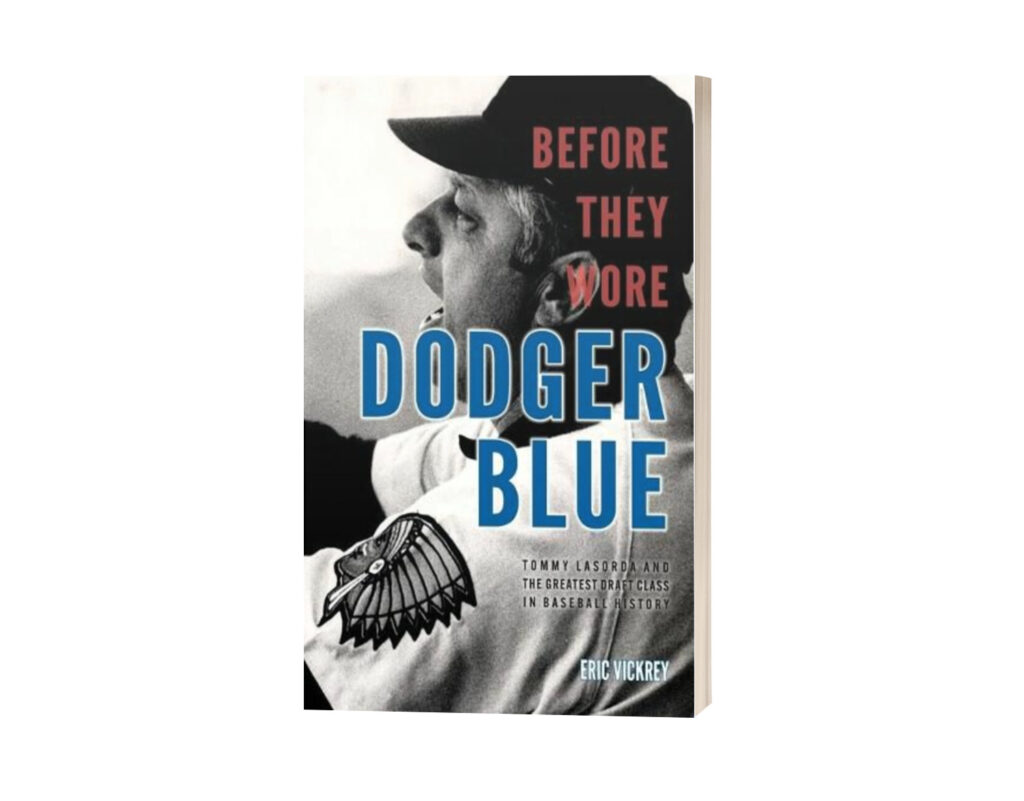
In this episode of the Exploring Washington State Podcast, author and researcher Eric Vickrey returns to share the story behind his new book, Before They Wore Dodger Blue — a deep, meticulously researched look at the early years of future Dodgers stars and the overlooked Northwest community that shaped them.
What Eric uncovered isn’t just a baseball footnote.
It’s a missing chapter in baseball history.
How Spokane Became the Foundation of a Dodgers Powerhouse
The Inland Northwest doesn’t often appear in national baseball conversations, but during the late 1960s and early 1970s, Spokane played a defining role in the Dodgers’ player development pipeline.
Eric breaks down how the groundbreaking 1968 MLB Draft — one of the most influential drafts in modern baseball — fed directly into the Spokane Indians, where future stars were stretched, tested, challenged, and ultimately transformed.
Gritty travel schedules.
Tough competition.
A small community with big expectations.
A manager learning his craft.
A group of young players trying to survive long enough to chase a dream.
This wasn’t glamorous baseball. But it was essential baseball.
For many players, Spokane was the moment everything clicked — or the moment everything almost fell apart.
A Young Tommy Lasorda Arrives in the Northwest
Before he became a baseball icon, Tommy Lasorda came through Spokane as a developing manager trying to figure out who he was as a leader.
Eric shares stories and insights about Lasorda’s early years that most fans have never heard:
- His unpolished leadership style
- His emotional outbursts
- His ability to ignite energy in a team
- His early mentorship patterns
- And how the Spokane clubhouse shaped the man he eventually became
It turns out the legend wasn’t made in Los Angeles.
He was made in the Inland Northwest.
Player Stories That Bring the Era to Life
Throughout the conversation, Eric highlights powerful, human stories from the players who would one day wear Dodger blue — but at this point were just young men fighting for a shot.
Some almost quit.
Some almost got cut.
Some found their confidence for the first time.
Others were hardened by failure and adversity.
Spokane was a turning point for all of them.
Eric’s research brings these players back to life with depth and detail that makes the past feel immediate and compelling. It’s the kind of storytelling that baseball fans — and history lovers — will connect with instantly.
Why This Forgotten Story Still Matters Today
This episode isn’t just about baseball.
It’s about:
- The value of communities that invest in young talent
- The grit required to grow in difficult conditions
- The mentors who shape future leaders
- And the places whose contributions go unrecognized
Eric makes a clear case that Spokane deserves a meaningful place in the Dodgers’ story — and that Washington State’s baseball heritage is richer than most people realize.
Whether you’re a lifelong baseball fan, a student of leadership, or simply someone who appreciates a great origin story, this conversation reframes what you think you know about the Dodgers — and offers a fresh appreciation for the Inland Northwest.
About the Guest
Eric Vickrey is a baseball researcher and author known for his deep-dive historical work and his ability to bring long-forgotten stories back into the light. His latest book, Before They Wore Dodger Blue, uncovers the Spokane chapter of Dodgers history with a level of insight and care the story has never received.
Learn more at: https://ericvickrey.com
Listen to the Full Episode
Full episode transcript with Eric Vickrey
Scott Cowan [00:00:05]:
Welcome to the Exploring Washington State Podcast. My name is Scott Cowan and I’m the host of the show.
Scott Cowan [00:00:26]:
And today we’re going to talk about his new book, Before They Wore Dodger Blue, Tommy Lasorda in the greatest draft class in baseball history, which surprisingly is about the 1970 Spokane Indians.
Scott Cowan [00:00:57]:
Well, this is another example of Spokane’s importance. So we’re going to talk about the 70 Spokane Indians, but we’re going to talk about Tommy Lasorda.
Scott Cowan [00:01:29]:
All right, Eric, we’re just gonna jump in. Welcome back.
Eric Vickrey [00:01:33]:
Thanks, Scott. Great to be with you again.
Scott Cowan [00:01:35]:
That was supposed to be a nice tight intro and I just, you know, I couldn’t, I can’t do it. So.
Scott Cowan [00:01:46]:
For, for people that don’t know you, which is probably most everybody in the audience. Right. I mean, you’re not.
Scott Cowan [00:01:54]:
Being an author and a researcher and a historian. Is your, your side hustle, I guess, your hobby? You’re a full time medical professional.
Eric Vickrey [00:02:03]:
Correct.
Scott Cowan [00:02:05]:
And you live in Port Townsend.
Scott Cowan [00:02:09]:
And you work in Seattle.
Scott Cowan [00:02:13]:
I’m not seeing where you get time to write, I guess, is what I’m trying to say. Where do you find the time to do this? Because what I’m looking at is you. This is your third book in three years, man.
Eric Vickrey [00:02:24]:
That’s right. Yeah.
Scott Cowan [00:02:25]:
You’re so. You’re consistent.
Eric Vickrey [00:02:28]:
Yeah, I, I work hard at it. And I will say that my, my job kind of allows for that. I work 12 hour shifts in Seattle. And I work also partly remote.
Scott Cowan [00:02:39]:
Okay.
Eric Vickrey [00:02:40]:
Living in Port Townsend. So I. I have at least two or three days a week where I’m usually not working, and those days I usually devote to researching and writing.
Scott Cowan [00:02:51]:
Okay. And I’m putting you on the spot with this question, which you can hear that a lot from me, this episode probably, but.
Scott Cowan [00:02:59]:
Walk us through the conversation that in my mind went something like this. Hey, honey, I think I want to write another book.
Scott Cowan [00:03:10]:
How’s your wife with all of this? Does she like this? Does she think this is cool, too?
Eric Vickrey [00:03:16]:
She’s very supportive of the process. I think the hard part.
Eric Vickrey [00:03:23]:
After season of shattered dreams, I tried doing a lot of events and.
Eric Vickrey [00:03:29]:
Went to. Went to Spokane, went to Portland, Bellingham, a lot of different places to try and promote the book. And. And that. That was a difficult time, for sure. We had.
Eric Vickrey [00:03:44]:
Passing in the family around that time. Our. Our dog was sick, so that was a. You know, certainly added some stress. But as far as the. The researching and writing, you know, I do it on. On my days off when she’s at work. We still have our time at night where we sit on the couch and watch TV together or whatever.
Eric Vickrey [00:04:07]:
So it’s.
Scott Cowan [00:04:09]:
Your wife. Is your wife a baseball fan?
Eric Vickrey [00:04:11]:
She’s a huge baseball fan. And that helps as well.
Scott Cowan [00:04:13]:
That helps a lot. All right. Okay. So what’s her favorite team?
Eric Vickrey [00:04:18]:
The Cardinals. Although. So I can. I should preface that, Eric.
Eric Vickrey [00:04:26]:
She actually. She might say the Mariners now because we. We both grew up in Illinois, big Cardinal fans, and we moved to Washington state 11 years ago, and we’ve definitely gradually become drifted toward the Mariners. You know, just going to a lot of games. And of course, this past season was just so exciting and.
Eric Vickrey [00:04:48]:
You know, love. Love the roster they have now. So.
Eric Vickrey [00:04:53]:
I myself might even say I’m a bigger Mariners fan than Cardinals fan at this point, and she would probably say the same thing.
Scott Cowan [00:05:01]:
I’m a Mariners fan, but because my formative baseball years, the Mariners weren’t a team, so I couldn’t be a fan of a team that didn’t exist. But I remember 1995 because I was working in downtown Seattle at that time, and about August, the whole.
Scott Cowan [00:05:20]:
The vibe of the city changed because there was this chance that the Mariners, the. The horrible, hapless Seattle Mariners might make it to the playoffs. Oh, my gosh. And the whole city kind of had this.
Scott Cowan [00:05:33]:
I’m gonna say I think the 2025 Seattle Mariners season was the best season of Mariners history for lots of reasons. But I think they finally have put together the most complete roster from. From the superstars to the last guy on the bench. I think. I think this team is that team because we don’t know what the. You know, we don’t know next year’s team yet. But. But I think this team was.
Scott Cowan [00:05:36]:
This vibe about it.
Scott Cowan [00:06:04]:
It was the best season they’ve ever had. And I’m not really disappointed that they didn’t go to the World Series. I mean.
Scott Cowan [00:06:13]:
Yes, but this was a great team. It was a fun team to watch. It was a complete team. And how can you not be a Mariners fan if you’re exposed to it like that?
Eric Vickrey [00:06:24]:
Yeah, 100%. Yeah. And hope they’ll only get better. You know, they still have most of the roster returning.
Scott Cowan [00:06:30]:
Yeah.
Eric Vickrey [00:06:30]:
These guys are all in their prime.
Scott Cowan [00:06:32]:
Yeah. Yeah.
Eric Vickrey [00:06:32]:
No, so I’m optimistic, but see, this.
Scott Cowan [00:06:35]:
Will segue nicely because I didn’t want them to play against the. The Dodgers.
Scott Cowan [00:06:40]:
Because what’s the Dodgers payroll? And how many billions of dollars have they got committed in future contracts? I mean, they’re an economic juggernaut, and the Mariners are not. But back when this book was taking place, yes, the Dodgers were still financially well off. They’ve always been a financially strong team, even back in Brooklyn and to the Los Angeles days.
Scott Cowan [00:07:07]:
But.
Scott Cowan [00:07:08]:
You go on. I don’t want to put words in your mouth, but I’m going to. You say something like, it’s the greatest draft class in history.
Eric Vickrey [00:07:19]:
Yes.
Scott Cowan [00:07:20]:
Defend that.
Eric Vickrey [00:07:23]:
Yeah, that’s. I can. I can do that.
Eric Vickrey [00:07:28]:
So in 1968, the Dodgers drafted 11, actually drafted 15 future big leaguers, 11 of them signed. And of those 11, nine of them played in the big leagues for 10 or more seasons. So that. That in itself is a draft record.
Eric Vickrey [00:07:46]:
Of those 11, they combined for more than 11,000 hits, which is a draft record. More than 1100 home runs, also a record.
Eric Vickrey [00:07:56]:
And they combined for 234 wins above replacement or win WAR, which is about 40 to 50 wins above replacement, better than the next highest draft class.
Scott Cowan [00:08:12]:
I didn’t think it’d be that easy for you to defend it, but.
Eric Vickrey [00:08:14]:
Okay. Just a curiosity.
Scott Cowan [00:08:17]:
Yeah, I guess. So, just out of curiosity, what is considered the next best draft class?
Eric Vickrey [00:08:24]:
So there’s, you know, a few ways to look at it. You know, some people like to dismiss WAR or wins above replacement. It’s. It’s nice because it’s just a single statistic that you can look at. So if you’re just looking at war, the next highest is the Red Sox draft class of. I believe it’s 83, when they had Clemens and Ellis Burks. And basically those two players alone, Clemens had something like 120 wins above replacement on his own. Okay.
Eric Vickrey [00:08:54]:
And then you could also measure it by just number of players who reached the main leagues. The 82 Mets had drafted 17 future big leaguers. So just in terms of the number of future major leaguers, they. They drafted more, but they weren’t as impactful of a class in terms of the talent.
Scott Cowan [00:09:15]:
Okay, so in the, in the beginning of the book, where you’re setting it up in. What we think about in the major league, big league draft, you know, is now, is that we draft. We draft these. I’ll call them kids. And. But before that, there wasn’t a draft. And so there was scouts going around the, around the country. And, and they were, you know, sitting down.
Scott Cowan [00:09:35]:
And not that they’re not doing that now, but they’re sitting down, having lunch, dinners, you know, with families, trying to. Trying to get, hey, Eric, come on, come on, join the Mariners. You know, we, you know, we want you to plane as hell, that kind of thing. And Major League Baseball, you know, I’m paraphrasing, but Major League Baseball didn’t think that there was a. There was a competitive disadvantage to that system because the teams that had money could afford to hire more scouts. You know, they could pay more bonus money, things like that. So they wanted. They wanted to put a draft in.
Scott Cowan [00:10:04]:
And the Dodgers, in your book, I didn’t realize this before, but the Dodgers were at first very against that. I mean, and why, probably. And why not? Because they were. They were winning at the signing of bonus players if they wanted to. Right. But then they kind of adapted and then they. Very quickly. Because this is what, four years after the draft started.
Scott Cowan [00:10:26]:
Right.
Eric Vickrey [00:10:26]:
Okay.
Scott Cowan [00:10:26]:
So within four seasons, they draft what you’re calling the greatest draft class of all time, which, with every year that goes by, this draft class still holds up.
Eric Vickrey [00:10:36]:
Right? Exactly. Yeah.
Scott Cowan [00:10:37]:
So, I mean, okay, so if this was 1972, that the best draft class ever? Well, it’s only been, you know, seven years. A big deal. But now, after all these years. Okay, what behind the scenes, why do you think the Dodgers were so successful at changing strategies?
Eric Vickrey [00:10:53]:
Yeah, that’s. That’s a great question. So, yeah, prior to the institution of the draft in 65, they were, for the previous two decades, they had signed Sandy Koufax, Roberto Clemente, you know, originally going back to the 40s, integrated the game, of course, with Jackie Robinson and Roy Campanella. Then they signed Don Drysdale and Don Sutton, all these future hall of Famers when it was kind of this free for all. And part of that was they had just really good scouts. They were experienced group of scouts. Walter o’ Malley had pretty deep pockets, so that certainly helped. Yeah, and the Dodgers were very much against the draft for, for good reason.
Eric Vickrey [00:11:32]:
You know, they were very successful in the the 50s and early 60s with the status quo. So they were one of the teams that voted against the draft. And, and the first three years of the draft they didn’t do too well. In 65, they really didn’t draft any future big league players.
And 66, they got a little lucky with a couple of later round picks picks. Charlie Huff, who really only made the major leagues because he learned the knuckleball, right? And then Bill, Bill Russell was another kind of later round pick from that draft. In 67, they, they got a couple future big leaguers, Stevie Vaughn, Joshua, but very so underwhelming draft class. So.
Eric Vickrey [00:12:16]:
And around this time, Stanley Koufax had retired. You know, he retired after the 66 season and he virtually, you know, carried that team to the World series in, in 66 he had that phenomenal season. Of course the Dodgers got swept by the Orioles in the World Series. Koufax announces his surprise retirement after that season. And the Dodgers go from winning 95 games in 66 to winning 73 and 67. And that part of that was because their offense was just really weak. They hit something like 236 in 67. They probably scored three runs a game.
Eric Vickrey [00:12:55]:
They were, you know, among the lower teams in the league at scoring runs. So that they were, you know, didn’t have this influx of talent coming because of these poor drafts. Koufax retires, their offense is struggling. And so the scouting director.
Eric Vickrey [00:13:13]:
Al Companis and the general manager, Buzzy Vivesi, and then Fresco Thompson realized they needed to really boost the offense. So they kind of went all in on offense. The other thing they did ahead of that 68 draft was Alcantas met with some NFL scouts because the NFL had been had a draft for years.
So he sought out this guy named Al Lucasal and got advice from him. You know, what are you doing? How do you evaluate players? So he learned a lot about just how to evaluate talent and how to go for best athletes rather than, you know, drafting based on position. And that that sort of shift in strategy is I think what really helped them with this enormous haul in 68.
Scott Cowan [00:14:01]:
And Lasorda was a scout then as well. I mean, in the earlier 60s yes.
Eric Vickrey [00:14:08]:
Yeah, he became a scout after he retired as a player in 61.
Scott Cowan [00:14:14]:
And what I know of Lasorda is kind of is when he’s the manager of the Dodgers. Okay, so anything pre managing the Dodgers is not, you know, it’s news to me. And I’m reading that he was kind of a character.
Eric Vickrey [00:14:34]:
To say the least.
Scott Cowan [00:14:35]:
Yeah, kind of a character. And there was some reservations in the Dodgers organization about making him a manager because they were kind of afraid his rough and tumble maybe so polite way of saying it, rough and tumble Persona would negatively impact talent. Well, that proved to not be the case. I mean. Okay, but.
Scott Cowan [00:15:04]:
So the, the Dodgers employed about 20 full time scouts in 68. At that time, Scott was a rookie league manager. He started managing in the rookie league in 65. So these are guys who were, you know, basically just out of high school. He did that for four years. He was still doing a little bit of scouting in 68, but he wasn’t one of the full time scouts. They had this group of guys, you know, most of their names are, they’re pretty anonymous guys and I do go into some of that in the book. I thought they deserved credit.
Scott Cowan [00:15:15]:
Yeah, how, how do you think the 68 draft was put together? How did it come about?
Eric Vickrey [00:15:22]:
So the, the Dodgers employed about 20 full time scouts in 68. At that time, Losor was a rookie league manager. He started managing in the rookie league in 65. So these are guys who were, you know, basically just out of high school. He did that for four years. He was still doing a little bit of scouting in 68, but he wasn’t one of the full time scouts. They had this group of guys, you know, most of their names are, they’re pretty anonymous guys and I do go into some of that in the book. I thought they deserved credit.
Eric Vickrey [00:15:57]:
Guys who had been scouts for, for decades, who really no one knows about. Leon Hamilton, Guy Wellman, Bill Brinzel, these are all guys who scouted the guys like Ron, say Bobby Valentine, Davey Lopes, Bill Buckner, you know, submitted their reports to Al Campanis.
They would kind of come up with a list of their top players based on these rankings. And, and they kind of learned this ranking system from Alvo Casal, the football executive. So they put all this together and came up with their draft list. And at the top of that list was Bobby Valentine was their top choice heading into the 68 draft, followed by Bill Buckner. And they managed to get both of those players with their first two picks.
Scott Cowan [00:16:47]:
And you, you mentioned in the book that Buckner wasn’t too happy about not being drafted in the first round.
Eric Vickrey [00:16:52]:
Not at all.
Scott Cowan [00:16:53]:
Not. Not at all. Yeah.
Eric Vickrey [00:16:55]:
So.
Scott Cowan [00:16:57]:
Let’S, let’s jump into the Spokane season. The, you know, in, in 70. Do you.
Scott Cowan [00:17:04]:
So Lasorda had probably been what, a manager for five years at that time. So he wasn’t a, he wasn’t a, a well seasoned manager.
Eric Vickrey [00:17:13]:
Okay, Correct. Yeah, he managed in the Rookie Leagues. For four years and then was promoted to Spokane in 69 and had a losing season actually in his first season.
Scott Cowan [00:17:21]:
Which now Wenatchee was a AAA.
Scott Cowan [00:17:27]:
Franchise. That’s the wrong word, but AAA. So if you’re not a baseball fan, that’s basically one step below the minor leagues. It’s where back then probably your best players were playing. Nowadays, maybe it’s double A, depending on what you’re trying to do with the player, but AAA was where the. Your big prospects were probably playing. These were teams that I think you might, you might be willing to make the argument that this 1970s Spokane Indians could have held their own against most of the major league baseball clubs.
Eric Vickrey [00:17:57]:
Absolutely.
Scott Cowan [00:17:58]:
Yeah. I mean, they probably weren’t going to win. They weren’t going to be a playoff team in the major leagues, but they could have certainly held their own against especially like the lower division major league teams.
Scott Cowan [00:18:09]:
Do you know why the Dodgers had their AAA club in Spokane versus somewhere, you know, closer to Los Angeles?
Eric Vickrey [00:18:20]:
Yeah. So when the Dodgers moved from Brooklyn to Los Angeles in 58, I believe it was 58.
Eric Vickrey [00:18:30]:
They needed to basically establish AAA club. Walter O’ Malley had owned the Los Angeles Angels.
Eric Vickrey [00:18:40]:
They talked about putting a team in Long beach, but some people thought that was too close to la and so they were kind of taking bids from other cities.
Scott Cowan [00:18:51]:
I’m laughing. Have you been in la traffic? That’s not too close. Man.
Eric Vickrey [00:18:54]:
That’s.
Eric Vickrey [00:18:56]:
Good point. Yeah. That could be a couple hours away.
Scott Cowan [00:18:59]:
Exactly.
Eric Vickrey [00:18:59]:
Good day.
Scott Cowan [00:19:00]:
All right, so yeah, so they were taking bids from other. Sorry.
Eric Vickrey [00:19:03]:
Yeah, so Spokane submitted a bid. Prior to that, Spokane had been like a lower class in terms of the ranking of minor league teams, like a class A Class B.
Eric Vickrey [00:19:18]:
Franchise since the early 1900s. But they submitted a bid and got the approval to the funds to build a new stadium and ultimately landed the Dodgers affiliation as their AAA franchise. The Spokane Indians.
Scott Cowan [00:19:35]:
Okay, so we’re just going to skip over Ogden and all that because that’s not Washington related. We’re just going to try to keep this to Spokane. We got to talk about Dodgers anyway, but you know, you get the idea, Spokane. So.
Scott Cowan [00:19:49]:
Walk us through.
Scott Cowan [00:19:52]:
You’re calling them the greatest draft class, but the 1970s Spokane Indians won the PCL championship against at that time was a pretty good franchise. The Hawaii Islanders.
Scott Cowan [00:20:05]:
They were always a pretty strong AAA club in that era.
Scott Cowan [00:20:10]:
How much. How do I put this? So it was a good draft class. Great draft class. I mean, ultimately it turned out to be a great draft class, but at this point, we still don’t know where these guys are. Going to, how they’re going to shake out right when injuries, trades, just, you know, failure to develop beyond a certain plateau.
Scott Cowan [00:20:27]:
What sort of impact do you think Lorda had to the success of this draft class?
Eric Vickrey [00:20:33]:
I think he was very impactful in a, in a few different ways he was the ultimate motivator. He, he had a way of convincing his players that they were better than they actually were. And he, it was carried around these self help books of, you know, promoting himself and promoting just positivity.
He told his players they were going to get their mail someday at Dodger Stadium. He constantly said you got to believe, you got to believe. That was his mantra. So he just instilled this tremendous confidence in his players and it was a confidence that he had in himself. You know, he was not a very talented pitcher but somehow he reached the major leagues despite having kind of below average ability.
Eric Vickrey [00:21:20]:
And his other strength was that he was really good at recognizing players potential. And I think this kind of goes back to his years of scouting. The 70s Spokane Indians had an outfielder. Their, their fifth outfielder was Davey Lopes. On that team, you know, major league all star. But at the time Davey Lopes was, you know, not necessarily thought of as a, this highly touted prospect. He was, you know, kind of a backup outfielder. Lord of ultimately saw that Davey Lopes could be better utilized as a second baseman rather than maybe an average hitting outfielder.
Eric Vickrey [00:22:00]:
He was an above average second baseman. So he worked with him on transitioning to second base and he did the same with Bill Russell, turned him from an outfielder into an infielder. And of course Russell and Loes along with Ron say and Steve Garvey ended up forming an infield that played together for eight seasons in, in Los Angeles and won four pennants. So we’ll sort of had that, that eye to sort of see the future. So I think those are some of the ways that he helped, helped his prospects.
Scott Cowan [00:22:32]:
One of the, one of the antidotes you, you share and I’ll, you know, I’ll butcher it but I thought I chuckled when I read this. Tom Pachoric, they would get together and they would bowl Lasorda and it was almost Patrick and Lasorda would pull against a couple of the other players and basically the losers would buy beer and Pachoric is involved in a collision.
Scott Cowan [00:22:56]:
On the base paths and Lasaurus comes running over and asks him if he’s hurt and basically oh good, I thought you hurt your bowling hand or something. I mean it was just like this kind of like you know, making light of it in a. You know, I don’t know. There’s something. I read that and I just chuckled like that’s. That’s a guy who’s connecting to his players for sure.
Eric Vickrey [00:23:18]:
Yeah.
Scott Cowan [00:23:19]:
And maybe we don’t do that these days.
Scott Cowan [00:23:23]:
Because of the dollar signs attached to these guys, unfortunately. Not that there wasn’t big dollars attached to them back then, but now.
Eric Vickrey [00:23:33]:
Yeah, I think Scott sort of broke the mold in, in that way. A lot of his players told me that, you know, the kind of the culture in baseball before that was that managers would be very standoffish. They would not go out bowling or. Or out to dinner with their players. And Scott has sort of broke down those barriers, ate dinner every day with his. His players, took them out for extra batting practice and became more of a. A friend or father figure to them.
Scott Cowan [00:24:03]:
Yeah, no, that was that, that antidote. And then the, the one about the.
Scott Cowan [00:24:09]:
Having the, the bus driver pull the team bus over and go in and say they’ve got a bus full of hunger players and we’ll stop here if you, if you let the. If you let us eat for free type thing. And I was like, yeah, I can see that.
Eric Vickrey [00:24:20]:
That’s.
Scott Cowan [00:24:21]:
That’s a pretty good. I don’t think that that’s any different. What fast food places on the side of the highway do to now, they go, you know, the bus driver eats free. Stop here. So you.
Scott Cowan [00:24:32]:
So they had this great season in 70.
Scott Cowan [00:24:36]:
And.
Scott Cowan [00:24:38]:
Spoiler alert, that’s about where I’m at in the book. So, you know, we’re gonna. I’m gonna stop having antidotes at this point of what I’ve observed in the book. But let’s talk about that 70 season because some of these guys had, you know, only been professionals now for two years, which is a pretty, pretty fast rise.
Scott Cowan [00:24:58]:
And to go on and have this very dominant AAA season. How many of them were.
Scott Cowan [00:25:07]:
Pulled up from AAA and made the Dodgers.
Scott Cowan [00:25:11]:
Roster in 71.
Eric Vickrey [00:25:15]:
A lot of them made.
Eric Vickrey [00:25:17]:
Brief appearances with the 71 Dodgers. Garvey and Buckner more or less spent most of the. The 71 season.
Eric Vickrey [00:25:28]:
With the big league club. They kind of went. A lot of them went up and down.
Eric Vickrey [00:25:32]:
For a year or two.
Scott Cowan [00:25:34]:
I’m trying to think. I have a. I’ve actually managed to complete the 71 top set.
Eric Vickrey [00:25:40]:
Oh, cool.
Scott Cowan [00:25:41]:
Which if you’re at all familiar, that was when I started collecting baseball cards, was 71. And I’m trying to remember what Dodgers is. I haven’t pulled the set out. He goes, is it like 750 players in the, in the. A brutal set to complete.
Scott Cowan [00:25:56]:
And I’m trying to remember which Dodgers were in the 71 tops. And I’m not remembering, to be very honest with you. So I want to see.
Eric Vickrey [00:26:06]:
Sure. Some of those guys probably had rookie cards around that time.
Scott Cowan [00:26:09]:
I want to say Garvey’s in there, but I don’t know. Okay, so.
Scott Cowan [00:26:16]:
What year did Lasorda get called up to the Dodgers to be? He wasn’t brought up as the manager initially, but when did he get gone to the, the coaching staff for the, for the big, the big club?
Eric Vickrey [00:26:27]:
Yeah. So he managed in Spokane in 71. After the 71 season, the Dodgers moved their AAA affiliate to Albuquerque. So he managed in Albuquerque in 72, and in 73 he was promoted to third base coach.
Scott Cowan [00:26:43]:
Okay. And that’s about when this, this group of players kind of were playing in LA.
Eric Vickrey [00:26:51]:
Yep. Okay. Yeah. In 74, the Dodgers reached the World Series and in fact, five of the first six hitters in their game one lineup were from the 68 draft class.
Scott Cowan [00:27:03]:
Five of the first six. Wow. You should have led with that. Or defending the. I mean, jeez.
Scott Cowan [00:27:14]:
Did they draft any pitchers in the draft class that were impactful?
Eric Vickrey [00:27:21]:
They did. They, you know, they went really heavy on, on position players. I think in the. Of their first nine or 10 picks, they were only one or two pitchers. One of them was Doyle Alexander.
Scott Cowan [00:27:31]:
Okay.
Eric Vickrey [00:27:32]:
Who won about 190 games in leagues. And Jeff Zahn was another who 100 games or so. But actually the, the, probably the best pitcher of that class was a guy named Sandy Vance.
Scott Cowan [00:27:47]:
Okay.
Eric Vickrey [00:27:48]:
Who had a really good rookie season with The Dodgers in 70. Got called up midway through that season. He was a kind of a star pitcher out of Stanford, but he injured his arm the next season, so he was probably would have been the best pitcher out of that class. And it was a lot of fun to interview Sandy for this book. He gave me some, some great stories.
Scott Cowan [00:28:11]:
So how many of these guys did. Have you interviewed? Were you able to sit down and have interviews or. Not necessarily sit down, but you know, how many of them did you interview?
Eric Vickrey [00:28:20]:
Yeah, I interviewed 11 members of the 1970 Spokane Indians.
Eric Vickrey [00:28:27]:
Including Bobby Valentine, who’s a terrific storyteller. You know, a guy who’s used to dealing with. With media, telling stories. And he, in a way, kind of adopted the personality of Tommy Lasorda. He was kind of a natural extrovert, but kind of adopted some of Lasorda’s philosophies as a manager himself. I talked to Tom Pescurek, great sense of humor, very kind of dry wit. Tommy Hutton from that team, who’s now a Miami Marlins broadcaster. Charlie Hough, who was actually the team’s closer.
Eric Vickrey [00:29:06]:
Interestingly, I, I found that a bit surprising that they, you know, had a knuckleball or what could go wrong?
Eric Vickrey [00:29:16]:
Yeah, he, he was amazing that you’re, you know, Charlie Hough was, was going to be out of bay. He had, you know, came out out of the 66 draft class and really, you know, had peaked in Double A and was on his way out of baseball. And then before the 70 season.
Eric Vickrey [00:29:38]:
One of the Dodgers scouts, Goldie Holt, told him he should try learning the knuckleball. So he, he tried throwing it one day and he just picked it up. Within a few minutes he was throwing this unbelievable kind of fluttering knuckleball. And that 70 season with Spokane is the first time that he actually used it in games. And he just. Unbelievable. And got. Ended up getting called up to the Dodgers late that season.
Scott Cowan [00:30:02]:
Any antidotes through the interviews that were on the cutting room floor, if you will, that didn’t make it into the book that are. That you thought was an interesting tidbit or an aside, but just didn’t fit into the, into the narrative of the book?
Eric Vickrey [00:30:17]:
Oh, gosh.
Eric Vickrey [00:30:20]:
Wow. That’s a great question.
Eric Vickrey [00:30:25]:
You know, a really sort of fascinating part of the Spokane Indian’s story was the Hawaii Islanders.
Eric Vickrey [00:30:33]:
Because they were this.
Eric Vickrey [00:30:36]:
They were a juggernaut of their own. They were the Angels AAA affiliate, but they were, they were considered this sort of co op team. So they had local ownership in Hawaii and they had this agreement with the Angels where they could sort of fill the roster with their own players that they signed. So it was like half independently signed players and then half Angels prospects. And so they signed all these former major league players, not necessarily like All Stars, but solid major league players who are like maybe a little bit past their prime guys in their early 30s. And they were, they were a really good, good team.
Eric Vickrey [00:31:13]:
And you know, I, I’ve, I just find it fascinating that there was professional baseball in Hawaii, AAA baseball.
Eric Vickrey [00:31:20]:
In Hawaii at that time, and a lot of, a lot of cool stories just from players. It was of course, their favorite road trip.
Eric Vickrey [00:31:29]:
Come on. Spending the whole day at the beach getting sunburned and then trying to play baseball at night.
Scott Cowan [00:31:34]:
So I got, we got to go to Tacoma this week.
Eric Vickrey [00:31:37]:
Great. Oh.
Eric Vickrey [00:31:40]:
Exactly. So the 70s Spokane Indians, they start their season in Salt Lake City in the snow.
Scott Cowan [00:31:47]:
Yeah.
Eric Vickrey [00:31:48]:
But to answer your question, I had so many stories about the Hawaii Islanders, I ended up writing this 30 page chapter about the Hawaii Islanders. And you know, as I was kind of editing the book and I had. My editor was looking at it, we, we both agreed there was way too much about the Hawaii Islanders, so we needed to kind of refocus and cut some of that. But a lot of, a lot of fun stories.
Scott Cowan [00:32:25]:
So you’re going to turn that into an article though, the Islander content. Could it be something you could publish with Sabr and, and have.
Eric Vickrey [00:32:31]:
Yeah, yeah, yeah, I think so.
Scott Cowan [00:32:33]:
Okay.
Eric Vickrey [00:32:34]:
All right.
Scott Cowan [00:32:36]:
Do you think Lasorda enjoyed being in Spokane, out of the limelight, if you will? Because, I mean, 1970 Spokane.
Scott Cowan [00:32:48]:
Spokane wasn’t a booming place. No offense to Spokane, folks, because 1970 Tacoma wasn’t booming either. But you know, it certainly wasn’t Los Angeles, it wasn’t New York, you know, things like that. It was kind of.
Scott Cowan [00:33:04]:
Remote, I think is a word I can use. It was remote.
Eric Vickrey [00:33:07]:
Yeah, that’s fair to say.
Scott Cowan [00:33:08]:
And you know, did that lead to.
Scott Cowan [00:33:13]:
More time to.
Scott Cowan [00:33:16]:
Work with the players? Because there’s less distractions of a, of a. Okay, let’s be honest. If you’re coach of the manager of the Hawaii Islanders, you’re competing with the beach. I mean.
Eric Vickrey [00:33:27]:
Yeah.
Scott Cowan [00:33:30]:
Yeah, that’s, that’s a hard draw to get him to come in and do some extra bp, you know, and go run the, run the lines, you know, we’re going to the beach.
Eric Vickrey [00:33:37]:
Coach.
Scott Cowan [00:33:37]:
Sorry. Do you think Spokane’s remoteness led to building this tight knit group?
Eric Vickrey [00:33:46]:
I do, yeah. That’s, that’s a good point. You know, I think, I think of my own, my own personal story. You know, I went to college in Peoria, Illinois, kind of similar town to Spokane, you know, not a lot to do, not a lot of like nightlife. So I more or less just hunkered down and studied. Whereas, you know, if I would have went to college in Hawaii, you know, a lot more distractions. So I think Spokane kind of lent itself to, you know, there wasn’t much to do. So the, the players all hung out together.
Eric Vickrey [00:34:17]:
They form really tight bonds. Lasorda took Valentine and Buckner and Paciorek and Garvey out for morning batting practice every day of home games because, yeah, wasn’t much else to do. They’d go to maybe a movie at night on their off day. But I think that did, did help and Lasorda had come from, you know, Pocatello, Idaho and Ogden, Utah before. So I think in some ways Spokane was certainly a step up in terms of the.
Scott Cowan [00:34:49]:
And no, we’re not throwing any shade on these, these communities.
Scott Cowan [00:34:55]:
Look, comparing Spokane or Pocatello or Puyallup to Honolulu or.
Scott Cowan [00:35:05]:
Phoenix, even back then. Yeah, I don’t think there was as many built in distractions. How’s that? Yeah, yeah. Okay. Because one of the things you mentioned was eight years together, the infield basically played together for eight seasons.
Scott Cowan [00:35:27]:
I don’t know if you were to go back and look through baseball history, if you could find many other infields that played together that many seasons.
Eric Vickrey [00:35:37]:
No, I’ve seen it documented as the longest.
Scott Cowan [00:35:40]:
Yeah, I mean, yeah, that’s, that’s surprising.
Scott Cowan [00:35:45]:
That’s actually more than surprising, honestly. The fact that, that those guys were able to have the longevity, I mean, health wise. I mean, you know, just, just that alone, you know, that. And they were able to get the business of the, of baseball out of the way and they all kept signing contracts to continue playing for the team versus, you know, being traded off for somebody, you know, getting rid of a bloated contract to get, you know, save some money.
Eric Vickrey [00:36:12]:
Yeah. Because, yeah, free agency came along in 76, so those guys certainly would have had opportunities to go elsewhere.
Scott Cowan [00:36:18]:
Yeah. And that’s interesting. And so I, I wonder, you know, when you interviewed these guys, did they hold Lasorda in pretty high regard?
Eric Vickrey [00:36:31]:
Yes, I would say not, not 100%. And in fact, there was a. One of the players I got in contact with from the 1970s, Poan Indians, refused to go on record just because.
Scott Cowan [00:36:45]:
He.
Eric Vickrey [00:36:48]:
Had.
Eric Vickrey [00:36:50]:
Let’s say, a negative impression of Lorda. Interesting. Okay. In fact, said that he was more of a.
Eric Vickrey [00:37:00]:
Politician than a manager in his, in his mind.
Scott Cowan [00:37:04]:
Interesting.
Eric Vickrey [00:37:05]:
Okay, well, I mean, but, but the other guys, you know, I was the vast majority, held him in very high regard, had nothing but great things to say about him. But yeah, he was not everyone’s cup of tea for sure. You know, he had this sort of rah rah mentality, which was, I think, great for younger players. But, you know, some of these guys had been in professional baseball for 10 years at that point. And here’s this, you know, guy, guy with very little major league success coming in with his kind of rah rah, you can do this mentality. And not everyone kind of drank that Kool Aid.
Eric Vickrey [00:37:50]:
Okay.
Scott Cowan [00:37:52]:
But if we look back on his managerial career in the big leagues, he was a very successful, I don’t know what Is how many, how many wins did he have in the, in the major leagues?
Eric Vickrey [00:38:06]:
I’d have to look it up. He’s I think around 20th on the all time.
Scott Cowan [00:38:10]:
Yeah, so I mean list that’s. There’s been what, let’s see.
Scott Cowan [00:38:16]:
I mean, how many couple thousand guys have been managers at the big league level? Maybe, maybe more if we, if we don’t count, you know, Eric’s the manager today because I was suspended. You know, type, type thing, you know, where you’re filling in but you know, how many guys were assigned the job of being the manager of the big league team through all these years and.
Eric Vickrey [00:38:36]:
And to stick with one team for as long as he did. 20, 20 years was.
Scott Cowan [00:38:41]:
Yeah, yeah. Without. And seemingly, I mean he bled Dodger blue.
Eric Vickrey [00:38:48]:
He did, you know, and even back when he was a player, he bled Dodger blue. Very, very loyal. He had opportunities to go elsewhere. When he was a third base coach, the Montreal Expos offered him a much more lucrative contract to manage, but he kind of stuck it out.
Eric Vickrey [00:39:07]:
Assumed that Peter o’, Malley, who was by then the Dodgers president, would promote him eventually to replace Walter Alston.
Scott Cowan [00:39:16]:
Right, right. I’m just laughing. Montreal, I mean really.
Eric Vickrey [00:39:22]:
Well, that’s sort of had his most success as a player. He spent I think nine seasons in Montreal, which is a Dodgers AAA affiliate back in the 40s and 50s.
Scott Cowan [00:39:32]:
Yeah.
Eric Vickrey [00:39:33]:
So he had some ties there and.
Scott Cowan [00:39:35]:
Well, maybe that’s why he said now he remembered what it was like.
Scott Cowan [00:39:41]:
Now if Hawaii came calling, maybe he was the Islanders. What the heck. All right, so let’s talk about you putting this book together. How long do you think? Well, let’s go this. When did you come up with the idea that you wanted to put this book together?
Eric Vickrey [00:40:00]:
Yeah, so it was really when I was researching my last book about the 1946 Spokane Indians. That’s kind of when I learned about the 70 team. So I thought that something interesting to write about. So I kind of put that in the back of my mind and.
Eric Vickrey [00:40:18]:
After my last book had come out, I was kind of looking for another project and had this idea floating in my mind and started to put an outline together. Couple months after my last book came out and that’s when I really decided to dive into it. Started doing the research, started doing interviews, reaching out to as many people as I can affiliated with the Spokane Indians. And in fact I, I, you know, some of my best stories from the book come from like the bat boy, clubhouse boy, concessions manager in, in Spokane. Even a few fans gave me some anecdotes so I really.
Scott Cowan [00:40:58]:
Well, come on, share with me the concession guy. What did he, what did the concession. I mean, let’s talk about Spokane Indians concessions.
Eric Vickrey [00:41:11]:
And I found his name in the Spokane Indians program from that year. Okay, so let me reach out to this guy and see if he has any stories. And sure enough, he did. He says one day he.
Eric Vickrey [00:41:25]:
A couple of the bat boys were kind of picking on another event, a female vendor. So he goes over and kind of shoves one of the bat boys and sort of sees this, and he comes over and kind of reams out Scott.
Eric Vickrey [00:41:42]:
Scott, the concessions guy, and said, you keep your hands off my bat boys. What. You know, what are you doing? And he said, he gave him a piece of advice that stuck with him for the rest of his life. He said, whenever you’re angry, upset about something, put your hands in your back pockets. That way you’re less likely to punch somebody or shove somebody when you shouldn’t. And so Scott said that he’s carried that with him for the rest of his life. Anytime he’s angry, puts his hands in his back pockets, and it keeps him from doing something he might regret.
Scott Cowan [00:42:11]:
At this point, I’m going to call Tommy Lasorda a hypocrite because he was really known for not keeping his hands in his back pockets. I mean, come on.
Eric Vickrey [00:42:21]:
That’s a good point. Yeah. I think he could have maybe used his own advice.
Eric Vickrey [00:42:26]:
Sort of.
Scott Cowan [00:42:27]:
Okay. Anyway. All right, so, yeah, but I’m going to defend the concession guy. He saw the, the bat boys doing something that they shouldn’t have been doing. Maybe he shouldn’t have shoved the kid, but come on, he’s, he was stepping in to, to intervene, so. Okay. Yeah, well, what else, what else did we learn? What about the fans from Spokane? What, what were their memories of, of that season?
Eric Vickrey [00:42:51]:
A couple of them told me just how, how generous the players were with giving autographs.
Scott Cowan [00:42:57]:
Okay.
Eric Vickrey [00:42:58]:
And, and Lasorda was a big proponent of this.
Eric Vickrey [00:43:25]:
So he always told his players, you know, sign autographs for any kid who asks. Otherwise they’re going to go the rest of your life thinking you’re a Jerk.
Scott Cowan [00:43:33]:
But let me interrupt you now. In the book, I want you to tell the story about how Lasorda used autographs against the players.
Eric Vickrey [00:43:41]:
One of the first things he told them, you know, sign autographs for any kid who asks.
Eric Vickrey [00:44:12]:
This elderly guy who worked at the team hotel in Ogden.
Scott Cowan [00:44:34]:
Genius. I love that. That was genius.
Scott Cowan [00:44:40]:
What I want to know, what you didn’t share, you probably don’t know, but what I want to know is, you know, were there repeat offenders or did they figure this out? You know, like if you ask me, I’m not going to sign anything. You know, I don’t know, I just, I thought that was a brilliant story. I chuckled when I read that.
Eric Vickrey [00:44:56]:
Yeah. So I actually interviewed the clubhouse boy for Ogden.
Eric Vickrey [00:45:01]:
Zach Panasian, who’s actually whose sons are general managers now of the Angels and Giants.
Scott Cowan [00:45:07]:
Oh, wow.
Eric Vickrey [00:45:09]:
So he was actually a clubhouse boy for the Ogden Dodgers as a 14 year old in 1968. He had some great stories about Lasorda.
Scott Cowan [00:45:20]:
Well, what did you say about Lasorda back then in Ogden? Well, we can talk about Wenatchee right now. I guess it’s okay.
Eric Vickrey [00:45:26]:
Yeah. You know, one thing that, that stuck out to me was just the guy that, that everyone saw in, in commercials and Dodger stadium in the 70s and 80s. Lasorda was the same guy back in, in rookie leagues and Tiny Pocatello and Ogden. He was this just full of energy guy, you know, dancing in the third base coaching box. This is when minor league managers were also third base coach. So he’d be like just dancing and singing, hollering and third base coach.
Eric Vickrey [00:46:01]:
And then. Yeah, just kind of being like this father figure to the team on road trips, telling, regaling them with stories from his major league career. He was a tremendous storyteller. He repeated a lot of these stories over and over again. So I think a lot of his players over time are like, oh, God, that story again, especially if they were from Puyallup.
Scott Cowan [00:46:23]:
One of the things you open the book with. And I can’t remember the player’s name, but this was when Lasorda was a coach and he ended up at a funeral or memorial.
Eric Vickrey [00:46:35]:
Yeah, Willie Crawford was the player and.
Scott Cowan [00:46:38]:
Ended up at the.
Scott Cowan [00:46:42]:
Minister, preacher, whatever, who was up, you know, said, we have a.
Scott Cowan [00:46:49]:
Notable person in the audience or something. And then Lasorda got up and did a cult eulogy.
Scott Cowan [00:46:57]:
I think it would have been pretty interesting to be in the room with him. I. I really do. I think he would been a personality that would have been in. I don’t know that there’d be. Well, maybe he started repeating himself, would get dull. But I. I think at least the first round of hearing his stories would have been pretty fascinating for everybody, you know, for me.
Eric Vickrey [00:47:16]:
Yeah. And he. And he really honed his skills. He became a renowned public speaker, you know, spoke at like, at the White House and all these Fortune 500 companies, but he really honed his speaking skills at, like, the Kiwanis Club in Spokane and at church banquets and in Spokane.
Eric Vickrey [00:47:36]:
Back in 1970.
Scott Cowan [00:47:39]:
So the book’s coming out on December 7th, which this episode’s coming out a little bit after that. So the book will be available.
Scott Cowan [00:47:48]:
You mentioned earlier.
Eric Vickrey [00:48:08]:
Yeah. So I’m going to try to do a few events. Spokane Indians were really supportive and have been with my efforts to document their team’s history. So they had me out to a game a couple years ago to do a signing, and I’m hoping to do the same this coming season. And I’ll do a signing at Aunties, which is the independent bookstore in Spokane. So looking forward to that in the spring or summer of 2026. And then I also hope to do an event or two in. In la.
Scott Cowan [00:48:39]:
Yeah.
Eric Vickrey [00:48:40]:
Around the start of the season. And I’m doing a talk here in my adopted hometown of Port Townsend in a month or so.
Scott Cowan [00:48:48]:
Well, where are you doing the talk at?
Eric Vickrey [00:48:50]:
At the Port Townsend Public library.
Scott Cowan [00:48:52]:
Okay.
Eric Vickrey [00:48:53]:
Actually, February 19th was a Thursday.
Scott Cowan [00:48:58]:
Okay, well, we’re going to come back to Port Townsend, but I want to. I want to ask you this. Were the Dodgers. Did you get. Were the Los Angeles Dodgers involved at all in this Book. What I mean by that? Were they helpful? Were they. Did they ask you to, like, can we review this before you. You publish it? You know, how.
Scott Cowan [00:49:21]:
How involved?
Scott Cowan [00:49:24]:
That’s not the right word, but, you know, where were the Dodgers out in all of this?
Eric Vickrey [00:49:29]:
Sure. Well, I would say several people affiliated with the Dodgers were very helpful. Fred Claire, who is a former Dodgers general manager, I reached out to him with my idea about the book. He was very enthusiastic and supportive, and he actually put me in touch with a few of the kind of the key figures, because I know I’m not a sports writer, I don’t have a Rolodex of major leagues, but I can just pick up and call the phone.
So, Fred getting me in touch with a few guys was very helpful. The Dodgers team historian is a guy named Mark Langill. He reviewed the manuscript and kind of gave me a few bits of feedback. I sent it to.
Eric Vickrey [00:50:17]:
A gentleman who’s associated with Peter O’Malley, who’s kind of the O’Malley family historian. He manages their website, Walter O’Malley.com and he reviewed the manuscript as well. So I tried to get.
Eric Vickrey [00:50:32]:
A few people with knowledge of the story and the team to give their inputs. That was really helpful.
Scott Cowan [00:50:38]:
And the feedback you received, and obviously the books coming to press were. They were complimentary and did you. Did they. Were you able to gleam any more information? Were they like to go, oh, here’s some more stuff that you could maybe add to this section or that. Were they. Was that valuable for you?
Eric Vickrey [00:50:55]:
Yeah, it was. I would say more just, you know, maybe fact checking a couple of points here and there. There were no, like, major structural changes or anything to the book based on their feedback. Was more of a. Just getting all the facts straight, dates and times and events and names and.
Eric Vickrey [00:51:17]:
Yeah. And then a couple of them provided, like, blurbs for the book, which was really nice.
Scott Cowan [00:51:21]:
Yeah, I saw the blurbs. And that’s one thing. I was over here scrolling, trying to look at Bob Costas.
Scott Cowan [00:51:31]:
Yeah. How did you obtain Bob Costas to give you. I mean, no offense, but like, Bob Costas.
Eric Vickrey [00:51:38]:
Yeah, it’s funny. Funny story. So Bob and I are both from the St. Louis area, and I wrote a book about the 1982 cardinals. That was my first book that I wrote about five years ago. And Bob Costas was a young reporter covering the 1982 World Series. That was one of his first assignments. And he’s in the book, so.
Eric Vickrey [00:52:03]:
So I sent him a copy of the book and I said, hey, you might enjoy this. And About a year later, he calls me and says, hey, sorry it’s taking me so long to get back to you. I got the book. It’s great. Thanks for sending it. We Talked for like 15 minutes. So totally out of the blue. It just blew me away.
Eric Vickrey [00:52:25]:
And so I had, so I had Bob’s contact information and a few months ago I reached out to him and said, hey, I’ve got this book coming out. Are you interested in taking a look at it? And he said he would. And I sent him the manuscript and he replied a few weeks later with a really nice and thoughtful blurb. So.
Scott Cowan [00:52:45]:
That’s awesome, man. That’s cool.
Scott Cowan [00:52:49]:
I didn’t realize.
Scott Cowan [00:52:52]:
How do I want to say this? I think I just thought of Bob Costas as always being fully baked as a international sports guy. Not that you’d been covering as a reporter. You know, I’m saying, like, I’m aware of Bob Costas because of his TV stuff. Right. I never really thought about Bob Costas as being anything but. Bob Costas the sports guy.
Eric Vickrey [00:53:16]:
Yeah.
Scott Cowan [00:53:17]:
You’re telling me he was a reporter. Like, well, that makes sense. But I never thought about.
Eric Vickrey [00:53:20]:
Yeah, like a television reporter. He would do like the locker room interviews.
Scott Cowan [00:53:23]:
Okay.
Eric Vickrey [00:53:24]:
In. During the World Series.
Scott Cowan [00:53:26]:
Okay. That’s a, that’s. Well, that would be a nice job, wouldn’t it? That’d be kind of a fun, fun, fun gig. Especially the team you’re, you’re, you’re seek as a reporter. I guess you can’t be too much of a homer, but I, you know, it’d be kind of. I don’t care. It’d be awesome. It’d be cool.
Scott Cowan [00:53:44]:
Have you ever been to a World Series game?
Eric Vickrey [00:53:47]:
I have. Yeah. Okay. 2011, game six. I think it’s one of the best games ever played Major League baseball was the game where the Cardinals came back with two outs in the ninth inning and then David Freeze won the game and extra innings with a walk off home run. Best game I’ve ever seen in person or on tv, and I happen to be there. Okay. For it.
Scott Cowan [00:54:11]:
Yeah, well, that’s. I’ve never been to a World Series game. I is.
Scott Cowan [00:54:19]:
I hope I get the opportunity because I’m kind of holding out for the Mariners to do it.
Eric Vickrey [00:54:25]:
2026.
Eric Vickrey [00:54:29]:
I’m optimistic.
Scott Cowan [00:54:30]:
I’ve been a Mariners fan for long enough to know that this is not the time of year to be optimistic.
Scott Cowan [00:54:39]:
August is the month to get enthusiastic. It’s just.
Eric Vickrey [00:54:42]:
Yeah.
Scott Cowan [00:54:43]:
But I do, I, as you know, we. I do genuinely think this team is.
Scott Cowan [00:54:49]:
Positioned better than it’s ever been positioned. And if they get the lucky breaks, they got a legitimate shot of going at least back to the American League Championship Series. And, you know, we’ll see. We’ll see. So how’s life in Port Townsend?
Eric Vickrey [00:55:07]:
I love it. Yeah. I love living here. Yeah.
Scott Cowan [00:55:10]:
Okay. Last time we talked, you gave me a couple of, you know, you gave me a coffee place and a lunch place. Any. Any new. New restaurants? Any. Anything. Anything I should know about Port Townsend? That has changed since the last time I was there, which has been a couple years now.
Eric Vickrey [00:55:24]:
What’s changed?
Scott Cowan [00:55:25]:
What’s. What’s new?
Eric Vickrey [00:55:26]:
What’s changed?
Eric Vickrey [00:55:29]:
Well, I think in some ways that’s what makes Port Townsend cool, is that it hasn’t changed. A whole lot of. It’s still got that. I think it’s had the same vibe for a long time. There’s a lot of kind of old retired hippies that live here, so it’s kind of got that vibe.
Eric Vickrey [00:55:48]:
It’s really popular in the summer. Touristy, but I love, you know, winter. Rainy days here in the winter when the. There’s hardly anybody out I can go down to. Better Living through coffee. Right on the waterfront. Have a latte. The.
Eric Vickrey [00:56:02]:
That’s. That’s one of my favorite parts about living here.
Scott Cowan [00:56:05]:
Better Living through coffee is such a cool name because it’s so true for me, it’s so it. But, you know, such a cool name, so. Well, have you gone out. Have you explored Fort Worden? Have you gone out there?
Eric Vickrey [00:56:18]:
I have, yeah. I love Fort Worden. I actually volunteer. There’s a community radio station here called kptz.
Eric Vickrey [00:56:26]:
And it’s, It’s. It’s all volunteer, community run. And so I volunteering there. So I. I record a community calendar weekly for them and I. I host my own. As of a couple weeks ago, I started doing this. Host my own music show on Wednesday nights.
Eric Vickrey [00:56:41]:
Yeah.
Scott Cowan [00:56:42]:
So what’s. What’s. What’s. Let’s look. Well, let’s forget baseball. Let’s talk about music for a second. What’s. What’s going on? What.
Scott Cowan [00:56:49]:
What’s. Walk me through your show. What’s going on there?
Eric Vickrey [00:56:52]:
Yeah, so the show is called Jam Sandwich.
Scott Cowan [00:56:55]:
Okay.
Eric Vickrey [00:56:56]:
And I play a lot of jam bands. Yeah, I’m big into, like, Dave Matthews Band.
Eric Vickrey [00:57:03]:
Fish, Grateful Dead, Goose. So I played a lot of their stuff, but I also mix in. I like a lot of Pacific Northwest artists. Death Cab for Cutie, Brandy Carlisle.
Eric Vickrey [00:57:16]:
Mixed in some older stuff, too. Some Beatles. Try to. Try to mix it up.
Scott Cowan [00:57:23]:
So Are we. Are you playing Government Mule? Are you doing any String Cheese Incident?
Scott Cowan [00:57:30]:
I mean, you named. You kind of. I mean, when you. When you name. Drop the Dead and Fish. I mean.
Eric Vickrey [00:57:34]:
Okay.
Scott Cowan [00:57:35]:
I mean, have you ever seen. Did you ever get to see the Dead?
Eric Vickrey [00:57:38]:
I did not know, unfortunately.
Scott Cowan [00:57:40]:
Yeah, you missed. Yes, I’ve saw them probably about 80 times.
Eric Vickrey [00:57:45]:
Really? Wow. Yeah.
Scott Cowan [00:57:45]:
Yeah, they were. They were. Yeah. Well, and then that number is in other configurations of the Dead, you know.
Eric Vickrey [00:57:54]:
Did you see them with John Mayer?
Scott Cowan [00:57:56]:
I saw John Mayer, yep. I saw him.
Eric Vickrey [00:58:00]:
How did they sound with him compared to their. Their kind of former lineup?
Scott Cowan [00:58:05]:
Well, so nobody. Nobody can replace Jerry Garcia. Okay. So any.
Scott Cowan [00:58:13]:
Any variation of the band without Jerry is.
Scott Cowan [00:58:18]:
Not going to compare for me personally.
Scott Cowan [00:58:22]:
But they were amazing with Mayer. John Mayer brings a lot of very creative musicianship to the stage with them. Yeah.
Scott Cowan [00:58:36]:
I hate to say it. Feeling. I don’t hate to say it. I’m embarrassed. I really am a John Mayer fan. Not just for the Dead, just his music in general. And I think he’s brilliant guitar player.
Eric Vickrey [00:58:46]:
He is, absolutely.
Scott Cowan [00:58:48]:
Yeah. And I saw him in 2015. We went to all three of the last shows in Chicago when Trey Anasta was playing guitar with him. And that was. That was. That was cool. I mean, when there’s 84,000 people there, I mean, it was. It was.
Scott Cowan [00:59:04]:
It was pretty cool.
Scott Cowan [00:59:06]:
But nobody, Nobody, nobody could touch Jerry as far as I’m concerned. Jerry’s. You know, for me personally, that’s. That’s my. That’s. He’s on my Mount Rushmore. Guitar players and musicians.
Scott Cowan [00:59:18]:
But you’re doing jam bands.
Eric Vickrey [00:59:19]:
That’s.
Scott Cowan [00:59:20]:
Actually. Can. Can this be listened to online?
Eric Vickrey [00:59:23]:
Yeah, you can stream it on kptz.org Very cool. Wednesdays, 6:30 to 8.
Scott Cowan [00:59:30]:
Okay. Are you doing this live or are you recording it?
Eric Vickrey [00:59:32]:
It’s live. Yeah.
Scott Cowan [00:59:34]:
So what’s your walk?
Eric Vickrey [00:59:35]:
Me?
Scott Cowan [00:59:35]:
I’m jealous, man. You get to do a radio show. That’s so cool. So walk me through. How are you picking?
Eric Vickrey [00:59:41]:
What?
Scott Cowan [00:59:43]:
Well, we’re recording this on a Thursday, so let’s talk about yesterday’s show. Okay. Who’d you play yesterday?
Eric Vickrey [00:59:51]:
All right, well, I started off with. I did. I. I started off with Three Marlinas by the Wallflowers.
Scott Cowan [00:59:58]:
Great song. Great bandep. Saw him a couple months ago.
Eric Vickrey [01:00:04]:
Nice.
Scott Cowan [01:00:04]:
Yeah.
Eric Vickrey [01:00:07]:
Two, Two Step by the Dave Matthews Band.
Scott Cowan [01:00:08]:
Okay.
Eric Vickrey [01:00:09]:
And then One Love by Bar Marley and the Wailers.
Scott Cowan [01:00:13]:
Yeah.
Eric Vickrey [01:00:14]:
So I did 3, 3, 2, 1. Start with. And I did Backwards down the Number Line by Fish was my fourth song.
Scott Cowan [01:00:21]:
Solid.
Eric Vickrey [01:00:22]:
A Little play on words there. I like that. And then. Yeah. What else did I. I’d have to pull up my playlist and so.
Scott Cowan [01:00:34]:
Have you ever done a radio show before?
Eric Vickrey [01:00:36]:
No. And I literally just started doing this like two weeks ago, so I’m still pretty new.
Scott Cowan [01:00:41]:
That’s cool, man. I’m so envious of you. That is. That is super cool.
Eric Vickrey [01:00:48]:
It’s a lot of fun to put together the playlist and then just sitting there in the studio listening to it. It’s a lot of fun. Last.
Scott Cowan [01:00:59]:
So you’re doing that every Wednesday. That’s all right.
Scott Cowan [01:01:05]:
I know this won’t be your last book, so I know we’ll probably. Especially if you do anything. Washington State really will be. I’d love to have you back on the show, but I’d love to have you come back on the show now in a few months and talk to me about your radio show. Because I think community radio is.
Scott Cowan [01:01:22]:
I think it fills a gap that’s commercial radios. You know, I’m not a big fan, so I, I love the independent nature of these things in community radio stations. I. I think it’s so cool. That’s. Yeah. We could have led this. This whole episode could have been about Batman.
Scott Cowan [01:01:40]:
I mean, and I love baseball. So, you know, you pick jam bands of baseball. You. You’ve nailed it. Add coffee and I’m. I’m in forever. That’s so cool.
Scott Cowan [01:01:54]:
She never saw the Grateful Dead. Did you see Dead and Company? Did you see with Mayor.
Eric Vickrey [01:02:00]:
I didn’t. And I had the opportunity to about five years ago. I was in San Francisco for New Year’s Eve.
Eric Vickrey [01:02:08]:
And they were playing a New Year’s Eve show and I was there with my in laws and we decided to do this, a jazz concert with Maceo Parker, which was really cool.
Scott Cowan [01:02:17]:
It’d be very cool too. But it.
Eric Vickrey [01:02:19]:
But I. I definitely regret not seeing.
Scott Cowan [01:02:22]:
Here’s my advice to you. We’ll. We’ll close with this advice. Okay. When they play the Sphere again in Vegas, you need. You just need to go down there. I’m not a fan of Vegas. I haven’t been to the Sphere yet.
Scott Cowan [01:02:36]:
And I’m regretting not seeing them at the Sphere. Rumor has it they’re going to do another, you know.
Scott Cowan [01:02:45]:
Series of shows. Everybody that I’ve had a conversation with, it’s been to the Sphere for any band has come away with glowing positivity. Like, it’s a cool venue. It’s. It’s. It’s a venue. And the videos that I’ve seen of Dead and Company at the Sphere. It will be a multimedia extravaganza.
Scott Cowan [01:03:05]:
Just go experience it.
Eric Vickrey [01:03:07]:
All right. You have to twist my arm.
Scott Cowan [01:03:09]:
Yeah. You know, Vegas is, Vegas is easy to get to and yeah, you just go see the show and leave Vegas. I mean, or stay in Vegas if you want.
Eric Vickrey [01:03:18]:
I don’t care.
Scott Cowan [01:03:18]:
But you know, I’m not a Vegas fan.
Eric Vickrey [01:03:21]:
Yeah, well, I guess they won’t have major league baseball this year, but one of these.
Scott Cowan [01:03:28]:
Well, they don’t have, they don’t have pro football right now either. Oh, sorry. That was, that was, that was, that was, that was a dig.
Eric Vickrey [01:03:35]:
Well.
Scott Cowan [01:03:37]:
Because that Spokane Indian’s Tragic Story is. I mean, that’s a very, very well written book, by the way.
Scott Cowan [01:04:03]:
I’m looking forward to finishing up this one, which I’ll probably finish it up today. So where can people find more about you and where should they buy the book?
Eric Vickrey [01:04:13]:
Yeah, so I do have a website. It’s just my name, ericvickry.com, v, I, C, K, R, E, Y. And I post some now and then I’ll have some blog posts about all baseball related stuff and then information about my books. My publisher for this book is August Publications. That’s a small press out of Minneapolis. They’ve been great to work with. They, they publish just all sports books, so kind of specialized.
Scott Cowan [01:04:39]:
Cool. A cool ditch.
Eric Vickrey [01:04:41]:
Yeah. Yeah. So I, my editor there, Kevin, very knowledgeable baseball guy, has been putting out a, like a spring training guide for years and years, so.
Eric Vickrey [01:04:55]:
It’s also going to be anywhere you can find books online, of course. Amazon, Barnes and Noble and then a few select independent bookstores in Washington state are going to carry it, including Auntie’s and Spokane.
Scott Cowan [01:05:20]:
Well, and what’s the. I can’t think of the name of the bookstore in Port Townsend. What’s the.
Eric Vickrey [01:05:27]:
Oh, okay.
Eric Vickrey [01:05:31]:
Imprint.
Scott Cowan [01:05:32]:
Yeah, I mean you should, you should go, go camp out on the doorstep and say you need to carry. I’m a local author, you need to carry my book. That’s how. That’s guerrilla marketing. You just go camp out so well, Eric, thank you. It’s an excellent book from what the parts and full disclosure, I haven’t completed it, but what I’ve read, I want to complete it. Like, it’s so good. It’s really enjoyable.
Scott Cowan [01:05:53]:
You’re a great writer. You tell a very good story. Lasorda just seems, like I said, like, he seems like somebody who I want to sit and eat a plate of pasta with. And I look forward to hearing more about your journey as you go.
Eric Vickrey [01:06:09]:
Thanks. Yeah, it’s a lot of fun to write these books and I put a lot of work into it. But yeah, it’s very rewarding. And.
Eric Vickrey [01:06:19]:
Yeah, I’d love to come on and talk to you about future projects and maybe a jam sandwich.
Scott Cowan [01:06:23]:
I love that idea, man. All right, thanks a lot.
Eric Vickrey [01:06:26]:
All right, take care, Scott.
Want More Washington Stories?
Subscribe to the Exploring Washington State Podcast and join us as we highlight the people, places, history, and culture that shape the Pacific Northwest.
This article is part of our complete Spokane Washington guide on Explore Washington State.
Before you go
That is the whole idea behind the Explore Washington State Card. Free to carry, with a little something waiting at participating places when you visit. Your zip code is a vote for which towns we sign up next, and our weekly Washington travel newsletter starts landing right away.
Get your free card- About the Author
- Latest Posts
Explore Washington State has been covering the real Washington for more than a decade. State parks, small towns, back roads, rest stops, and the people who make this place worth exploring. What started as a hyperlocal project covering individual communities grew into a full media project with more than 340 podcast episodes, a weekly newsletter with over 6,200 subscribers, and coverage of all 146 Washington State Parks. The content here comes from people who have actually been to these places: locals, regulars, and lifelong Washington residents who care more about getting it right than getting clicks.