
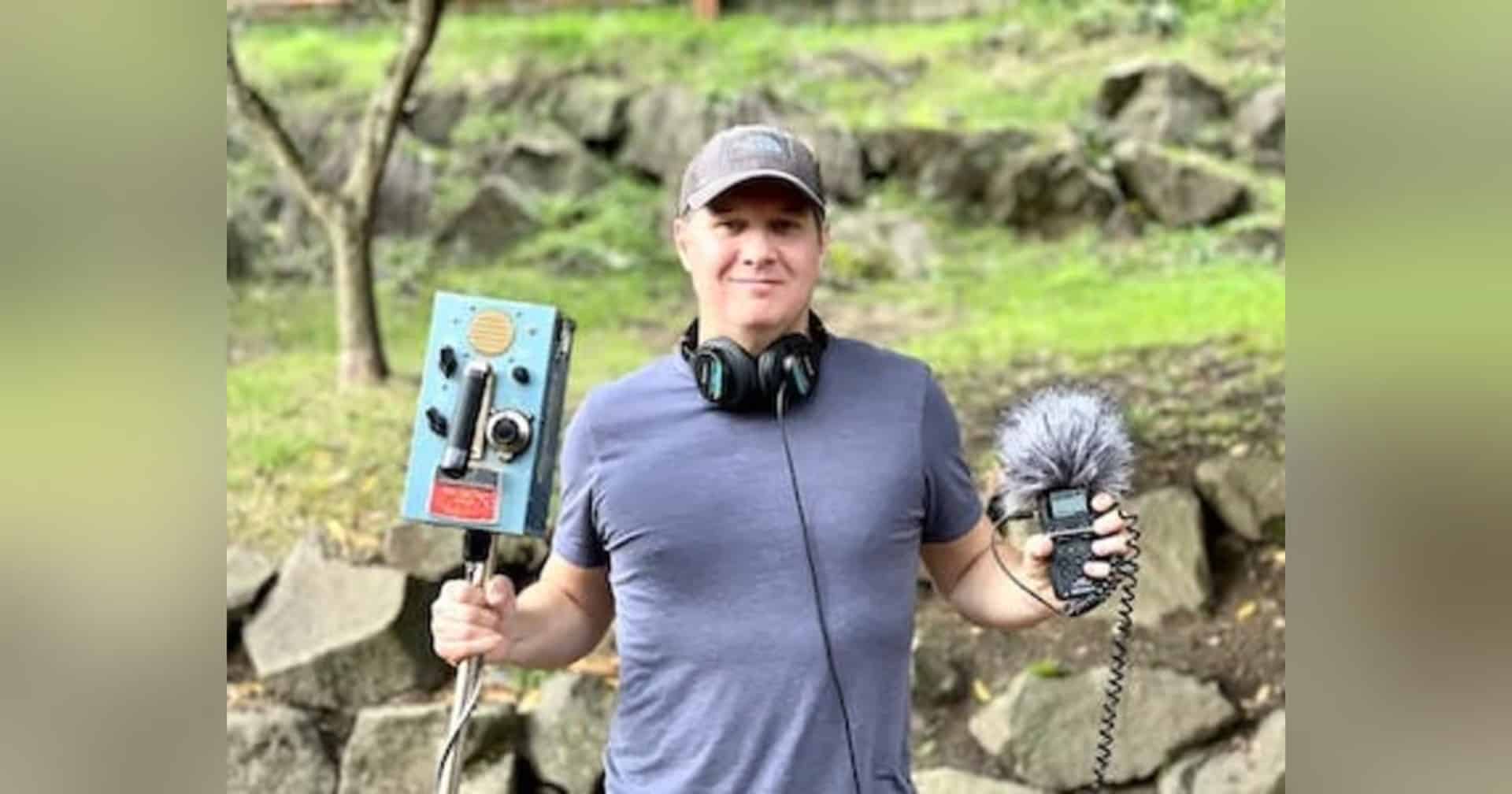
The Listener’s Guide to Kris Kaiyala’s Dirt: A Conversation With The Creator of The Show
On this episode of Exploring Washington State, we chat with Kris Kaiyala, the creator of the successful fiction podcast Dirt an audio drama. Kris takes us on a journey through the creation of the podcast – from how he first got into audio dramas, to how he was inspired to start writing and producing his own podcast.
We explore his experiences in obtaining the necessary equipment, writing the script, developing character arcs, and the challenges he faced along the way. Kris also shares insights on promoting the podcast through grassroots marketing, episode swaps, and personal connections.
As we wrap up the episode, Kris describes how he has adjusted to remote work, acknowledging the privilege of not having to physically go into work, and how the pandemic has impacted the audio drama industry. Tune in to this episode to discover more about the creative and technical process behind successful fiction podcasting.
Kris Kaiyala of Audio Drama Dirt Episode Transcript
Scott Cowan [00:00:00]:
You. Hello, friends, and welcome to the Exploring Washington State podcast. My name is Scott Cowan and I’m the host of the show. Each episode I have a conversation with an interesting guest who is living in or from Washington State. These are casual conversations with real and interesting people. I think you’re going to like the show. So let’s jump right in with today’s guest. You. Welcome back to this episode the exploring Washington State podcast. My guest today is Kris Kaiyala. Kris, did I say it right today?
Kris Kaiyala [00:00:33]:
You did.
Scott Cowan [00:00:33]:
It awesome. All right, cool. First take, folks, first take. Imagine that. Anyway, Chris’s chris’s bio shows him as a writer, producer, creative director, but we’re talking to him tonight primarily about dirt and audio drama. So, Chris, welcome. Thanks for taking some time to sit down.
Kris Kaiyala [00:00:55]:
Thank you. Glad to be here.
Scott Cowan [00:00:58]:
Let’s just jump. Here’s the first question for you. Why did you decide to do dirt? It doesn’t seem to line up with your professional career that I’m aware of. So why dirt?
Kris Kaiyala [00:01:15]:
That’s a great question. And on the topic of dirt, let me first wish you a happy Mount St. Helen’s Day.
Scott Cowan [00:01:22]:
Oh, my gosh, you’re right. Is the time of this recording yeah, it’s was.
Kris Kaiyala [00:01:25]:
It 43 years ago, I believe it was, yeah, 43. 43 years ago. I was I’ll get to your question in a moment, but 43 years ago I was on Fairchild Air Force Base with my parents in the car on the way to an air show, like the annual air show. And there were probably 200 cars in line waiting to get through the gate. And then police cars came zooming the other direction, where of course there were no cars because we were all trying to get in, they were coming out and with blaring on their loudspeakers, everybody turn around, go home.
Scott Cowan [00:02:04]:
So.
Kris Kaiyala [00:02:06]:
That was my Mount St. Helens day experience. And in Spokane, within 3 hours of getting back home, it was pitch black in the afternoon and snowing ash. It was a really wild, fascinating day.
Scott Cowan [00:02:17]:
So you don’t look old enough to have been in a car remembering this. So how old were you?
Kris Kaiyala [00:02:26]:
Thank you for saying that. I get that comment a lot. People are surprised to learn that I was actually born in 1970.
Scott Cowan [00:02:37]:
Folks, I know this is audio, folks. Honest to God, you look like you’re about 35.
Kris Kaiyala [00:02:42]:
Well, I appreciate that. The time of night that my body wants to go to sleep, which is around 845 these days, would say otherwise. I’ve turned the corner into clearly into my fifty s and ready to go to bed late. Go to bed early and go to bed early.
Scott Cowan [00:03:00]:
45S late, man, we can’t oh, my God, I’m trying to remember. Okay. So spokane. So I was in the Tacoma PIOP area, then I was a senior in high school, and I really don’t remember all that much. I remember the aftermath of it, that Ash was everywhere. You shouldn’t buy a used car because they were destroyed by the ash people. You know, I mean, there’s all sorts of things like that. I remember bits and pieces. So I went to college the next year. I started college at Central in 1980. And my roommate, who is the guy who is the producer of the show. Todd todd’s parents owned a jewelry store. And like all good entrepreneurs, they found somebody that was making what they they named it St. Helenite, which they compressed the ash ash into glass. And it was this emerald green color, and they were faceting it and selling it. So there was a craft fair at school and Todd was selling St. Helenite stones and jewelry.
Kris Kaiyala [00:04:12]:
Ever the entrepreneur.
Scott Cowan [00:04:13]:
Ever. Okay, so back to this. So you’re the writer, producer, creative director, which all ties into launching a drama of podcast. But how did this come about? What was this like? And maybe tell it to us as best you can from your wife’s standpoint, what did she think when you said, hey, I want to do this?
Kris Kaiyala [00:04:41]:
That’s a great place to start. Because it was in early days of the Pandemic, my wife Sarah and I were hunkered down here in the house together. And fortunately, we get along very well and do quite well together in small spaces and whatnot. Just before Lockdown and Quarantine and all that stuff that happened, I actually just had started listening to basically what are called audio dramas or fiction podcasts. And there are hundreds of them that are available on Apple podcasts and Spotify and all the different platforms. And I listened to one in particular, which I was actually just listening to again last night on my dog walking My Dog called Limestown. And Limestown was produced, I think four or five years ago. I’m not even sure where the producers live. But it was a big hit at the time and it still is a very popular fiction podcast. And it basically was sort of like this pretend NPR format where the host, a woman, is investigating the mysterious events that take place in a town in Tennessee.
Scott Cowan [00:06:05]:
Okay?
Kris Kaiyala [00:06:05]:
And the audio engineering, the sound design, the music, the acting, all just come together in this just beautiful piece of sort of fictionalized documentary magic. And so I binged that season one of Limestown. Then I promptly dove right into five or six other sort of popular at the time, audio dramas. And just something something clicked. And I was like, I’m at home. I’m working full time. I have all the duties of keeping the house clean and feeding the animals and all that. We’re still going on, but I’m here. I have maybe more spare time than I would have had before with commuting into the office and whatnot no longer happening. And I thought, you know what, I’m going to buy a microphone, and I’m going to buy a recorder, and I’m just going to start playing around and with Limestown and other shows sort of as my inspiration. So that was sort of like sort of like the OOH new toys, play with new toys aspect of it. Additionally, going way back to the got a creative writing degree at the University of Washington, and I had always intended to write short stories about just things that interest me. I love to read short stories, but you only have so much time in the day when you’re working full time, et cetera. So at the same time that I was like, I’m going to jump in and try this audio thing, I was like, I have, like, ten ideas that have been in my head for 1015 years. Let’s see if I can put a lot of these ideas together and form some sort of longer narrative. And so those two things just kind of all just kind of came together at the same time that the world was sort of turning upside down, and it just seemed like a good time to try something new.
Scott Cowan [00:08:07]:
So what did your wife say?
Kris Kaiyala [00:08:10]:
She said, go for it. She has been by far the most supportive person of this show and of me in general. So I’m very grateful to the time that she allows for me to do this. And it is a nights and weekends endeavor for the most part. There’s been some time sacrifices that have gone into it, but fortunately, she enjoys the show. She actually has a few small parts in the show. I refer to her as the co producer, even though she’s not actually in the weeds and putting the episodes together like I am. But she does some of the marketing materials and just generally gives me a thumbs up, thumbs down on the drafts of the episodes as I produce them and get ready to put them out into the world.
Scott Cowan [00:09:00]:
We’re going to go off on a sidetrack for just a second because I want to make sure I let you know where I’m at in the show because what I don’t want are spoilers. Okay. So if I ask questions I don’t want you to spoil. So I’m currently listening to episode ten.
Kris Kaiyala [00:09:13]:
You’ve gotten pretty far along.
Scott Cowan [00:09:15]:
Yeah, I’m listening to episode ten. So I have questions I want to ask, but I also don’t want to know. So I’m going to just ask you to kind of if you can if you spoil it, that’s okay. Pandemic gets this idea. You buy some toys. You’re playing around. How long was it from the idea that, hey, I think I might want to try something here to starting the actual recording with your actors?
Kris Kaiyala [00:09:52]:
Yeah, I would say it was probably about five months.
Scott Cowan [00:09:56]:
Okay.
Kris Kaiyala [00:09:57]:
Maybe less than that. Once I had a Zoom recorder. Not Zoom, the product we’re using to talk to each other. But Zoom is an actual product based in Japan that makes some excellent audio recorders.
Scott Cowan [00:10:13]:
I use an H Eight when I record these in person.
Kris Kaiyala [00:10:16]:
Outstanding. And I have an H five that I use. So once I had that and then a couple of basic microphones that I could plug into it, I was so excited. There was no stopping the train at that point. I was like, this is going to be a lot of fun. So what I didn’t have yet was, like, a script, or a fully fleshed out script anyway, to actually give to somebody and say, here’s your part. Let’s record you. So the time between having the toys and actually sitting down with the first person that I recorded, which was Jeannie Leslie, who plays the part of Kim Joseph’s sister, so you’ve listened to enough of the show that you know, you know who that character is, and thank you. Thank you so much again for listening, by the way. So once I had enough of season one written that I could sit down with her and say, are you interested in doing this? There was just a lot of sort of busy work of figuring out sharing the script with some friends and family and saying, does this feel like it could be anything? Are you interested in where this is going? Does it feel compelling? All that kind of stuff. Okay, so I got pretty good feedback there. And then I showed it to Jeannie, who does have some theatrical acting experience in Seattle. And she was like, Sign me up. And I was like, all right, let’s do this. And I was pretty upfront with Jeannie that I had no idea what I was really doing. It was really learning the proverbial, building the plane while it’s in the air, and so experimenting with different microphones, experimenting with how far away the microphone was from our mouths. And do we act out both of our parts at the same time, or do I just record your voice and do, like, ten takes of each line and then build it later? So it was all just sort of like one big, beautiful mess to start out with. And fortunately, since then, I have developed more processes and preferred ways of doing things that make it go more efficiently, and hopefully it sounds all right, too.
Scott Cowan [00:12:36]:
Well, the the sound design, everything so far. I mean, it thumbs up on my side as a listener. So I’d like to talk about recording then for a second. Are you recording all the parts for one episode at a time, or are you sitting down with an actor and asking them to read their parts for a season at a time or something different?
Kris Kaiyala [00:12:56]:
The latter. I’m really trying to be respectful of my actors time. And by the way, all the actors are friends or coworkers of mine, with the exception of maybe two or three people. And with the exception of Jeannie, none of us have any real trained voice acting experience. So we’re just sort of trying our best as we go. Sorry. Remind me of the original question.
Scott Cowan [00:13:27]:
So you’re recording an entire season in a batch. Let’s say I was on your show. You’d sit down with me and say, okay, here’s your lines. Let’s go through them. Let’s go through them. And so it might be episode I might be in episode one, I might be in episode five. And episode eight, we’re just knocking them all out. You’re done with me, you move on to the next talent. Okay.
Kris Kaiyala [00:13:49]:
Yes, that is correct. And I just find that I can get a little more consistent performance that way, too, because within that hour or two span that we’re recording together, myself as the director in that situation and the actor, we’re just sort of getting into a good groove, right. And starting to feel it, feel the flow. And so, yes, it’s best to just get it all done. Everything that I have written all at.
Scott Cowan [00:14:20]:
Once, has that worked well for the actors? I’m sitting here in my mind going, I don’t know. I mean, I’ve got my imaginary, I’ve got my script, here my lines, and I’m looking at it and I don’t have anybody to work off of, though. Are you reading the other side to help them? Okay, so you’re playing all the other parts that they may be interacting with for this to help them get in character?
Kris Kaiyala [00:14:45]:
Yes, that’s correct. So I may not be fully acting out the other lines, but certainly reading the lines and giving them the line to bounce off of.
Scott Cowan [00:14:56]:
Right.
Kris Kaiyala [00:14:57]:
And then also, I would say, not just explaining, but over explaining the scene and the context and what’s happened prior and what’s happened after. And I’m pretty careful to just give people just their bits. If they ask for more, if they want to know more, I will gladly share it. But it’s a lot. It can be overwhelming. Here you go. Here’s 100 page script. And that can just rattle somebody pretty quickly. It’s basically me just sort of giving them that context. Usually, by the way, the other character that they’re interacting with is my character. I play the lead character of Joseph ELO. Because the story is so intensely first person, there’s not a scene that Joseph, my character, is not in.
Scott Cowan [00:15:49]:
Okay.
Kris Kaiyala [00:15:49]:
So usually the other character that they would be interacting with is mine. Anyway.
Scott Cowan [00:15:55]:
So it works out all right, then we’re going to talk technical for a little bit here. But we’ll try to spare the audience. They might like it. But I could geek out on this. So you’ve got all the files and you’re putting it together. What are you using to build this with?
Kris Kaiyala [00:16:15]:
Yeah, so I use Adobe Audition and it isn’t like I went out and shopped around or demoed all the Daws, as we say, the digital what does Daw stand for? I suddenly blanked. Anyway. Digital Audio Workstation, I think is what Daw. Stands for. And there are a lot out there. Right? And so my wife is a graphic designer. She has the entire Adobe creative suite. She’s already paying for it, and Audition happens to be part of that. And so I was like, hey, you get two logins with your subscription. Not just one, but two. So how about if I am your other login? And so I just was able to download audition onto my machine here, start fiddling around. And it has far more than enough things going on than I would ever use. I know that there are things in there that really serious college trained engineers would use that are of no use to myself, but it has served me well.
Scott Cowan [00:17:33]:
Episodes are about 30 minutes ish, right? At least so far, 20 to 30. How long is it taking you to put one together?
Kris Kaiyala [00:17:46]:
That’s the big question. So I’ve never done the math, but I can tell you that it is not fast. It’s not fast, but actually, I will caveat it that I enjoy how long it takes. I really am sort of jealously own each aspect of the production of the show. I really love the different hats that I get to wear. But because it’s me primarily doing.
Scott Cowan [00:18:21]:
All.
Kris Kaiyala [00:18:21]:
The different roles, it’s also subject to how much time do I have or how much time is my day job taking? Up, or are we going to Wenatchee, which is where you live to visit family, where we happen to have family living in Wenatchee as well, for the weekend. So it’s life oftentimes taking over and certainly more important things than working on a fiction podcast. And so that’s a long way of not answering your question. I would say it’s anywhere between three to five weeks per episode.
Scott Cowan [00:19:05]:
Wow, okay. That’s a lot of time. I know it’s not three to five weeks, 24/7, but three to five weeks of parsing it out, fitting it in around the jigsaw puzzle of life. Okay.
Kris Kaiyala [00:19:18]:
Yeah. And I try to do things in batches, right? So I’ll do as much of the recording up front as I can so that I just have those files ready and waiting when I get to that part of the story and I’m already creating sound effects or I’m already doing other things. And then that way I don’t have to pause everything to go out and record that person. I hopefully already have that in the can and can just grab it and cut up the dialogue and grab the takes that I like the best and slot them in and hopefully it all fits together.
Scott Cowan [00:19:52]:
Okay, so the reason that we’re talking about an audio drama on this podcast a podcast talking about podcasts. Yeah, exactly. Is that the story takes place primarily in Washington state and your character visits lots of I really like the places that you’re having your character go because you could have said, we went to Woodinville. Nothing against Woodinville nothing. Don’t disrespect anybody. Please don’t don’t get mad at me. But you this could have taken place on Bainbridge Island. This could have taken place in Seattle. But no, we’re going to wapato talk about Toppinish. You’re talking about? Well, Aberdeen, Grace, Harbor County Pe Eel. I mean Pe Ell. How did you how did you pull these locations?
Kris Kaiyala [00:20:54]:
Have you been to Pe Ell, by the way?
Scott Cowan [00:20:56]:
I have. I’ve been to every place that you’ve named so far.
Kris Kaiyala [00:21:01]:
I love that. It’s not a romantic story, right. Although there is there is like, maybe elements of of that, but it’s it I I wanted it to just be kind of an everyday places kind of a story. And I think demographically, there’s so much going on in a state that people never see on TV or on a postcard or maybe even read in the sale times or whatever. Right. And so I like the unexpected, out of the way parts of this state very much. And also there’s actual real connections to these places for me in real life. My father was born in Pe Ell, really? Or I should say his parents, my grandparents, who a lot of my family members have inspired the characters in the podcast. But my grandparents lived in Pe Ell when my father was born, I think at some bigger town down the street, which was probably just barely bigger.
Scott Cowan [00:22:25]:
Maybe Raymond or maybe yeah, exactly. Centralia.
Kris Kaiyala [00:22:29]:
Maybe Centralia. Yeah, that’s right. I think it actually might have been in a hospital in Centralia. I grew up going to the Yakima Valley constantly as a kid. I had relatives who lived in Sunnyside and Grandview as well as Yakima itself. And so I know all those small towns throughout the Yakima Valley. Maybe not intimately. I’ve not lived in any of them, but I’ve visited them and been through them many, many times in my life that I feel a strong connection to that part of the state.
Scott Cowan [00:23:03]:
I think to me, that’s one of the things that I’m enjoying about the story is that it’s not taking place in a place I know too well. Let’s say it’s taking place in Tacoma. And you make a reference that I feel is not accurate. I would probably because I did catch something. I did catch an actual error in your description.
Kris Kaiyala [00:23:35]:
I love it.
Scott Cowan [00:23:37]:
Grandfather went to college. He graduated from where in the story graduate, you say he graduated from Central Washington University.
Kris Kaiyala [00:23:50]:
I did say that.
Scott Cowan [00:23:52]:
It would not have been Central Washington University at that time.
Kris Kaiyala [00:23:55]:
Was it something college?
Scott Cowan [00:23:58]:
It’d be Central Washington College. Or it might have been there was another name for Central. And I think at that period of time, it would have been Central Washington College because it wasn’t a university back then. And I’m giving that to you. I’m teasing you because I went to Central. So that’s the only reason that I have any connection to that.
Kris Kaiyala [00:24:12]:
I knew you did. I read that.
Scott Cowan [00:24:13]:
Yeah. My bio says my freshman year was the best six years of my life. So really, how much studying was I doing at Central? No, but the point is, if it was, say, Seattle Tacoma based or someplace I knew really well, and you say, oh, we were on and I’m making this up. We were in Tacoma and we went up in the Space Needle. Come on, come on, man. But you’re picking these towns that I’ve been to, and I have kind of these hazy, like I can’t place Wapito. I mean, I can, but I can’t. I don’t know if I’m thinking what when I think about, quote unquote, downtown Wapato, am I thinking about downtown topping ish I don’t know. I have to go back there now, and I actually kind of want to.
Kris Kaiyala [00:24:57]:
Yeah.
Scott Cowan [00:24:58]:
So I love the fact that the story is taking place, at least so far. I don’t know where else it’ll go in these smaller communities with interesting characters within those smaller communities.
Kris Kaiyala [00:25:11]:
Yeah. I’m glad to hear that. For most people, Wapato is just a sign on the freeway, right? Correct. You wouldn’t know it one town from the next. And I think that’s, you know, I try to make my story feel like what I would do driving through there, which is to take that exit and just go see what’s down the road a little ways.
Scott Cowan [00:25:37]:
Okay.
Kris Kaiyala [00:25:38]:
Just take the time to just go down and explore, have a look around. And that’s what I want the story to feel like, that you’ve actually gotten off the main road and gone down the side road a little bit to see what’s happening.
Scott Cowan [00:25:54]:
And I’m scrolling through and looking at the cast. I was going to ask a question and I’m and now I can see because there’s there’s one character that I I found him highly annoying. Yeah.
Kris Kaiyala [00:26:07]:
Not mine.
Scott Cowan [00:26:11]:
I wasn’t getting no. Carl.
Kris Kaiyala [00:26:15]:
Yes.
Scott Cowan [00:26:16]:
I found Carl to be highly annoying. No. And I was going to ask you if he shows up in more episodes, and I see that he’s going to come back in a couple. So I’m curious. I don’t want to know anything more. I like what you’re doing here. So since I’m on episode ten, where am I at in the story arc? That’s season two. Episode ten is in season two, and you’re on season three. Have you completed the whole story? Maybe not scripted it out, but do you have the whole story concept lined out?
Kris Kaiyala [00:26:57]:
I do, but not to the level of detail that you’re hearing currently.
Scott Cowan [00:27:03]:
Right.
Kris Kaiyala [00:27:05]:
I do know generally how it will end. I do know that there will be has to be some sort of surprise twist at the end. I generally know each character’s story arc also to get to the end. And, you know, like Joseph’s story arc has been one of a bit of a downward spiral, and you’re sort of starting to sense maybe that that’s happening where you’re at currently. And it doesn’t mean that his entire arc is going to end down in the gutter somewhere. But there are more changes and surprises to come, I guess, is what I will say. But, yeah, as the writer, as a writer and as someone who’s newer to fiction, as I mentioned, I have a creative writing degree, but I never really put it to use until this show. It’s been really a wonderful experience. And I had read about this, other writers saying this and experiencing this, that you don’t always know what’s going to happen as a writer, I don’t know always what’s going to happen, not just at the end, but maybe a page from now. Right.
Scott Cowan [00:28:34]:
Really.
Kris Kaiyala [00:28:35]:
And as you go, there’s just sort of an element of ideas just sort of come up and you sort of follow that path and see where it leads. Right. And there’s just a little bit of magic involved in that and elements of surprise where even I, as the writer, are like, well, I didn’t know that was going to happen, but looks like we’re going there. So you just sort of chase that down and follow it and see where it goes.
Scott Cowan [00:29:04]:
Okay. For the purposes of the show, did you go to PL to see what it looks like today? Not today, but current times. Have you been touring the state to do this or are you pulling most of this from the memory?
Kris Kaiyala [00:29:28]:
I have been to every spot that the show travels to. Yeah, I actually went to Pe Ell, I guess three years ago. My sister and I took my dad there because it had been decades since he had been in that part of the state of his own origins. My dad lives over in Spokane, which is where I grew up. It was kind of a small family field trip that we did that just to go see it. But in the back of my mind, I knew that I would probably use that as a location in the story. So absolutely there was part of my brain that was sort of taking mental notes and logging the way things looked and how they were laid out and stuff. And then, of course, we have so much technology at our disposal these days, you can see just about anything on Google Street View and to remind yourself of what you saw. But no, I don’t think there’s any location that the story has or will go to that I don’t actually personally know or have experienced myself.
Scott Cowan [00:30:40]:
So I’m trying to pick my questions carefully once again. I don’t want to know too much, but will it go beyond season three?
Kris Kaiyala [00:30:51]:
Yeah, it will. I’ve written to the end of season three, and I’m currently working on the last two and a half episodes of season three. But I know the story will wrap up in one more season.
Scott Cowan [00:31:05]:
So there’ll be four seasons.
Kris Kaiyala [00:31:07]:
Four seasons and probably seven, six to seven more chapters in season four, and then that’ll do it. And hey, maybe I’ll go George Lucas and decide to prequel this puppy. I have no idea. No, I probably won’t. I’ve enjoyed the story, and one thing I like about I’ve enjoyed writing the story, and one thing that I like about it is how it bounces around in time. Although, as you hopefully have noticed, the story itself is very much in the present. Right? So it bounces around in time based on stories that Joseph is reading about, mostly about his grandfather’s life stories, stories that he wrote. But I could see that there are ways to maybe expand the story beyond what’s happening exclusively in the 2020s.
Scott Cowan [00:32:10]:
Right, okay. When you packaged up the first episode, I’m just going to assume that you completed episode one first. You might have been working on the rest of season one, but chapter one completed it first.
Kris Kaiyala [00:32:29]:
Yes.
Scott Cowan [00:32:31]:
What was the initial reaction of your people that you shared with them? I’m going to guess do you share with friends and family, inner circle type folks? What was the initial reaction and were you nervous to share it?
Kris Kaiyala [00:32:43]:
Yeah, great questions. I was nervous to share it. And you’re right. Inner circle. I do have an inner circle of family and close friends who are I call them my listening group. And so they get first crack it at the episodes before I publish them, just in case there’s anything that is really going wrong that I need to address.
Scott Cowan [00:33:10]:
And has there been has there been any feedback? They’re like, whoa, whoa, whoa, wait a second here. Pump the brakes, let’s talk about this.
Kris Kaiyala [00:33:17]:
I haven’t gotten any pump the brakes feedback, but I have, especially in those early episodes, I would say that the acting has progressed. The acting has progressed from those early few episodes to what’s happening, certainly, I think what’s happening in season two where you’re at, and then definitely, I think with season three, everything, the game has sort of stepped up and stepped up. So you have that to hopefully look forward to. Feel free to let me know if you disagree as you go. Yeah, but I think if there’s been one consistent piece of feedback from my inner circle as well as just regular people out there listening to the show critiques is just that the acting is maybe just a little bit rough, a little bit sort of like reading from the script early on. And that’s literally because basically, like, the learning curve is exposed, unfortunately, is out there to hear in some places. But I’m aware of it, and it’s been a good learning experience. And I think that the show is better for it for some of the shortcomings early on.
Scott Cowan [00:34:45]:
Well, I’m critical of people, but I’m not a critic. But I agree. The first handful of episodes, I was just like, I like this, but there’s just something and it’s couldn’t quite, you. Know, it’s like a very small pebble in your shoe. It’s just yeah, I can’t I can keep walking, but I just don’t quite and season two has been progressed is a good word. Okay. I don’t want to say it’s better. I don’t mean like that. But I think it’s progressed. I think maybe the actors are more comfortable with the characters. Maybe that’s it. I enjoy it. All right, so you kind of released it to your listening group when you launched Chapter One. Were you in a podcast network at that time, or did you release it as an independent?
Kris Kaiyala [00:35:36]:
Dirt was not in a podcast network. That was certainly the dream and the goal, because I knew that they existed and were out there. But no, there was none of that at the start. And I think that first week that the first episode was out, actually, I think I launched episodes one and two together. So this would be going back to the fall of 2020, and I think it maybe had 50 downloads the first few weeks simply because it was brand new and I had no connections, there was no marketing of any kind behind it. And it was just purely let’s just put it out there first and then try to get the recognition second. And so it took a little while to get that going.
Scott Cowan [00:36:32]:
What company did you use to host it when you initially launched? Who were you using?
Kris Kaiyala [00:36:40]:
It’s a host called Libson.
Scott Cowan [00:36:42]:
Not sure if you’ve heard of them at the time. They were probably the largest thing out there as far as number of shows on there because they’ve been around for a long, long time, because this is me. Were you kind of obsessively refreshing the screen to see downloads?
Kris Kaiyala [00:36:59]:
Yeah, I would say I was. And I think there are I’m certainly not the first and only person who’s tried their hand at this in the audio drama space, specifically, I sense have learned that there are hundreds of people like me who are just having fun and doing this as a hobby to various degrees of serious effort or just for fun. But I think a lot of us all had that same experience of launching as essentially a nobody, right? Just purely as an independent effort and just on the daily, maybe several times a day, just like, is anyone listening? Is anyone out there? Refreshing click, looking at the stats, and then suddenly you get your first there were 100 downloads today, and you’re going crazy on top of the world, and it’s so great, and you go through all those various stages as the show.
Scott Cowan [00:38:01]:
The next day is 50. And I don’t want to say, yeah, you’re just miserable, you’re beside yourself, it’s over. Okay.
Kris Kaiyala [00:38:10]:
Yeah, exactly.
Scott Cowan [00:38:15]:
I’ll say you self published it using lipson. Okay, when did the network how did you and you said downloads were low to start with. Okay, what flipped the switch? Because currently what are you averaging on an episode download now?
Kris Kaiyala [00:38:34]:
I don’t think of it necessarily in terms of per episode, but it’s around 40 to 50,000 per month of downloads per month now.
Scott Cowan [00:38:44]:
Okay, so that’s a great number to have. So you went from 100 a day, which would be let’s do the math, it’d be 3000 episodes. You have ten to 20 x this thing, how what happened? Was it written up somewhere or was it multiple things? But how did you go from anonymity to this well known show?
Kris Kaiyala [00:39:14]:
Yeah, it’s a great question and a lot of it was just grassroots, mostly on my part, also on some family members parts, marketing and just sending the link out to friends, putting it up on Instagram and Facebook for all of my friends and colleagues to see on. There a couple of well placed LinkedIn posts early on too, which unfortunately I have a pretty good network on LinkedIn just because of the decades that I’ve worked in the tech ad world. Right. It wasn’t my day job, but I thought, well, I’m just going to treat this like a job and why not post it there instead of simply as a hobby on Instagram or whatever, to just friends and family? So that helped a lot. Other shows like mine, and I don’t mean like in the story sense, but in the genre or the level of popularity sense, the indie sense, making connections there and sharing each other’s episodes in our podcast feeds, that’s a tactic that really helps. And when I did join the network, fable and Folly Network, by the way, is the name of the network that dirt is a part of. One of the first things that they said was, you want your show to grow? Do feed swaps, do episode swaps on other shows in the network. Other shows who are in our network put it on their feeds as well and you’ll just see things. You’ll just see numbers like you’ve never seen before. And they were right, that was definitely an excellent tactic as well. But that came later on, so early on, when it was the slower growth and trying to get the attention of the podcast network, it was really just a matter of making personal connections with other creators. Twitter is a big space for audio drama and fiction podcasting. So getting connected with that community that was already there. I think maybe a lot of them have actually left twitter since our old pal Elon got involved. But it still is a pretty active community of people who enjoy not just creators of the shows, but people who enjoy this type of entertainment that are very vocally in a very positive sense, promoting it to their friends as well.
Scott Cowan [00:41:54]:
Right, that’s great. I think that’s awesome. Did you approach them or did they approach you?
Kris Kaiyala [00:42:04]:
I approached the network. I know that they had heard the show and heard of the show and I sort of was kind of waiting and picking my moment, I guess. And it was right after I launched all of the season two episodes, which I was able at that time, I was able to do like one week at a time, but all of them, one week in a row, I had them all in the can. So I was able to just, like, get them all out there. And I think that also kind of caught a lot of people’s attention because they realized they could now binge this show. And so it was right after a few weeks, after I had gotten the last of the season two episodes out there, that I reached out to the Fable and Falling network and said, okay, I’ve got two seasons in the can. They’re out there. I have a little bit of a loyal audience, if you like the show. I would really love to join the network and see if together we can turn this into something more and bigger. And I would say that success is defined in various terms. Is it as popular as Friends on TV? Like, no. Will it ever be? No. But is it doing well compared in its genre, in its sort of expected space? And I would say that it has gotten there. I’m pleased.
Scott Cowan [00:43:41]:
I’m going to look something up in real time here. Are you familiar with the website Listen Notes?
Kris Kaiyala [00:43:49]:
No, I’m not.
Scott Cowan [00:43:50]:
So Listen Notes is a podcast search engine and I’m looking up your show. Okay.
Kris Kaiyala [00:44:04]:
Let’s see what you get.
Scott Cowan [00:44:07]:
According to them, you are in the Global Rank, the top 1% of all podcasts.
Kris Kaiyala [00:44:16]:
Well, that’s nice to hear.
Scott Cowan [00:44:18]:
Yeah. Wow.
Kris Kaiyala [00:44:21]:
Well, thank you for doing that just now and well, okay. Guess my work here is done.
Scott Cowan [00:44:31]:
I would advise you go in and claim your show because I will.
Kris Kaiyala [00:44:36]:
Yeah, you can go listen notes. Listen notes. Yeah, I will do that. And I am generally aware that the vast majority of podcasts, whether it’s a fiction or a drama genre like what I’m doing, or more of an interview series like what you do, or obviously there’s a whole span of different types of podcasts. That most of them a lot of them fizzle out after a few episodes or people just give it a try and let it decide that it’s not for them or whatever. And so there is sort of just that tier that exists of basic attempt at it. Right. And so I think for people who can stick with it and grow a little bit of an audience, it can be a really fun, gratifying thing.
Scott Cowan [00:45:33]:
Yeah. For our show, I know my numbers. I know your numbers. We’re quote unquote in the top 5% and we’re not close to your numbers. Now, if I’m being honest with you, you’re in the top 1%, but Joe Rogan is way up there, downloads. His download numbers are just ridiculous. But here’s the thing. You have accomplished something. You are accomplishing something. You are telling a story. You are entertaining and engaging people that don’t know you in an audio format that is popular, but it’s not Netflix.
Kris Kaiyala [00:46:20]:
Right.
Scott Cowan [00:46:21]:
You have to work a little bit harder to listen to a podcast podcast than you do if you’re going to sit down and watch Netflix. So I think this is awesome. Now I don’t want to talk about your show really anymore, because my goal here is I want people to listen to your show. I do. I’m enjoying it at the time we’re recording this. Like I said, I’m only on episode ten. I don’t see any reason that I won’t keep enjoying it. But I haven’t finished it, folks.
Kris Kaiyala [00:46:49]:
Okay. Carl is coming back. Give him a chance. Just give him a chance. And there’s a little bit of Mississippi twang and Carl that I know the actor Aaron is from Mississippi, so we tried to turn that into more of a country accent.
Scott Cowan [00:47:07]:
Carl’s a little creepy to me. His actions are a little aggressive. That’s not a complaint. Scott says, write Carl out. No, I’m just saying this is one of those characters that I’m like. This guy could be bad news here. Somehow this guy’s going to get involved in something that might not go well.
Kris Kaiyala [00:47:36]:
Could be, could be. And I think I wrote Carl to be sort of the anti Joseph who’s very, in many ways, sort of protective of his privacy and maybe hides his feelings or maybe has ulterior motives at times. Whereas Carl is somebody who is everything he does is just sort of out on the surface. He overshares.
Scott Cowan [00:48:02]:
Right.
Kris Kaiyala [00:48:05]:
But I will say that of all the characters people have written to me about, carl is high on the list.
Scott Cowan [00:48:16]:
Really? Yeah. All right.
Kris Kaiyala [00:48:18]:
A lot of Carl fans out there.
Scott Cowan [00:48:20]:
Okay.
Kris Kaiyala [00:48:21]:
You might become one who knows.
Scott Cowan [00:48:24]:
So I’m looking kind of at your resume, and somehow I ended up on your wife’s resume site too. So that sounds kind of stock rich, and I don’t mean it that way, but question. So I see you went to the University of Washington. You got a bachelor of arts in creative writing, but your wife went to WSU, so you’re one of those households.
Kris Kaiyala [00:48:50]:
Can I tell you more? Can I take it even farther down that road?
Scott Cowan [00:48:53]:
Go right ahead.
Kris Kaiyala [00:48:55]:
Okay. So you’re probably aware of the rivalry between the Washington Huskies and the Oregon Ducks.
Scott Cowan [00:49:01]:
Yes.
Kris Kaiyala [00:49:03]:
My wife’s family, almost all of them, went to University of Oregon, and my dad has a degree from Oregon State University, and my daughter is currently going to school there. So we have all four Northwest schools represented, and the immediate family got them all. We’ve got them all. Yeah. I grew up in the Spokane Valley. My dad, for decades has been a rabid coug fan, cougar football in particular, even though he he personally didn’t attend the school. I would say that Sarah, my wife is more husky, more Washington husky than she is WSU Cougars. That’s where she got her degree from.
Scott Cowan [00:49:57]:
Where did she grow up?
Kris Kaiyala [00:49:59]:
In Muckletio.
Scott Cowan [00:50:01]:
So it’s interesting. So you grew up on the east side. You came to the west. She grew up on the west and went to the east.
Kris Kaiyala [00:50:06]:
She was there only briefly, but yes. Interesting.
Scott Cowan [00:50:10]:
Okay.
Kris Kaiyala [00:50:13]:
We got the whole state got the whole state covered.
Scott Cowan [00:50:15]:
Yeah, you do. So your career did some intern stuff at Alaska Airlines. How does one end up are you a ski buff? Snowboard skiing? Is that your thing?
Kris Kaiyala [00:50:31]:
Yeah.
Scott Cowan [00:50:32]:
Okay.
Kris Kaiyala [00:50:33]:
I mean, I grew I grew up skiing at Mount Spokane and 49 degrees north for anyone listening who knows those areas since age four.
Scott Cowan [00:50:42]:
Okay. Jackson Hole, Wyoming, is some pretty good skiing.
Kris Kaiyala [00:50:47]:
Jackson Hole, Wyoming, is good skiing, and I lived there for a year right after college. Yeah. There are so many places in the western US. That are just outstanding, and I’ve been to many of them on road trips or vacations or visiting friends who’ve lived in various places. But I always come back to Washington. This place is in my bones, and that it goes, you know, it goes back, you know, three generations for me. And it’s hard, you know, it’s hard to fathom being a resident anywhere. I have lived in other parts of the country, actually, but it would be hard to not keep my roots here, that’s for sure.
Scott Cowan [00:51:38]:
So what’s a typical day look like for you in the career?
Kris Kaiyala [00:51:47]:
Well, my my job for the last three years has been fully remote. I work in the I work in the tech sort of advertising world. And so just like, just as you and I, our audience can’t see us right now, but we’re looking at each other in full HD on our laptops, and so that’s my day is really just working at home in various video calls and meetings. And the job I was at until just about a month ago, where I was at for a good number of years, still has an office, still has a physical office in downtown Seattle, although it’s a much smaller office now than it used to be. They gave up a lot of the square footage. So I work with a lot of creative people in the advertising industry, and being together in a room, that’s the way it was done forever. You know, like, not to draw on that tired cliche of Mad Men, but, you know, you you if you watch the show, you know, you’ve got four or five people in a room, they’re batting ideas around writers, designers, art directors, et cetera, and that’s the norm in my industry. But that was all upended a few years ago, and we all went remote, and we had to do that kind of stuff like this instead. A little awkward at first, but figured it out to the point where very few people actually want to go back to work in the office. And we’re very fortunate, we’re very privileged and that we don’t have to physically go into work if we don’t want to. I know a lot of people have to do that and have had to throughout a lot of the crazy stuff that’s happened in the last few years.
Scott Cowan [00:53:43]:
Do you like working remotely? Does it work for you?
Kris Kaiyala [00:53:46]:
Okay, it does. I do. I do very much. I enjoy the routine that I have of working at home. I do not miss getting up early, taking the shower, driving into the office, spending seven, 8910, whatever number of hours there and then driving back, leaving my dog, leaving our dog here for seven, 8 hours at a time. And even though we would come home when he would have to go to the bathroom really badly, he would still give us that warm greeting. He still loved us despite us leaving him alone for so long. But now he has us here all day long and he can just walk up and ask for a pet anytime he wants to. So I love it. I really enjoy the remote aspect of work these days.
Scott Cowan [00:54:40]:
My dog is currently he’s spending more time in his condo without his humans around, but my guy’s a little bigger than your dog, so he knocks me over today when I got home and let him out, and he hit me so hard he knocks me over. But super happy, super exuberant. But he likes it when I’m in the office and he can lay down and sit at my feet and just bark in the middle of a recording.
Kris Kaiyala [00:55:11]:
Yeah.
Scott Cowan [00:55:13]:
So I can’t remember your answer when I asked you this in the pre interview, so I’m hoping, well, it doesn’t matter. Do you drink coffee?
Kris Kaiyala [00:55:23]:
I absolutely do drink coffee.
Scott Cowan [00:55:25]:
Okay. Where’s a great place to get coffee around you?
Kris Kaiyala [00:55:30]:
Well, it’s a local chain here in Seattle, but it’s Cafe Ladro.
Scott Cowan [00:55:38]:
Cafe, ladro. Okay.
Kris Kaiyala [00:55:40]:
So they’ve got a few been around a long time. Coffee, really good coffee. Whatever they’re doing, the way that they roast the coffee, it just has kind of a nice, I don’t know, nutty taste to it. I’m not much of a tasting notes person, I have to say, even though I do enjoy a glass of red wine from time to time. But there’s just something about the Cafe Ladro coffee that is good and they have great they have really good kind of open spaces to sit in with the laptop and do a little bit of writing if you need to also.
Scott Cowan [00:56:20]:
So what’s your coffee drink of choice?
Kris Kaiyala [00:56:25]:
I try not to do too much of the dairy, so not a latte. It’s pretty much just like an Americano, like a medium or dark roast Americano with a splash of 2% milk will do it fine.
Scott Cowan [00:56:40]:
So if I’m coming over to your area of the world, where’s a great place to grab lunch.
Kris Kaiyala [00:56:46]:
There’s a lot of great places over here in Seattle. One, scott it actually has the word spot in its name. It’s the Five Spot, which is up on Queen Anne.
Scott Cowan [00:56:59]:
Yeah. I haven’t been there in years. That’s jeez. Okay. That’s a good one.
Kris Kaiyala [00:57:03]:
It is still around, although they did close for maybe 18 months or so, and I think there was a little bit of worry that they might not reopen and come back. But great. Breakfast. Breakfast and lunch. Scott the BLT there with the thick fries is a good way to go.
Scott Cowan [00:57:27]:
All right. Yeah. So in all your copious free time, because you don’t have to commute, you’ve got a job, your wife has a career, too. Both have careers. You have a dog. You’re recording a podcast series. What do you guys like to do for fun? Where’s the dog? Want to go for a walk?
Kris Kaiyala [00:57:44]:
Well, the dog it’s interesting you say that, because he’s probably at the top of the stairs right now looking down, wondering what’s going on. Yeah. Like, it’s time, buddy. Literally, our dog asks for I don’t know how many times you take your dog for a walk a day. Scott probably a lot. Our dog will just lay around like a cat and sleep all day long until right after dinner. 637 o’clock. Almost always on the nose. And he will just walk up, and he will just stare at me, and there’s no getting out of it. There’s no getting out of it. And I know immediately and exactly what it means, because it’s our routine, and so we don’t really go anywhere for the dog walk. It’s right around the neighborhood here.
Scott Cowan [00:58:33]:
Okay.
Kris Kaiyala [00:58:33]:
And he knows every street within six blocks of the house and oftentimes likes to tell me which street he would like to walk down tonight.
Scott Cowan [00:58:45]:
All right.
Kris Kaiyala [00:58:45]:
As the case may be. Yeah.
Scott Cowan [00:58:47]:
Okay. We could go on and on and on, but because the dog will need your attention shortly and to keep it within the navigational beacons, we’ll wrap it up. I got a couple of last questions. Number one, what didn’t I ask you that?
Kris Kaiyala [00:59:05]:
I should have oh, you’re going to stump me here at the very end. I think maybe ask me, if we have time, the significance of the story going to Maryhill State Park.
Scott Cowan [00:59:23]:
Okay.
Kris Kaiyala [00:59:24]:
Do you know this part of the state?
Scott Cowan [00:59:27]:
You are currently there, so this may be a spoiler alert, but go ahead. What’s the significance?
Kris Kaiyala [00:59:36]:
It won’t be a story spoiler.
Scott Cowan [00:59:38]:
Okay.
Kris Kaiyala [00:59:38]:
But I grew up in Spokane, as I mentioned a few times, and then we had family in Seattle, we had family in Portland, we had family in Yakima, and Mary Hills State Park on the Columbia River always served as a central meeting spot for family reunions, almost annual family reunions. And so it just for nostalgic reasons, I decided to write it into the story and have it be just kind of be a place where something is found and discovered.
Scott Cowan [01:00:23]:
Where I’m at is in the episode I’m right, you found something that’s right where I’m at and what I was listening to before we jumped on. So that’s where I’m at.
Kris Kaiyala [01:00:33]:
Yeah. So it also happens to be where my real grandfather’s memorial was, just as Joseph’s grandfather had his memorial there. And so it’s just again, getting back to your questions earlier, I think the locations in the story all have personal connections, family or personal connections. In some cases, deep connections of some kind or another, which I think, for me, has made the story just that much more fun to write.
Scott Cowan [01:01:04]:
All right, a couple of last things. I’m throwing this one at you, and I understand it’s a curveball. When dirt is completed, you think you got another story in you?
Kris Kaiyala [01:01:19]:
Yeah, I think I do. Well, I don’t know if it’ll be another audio story or something else, so time will tell. I really enjoy audio production. I definitely see myself still doing it to some degree afterward, but I don’t know what that would be. But, yes, I do think that there is more storytelling of some kind, though.
Scott Cowan [01:01:45]:
So I wrote a note before we went live, and I haven’t asked the question. Studio 57 five. What’s the meaning?
Kris Kaiyala [01:01:57]:
57 Five is the street address of the house I grew up in.
Scott Cowan [01:02:02]:
Okay.
Kris Kaiyala [01:02:03]:
And in the creative ad world, we talk about sandboxes, like, playing in the sandbox in terms of coming up with ideas or how can we just ideating creative, idea generation. And for the first maybe five years that we lived in this house that my parents built up in the hills in the Spokane Valley, my two sisters and I were age ten or less. My parents decided to forego any formal landscaping and just had two dump trucks come and dump two big piles of sand in the front yard. And that’s all we did almost every day in the summer, was just go outside and dig tunnels. And there are untold buried toys in that front yard for whoever lives there. Now, they could unearth them and maybe a little puzzled by what they’re finding there.
Scott Cowan [01:03:06]:
But they need a metal detector.
Kris Kaiyala [01:03:09]:
They might need a metal detector. Who knows what they’d find anyway? Yeah, I just thought I was kind of struggling, like, oh, I could go with something kind of artisan sounding or whatever, and I was like, no, I just couldn’t come up with the right name. So I was like, Well, I love that house I grew up in, and I have so many great memories, and it served as such a I had a very sort of free and creative childhood. I feel very fortunate that I had that, which I think is part of what informs me wanting to do things like this today. So I just was like, okay, cool, I’ll take the Studio 57 Five.
Scott Cowan [01:03:47]:
Right. So the last question I have of you.
Kris Kaiyala [01:03:49]:
Okay.
Scott Cowan [01:03:51]:
Cake or pie and why?
Kris Kaiyala [01:03:55]:
Okay, well, my wife would say cake for sure. She would eat cake three times a day if she could, but for me, I’d have to say pie. Apple pie specifically, which probably sounds kind of generic and vanilla.
Scott Cowan [01:04:10]:
No, it just sounds washingtonian. Frank, come on. All the apples here.
Kris Kaiyala [01:04:14]:
So there’s an apple pie competition amongst myself and my siblings and my father every year, and each of us claims that we make the best apple pie. My sister gave me a pie dish for Christmas one year that in cursive writing says, second best apple pie that I faithfully use for every apple pie that I make and feed the family. And I’ll tell you, Scott, they love it. And I do think it’s the number one apple pie in the family. Between you and me. No one else has to know that.
Scott Cowan [01:04:53]:
No one. Keep that down. Okay, so last thing is you. Where can people find out more about Dirt? Where do you want them to go? Where should people go?
Kris Kaiyala [01:05:04]:
Well, let me just say again, thanks for doing this. This is so awesome. And thank you to anybody who’s lasted this long to the end listening to all this. And the best place to visit to learn more about the show would be the show’s website. It’s Dirtaudiodrama.com. It has all the episodes there, but also has some background information that goes into a little bit more detail about sort of family inspiration and some of the locations.
Scott Cowan [01:05:34]:
Great photography.
Kris Kaiyala [01:05:36]:
Thank you. There’s a photo of the actual metal detector that I use for the Foley sounds, which is very similar to the metal detector that my real grandfather used. So there was, again, some story inspiration there. So, yeah, if you want to learn more about the show and sort of a little bit of behind the scenes stuff, that’s the place to go and follow the show on Twitter, just because that’s where most of the updates happen. So that’s dirt audio drama on Twitter.
Scott Cowan [01:06:05]:
Okay, Chris, thanks for doing this. This is great. Keep up the show. I really am enjoying it. I’ve shared it with some of my friends. Oh, I do have a question. I don’t have to record this. We’re going to record anyway. Have you listened to Ghost Herd?
Kris Kaiyala [01:06:22]:
No, I have not.
Scott Cowan [01:06:24]:
So Ghost Herd is a documentary about a family in the Pasco area who the patriarch of the family, created a fake herd of cattle and got away with about $250,000,000 and bankrupted his family. And this is true story. It was this is an NPR show done and written and told by a journalist in in the Pasco area. Your show not similar at all, but there’s just there’s just something about this rural Washington thing, right? That show has a kind of it touches on it and your show touches on it, and they’re just it’s interesting, but it was a, I think a six episode series called Ghost Herd. And anyway, that just popped in my brain. Like, I warned you, we go down rabbit holes here.
Kris Kaiyala [01:07:20]:
So I love it. Thank you for the recommendation. I will check it out. I love stories like that.
Scott Cowan [01:07:26]:
Yeah, and it’s not a happy story. It’s really not a happy story. It’s really quite tragic. Anyway, thanks so much for being on the show. Really enjoyed this. Looking forward to continuing listening. I will get back to you. The problem with shows like yours, this is the same thing with the Netflix show. When you binge, binge, binge and you get caught up, then you got to wait. Thanks so much for being here.
Kris Kaiyala [01:08:00]:
Thank you, Scott. Much appreciated and I hope we can talk again soon.
Before you go
That is the whole idea behind the Explore Washington State Card. Free to carry, with a little something waiting at participating places when you visit. Your zip code is a vote for which towns we sign up next, and our weekly Washington travel newsletter starts landing right away.
Get your free card- About the Author
- Latest Posts

The Exploring Washington State Podcast is your go-to source for discovering the diverse wonders of the Evergreen State. Whether you’re seeking inspiration for your next adventure, looking to savor local cuisine, or eager to learn about the businesses and artists that call Washington home, this podcast has something for everyone. Join us as we showcase the splendor of Washington State, reminding you that “there is always more to explore!”


