Exploring the Civil War Era with Richard Heisler and its Lasting Impact on Seattle
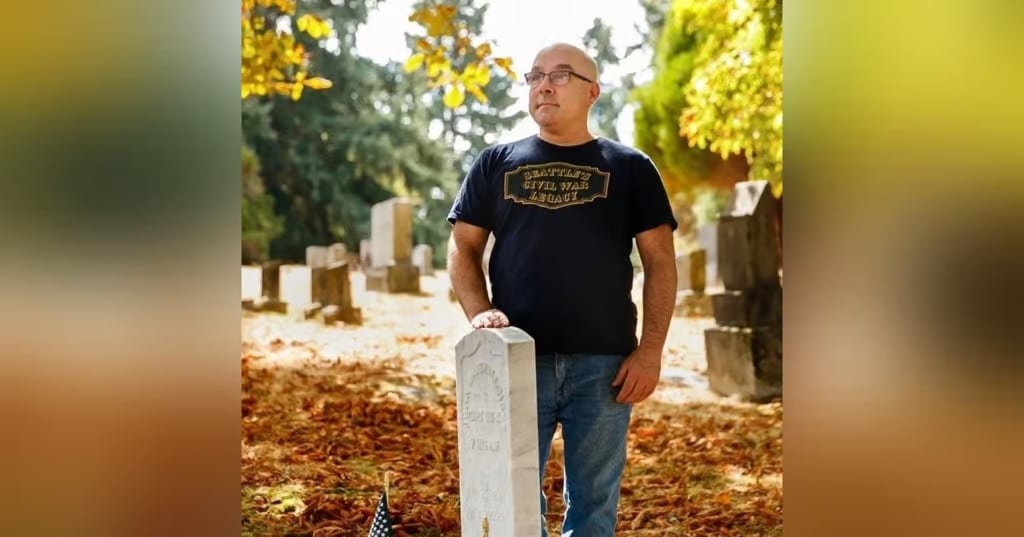
On this episode of Exploring Washington State, host Scott Cowan sits down with guest Richard Heisler. They discuss Richard’s journey from fine artist to history tour guide, and his focus on Seattle’s Civil War history, true crime, and tragedy. Richard shares his personal connection to the Civil War era, which sparked a lifelong passion for history and art.
They delve into Richard’s process for researching historical information, and how he creates stories to share on his tours. Richard also shares his experience discovering three veterans buried in a cemetery in Seattle who served in the same regiment as his third great grandfather. They also touch on the challenges of discerning the authenticity of claims about Civil War veterans meeting President Lincoln.
The episode ends with Richard’s favorite places to eat in Seattle, including a traditional Japanese sushi place and a famous Italian spot. Don’t miss this unique look into Seattle’s Civil War history on Exploring Washington State.
Exploring the Civil War Era with Richard Heisler and its Lasting Impact on Seattle Episode Transcript
Well, welcome back to this episode of the Exploring Washington State podcast. I’m sitting down today with Richard Heisler who is got. Richard, you got two things here we’re going to talk about. I thought we only had one, but doing my research, she surprised me with something else. Now I see the connection. But when I didn’t talk to you, I was like, well, what the heck. But anyway, we’re talking about Civil War Seattle today. When I think when I first reached out to you, I said to you, I don’t think of Seattle and Civil War as having much of an overlap, which really after just even doing a little bit of cursory research is really a massive oversight on my part. So welcome to the show.
Richard Heisler [00:01:05]:
Thank you. Thanks for having me.
Scott Cowan [00:01:06]:
And what I would like you to tell the audience is how did you get started? Where did your interest in Civil War history start?
Richard Heisler [00:01:18]:
Well, this will dovetail great with your second part of the question too. So this will be a great footing to put that upon.
Scott Cowan [00:01:27]:
All right.
Richard Heisler [00:01:27]:
But my interest in the Civil War is pretty history in general, but specifically the history of the Civil War era is kind of like anything, you’re just sort of born into it, I think, when ask somebody, why are you a baseball fan? Well, I don’t know. My dad was, my grandfather was. We went to baseball parks. It’s kind of like that. So my parents I grew up in the east. I was born in New Jersey and lived in Pennsylvania and North Carolina. So we spent a lot of time visiting battlefields and going to museums and historic sites. My dad had a ton of books. Encyclopedias of World War II History or The Civil War. And my family has tradition going back all the way to the American Revolution of military history. So we just had that stuff around all the time. So it was easy to become pretty fascinated and pretty interested in it. I can tie my legitimate knowledge of being interested in it to a trip probably kindergarten age, to the battlefield at Gettysburg one summer and visiting there and seeing the monuments and all that stuff. But my mother and father bought me a coloring book of Civil War uniforms and doing those filling in those pages and stuff, boy, that fired up my imagination as a kid like nothing else. And it was participatory being able to what color should this be and figure it out. And from that point on, I think I was just fascinated with the period, with the history, not just the military history, but that era in American history. And my parents accommodated that for sure. They took me places, and we went to stuff and Reenactments and all that stuff. Yeah.
Scott Cowan [00:03:15]:
Interesting, because the summer before my fourth grade year, so I would have been ten, this would have been 72, my parents took me back east, and until you just said Gettysburg, I didn’t remember this, but they took me to Gettysburg. We did this whole East Coast trip, washington Monument, all of that. Oh, my gosh. The Smithsonian. Sorry. Words escape me sometimes. Anyway, but I forgot that they took me to Gettysburg, and that seems really embarrassing to admit, which is something I frequently do on live radio so that people can go, hey, look at that, man. Anyway? No. Gettysburg was fascinating. Okay, so you grew up on the East Coast with a family with some historical ties to American history, world War II, Revolution, Civil War. Okay.
Richard Heisler [00:04:02]:
Yeah.
Scott Cowan [00:04:03]:
Now, on your other site, you’re an artist. Yes. And I’m not just saying this to flatter to you. I’m saying this because I was surely blown away by your work. Like, I’m looking at your painting. I was looking at your painting, and my screen just went black. Hopefully that’s not a precursor to other problems. There Radio City. How did you get into I mean, was it the coloring books that got you started into art?
Richard Heisler [00:04:37]:
Yeah. Really? It is kind of one and the same, the coloring books. Of course, my mother had a tremendous interest in art, so we would go into New York City, and we’d go to the Metropolitan Museum and all these other museums. She really liked Van Gogh. So I remember once when I was a kid, there was a big Van Gogh exhibition in New York, so probably early 1980s that we went to see that. That one stands out for sure. But what really I really liked was and you can see this if you look at my work or you come on a tour or read my writing about history is I really like detail. There was artists, traditional American artist painters, or American painters like Thomas Aikens and some of the Hudson School painters that do these wonderfully, rich, but yet very realistic work. John Singer Sargent is another one that I latched onto them very early, earlier than a kid should. Probably interested in that kind of artwork. Okay. And the number one thing, again, going back to Gettysburg is there’s this thing called the Cyclorama at Gettysburg. It’s a big 360 degree painting. It’s like 18 or 20ft high. Just immersive experience, the precursor to motion pictures, these Cycloramas, very popular at the time, turn of the century or 1890s. And going into that as a kid, where it’s a gigantic oil painting. I think it’s several hundred feet in width that goes circles around this giant building and just like, wow, this is amazing. And I knew it was art. I knew it was painting. And so I had that attraction to that early on. So even my art interest comes from some of those formative history experiences I had, too. So they really do track parallel from the start of my life.
Scott Cowan [00:06:41]:
I know that when people look at the title of this, it’ll have Civil War probably somewhere in the title, and now they’re listening to us at the very beginning talk about your painting, which, sorry, folks, but you know how the show runs. I am looking at one of your paintings, and I’m not even going to try to pronounce it, but it’s basically it’s 100 views of Tokyo.
Richard Heisler [00:06:58]:
Yeah.
Scott Cowan [00:06:59]:
Did you go to Tokyo?
Richard Heisler [00:07:01]:
I did. My wife is from Tokyo, so I spent a lot of time there.
Scott Cowan [00:07:03]:
Okay. So if you wouldn’t mind, would you just kind of indulge me? What’s your process for creating a piece of art like that?
Richard Heisler [00:07:13]:
Oh, boy. The first step is an enormous amount of photography.
Scott Cowan [00:07:22]:
Okay.
Richard Heisler [00:07:22]:
So one thing that I’ve learned through my entire career and this also goes with history research, too, is the thing that I wind up really nailing and ends up being the finished thing is probably the one I had the least expectations of starting, really. So I’ll walk around the city and take photographs of different compositions and different things, and I’ll think, oh, man, this is a banger. This has just got everything I want. And I get home, and I do all the editing in Photoshop. Usually each one is at least a dozen different photographs that are stitched together, and then I have to correct all the perspectives and take out, like, a box truck that pulled in front of something at the wrong moment in the photo and really settle on the composition. And I’ll do a whole bunch. On an average trip to Tokyo, I’ll take five, 7000 photographs and come home and maybe get six or eight really nice compositions out of that.
Scott Cowan [00:08:18]:
Okay.
Richard Heisler [00:08:18]:
And then kind of whittle it down to which 01:00 A.m. I willing to spend all this time on because they take months to make a painting. So I got to love it to put that kind of time into it, and then it becomes transferring it onto the canvas, which generally for the proportions and stuff, I’ll use a projector. So I put the canvas up on my easel, use a projector to get the outline, and then go in with pencil and draw everything in, and then adjust and change. They’re not really as realistic as they are. They’re not particularly slave to the exactness of the spot. So I’ll change colors and put a building here, move things around to make it the way that I really want. But then it’s sort of like when I take these images, I got to look back at what I’m good at doing because there’ll be something I think, man, this is super cool. But I really struggle with painting this one thing and it never quite comes out right. So maybe I should choose this other one first. And I’ll ask friends and my dealers, the gallery managers that I work with and say, here’s the ten that I might do and I’m going to invest four months into this. So what do these stands out to you? And we discuss it. And then it’s a whole lot of time with tiny paintbrushes and patience and stiff hands.
Scott Cowan [00:09:48]:
So what I’m looking and I am no art aficionado, art critic, this is just layman’s observation, looking at it on a computer monitor. What’s fascinating to me is I’m looking at this building and not this building, but this perspective of a street. And in the lower right corner is a cab, you know, you’re painting and that cab looks like it’s painted. I mean that looks like that doesn’t look quote unquote, photorealistic to me. But the building on the left hand side, that the shrubberies got this effect of light. The windows have this reflective quality to it. The two people that are standing having a conversation, it’s creepy. I mean that in a compliment, not in a negative way. This is like, wow, this is really cool. And just the whole perspective of the piece, it’s amazing. And probably 30 minutes ago I didn’t know anything about this with you.
Richard Heisler [00:10:52]:
I appreciate that. I will tell you, you’re cluing into kind of one of the key things with realist painting. Whether it’s what I do, this very hard edge realism, or going back to those like Thomas Aikens and Singer sergeant of the late 18 hundreds that I like is it’s all about the light. That’s what gives it authenticity, that’s what gives it contrast and interest in realism that can make or break whether a painting looks flat like a painter, like Edward Hopper who’s done a lot of iconic American artwork, it’s very realistic, but it’s more realistic in feel rather than literal realism. And his light and his tonality is pretty flat. But then you look at some more earlier art that’s more focused on hard light coming from one side and high contrast and then it starts to be like oh, I can feel the surfaces in that painting more. So it’s good that you notice that. That’s absolutely a conscious decision going into those paintings, making sure the light and not all my paintings are, I feel the best work. Some are better than others. Some I really hit, some others I’m like. And it usually comes down to the effect of the light or the angle or how well that’s rendered to how convincing it is.
Scott Cowan [00:12:14]:
No, these are amazing. You said hopper, though.
Richard Heisler [00:12:17]:
Yeah.
Scott Cowan [00:12:20]:
I don’t know if this is going to be a dead end or not, but how much do you know about him in his career?
Richard Heisler [00:12:25]:
Not much.
Scott Cowan [00:12:28]:
Are you aware? Did he have a missing painting?
Richard Heisler [00:12:32]:
Likely. I’ve heard. The best I can say on that is it sounds familiar.
Scott Cowan [00:12:37]:
Okay.
Richard Heisler [00:12:38]:
That there’s there’s known works that of several of artists of of the first half of the 19th century, mid century, where there’s sort of known iconic works that nobody knows where they are. Not like somebody, oh, I found this at Goodwill, and it just happens to be a jack.
Scott Cowan [00:12:57]:
Just stop now. Just stop because you said the magic word. I used to work for Tacoma Goodwill. I was their head of online sales. So we would go in into the stores, and we would find things of more value than Goodwill stores replacing on them, and we’d sell them for auction. And right about the time that I was wrapping up my time at Goodwill, portland Goodwill called me and said, hey, you have an art authenticator? I said yeah. Do you think they would come down? We have something here. Yeah. So went down to Portland, looked at the painting, kind of said in a more professional way than what you just said, but I’m just saying, they were like, yeah, sure. This does appear to be a missing painting, that there were known sketches of this, but no one has ever seen the finished work. That painting was donated to Portland Goodwill in the back of a semi truck at a Fred Meyer parking lot. People clean out their houses. Well, that painting sold on shopgoodwill.com for approximately $165,000.
Richard Heisler [00:14:09]:
Wow.
Scott Cowan [00:14:10]:
The gentleman this is the story that I told. The gentleman that won the painting, came to Portland and left with the painting after inspecting it in a locked briefcase chained to his wrist. Supposedly, this story goes probably that’s probably a little fictional and ended up selling it with either Sotheby’s or Christie’s for about $6 million.
Richard Heisler [00:14:30]:
Wow.
Scott Cowan [00:14:34]:
Anyway, totally off topic. Totally has nothing to do with Silver war. Seattle. Totally has nothing to do with your work. I am looking at your painting now called Kititas, and I love it. So you’re an artist, you’re an historian. You live in Seattle, Washington State now. I went off the rails. You grew up with an affinity towards Civil War history.
Richard Heisler [00:15:02]:
Sure.
Scott Cowan [00:15:03]:
Why and how did you start doing this in the Seattle area? Well, let me back up. What brought you to Seattle from the East Coast?
Richard Heisler [00:15:13]:
Well, that would be I moved around a lot as a kid. My father transferred a lot with his corporate job. My parents separated when I was young, and both of them kept moving around, and I kept kind of live for a couple of years with dad, lived a couple of years for mom and kind of bounced around. So when I was in high school, I lived in Florida, in rural central Florida, which is not a good fit for me. Really? That summer between my junior and senior year of high school, my mother took a job in Seattle. So I spent the summer in Seattle and discovered rock climbing and went to mount rainier and all these different things that I had been curious about all my life. So literally, the day after I graduated high school in Florida, I got on a plane and I came to Seattle because I was so kind of enchanted with it. That first year, there was a couple of different schools that I was interested in going to, which ultimately I wound up going to one of them here in Seattle. So I was looking to get the heck out of central Florida quickly. My friends were getting into trouble. I barely got out of high school because of influence of them. I needed for my future a big change. And Seattle was very attractive place. It really suited me and what I wanted to do. So it was a quick decision to make. And, man, as soon as that diploma was in my hand, I was packing my suitcase. And that’s not an exaggeration. It’s pretty literal to come here.
Scott Cowan [00:16:46]:
So central Florida is known for its mountainous regions of about three foot elevation.
Richard Heisler [00:16:53]:
Yeah.
Scott Cowan [00:16:55]:
So you come and you see rainier, which is the tallest peak in north America, and you’re like, or not, continental United States. Got to be careful. And you’re like, okay, this is kind of different. This is kind of cool. All right.
Richard Heisler [00:17:05]:
Yeah.
Scott Cowan [00:17:07]:
So you’ve had your career. You’re doing this in about 2020, you opened up civil war Seattle.
Richard Heisler [00:17:12]:
Yeah.
Scott Cowan [00:17:15]:
I think I know the answer because I think it’s going to be a very common answer, but why did you open silverware sale?
Richard Heisler [00:17:23]:
Well, why I did it’s a confluence of a number of things, really. I think the timing of it, which is the timing of a lot of people taking on a new project, of course, was the pandemic year.
Scott Cowan [00:17:37]:
Ding, ding, ding, ding, ding.
Richard Heisler [00:17:39]:
No disguising that at all with starting something in 2020, but I think it’s certainly longer than that. I think that was just a really good kind of push through the door, so to speak about it. One part was that there was tremendous uncertainty in the art market at that point. Galleries were closing doors left and right, and a lot of artists, long term professional artists like myself, were like, what are we going to do? Is this coming back, or is the whole population going to die, first of all? Second of all, if they don’t, who cares about buying a painting, right? And then the business realities of being of these places being high overhead, galleries being shuttered. Fortunately, both the galleries that I work with are still in existence and doing well. A lot of galleries did tremendously well the year after, but that was a great time of uncertainty, and a lot of us and I’ve talked to friends and colleagues in the art world that a lot of us kind of reassessed, what are we doing? Do I really like doing this? Am I chasing my tail with the art world and going through all the hoops and hurdles you have to jump through with the politics of that kind of business end on top of the uncertainty. And a number of people kind of backed off top. I know a lot of top guys that sold paintings for six figures each that were like, man, I don’t know if this is the thing to do anymore. Everybody’s thinking about mortality, and there’s just a lot of stuff on your mind at that time and legacy and life and what are we doing? And, man, I’ve been burning a candle at both ends for 20 years as an artist. And so it was something where I felt like, maybe this is a nice time to reoccupy myself and re energize myself. Anyway, after 25 years of the tremendous ups and downs of being a professional fine artist, it’s feast or famine with that. You’re either high on the hog or I don’t even know what’s going on now. Why aren’t any painting selling? And then they all sell. It’s a tough career. It really is. And so it was a time after 20 plus years of that and everything, I just thought, boy, I don’t know, it’s hard for me to sit in the studio in the middle of the pandemic and paint, because I don’t know if this is ever going to go anywhere. This may just sit in my studio permanently. Who knows what the future is going to be? And we had a lot of time on our hands. So I’m reading and getting kind of reconnected with things I had cared about a lot in previous years and hadn’t put much energy into, and that was history. And I found myself reading these books and reconnecting with friends, history, world friends from 510, 20 years ago that I hadn’t talked to, and it was just exciting, and it was like, wow, I forgot how much I love this. And that’s that’s where it began. It was initially just a hobby Facebook page because I had found some stories, and I wanted to try my hand at writing or maybe doing a little tiny video creation just for fun. And then nearly three years later now, I did tours five days this week. So it’s turned into a thing that I had no concept of. It was, just let me pass the time. Something different that I can enjoy for a little while. All right, that’s where the seed for the actual Civil War Seattle thing. But the interest, of course, goes back to the coloring books in 1975.
Scott Cowan [00:21:23]:
So I bounced off your painting site now, and I’m on your back in your Silver War sale. And there’s this paragraph here. I don’t want to read all of it because I kind of want to make fun of it and humor me. But it says, folks, this is not the paragraph’s exact wording. I’m just cutting it down to they serve as leaders in government business and society. Many of Seattle’s mayors, judges, lawyers, doctors, business leaders, engineers, religious leaders came from the Civil War. Veterans, postmasters, shopkeepers. I guess I’m going to read it all. Postmasters, shopkeepers, sign painters, teamsters, real estate dealers, railroadmen, and vaudeville performers. So a bunch of crooks because they’re real estate guys. I mean, I’m a real estate agent. I can say this, but here’s the thing, and I could have cut this down. And here’s the thing. Here’s the next two. An Olympic gold medalist and a world champion wrestler.
Richard Heisler [00:22:12]:
Yes, all of the above.
Scott Cowan [00:22:15]:
All right, we can’t go through all of this, but it’s my show. I get to ask what Olympic gold medalist in what and who?
Richard Heisler [00:22:26]:
So this is great tease, because I’m just now working on a feature article for Civil War Times Magazine, the national Civil War magazine, on those two people, specifically the gold medalist and the world championship.
Scott Cowan [00:22:42]:
So there’s two people. I was almost thinking it might have just been one.
Richard Heisler [00:22:45]:
No, it’s two separate people. The gold medalist. He’s a man named Will H Thompson. He was a prominent Seattle lawyer. He was a counsel for the Northern Pacific Railroad here in the city. Very, very well known speaker and order, tremendous writer, poet. He’s everything that you expect out of a Victorian era, educated man. He was a Confederate veteran. He was served in the Confederate Army as a 15 year old in 1864 wow. In 65. There’s a lot of interesting dynamics with him as a leading figure in sort of reconciliation and reunion with the Union veterans. He’s a captivating guy. His son killed, murdered a state county superior court judge, which made for one of the most sensational trials in the history of this state, that he defended his own son on the basis of insanity in a murder trial of a state judge. I mean, this guy’s got a biography like you can’t possibly imagine that the gold medal goes way down the list on stuff people would have known him for. So he won a gold three medals. He won a gold medal, a team gold medal, and two bronze medals. Individual in the sport of archery at the St. Louis Olympics in 1904. Okay, so he’s Seattle’s first gold medalist, an Olympic medalist. He’s the only Confederate to have ever competed in an Olympic Games, much less won a medal or three. So he’s true one of one in a lot of ways.
Scott Cowan [00:24:23]:
Wow.
Richard Heisler [00:24:25]:
Him and his brother Maurice were they learned archery in the hills of North Georgia and also in the swamps of Central Florida after the Civil War.
Scott Cowan [00:24:36]:
And you didn’t want to stay there, and you didn’t want to stay in.
Richard Heisler [00:24:38]:
Central Florida knowing he was there. I just found this out in the recent years. So he and Maurice wrote some very early textbooks that are considered foundational in the American sport of archery. So it’s more popular in Europe, but in America, it was never a sporting pursuit. It was hunting or a practical pursuit. So they wrote all these books about it and turned it. So he’s kind of the father of the sport that he won the gold medal in. And honestly, if you were alive in Seattle during his lifetime, the Olympic medal is, like, number five on the things that he’s most known for.
Scott Cowan [00:25:17]:
All right. I don’t want to know about the wrestler. We can skip that one now. Okay. Because that wrestler, no matter how, they’re just going to pale in comparison.
Richard Heisler [00:25:27]:
I don’t know. The wrestler was pretty good, but we’ll save him for another day.
Scott Cowan [00:25:32]:
All right, so now here’s the question I have, and you brought it up with this guy somewhere on your website, I think it says, about how many Civil War veterans came to the Seattle area.
Richard Heisler [00:25:49]:
And what’s that approximate number here in Seattle and King County? My best estimate, based off historic numbers and then kind of adding in what I think may have gone beyond that is about 3500 here in our immediate Seattle and suburbs. Statewide, it’s about 15,000.
Scott Cowan [00:26:07]:
Okay.
Richard Heisler [00:26:08]:
That lived here.
Scott Cowan [00:26:09]:
Do you know approximately the ratio of Union to Confederate?
Richard Heisler [00:26:14]:
Yes, I know it very well, actually. So with that 3000 to 3500 that lived here in King County, union veterans, confederate veterans number right around 150. I think I have about 154 or something in my notebooks now that I’ve tracked down and documented those. Very small.
Scott Cowan [00:26:35]:
Very small. Yeah. Okay. And that’s kind of what I thought it would be. Okay. Once again, we’re bouncing around. Do you know when the last known Civil War veteran in the Seattle area passed away?
Richard Heisler [00:26:52]:
Yes, 1951. Man named Hiram Gale.
Scott Cowan [00:26:55]:
Okay. And did Hiram do anything like archery or lawyer wrestling?
Richard Heisler [00:27:03]:
No athletic accomplishments to speak of.
Scott Cowan [00:27:05]:
Okay.
Richard Heisler [00:27:06]:
I mean, being alive to 104 is something that’s athletic.
Scott Cowan [00:27:09]:
That’s athletic.
Richard Heisler [00:27:11]:
He got some jeans, exceptional jeans in that regard. He marched speaking of an athletic achievement, he marched a full two mile route of Seattle’s Memorial Day parade in the late 1940s at 99 years old.
Scott Cowan [00:27:26]:
Wow.
Richard Heisler [00:27:27]:
But he walked the entire route. Most of the veterans well, there was, like, four of them at that point. They would usually drive in cars for the parades for going 20 years prior to that. And he was working for his son in his son’s real estate office at the age of 100, and he walked 2 miles on Memorial Day of 19, I think 47, 46, whatever it was.
Scott Cowan [00:27:51]:
Okay.
Richard Heisler [00:27:51]:
Yeah. So he should have got a medal for that.
Scott Cowan [00:27:55]:
Okay. So in that same block of text now we talk about these are the same men that charged into the crater at Petersburg, which I’m not familiar with that one at all. Fought fiercely at Gettysburg. I think every listener has heard of Gettysburg, marched to the sea with Sherman, knew Abraham Lincoln.
Richard Heisler [00:28:12]:
Yes.
Scott Cowan [00:28:13]:
How do you know that? Some of these people are a person new Lincoln. How are you able to connect those dots?
Richard Heisler [00:28:21]:
A couple of them see that’s one, civil War veterans, like people of every generation that’s ever walked the Earth, are a little prone to exaggeration. So there’s a whole lot of people that claim to fire the first shot at the Battle of Gettysburg. They met Abraham Lincoln. They were the first person to do that. They put this flag on the top of this hill. There’s a whole lot of claims the last Union veteran died in 1951. But there’s claims of Confederate veterans that, like, they just go so beyond.
Scott Cowan [00:28:52]:
They might have been still alive, they.
Richard Heisler [00:28:54]:
Might have been a stem cell at the time of the Civil War, and they’re the last one in 1970 or something. So you have to be very discerning with these claims. A lot of men did meet President Lincoln. They had great access to him. He would walk around in Washington, DC. And meet soldiers in the Capitol Building or at the White House or just on the streets of the city. So there’s plenty of opportunity that some of our thousands of veterans had had the chance to at least see him or maybe come and shake their hand in the Capitol Building or something like that. But there’s a few that have very, very specific stories that we know because of the way they told the story and the authenticity of the situation that, yes, in fact, this is a real thing. The best one to me is one of our last surviving veterans. He lived kind of a friend of Hiram Gale. He lived until 1943 as a boy in northern Illinois in the 1840s and 50s. His father was a conductor on the Underground Railroad, and his father was acquainted with Abraham Lincoln through that. When Lincoln reentered politics in the 1850s, 1852, he was working with his father, with a soldier’s father. So Abraham Lincoln came to his house multiple times to meet with his father, and then he would tell these stories consistently in detail, year after year after year, throughout his life. Some of them have connections to Lincoln through the legal realm as lawyers, or they worked at clerks. One was a clerk in the offices where Lincoln had worked. So there’s some professional overlap with him as well. And then some other personal ones where they were from the same area of Kentucky, and they were friends with his wife’s family, things like that. But there’s a lot that made claims that you could just go, yeah, everybody says that, but there’s some where it’s legitimately okay. That really bears scrutiny. Some of the stories.
Scott Cowan [00:31:03]:
Where are you going for a lot of your research? I mean, when I’m a baseball history fan, and so my area of enthusiasm is pre World War II minor league West Coast baseball. That’s pretty granular, right? And in particular, three seasons of the Pacific Coast and Northwest Leagues, where there was a series. Of baseball cards from a cigarette company out of San Francisco called OBAC. And so I’ve tried to go and look for the history of that.
Richard Heisler [00:31:42]:
Yeah.
Scott Cowan [00:31:42]:
And so I spent a lot of my time down at the Washington State History Museum in Tomwater looking at microfish. I’m guessing you probably have done similar, but I haven’t done that in a long time. So I’m curious. Where does one research Civil War veterans in the Pacific Northwest?
Richard Heisler [00:32:05]:
Well, it’s multi pronged approach, I guess. This one thing now that’s much better than say, when I was in college and trying to research things for editorial illustrations based on the history stuff is it doesn’t always require a trip to the library anymore. The ever increasing availability of digitized resources is tremendous for really getting a wonderful picture of their lives. And there’s never ever one source. You just got to put together 100 different little tiny bits of information to create a picture. Digitized newspapers are one of my favorites. I mean, to talk about if you want to research early baseball. My goodness. The stuff that the stories about these people and the portrait of their lives that comes across in those newspapers is without compare for research source then there’s a lot of it is just strict records stuff like looking through pension records and census records and property records to verify was this person live here? And then look into a city directory and find their address and the organizational history. A lot of it is then museum collections, looking through folders of papers that belong to one person or the other. And then one thing that I really enjoy is local historical societies. They’ll have family collections and photographs and letters and things like that that unless you go and you look in that shoebox that was donated by the Jones family in 1984, you’re never going to find it. And one thing that I’ve had a great time with is going to historical societies here in King County and looking through their archives, looking at them the way that I am, the Civil War lens, and seeing stuff that they didn’t know what it was. And I went, oh, this is that veterans organization’s book, or this is a letter from whatever. And then I explain what all that stuff is to them and it recontextualizes everything. And they go, oh, well, that guy, we’ve got their family Bible downstairs. And then you find open that up. Oh my God, look, there’s a letter that’s tucked in there. So it’s little luck, and it’s just digging and digging and digging and digging through anything. And then the Civil War stuff is records and museum collections and published histories and a lot of time in the libraries for that stuff.
Scott Cowan [00:34:37]:
So I’m making a connection between your research and your art. You’re very detail orientated. You seem to enjoy the minutiae, the connecting of the little tiny threads, weaving them into a fabric that when you pull back, you go, oh, that’s this person’s history. It’s interesting because if you’re spending all this time on photography, like you said, 6000 photographs, right. And out of that trip, you might get six working concepts. And I’m going to guess that you don’t finish all six of those working concepts either. You might finish, say, four, I don’t know. And so you finish four of them, and then that’s taken you a better part of a year of your life. You don’t seem like somebody who’s, like, that needs instant gratification. You probably don’t shop. What? There’s an Amazon box behind you. I guess you shop at Amazon, but you probably are okay with delayed gratification.
Richard Heisler [00:35:43]:
Yeah. The history work is very much in that same vein. I think you’re seeing this from the outside, the way that it feels from the inside, that it’s a lot of work for a very finely detailed picture at the end, whether it’s a written or spoken picture or a painted one. That’s the product of what I do.
Scott Cowan [00:36:05]:
Okay, all right.
Richard Heisler [00:36:07]:
And I also have an interest somewhat in baseball history and my collecting and stuff in that, like, my wife and I used to not so much anymore, have spent a lot of time autograph collecting. And it was just as thorough and just as complete as everything. So we’ve got this massive collection of, like, ichiro autograph stuff, for example, and other things where we were like, we got to get his Japanese jersey and we’ve got to get this, and we’ve got to get this card in this photo. So that thoroughness in particularness. That’s just my DNA, I think, for all of it.
Scott Cowan [00:36:43]:
I was going to ask you a question, and I think you ruined it for me, but I’m going to ask. Does your wife think you’re nuts? But if she’s out there hunting autographs for each hero and all that with you, she’s probably detail orientated too.
Richard Heisler [00:36:56]:
Yeah, she gets me mostly if she’s frustrated with anything, it’s how distracted I can get with going down rabbit holes for research and stuff. Like, I can go sit down on the computer and not even look up for hours. Right, okay. Meanwhile, the hedges need to be trimmed. Right? Yeah. But personally, I think she knows what it is, and she values authenticity a lot, too. That allows me to whether it’s in food or when we travel or go to whatever, we both were patient, and we make the decision for exactly what that is that we want at the end.
Scott Cowan [00:37:34]:
Okay.
Richard Heisler [00:37:38]:
She supports it as best she can.
Scott Cowan [00:37:41]:
Awesome. The challenge for me every time I sit down with somebody is these conversations could spin out of control and go for a really, really long time. So and and I don’t ever want to feel like I’ve just, like, lopped off some big area that we should have talked about, you know, the 800 pound elephant in the room. We should talk about, but I always ignore parts of things. But I promise you we’re going to come back to your tours because we’re going to wrap up well, we’re going to wrap up with your tours. But you said something, and I think we’ll go down that direction. So you said authenticity and food. You live in the Seattle area?
Richard Heisler [00:38:17]:
Yes.
Scott Cowan [00:38:18]:
I’m going to drive over to Seattle at some point in the future from Winachi, and I’m going to get there about lunchtime, and I need to go to a great place to eat. Where are you telling me to go?
Richard Heisler [00:38:29]:
Boy, well, lunchtime is tricky because the places I really like are usually only open in the evening.
Scott Cowan [00:38:39]:
Well, I ask lunch because you’re the first person that said everyone’s always had a problem with dinner, so all right, help me out. I’m a little late. It’s late afternoon. I’m looking for dinner this evening. Where’s a great place to go?
Richard Heisler [00:38:53]:
I would say my favorite place to go eat is there’s a sushi place in Bell town called Shiro’s. It’s been around about 25 years or so. It’s very traditional in its style, but still kind of it’s not dated, but it’s traditional in in their manner. They have most of their chefs are from Japan, so they’re very, very well trained. And they bring their fish in from Japan twice a week. It’s sourced from Japan. They get their salmon from here. But that place has always and has long been a favorite. And boy, there’s an Italian place on Beacon Hill called Bar del Corso. This is a little bit of a I know the people that opened the place, so it’s a little, I don’t know, slightly biased, but I really like the food that they have. He spent a lot of time cooking in Italy and learning his craft there. Their pizza that they make in the wood fire oven is really without compare. There’s a lot of places now in Seattle that really pride themselves on a supposedly authentic Neapolitan style pizza with Wood fire ovens and using the right kind of tomatoes and this kind of stuff. But there’s something different about how Bardel Coristo cooks their pizza. And there’s something more. It’s just one location rather than six or whatever, and then the small plates and stuff, and they pair it with the wine and everything. It’s hard to get in the place because I don’t think they take reservations. So people line up out on the sidewalk and have for a few years. But that’s one that should be way more famous than it is, and it’s very well known, but considering the product that they put out, if someone was going to come here and I’d say have one meal, that might be the place.
Scott Cowan [00:41:02]:
That might be the place. Okay.
Richard Heisler [00:41:04]:
Yeah.
Scott Cowan [00:41:04]:
So the other thing I always ask my guests is coffee. I love coffee. You’re living in a town that’s got a fairly well known coffee company based out of it, but besides that fairly well known 800 pound mermaid. Where’s a great place to get a cup of coffee in Seattle, in your opinion?
Richard Heisler [00:41:24]:
Well, this one, I may get my state residency revoked for this. I don’t drink coffee. I’m a Seattle that doesn’t drink coffee, which is I don’t know what it is about that. So that question I literally can’t answer. There’s one place I go because it’s close to where my wife works and I just drop in there and use her WiFi and get a hot Coke.
Scott Cowan [00:41:50]:
Okay, so at least humor me. Play along. What’s the name of that place we go there for their WiFi?
Richard Heisler [00:41:56]:
Uptown. Espresso uptown.
Scott Cowan [00:41:58]:
Okay.
Richard Heisler [00:41:59]:
They have several locations.
Scott Cowan [00:42:01]:
No, that’s good, solid coffee, man.
Richard Heisler [00:42:03]:
Yeah, and it’s a moderate sized company. They’ve got a couple of locations. So I don’t feel like I’m going into a Starbucks when I go to read or work there. It still feels like when reminds me of the feeling of going into coffee places when I was in school and we go to the university district or whatever and go into this old coffee shop with everybody’s just doing their homework and stuff.
Scott Cowan [00:42:24]:
Right.
Richard Heisler [00:42:25]:
It feels more like that than sitting in the Starbucks while everybody’s working remotely.
Scott Cowan [00:42:30]:
So look, it’s good solid coffee and they have great WiFi. There you go.
Richard Heisler [00:42:35]:
Yeah.
Scott Cowan [00:42:36]:
Okay, so when you’re not painting, when you’re not giving walking tours, when you’re not researching, when you’re not going out and going after baseball stuff, which we could talk for another 3 hours on that one, but what do you and your wife like to do for fun and relaxation? Excitement in sale?
Richard Heisler [00:42:59]:
Well, going out to eat is definitely something we like to do. We don’t have any kids, but we own a horse and our horse is very time consuming. So if I’m not doing the painting or the history stuff or driving to and from something, we spend most of our time taking care of him. He’s older now, so we don’t do horse shows anymore. He’s retired from that, but that’s what we used to do. So we travel around the area going to equestrian events. So that’s a lot. When you own a domestic sport horse and you live in the suburbs, it’s a lot of work. It’s like in Ellensburg or something. You’ve got 50 acres, the horse goes out and eats, and there’s a little pond back there. When you own a horse near the city, it’s an entirely different monster.
Scott Cowan [00:43:58]:
Well, you’re boarding him somewhere, right?
Richard Heisler [00:44:02]:
Yes, he lives at a boarding facility a couple of miles from my house.
Scott Cowan [00:44:05]:
Yeah, boarding, I think if you look the word up in the English dictionary now, translation is expensive. And so there’s all of that. Okay, very interesting. So how did you get involved in the equestrian thing, though?
Richard Heisler [00:44:21]:
Boy, it’s one of those things, man, that you tried it out once and you liked it and so I had been around horses a bit earlier in my life, and we went to Sun Mountain Lodge in Winthrop, actually, and they have a little trail riding horse you can get on. The guy takes you around on this half asleep horse that tries just follows his route and goes back and gets his dinner.
Scott Cowan [00:44:48]:
A union card. He’s got a union card.
Richard Heisler [00:44:52]:
And we did that, and then we’re like, oh, that was pretty fun. We should look into riding lessons. And we went and took a couple of lessons, and then two years later, we own one, and we’re up to our eyeballs in it. It’s what happens when people get a mountain biking or skiing or bird watching or astronomy or whatever. You made the mistake of trying something, and then you liked it, and then you’re off and running.
Scott Cowan [00:45:17]:
But the difference between the ones that you just named and a horse is that the other things don’t eat. Yes, you have to feed them because you’re always buying the latest whatever. Most of us, we get into our hobbies, and I have a new podcast microphone or I need this or that or whatever, but my microphone doesn’t eat.
Richard Heisler [00:45:44]:
Veterinary care, right. Which is really what hurts.
Scott Cowan [00:45:48]:
Oh, yeah. Now, we have a Bernie’s mountain dog and three cats. So, yes, my dog may eat like a horse, but okay. All right. So we’re going to go back. I promise you we’d go back. Your Civil War Seattle, your walking tours, what was the inspiration for you to start those? When did you start them and help me out and walk me through to the best of your recollection, when you met Abraham Lincoln at the first walking tour. No. What was it like at first for you? I mean, how did you decide to do this, and when you put it out there for the public, how was it received?
Richard Heisler [00:46:30]:
Yeah, well, it was definitely with some reluctance or shyness, perhaps, because it’s never anything I’ve done before. And so it started with the Facebook page, and it was kind of writing and little article about this and that. And I’m going way back here. I’ll take a little time here, but I think it’ll be worth it to go through the whole story. And one of the very first things that I wrote, I sent to a friend that I had known from years before, who is a national park ranger on a battlefield back on one of the national parks back east. And I said, hey, this is what you do for a living. And I’m just playing around with this. Can you just read this and give me a critique? I’ve spent 30 years as an artist in being trained. Critique is something I really enjoy. So I’m like, hey, lay it on. Let me know. Is this stupid? Is it whatever? And I’d written this whole thing about this guy who was in the 7th Michigan Cavalry and what he did during the war and all this stuff. And then he happened to be Seattle’s first civil engineer. And that was kind of the last sentence of the thing. And he read through this whole thing and he wrote back and he said, yeah, the stuff’s interesting, the history, the battle, the tactics and all that stuff, the military history. But what really caught me was like, what the heck? This guy’s the first civil engineer of the city of Seattle. I want to know more. So that steered me into this direction of looking more into rather than taking the Civil War history and just laying that on top of Seattle, is trying to figure out who these guys were. And I kept getting that response over and over and over and over. And so that’s the angle that I started to look at. It was never my intention in the beginning to look at that side of things. My first page on Facebook, the description of the page was like, this isn’t about Seattle history. This is about blah, blah, blah. And it’s anything but at this point, it’s completely the opposite of what it was on that first day. And so that’s what got me into researching with the local museums and the local historical sites and just getting on the phone with people saying, hey, I’m looking up some stuff, and do you guys have anything that might be fun to look at? And meeting people, that slowly became an opportunity where I thought I’ve accumulated enough information of the group of veterans that founded the town that I live in, which is Baffle, the northeast suburb of Seattle. And I had friends that were doing tours and doing virtual tours and stuff, and I thought, man, I wonder, this would be kind of fun to try. I’ll just put it on Facebook and I’ll share it around a little bit. And if people show up, that’s fine. I’m just going to try it out. And when I drove down the road to where the cemetery was that first day, 20 minutes before the tour time I had scheduled to start, and there’s no buying tickets. This is just, hey, I know some stuff. I’m going to share it. If anybody wants to show up, fine. And I couldn’t park because the street, the parking was full. The whole block on both sides was parked, was full of parked cars. And I thought, oh, man, what did I do? I can’t talk to these people. What do they expect from me? I invited them here, and I’m like, I can’t do this. But there I am. I got to do it. And I think the first ones are probably pretty clunky. If I were to look at videotape of them now, that’s fine. But immediately the reception for the written work and the social media stuff, and people in the history world were going, holy crap, I’ve never heard anything like that. I’ve never connected Seattle with the Civil War. We want to have you on our podcast. We want to have you write for our website. We want to have you do video. It was like this magnetism to what I had kind of discovered. And so the tours generated that on the on the local level, where the first four tours that I did all got 40 or 50 people every time. Wow, I’d love that. Today it’s harder to get that five days a week.
Scott Cowan [00:50:44]:
You’re doing five days a week?
Richard Heisler [00:50:46]:
Some weeks, yeah.
Scott Cowan [00:50:48]:
Wow. There’s that much demand and interest.
Richard Heisler [00:50:52]:
But I don’t mind a small group. I’ll take four people, but still, that’s.
Scott Cowan [00:50:57]:
20 people a week. That’s 1000 people in a year. If you did it 50 weeks in a year.
Richard Heisler [00:51:02]:
There’s a tremendous appetite for this history, and the demographic that’s interested in it has shocked me as well. I thought it’s going to be all 60 year old guys, civil War buffs, armchair general types. That makes up a small fraction of the people on my tours. It’s mostly middle to, I guess I’d say 30 to 60 year old women are the ones that are super into it and engaged in the tours. One thing that’s helped is I’ve branched out from the Civil War specific tours a little bit as well. So a second part of this, which has just really started in the last couple of months, is Seattle history tours. And the one that keeps me in business is True Crime and Tragedy in Victoria in Seattle. So it came out of the Civil War stuff because several of them were murdered. Several of them murdered people. A lot of suicides. Some of them were coroners or police chiefs or judges or prosecuting attorneys that worked on all these sensational cases. Will h Thompson and his son. So I built a whole tour program of just like, True Crime with the veterans. And so I spun that out into some of the other stuff that would be in the other columns of the newspaper. I’m like, this is too good. Like how many people died in insane elevator accidents in Pioneer Square in the 1890s. You could do a whole walking tour of just that, of gory, like just death in the Victorian era. People love that. So I’ve branched out beyond the Civil War stuff. So it’s not five days a week of Civil War, it’s one or two, and then three days of people getting their face run over by a wagon in Pioneer Square. That’s fun, too.
Scott Cowan [00:52:54]:
See, that’s ones I wouldn’t have even for time. We won’t even people you have to go on that tour to learn more. I wouldn’t have even thought of those as being topics. It’s fascinating. So where can people find out more? Where’s the best place for them to go? I mean, I’m on Civil War Seattle.com, but is that the best place? Where’s a good place for people to.
Richard Heisler [00:53:21]:
Come that’s a good place to get the basics and of course, to see the current tour offerings. I have a tours page so the programs rotate because I have a dozen different programs that I do. So that’s where you can kind of see what the current titles are, look at the booking calendar and see what’s available. Seattlehistorytours.com will take you to the same website so that’s the same thing. So either of those Civil War Seattle.com or Seattlehistorytours.com will take you to the same information and the same tour stuff. The social media is really probably a little more dynamic place to keep up with what I do. Facebook, of course, has tons of content on a more regular basis. And on there I’ll do a post once or twice a week with a picture. I do a lot of live video where I’ll go to the cemetery or I’ll go to a building or I’ll go to a place and set up the camera and then narrate what happened or talk for 30 minutes or an hour. I used to do a lot of, like, I guess you would call them, sort of video podcasts where we have a guest on for live streams and stuff that became to be too much work for the return. So I haven’t done any of those this year. But last year, back through the YouTube channel, we have got great interviews with other historians where I could bring in they’re working on the Confederate Navy or this and that. My audience is interested in that. I don’t know about that. Let’s talk about your book. So I tried to kind of be sort of what you’re doing with yours and bringing other people to cross pollinate audiences and things. But that has with the tour business that’s taken a little bit of a second or lower priority. So the Facebook page for Civil War Seattle is pretty good. I think that’s where you can keep up, where there’s tour announcements, that kind of stuff. The latest article, if there’s an anniversary of something going on, that’s where you’ll find that YouTube has more archived stuff and then TikTok. I have an enormous following on TikTok.
Scott Cowan [00:55:30]:
Okay. I’m sorry, really?
Richard Heisler [00:55:32]:
TikTok? Yeah. 14,000 followers on TikTok for Civil War Seattle. But TikTok is a little more general Civil War history content, less Seattle specific. So if you want to get some facts and some other general Civil War stuff, there’s tons and tons and tons of posts on there for people to follow. Yeah, it’s interesting. I don’t know that there’s a bigger there may be some history accounts out there that are bigger than Civil War Seattle on TikTok, but not many, that’s for sure.
Scott Cowan [00:56:03]:
I would not think that that would play well on TikTok.
Richard Heisler [00:56:06]:
You wouldn’t, but it’s well, good for you, man. Yeah, it was fun. The problem with that is it doesn’t translate to my day to day stuff very well. So TikTok is so random with its distribution that if I get a video that gets 100,000 views or something, 15 of those might be in Seattle. So I’ve deemphasized that in time as well, too. I’m like, Man, I put all this into it, and I get these great statistics numbers, but it hasn’t directly led to an additional tour or an additional people showing up at a speaking engagement or something. So it’s there, but it’s a minor focus. But Facebook Civil War Seattle is probably the most up to date stuff.
Scott Cowan [00:56:49]:
We’re going to wrap this up. I have two final questions for you, okay? Final question number one. What didn’t I ask you that I should have?
Richard Heisler [00:56:59]:
Boy, I think one thing that people commonly ask, and I think it’s a fun story, and it’s an important one, and I enjoy telling this on tours or talking to people whenever they ask is, how did I start caring about the Civil War veterans here in Seattle? Specifically? When did I turn inward with that? Looking at these people, these veterans and their families? Mind you, this isn’t just the old soldiers. It’s the impact of this whole generation of people. And where I went to art school was just several blocks from Seattle’s cemetery that is now exclusively the burial ground of Union Civil War veterans. It’s a city park. It’s a Civil War cemetery. It’s four blocks from where I went to school, where I was studying art and studying to be a historical illustrator. And I still was thinking, the Civil War, it took place in Gettysburg, and I got to travel, and I got to go to the library to read about it. Meanwhile, it’s literally blocks away, or the cemetery full of all these guys. So years later, mid 2010, I was in the cemetery, and I’m looking at the different names and the regiments, just like, Whoa. Oh, here’s a guy from Wisconsin. The same thing I see people do when I’m sitting there, and they’re walking through the cemetery looking for their last name or the state that their family.
Scott Cowan [00:58:21]:
Is from, and that’s it.
Richard Heisler [00:58:23]:
So I was kind of doing that, and I found three veterans of the 500 plus that are buried there that served in the same regiment as my third great grandfather. Now, okay, I’m pretty connected with him because of my interest in the history. He was also an artist. He was a painter in New York City. I’ve seen his studio. I’ve seen I had an art show in Soho that was several blocks from where he was a practicing artist. My connection with that aspect of my history is very intimate and feels very real to me. And here we have three guys in Seattle that fought with him in the same regiment, and I thought, what the heck? Why first of all, why are there three of them here? Because the distribution is not they came out here very individually. I didn’t know that till afterwards, but I saw these guys and did they come here together? Did they work together? Is there some sort of network that brought soldiers of the 97th New York Infantry to Seattle? What is this? So I looked up those three individuals, and I found that one of them had been wounded at the Battle of Fredericksburg in December of 1862 on nearly the same ground that my ancestor had also been wounded in the same patch of dirt, basically about 50 yards apart wow. From one end of the line to the other. And that’s where I thought, wow, like, this guy may have even known my third great grandfather. And then my ancestor was slightly wounded. This guy was a little bit more injured, significantly injured. They went to the same field hospital, and at that hospital, my ancestor was changed from being an infantry soldier to a nurse at the division hospital, and he may have even been involved in that soldier’s care. He was at that hospital longer. Those potential questions, I was like, I looked down. I thought they may have spoken, and immediately it became intensely personal, and that’s where I was like, now I need to know who all these guys are, and looked into his story, and then you realize, oh, man, this guy lived here. This guy did this. Where I live in both. This was the original homestead of a Pennsylvania Civil War veteran, and I live on it as I’m recording this podcast.
Scott Cowan [01:00:40]:
Really?
Richard Heisler [01:00:40]:
Sitting on the homestead of a Civil War veteran. I wouldn’t have known that unless you look at them personally here. So that’s really the origin story of Civil War Seattle from that moment where I read about that officer being wounded with my third great grandfather and thought that these guys are like, they were closer to me than I am to my neighbor bleeding on the battlefield in Virginia in 1862. And that’s when I turned. That’s where Seattle Civil War Seattle was born. Not just somebody interested in the Civil War. And then I became obligated to share these stories because nobody knows, and I couldn’t find it when I wanted to look for it. There’s no book about this. There’s no website. I felt this is here. And the more I talk to people, the interest is intense in it. So if nobody else is going to do it, I guess I got to be the guy to go public with this. So that answers some of the previous questions a little bit more thoroughly.
Scott Cowan [01:01:43]:
That’s awesome.
Richard Heisler [01:01:44]:
But that’s important. Part of this to me is, like, why it’s not just an interest in the Civil War. I wouldn’t be here where my third great grandfather didn’t have a kid and all that. But then you connect it with real life flesh and blood people that lived here in Seattle. That changes the math on that whole history.
Scott Cowan [01:02:05]:
Right? Okay. I don’t know if I can top that, but I’m going to. Try. All right, last question. Very important. Very important. This is going to be a hard question, maybe not, but I want you to take it seriously. Cake or pie and why?
Richard Heisler [01:02:22]:
Oh, absolutely. Pie and Shoefly pie in particular, which is a I don’t know if you or your listeners would be familiar with Shoefly pie. It’s not a Washington food. It’s a south. Central Pennsylvania. Food. Boy, we’re great with segues today. So this connects back to my childhood trips to Gettysburg and going to Lancaster County to Pennsylvania Dutch country and getting shoe fly pie as a kid. And that was my favorite food, and I looked forward to that specific food on our trips there. That was an integral part of that whole experience where we started with the coloring book. The shoe fly pie is also part of that, so it’s really built in. And so anytime I can have that and I lived in Lancaster County for a while later in life, too, and it’s on my top five favorite foods. That’s an easy one.
Scott Cowan [01:03:25]:
All right, so for the members of the audience that don’t know what shoe fly pie is, please elaborate.
Richard Heisler [01:03:35]:
Yeah, so there’s different styles. Lancaster county probably does best what they call wet bottom shoe fly pie. So it’s regular pie crust. It’s a two layer pie. The bottom layer is basically molasses. And then on top of it is like a crumb cake. Like, if you have a coffee cake with crumbs on top of it, it’s sort of like that, like a little crumble crumb kind of mixture on top. It’s sweet because it’s like just drinking a half a bottle of molasses, but it’s not saccharney sugary, fruity sweet. It’s a different kind of sweet. Right. And it’s a great breakfast food. Speaking of coffee, so it’s kind of like if you took a piece of coffee cake and poured a bowl of molasses and then put a piece of coffee cake on top of it, that’s kind of what it tastes like. So it’s got a very breakfasty goes great with coffee with, like, milk in it or something.
Scott Cowan [01:04:38]:
Okay.
Richard Heisler [01:04:38]:
But yeah, again, it just goes to my roots, spending time in that part of Pennsylvania and living there and everything that’s awesome in my DNA, for sure.
Scott Cowan [01:04:51]:
Nobody has answered that question quite as emphatically or as quickly as you have. So there’s been some like, oh, it’s got to be pie or it’s got to be cake, but not with the folks. You can’t see the look on his face, but there was this, like, moment. You just had this, like, oh, yeah.
Richard Heisler [01:05:08]:
I just had my annual shoe fly pie two weeks ago for my birthday. My wife made one because you can’t buy it around here, right? You got to ship it, get it shipped overnight from the Pennsylvania to get it. It matches up with the food questions before. Where did I learn about art or the Civil War? It’s all the same. I’ll get any of those four topics in mixing baseball for five, you’ll get the same result from me generally. Yeah.
Scott Cowan [01:05:37]:
Well, thank you so much. I’m going to come over how do I say this? I don’t get over to the West Side as much as I used to. I used to live in the Seattle area, in Tacoma area, many years, but we moved over here six years ago now, and I really like Central Washington. And so leaving here is seattle is an easy drive. Baffles are really easy drive. I don’t have to go into Seattle, so that’s more intense. Traffic sucks over there. Let’s just put it that way. Traffic is just terrible and that’s why I left. Just even thinking about driving over there is giving me heart palpitations right now.
Richard Heisler [01:06:14]:
Yeah, I get it.
Scott Cowan [01:06:15]:
But I know I want to go and take this tour because one of them I think it’ll be fascinating. I think you’re a great storyteller. And I had no clue up until 2 hours ago that you were a painter and now I had no clue that the first Olympic gold medal winner, the first Olympic medal winner period in Washington State was a Confederate veteran. That’s just like, yeah, I could win trivia contests with that info. I mean, think about this. That’s like a ringer question to have in your back pocket. And so this has just been fascinating for me. Really enjoyed it. And thanks for taking the time to sit down, chat with us.
Richard Heisler [01:07:00]:
Yeah, it was fun. I think that you looked into the art made for interesting conversation. It enlightened me on how connected this stuff is for me. I think it was a very fun conversation for me. I’m glad you enjoyed the stories. That’s just the tip of the tip of the iceberg with this stuff. But the other thing I would leave your listeners with going away from this is the Civil War history is not just to Seattle. It’s this every community in this state, whether it’s Winachi I was just looking at pictures yesterday of a Civil War monument in Ellensburg and Walla Walla that my friends were sending me. So these are the people that are the pioneers of this entire state in large part. So if you’re in Spokane, go to the cemetery in Spokane and you’ll see dozens and dozens and dozens of union veterans and there’s monuments to them and Walla wallet is the same. Ellensburg Winachi, Shalan Yakima has a big section and a big monument every town and city in Western Washington. So even if you can’t come to Seattle, you can look locally anywhere in the state, and you can find the same stuff and find your own version of it, too. So I encourage people to explore wherever you are in Washington because this history is statewide.
Scott Cowan [01:08:23]:
Yeah, it’s a fascinating place that we call home.
Richard Heisler [01:08:27]:
Absolutely.
Scott Cowan [01:08:28]:
In these conversations I get to have with people if you would have asked me when I started doing this podcast. Hey, are you going to talk to somebody about the Civil War? No, I don’t think so. Probably not. Here we are, right? Yeah. And who knows what’s next? And that makes it fun for me. Well, thanks again. I really enjoyed this.
Richard Heisler [01:08:48]:
Yeah, thank you, too. Thanks for having me.
Before you go
That is the whole idea behind the Explore Washington State Card. Free to carry, with a little something waiting at participating places when you visit. Your zip code is a vote for which towns we sign up next, and our weekly Washington travel newsletter starts landing right away.
Get your free card- About the Author
- Latest Posts

The Exploring Washington State Podcast is your go-to source for discovering the diverse wonders of the Evergreen State. Whether you’re seeking inspiration for your next adventure, looking to savor local cuisine, or eager to learn about the businesses and artists that call Washington home, this podcast has something for everyone. Join us as we showcase the splendor of Washington State, reminding you that “there is always more to explore!”