
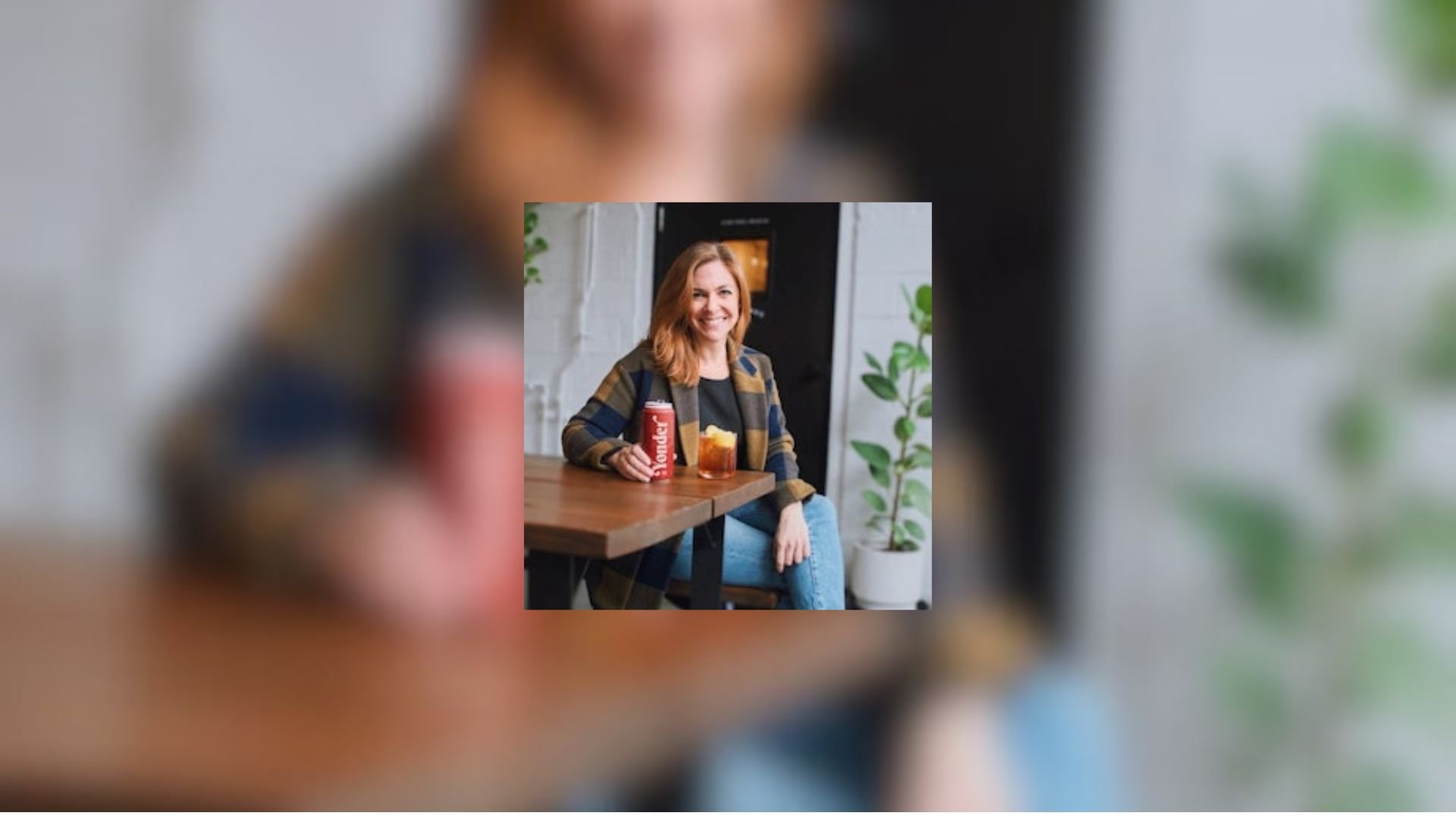
Yonder Cider: Mixing Sweet, Savory, and Herbal Flavors For Unique Blends
Meet Caitlin Braam, the founder of Yonder Cider. Caitlin shares her journey of starting Yonder, from finding the perfect space with outdoor seating to partnering with a distillery and building a successful business during the pandemic.
She also talks about her challenges and how she overcame them with tenacity and perseverance. Caitlin reveals Yonder’s unique flavors and shares her passion for introducing people to new beverages.
She speaks about partnering with Bailbreaker Brewery to offer customers various options to try and discover different ciders while opening their minds to the cider world. Caitlin’s experience in branding, marketing, and production and getting to market fast has helped her product succeed quickly.
She also shares her journey to the cider-making industry and how she got to where she is today.
Caitlin Braam Yonder Cider Episode Transcript
Scott Cowan [00:00:00]:
I noticed that you said there’s nothing wrong with Miller Light, but you conspicuously left out the other part of that. I sorry.
Caitlin Braam [00:00:06]:
Hope I won’t get in trouble for that one.
Scott Cowan [00:00:27]:
Welcome to the Exploring Washington State podcast. Here’s your host, Scott Cowan. Welcome back to this episode of the Exploring Washington State Podcast. My guest today is Caitlin Braam.
Caitlin, what’s your official title with Yonder? I’ll ask you that question, then I’ll take the controls back from you.
Caitlin Braam [00:01:31]:
I’m the founder of Yonder Cider.
Scott Cowan [00:01:33]:
Okay, so Caitlin is the founder of Yonder Cider, but I have a feeling there’s a story before that. So why don’t you tell the audience a bit about you and how it all led up to Yonder.
Caitlin Braam [00:01:47]:
Yeah, it’s kind of a wild ride, actually. So I’m from the Midwest. I’ve actually lived in ten states in my life, was born in Michigan, moved around a lot as a kid, and then landed in Minnesota for high school and college. And then I went to college to actually be a broadcast journalist, TV reporter for business as well. So was a TV reporter in South Dakota for a couple of years.
Scott Cowan [00:02:13]:
I’m sorry, that sounds so were you like the farm Report? I don’t know. I just kidding.
Caitlin Braam [00:02:20]:
I reported a lot on weather, snowstorms, all sorts of fun things. So, general assignment reporter, you throw it at me? I usually had to report on it, yes. I went into broadcast journalism and eventually decided I wanted to get into public relations and marketing. I had grown up homebrewing with my dad as a kid, and so actually moved to Seattle to take a job in PR. My then boyfriend, now husband, had already moved to Seattle, so moved here to be with him and took a job at a small PR firm that specialized in consumer products like wine and restaurants and all sorts of great, amazing, fun things. So I was coming from the Midwest, which at the time no longer is, but at the time I always joke, was the land of Miller Light and Applebee’s. Nothing wrong with Miller Light, but I moved to Seattle and was just thrown into this world of food and beverage and wine and food and just all these amazing things that I fell in love with.
Scott Cowan [00:03:23]:
I noticed that you said there’s nothing wrong with Miller Light, but you conspicuously left out the other part of that.
Caitlin Braam [00:03:28]:
Sorry, hopefully I won’t get in trouble for that one.
Scott Cowan [00:03:32]:
Oh no, that’s okay. I love that. So how long have you been in the Seattle area?
Caitlin Braam [00:03:37]:
I’ve been in the Seattle area about eleven years now. I absolutely love it.
Scott Cowan [00:03:42]:
Okay, so you came out here, boyfriend now, husband, followed him, if you will. You got a job at a PR firm. That still doesn’t explain why. So we got you to Seattle. Now first off, we got another twelve years to fill in here.
Caitlin Braam [00:04:01]:
Exactly. So when I filled out the bio you put on the website for the new company you’re working for and it says like ideal dream client. Since I had homebrewed with my dad as a kid, I wrote Craft Brewery and put that out into the universe. And long story short, I left that PR firm after about three and a half years, started working for the Downtown Seattle Association as their PR manager and started Freelancing on the side and started Freelancing for small breweries. And it was kind of like that thing I had put out into the universe came to fruition.
I was working with places like Two Beers Brewing Company and Airways Brewing Company, Frolic Kitchen and Cocktails, and doing public relations, marketing and branding for some of these growing clients, and new restaurants and new breweries popping up and just absolutely fell in love with telling their story. And so from there it was a crazy couple of years of freelancing. I eventually went freelance full time, had my own PR firm and eventually helped sorry, I’ll start that over. I’m trying to think of the best place to start that.
But I was freelancing for Two Beers Brewing Company and eventually under that same kind of umbrella, same owner, they started Seattle Cider Company. And so I eventually came in full time as the director of marketing and business development for Two Beers in Seattle Cider and eventually became president of those two companies. So I was there for a few years, left, took a job with Boston Beer and Angry Orchard where I worked with the Innovation Cider House that they have up in upstate New York. Also traveled the country in the world teaching people about cider and learning about cider, and then eventually decided, you know, it’s time to go back and start my own thing and start small again. And there let’s yonder.
Scott Cowan [00:06:03]:
You may not want to answer this question, that’s okay, but all I can ask and then you can shut me down. This is my interpretation. When I think of Angry Orchard, I think of Angry Orchard. Kind of like I think of Starbucks coffee. See, 800 pound gorilla. You can say it’s good, you can say it’s not good. But without Starbucks, all these small roasters in Seattle would have a hard time selling coffee for $20 a pound. Much less lattes for six and $7. So Starbucks did a great service to the industry in a lot of ways. And I worked for Starbucks for a number of years. I think of Angry Archer and I don’t know Angry Archer very well, but I think of them as the same way. Kind of this, take my word, carefully acceptable beverage. I enjoy them. I enjoy their their bigger bottles that they had, like the iceman and the stratton. I really like those their other stuff. It’s acceptable. Right. But without them blazing a trail, would it be I think it would be much harder for these craft cider companies to gain awareness and traction. So what’s your favorite angry orchard? Cider? There’s the question.
Caitlin Braam [00:07:29]:
Similar to you, some of my favorite Angry Orchard ciders are coming out of the Innovation cider House in upstate New York. There’s a lot of beautiful single varietal ciders coming out of there. Their new town, Pippin is absolutely fantastic. And so if anybody ever gets the chance to go to the Hudson Valley and check out the Angry Orchard cider house, it is a beautiful place. Just a cider play land full it’s on an orchard. They make such beautiful stuff. And you can chase all of the amazing barrel aged in single varietal and small batch alongside all of the things like rose and crisp. It’s just a really great place to taste a huge variety of ciders and really explore.
Scott Cowan [00:08:12]:
Since I’ve never been there. Have you ever been to one of the Starbucks roasteries?
Caitlin Braam [00:08:16]:
I have, yeah. I’ve been to the one in Capitol Hill.
Scott Cowan [00:08:19]:
Okay. Isn’t that kind of like a combination of Las Vegas and Disneyland for coffee fans?
Caitlin Braam [00:08:24]:
It is, yeah.
Scott Cowan [00:08:26]:
And I noticed, like, Vegas, there’s no clock in there, right.
Caitlin Braam [00:08:29]:
You never know how long you’re there.
Scott Cowan [00:08:31]:
Yeah, I went there with a dear friend of mine. We both were former Starbucks partners. We went there and I had an amazing experience. And then I realized I spent $300 on coffee. I was buying coffee at $80 a pound.
Caitlin Braam [00:08:48]:
Yeah.
Scott Cowan [00:08:49]:
And it was great. So is the Angry Orchard is their cidery kind of like that? It’s like this sort of playground and overwhelming. Okay.
Caitlin Braam [00:09:02]:
Yeah. Well, they have beautiful cider that they’re making. They have amazing team there as well. And it’s just a beautiful place for people to explore cider, whether it be for the first time or they’ve drank cider for a long time. And I think that’s the glory and the beauty of it is that you can have a little bit of everything there. And my career has been all over the place, as you just heard. But what I love about it is that I started in reporting and journalism, so learned how to tell a great story, moved into PR and marketing and was working for really small places that needed that help telling that story. Then went to a larger scale and learned how a larger company tells those stories and how much different it is and really, I think, gained a lot of expertise there and interest there and then decided to go marry both of the worlds that I had just come from, the small and the large, and start my own company.
Scott Cowan [00:09:56]:
Okay, walk us through the idea to start Yonder. And how long did it take you from having that AHA moment, if you will, to your first commercial sale?
Caitlin Braam [00:10:12]:
My husband, when I left, finally start that over. The idea for Yonder had been in the back of my head for a long time, but I always said I wouldn’t start another cider company. I always said that that was too many emails and too much stuff and too overwhelming. But after a couple of years at Angry Orchard, I decided that I was feeling like it could be time again. I went to my husband, and I was like, I think I want to start my own cidery. And he goes, we have been waiting for two years for you to say this. And I was like, who’s we? He’s like, me and all of your friends and your family. We’ve been waiting. And so it took me a little bit of time to know what I wanted to do and to take a break from it all and come back to it and know exactly kind of what I wanted to do moving forward. And that was Yonder. And what Yonder did was it took, like I was mentioning, all of my expertise from working with small producers and then also working with a large producer, and I found the pieces I loved of both and found a way to work them together. And so that comes in the form of the cider. We make our marketing and branding the way we talk about cider and how we present ourselves to the world.
Scott Cowan [00:11:29]:
Okay, so you had this conversation with your husband. You, at that point, realized you were the last person to know that you should have been opening a cider. From that conversation, how long did it take for Yonder to come to fruition?
Caitlin Braam [00:11:46]:
It took about a year for us to fully from that conversation to having let me make sure that’s right. Let me say that again. Hold on. I got to make sure that’s accurate. The thing with COVID is that all my timelines are different, and so I.
Scott Cowan [00:12:06]:
Have to be like.
Caitlin Braam [00:12:09]:
Was that right or not? Anyway, I’ll start that over. So from the moment I realized that what I was really meant to be doing was running my own cidery to when we sold our first can, was about a year. And so the idea started swirling around in my head. That would be August of 2019. And by August of 2020, we were selling our first can of cider out of my garage, of all places, which is a fun, lovely story that I’m sure we’ll get into. But, yeah, it took about a year. And in that time we moved forward quickly with deciding what our cider was going to be as far as blends go, how it was going to look and feel. And then also having COVID hit and being like, March 2020, we’re full steam ahead on this project and this idea. Do we move forward? Do we pause for a little bit? What do we do? And at the time, everybody was like, oh, this will be a couple of months. So we decided to move forward. Turns out we’re still here. So it’s been a wild ride, to say the least.
Scott Cowan [00:13:23]:
Sleepless nights.
Caitlin Braam [00:13:26]:
I mean, I still have those that has not gone away. And as a small business owner, I’ve been told they never will.
Scott Cowan [00:13:33]:
I’ve been told that too.
Caitlin Braam [00:13:34]:
I’ve come to that realization and that’s okay because if I was sleeping well, I don’t know if I’d be doing this right. I don’t know if I’d be worried. I wouldn’t be worrying about my baby. I have enough and this is my baby.
Scott Cowan [00:13:48]:
Okay? A year seems like a very short runway to go from concept to selling your first out of the garage, which just puts you in great company with all those other companies that are world famous for starting at garages. Apple Packard. Many others. I don’t know of any other cider makers that have started selling out of their garage though maybe there are, but that’s interesting. Why your garage just because it was the easiest place or how does that fit into the overall brand of the company?
Caitlin Braam [00:14:24]:
So Yonder’s production facilities in Wenatchee And so that’s where we get most of our apples from and that’s where we produce all of our cider. When we started to move forward and decided even though the pandemic was hitting to move forward we kind of put our dreams of a tap room on hold. We knew we wanted a tap room in Seattle because it was where our largest consumer base was going to be. But not knowing what the outcome would be of the pandemic it just didn’t make sense to put the time, money and rent into building a space that maybe people couldn’t sit in. And so we decided to move forward and we had signed a distributor so we were confident in being able to get our products out into the market through a distributor. However, that didn’t really allow us a chance to talk to anybody about our product. There were no tap takeovers. There were no bars open that you could sit in and there were no festivals to be had to share our story with people. And so I live in Phnney Ridge in Seattle and we actually live on what’s called a stay healthy street which is one of the streets they shut down during the pandemic for pedestrians only so the people that live on the street can park on it. But for the most part, the whole thing is reserved for bikers, walkers, runners, et cetera. And it was a space in the city, and there’s a few of them around to allow people to be socially distanced from each other but still get outside. And so we’re on a stay healthy street. My garage, which is detached from my house, actually is on that stay healthy street. And so my father in law was actually over one day, and he was like, man, look at all these people walking by. You should just sell the cider out of your garage. And so this offhanded comment turned into an entirely huge thing. And I started looking into it, and there was no problem with the liquor control board because it was detached from the house. There was no problem with the health department because the concept was that we were going to get Duke to go only because you couldn’t do tasters, you couldn’t do pints inside at tap ribs at that time. So it would be purely cans to go. I called the zoning department, and I was like, what do you think? And they’re like, it’s kind of a weird gray area because everything’s changing, and now the street’s different. And honestly, we won’t really know about you unless a bunch of people complain. So I was like, okay, let’s take a gamble. And we moved forward with opening what we called yonder bar.
Scott Cowan [00:16:58]:
So one of the things that I still can’t wrap my head around about the state of Washington, city of Seattle during the Pandemic was and I love that they did it first off, this isn’t me complaining. It’s just me not being able to wrap my head around it. All of a sudden. Alcohol to go was acceptable. You could go and get a cocktail and take it to go. You could go. It was these things that the state had fought so aggressively for so long. They just said, okay, go for it. And I’m like, are you kidding me? And so here you are telling me that you actually asked permission, and they still said, yeah. I mean, I would have wouldn’t have been surprised if you just said, we rolled up the door, we sold cans, and nobody cared. But you actually went and talked to the groups that you should have talked to, and they even said, well, we don’t really know, and no one’s going to complain. So you go do it. It’s a head scratcher to me. It’s just so surprising. Wow. Okay, so yonder bar in your garage, does it have a roll up door?
Caitlin Braam [00:18:12]:
Yeah. So it’s a garage. It had a garage door. So that was the one thing we really invested in, was a new garage door because our old one barely opened because we live in, like, a 1950s house in Infinity Ridge, and nobody’s garage door seemed to work. So we installed a new garage door, and my husband and I and one of my business partners, Maddie and her husband built it. And we were using a lot of found materials or stuff from ballard reuse because we were on a budget. We were brand new cidery. We hadn’t sold a drop yet. Right? And so also not sure if this was going to work, if anybody would be interested or if we’d really get shut down. And so wanted to keep the budget relatively low. So we built yonder bar, and basically it became like a walk up window, and you could walk into it a little bit because we had a merch section as well. And so august, I believe it was 19th, was the first day we had planned to be open. The day before, we had been producing a Winachi because we were getting ready to send product to our distributor. We sent a pallet to be dropped off at my house full of cider cans, one pallet, and it got dropped off and we started unloading it. And people had been watching us build yonder bar for a couple of months, and then they saw us unloading cases. And that day people were like, can I buy it, can I buy it, can I buy it? And so we just started selling it the day that the day early. But just people during that time, there wasn’t a lot to do. There wasn’t a lot to be excited about. There weren’t a lot of places to go. And so people that had been walking by, that lived in the neighborhood that have been watching us for two months build this space, and they’d been hearing about it, they had seen our liquor control board license permit on the door, were super curious. And Yonobar became this place in this space for people to escape, to, to stop by and see a friendly face, to pick up some cider for the weekend and just to discover something completely different in a time when a lot of us were struggling, and a lot of us still are. But it was this little, like, beacon of hope in the neighborhood for a lot of folks.
Scott Cowan [00:20:27]:
What was the first cider that you brought to market, and how many varieties did you bring to market to start with?
Caitlin Braam [00:20:37]:
So we actually launched with three varieties. We had our dry, and at the time what was called semisweet, which is now known as vantage, and then we had our seasonal, which at that time was palisades. And so we just had three ciders we were selling.
Scott Cowan [00:20:53]:
And did you have all three of those when you opened?
Caitlin Braam [00:20:56]:
We did. Okay, we did. And so one of the things I love about cider is educating people. And that’s what yonder bar became, was people being excited about this little garage bar that had popped up in their neighborhood, but also getting a chance to teach people about cider. There’s a lot of preconceived notions about what cider is, that it’s all sweet or that they’re not going to like it. And so we got a chance to sell to folks and talk to folks and encourage them just to try it because they picked it up at a weird garage bar. And that sounds like a fun idea either way. And so we were also able to make mix four packs for everyone. So we didn’t sell single cans. We always had to do in the four packs to help curb drinking on the street. You had to buy it in a four pack. So we could make a mixed four pack for people and they could get a dry, a semisweet and a palisades and then one other one, they could get two of one of them and make a mixed four pack and discover our brand and also discover cider a little bit, because each of those are pretty different for us. And I think it allowed people to just explore in a way that maybe they normally wouldn’t for cider.
Scott Cowan [00:22:03]:
So your neighborhood shows up, you start selling. Did you have expectations? I mean, we all have expectations, right? So you had expectations. Were they met? Were they exceeded? How was this initial?
Caitlin Braam [00:22:23]:
So our expectations for Yonder Bar were basically, we just want to sell enough product to make back the money we put into building it out. So that was around six grand with the garage door, right?
Scott Cowan [00:22:34]:
Okay. That was before COVID pricing increased garage doors to astronomical. You couldn’t buy the garage door for six grand right now, and it would be six months to get the door if you were lucky.
Caitlin Braam [00:22:45]:
So we were like, we just want to make back the money we put into building it. And we didn’t know how long we would be open. We didn’t know how popular it would be by day three, because we opened on a wednesday randomly. By day three, it was Friday and Saturday, and everybody was walking by on the stay healthy street. And I think the first weekend, we had somewhere around like 200 people stop by and buy cider. And it was crazy. We didn’t have enough product. We basically almost ran out that first weekend, and the word spread very, very fast, and it helped that people were just biking by. My favorite thing is when we’d see people bike by and you’d see them grab the brakes real quick and be like, what is that? Or my favorite thing is when runners are going by and they run by, and then they do a loop at the end of the street, and they come back and they’re like, what’s going on here? And they’d stop their run, they’d suck their workout, and buy a four pack of cider and walk home. I have, like, a little bit of pride.
Scott Cowan [00:23:49]:
Do you see the humor in that?
Caitlin Braam [00:23:50]:
I do.
Scott Cowan [00:23:51]:
No, it’s my favorite thing, because that’s really quite hysterical to me.
Caitlin Braam [00:23:56]:
I also learned what the bottoms of strollers are for. That’s where you throw your four packs. So it became this neighborhood like gem, hidden gem, and people were posting about it on Instagram, social media. And again, it was a time when a lot of the bars and restaurants were closed and there weren’t a lot of places to go and a lot of new things popping up. And so people would come, yes, from the neighborhood, but people started coming from West Seattle and then just all sorts of other places to discover Yonder bar. And it was an amazing phenomenon. In the beginning, it was my husband, myself, and then our first employee, David, working Yonder bar. And then we had to hire more people in a team so that we could have it open five days a week. And we eventually released newer SKUs. And when we released our first new limited edition release, which was Stoked, people were preordering it and coming out, we’ve sold out in like, two weeks. And it was pretty exciting to watch, and especially exciting for me as somebody that’s worked insider for a really long time. You don’t typically get that type of excitement for cider and that sort of demand that quickly for cider. And it was jaw dropping and amazing and so much fun to see and to be a part of. And there were so many awful things that came out of the pandemic, but Yonder bar wouldn’t exist without it. I don’t think it would have worked in a standard climate, in a standard world. So again, it was just this little beacon of something good happening in a time that was really dark, and we were really proud to be a part of that and to help give people something to look forward to.
Scott Cowan [00:25:48]:
Okay, pause you on Yonder Bar, but let’s talk about yonder. How did you come up with the name? What’s the story there?
Caitlin Braam [00:26:02]:
So I find naming brands and the marketing and branding behind brands extremely interesting. It’s thinking about what people are going to remember, what they associate with the word or the name and how it makes them feel. And so I had a couple of requirements around what I wanted a name to be. This is my nerdy branding self. I wanted it like two syllables. If it had a fun letter in it, it’s usually more memorable things of that sort. And I wanted it to invoke something that kind of connected our life in Winachi, which is where all of our fruit comes from, to our life in Seattle. And we have this split team and a lot of different interests. And one of my business partners, Maddie, she’s our creative director, she sat down and she had three names, and I don’t even remember what the other two are, but she said yonder. And I was like, that’s it. That’s it. And it just invoked when she said Yonder, it invoked this feeling of the first thing you think is over Yonder. Right? That’s the immediate thing. The number of emails, I get that joke, oh, I’ll see you over yonder. That’s the immediate thing that comes to mind. But when you’re sitting in Seattle and you have a tap room in Seattle that you’re thinking about opening and stuff, but everything that you’re producing is over yonder, the name just makes sense. It also has this slight whimsy of yonder is wherever you are that day. And it’s whether it’s a hammock, whether it’s a dive bar, whether it’s your backyard, like we’re going to go over yonder and we’re going to enjoy this lovely cider or this moment, or these people we’re with. And I think it is very memorable word. It does invoke a feeling for people. And I think it has done amazing things to get people to think about our brand and our cider in a different way.
Scott Cowan [00:28:02]:
Okay, why cans?
Caitlin Braam [00:28:07]:
I like to drink cider everywhere and so I like cider in cans. And I don’t believe that you have to limit the type of cider that goes into cans. We just put a Perry, which is Pears only into cans. We’re going to put Wenatchee Wave, which is our beautiful red flesh single Varietal into cans later this summer. I love cans because they are affordable, they’re portable, but they’re also shareable. You can buy a four pack and that four pack can be split up among four friends and you can each explore and drink it and enjoy it together. I think it also breaks down some of the barriers around cider where thinking about some of my favorite ciders come in beautiful 750 milliliter bottles. Right? But that price point is higher. Once you open it, you’re drinking 750 cider and you’re committed to it. And so a lot of times those are reserved for special occasions. Cider doesn’t need to be a special occasion thing. For me, cider is an everyday thing and I think having it in cans allows that to happen. And having beautiful branding and something that you are happy to having sit on your table as part of your dinner is really important as well for us.
Scott Cowan [00:29:33]:
Okay. Now, I love the idea that it comes in cans. I could elaborate, but we don’t need to. So I do have a question though. Yeah, and I think you answered it, but I’m going to put you on the spot with this one. Cider seems as an industry to put everything in a four pack, not a six pack like the beer industry. Why?
Caitlin Braam [00:29:59]:
I think it’s changing. I think there are I am seeing more cider in six packs these days. I think for me, the reason we’re in four packs is because I love a full pint. There’s no other answer to it. I love the way it looks and feels. For me, it’s a full pint and it’s more branding, marketing space and it’s beautiful. I like the way a six can feels.
Scott Cowan [00:30:25]:
Okay.
Caitlin Braam [00:30:26]:
As far as six packs for cider, I can. Also see the argument for it just from on the shelf and what beer is doing in the lining. With beer more, but also it’s a smaller package size, and ciders are typically a little bit higher ABV, so a lot of ours are 6.5% to 7%. And so having a 16 ounce can of 7% 6.9% cider is no, you know, that’s that’s a good amount of a relatively high ABV product. So I could see the argument for twelve ounce cans as well. But for yonder, we just love the way it looks. I love a full pint, and there’s pretty much no more behind it than that.
Scott Cowan [00:31:10]:
Well, here’s the beautiful thing at your company, you can do what you want.
Caitlin Braam [00:31:13]:
Exactly.
Scott Cowan [00:31:14]:
Isn’t it nice that you okay? When you were elaborating on getting started, you mentioned that you found a distributor, which seemed well, given your background in the industry, not surprising, but almost seems a little surprising based on conversations I’ve had with other cider makers, is finding a distributor comes later sometimes, yet you found one from the very beginning, which is cool. When you started shipping cider outside of yonder bar, where were they distributing it to? Were you just local in Washington state or were you out of state quickly or anything like elaborate for me, please.
Caitlin Braam [00:32:02]:
So you had mentioned earlier that we had a short runway for our product, and it is because I’ve done this before, this is not my first rodeo. So knowing what we needed for branding and marketing, know what we needed for production, knowing what we needed for cider and knowing how to get to market fast is part of the reason yonder is where it is right now. And the distributor was a big part of that because again, there weren’t a lot of bars and restaurants open and a lot of people were getting their beverages from local grocery stores or the grocery store because that was the one place they were going. And so it was important to us with a really small team, to partner with a distributor to make sure we could get into those places. Usually that takes a lot of time, but as it being the only place people were purchasing cider at the time, it was extremely important for us at launch. And so our distributor was basically in the greater Seattle area. We’re still only in Washington state, but we were seeing actually a lot of pickup at your local stores. So ken’s market is four blocks away from yonderbar or from my house, and it was the first account that picked us up and to this day is still our biggest account, which makes me extremely happy. We released another collaboration with them just a little bit ago. But the other place we saw a huge pickup was at breweries. And so my background is originally in beer, and I have known a lot of the beer folks in the town for a long time. And they’ve known me from my time at Two Beers in Seattle Cider Company and from Freelancing. And so when people saw that we were coming out with a cider brand, a lot of the breweries were excited to support and pick us up. And breweries, at least for me, during the pandemic, were the one place that I felt I could get out and go to. Because breweries spent a lot of time building out their outdoor spaces, they were stuck with a lot of challenges of not being able to have people inside, no tasters, et cetera. But breweries around here raised up and really did an amazing job of making sure people could still enjoy their products and enjoy their spaces. And so getting on at the breweries around Cowan also helped us a ton because people were what’s this? Yonder? They were just seeing it on the menu board and they hadn’t seen it anywhere else or heard about it anywhere else. And so I thank the breweries around here so much and all my friends in the industry for their support and helping get our name out there. It was extremely important, and they are extremely important for us to this day.
Scott Cowan [00:34:43]:
So who was the first brewery to pick you up?
Caitlin Braam [00:34:48]:
I want to say Stoop, but it was probably either Stoop or Urban Family, one of the two of those. But they’re also they’re now like, three blocks from our tap room in Ballard, and so I love them both. So I talked to Andy from Urban family yesterday when our glycol system went down. I called him and I was like, Help. Please help. And then I’m friends with Robin from Stoop and everything. The community in Seattle, the brewing industry and the cider industry as well is just such an amazing thing to be a part of. And it is so collaborative and helpful, and I feel very lucky to be back in it and a part of it. Three under.
Scott Cowan [00:35:36]:
The distributor picked it up. Ken’s Grocery, close to Yonder bar, but your fruit and your productions in Winachi. When did you start selling product in Winachi?
Caitlin Braam [00:35:52]:
We started selling product in Winachi right away, just through self distribution. And so it was minimal because we, again, were a really small team. But we were self distributing in Winachi and Leavenworth. And so we didn’t launch with Central and Eastern Washington distributor until about a year ago. So about a year into Yonder’s life. So we focused on Seattle First because we didn’t know how big the demand would be, how how fast it would grow. And we just did know that this was the there was more people here, right? There are more people in Seattle. And so we wanted to focus on Seattle First as from the distributor standpoint. But it was really important to us to have a couple of places in Winachi that people could be purchasing our product. And it’s at places like Saddle Rock and Poor, PJs and the Plaza Superjet, which is my favorite name for a store ever. They all carry Yonder and they sell a ton of it. And we thank them so much for that because it is tough. It is tough having a production facility in Winachi, but having a tap room and a distributor here and having me split time in between, it’s a lot. And it’s not your standard business structure, but we’re making it work and doing our best.
Scott Cowan [00:37:12]:
So Winnacci has two businesses that I think are I love the names. Plaza Superjet is one of them. And when we just started looking to move here, we’re driving down Winachi Avenue and Wally’s House of Booze I’ve been to Wally’s. I just thought that was the coolest name.
Caitlin Braam [00:37:32]:
Yeah.
Scott Cowan [00:37:32]:
I just thought, okay, I’ll move here, just because that sign was hysterical. I love the name wally’s House of Booze. And it’s the quintessential dive bar that and the Igloo.
Caitlin Braam [00:37:45]:
Have you been to the Igloo yet?
Scott Cowan [00:37:46]:
I’ve been to the Igloo. Yes, I’ve been to the igloo I prefer Wally’s House of Booze. That’s my personal preference. That’s my personal preference.
Caitlin Braam [00:37:58]:
Fair enough. One of the things I love, because.
Scott Cowan [00:38:00]:
I like Wally’s House of Boost because they have music. They have live music.
Caitlin Braam [00:38:02]:
That’s fair.
Scott Cowan [00:38:03]:
Yeah. So that’s where they went out.
Caitlin Braam [00:38:04]:
One of the things I love about Winachi, besides how gorgeous it is when you drive in, is all of the old signage in Winachi. And so Yonder has a very 1970s vibe to it by design. And then you drive around Winnacci and you see all these beautiful old neons and light up signs and everything, and it feels very preserved in certain ways. And I love that about Winachi. I love seeing all those old signs. And I think it plays into our brand as well. And we take some inspiration from it. We have some T shirts and bags and things that have the original Winachi Apple Capital of the World sign from the I’ve found a couple of pictures of it. I don’t know where the sign exists. Now they have a new one. But I love that feeling and that vibe. And honestly, the tie to Apples that Winachi has, and it just feels so right for our brand to be based there.
Scott Cowan [00:39:01]:
Right. So we’ve gotten you a distributor, we’ve gotten you in local grocery stores, a few breweries, Yonder bars out of your garage. You mentioned in passing you have a tap room in Ballard. Let’s jump to that. Did you outgrow the garage?
Caitlin Braam [00:39:23]:
No. I knew someday we’d want a bigger space. Right. Yonder bar was amazing. And the ability to sell people cider out of the garage and had this novel idea was great, and it did amazing things for our brand. But what we couldn’t do is pour a pint for someone and watch them taste it and get feedback from them. And that was the thing. As somebody that has spent a lot of time in this industry teaching and educating and talking to people about cider. I was missing so much from our brand, and I didn’t get a chance to sit down with an account or a new bar, a new restaurant, and talk to them about it and explain to them what makes our site are different and special. And so while we had put a large tap room on hold, I was keeping an eye out for something that might open up that might be the perfect fit for us, hoping that the Pandemic would be over, which silly hope I know soon, but I’m always on the lookout for the next thing. It’s just who I am and what could move the brand forward. And it was actually a Saturday morning, and my husband and I were scrolling around on Pro Brewer, as you do. Pro brewer is like the Craigslist of the brewing industry, where you’re trying to find, like, used tanks and use kegs and all of that. And as a scrappy startup, cidery in the middle of the Pandemic, we were always looking for things to save a little money. And so my husband actually came across a listing that was like, brewery for sale in Popular Brewing District seven Barrel Brew House. And I’ve been around enough to know it was only one of a couple of places that that could be. And it ended up being in Ballard. It ended up being the old Populux brewing space. And they were looking to sell, you know, the space and the equipment and everything like that. And obviously, Yonder is not a brewery, so that really didn’t quite fit for us. But what was amazing about the space was the outdoor space. And as we have all come to learn, outdoor spaces become really, really important for everyone. And it was something different that wasn’t overly prevalent in the Ballard, the district already. There also isn’t another cidery in the Ballard Brewery District right now. And so it was too big for us. This is like four months into Yonder having launched. And so I kind of went down the path of trying to figure out more about it and talking to the owners and things. And I have always been a believer in maybe not a cider only tap room. I’ve always wanted to share a tap room with a brewery because cider is one and a half percent of craft beer when it comes to sales. And so if you make a cider only tap room, you’re only marketing to a very small segment of people. But if you have the opportunity to partner with another brand or another beverage, you have this opportunity to introduce more people to cider. And so I’ve always wanted to share a space with a brewery. I did find out, though, that actually in Washington State I’ve learned a lot about Washington State laws over this whole process. I did learn in Washington state that breweries and wineries, which Yonder is technically a winery, actually can’t share tap rooms in Washington. However, the Distillers Guild in 2020 passed a bill that allows Distilleries to share their tap rooms with breweries and wineries, so found a loophole.
Scott Cowan [00:43:13]:
Wait a second. So, sake of conversation. Scott’s Winery wants to partner with Yonder and open a tap room together. We can’t do that. Scott’s Distillery can partner with Yonder and Scott’s Winery and open up a place with all three.
Caitlin Braam [00:43:35]:
So if Scott’s Winery was actually a brewery because Yonder is a winery, okay, so breweries and wineries, they can’t partner, but Distilleries can partner with breweries, and they can partner with wineries. And this was part of a bill that got passed in 2020 by the Distillers Guild. And so it hadn’t gone into effect yet, but it went into effect in January of 2021, and we had found this space in November. And so I started searching around for a brewery partner that was willing to do this crazy project with me. The search didn’t take long. I’ve known the folks of Bailbreaker Brewing Company for a while. Kevin Smith, who’s one of the owners of Bailbreaker, actually worked at Two Beers Brewing Company as a brewer. When I first started doing PR for Two Beers Brewing, and so it’s funny how this world is really small and comes full circle so many times throughout my life already. But I called Kevin and I was like, hey, I know it’s the middle of the pandemic and all of that stuff, but how would you be interested in maybe opening a tap room in Seattle with me and Yonder? Long story short, they said yes. We actually started the distillery together called Wise Fool Spirits, to make it all happen. Wiseful Spirits, because either we’re totally wise or complete fools for doing all this. And by starting that distillery, we were able to get licensing to share the tap room and make it all happen.
Scott Cowan [00:45:17]:
I don’t understand the logic of this. I just don’t understand. Okay, all right, so you’re obviously demonstrating you’re a creative problem solver, which is very cool. So when did the tap room open?
Caitlin Braam [00:45:35]:
The tap room open Labor Day weekend of 2021. So we’ve been open about nine months.
Scott Cowan [00:45:42]:
And how has that been?
Caitlin Braam [00:45:43]:
It’s been amazing, honestly. The chance to share the space with Bailbreaker, who I absolutely admire and look up to as a brand that has been around for nine years now, and just friends as well, the chance to partner with them and partner with such a caliber brewery like them and build a space that people really enjoy has just been amazing. So we built out the space over about seven, eight months, and we really transformed the outdoor and indoor space. There’s fire pits, there’s tons of outdoor seating, there’s food trucks on site. It just feels like a kind of a different world when you walk in there. And we love that about it. There’s 16 taps of beer and 16 taps of cider. It’s a large offering, but what we love about it is the ability for somebody to come in and they can get a flight of half beer, half cider if they want to. They can have a pint of cider and then have a pint of beer. They can have a single varietal Winacchi Wave, and then they can have a Field 41. It really opens up people’s options when they walk into our tap room and also offers a lot of ability to discover, and especially for us as yonder, it gives us a space to be able to showcase the breadth of what we can do. So now you can find our Dry, our Vantage, and our Palisades at places like PCC Whole Foods. They’re a little more readily available. But what you can’t find everywhere is our single varietals or our anniversary blend or apricot tea infusion that we’re trying out or what we’re testing for the next spring seasonal. People can walk into our tap room and get cider they recognize but also push the bounds of what they know cider to be, not just from yonder, but as a whole. And I think that’s a really amazing opportunity that we have as yonder is to open people’s minds up to the world of cider and show them how different it can be.
Scott Cowan [00:47:58]:
I’m scrolling through the taplist right now, which is why not that anybody can see me other than you, but I’m looking down at your taplist here because I was going to say I only see 13, and then before I wow. Okay, so you’ve got wow. Well, because I’m not a skilled news reporter, we’re going to grind some gears and transition in a very unprofessional way. But I want to talk about something that I saw on your website that’s been, of course, now my browser won’t go back. Put you on the spot. Velvet Cashmere big long pause there, folks. I was like, what’s the question, Velvet Cashmere? What was the inspiration for this pairing?
Caitlin Braam [00:48:58]:
So this leads me into a little bit about my theory on yonder as cidery as a whole. I, as you probably have learned through this conversation so far, like, to push the bounds of what is normal and what is possible. And I get an idea and I find a way to make it work for yonder. Most of our ciders, all of our ciders typically that are in cans have at least 80% or they have 80% culinary and at least 20% cider fruit. And cider fruit is the cider fruit that’s like mortanic and has more aroma to it. And really you typically don’t want to eat those apples, but they make for beautiful cider. And that’s what makes yonder special and different from a lot of other ciders, especially ciders and cans for our seasonals, which are things like Palisades and Cashmere and Sunny Slope. They are designed after cocktails I love. And so I’m a big cocktail person. I drink a lot of cider for work. I drink a lot of wine for fun. I drink a lot of cocktails for research, is what I tell my husband, at least.
Scott Cowan [00:50:05]:
Sounds like a terrible lifestyle, right? It’s awful grueling. Just grueling. I’m so sorry for this.
Caitlin Braam [00:50:12]:
And so when thinking about our seasonals, our first one was Palisades, and that is BlackBerry and sage. There are a lot of BlackBerry ciders on the market, but there’s not a lot of ciders that have sage in them. And what I love about cocktails is how they do an amazing job of mixing sweet and savory and herbal and just all of these different combinations that typically you don’t find in beer insider. And I love taking a cue from that cocktail world and being able to make our ciders stand out in that way and add something that’s a little unexpected that works and works really well. And so Cashmere, my favorite cocktail is the Negroni. And so Cashmere is designed after a Negroni. It is tart, cranberry, dark cherry and bitter orange peel steeped in there. And so you get this campari vibe to it and this nice bitterness on the end, and it’s really lovely. And about a year ago, I started getting into Amaro and learning a little bit more about Amaro’s and found out that there was a company in Seattle called Fast Penny Spirits. It’s actually just over the Ballard Bridge and run by a couple of lovely ladies and female owned Seattle based Amaro company. And I was like, I must know more about this. I must go. And so they have a tasting dock. And I went there and tasted through their Americano and their Americano Bianca, which is their lighter one, and was just blown away. And I was like, there’s got to be something we can do here. And so started chatting with them and we tasted through all of my ciders, all their marrows tasting different blends and trying to see what worked. And we landed on Velvet Cashmere, which is a blend of our cashmere cider, our negroni inspired cider, and their amarcado, which is their darker amaro. And it’s like a 16 ounce to 1oz ratio. And it is so good and so different than what anybody ever thinks of for cider. And I love that about it.
Scott Cowan [00:52:27]:
So I had Fast Penny on as a guest and I picked up a couple of both their products. And I don’t know what the right adjective to use here, but intrigued, there’s just not anything that I’d ever experienced before. Right. So when I’m scrolling and I see that you’ve put their product with your cider and I guess what you’re about to tell me, this is where you’re going to break my heart publicly. That’s not available in stores, is it?
Caitlin Braam [00:53:12]:
It’s available at the Tap room right now, but I think it will be available in stores next year or I should say later this year.
Scott Cowan [00:53:22]:
Yeah, that’s.
Caitlin Braam [00:53:27]:
It’S as close as to a cider cocktail I can get in a can without making it an actual cocktail.
Scott Cowan [00:53:33]:
And that’s interesting because you said so I was going to ask you the ratio, if you will, and you already said that, so it’s like, yeah, I’ve got to try this.
Caitlin Braam [00:53:46]:
We have it on tap at the Ballard Tap room. We also have it in cans. I think we have like ten more cases of it left until it’s gone till this winter. And I’ll be sad to see it go because it really is an amazing beverage. Like, you taste it and you’re like, I don’t quite know what I’m drinking. And I love that. I love that it blurs the lines so nicely between the two.
Scott Cowan [00:54:13]:
So you’re not the head cider maker, but I’m going to ask you the cider making question on this one. When does it get added? When does the Maricano get added to this in the process?
Caitlin Braam [00:54:28]:
It’s blended at the end.
Scott Cowan [00:54:30]:
At the end? That’s super intriguing. Yeah, that one stopped me in my tracks when I was like, wait a second, because their product is very complex.
Caitlin Braam [00:54:48]:
It’s like my favorite after dinner drink. It’s also my favorite summer drink because I make something called a little ripper with it, which is the darker amaro, club soda, lemon, and a couple of green olives. Very Italian. And it is the most refreshing, delicious, pre dinner beverage in the summer.
Scott Cowan [00:55:08]:
Really? Okay.
Caitlin Braam [00:55:10]:
But that’s the thing about the laws and the beverage world right now. They are very siloed. Right. And so it is very difficult to create things that bridge the gap between beer and cider or cider and amaro or the laws aren’t built to allow for that. And so getting creative in the way that you’re doing it or who you were working with and working to try and change some of these laws is really important so that we can continue to be creative. Beverage producers. And break down these silos. And not just create cider or beer or wine or spirits, but create really great drinks that people love and are willing to explore and search for more.
Scott Cowan [00:56:03]:
Absolutely. So I’m scrolling and I’m just going to start reading. Your initial product was dry. And then Palisades and Vantage cashmere. Sunny slope. So obviously initially you started naming your products after locations in North Central Washington. We go into some limited editions. Finneywood, which is your collaboration with Ken’s Market, where you mash the two Greenwood and Infinity Ridge together. Okay, now you’re throwing me with Stoked Insider. Ken. So how did you come up? Because that doesn’t seem like you’re following the same naming convention.
Caitlin Braam [00:56:38]:
Yeah, turns out you start to run out of Central Washington fun Central Washington town names after a little bit.
Scott Cowan [00:56:44]:
OMAC. Just doesn’t sound like a good cider, does it? OMAC. No offense to.
Caitlin Braam [00:56:52]:
We reserve the Central washington town names for our year rounds and our seasonals, and then the Finneywood just made sense because it was our homage to where we started selling cider and to Ken’s Market, who was our first account. Stoked is called Scott because it is 70% Stoke Red Apple, and we were releasing it as our winter limited. And so Stoked goes along with skiing, goes along with snowboarding, and it just kind of was a fun play on this apple that we were promoting and that a lot of people had never heard of. And I think that’s what I loved about Yonderbar and what I love about our limited releases is it’s our opportunity to showcase apples that people have no idea about in a really fun and interesting way. Right. You throw a skier on there. That skier on the can is actually a cartoon image of our old production manager, Cam. He wears a hot pink and yellow onesie when he skis. So that’s our homage to him as well. And so that was what Stoked was. And people love it, and it’s fun, and it gets people to drink something that’s 70% cider fruit, but in a can and in a fun way. And I think that’s part of Yonder is breaking down a lot of those barriers that typically come with drinking something a little bit more high end and that’s a little bit more outside their norm, but giving it a fun twist that makes them want to grab more. And then Ciderkin is actually an old school traditional name. Have you ever heard of pequette?
Scott Cowan [00:58:30]:
No.
Caitlin Braam [00:58:30]:
So pequette is in the wine world. And what it is, is after you press grapes, the first time, you take those skins and any of the pulp that’s left and you rehydrate it with water and let it macerate or, like, sit for a little while and it pulls out the rest of the color, the sugar, some of the tannins, and then that naturally ferments. Or they ferment that liquid. And that’s called pequette. It’s also called like, small wine, where it’s a naturally lower ABV because a lot of the sugar has already been taken out of it. And so in the cider world, that’s called Ciderkin. And so after we press our cider fruit and get the original juice out of it, we add water to the pumice, like the macerated apples, and let that sit for a couple of days to pull out those additional sugars and flavors. And it comes out to a naturally 4.5% beverage. And so cider typically, when you make it naturally ferments out to around between six, seven, eight. Like, usually it’s between like six and eight. You can definitely get some higher stuff, but that’s usually the range to get it lower. You’re typically doing things like adding water or something along those lines, but getting a naturally 4.5% cider like beverage, if you will, is pretty cool, and the flavor is still really amazing. And I love having it. We release it around 4 July because it is a really great thing for having floating a river or being on a boat or day drinking, if you will, any occasion in which you’re doing that. Because I love our dry cider, but a couple of like 6.5 or 7% ciders in the middle of the day afloat in the river hits a little different than a 4.5% cider can.
Scott Cowan [01:00:23]:
Right. And then we have the Yonder bar anniversary, which is intriguing. I love the graphic.
Caitlin Braam [01:00:36]:
Oh, yeah. The graphic is Yonder bar.
Scott Cowan [01:00:38]:
Yeah, I love it.
Caitlin Braam [01:00:39]:
Yeah, it’s a beautiful can, and it is a beautiful cider. Our cider makers developed that one and basically pulled out all their favorite cider apples to make that. And it is rich and spicy in a warming kind of way and just a really lovely cider.
Scott Cowan [01:01:01]:
And then you got the rose rose, which I like the way you’ve done the graphic on that, too. That’s kind of beautiful. Yeah, you’ve done nice. I mean, the attention to detail on the presentation of the cans is really cool. I really like the aesthetic. Now, I got to tell you, the Chai lemonade thing is just like, yeah, you can take that off the menu as far as I’m concerned. That one. But people love Chai. I don’t get it.
Caitlin Braam [01:01:29]:
It’s a really great cider. It plays well in the fall and also plays well in the summer because it’s got that nice lemony lighter flavor to it. I like chai. I like ginger, so I like it a lot, but it’s not for everyone.
Scott Cowan [01:01:45]:
Okay, and then you’ve just released this Perry. What was the motivation there? To go away from apples and to do a Perry.
Caitlin Braam [01:01:54]:
So Perry is something that is relatively hard to find, I should say. It’s not as prevalent as cider, and finding really good Perry is even harder. So we were given an opportunity to buy a bunch of periphers last fall at a pretty good rate and snap them up because Perry pears are difficult to find. So Perry pairs are going to be smaller and really high in sugar content, and so they make for the best Perry. You can definitely make Perry out of things like Dionju Except and Bartlett, et cetera, but the periparers are really where Perry shines, and so we got access to those. And Yonder is all about teaching people more about cider or perries for that matter, and showcasing something that maybe somebody hasn’t had before. And so I don’t know many people that have put Perry into cans. And so we decided to move forward with making a Perry that is 70% Perry pears and 30% Dionju pears. So it makes it a little bit crisper, a little bit more sessionable, makes it perfect for putting into a can. And so we released that. And it has been so much fun to watch people’s faces when they drink Perry for the first time. Because it is really different. It has a lot of similarities to cider, but it’s more nuanced and it changes a little bit with each sip and it is different in a way that is hard to put your finger on sometimes has a slightly natural sweetness to it as well, which people seem to be loving. A lot of our stuff skews very dry and so it’s nice to have something with a little bit of a touch of sweetness to it and it’s been fun to educate people. We still get a lot of people calling it a parasitor just fine, but parasiter is apples and pears. This is 100% pears and I’m excited. I am packaging up a four pack of it to send to Tom Oliver, who is in England and one of the most like, well, world renowned perry makers and I can’t wait to see what he thinks. So our cider maker, our headsider maker, Tim Larson, who’s also one of my business partners in Winachi, he is an amazing perry maker as well, so I feel very lucky to have him on the team and to have had this beautiful perry made.
Scott Cowan [01:04:23]:
You said you’re packaging it up and I can only imagine sending alcohol to another country is something simple to go to the post office with.
Caitlin Braam [01:04:30]:
I’ll figure it out.
Scott Cowan [01:04:31]:
Super easy. Yeah, nothing can go wrong there. And then you’ve got some draft. Only the Roxbury Russet, the Winachi wave and the Kingston blacks. Any chance that those will make it into cans?
Caitlin Braam [01:04:45]:
Potentially, I think Winachi Wave will. It is definitely one of our top sellers. It is a beautifully tart, naturally pink from the red flesh apple cider that people absolutely love. Single varietal ciders are more expensive, so going into cans is a bit of a challenge sometimes with that. But while I love having single varietal ciders on, I think we currently have five on at the Tap Room. Why I love that so much is we can showcase individual apples and what they taste like once they’ve been fermented and I think that’s pretty special. And so people, especially if they get a flight, can get like our dry cider, they can get which is like an 80% culinary, 20% cider fruit, then they can get our anniversary blend, that’s 70% cider fruit, 30% culinary, so the opposite. And then they can get a couple of single varietals, right? And so they can just go on this wild ride from very crushable, but still has a lot of body and flavor to highly tannic, maybe a little funky, and they could just take this cider journey and I love having it. That’s why I love the Tap Room so much, is that people can really explore cider there or they can throw velvet cashmere in as one of their flight options and then just throw the whole thing for a loop.
Scott Cowan [01:06:07]:
Yeah, you just knocked me off with that one. That velvet cashmere. That one okay, so you don’t have much to do. You run a cider company, you’ve got a tap room now, but there’s this other thing you’ve got going called The Source. How did that come about? So did Yonder come first? Did the source come first? What’s this and how do they interconnect it?
Caitlin Braam [01:06:44]:
Yeah, so Yonder, the original concept with Yonder was to work with The Source, used to be called a different company called SUNRED. And the idea was to work with SUNRED to actually produce our cider. Starting a cidery is extremely expensive because of the startup capital needed, the tanks, the press, all of that if you’re going to go this route that we’ve gone. And it was just more than I was ready to take on at the moment. And so I was going to work with that team to come up with the recipes with me and to produce it there. And then we would package it and sell it. And so unfortunately, an opportunity came available and then SUNRED was up for sale, which completely changed my plan because if somebody else was going to buy it or they were going to sell it for parts or whatever, yonder’s idea was going to be different. And so me being the crazy person I am, decided to take on another company during the pandemic and actually start Yonder and The Source at the same time. And so Tim, who is my headsider maker at Yonder, is also my business partner in The Source, and he was working at Said Red previously. And so we own The Source, and we do premium juice and custom fermentation for other cideries. Yonder being obviously the largest one, they were launched at the same time. They actually occupy the same building and share a space. They’re like sectioned off from each other, but we also share a team. And so it’s a beautiful synergy where The Source is, yes, making Yonder cider, but it’s the same people that are also packaging it and putting it in on the Yonder side. So we have this beautiful opportunity. But what The Source does as a couple of things is it allows cideries like Yonder to be able to start up quickly without a ton of capital and get going fast with really high quality cider. And that’s a beautiful thing and takes away a lot of challenges that I think a lot of not only cideries, but startup beverage companies face. It also increases the opportunity for really high quality cider. And you have a lot of options. We do tankers of culinary juice, but we also do totes of single varietal ciders. And you can blend the two, you can get finished cider or you can get frozen juice. It just gives you a whole range of opportunities as a cidery to produce something that maybe wouldn’t be accessible to you because we have it and we have it either frozen or stored and work with clients throughout the year to plan for their production. So it also allows people to scale with us, which I think is a beautiful thing. The hope is that they scale and they scale, and they maybe eventually one day can afford their own production facility and they move it there. But we can be flexible because there are tanks, right? So if a company grows, we have the tank space. If they shrink back, that’s fine. They don’t have to sell off another tank. It’s all our stuff. So it allows people to kind of ebb and flow with the seasons, with growth, with the economy, with the pandemic, and I think provides a lot of opportunity.
Scott Cowan [01:10:04]:
So it’s almost like a cider incubator.
Caitlin Braam [01:10:06]:
If you yeah, we’ve worked with it’s beautiful because we work with a lot of startup cideries, but we’ve also been working with cideries that have been around forever that have, like, one skew that they want produced off site because they don’t have enough tank space. And so we get to work with, honestly, a lot of our friends in the industry. We get to work with a lot of breweries that I’ve known over the years that wanted to start their own cider skew. And it’s been a lot of fun to kind of see where the opportunities lie and be able to hopefully increase cider quality through this.
Scott Cowan [01:10:38]:
That’s actually really cool.
Caitlin Braam [01:10:39]:
Yeah.
Scott Cowan [01:10:42]:
So what’s next for yonder?
Caitlin Braam [01:10:45]:
That’s a good question. Let me think on that one. But then I want to go back real quick, if you don’t mind, to talk about the fight for yonder bar that we had, because that’s what most people know us for.
Scott Cowan [01:10:56]:
Okay.
Caitlin Braam [01:10:57]:
If you don’t mind.
Scott Cowan [01:10:58]:
No, let’s do it.
Caitlin Braam [01:10:59]:
So about three months into opening yonder bar, I got a call from the zoning department, and they had gotten a couple of reports that somebody was unhappy with what we were doing at yonder bar. We had been talking with them, and we were trying to work out some solutions. But in that time of trying to work out solutions and this is right around the holidays, the cops showed up at my house a couple of times. The health department showed up. The liquor control board kept getting called, and it turned out that we had one person who lives about seven blocks away who was unhappy with yonder bar for various reasons and made it his personal mission to get yonder bar shut down. It was a very stressful four months because at that time, yonderbar was extremely important to us. We had only been open for a couple of months. We were growing. We were just trying to make it through the pandemic like any other small business was. And was it a little weird what we were doing? Sure. But was it hurting anybody? No. And did we have a lot of people supporting us? Yes. And so what it came down to is I ended up challenging the zoning department, and eventually working with City council and making a case for why Yonder Bar and why other businesses like Yonderbar should be available and allowed. And so over a process of about four months, we ended up shutting down for three weeks because of all this. But at the end of that three weeks, we worked with City council to pass a bill called Bringing Businesses Home. What Bringing Businesses Home bill does is it allows small businesses to incubate within their garages. It removes a lot of the home business restrictions, like no signage, and it must be not visible from the outside and all of that. And so we were able to remove a lot of those restrictions. It was originally put for just one year. And the idea was that a business could start in its garage and incubate prove concept of Viability and all that kind of stuff. And then hopefully, just like Yonder did, sign a long term lease at a permanent commercial space and build out a real tap room or a real site. And so that’s what the bill was for. That’s exactly what Yonder did. And it was a beautiful thing. The support that we got from the community, though, when they found out that somebody was trying to shut us down was crazy. We got over 5000 signatures. We had people emailing the news stations for a couple of weeks. TV crews just kept showing up outside my house to talk about Yonder Bar and to talk to people because it was this story of an entrepreneur, a woman owned business, and somebody just trying to do something creative and make it work. And this one person just trying to shut it down when a neighborhood full of people wanted it. So Yoder Bar was able to reopen. But what I love the most about it is that we got this bill passed and the bill is getting extended. And so after the bill got passed, I know of a chocolate tear that opened a flower shop, a plant shop, and all these other little places that are considering opening in a space that they already have that they won’t have to pay rent in to maybe follow their dream when they maybe wouldn’t have otherwise. And I think that’s such a beautiful thing. And I’m so thankful for the support of the neighborhood and the support of the City council and everything that we did to kind of get that passed and what Yonderbar did for, hopefully, other businesses.
Scott Cowan [01:14:38]:
That’s very exciting. Although it’s not expensive to rent anything in Seattle, but these companies could go ahead and sign a multi year lease to test something.
Caitlin Braam [01:14:48]:
It’s one of the biggest challenges, honestly. Like when we were looking at spaces before we landed in Ballard, they’re asking for ten year leases and personal guarantees. And that is just not physically possible for most people, especially if you haven’t even started your business yet. How do you do that? How can you commit to that.
Scott Cowan [01:15:10]:
I don’t know the answer. Yeah, let’s not go down that rabbit hole, because we could talk for another hour and change the whole tone of the conversation. So not letting you off the hook. Let’s go back. Now that you fought City Hall in one, what’s on the horizon over Yonder?
Caitlin Braam [01:15:27]:
That is a great question. Right now, we are trying to keep up. We are having so much fun building our tap room out. We’re currently building a second bar there right now called a Can Bar to help alleviate some of the busyness at the main bar during the summer. My husband and I are building that out because building bars and projects is our passion project. We have a new seasonal coming out called Cooley. It’s our first new seasonal that we’ve released in a while. It’s pineapple, lime, and cardamom, and I’m so extremely excited for it. To introduce a pineapple cider to the world from Yonder that honestly tastes like a cocktail. Again, it’s based on a cocktail that I had when I was in Wahaka. I’m a big mescal person, and so I had a mescal, lime, pineapple, and cardamom cocktail while I was there, and I was like, this is it. This is the next seasonal. We have to figure out how to make this work. Besides that, there’s always something around the corner for Yonder.
Scott Cowan [01:16:35]:
Okay, well, okay. You’ve got all the free time in the world, I can tell. So speaking of free time, so when you’re not building out bars, fighting City hall, driving back and forth from Seattle to Winachi, what do you guys like to do for fun in entertainment in the Seattle area?
Caitlin Braam [01:16:53]:
I’m a big skier. I didn’t get to ski that much this winter, but we do love to ski.
Scott Cowan [01:16:57]:
I’ve been skiing since I was where’s your go to slope?
Caitlin Braam [01:17:00]:
I go to Stevens quite a bit, but I’ve done mountain baker a couple of times and things of that sort, so it’s fun to I love traveling to ski as well. I love going to Utah and up to Whistler and things of that sort, so it’s been a little busy as of late, so I didn’t get out as much this winter as I would have liked. But we’ve got a 13 and a half year old dog, Emma, who kind of runs our world and our life, and we love getting her out to the beaches. And so we’ve been traveling around a lot lately to a lot of the islands just to explore and get out of the city a little bit and take a little bit of a brain break. I’m very into plants recently. Like, if you go to the tap room, our tap room is filled with plants that I love to take care of, and I have a bunch of my home as well, and so it’s my little destress moment, if you will. Okay. And then I’m planning a road trip down the coast right now for September, we’re going to rent a trailer and take Emma along with us and hit up the California coast, go all the way down to San Diego and back, and got a lot of people and friends and places we want to visit along the way.
Scott Cowan [01:18:12]:
Okay, so these questions I’m about to ask you are unfair. They’re hard, and I’m not going to let you off the hook. Are you a coffee drinker? Best place for you to get coffee around the Seattle Ballard area.
Caitlin Braam [01:18:33]:
Best place for me to get coffee is the Herkimer. It’s four blocks from my house. They make great coffee and they always have dog treats for Emma. So if I leave without grabbing a dog treat, I get in trouble. All right, best place to get lunch, sabine and Ballard. They also carry yonder, but they make great salads and great sandwiches, and it’s always just such a beautiful little spot.
Scott Cowan [01:18:56]:
Okay, so this last question is a two part question. Your go to cocktail Negroni.
Caitlin Braam [01:19:03]:
Specifically mezcal Negroni.
Scott Cowan [01:19:06]:
And the best bar to get it.
Caitlin Braam [01:19:08]:
At, flint Creek up the street for me here, makes an amazing Negroni. Also, Flint Creek makes an amazing mezcal negroni. Cornudo. Infinity Ridge makes the best actual Negroni gin negroni.
Scott Cowan [01:19:23]:
You see why these are hard?
Caitlin Braam [01:19:25]:
At least I have the answers.
Scott Cowan [01:19:27]:
Yeah, you do, actually. You’ve done really well. All right, so we’re going to ask one last question. Best place to get breakfast.
Caitlin Braam [01:19:36]:
I’m like. Best place or the place I always get breakfast?
Scott Cowan [01:19:41]:
Where do you always where do I.
Caitlin Braam [01:19:42]:
Always go for breakfast? I always go to breakfast to Mainstay Provisions. So it’s a Saturday morning ritual for me, Emma and my husband John is it’s like you can preorder and you go and you get their bacon egg sandwich that’s got, like, Arugul and aioli, and it’s so good, and it’s like the eggs not all the way cooked, and you just go down there. We grab the sandwiches to go and we go to a local park and spend a little time with Emma on Saturday mornings and eat her breakfast and kind of enjoy the morning before it inevitably gets crazy.
Scott Cowan [01:20:17]:
So getting the camera angle that we have here, emma is now presenting herself. What breed is Emma?
Caitlin Braam [01:20:24]:
Emma is a Rhodesian Ridgeback and lab mix. And so we adopted her when she was about one years old from Paws Up in Linwood, and she is going on 13 and a half right now. So she’s a good girl. She’s basically bionic. She’s had two knee surgeries, lung cancer, and currently going through chemo for lymphoma. But she’s doing great and is super happy, and we’re excited to take her on that trip I mentioned where we get to go down the coast because her favorite thing in the world are water and beaches. And so every day she’ll get to explore a new beach and play in the water.
Scott Cowan [01:21:05]:
Sounds like an amazing trip. All right, my catch all get out of jail free question. What? Didn’t I ask you that I should.
Caitlin Braam [01:21:14]:
Have my favorite dive bar?
Scott Cowan [01:21:17]:
Oh, okay. I just assumed it was going to be Wally’s House because it’s an awesome name. All right, what is your favorite dive bar?
Caitlin Braam [01:21:24]:
Olaf. Olaf Ola. I’ve not heard of that. It’s over in Ballard. Sorry. She’s going to be attempt. It kind of ties back to the Yonder story a little bit. So there’s Olafs and there’s Rupee right next door. And Olafs is like your classic dive bar, right? You go in, you’re getting like, they’ve got great beer, but they’ve also got Miller Light on tap, and they’ve got great whiskey sodas and whatever you want. And you can go in wearing anything and be accepted and come as you are. Rupee is next door, and it is this beautifully curated, dark Sri Lankan restaurant with small plates and amazing cocktails. And so Olapse is my favorite and I love it. And then Rupee came in, and when we were talking about building Yonder, I was like, I want a brand that can fit in both of these spaces. I love a good dive bar just as much as I love a high end, expensive dinner date night. And I want a brand that normally from a flavor profile standpoint, but from how it looks standpoint, can sit on both of those bars. And that’s what we strive to create. And so, yeah, I love going there.
Scott Cowan [01:22:46]:
Well, this actually prompts another question. Are you a music fan?
Caitlin Braam [01:22:50]:
A little bit. I wouldn’t say I’m listening. Not great music.
Scott Cowan [01:22:55]:
Okay. I was going to ask where you like to go see music in Seattle with the Pandemic. It’s been a tough question for people.
Caitlin Braam [01:23:03]:
But I recently went to the Sunset Tavern for the first time to see my friend and former employee Kate Dinsmore play. And she’s a beautiful singer and musician. She had her full band there. And I had never been to the Sunset Tavern, and it’s such a great hidden little gem. And not to always plug Yonder, but they also had, like a cider and a shot special going on, so I was totally down with that.
Scott Cowan [01:23:31]:
Have you ever been to the tractor, Valerie?
Caitlin Braam [01:23:34]:
Yeah, the tractor is great.
Scott Cowan [01:23:35]:
I love the tractor. It’s just something about that place. It’s not that great for music because the bar is off to the side, but there’s something about the tractor.
Caitlin Braam [01:23:42]:
It’s one of my husband and I John’s missions this summer is to now that we’re not building a tab room or building a cidery or we’re still building a business, but we have less construction projects this year how about that? Is to spend a little bit more time at some of these venues. We didn’t get a chance to do it very much while building it, plus the Pandemic. And I know these places all need our support, and I want to go, and it’s just not something that’s ever been something I do a lot of, but kind of realizing during the pandemic how much we did miss it, even that little bit we went before. Our hope is to kind of explore some more of these venues this summer.
Scott Cowan [01:24:25]:
Awesome. Well, I’ve taken a lot of no worries. I appreciate it. It’s been a lot of fun for me. I can’t wait to try the velvet cabinet.
Caitlin Braam [01:24:34]:
Well, if you email me Your address, I’ll just ship you some. Don’t say no. I’ll ship you some of that chai lemonade, too.
Scott Cowan [01:24:48]:
All right.
Caitlin Braam [01:24:52]:
Yeah, I’ll definitely send you some.
Scott Cowan [01:24:55]:
Thank you so much, and I really appreciate you. Join us next time for another episode of the Exploring washington state Podcast.
Before you go
That is the whole idea behind the Explore Washington State Card. Free to carry, with a little something waiting at participating places when you visit. Your zip code is a vote for which towns we sign up next, and our weekly Washington travel newsletter starts landing right away.
Get your free card- About the Author
- Latest Posts

The Exploring Washington State Podcast is your go-to source for discovering the diverse wonders of the Evergreen State. Whether you’re seeking inspiration for your next adventure, looking to savor local cuisine, or eager to learn about the businesses and artists that call Washington home, this podcast has something for everyone. Join us as we showcase the splendor of Washington State, reminding you that “there is always more to explore!”


