
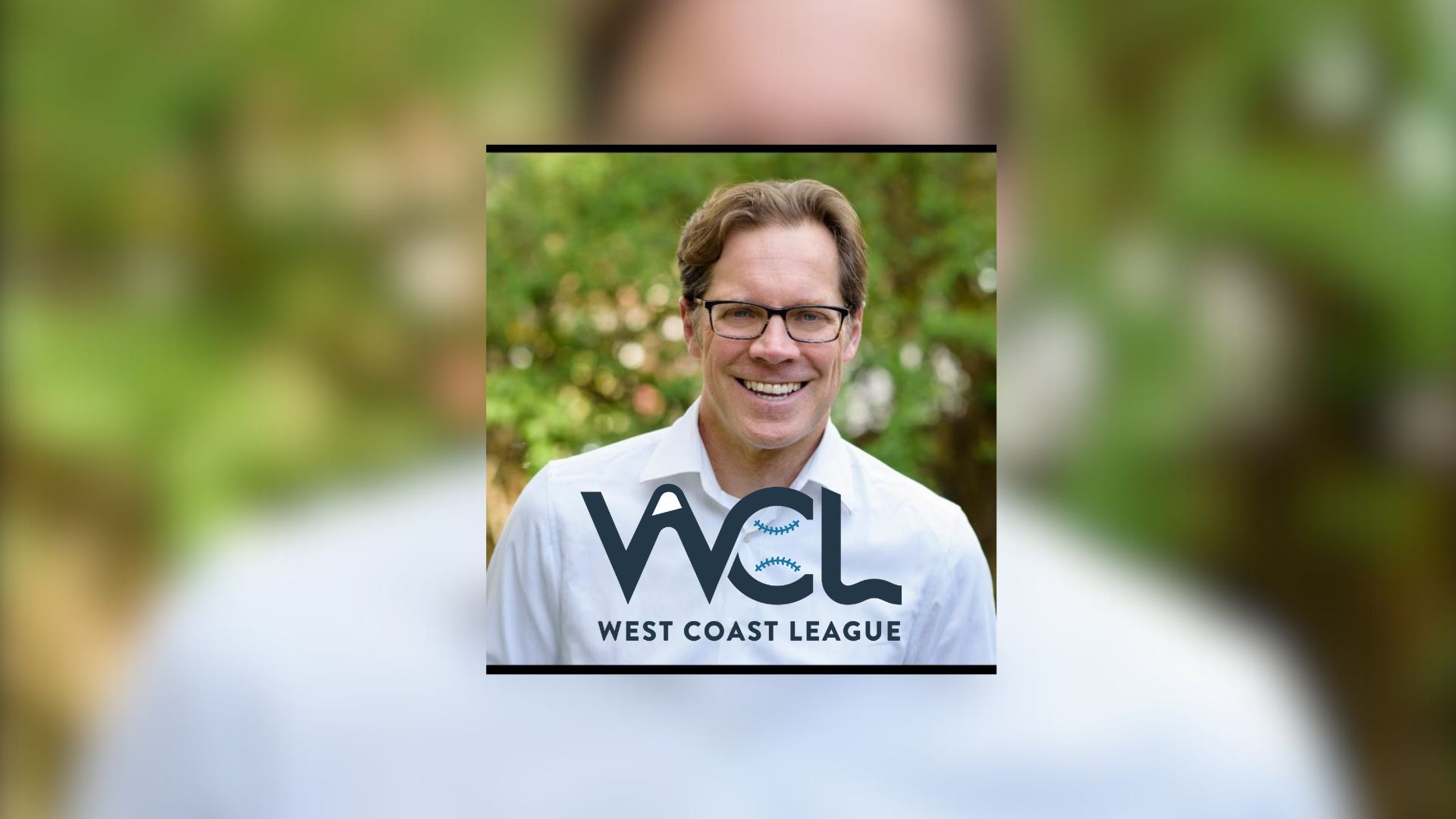
Rob Neyer West Coast League Commissioner Talking Summer Baseball
Rob Neyer commissioner of the West Coast League joins the show to talk summer baseball in Washington state.
Rob tells us about the West Coast League which now has 16 teams including seven in Washington state. The teams in Washington are based in Port Angeles, Bellingham, Longview, Richfield, Wenatchee, Yakima and Walla Walla.
The West Coast League is a summer collegiate league where players from various colleges around the United States and Canada come together and experience playing baseball in the same format as they would in the minor leagues or major leagues.
Rob Neyer West Coast League Baseball Episode Transcript
Welcome to the Exploring Washington State podcast. Here’s your host, Scott Cowan.
Scott Cowan [00:00:25]:
Well, welcome back to this episode of the Exploring Washington State podcast. Today, my guest is Rob Neyer. Rob is the commissioner for the West Coast League as well as a well what’s the word I wanna use? Well known. I guess known, Rob,
Scott Cowan [00:00:41]:
In some circles, you are very well known as as a baseball author and with an interesting story. So welcome.
Rob Neyer [00:00:48]:
Thank you
Scott Cowan [00:00:48]:
And let’s well, first off, I I I I want you to introduce yourself, but I’m just gonna ask one question first. You’re not really a Kansas City Royals fan, are you?
Rob Neyer [00:00:59]:
Well, I would say there is a part of me buried fairly deep now that that remains a Royals fan. That’s that’s I became an obsessive baseball fan almost purely because of the Kansas City Royals when I was a kid. And so that’s that’s still deep inside me, but but it sort of that part of me sort of most of that sort of fell away as I after when I moved away from Kansas City, and then they spent years just basically operating exactly the opposite of how I wanted them to operate. And so it was actually better for my mental health at one point to just stop caring so much. And I I did. It it was a process, but it it happened. And then a few years later, they won the World Series. So Yeah.
Rob Neyer [00:01:48]:
It didn’t work out so well for me.
Scott Cowan [00:01:51]:
Who who is your favorite Kansas City Royal of all time? What what player resonates with you? Like
Rob Neyer [00:01:58]:
Yeah. It’s a tough one. I my favorites tended to be whoever was having the best season at the time when I was a kid, and so that was often George Brett. But later, I probably wound up settling on a player named Frank White, who was the royals’ second baseman for 12 no. It was more than that. It was more like fifteen years. Won a number of gold gloves, and I always liked him. But he wound up after his career working in proximity with my mother at her job, at Blue Cross Blue Shield in Kansas City, And she actually spent enough time around him that she was able to become friendly with him and set up a lunch for the three of us together.
Rob Neyer [00:02:48]:
And so I got to spend an hour just talking to Frank about about baseball and which was sort of, like, my dream date. And I think he’s been my favorite ever since. That was twenty some years ago.
Scott Cowan [00:03:00]:
Okay. That’s alright. See, that’s I love those stories that people have, you know, because it’s easy to say, you know, George Brett or if you’re a Mariners fan, you know, Griffey or Right.
Rob Neyer [00:03:08]:
I mean,
Scott Cowan [00:03:09]:
there’s you know? So you grew up in Kansas City, right, in in that general area?
Rob Neyer [00:03:14]:
I did.
Scott Cowan [00:03:16]:
I read that you went to University of Kansas.
Rob Neyer [00:03:19]:
Yep. So
Scott Cowan [00:03:20]:
I’m gonna guess that tonight you’re rooting for North Carolina.
Rob Neyer [00:03:26]:
No. I became a Kansas basketball fan the minute I stepped on campus. Actually, the the probably the spring before. I Okay. I had grown up a Missouri fan because I was born in Columbia, Missouri, which is where the University of Missouri is, and I always thought I might go go to school there one day. And I wound up settling on Kansas instead because all my friends were going there, and and it was, cheaper and immediately became a Kansas basketball fan. That was a long time ago. That was almost forty years ago, and I still am semi obsessed with Jayhawks basketball.
Rob Neyer [00:03:59]:
In fact, I somebody asked me this morning on another podcast, to answer a question about the twenty twenty two baseball season, and I had to respond honestly. I haven’t even thought about it yet because my I have I’ve had this routine for a long time. I don’t even pay attention to baseball at all outside of Twitter. I don’t pay attention to it until the Jayhawks are knocked out of the the tournament, and they don’t typically make the final four or the final. So sometime in mid to late March, I completely, stopped paying attention to basketball, and I immersed myself in baseball. Well, guess what? It hasn’t happened yet. It won’t happen until probably either tonight, after the game or during the game if they’re getting blown out or tomorrow morning. Okay.
Scott Cowan [00:04:53]:
So you’re you’re already behind for baseball season?
Rob Neyer [00:04:56]:
I am well behind. I’m actually quite fortunate that the season is ending late because it was supposed to have started by now.
Scott Cowan [00:05:03]:
That’s true.
Rob Neyer [00:05:03]:
Things start yeah. Starting late. Yeah. So Yeah. So I I’m I would really be behind, and I would feel even more embarrassed than I do. But I’m fortunate that that opening day is actually, what, four days this season after the, the the the final in in basketball.
Scott Cowan [00:05:21]:
Well, how alright. You said something earlier and your backstory. So what what was it do you think got you so deeply connected to baseball? Why why baseball and not basketball or football or, you know, soccer or any other sport?
Rob Neyer [00:05:37]:
It was and this has actually been been studied, with some degree of precision scientifically. There is a sweet spot for, I guess, probably sports fans generally, but certainly baseball fans. That’s what the study was. What was was about. There is a sweet spot between the ages of nine or 10 and 13 when you are particularly prone or susceptible to becoming an obsessive baseball fan. If you are that age and your team is highly successful, like, you can really get locked and you’re more likely to get locked in. And that’s what happened. We moved to Kansas City, the Kansas City area when I was just about to turn 10.
Rob Neyer [00:06:26]:
And I’d at that point, I was a sports fan. I loved all sports. Sports. I played everything. Everything that would that I that you could play, I played. Not that I was any good, but I played. I was crazy for playing sports. And I also enjoyed watching sports and following sports.
Rob Neyer [00:06:43]:
I read Sports Illustrated and, the Sporting News when it was around. Whatever what whatever was there, I would read, but I wasn’t a crazy baseball fan until we moved to Kansas City. This was hate to date myself, but this was 1976. And we moved to we moved there in literally in April, as I recall. So the baseball season had just started, and Kansas City at that point was baseball mad. You everywhere you went, the royals game was on the radio. Everywhere you went through people were talking about the royals. They had nearly beat out the a’s for the division title the year before, fell short in September.
Rob Neyer [00:07:29]:
And then in ’76, it all came together. Not that we knew that anybody knew that in April because you don’t know what’s going to happen in your season in April, but but there was just this amazing amount of excitement. So we just sort of arrived, and that was already in the air. And then the Royals were so good. They had so many great players, George Brett most notably, but it was just incredibly easy to fall in love with this team. And and then they wound up winning in 1976 and ’77 and ’78, the division titles losing to the Yankees in the playoffs every year. But, I almost immediately became obsessed. You know, had to read the newspaper the next morning to read the see the Bucks score the whole thing.
Rob Neyer [00:08:08]:
So that’s sort of where it started. I’m sure, you know, I wasn’t alone. There were a lot of kids in Kansas City in the late seventies became rabid fans because that team was was so interesting and so successful.
Scott Cowan [00:08:21]:
That’s interesting. So you moved to a Major League city. I I grew up in Tacoma, and that was after the pilots but before the Mariners. So Mhmm. I I followed so there was three teams that I followed, and it was the the San Francisco Giants, the Oakland A’s, and the Pittsburgh Pirates. And I obsessively read the Tacoma News Tribune’s box scores, and my parents had a friend who had a subscription to the to Sports Illustrated. You mentioning this. I hadn’t thought about this in years.
Scott Cowan [00:08:51]:
And I would go my parents would go visit them, and he would always, here you go. Give them to basically, it was to get the kid to shut up for a while because my parents are bringing me along, and they they’d give me, you know, Sports Illustrated. And so I would devour, you know, the late sixties to mid seventies, Sports Illustrated magazines. And, that’s when it that’s what that’s when it you know, I got bit without even a team locally, you know, and then
Rob Neyer [00:09:13]:
So the I I get the A’s and the Giants because as I as I have heard Mhmm. Those teams actually broadcast their games up into the Pacific Northwest. Right. But why the Pirates?
Scott Cowan [00:09:25]:
Probably because of Sports Illustrated and Roberto Clemente. Clemente was there was something about Roberto Clemente as a player that really and in his tragic in his tragic death, that really, you know and then Willie Stargell and Manny Sanguillen. The the Pirates were a fun team to watch back then.
Rob Neyer [00:09:42]:
Right.
Scott Cowan [00:09:42]:
And, you know, I would watch and it’s funny you say this because this is bringing up stuff. You know, there was this appliance store that my parents would go to regularly. I don’t know why. But on Saturdays, I’d go watch, you know, Saturday baseball with Joe Garagiola at the they put me in front of a TV, and I’d watch that while they were out shopping or something. You know? And so that was kind of, you know, blame it on Joe Garagiola. But that was kind of how I got enamored in. My my grandfather was a huge, Tacoma Giants fan. So we’d go to the Tacoma Giants games, which, you know, there was amazing ballplayers that came through Tacoma through the sixties and seventies.
Scott Cowan [00:10:18]:
That’s just that’s when it’s so it’s funny you said because I never heard that study, but, yeah, 10 to 13. Yeah. That’s when it hit me too. Okay.
Rob Neyer [00:10:24]:
It’s it’s when you’re old enough to know what’s happening and read the box scores and and figure statistics if you enjoy that sort of thing. But before you discover how important girls are, basically. Right. I mean, for for for me, I think it it all just resonated because at some point now I never lost that. I was still obsessed with the royals well into my twenties, but because it it was it had already sunk in. I think if I had come to the royals when I was 14 or 15, I was like, okay. That’s interesting. There’s a baseball team there, but there’s also this other thing that I’m obsessed about, and I really don’t have room for two things.
Rob Neyer [00:11:01]:
Right.
Scott Cowan [00:11:01]:
Right. No. I get that. So so you went to University of Kansas, and then after school, you end up working for Bill James?
Rob Neyer [00:11:10]:
I I did. It it, look. Whenever whenever there always seems to be this sort of notion that people who people who are successful or who achieve some level of success in their in their field, I don’t have any patience with with those people who don’t give a some degree of credit to just a lot of good luck. And I certainly now granted, I’m probably even exceptional in that regard, but I had so much good luck early in my life. The only reason I work wind up working for Bill and by the way, this was as I’ve said many times, if you had asked me when I was 19, 20, 20 one, Robbie, you if you could do anything, if you could have any job, what would it be? Literally, my answer would have been work for Bill James.
Scott Cowan [00:12:09]:
Wow. Okay.
Rob Neyer [00:12:10]:
Now I had no idea how that could actually happen. I didn’t consider it a realistic option. For me, it was like it was the same as, saying, what would you do if you won the lottery? Well, I I never played the lottery. So it’s a it’s a silly thing to even consider. I also didn’t have any any notion on how one would would work for Bill James or or someone like Bill James, but I just sort of fell into it largely because, well, for a couple of reasons. One, Bill happened to live about an hour away from from where I lived in Lawrence, Kansas. And for another, Bill and I wound up having a mutual friend. I I one of Bill’s good friends was a man named Mike Cope, who I’m we’re still, you know, I’m still friends with Mike today.
Rob Neyer [00:13:03]:
Mike ran a little on the weekends, a little bookshop in a flea market in Lawrence, and I just became friendly with Mike. And when after I had left school, dropped out of school, basically, and was roofing houses, Bill was looking for a research assistant. And Mike, over my protestations, Mike convinced me to apply for that job. And for some reason, Bill hired this college dropout who didn’t have a transcript because it was too embarrassing to to to show anyone.
Scott Cowan [00:13:37]:
I’m not laughing at you. I’m just thinking of the parallels. That’s all. That’s all.
Rob Neyer [00:13:43]:
So, yeah, I was not qualified for the job. I have no no idea why Bill hired me other than that, I wouldn’t have to relocate from somewhere far away. But I spent four years with Bill and obviously learned a ton. And Bill gave me some tremendous opportunities, not only to do research for his books, but also to actually write in them. And, everything that’s happened to me since then, all the great things that have happened since then professionally are are due to Bill.
Scott Cowan [00:14:13]:
What did you what were you majoring in in college?
Rob Neyer [00:14:16]:
I never declared. I mean, I was the worst college student in history. I I was if you’ve ever seen Animal House, I was not that far off, John Belushi’s character, except that I didn’t drink nearly as much as as as he does. But, I really didn’t I just didn’t I I I I was I really didn’t have any conception of what would lay beyond college, so I didn’t wasn’t motivated to study really very often or choose a major or think about a career, any of those things. I just really didn’t belong in honestly, didn’t belong there. It’s a sort of a it was a semi miracle that I lasted for the four years that I did.
Scott Cowan [00:15:01]:
My, my bio on our website says that I went to Central Washington University, and my freshman year was the best six years of my life. So, I mean, I’m I the parallels are real here. That’s just funny. I Okay.
Rob Neyer [00:15:13]:
I think I might have wound up with enough credits after four years to maybe be halfway through my junior year. I’m not sure. I’ve never gone back and looked. But, yeah, it’s pretty ugly.
Scott Cowan [00:15:24]:
Well, what okay. If you look if I made you decide today, what what do you think you would have majored in back then?
Rob Neyer [00:15:31]:
What was what would you So the the subjects that I studied the most and considered were, political science and and and history. I I enjoyed those classes and took most of my classes that that I, I mean, I took things for fun too, like, you know, Japanese cinema or and, the literature of baseball, things like that. But Okay. But in terms of consistently going, oh, yeah. I should take this this semester. It was history, and it was political science. Okay.
Scott Cowan [00:16:06]:
So then after, your four years with with Bill James, you ended up at, well, not ESPN per se. Correct? But ESPN, something else that was was this predating it? Or
Rob Neyer [00:16:18]:
That’s right. Well, first, there was a stint trying to to to make a living as a freelance writer, and and that was a disaster after the first good job. I found a bunch of ill paying jobs that that didn’t allow me to to feed myself, basically, and just not the right place for me to be out there hustling work. Then I, fortunately and, again, I’m sure with some help from Bill, I got a job at a company called Stats Inc, which is still around in a much different form. But I was at Stats Inc for almost two and a half years, and then I then came out to the Pacific Northwest to work for what was I don’t think this company still exists. I could be wrong, but there was a company called Starwave owned by Paul Allen. And it was Right. This was in the very early days of CD ROMs and the Internet, all those things, and it was a multimedia company that not only built websites, but also CD ROM games and various other things I’m probably forgetting.
Rob Neyer [00:17:23]:
And one of the websites that that Starway built, this Paul Allen company built, was called ESPN net SportsZone, which some people might still remember. For some reason, it couldn’t just be ESPN.com. I don’t remember why, but it it had to have this bizarre, unmemorable name. And, yeah. That’s what brought me out to the to the Northwest, working as the then theoretically an editor at ESPN Net SportsZone.
Scott Cowan [00:17:53]:
Okay. And you stayed out in the Northwest zones?
Rob Neyer [00:17:56]:
I have. It it’s funny. The first winter was tough. I missed the Midwest, built hemmed in by the mountains and and oppressed by the lack of sunlight. But after about a year or maybe it was two, I I might be romanticizing that period, but it might have been two years. But then I realized, oh, I don’t ever wanna go back. Not that I don’t enjoy the the everything back when I was still sort of home, the Midwest, Kansas, Missouri, that whole space, but I I have come to it didn’t take long for me to to to feel like the Northwest was really where I belonged.
Scott Cowan [00:18:37]:
Okay. And then after your your time there, you did that transition into ESPN?
Rob Neyer [00:18:45]:
It did. Yeah. There was there was a it was weird. There was, like, it was such a strange time on in in in that world. Starwave was bought by a company called InfoSeek, which was a search engine
Scott Cowan [00:18:58]:
Search yeah. Basically. Right.
Rob Neyer [00:18:59]:
And there there was this period which everybody’s still everybody’s still aware of Yahoo, but there was this period when all these different companies were fighting to have the search engine, right, before Google took over. And there was Google. There was Yahoo. There was InfoSeek, and I think there were a few others.
Scott Cowan [00:19:19]:
AltaVista.
Rob Neyer [00:19:20]:
There you go. And, but, anyway, I believe it was InfoSeek that that bought us. No. Was it InfoSeek? I can’t even remember now. There was also this thing called Go.com, which either was a different company or part of InfoSeek. I I but we were Go.com. In fact, if you go and look at, I think go.com still pops up in some of the ESPN.com URLs. It’s a weird little vestige of this thing that happened twenty five years ago.
Rob Neyer [00:19:49]:
But, yeah, we got bought out first by this other company, and then ultimately, Disney bought that company. And I became a Disney employ an actual Disney employee, and we became ESPN.com instead of this other weird sports zone, thing. And I was I was at one of the other one of the other places for almost exactly fifteen years.
Scott Cowan [00:20:11]:
Wow. Okay. And then now you’re back out as an independent author. Right? Freelance Right.
Rob Neyer [00:20:17]:
After it stops along the way at a few other a couple of other places, I am
Scott Cowan [00:20:21]:
Okay.
Rob Neyer [00:20:23]:
And, you know, I am writing books when I can. I’ve written a couple of books since my last full time writing gig. There’s a new one out just this spring, which I’m pretty happy about. And, we’ll take the occasional freelance job, although it’s been a while, mostly because I have had a tougher time finding the time, not to write, but just the time to track down a story that I think is worth spending a month working on. Mhmm. And, and, of course, there’s the commissioner gig, which is also it feels like a a a really easy part time job for eight, nine months out of the year, and it feels like a crazy full time plus job during the season.
Scott Cowan [00:21:11]:
So since this is about the West Coast League, and thank you for this setup, how did you end up did you approach the league to be commissioner? Did the league approach you? Did you
Rob Neyer [00:21:25]:
Being the commissioner of a baseball league would have been just about as impossible in my mind as working for Bill James was when I was 22. And, again, I’ll go back to what I said about being lucky. I have found and I wouldn’t recommend this to people. I don’t think it’s actually the smart way to go about your your life or certainly your professional life just waiting for things to happen. But I have found for me personally when I’ve gone after things, it hasn’t really worked out so well. And almost almost all of the things that the good things have have just sort of come to me, for whatever reasons. That that that applies to the best jobs that I’ve had. It applies to the most interesting books that I’ve that I’ve worked on, and it certainly applies certainly describes the the job as commissioner.
Rob Neyer [00:22:26]:
I was asked five years ago, more like four years ago, actually, to to give a talk at a a banquet, a baseball banquet here in Portland. And I had earlier written a talk for another another thing, and I thought this I could just give this one again, punch it up a little bit for this audience. And so I did that. I punched it up, but I had a little more work to do, before it was ready. The the the day of the banquet, and I think this is I’m a big believer in the the tyranny of the subconscious. I really don’t enjoy giving those sorts of doing those sorts of things because I’m still one of those people who’s probably on on some level that 14 year old who’s afraid of public speaking, although I’ve done a fair amount of it over the years. And, obviously, I’ve done a gazillion podcasts and radio shows and whatnot. But standing up on that dais with all these people looking up at me, it’s it’s still somewhat terrifying.
Rob Neyer [00:23:34]:
And I think my subconscious said, nope. We’re not doing this. So the day of the banquet, I was and I had known like, I’d I’d thought consciously earlier that week, Rob, you gotta take a half an hour and punch up that talk. Okay. I’ll do it. The day of the banquet, I was sitting in a coffee shop here in near my house in North Portland working on something completely different. And I got a text from a friend of mine, Rob Nelson, who is somewhat famous as the inventor of big league chew, shredded bubble gum. And Rob was going to the banquet that night, and the text said, hey.
Rob Neyer [00:24:19]:
Do you wanna you wanna ride to the the thing tonight? I literally had not thought about this the entire day. My subconscious had decided we’re not going to go, and we’re just gonna forget about the whole that that this is happening. This thing has been on your calendar for three months. So and this was about 04:00 in the afternoon, the fourth 04:30 in the afternoon. The the thing scheduled for seven. Well, I was mortified, obviously. I did take a half an hour and pushed up the talk and printed it out and got got there on time and found something to wear. But, anyway, my point is that, that I was if Rob hadn’t texted me, I would not have been there that evening.
Rob Neyer [00:25:00]:
I would not have given this talk. Dan Siegel, who runs the Corvallis Knights in the West Coast League, would not have been would not have seen me give this talk and would not have thought, hey, Rob seems reasonably self assured up there. He’s a baseball guy and we need somebody this summer who can sort of serve as the public face of the league and also mediating any disputes that we have or or or hand down any discipline if a coach gets a jet whatever it is. Right? The the sort of the basic job description. So it it it’s I’m only talking to you right now because my friend Rob Nelson texted me to check if I wanna ride to this banquet that night. So there’s just so much of that in my there’s life, just little bits of good luck like that. I don’t know what was in Dan’s head when he thought that I might be able to do this, but he did think I might be able to do it. We met for breakfast not long afterward.
Rob Neyer [00:26:00]:
And when he said, hey. Do you think you would would be interested? I said, sure. See, I didn’t have anything lined up. I just finished a new book or was about to finish my my a new book and had literally nothing happening that summer. And I just thought it’d be an interesting summer job, essentially. I never you know, how many people get a chance to do this? So I said, sure. The he was able to convince his fellow board members, the other owners in the league that that I could be a good fit. And, we had a couple of long of phone conversations where I got to meet everybody.
Rob Neyer [00:26:31]:
And, and that’s just sort of how it started.
Scott Cowan [00:26:35]:
Wow. I’m laughing because you you you know, you’re saying that you don’t things that you pursue don’t go well, things that just kind of serendipitously present themselves. I saw a Facebook blurb about the Wenatchee AppleSox looking for a PA guy, and I said, oh, that’d be fun. You know, never in my never in my wildest dreams when I thought about doing something like that. And so here I go this summer sitting there and being the PA guy. That’ll be interesting.
Rob Neyer [00:27:05]:
Alright. Well, I hope I don’t have to suspend you for criticizing the umpires.
Scott Cowan [00:27:08]:
Oh, I they well, not not to talk bad about Wenatchee, but they already told me I have to criticize the umpires. Am I, you know, am I getting bad information here?
Rob Neyer [00:27:18]:
Well, I’ll have to suspend whoever told you that.
Scott Cowan [00:27:21]:
Okay. Yeah. Alright. Well, I won’t.
Rob Neyer [00:27:22]:
No. You’re off the hook.
Scott Cowan [00:27:23]:
Yeah. Thanks. So so you take the job as the commissioner of this league. How many teams are in the league at that time?
Rob Neyer [00:27:30]:
That’s a good question. I believe that first season, we probably had 12.
Scott Cowan [00:27:36]:
Okay.
Rob Neyer [00:27:37]:
It’s the problem the reason I have trouble remembering is that we’ve jumped back and forth in numbers of teams because of expansion and COVID. So it’s been Mhmm. The numbers get mixed up in my head, but I believe we had 12 that first season. It was either I also feel like we had an odd number one season, but that might have been before I came around.
Scott Cowan [00:27:56]:
Okay. Well, actually, before we talk about your your tenure so far, let’s go back. Give the audience the backstory of the West Coast League. How did it come about? What’s its market? What’s its intention?
Rob Neyer [00:28:13]:
So I am not exceptionally well versed in the history. I know that the that the league the roots go back roughly twenty years now to maybe even before that. I mean, the the team I mentioned, the Corvallis Knights earlier, the team Dan Siegel runs where they before the league existed, they were the Aloha Knights based in the Portland area. And they weren’t exactly a collegiate summer team. They were really sort of what used to be called semi pro or sandlot team. They would just basically play anyone.
Scott Cowan [00:28:47]:
Mhmm.
Rob Neyer [00:28:47]:
And, of course, there’s this I’m sure you’re aware, Scott, that they’re used to every small town in America used to have a baseball team.
Scott Cowan [00:28:56]:
Absolutely.
Rob Neyer [00:28:57]:
They called it town ball.
Scott Cowan [00:28:59]:
Mhmm.
Rob Neyer [00:28:59]:
And there is a perception now, I think, among many baseball fans, if not most, probably most, that that world has sort of doesn’t exist anymore, which is true. Every town doesn’t still have a team, but there are still baseball teams all over the place. Adult leagues, summer leagues for high school kids, for college kids, of all different skill levels, And the Aloha Knights were a part of that world. They wouldn’t draw fans unless it was a few family members. I don’t even I doubt if they were charging admission to their games, but they have some pretty good players, and some of whom I mean, one of at least one of whom no. No. It must be more than one, wound up in the major leagues. So there there was a the talent level was good.
Rob Neyer [00:29:53]:
There really wasn’t a lot of super organized collegiate summer baseball. Then for those for anyone listening who doesn’t know collegiate summer baseball, the most famous league is the Cape Cod League. It’s been around forever. The Alaska Baseball League is another league that’s been around forever. A lot of famous players up in Alaska and in The Cape. That world has exploded over the last fifteen or twenty years. Now if you are if you are a collegiate a college player with any professional aspirations at all, It’s just sort of assumed that you’ll go play somewhere in the summer. Mhmm.
Scott Cowan [00:30:34]:
And
Rob Neyer [00:30:35]:
they’re these leagues are all over the country. You can’t find a, you you can’t go very far without running into a collegiate summer league or team. They’re all over California. They’re two good sized leagues in the Northwest. There’s our league and there’s the, Cascade Collegiate League.
Just there’s league everywhere you can think of, there are there are these collegiate summer leagues. And there was league I wanna say it was called the Pacific International League, and I might be wrong about this, twenty some years ago. And there were a couple of teams that the Knights were in that league.
Rob Neyer [00:31:11]:
I believe the Kelowna Falcons, Kelowna being in British Columbia. I believe they were in the league. I believe it was those two teams that basically said we’re gonna leave this other league, the PIL, and we’re going to create this new league, which, by the way, had a different name. I think they were the West Coast Collegiate Baseball League, the WCCBL at the beginning, and then quickly within a year or two change their name to the West Coast League. So that’s the roots. We’ve been the West Coast League or the West Coast League has existed since I since 02/2005.
Scott Cowan [00:31:43]:
Mhmm.
Rob Neyer [00:31:45]:
So getting up close to our twenty year anniversary. I believe that’s roughly the history, but, honestly, I have to go to Wikipedia and check every once in a while because, I wasn’t around until the last four years.
Scott Cowan [00:31:57]:
Okay. You have a breakfast meeting. You have some phone conversations.
Rob Neyer [00:32:02]:
Mhmm.
Scott Cowan [00:32:03]:
You agree to take this we’ll call it a part time job for summer. You know? Was it what you expected?
Rob Neyer [00:32:11]:
No. It was not. I there’s nothing that can prepare you for for being the commissioner or mostly, it would be you you it’s the president. We call it the commissioner in in our league. Nothing can prepare you for it unless you have been in that world. In not the world of baseball, but in the world of a league being a a because there are things that happen in a league that most of the teams that don’t have any idea about, but they stay just within this team and this team or this. So no. There was nothing that could prepare me for it.
Rob Neyer [00:32:45]:
In retrospect, I think that I would have been well served to have at least gone back and reread or read for the first time as many books as I could find about baseball commissioners because there are a bunch of them out there. You know, most of the MLB commissioners over the years have written a book. Some of the league presidents, American National League presidents wrote books. When I when I go back now and look at those books, I say, oh, yeah. That that happens even in my league. What’s it it what what I didn’t realize or didn’t really understand even if I might have have have acknowledged it, what I didn’t wasn’t able to really understand or conceptualize was just how much of a this job is about managing relationships. And that comes up again and again when you read the books by baseball commissioners. And I I think someone might fairly listen to me talking and and and and think Rob really shouldn’t be comparing his job to Rob Manfred’s job or Bowie Kuhn’s job or whomever because it’s not the same thing.
Rob Neyer [00:34:09]:
And, of course, it’s not the same thing. They’re worlds apart. For for one thing, an MLB commissioner is managing a staff of many dozens. Maybe now it’s hundreds. That job has gotten so much bigger. The business of baseball has gotten so much bigger. But the the one thing that that I think is common, whether it’s the West Coast League or shoot, a little league or Major League Baseball is that you’re essentially managing this group managing isn’t the right word. You’re you’re working with this disparate group of people.
Rob Neyer [00:34:49]:
This is not a monolithic group. We’ve got now 16 teams in the West Coast League. And when I think about the the groups who run or own these teams, everyone’s everybody’s different. The it’s it’s the opposite of one size. You know, we’ve got we’ve got two of our teams are owned by the same person who basically who owns the Seattle Mariners. We have at least two, and I might be forgetting one, billionaires in our league. We also have ownership groups where this is what they’re doing for a living, basically. This is their their business.
Scott Cowan [00:35:33]:
Mhmm.
Rob Neyer [00:35:34]:
They we have teams in huge markets, Victoria, Edmonton, Portland. We have teams in Walla Walla and Wenatchee and Port Angeles. So in in one way, we’re more our our league is more is more diverse than by far than Major League Baseball where at least every market is, you know, among the top 30 or 40 markets in in North America. So we’re we are all over the map, both literally and figuratively, and that’s the interesting thing for me is how do all these people work together? How do they best work together? Now I’m I’m certainly no expert when it comes to to managing relationships. And it’s been a it’s been a learning process, no question, from day one. And I I am fortunate that that the people in the league have been patient with me as I’ve learned how to to to figure all this stuff out. Well, you mentioned,
Scott Cowan [00:36:33]:
you know, Edmonton, Portland, Victoria. Those those are probably the three largest markets. Right. It’s hard for me to think of Victoria as being a large market, but it’s it’s a bigger bigger place than you I initially thought. And Edmonton’s new to the league this year. Correct?
Rob Neyer [00:36:50]:
That’s right. Yeah. We have four teams entering their first seasons.
Scott Cowan [00:36:56]:
And so who are those for? Since they’re not in Washington, so I didn’t talk about them on the other episodes.
Rob Neyer [00:37:01]:
Well, three of them are in Canada. Edmonton, Kamloops, British Columbia, and Nanaimo, British Columbia. Okay. I have not been to Edmonton yet. I will be there in June. I have not been to Kamloops. We’ll be there in June. I have been to Nanaimo.
Rob Neyer [00:37:16]:
I was there when they made their big announcement, which was actually two years ago. They were supposed to be in the league last season, but because of COVID, they weren’t able to play. But Nanaimo is for anyone who doesn’t know. It’s a it’s a wonderful old fishing town on the East Coast Of Victoria Island. Is wait. Is it Vancouver Island?
Scott Cowan [00:37:39]:
It’s Vancouver Island.
Rob Neyer [00:37:41]:
Vancouver Island.
Scott Cowan [00:37:41]:
Vancouver Island.
Rob Neyer [00:37:42]:
Vancouver. The city is not on Vancouver Island, which is confusing, at least.
Scott Cowan [00:37:47]:
And Victoria is. So yeah.
Rob Neyer [00:37:48]:
Victoria is. Victoria is actually the capital of British Columbia, as you know. And Nanaimo is about, I think it’s about ninety, ninety minutes, maybe sixty, seventy miles north of Victoria on the on the, again, the East Coast Of Vancouver Island. It’s just, it’s just a delightful place.
Scott Cowan [00:38:09]:
And then where’s the fourth the fourth new team? Oh, Springfield, Oregon. Springfield, Oregon.
Rob Neyer [00:38:14]:
Just across, from, from Eugene. And it’s a it’s it’s an interesting market because The U Eugene’s got a team in the the Northwest League, and, it’s it’s not clear how long that’s going to last. It got a ballpark issue that they need to solve as they’re probably not gonna be able to play much longer in PK Park where the the Ducks play. But, there’s a long history of minor league baseball in Eugene going way back. Mhmm. And, it’s gonna be interesting to see how that area and it’s a big when you consider Springfield and, Eugene, it’s a it’s a it’s a good sized market. It’s going to be really interesting to see what happens when with with two teams, The the Emeralds, Eugene’s, Northwest League team starts in this week, actually. The Northwest League used to start in June.
Rob Neyer [00:39:17]:
Now they start in in April. But come early June, there will be two teams in that market, the West Coast League, Springfield Drifters, and the Eugene Emerald. So it’s a a bit of an experiment.
Scott Cowan [00:39:32]:
So the league’s got 16 teams in it now. Mhmm. Oregon, Washington, British Columbia, and Alberta? That’s right. Is that yeah. Okay. I didn’t know this was gonna be a geography lesson today. Sorry.
Rob Neyer [00:39:43]:
I’m like, no. I’ve got a map
Scott Cowan [00:39:45]:
Okay.
Rob Neyer [00:39:46]:
That I can see from here. It’s and it’s, we are, certainly one thing that distinguishes our league. We talk about the geography and the scenery all the time because it’s it’s it’s it’s unique. There’s no other collegiate summer league that’s got any can can remotely approach, our this the our footprint. Right. Most of them are fairly self contained, within, you know, know, an easy bus ride away. All the the teams are all very close to each other, at least reasonably close. But, we’re more like the old Pioneer League in the minor leagues where where with with twelve twelve hour bus rides.
Rob Neyer [00:40:27]:
And now with Edmonton League, they’re not even bus rides. They’re flights.
Scott Cowan [00:40:32]:
So are the Canadian teams scheduling wise, are the Canadian teams playing amongst themselves more, or is it a balanced schedule where there is Edmonton gonna be playing, you know, in Springfield? Because that’s a long that’s a long.
Rob Neyer [00:40:45]:
Yeah. It it yes. It would Edmonton I don’t remember if Edmonton is playing in Springfield. I think they’re probably not. We do have a regionalized schedule. It’s not balanced, but Edmonton will be making some trips down into, I believe, into Oregon. I know that the Portland pickles are flying to Edmonton
Scott Cowan [00:41:08]:
K.
Rob Neyer [00:41:08]:
Early in the season. So, yes, you know, with with Edmonton, they’re so they’re they’re actually one thing I didn’t realize until they actually joined the league is just how far up there Edmonton is. I thought, oh, well, they can’t be that far from Kamloops and Kelowna. No. They’re a long ways. They’re as far Edmonton is as far from Kamloops or Kelowna as Kelowna is from Portland or Corvallis. Yeah. So, yeah, these are massive distances.
Rob Neyer [00:41:38]:
And I I I did have a sense for how large Canada is. I did not realize how far Edmonton was from the rest of our league.
Scott Cowan [00:41:47]:
So in my conversations with with other general managers and owners, one of the takeaways that I’ve I’ve had is that they all there’s a spirit of collaboration within the league. That the league is very competitive amongst themselves. Don’t get me wrong. They they’re when they’re when they’re playing, they wanna win. There’s but but there’s this collaboration. This this will all the league will benefit together if we all work together. Synergy. That’s at least how I’ve what I’ve been hearing.
Scott Cowan [00:42:23]:
One of the things that’s still I mean, it’s not confusing, but one of the things I think maybe to a casual listener who’s like, I didn’t know there was baseball in Port Angeles, let’s say, or I didn’t know there was baseball in in Portland is the the relationships the teams have with the with the with their pool of players. So do you are you involved in any of that as the commissioner? Do you have any oversight in where teams are bring building their roster from?
Rob Neyer [00:42:54]:
No. I have almost no role. My role is limited to and this comes up maybe two or three or four times a year. That’s just how rare rare it is. Occasionally, a player or a coach will email me and ask about placement in the league. And when that happens, I will forward the email along to all of our teams so that I played basically no nobody could ever say Rob steered this player toward this particular team. But most of the recruiting happens on a a team level, and it and it and it it is it is almost entirely accomplished via the relationships that our teams have with with individual schools. Because, ultimately and this is something that I had no concept of before I was joined the league.
Rob Neyer [00:43:54]:
Ultimately, what our teams are doing is not recruiting players so much as recruiting coaches. The players don’t really know where the best programs are, which where which which program which would be the best fit for them. Ideally, their coaches do know. Their coaches know where their players will fit best, and I think quite often the coach the college coach says to the player, there’s an opportunity for you in Wenatchee, Walla Walla, Victoria, wherever it is, and the player says, hey. Sounds great. When’s my flight? I think that’s generally how it works.
Scott Cowan [00:44:34]:
That’s interesting. Yeah. Okay. So, yeah, they’re not I mean, they’re building a roster. They need a certain number of arms. They need, you know, x number of outfielders and filters, catchers. Okay. But they’re working with the with the coaches at these various schools that they have relationships with.
Scott Cowan [00:44:50]:
So they’re calling Rob up at Portland Community College and saying, hey, Rob. Who do we have? You know, what do you have? And and you’re able to say, well, this this Scott guy over here needs to learn how to do something, and you guys are good at that. So go have him play there.
Rob Neyer [00:45:02]:
Right. And and on there’s a lot of it it relies to a huge degree on trust because our our our teams aren’t able to go out and scout all the players. Right? There are hundreds and hundreds of them that are potential potentially could play in our league and do. We we we tend to run through players, a a large number of players over the course of a season just because many players and especially pitchers, they’re really not available for the entire two and a half months of our season.
Scott Cowan [00:45:38]:
Mhmm.
Rob Neyer [00:45:39]:
They they have innings limits. Their their college coaches want them to throw x number of innings, and once they hit that limit, then they’re going they’re they’re leaving. So the rosters are there’s a lot of turnover on our roster. So many hundred hundreds and hundreds of players will play in our league over the course of a season. I mean, you’re you figure 30 players on a roster, 16 teams, that’s 480 players.
Scott Cowan [00:46:06]:
Right.
Rob Neyer [00:46:06]:
So that that 30 is going to not be the same all season. So, I actually would actually be curious to know how many players will wind up getting at least one game in this season. I wouldn’t be surprised if it I don’t think it’ll be a thousand, but it will be somewhere between 700 and a thousand. So that’s a huge number of players, and, obviously, our teams aren’t capable of scouting all those guys. So you rely on the college coaches to tell you not just who they want in our league, but you also you’re relying on them to send you a player who can be successful
Scott Cowan [00:46:41]:
Mhmm. In
Rob Neyer [00:46:42]:
our league. Right. And if if if a college coach, tells you these four guys would be great for your team, and then three of those four guys aren’t able to handle the level of competition, you’re not gonna trust that coach the next year. So there there there’s a it’s all about the relationships between the team and the college coaches. And I think, frankly, the the teams that are the most successful year and you’re out in our league are the ones that have the the most productive relationships with with different colleges.
Scott Cowan [00:47:15]:
K. So gonna start bouncing around some questions for you. And, like Mhmm. Then this first question, I’m gonna just tell you. I’m kinda being facetious here, so don’t take it as a serious question at all. But which team has your favorite mascot?
Rob Neyer [00:47:32]:
I am going to say it’s probably and I have a this is a very personal answer. I I’m gonna say it’s the Port Angeles lefties mascot, which and I remember his name. He’s a Marmot.
Scott Cowan [00:47:47]:
Marmot.
Rob Neyer [00:47:47]:
And he’s my favorite because I actually got to spend an inning inside the costume, at the all at the all star game four years ago, which was one of I’ve said this many times, but, the the the best part of my job is getting to do all these things that you never think you’re going to get to do if you’re a baseball writer.
Scott Cowan [00:48:14]:
Mhmm.
Rob Neyer [00:48:15]:
You it’s just not something that you you don’t think you’re going to have your name on a baseball. And I’m
Scott Cowan [00:48:22]:
Oh, wait a second. Put that back in the camera because you you held it off camera for me. No. Sure. Are you kidding me? That’s cool.
Rob Neyer [00:48:29]:
Yeah. It’s it’s it’s still a kick and this is That’s cool. I don’t think my name was on the baseballs the first year because I signed up too late. I might be wrong about that, but certainly certainly by the second season, my name was on the ball. And I will admit, yes, I purchased a few dozen of these and sent them out to friends and family.
Scott Cowan [00:48:49]:
Are you using them as business cards?
Rob Neyer [00:48:52]:
That’s a great idea. No. I have actual business cards that are
Scott Cowan [00:48:55]:
Stamp your stamp your contact information on the other panel. These are business cards.
Rob Neyer [00:48:59]:
Is an amazing idea, and I’m going to see if I can do that when we get the next the next batch. But but I’ve gotten to throw out the first pitch a few times, something I never thought I’d get to do.
Scott Cowan [00:49:14]:
Have you embarrassed yourself to stop curiosity?
Rob Neyer [00:49:16]:
I did. Okay. Also in Port Angeles, I buried one. Okay. I’ve had a couple of good ones, and I had the one bad one.
Scott Cowan [00:49:22]:
Okay.
Rob Neyer [00:49:22]:
So and something I’ve always wanted to do is be a mascot because there’s I’m basically too introverted and shy to be anything to to do anything remotely interesting around other people. But when you put the costume on, all that goes away. It’s like when you you’ve you maybe you’ve noticed this. When you speak in a funny voice, a cartoon voice or something, all of a sudden, you become more creative and sillier and well, it’s the same thing when you put the the mascots costume. I was doing the whole mascot thing, rubbing the heads of bald guys like they do on TV and and playing with little high fiving little kids. I mean, it was just a blast. I had so much fun. So that’s my favorite mascot is the the porta pottypalace marmot.
Rob Neyer [00:50:13]:
But we have some good ones. The the Walla Walla onion is True. A ton of fun. Yeah. That’s right. Got a great picture of him with my with my then infant daughter before I was from before I was even commissioner. So he’s put just costume wise, he’s probably my favorite. Okay.
Rob Neyer [00:50:31]:
Alright. Sweet, Luke.
Scott Cowan [00:50:32]:
Alright. Next question. Alphabetically, name the teams in the league. No. I’m just kidding.
Rob Neyer [00:50:37]:
No. I can do that.
Scott Cowan [00:50:38]:
Okay. I can
Rob Neyer [00:50:39]:
definitely do that.
Scott Cowan [00:50:39]:
Do you must have a cheat sheet right there?
Rob Neyer [00:50:42]:
I don’t, but I’ve I’ve typed them into spreadsheets often enough
Scott Cowan [00:50:45]:
Okay.
Rob Neyer [00:50:45]:
That I should be able to do it. Alright. You can
Scott Cowan [00:50:47]:
Alright. Let’s do it.
Rob Neyer [00:50:47]:
Check me on this.
Scott Cowan [00:50:49]:
No. I’m not checking your do your this is this is the honor system. You got it.
Rob Neyer [00:50:53]:
Alright. I hope I don’t miss anybody. It’s possible with the new teams. Bend, Corvallis, Cowlitz, Kamloops, Kelowna, Nanaimo, Port Angeles, Portland. I missed Edmonton.
Scott Cowan [00:51:18]:
You missed Edmonton?
Rob Neyer [00:51:19]:
Missed down. Edmonton. One of the new ones. What did I just say? Portland. Mhmm. And, Ridgefield, Springfield, Walla Walla, Wenatchee, Yakima Valley, Victoria. I missed who did I miss? I don’t know. I missed somebody.
Scott Cowan [00:51:45]:
I think you missed Bellingham.
Rob Neyer [00:51:46]:
I did miss Bellingham. Yes. Before Ben. Bellingham comes first. K. Yeah. Did I say Corvallis? I did say Corvallis.
Scott Cowan [00:51:52]:
You did say Corvallis.
Rob Neyer [00:51:53]:
Was that all 16?
Scott Cowan [00:51:54]:
Yes. It was.
Rob Neyer [00:51:55]:
Okay. I I’m still afraid I missed one. But okay.
Scott Cowan [00:51:58]:
Yeah. Well, well, I’m saying you didn’t. So we’ll both be wrong if you did. Okay? 16 teams, eight in each division.
Rob Neyer [00:52:08]:
Mhmm.
Scott Cowan [00:52:08]:
Right? Eight teams making the playoffs this year. Right. What other roles do so did you so let let’s the the eight teams making the playoffs is new this year. Correct?
Rob Neyer [00:52:20]:
Yes.
Scott Cowan [00:52:22]:
Can you walk us through what that process was like amongst the owners? Was it, you know, was it an easy I know. I’m not trying to I don’t mean like this, but was it a simple, like, yes. Let’s do eight, or was there was there a lot of negotiations back and forth?
Rob Neyer [00:52:37]:
It was not easy. Okay. That is the most interesting you know, the most fun are things like getting your name on the baseball and being a Mormon, things like that. It’s the most rewarding are things like arriving at a new system for the playoffs because it requires me to actually do some work and go out and talk to a lot of people and try to understand what everyone’s priorities are. It’s not that the playoffs are a controversial issue in our league. They weren’t ever controversial, but trying to we don’t have technically, we don’t have 16 owners because, we have three ownership groups that own two different teams. So, like, we really have 13 k. 13 groups or individuals that that you need to you want to be on board when you wanna change something like like the schedule or Mhmm.
Rob Neyer [00:53:44]:
The playoffs. I guarantee you, you’re never going to have if you took a poll, you’d never get all 13 to agree that, yes, this is the best way to do something. And I’ll tell you what what I really wanted to do, and I I rarely get exactly what I want. What I really wanted to do was come up with three or four different ways of doing the playoffs. And just from the get go, say, we’re gonna do this one this year and then this other one the next year and this other one the year after that and just we’ll just see what happens. Mhmm. Most I think most people have a tough time with that level of uncertainty. They want a system that they can at least imagine is the best system and just say, okay.
Rob Neyer [00:54:31]:
We’ll just do that and not have to think about it anymore. I would love to have experimented quite a bit more. But so the trick, though, was to come up with something that made enough sense to enough people, and I think we wound up voting for it 13 to zero. So it it all wound up working out okay in the end, but the the real issues were, a lot of things go into the playoff system and what it should be. We want we we’d for many years had the same. We had four teams make the playoffs and a best of three series followed by another best of three series for the championship. Very straightforward, quite standard in other baseball leagues. And I think that some of us wanted to do something different just to see just to see if that something different could work.
Rob Neyer [00:55:22]:
And I think that there was a sentiment for more teams in the playoffs, especially if every team could get a home playoff game Mhmm. And get a chance to, a, get that, maybe generate a little revenue, but also just give their fans a chance to see a playoff game. Right. To get for every team to have a playoff game, you have to do some different things schedule wise. Otherwise, and this is the big consideration for us, the thing we run into every year is, and I mentioned this with the rosters, you start losing players especially late in the season as pitchers have their innings limits as I I don’t have really have any any connection to this world, but my understanding is that there’s basically two kinds of, college academic schedules. There’s the quarter system and the semester system. And one of those starts in August, I think.
Scott Cowan [00:56:14]:
Right. I I can’t remember which one. I think it’s semesters. I think
Rob Neyer [00:56:17]:
And what that means is you have players literally who have to leave their their summer team Mhmm. In mid August or early August because school’s about to start. Or if it isn’t about to start, they want a week off or two weeks off before school starts just to recharge. Right?
Scott Cowan [00:56:33]:
Right.
Rob Neyer [00:56:33]:
So we wanted to expand the playoffs, allow more teams in without extending our playoff calendar further into August than it already was. And what we hit upon was something that I think is really exciting. The first two rounds of playoffs are still best of three, And then the championship game championship is just a single game
Scott Cowan [00:57:02]:
Oh, okay.
Rob Neyer [00:57:03]:
Which allowed us to not only keep the calendar basically the same as it’s always been, but also to create a single game that we’re hoping is a little more exciting than a best of three series, which is exciting as well. But all of a sudden now we’ve got okay. We can market this championship game. We we know exactly when it’s going to be. We know that this is the one game to watch if you wanna see who the West Coast League champion is. And, I mean, for me, the new system sort of accomplished everything we wanted to accomplish. More teams in the playoffs, everybody gets at least one home game, and we get to have this single exciting game to determine the championship. So I I’m I’m pretty happy with it, but it was a it was a process that took literally two years.
Rob Neyer [00:57:47]:
Oh, wow. Okay. From from from initial discussion at a at our winter meetings two two plus years ago to actually voting for it this this this winter.
Scott Cowan [00:57:57]:
What else about your job? So you mentioned disciplinary actions.
Rob Neyer [00:58:03]:
Mhmm.
Scott Cowan [00:58:04]:
So you have disciplinary so you’re you’re the you’re the judge. You have the gavel. You sentence. But you you have rules you have to follow. You don’t just get to arbitrarily say
Rob Neyer [00:58:15]:
The only rule that I follow is precedent, essentially. And the rules that are in the we have a rule book that’s adopted from the the NCAA’s rule book, when it comes to discipline, and there’s precedent. And then there’s everything else, which is basically my judgment in my conversations with with various parties.
Scott Cowan [00:58:35]:
How many times a season do you have to get involved?
Rob Neyer [00:58:41]:
Well, I have a minimal level of involvement involvement most of the time because most of the suspensions for players are automatic. If a player is ejected from a game, he’s automatically suspended. Unless their their circumstances are extraordinary, the number of games for which he suspended is prescribed by the rules. It’s basically one game for a hitter and either four or five for a pitcher. There it’s quite rare that I will suspend a player for longer than that basic pursuit. It’s once in four once in three seasons
Scott Cowan [00:59:22]:
k.
Rob Neyer [00:59:23]:
I actually didn’t suspend someone. The the circumstances were such that the player said something that the umpire misinterpreted as an as a a criticism or a complaint. Mhmm. And the the umpire supervisor said, no. He shouldn’t be suspended. So that one time, a player was ejected, not suspended. And that actually felt good to be able to do what seemed like the right thing. But, otherwise, for the most part with players, it’s it’s it’s not a difficult thing to do.
Rob Neyer [00:59:57]:
Not that I enjoy it, but it’s as simple as writing a quick email to the team, the players team. This guy can’t play tomorrow night.
Scott Cowan [01:00:08]:
Right.
Rob Neyer [01:00:09]:
That’s pretty much it. Now with coaches, it becomes a great deal more complicated. That’s where the judgment part comes in. And when you play a 54 game season, being suspended for one game, let alone for three or four or five, it’s a pretty good chunk of your season. And this is life and death for the coaches. At least that’s how it feels to them at the time. And so I take each one of those incredibly serious. I mean, I will spend many hours on, a decision for for a head coach and that’s just something you you can’t do lightly.
Rob Neyer [01:00:54]:
Nobody’s pleased. Typically, the coach doesn’t think he should have been ejected, let alone be suspended. Mhmm. Typically, his his his the team he works for thinks he probably shouldn’t have been ejected and definitely shouldn’t be suspended. Mhmm. So it it’s it’s it’s but easily the most difficult and least pleasurable part of my job.
Scott Cowan [01:01:20]:
Okay. That wouldn’t be fun. I wouldn’t like to do that. I don’t either.
Rob Neyer [01:01:25]:
Oh, I don’t do. I really don’t.
Scott Cowan [01:01:28]:
So have you there’s four new teams this year. So 12 there’s 12 teams in the league as of last season. Have you been to all 12 ballparks?
Rob Neyer [01:01:39]:
I have been to all 12. Yes. Okay. In fact, my first season, which was I always get these mixed up. I guess it was 02/2019. No. It would have been 18. My first season, I did get a chance to visit all of our ballparks, which was fairly easy, because we had only 12.
Scott Cowan [01:02:01]:
Mhmm.
Rob Neyer [01:02:02]:
And my daughter was still quite young, and it was actually easier to be away from home. I I don’t think I’m gonna make it to all 16 this season. I’m what I’m definitely going to do is get to all the new ballparks. Mhmm. All four of the new ones and, and then probably half of the rest. So then in the long term, I think my goal will be to to get to at least half of our stadiums every year.
Scott Cowan [01:02:32]:
K. Does your daughter does your daughter like baseball? Is she finding it interesting?
Rob Neyer [01:02:38]:
No. She has zero interest. When we go to a game, she’ll just basically run around in circles. At least that was the experience last last time. It might be different now that she’s seven almost seven and a half. So, no, she doesn’t have any interest in in really in sports at all. Okay.
Scott Cowan [01:02:56]:
So what is the one thing Well, I I kinda asked this question earlier, but, like, what’s the one thing about your job that you just completely, like, didn’t think you would enjoy, but you are enjoying? How’s that? Let’s let’s reframe it that way.
Rob Neyer [01:03:11]:
I think it’s something I alluded to earlier, which is the relationship part. I went through most of my life and certainly my professional life without really talking to people very often. I was one of those writers who was happiest holed up in his little cubby just typing away, whether it was blogging or working on a book. Most of my books, my first five books or six, were almost completely from my head and from things that I was finding during my research.
Scott Cowan [01:03:57]:
Okay.
Rob Neyer [01:03:57]:
And it it wasn’t until my seventh book, the the one that came out the shortly after I my first season as commissioner, where I actually made a real effort to get out and talk to people. I probably conducted and not a ton for the sort of book that I did, frankly. A lot of it was out of my head and and from research. But but I did I did conduct probably twenty, twenty five interviews for for that book, which was far which was more than all the rest of my books put together. Okay. And, and I’ve also realized at some point well into my career that where the work that I found the most rewarding was the work that involved talking to people. And turned out I wanted to be a reporter the whole time and just didn’t know it.
Scott Cowan [01:04:42]:
Didn’t know it.
Rob Neyer [01:04:42]:
Because I was too, I basically, too shy to get out and and and and speak to people. I mean, when I was at ESPN for years, I I I could have basically gotten anyone on the phone because I worked at ESPN, and I did not take advantage of that opportunity very often. But when I in some of my later work, when I worked at at, SB Nation, which is also known as Fox Media, and at Fox Sports, I actually decided that I wanted to do some bigger stories that where I had to go out and actually talk to people, and I loved it. I just loved those conversations. So what I have found the most rewarding is in this job is not writing stories about the league. Although I’ve done a few of those, but just sort of the job is getting on the phone and checking in with people.
Scott Cowan [01:05:36]:
Mhmm.
Rob Neyer [01:05:37]:
And turns out I really enjoy that. And I think that the the real pleasure for me in the job is just having to learn all these new things, especially about, you know, writing decisions. That’s that’s been interesting too, writing these disciplinary things up and and having to sort of think through that process is while not enjoyable. It’s it’s it’s very interesting. But having to forge the best relationships I can with different people in the league and then figuring out ways to get people to work together or encourage them to work together, That’s all just it’s all completely new for me. And when you are in your early fifties, which I was when I started this job, you just don’t you just don’t think you’re gonna get a chance to learn something completely new. At least, I never thought I would. I just didn’t think so either.
Rob Neyer [01:06:37]:
And here I and here here I am with this completely different sort of job, and I learn something new every day, and I think I get better at it. Doesn’t mean I’ll ever be a great commissioner, but I think I’m a much better commissioner now than I was when I started, and I should continue to get better because there’s always something to learn.
Scott Cowan [01:06:55]:
Alright. So when you’re not being commissioner of the West Coast League, what do you like to do for fun?
Rob Neyer [01:07:02]:
What do I do for fun? I let’s see. I spend a fair amount of time rock climbing. I was just up in your neck of the woods not long ago. I was in a a area I’d never visited before called Frenchman Coulee, which is right across the river from Vantage. I’m sure you’ve driven through Vantage any number of times.
Scott Cowan [01:07:25]:
Many number of times. Yes.
Rob Neyer [01:07:27]:
On the way back, we took the scenic route from Vantage to Ellensburg along the old the old highway, which was a great deal of fun. I love road trips.
Scott Cowan [01:07:37]:
Okay.
Rob Neyer [01:07:39]:
I spent a fair amount of time bird watching. That’s another one of my numerous hobbies, and I and I try to read as many books as I can. And also, I have my daughter-in-law ton. Pardon me?
Scott Cowan [01:07:50]:
What are you reading right now?
Rob Neyer [01:07:51]:
Right now. I just finished Bob Odenkirk’s new book last night.
Scott Cowan [01:07:59]:
K.
Rob Neyer [01:08:00]:
And I haven’t oh, and I’m and I’m sort of started Bob Dylan’s book, which came out, like, twenty years ago. But but, for some reason, I’ve never had never never started reading it. There’s always a massive pile of books that I’m behind on, not to mention all the issues of the New Yorker that that make me feel bad. But, and I just read a great baseball book about the American League in the nineteen sixties and seventies. Okay. Are you a coffee drinker? I am. I came to it very late, but I am a coffee drinker. In fact, speaking of hobbies, this kind of went this kind of fell away a little bit when my daughter started going to school every day because I’m not typically, I don’t have the free time that I used to have.
Rob Neyer [01:08:50]:
But I have visited, I think, the last count, 167 independent coffee shops in Portland.
Scott Cowan [01:08:59]:
Okay. So normally, on the show, I say Portland’s dead to me. That’s kind of just the running gag.
Rob Neyer [01:09:04]:
Uh-huh.
Scott Cowan [01:09:05]:
But you’ve you’ve completely, I’m I’m not worthy. I’m not worthy. Oh my gosh. So name drop a few. Give me get I I here. Let me tell you what I like in coffee. I am just kind of a plain Americano black coffee drinker. I’m not interested in in latte art.
Scott Cowan [01:09:23]:
I mean, you know, it just does not my thing. So Right. Where next time I get to Portland, where should I go for coffee?
Rob Neyer [01:09:30]:
Well, I should send you my spreadsheet. Of course, I can’t spread visit. I’ve got a spreadsheet with rankings in various categories. Oh my god. So the hundredth If you
Scott Cowan [01:09:39]:
said I don’t know serious, please send it to me.
Rob Neyer [01:09:41]:
Please? I I will send it to you. It’s actually a Google Sheet that is available to the public. So I’ll just send
Scott Cowan [01:09:46]:
you my way to
Rob Neyer [01:09:47]:
the Google Sheet. Again, I’m a little bit out of practice because it’s been so long since I’ve actually done I used to basically drive all over the city to visit new ones, and I just don’t have the time to do that anymore. So it’s sort of a treat now when I am out and about and I see, oh, there’s one. I just went to one that’s a couple blocks from my climbing gym that’s brand new, it’s sports themed. So they have tenants on the wall, a lot of basketball related art, really fun vibe, a lot of young people hanging out. The and the name is escaping me. The one that I have been going to pretty religiously for a number of years because it’s it’s six blocks from my house is a motorcycle themed coffee shop called Two Stroke. And I actually wrote a good chunk of not the most recent book because that was COVID times, but the one before that, Powerball, I wrote a big most of that book.
Rob Neyer [01:10:44]:
I write on I write on, by hand, I write longhand.
Scott Cowan [01:10:49]:
Oh, you do? Okay.
Rob Neyer [01:10:50]:
I do. And I wrote most of that on on legal pads at at at Two Stroke. Oddly, a block away from Two Stroke is another motorcycle themed coffee shop called CC, and they’re actually three CCs in the Portland area, and this is the second. But, yes, there are two, motorcycle coffee shops within block of each other here in my neighborhood. So what is your
Scott Cowan [01:11:12]:
beverage of choice?
Rob Neyer [01:11:14]:
It’s just black coffee. I started out so I said I came to coffee late. I was going through a a personal emotional crisis some years ago, and I thought, you know what? I’m just gonna try coffee. What the hell? I I I the all the rules are out now. I need to do something to to to get out of this rut. So I tried somebody said, well, if you’re gonna try coffee for the first time, this was a woman actually, she’s on our first date as I recall. We were a long walk and she said, well, if you’re gonna try coffee, let’s just pop in here and you should try a I I think she said you should try a latte. That’s incredibly inoffensive and guess what it is.
Scott Cowan [01:11:54]:
Yeah. It is.
Rob Neyer [01:11:54]:
It’s just basically milk, hot milk.
Scott Cowan [01:11:57]:
Right.
Rob Neyer [01:11:58]:
So that was and then I went from there to mochas and then, espressos were were nice too. And then about three years in, I realized that, a, I’m spending way too much money when I go to a coffee shop because I have I can’t just have one. I have to have two, if I’m gonna be here for three hours. And, it’s expensive, and I’m there’s a lot of calories here. So then I and I said for years, I said, I’m not I can’t drink just black coffee. It won’t taste good. I tried a black coffee. It tasted okay.
Rob Neyer [01:12:33]:
And now I’m just one of those guys who goes in for the black coffee and then the free refill. That’s where I’ve been for six or seven years now.
Scott Cowan [01:12:41]:
Okay. So you’re that you’re that you’re you’re that guy. As am I.
Rob Neyer [01:12:44]:
As am
Scott Cowan [01:12:45]:
I. Doing
Rob Neyer [01:12:46]:
all fairness.
Scott Cowan [01:12:46]:
I am that guy. Yep.
Rob Neyer [01:12:47]:
Do you make coffee at home? I do, mostly because my wife insists on coffee in the morning. Okay.
Scott Cowan [01:12:53]:
But
Rob Neyer [01:12:53]:
yes.
Scott Cowan [01:12:54]:
How are how are you making
Rob Neyer [01:12:55]:
coffee at home? French press.
Scott Cowan [01:12:57]:
Okay. Alright.
Rob Neyer [01:12:58]:
Whole beans, grind them, and then French press. Alright. Here’s a What
Scott Cowan [01:13:02]:
what’s what beans do you typically get?
Rob Neyer [01:13:06]:
That’s a good question. I think we are right now signed up for some service where we every month, we get this massive bag of bird friendly coffee from Costa Rica or where we can make the bird friendly stuff. Okay. You were holding up a
Scott Cowan [01:13:19]:
coffee mug there that no one else but me can see. So what was this?
Rob Neyer [01:13:22]:
Well, there’s a certain. This is what a coffee mug should look like. I I have, you know, sort of the traditional
Scott Cowan [01:13:28]:
Yes. The diner style.
Rob Neyer [01:13:29]:
The diner style coffee mug. It it if it’s not a it doesn’t taste the same to me if it’s not in the proper proper receptacle.
Scott Cowan [01:13:38]:
I % agree with you. %. Absolutely.
Rob Neyer [01:13:42]:
If because I was gonna hold the weight and the right thickness of the lip. I mean, you got the whole thing.
Scott Cowan [01:13:47]:
This one is just a Starbucks from Chicago, and it’s not thick enough. It
Rob Neyer [01:13:52]:
it’s down here, but it’s It’s great for tea, but not for coffee. Not for coffee.
Scott Cowan [01:13:57]:
I agree. Yep. Okay. Oh, your new book.
Rob Neyer [01:14:03]:
There is a new book. It was again, this is one of those things that just sort of I I I didn’t exactly just fall into it because I actually made some effort. So it’s one of those rare rare times when me actually trying wound up leading to something, something wonderful. When I was working on my previous book Powerball back in 2017, I think that’s when I was working on it, I went to no. It would have been 2018, spring of ’20 ’18. I wanted to talk to somebody for the book about the lack of any real presence in the game of out gay men. Players, umpires, coaches, the whole thing. I also wanna talk to someone for the book about the current state of the strike zone, and and I wanted to talk to somebody about baseball’s efforts to speed up the pace of play.
Rob Neyer [01:15:06]:
And I realized that there was one person who could speak to me about all of those things. His name is Dale Scott, who at that point had just retired after a thirty year career in the major leagues as an umpire. And I don’t remember how I connected with Dale, but he was gracious enough to meet with me. We both happened to be down in Arizona during spring training and he agreed to meet with me and we just had a great talk, at a hotel bar for two or three hours. He was very forthcoming and and personable and could not have been more gracious. And I thought this guy’s story would make for a great book. And when you when you work as a writer for as long as I did, you know, ultimately, I think almost every writer thinks they’d like to work on a book with someone else, a some baseball figure. It’s just one of the things you know, it’s one of those boxes you check off.
Rob Neyer [01:15:59]:
Right? Yeah. Right. You wanna do a book and then, oh, yeah. You also wanna do a book with this player or this manager, whomever it is. And I’d never I I’d always wanted to try it because I thought it would be an interesting challenge. And I also admired those books when they were done well. Mhmm. And I mentioned to Dale at some point either during that conversation or perhaps I emailed him later.
Rob Neyer [01:16:23]:
Have you ever thought about doing a book? And he said he said no. He said no. I just it’s not something that ever really appealed to me. So I just sort of put it out of my mind. And then a year or two later, a a a friend of mine who’s a longtime broadcaster here in the in the Portland area, Rich Burke, he emailed me and said that he had run into Dale at some event the night before and Dale had said he was thinking about doing a book. And I thought, no, not a he can’t do it. He can’t do a book with somebody else. Well, my Rich said, you should check-in with Dale and see if if, if if if he’d like to do work with you and so I emailed Dale that day or maybe even texted him.
Rob Neyer [01:17:03]:
I can’t can’t remember And we met not long after that. And, the tricky part with the book with Dale was not us agreeing to work together because that happened pretty quickly. It was about finding some place that would publish the book. The the world of publishing has changed quite a bit in the last I don’t know when it happened. I guess it’s been gradual, but it’s not nearly as easy to get a book deal these days as it actually, that’s not true. It’s it’s probably easier to get a book deal. It’s quite a bit more difficult to get a book deal with a major publisher compared to twenty or thirty years ago. Twenty years ago, fifteen years ago, a Dale Scott book with one of the big publisher.
Rob Neyer [01:17:55]:
I think there are five now, four or five. Somebody might have just merged. Maybe it’s four, but with the big five, would have been easy fifteen years ago. In fact, I’ve got a over there on a shelf, a whole giant collection of books written by umpires. Okay. Some of them, umpires that people don’t even remember or barely remember. They weren’t super famous. Like, there was an umpire you might remember back in the late seventies and early eighties named Ron Luciano, who was I
Scott Cowan [01:18:23]:
remember that name.
Rob Neyer [01:18:24]:
Household name. Right. He’s on talk shows, and they would show video highlights of him all the time because he was kinda did all sorts of crazy stuff. Umpire is not household names anymore, and the big publishers don’t have any interest in in publishing books by people who aren’t household names. Okay. Fortunately, there are a number of other publishers that don’t pay as much, but they will publish books by sports figures. And some of them do a fantastic job on the production side, which is really something that was important to me and I think to Dale as well. It’s one thing to do a book.
Rob Neyer [01:19:03]:
It’s another thing to, you you to to do a book that looks good. Looks like a lot of care was taken with the design and the the the publishing. And that’s what we found ultimately with the University of Nebraska Press who publish a large number of baseball books, and they do a fantastic job on the editing side and the production side and the design side. So the money was not what it would have been with somebody like Simon and Schuster, but, otherwise, we just had a fantastic time working on the book. Dale was great to work with, and I’m honestly really pleased with how it turned out.
Scott Cowan [01:19:38]:
K. And when’s that coming out?
Rob Neyer [01:19:40]:
It’s out. Oh, yes. Kind of a funny thing. We we the our publication date was and is May 1, and we were actually told a few months ago that because of the supply chain issues we all heard so much about, we might not we we hoped we hoped we can make it actually make it on May 1. Okay. And Amazon was actually shipping books May I mean, sorry, not May. March ’15 or March 12 or something, is when I received my book, the one I’d ordered from Amazon just to see how long it would take to get one. So, yes, the book is out there.
Rob Neyer [01:20:17]:
I don’t know if it’s actually on shelves yet, but, certainly, it can be ordered from all the the various places and, and Dale’s been doing publicity for it. But it it’s great that it that it came out early. It did kind of completely upend our promotional efforts because we had all these things scheduled. Right? We’re gonna do Right. We’re gonna reach out to these people and these people and do an interview here and, but Dale will be out promoting the book. He’s already started, and he’ll be promoting it through the summer because he’s going to be appearing at Pride nights at various major league stadiums. In June, July, I think even August.
Scott Cowan [01:20:52]:
Alright. K. This is my last question of you. It’s the same question I ask pretty much everybody. What didn’t I ask you that I should’ve?
Rob Neyer [01:21:04]:
It’s interesting. I have I have thought about the answer to that question a few times over the years, and I have actually answered it in my head. But this was a longer interview than basically anything I’ve ever done before. So you’ve you’ve hit you’ve actually basically asked me all the questions that that I would have asked myself, especially because this is, you know, essentially a West Coast eccentric interview. Most of the questions that I think about asking myself are, you know, about all my publishing failures, why this book wasn’t very good or why this one actually never got published. So here’s here’s here’s one here’s one that that that you could ask me. You could ask me, what’s the aside from the new book, what’s the last thing I wrote that I cared about? How about that?
Scott Cowan [01:22:07]:
Oh, okay. How about that? What was the last thing you wrote besides the new book that you that you cared about?
Rob Neyer [01:22:13]:
It’s been too long, unfortunately, but, I was one of my hobbies that I didn’t mention before is whenever I travel, I tend to send a lot of postcards Okay. To people. Alright. That’s something it’s like an it’s just it’s a okay. It’s an obsession. I should just admit that. Okay. I spend I spend way too much time on trips writing postcards.
Rob Neyer [01:22:39]:
And, ultimately, because I enjoyed that so much, I wound up deciding that I can’t just send out the postcard. I’ve got to, when I can, affix to that postcard an appropriate stamp. So when I sent postcards out from my climbing trip, my recent climbing trip in Washington, they came with with with stamps celebrating Washington statehood. That’s the sort of nerd slash weirdo that that that I can be. So I I I anyway, I I really enjoy the world of stamps. I’m not really a stamp collector. I don’t have the books with the hinges and the thing, but I do have I do have a lot of stamps. They’re just sort of, like, in envelopes ready to be used Do you use them?
Scott Cowan [01:23:21]:
Use them. Okay.
Rob Neyer [01:23:25]:
One of the things that I particularly appreciate are baseball stamps.
Scott Cowan [01:23:29]:
Okay.
Rob Neyer [01:23:32]:
And, of course, there’s a long history of those. In fact, there’s just this this I think it just opened. There’s a there’s a there’s a the Smithsonian has a stamp museum in Yes. Washington, DC, which I visited and loved. It’s probably my favorite museum there except maybe air and space, and they’ve got a new exhibit on baseball stands, which I’d love to see. It’s gonna be there for four years. So I think Okay. Three years.
Scott Cowan [01:23:55]:
I would have to go out and see I the sun is amazing. So that’s
Rob Neyer [01:23:58]:
Yeah. Okay. So I when when Henry Aaron died, the natural question people, I think, had when is when is Henry Aaron going to get his own stamp? Right?
Scott Cowan [01:24:13]:
Mhmm.
Rob Neyer [01:24:14]:
And from that, I thought it’d be fun to sort of delve into the process. How does someone get a stamp?
Scott Cowan [01:24:19]:
Oh, okay. Turns out
Rob Neyer [01:24:20]:
there’s a waiting there’s a long waiting period. Typically, there’s a process that’s involved. You have to be dead. You probably knew that. A lot of people know that you can’t no living American can be on a stamp Right. Or living anyone. But you not only do you have to be dead, but then once you’re dead, you have to be nominated. And then there’s this long process that has to be gone through.
Rob Neyer [01:24:40]:
First, it has to be approved and the art has it’s set in your anyway, I was just really curious about that process, and I pitched it to, this sports editor at the New York Times who I had gotten to know a little bit over the years, and he was kind enough to allow me to work on that story. So I got to sort of delve into that process. I got to speak to the artist and the designer of the Yogi Berra stamp that came out last year. So I’m sort of a yogi centric, yogi stamp centric piece. It was also about how that how that all works.
Scott Cowan [01:25:12]:
That’s very cool.
Rob Neyer [01:25:13]:
Why it’ll be a while until Henry Young gets a stamp and why there won’t be an Ernie Banks stamp for a while and just the whole thing. And they did a really nice job with it in the times with great art and, there even now after all that and I’ve had stories in the times before, but that really that’s the sort of thing that doesn’t really get old, especially if you’re if you don’t get to do it very often is to see your your work in the New York Times print edition. That was a lot of fun. So I that that was, last spring. It’s been almost a year, but but that’s the last thing that I really, really enjoyed when I went to write it.
Scott Cowan [01:25:47]:
We’ve We’re I’ve taken a lot of your time. I do have another question. Sorry.
Rob Neyer [01:25:51]:
Sure.
Scott Cowan [01:25:52]:
As a kid, just because you kinda you kinda open you you kinda open the door with the postcards in the in the appropriate stamp thing. So Mhmm. And and the spreadsheet of coffee shops. Baseball cards?
Rob Neyer [01:26:07]:
Not really. I don’t know why. I think I had a limited amount of of, disposable income when I was a kid. And, honestly, this is actually sort of horrible. My I had two collections of cards when I was a little kid. The first was accumulated when when I stole them from a grocery store. Okay. Not proud of that.
Rob Neyer [01:26:29]:
I was I was apprehended at some point in that that process and, and embarrassed and the whole thing. Like, that was when I was about eight. And then, so I had I had this actually, I had one collection when I was a kid. So I had this giant box bit of of baseball cards. And then, a couple years later, I sold them to a neighbor kid for $4.35, whatever he had in his pocket. And, later that same day, he came back to me crying, wanting his money back because he’d gotten in trouble for spending $4.35 on this this box of of of three year old baseball cards. I did not give him his money back. So that was the end of my collection.
Rob Neyer [01:27:15]:
When I was in college, believe it or not, then I decided it was okay to take all my disposable income, I e college loans, and try to complete sets one pack at a time, which a lot of people can relate to that process. It’s a terrible waste of both time and money. But Yes. That I I did that and I have a I have a few thousand cards, but it’s hardly a a a collection. I really appreciate them as little artifacts of their time, but I’ve never spent a lot of money on it.
Scott Cowan [01:27:45]:
1971 tops, the black border cards.
Rob Neyer [01:27:49]:
Love that set.
Scott Cowan [01:27:50]:
I was nine. My grandmother would let me walk up to the local corner grocery store, and I would buy 10 packs for a buck and try you know, I had no idea that Topps was releasing these in series so that I would never get anything. Right. And I couldn’t figure out why I wasn’t getting the good cards. I would trade them with the neighbor kids as best I could. I I got smart enough to try to go to a different store thinking that they’d have different cards, but
Rob Neyer [01:28:18]:
Uh-huh.
Scott Cowan [01:28:19]:
I’m still I I don’t I have a collection. I don’t actively collect. Every now and then, I’ll go and say, okay. What am I missing in that 71 set? Because I just wanna complete that 71 set. I don’t care about condition per se. I’m not gonna go out I don’t like the graded cards. I don’t I’m not a fan of the entombing them into plastic. I want
Rob Neyer [01:28:38]:
Well, especially the 71 set, which is notorious because the black border obviously gets freaked off, and it’s almost impossible to find Right. Mid card.
Scott Cowan [01:28:45]:
So that’s that’s the one for me of my childhood, but the one I stumbled into. Are you familiar with the t two twelve Obak cards from the nineteen o nine, ten, and ’11?
Rob Neyer [01:28:59]:
I know I’ve seen them. I can’t Yeah.
Scott Cowan [01:29:00]:
It’s West Coast Minor League.
Rob Neyer [01:29:03]:
Oh, of course. Oh, yeah. That that’s sort of a holy grail for me because I’m such a big fan of the Pacific Coast League Baseball.
Scott Cowan [01:29:09]:
I have I think I have all three years complete
Rob Neyer [01:29:12]:
now. Wow.
Scott Cowan [01:29:13]:
And not in good condition. I mean, I would take you know, I’ve got some that are, you know, just brutalized. But, yeah, that’s a and my biggest regret probably is I sold I had a porcelain tin tin porcelain covered o Obak tobacco sign that I sold
Rob Neyer [01:29:29]:
Mhmm.
Scott Cowan [01:29:29]:
One time, and I I can never find it. I haven’t been able to find another one. Well, I don’t even that’s that’s fine. But, anyway, well, I thank you so much. This is a lot of fun for me. I’m I’m excited for the West Coast League this year. Actually, one, two I’m gonna put you on the spot one last question. I won’t ask you about the West Coast League, but I will ask you about Major League Baseball.
Rob Neyer [01:29:48]:
Mhmm.
Scott Cowan [01:29:49]:
Who’s gonna win the American League championship, and who’s gonna win the National League championship?
Rob Neyer [01:29:55]:
Now I think I said, like, an hours ago that I have not even met I
Scott Cowan [01:29:59]:
know. That’s but that’s you can pontificate.
Rob Neyer [01:30:01]:
So I’m just gonna throw out a couple of teams here. I’m going to say that this is finally the Rays year because I say that every year. K. And I’m going to pick someone who’s not the Dodgers because I’m sick of the Dodgers winning Okay. Winning every year. And, I’ll choose my favorite National League team, which I’m just discovering is my favorite at this moment. And that would be the let’s let me think here. Who do I want to win? I always pick the team I want to win.
Rob Neyer [01:30:34]:
I’m gonna say the Giants. Gonna say Giants raise in the World Series.
Scott Cowan [01:30:37]:
And who’s gonna win it?
Rob Neyer [01:30:41]:
I’m gonna go with the Giants because I I’m a I’m a I’m a big fan of, of Gabe Kapler who’s been on my podcast.
Scott Cowan [01:30:49]:
Okay. Fair enough. So another year that I’m not gonna be happy as a Mariners fan. I just kinda come to accept that.
Rob Neyer [01:30:57]:
Look. Hey. They they should be better. The the Yeah.
Scott Cowan [01:31:00]:
They should.
Rob Neyer [01:31:01]:
Thing is, before the season, people like me can reasonably say to fans of many teams that you are being irrationally exuberant. But every year, two or three of those teams that aren’t supposed to win 90 they’re supposed to win 80 some games, win 90 some games. Right. That
Scott Cowan [01:31:25]:
was last year for us.
Rob Neyer [01:31:27]:
Yeah. So so, I I think that there there are some teams had no hope. But to me, any team that has reasonable hope, and the Mariners certainly do, their fans should be over the moon because it could happen. Every year, it could happen for for teams like that. So I think we were
Scott Cowan [01:31:46]:
I think we were hoping for one more big big name in splash and free agency, and we didn’t get that. But I think what they picked up, I’m hey. We’ll see.
Rob Neyer [01:31:55]:
Well, starting season with the number two prospect on the in the lineup. That’s exciting too. I mean, there are a lot of reasons for that.
Scott Cowan [01:32:02]:
Gonna make the is he gonna make the the the opening day?
Rob Neyer [01:32:05]:
Oh, they’ve announced that. Yeah.
Scott Cowan [01:32:06]:
Oh, they I didn’t see that one. Oh, they have.
Rob Neyer [01:32:08]:
He’s on he’s he’s he’s he’s on the roster. Yep.
Scott Cowan [01:32:10]:
Oh, okay. Alright. That’s that’s exciting. Okay.
Rob Neyer [01:32:13]:
So, Scott, you’ve got Julio.
Scott Cowan [01:32:15]:
Yeah. So there we go. Alright. Well, thank you, Rob. I really appreciated talking to you. It’s it’s really been my pleasure. I I just have here too.
Todd Phillips [01:32:33]:
Join us next time for another episode of the exploring Washington state podcast.
Before you go
That is the whole idea behind the Explore Washington State Card. Free to carry, with a little something waiting at participating places when you visit. Your zip code is a vote for which towns we sign up next, and our weekly Washington travel newsletter starts landing right away.
Get your free card- About the Author
- Latest Posts

The Exploring Washington State Podcast is your go-to source for discovering the diverse wonders of the Evergreen State. Whether you’re seeking inspiration for your next adventure, looking to savor local cuisine, or eager to learn about the businesses and artists that call Washington home, this podcast has something for everyone. Join us as we showcase the splendor of Washington State, reminding you that “there is always more to explore!”


