
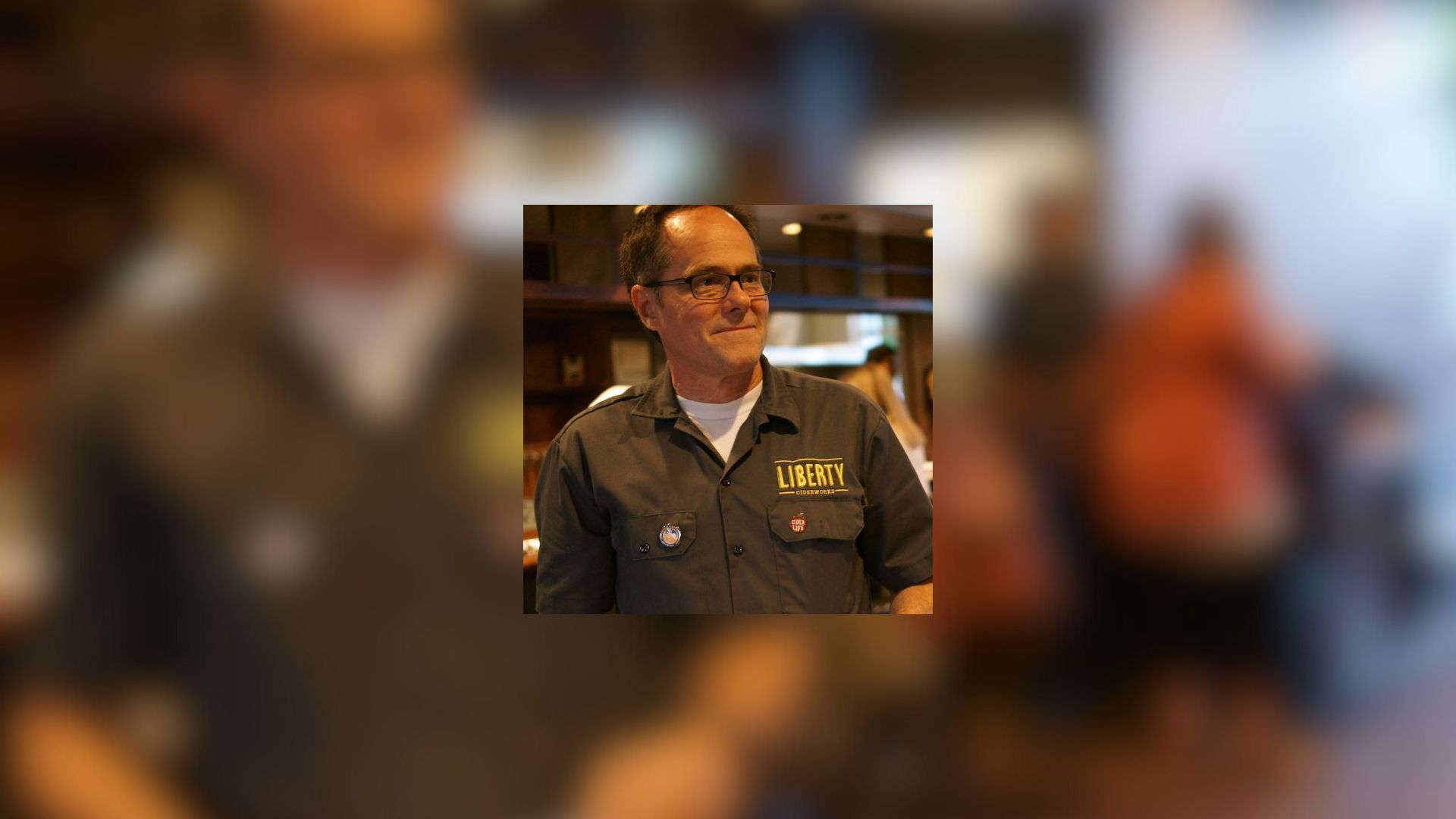
Rick Hastings: Liberty Ciderworks Makers of Fine American Ciders in Spokane Washington
Rick Hastings owner of Liberty Ciderworks is our guest for this episode.
Rick started making cider because some family members were having challenges with Gluten. What started as a hobby quickly became an urban cidery.
Liberty specializes in making cider from Apples grown in the area that thrive in the area.
Liberty Ciderworks Rick Hastings Episode Transcript
I’m gonna find my product, my source by looking at photographs of people in sweatshirts. Welcome to the Exploring Washington State podcast. Here’s your host, Scott Cowan. Welcome back to this episode of the Exploring Washington State Podcast. My guest today is Rick Hastings with Liberty Cider Works in Spokane. Rick, welcome to the show.
Rick Hastings [00:00:42]:
Thank you, Scott. It’s wonderful to be here.
Scott Cowan [00:00:45]:
You say that now.
Rick Hastings [00:00:46]:
No, just.
Scott Cowan [00:00:49]:
Rick. Let’s talk about Rick Hastings. Pre liberty, what’s your backstory?
Rick Hastings [00:00:58]:
I grew up on the west side of Washington State in Skagit Valley. Yeah. And for various reasons, family down there being one of the big reasons. I went to school at the University of Texas in Austin and met my wife in Texas. She’s a native Texan, but I have some growing up history in Texas too. I mean, I think I was seven or eight when we moved to Skagit Valley.
But anyway, degrees in Texas, wife found there, drug her back because I love the Pacific Northwest. By the time we were ready to come back to Seattle, it felt like we were kind of priced out of the market and didn’t want to spend our lives behind a steering wheel commuting 30, 40 or longer minutes per day having grown up.
Rick Hastings [00:01:56]:
There you go. Well, I don’t know about the Spokane, but let’s go check it out.
Scott Cowan [00:02:02]:
Okay. I can relate to this.
Rick Hastings [00:02:05]:
Yeah. I graduated from the University of Texas with a degree in architecture and so came up looking for that kind of job and was kind of enchanted, amazed, frankly, by Spokane and what was intact. I mean, the 60s, they were tearing everything down and creating freeways and they couldn’t urban renewal, quote unquote, faster as fast enough. But Spokane had somehow missed that train.
And there were these beautiful, beautiful old buildings and a river that just jaw dropping river that was flowing right through the heart of downtown with the falls and so many boxes you could check and say, what a wonderful city, but it just almost there. It just had so much potential and so big eyes, idealistic, fresh out of architecture school. Maybe this is a hook. And it was found a good job here and have been honored to be part of this community.
Rick Hastings [00:03:07]:
Since then been involved in many things that I kind of enjoy talking about. In other it’s a longer story, but I’ve had a part and a hand in helping Spokane reorient itself to the river and keeping the falls at the centerpiece of the community. And there’s a long, like I said, a big backstory there, but architecture for quite a while and then the last decade or so in city planning and.
Scott Cowan [00:03:38]:
Urban design, so in architecture, what was your focus?
Rick Hastings [00:03:45]:
When I was at ALSC Architects and I think one other firm, mostly commercial stuff, schools, I helped with a tech company that was growing in Liberty Lake and a few historic remodels in downtown. Some of the buildings that had been sort of laying fallow for a long time and had the chance to repurpose them and create space for new businesses and new investment.
Scott Cowan [00:04:16]:
That’s a simple process, isn’t it? Structural. I used to work for Starbucks Coffee in their corporate offices. And during the Nisqually quake, the building that we were in, which is the old Sears warehouse down in the Soto district, it just kind of split open in ways and they were retrofitting it around us when we went back to work. And I was always shocked at how much effort it took to retrofit 100 some year old building.
They were built with different standards than we have today. Right, okay, well, I think I read somewhere. Well, first off, let me ask you, go back to your wife. How were you able to convince her to leave Texas? Because Austin is a great city.
Scott Cowan [00:05:06]:
I love music, so I have yet to get to Austin and it’s like, I must get to Austin and I must go and watch and hear live music.
Rick Hastings [00:05:20]:
Yeah.
Scott Cowan [00:05:21]:
And then I have this romanticized notion that the barbecue will be just world class and amazing. Okay. How did you convince a Texan to come up to the Pacific Northwest?
Rick Hastings [00:05:36]:
That’s a good question. I don’t know that to this day, I’m not sure I’ve convinced her. We go day to day hanging by a threat. Okay. But when I graduated in 93, believe it or not, Austin was kind of an economic doldrums. There weren’t a lot of good jobs to be had. And the Northwest, on the other hand, was popping. So the job draw was a big part of it.
Rick Hastings [00:06:07]:
But I know when I came up here before we got serious about one another, I came up one day and just drove all around. All my favorite places, mostly in the Skagit Valley at the time, went up to Mount Baker, out to the San Juan, and I just took a zillion photographs and I trotted those back and that was part of my sales pitch to convince her to come up.
It’s an incredible state we live in. There’s so much diversity, everything from rainforest to desert. I’ve grown to really love the Palouse country just south of here and just so much to do and see. And if she was in the mood for flat and desert, we could check that box.
Scott Cowan [00:06:55]:
Okay.
Rick Hastings [00:06:56]:
Hill country. Yeah. And Lord knows we’ve got lots of forest land, so she’s enjoying it for sure.
Scott Cowan [00:07:04]:
What does she miss, though? Does she ever said to you, I miss X. What does she miss, if anything?
Rick Hastings [00:07:11]:
I don’t know. One thing that pops to mind immediately, I think we both miss it is the real dramatic weather in Texas. They get the thunderstorms that just like the finger of God is just coming down on you. It’s exciting as heck. I’ve witnessed, I think, two tornadoes with an eye shot when I could see them coming and going coming out of the clouds in Texas, and the lightning storms are just better than fireworks.
Scott Cowan [00:07:44]:
I’ll take your word for that.
Rick Hastings [00:07:46]:
Yeah, that pops to mind first. But I think she’s kind of a two season girl. She likes a little taste of winter, and then everything else needs to be warm. Whereas in Spokane, you get the full four seasons. It’s never full on fall. It’s kind of a touch of summer and a touch of winter, and it just kind of blends in. And then you have a winter, and yet very long winter and a very long spring, and it’s definitely four seasons here. It’s a bit of a change that way for her, too.
Scott Cowan [00:08:19]:
This last winter was rough. This last winter got to me. Wenatchee was I kind of felt like Jack Nicholson in The Shining for a while. I just never left the house. It was a tough winter for us here this year, and I know you guys got quite a bit of snow, too. You moved to Spokane in 93. The city’s obviously changed a lot in the decade since and for the better. What got you started with cider? What was the impetus for you getting involved in cider?
Rick Hastings [00:09:09]:
Well, I’ve always had hobbies of many stripes and types. One of them happened to be making beer, and I enjoyed doing that. I thought, well, I’ll try again. But my brother and sister in law about that time, both discovered they had celiac disease and so gluten intolerant to an Nth degree. And so the beer and pizza visits we used to have turned into well, what else?
And so we found some imported cider, black thorn, I think it’s called, and some of the imports from the UK. And I think we discovered we like them quite a bit, and those are gluten free. And so I was looking around, and actually, I live now and then right next door to an urban winery, and I worked right next door to another urban winery. And so I knew these folks, and I thought this would be a fun career to have someday.
Rick Hastings [00:10:22]:
But here we are in state of Washington, the Apple State. We’re known worldwide for our apples, and we may have 1101, 200 or more nowadays. Wineries as many breweries, probably. But at the time, twelve years ago or so, we may be maybe I think we’re only a dozen cideries in the entire region. Why why that disconnect when we’re growing such great apples?
I thought, and, you know, maybe I could maybe I could do that as an urban cidery. And so experiments started from trips to the local orchard to have them sell me unpasteurized juice and little small batches in the basement. And the hobby turned into serious passion. And now it’s completely out of control.
Scott Cowan [00:11:18]:
Now it’s out of control. Let me ask you, so when Liberty went commercial, when you flipped the switch from an enthusiast to professional how many cideries were there, do you think, in Washington state at that time?
Rick Hastings [00:11:38]:
I would guess two dozen when we finally started.
Scott Cowan [00:11:42]:
Okay. And how many do you think there.
Rick Hastings [00:11:44]:
Are today in Washington state? I would guess 60.
Scott Cowan [00:11:50]:
Okay. And when you define a cider, you’re talking about somebody who’s just making a cider, not necessarily a winery that’s got making a cider here or there, are you?
Rick Hastings [00:12:01]:
I’m probably including those, but there’s not very many wineries that are also making cider. There are a few breweries that are making cider, but for the most part, the ciders that would make a list are exclusive to cider.
Scott Cowan [00:12:20]:
So there’s been a lot of growth in the number of cideries since liberty went.
Rick Hastings [00:12:31]:
Yeah, it’s really taken off. I think regionally, we’re probably like regionally. I speak of the members of the Northwest Cider Association, which represents British Columbia, Idaho, Montana, Washington, and Oregon. I want to say there’s maybe 150 or so, maybe a little bit more than that. Members. And over and above the members, there are other ciders that just aren’t members. So it’s growing quite quickly now.
Scott Cowan [00:13:01]:
Okay, so if we go back to finding ciders to replace beer and pizza night, you mentioned Blackthorne, I think, was the name that you mentioned. What was it about the cider that you were all finding interesting? What was it?
Rick Hastings [00:13:16]:
Well, for me, it’s an approachable beverage. It’s refreshing, and I appreciated how it could be expressive. You were really tasting the essence of the apple, and it wasn’t sweet. It was dry. It seemed coffable sessionable and just really complemented the food. Whatever we had seemed to have on the table that seemed to go well with it, didn’t clash with it, didn’t demand to be front and center. It was happy to be part of the meal and helped with everything. It was kind of a way to kind of tie the meal together.
Scott Cowan [00:14:01]:
Okay, when you first started making your own at home for fun.
Rick Hastings [00:14:10]:
I always.
Scott Cowan [00:14:11]:
Love to ask mistakes, failures. But when you first started, did everything go smoothly, or did did you was there a learning curve? You’re already a home brewer, so you kind of have some of the familiarity with certain things. How was the first batch of cider? Do you remember?
Rick Hastings [00:14:30]:
I do. In fact, I think I still maybe have a bottle or two down in the basement.
Scott Cowan [00:14:34]:
Oh, my gosh. Okay.
Rick Hastings [00:14:35]:
I don’t think it’s drinkable now, but it’s sort of there gathering dust, and I look upon it from time to time to think in the day.
Scott Cowan [00:14:45]:
Okay.
Rick Hastings [00:14:46]:
No, the first batch went pretty smoothly. I really didn’t have too much trouble. Cider can be incredibly simple to make if you’re using just a commercial yeast and just some juice, and throw that yeast at that juice and make sure you’ve got things relatively clean. Put a cap on it, it’ll take off, and it’ll ferment to dry. And it may not be very interesting, but if you’ve at least dealt with the cleanliness thing and made sure to prep the juice properly, it turns out just fine. And so mine did, too.
I enjoyed it a lot, but I quickly learned that it can be a whole lot better if you start with really good apples. It’s like if you tried to make your first batch of wine with Concord grapes or Thompson seedless grapes.
Rick Hastings [00:15:41]:
Well, yeah, you could have wine and you might enjoy it. It might actually be quite enjoyable for I don’t know. But we know that Merlot grapes and grapes that are grown specifically for wine make a world of difference in what expresses in the glass. And I’ve not knowing it at the outset, but I learned fairly quickly that there are apples that are grown exactly in the same way. They don’t necessarily taste good off the tree, but they’re not supposed to. They’re supposed to be pressed and made into cider, and then they shine. And really, it’s a whole other level when you move to a cider specific apple than, say, Fuji.
Scott Cowan [00:16:29]:
So your first batch, do you remember what apples you used your first time?
Rick Hastings [00:16:34]:
I don’t. I think I went to the there’s a green area in Spokane called Green Bluff where there’s a lot of orchards still up there. It’s kind of an ecotourism kind of place now.
Scott Cowan [00:16:45]:
Right.
Rick Hastings [00:16:46]:
But I’m guessing it was probably Brayburn and I don’t know Fujis and maybe some Granny Smiths throwing in the things that you would pick and eat from a you pick orchard. Right. Hansen’s Orchards, where I got them for.
Scott Cowan [00:17:02]:
The so more like a dessert apple, if you will.
Rick Hastings [00:17:05]:
Absolutely. Yeah. That’s kind of what they’re called dessert apples.
Scott Cowan [00:17:10]:
You quickly learned then that there are better apples for cider. Where did you start sourcing those from? Because those aren’t typically available at your local UPIC.
Rick Hastings [00:17:22]:
No, they’re not. And that’s when I started going hat in hand to the cideries that were open, kind of becoming a cider groupie and showing up at Harvest and going, wow, can I help? I’ll help you with this or help you with that?
Maybe I’ll help for a bottling or can I just buy some extra juice from you? And in that mode, I think the folks I got most of my juice from that really made a huge difference for me was from Snowdrift Cider in East Wenatchee, Peter Ringsrud,
who I think you interviewed him once. Super nice guy, wonderful family. And they were so kind to share five gallons of this and five gallons of that for about two or three years, where I took them back and froze some and a five gallon batch in my basement and sequentially did that and then entered the results in international competitions or national competitions and was getting good results. And so starting out with the help of the Ringsrud’s at Snow Drift.
Scott Cowan [00:18:35]:
Peter is a very nice guy. I sat down with him and talked to him. Our interview that I sat with him was actually next to their tasting room while the tractors are going around working orchard. That was kind of interesting. But his name has popped up with other cider makers, too, as being someone who has been helpful. Okay. So we started off because you’re trying to find something gluten free. You expand that into a little bit more like, this is kind of fun.
Scott Cowan [00:19:11]:
I like doing this. I’m having results with this. When did the idea that, hey, this is a business come to mind?
Rick Hastings [00:19:23]:
Well, I think I mentioned my proximity to urban wineries, and so the seed was kind of planted in my head that it looks I mean, the winery right next door to us behind the brick wall where I’m sitting here, literally is Barrister Winery.
And there are a couple of attorneys. That one gave up his career. He was kind of tired of practicing law and took up wine. But I thought, I don’t know that I want to be behind a computer screen clicking away at a mouse for the rest of my life. At some point, I would like to transition into something like that. When cider came to the picture, it fit really neatly into the mold of an urban beverage company. And so I was always kind of hoping this was the way it would go.
Rick Hastings [00:20:22]:
And as I started out, making in the basement and reading every book I could lay my hands on and talking to cider makers I could speak with, that led to taking coursework from a gentleman named Peter Mitchell, who comes over from the UK at the time, anyway. I don’t think he comes over anymore, but at the time, he came and taught cider making, a week long course in cider making at Cornell in New York state and in Mount Vernon, Washington, as coincidentally, where I grew up.
So I had free room and board there, and I ended up signing up and taking that coursework. And you spend what is $1,000, I think, to take that course at the time you’re taking vacation time off to do it. Yeah. You kind of feel like you’ve made a commitment, and it’s maybe time to start thinking, fisher cut bait on this. That’s kind of how it that was kind of the tipping point when I realized things were pretty darn serious.
Scott Cowan [00:21:28]:
Okay. I’ve never met your wife. I’ve only talked to you just briefly. But has your wife been supportive?
Rick Hastings [00:21:37]:
Yeah, for sure. Skeptical at first.
Scott Cowan [00:21:42]:
Okay.
Rick Hastings [00:21:43]:
But very generous. And letting this passion of mine run its course, and it’s led to really wonderful things. We’ve had many trips, got to know many people. There’s lots of reasons. I think a lot of vocations will do this for you, but cider is definitely one of them. If you can use it as a means to see the world, a set of lenses, as it were, that lead you to meet people that grow your apples or press your apples or they’re also in the industry or that you’re visiting a place in the world that’s famous for apples. I don’t we’ve had some adventures, and she’s been very supportive. Yeah.
Scott Cowan [00:22:27]:
Well, let me ask you this question. So what was it like when you came home and said, I think I want to go take a class in Mount Vernon while I’m on vacation, and it’s going to cost maybe $1,000? Did she look at you like you were crazy, or was she supportive of the idea?
Rick Hastings [00:22:45]:
Supportive of the idea, but only because the topic I mean, think it seemed to be inevitable. You kind of see it coming. Okay.
Scott Cowan [00:22:52]:
By that time, so she just resigned herself and said, all right, go.
Rick Hastings [00:22:57]:
Right. Okay.
Scott Cowan [00:23:00]:
So how did you come up with the name Liberty Ciderworks?
Rick Hastings [00:23:06]:
Well, okay. My business partner at the time, another architect, I think he and I were casting around for names for a good long time, as it turned out. Liberty. There’s an apple called Liberty. It was an apple I was using quite a bit that we were getting from one of the orchards we still work with.
Scott Cowan [00:23:31]:
Okay.
Rick Hastings [00:23:32]:
And so that the apple name was like, okay, maybe it’s an apple name that the cideries adapts to. But then we thought, well, okay, why Liberty? Well, we maybe could build the brand a little bit around. The word liberty seems to have ties to colonial America, Patrick Henry, all that stuff. That happens to be the heyday of cider in North America. So there’s a lot of interesting history that we could latch onto with the name perhaps. So it has maybe a marketing hook. And then I think the final turn was we realized that he and I both worked at the same architecture firm in a building called Liberty. The Liberty Building in downtown Spokane.
Rick Hastings [00:24:24]:
Auntie’s Bookstore is still there, and the architecture firm we worked with at the same time is still there, too. So, like one, two, three. Okay, let’s go.
Scott Cowan [00:24:34]:
There you go.
Rick Hastings [00:24:35]:
Yeah.
Scott Cowan [00:24:36]:
And when you first started, what was your first commercial product? Don’t say cider. What was the first commercial variety you were selling?
Rick Hastings [00:24:53]:
We had maybe three that we kind of got out of the gate with, and one of them comes to mind. First off, it was called New World. It was a blend. And it was a blend that was intended to evoke a cider that was made predominantly with cider apples, but it was a blend that was dessert apples, but blended with crab apples that we were able to get our hands on. And we couldn’t get some of these English or UK or French varietals or not very many of them anyway.
But how do you approximate that reverse is just doing a straight up dessert fruit and adding sugar or adding things to how do you come up with something that’s as interesting or at least in the same ballpark as one that began with dabanette apple, let’s say. And so New World was a blend of, like I said, dessert apples. I think it was Liberty empire macintosh and courtland with Manchurian crab apples.
Rick Hastings [00:25:55]:
Little tiny apple that was just really, really intensely flavored and full of tannins, lots of acidity and maybe 10% blend. It made a world of difference and made that cider taste almost as good as a full tilt cider made with cider specific apples. So that was one of the ones we started with. We also had another one that was limited quantities. We just called it English style, which it was intended to approximate a West Country style cider, which is typical in the southern UK.
We could get a few Dabanets and Chisel jerseys and browns apples and some of those, and it was a blend. And we also had to blend it back with some dessert apples to make it commercially viable. But that was another one that we started out with.
Scott Cowan [00:26:50]:
Okay, when we talked on the phone, and I’m looking at your website over here, and right now I’m looking at a headline that says inspired by there, but made like here. You had mentioned that you take great pride in sourcing your apples locally and you’re using what is available in your area versus importing apples from, say, New York.
Rick Hastings [00:27:16]:
Yeah, for sure.
Scott Cowan [00:27:19]:
When was that decision made and how did that come about?
Rick Hastings [00:27:25]:
Well, I think it could be just a pragmatic decision and on some level, maybe it was. It’s crazy to continue to try and get in our area. I’ll use an example. There’s an apple called Yarlington mill. Love that apple, makes a fantastic cider, one of my favorite ciders in the world, oliver’s cider in the UK uses a lot of yarlington mill, but they are really susceptible to a viral issue called fire blight in our area.
And so it’d just be crazy to try and grow not just yarlington mill, but many other types of apples that are susceptible to fireblind or that maybe really only shine if it’s, say, a marine climate. Spokane is not a marine climate. Spokane is semi arid.
Rick Hastings [00:28:20]:
We have long winters. And so not every apple will thrive here. And I guess you could just try and be insistent on sticking with those apples that, you know, from having drunk cider in the UK. But why try to shoehorn those apples into your area? I think apples are incredibly adaptive and they’re going to be varieties that will just almost grow themselves wherever you are in the world. And so let’s figure out which apples those are that grow beautifully and express our area and express our climate that also happen to be really, really good for cyber.
And, you know, there are many app, there are many varieties that that are just that way. We have to find out the hard way because there’s just not much experience to go around in what grows well in the Palouse. There’s only one or two orchards in that area, and maybe that ever have been.
Rick Hastings [00:29:23]:
It’s wheat country. I mean, it could be and maybe should be apple country too. But anyway, you find out by planting and seeing what happens, maybe you definitely kind of do your research and talk to lots and lots and lots of people before you spend the money to put something in the ground. But but that’s one reason it’s, you know, just being pragmatic.
But then there’s the more lyrical reason to be able to talk about what’s in the glass. This is something that represents an apple or apples that we found to grow beautifully and maybe better than anywhere else that we’ve encountered, maybe better than anywhere else in the world. They seem to belong here. That is a story about us.
Rick Hastings [00:30:14]:
That’s a story that’s unique to us, and it becomes part of a story that our brand tries to express.
Scott Cowan [00:30:23]:
Well. Give me an example of an apple that you feel grows well and maybe better in northeastern Washington.
Rick Hastings [00:30:32]:
Well, too, I’ll mention Macintosh. It’s a dessert apple, but it is also, more properly, I think, classified as an heirloom apple, which means it is at multipurpose. It’s great for cooking and culinary use, but also for cider. It doesn’t have the tannins that we typically associate with a complex cider specific apple, but it tends to the fruity esters that don’t seem to ferment away they’re left in the glass at the end of a fermentation give. It this just an amazing fruitiness and full bodied character to it that belies the fact that it may be very dry. It still tastes sweet somehow and still taste fruity somehow.
Now, a Mac from the East Coast, so I’m told I mean, there’s many cider makers that I have deep respect for won’t even touch a Macintosh because it just doesn’t finish that way in a glass. Now, there are many other places that maybe it does, but the Macintosh apples that grow in the Palouse and in our region, I’ll also mention in Montana, just over the border from us, grow amazing Macintosh apples too, but I found them to be really world class.
Rick Hastings [00:32:05]:
There’s something about the Max, something about this area that Max just seem to love. And so if you look around for the I don’t know. Anyway, they’re amazing. The Macs are just better than anything I’ve encountered anywhere. The other one that I’ll bring up is golden russet. That’s an American cider apple, and it grows well in other parts of the country too. But I was just at a conference in Virginia, and I was able to taste various golden russet apples from over there, and you could tell that it was golden russet. You’re swirling at the glass that smells like a golden russet.
Rick Hastings [00:32:51]:
Yeah, I’m getting some golden russet character and flavor, but it’s just dialed back. It’s just not as acute, it’s just not as wonderful as the golden russets we are able to get and grow here. Ours almost have to be blended back because they are so over the top. The characteristics are almost too much, but that’s the flavor in the glass.
But the golden russets that are grown for us by one of our partner, Richards Topcliffe in Prosser, that’s wine country, and I don’t know that anyone’s really thought to grow apples in wine. Well, with sort of that mindset, and that’s the way he does. In fact, all our orchards do that. They’re not growing apples to ever be sold on the grocery store shelf or to be wholesaled out, even when they might be able to.
Rick Hastings [00:33:52]:
They’re growing them like wine grapes. They’re not trying to get them big, not trying to get them pretty, not trying to get them to march to a certain tune. They’re not picking them early. But his golden russets come with sugar levels that are freak. They’re just off the charts. The sugar levels we get in the golden russets from Bill at Topcliffe would yield, and typically do yield something in the neighborhood of twelve and a half percent alcohol. With residual sugar. It’s not like the yeast just gives up that we use the yeast just kind of stops working, and we’re left with a nicely balanced, some residual sugar and still almost too much alcohol.
Rick Hastings [00:34:35]:
And it’s owing to our climate that’s owing to the amount of sunshine we get and the heat cycles. Cold at night, warm in the day, cold at night, warm in the day, those things help the trees produce sugar. And so it’s kind of exciting to be able to discover what apples can do in our area if you’re growing them deliberately for cider and not for the grocery store.
Scott Cowan [00:35:04]:
I want to confirm something. Liberty Cider works. You do not have an orchard where you’re raising apples. Correct. You source all your apples?
Rick Hastings [00:35:13]:
Yes.
Scott Cowan [00:35:14]:
Okay.
Rick Hastings [00:35:17]:
I hope someday to have my own orchard, but right now I’m really glad I don’t, because it is a full time job and then some just making cider and running business to have an orchard to have to worry about, too. My hats off to any and all that do both.
Scott Cowan [00:35:37]:
So through the years, you jokingly said earlier on you were a cider groupie, and you go around and offer to help, and in return for an opportunity to take some apples back or some juice back with you. How did you go about developing the relationships with the orchards? I mean, the same sort of thing, literally going and knocking on the door of these people, or did you ask them to plant trees that would meet your needs or how did we get to where we are today?
Rick Hastings [00:36:08]:
Well, so far it’s been kismet. The orchard we work with and get most of our apples from is Bishop’s Orchard in Garfield, Washington. Steve and Sally Bishop. As it turned out, both took the Peter Mitchell class, because I think I know at one point they wanted to make hard cider as well, and they’re the Orchardists, but they thought, well, we’ve got all these apples, let’s make cider, too.
They ended up taking the Peter Mitchell class in Cornell, and I had finished my coursework here in Mount Vernon and was, I think, working on my database and all the people that I knew had met. And so who took the class at Cornell? And I think I stumbled upon a slideshow of the students at the Cornell class, and there was this one guy sitting in the photograph. There’s this one guy with his sweatshirt on that says, Bishop’s Orchard, Garfield Washington on it. And so I was just that chance photograph that I happened to see and was attentive enough to see what was on a sweatshirt.
Rick Hastings [00:37:24]:
And then google. Google. Phone call. Phone call. You don’t know me. But so it began. Yeah.
Scott Cowan [00:37:32]:
Okay, what apples are they raising or growing? Raising.
Rick Hastings [00:37:37]:
Well, so they’re the ones that provide our Macintosh apples. We’re not using too many of their dessert apples anymore. I mentioned Courtland and Liberty and some others, too, but they still grow those. But we’re kind of using just the max.
But they also have most of our we call them English apples, but they’re cider specific apples. We get all of most of those, I should say, from the Bishop’s Orchard, too. So they have a section of the orchard that’s set aside just for the apples they grow for us. That include Dabanette and Kingston, Black and Chisel, Jersey and Brown, Zapple and Philip Barrel, and I’m sure there’s three or four others that I’m missing, but you.
Scott Cowan [00:38:27]:
Get the gist of it, right? So it was just random luck, if you will. Yeah, a photograph with a sweatshirt on.
Rick Hastings [00:38:35]:
Right.
Scott Cowan [00:38:35]:
That’s not something you can put into a business plan. I’m going to find my product, my source by looking at photographs of people in sweatshirts. You sat down with your banker and said, hey, this is my business plan, and they’re going to throw you out. I mean, it’s just over.
Rick Hastings [00:38:49]:
The conversation is dead, right? I mentioned Top Cliff Farms in Prosser. They’re another big supplier of ours. Bill Howell is the Orchard, astaire he and lynette he, too, I think, wanted to be a cider maker, and he was actually in my Peter Mitchell class.
There were two of them, actually, Peter Mitchell classes, one and two, but he was in the second one, and so I got to know him a little bit there. And so when we discovered when he discovered, I think, that he didn’t really want to get into the cider biz either, it was an easy thing to say, look, we’ve got some great apples going here. How about Liberty just buys them from you? And so that’s another big source, and so it’s just luck. Okay. We would have hunted people down, I think, regardless.
Rick Hastings [00:39:39]:
But I was really fortunate. We’ve been incredibly fortunate to just have found people that already had these amazing apples in the ground in a mindset that was attuned to cider and not really focused on yield pounds per acre how much can I get on this? In the wholesale market? And there are these troublesome dudes that show up, want to buy apples for us to use cider to use for cider? No. These people already are already sympathetic to and appreciative of what we’re trying to do.
Scott Cowan [00:40:18]:
I’m looking on your website at your you have, like, a graph. I’m looking at porter’s perfection, and you have a graph, like a tasting or like, a flavor wheel maybe, or.
Rick Hastings [00:40:39]:
I.
Scott Cowan [00:40:40]:
Don’T know that I’ve ever seen anybody just display their product like this. I’m a little awkward here in this because I’m looking at this going, wow, this is really quite interesting. How did you determine to start doing displaying your I know this is bad radio, if you will, but let me just read this. So what I’m looking at is your porter’s perfection 2.22. You give a brief description of what it is. Then you describe the vintage, the number of volume that you’ve made, how you’ve conditioned it, the varietals used origin process notes, and then you have this chart. Walk me through that, please.
Rick Hastings [00:41:32]:
Well, cider is so new to most people. It’s getting less new. I mean, people are getting used to the notion of it, but there’s still a big learning curve ahead, and we’ve always thought of our tasting room, and part of our mission is to educate people about cider in whatever way we can. And there’s one way, I think, is to give people information about what we’ve done and how we’ve done it and what’s in it and what the process was.
What’s the story behind it? How did we ferment it? Did it spend time in a barrel? Yes or no? How much time? Tell me about what’s in this glass here. What about those apples? What’s a dabanette, right? And so that kind of information is just always useful and compelling to a lot of folks. And as they become, as they transition from newbies to cider heads, then they’re they’re they’re really appreciative of that information. So, you know, I’m I’m learning about all this myself as we go through, learning about the charms and foliables, I suppose, of different apples.
Rick Hastings [00:42:54]:
We’re on this journey together. So for our club and for our special ciders, I think all our ciders, we have spider charts on, but especially, I think, starting out with the club, we wanted to give people a takeaway with their quarterly trio of bottles that went into that kind of detail. And so, yes, that chart that you’re talking about is just one way of, I guess, helping record and document what typically presents in the glass.
Of course, it’s my palette. It may be my wife, Charlotte’s Palate. Maybe it’s one of my partners when we get around and talk about these things. What are you tasting? But I think it opens the door to appreciating what cider is and can be by at least touching on some of the big categories of flavor and or aromatic experiences you’re likely to have. Is it fruity? Well, okay.
Rick Hastings [00:43:54]:
Yes, but what kind of fruit? Is it stone fruit? Is it like a palm fruit? More or is it tropical? Some of these broad categories are really helpful in that, yes, you can taste in some ciders. It’s a tropical note. Okay, we start there. What kind of tropical is it? Bananas. These various categories of fruit that then as you’re sipping and swirling and savoring this thing, you begin to tease out these specifics that otherwise may not just leap off your tongue. We’re not all sommelier’s, and so it gives you a chance to, again, enjoy what you’ve got. If you want to take the time and sort of get nerdy with it.
I encourage people to go through this exercise of kind of rating a one through five for all of these different categories that we have on our little wheel.
Rick Hastings [00:44:47]:
And then you connect the dots and make a little spider chart. It helps document what we’ve done, and we can look back on five or ten years from now and see maybe if the dabinet is changing a bit or if we’re kind of finding out what it is dabanettes will and always seem to express in our area with our dabanets, with our process.
Scott Cowan [00:45:12]:
Okay, so I’m on your shopping cart now, and I’m saying this tongue in cheek, firmly planted. I’m not seeing any infused with jalapeño or these are more fine ciders versus I don’t know what’s the other word I want to use, but versus help me out here. I’m struggling, but mass market.
Rick Hastings [00:45:50]:
Commodity.
Scott Cowan [00:45:51]:
Commodity.
Rick Hastings [00:45:52]:
Okay. All right.
Scott Cowan [00:45:56]:
And I’m looking through here, and you are presenting it in a manner very similar to me, how wine is presented. When I look at a wine, if I’m online looking at wine, and you’ve got a number of varieties here.
Rick Hastings [00:46:12]:
We.
Scott Cowan [00:46:12]:
Don’T have time to talk about them all. But what can you highlight? What are you really exceptionally proud of right now that’s available to the public?
Rick Hastings [00:46:23]:
They’re all like my children. I love them all.
Scott Cowan [00:46:27]:
I know it depends on what I’m.
Rick Hastings [00:46:30]:
In the mood for, what I’ll reach for, but I’m really enjoying the browns apple right now. It’s an English side of a ryle that seems to really just almost just thrives in the Palouse. It is not as sharp and acidic as the browns are in other parts of the world. It’s a softer they’re usually used to blend with they’re called the bitter sharp for a reason. They’ve got a lot of tannins. So the bitter, that’s where the word bitter comes. So it’s what it relates to. And then the sharp is the malic acid.
Rick Hastings [00:47:10]:
This one is not that sharp. And it does have a lovely tannin level character and a really intense fruitiness. So that’s one, that’s one also where the native yeast that we use, which is another thing that I think sets us apart from 95% of the cideries in the region, not the world, because all cideries in France and Spain, most cideries in the UK use natural yeast, too, but that’s what we do. And so this natural yeast that’s on the apples, that’s part of the microculture in the orchard that comes to our place in the juice and then ferments the cider just seems to just marry incredibly well with this apple.
There’s just a lovely amount of residual sugar in that browns that helps balance out some of that acidity, gives it an amazing fruitiness. But there’s also a depth of character, it’s just not a one note, several notes going on. It’s a lovely thing in the glass and relatively low alcohol, so it’s quavable and enjoyable. That’s one, for sure.
Rick Hastings [00:48:17]:
Kingston black is another one. That’s one we won a Good Food award with just what’s, this year? We entered it last year. But that’s an incredible honor. That’s a national award. And it’s not just that their criteria include a lot of specific questioning to ensure that the kind of apples that we’re growing are sustainable, that we have good practices that are sort of a slow food movement ethos.
And so we’ve been able to aver to those things and both in the way that our apples are grown and the way they’re responsibly managed and all of that stuff, and then you get something wonderful on the glass. Kingston Black is another UK cider variety. You would ask ten cider makers what their favorite cider apple is.
Rick Hastings [00:49:09]:
I think nine of them say Kingston Black. And so this one turned.
Scott Cowan [00:49:13]:
That’s a question I was going to ask you. I was going to ask you, I’m going to make you pick one apple, the only apple you can work with for the rest of your career. I know it’s a terrible question for you, I know it, but I just started asking this one, so I haven’t asked it to everybody, but I’m going to make you pick one apple you can work with the rest of your career.
Rick Hastings [00:49:32]:
God, that’s cruel.
Scott Cowan [00:49:36]:
I know.
Rick Hastings [00:49:42]:
I don’t know. Kingston Black is so hard to grow. I think I’d be pulling my hair out just trying to get those apples on a regular basis. So as much as I love that apple, I’d set that one aside. I would say, Liberty, our approach is to try and coax the very best out of American apples that we can. And so maybe I’ll be bold and say I’ll take off those UK cider varietals that I love and pick an American apple.
And then if I narrow it down that way, I’m left with two golden russet, which I think is just amazing. And then Wix and Crab Apple, which I was sort of on the fence about for a long time until we got our hands on the ones that Bill Howell grows.
Rick Hastings [00:50:36]:
And we’re about to bottle that. In fact, after I hang up, I’m going to go bottle a big tank of it. It is just phenomenal, and I think it’s super approachable. And it’s an American apple that is cultivated and created by a gentleman named Albert Etcher. I think was first brought into the world in the 30s in Northern California. But since I don’t actually have to hold to this promise, I’ll say Wix and Crab Apple.
Scott Cowan [00:51:08]:
Okay. All right. And I know that that was a terrible question, but it’s still kind of fun to watch people squirm as they work it through. I’m looking at your Raven Oak, and another guest that we’d had on previously was Dry Fly Distilling. And so I see that you’re working with them as far as their barrels go. Have you been to their new distillery?
Rick Hastings [00:51:36]:
Just once. Yeah, we went picked up some barrels there recently. It’s pretty impressive.
Scott Cowan [00:51:44]:
It’s kind of jaw dropping when you’re like, oh, my gosh. So what is the barrel? Help me out here. So when you age this in a barrel, what are you noticing comes out? What are you extracting from the wood? How does that help with the finish?
Rick Hastings [00:51:58]:
Well, for that one product, we’re really trying to marry the character of what had been in the barrel before. I e whiskey with a blend of apples that seem to really harmonize with that. And so in that case, we are definitely bringing that whiskey character onto the stage. And again, finding an apple that just seems to work well with that.
And that’s what Raven Oak is. And so the whiskey barrels we get from Dry Fly for that particular product, the first time that cider gets that and spends three, six months in there, we’re trying to get that whiskey flavor developed, or that marriage of those flavors developed. Subsequently, though, when that barrel has been used once, we’ll use it again and again and again, and it becomes more and more neutral. And so we end up with a bunch of barrels that started out life as Dry Fly whiskey barrels, but now they’re neutral French oak.
Rick Hastings [00:53:03]:
And we’ll age many of our ciders in those. Not trying to draw whiskey notes out of, but really trying to capitalize on the things that you can get when you put a fermented beverage in oak, which is some oakiness, yes, but also micro oxygenation. That happens. That helps marry the flavors and smooths the product out over time.
Those things that you do with wine ciders really just it is just wine made with apples. The exact same methodology and at least the way we approach it, the same sort of mindset and intent, trying to coax the most flavor out of those things that have been doted on by these orchardists that are just their passion. It’s their love. It’s the reason they get up at 02:00 A.m.
Rick Hastings [00:53:52]:
In the, at night to try and check on these apples to make sure they’re going to be okay because maybe there’s a cold snap coming through. They put as much love and care into these things as we put into the cider. And we’ve got to honor that.
Scott Cowan [00:54:07]:
Your tasting room, when is it open? Let’s talk about that for a little bit.
Rick Hastings [00:54:14]:
Well, we used to be Wednesday through Sunday. We’re Thursday through Sunday. Now. Post COVID, we might pop back open on Wednesday soon. But it’s Thursday, Friday, Saturday, Sunday evenings from 04:00 p.m to 09:00 p.m and Sunday. I’m in the tap room on Sunday from two to six.
Scott Cowan [00:54:35]:
Okay.
Rick Hastings [00:54:36]:
Yeah. People pop in and we’ve got lots and lots of regulars, lots and off people that pop through that maybe here for a convention from the Midwest. What do they think of when they think of Washington State apples? Is there a cider nearby? Well, the Google map sheds Liberties a couple of blocks away, so we get a lot of those folks too.
Scott Cowan [00:54:59]:
Yeah. Okay. Before we hit record, you have some exciting news, I guess. I don’t know. It’s exciting. You’re closing on a building.
Rick Hastings [00:55:13]:
Yeah, it’s very exciting for us. It’s like working on you’re working on a ship.
Scott Cowan [00:55:21]:
Okay.
Rick Hastings [00:55:23]:
Everything’s floor to ceiling everywhere you look. And that’s the way we’ve had to operate for way too long. But we are closing on a building and a property next week not too far from where we’re at. And it’s like three times the size and about the same lease rate. So, yeah, we get to expand. I think we’re working towards about tripling our output in the next year or two. So new Fermenters, new equipment, and a whole lot of stuff that’s happening. And I get to take my degree back out off the shelf and design the space and that’s going to be a lot of fun.
Rick Hastings [00:56:12]:
But it’s going to be a busy, busy year.
Scott Cowan [00:56:16]:
Well, it’s easy to build out a building. It’s not very work. You just buy the stuff, throw it in, and it works, right?
Rick Hastings [00:56:26]:
Yeah, we’re lucky. It’s an entity created to purchase the building. That includes my former partner who’s, like, as I mentioned, he’s an architect. He’s still at the helm of his firm. It’s a design build, architecture firm. And we were able to secure this building because they’re going to take the second floor of the building where we’re going to occupy. And so they’re actually going to do a lot of the heavy lifting. You’re going to be the contractor and they’ve got people that can in this day and age, you want to get anything done.
Rick Hastings [00:57:04]:
It’s going to take two or three times the amount of time and two or three times the amount of money. I don’t know about the money. Part, but at least the schedule part we’re going to be able to attack because we have insiders going to help us build this thing out fairly quickly. Yeah, and so that’s been a good thing, too. And we’ll have that little bit of dynamic with little business above us.
Scott Cowan [00:57:27]:
So when do you optimistically, hope to flip the switch and be open in your new facility?
Rick Hastings [00:57:36]:
Optimistically, December probably as hard of a.
Scott Cowan [00:57:38]:
Question as asking what apple you can pick with, but do you have an optimistic timeline?
Rick Hastings [00:57:45]:
Yeah, our target is January of next year, so we have about six months or so. Seven months.
Scott Cowan [00:57:56]:
That’s a pretty aggressive timeline.
Rick Hastings [00:57:57]:
It really is. I didn’t think it was likely to happen, but the loan entity gave us six months. And then after you kind of recover from hearing that, you think, well, we do have this dynamic where the design build firm is definitely motivated to help us get this done quickly. They’re going to pull strings and you call in favors and get people to come in and finish it out. We’ll see. It may take longer, probably will. But you said optimistically, so I said January. All right.
Scott Cowan [00:58:40]:
Because you’ve got all this free time on your hands, what do you and your wife, what do you guys like to do for fun and entertainment around the Spokane area?
Rick Hastings [00:58:49]:
Well, we are outdoorsy folks, and one of the things I love about Spokane is its proximity to a lot of good recreational stuff. The largest state park in our state is Mount Spokane.
That’s not far away and there’s wonderful hiking to be had there. But the second largest state park in the state, is it abuts downtown or actually it becomes kind of a green belt extension of downtown. It’s Riverside State Park. And that was one of the reasons that was a deal break that closed the deal for me when I came to visit Spokane. Cool community. I’m an avid mountain biker, and I was able to pop out of my hotel room, ride maybe two or three blocks on asphalt, found a trail that took me to, from downtown to Riverside State Park, which was just, it’s a really, really beautiful park with trails everywhere.
Rick Hastings [00:59:52]:
And I was, I stopped, I was up on a hilltop. I looked back towards downtown and there’s these towers, this cityscape set in this bowl of green on the trees, trees, tree, trees. And then just beyond those trees there is downtown. And it’s just amazing view. And I thought, you’re not going to get this many places. This is something special. I had a little bit of that in Austin, but not like here. And so we’re outdoorsy folk.
Rick Hastings [01:00:31]:
We like to ride the Centennial trail and mountain bike. My wife’s an avid road biker. Amazing road biking to be had south of here, all around, frankly. But as many country lanes as we have, there’s plenty of places to just kind of get off and pedal, we run. In fact, I’m going to be doing my very first marathon in about three weeks.
Scott Cowan [01:00:57]:
Which one? Which marathon?
Rick Hastings [01:00:58]:
Called the Windermere Marathon.
Scott Cowan [01:01:02]:
Where is this held out?
Rick Hastings [01:01:03]:
It’s held in Spokane. It starts in Liberty Lake, just east of here near the Idaho border. And it’s a one way. You start out there and you run back towards downtown. You finish in downtown and it just happens to be 26 miles. .2.
Scott Cowan [01:01:18]:
Yeah, just happens to be.
Rick Hastings [01:01:21]:
But it’s a gorgeous course because very little of it happens along arterials or roadways at all. It happens along the Centennial Trail, which is a non motorized route. It’s like 70 miles long total. Starts in Idaho and then goes up past Spokane towards the confluence of the Spokane of Columbia. But it’s this wonderfully quiet, paved trail that follows the course of the Spokane River. So the net elevation gain is actually a negative. So you’re kind of running a little bit downhill the whole way. And so it makes it that was kind of I thought, you know, maybe if I’m going to do a marathon, at least I won’t have to run uphill much.
Rick Hastings [01:02:11]:
Yeah, that’s another thing we do.
Scott Cowan [01:02:14]:
Does your wife run?
Rick Hastings [01:02:16]:
She does, yeah.
Scott Cowan [01:02:19]:
Is she going to do the marathon?
Rick Hastings [01:02:20]:
No, she’s not this time. She did the Portland Marathon a few years ago.
Scott Cowan [01:02:28]:
She’s already done a marathon.
Rick Hastings [01:02:29]:
She’s done one and I’ve never done one. She was always like felt like there was something over my head.
Scott Cowan [01:02:38]:
What what is the furthest you’ve ever run so far?
Rick Hastings [01:02:43]:
I did 18 miles a couple weeks ago. That was the first time ever run? Yeah. Okay, so we’ll see. I don’t know.
Scott Cowan [01:02:53]:
All right, well, I applaud you. I’m tired just hearing you talk about running, so I’m just like, okay. Always ask my guests, are you a coffee drinker?
Rick Hastings [01:03:07]:
I am, definitely. In fact, I get carried away with that, too.
Scott Cowan [01:03:13]:
Do you?
Rick Hastings [01:03:14]:
Yes.
Scott Cowan [01:03:16]:
Let’s explore that for a second then. What do you mean by you get carried away with that?
Rick Hastings [01:03:20]:
Well, it was one of my pandemic hobbies that I picked up was making coffee. We’d always had this espresso machine in the house. I was like, well, it’s just decent. But it’s not like cafe coffee. But I don’t know how you I think it was YouTube. I think I discovered some videos. Like James Hoffman. Do you know him? I don’t know that if you don’t look him up.
Rick Hastings [01:03:42]:
He was the world champion barista a few years back. Anyway, I discovered lever coffee machines, so I ended up buying a la pavoni. Classic Italian, old school. This is what we mean when we’re talking about pulling shots. You have a lever, and so that pushes the hot water through the bed of coffee. And it’s taken a while to learn how to use the darn thing and to get good at it, but I think I’m there. So my wife and I have a latte, and I’m learning how to do my latte art. I’m getting decent at that too.
Scott Cowan [01:04:23]:
Okay.
Rick Hastings [01:04:23]:
So we have this every morning, and we make sure and buy beans from our local roaster, our favorite local roaster. Roast house.
Scott Cowan [01:04:35]:
Okay.
Rick Hastings [01:04:35]:
Hats off to her.
Scott Cowan [01:04:42]:
I know. Roast house. They’re wonderful folks. What coffee from them are you buying? What do you like from them?
Rick Hastings [01:04:48]:
You know, it’s a blend. This is the part of coffee I’m not fluent in yet. What kind of beans? I can’t tell you. But is the blend called epic? I think that we like the best espresso.
Scott Cowan [01:05:00]:
Okay. All right. Yeah. Have you been to their First Avenue coffee?
Rick Hastings [01:05:06]:
I have, yeah. It’s just right down the street from where we live. We live in downtown.
Scott Cowan [01:05:09]:
Okay. So that coffee bar, the first time I walked in there, I started looking at the equipment, and in my head, I started adding up the dollars, and I’m like, I don’t know that I’ve seen this much coffee equipment in one coffee shop ever.
Rick Hastings [01:05:27]:
Right.
Scott Cowan [01:05:32]:
I love their pour over station where they have all the grinders will grind for you around the spot. I love going to Spokane for that reason. Right there. First Avenue coffee.
Rick Hastings [01:05:42]:
Yeah, it’s awesome. They have a coffee flavor wheel, a big poster of one in the back. And so coffee nerds go in. I’m sure they do something similar, quite similar to what we do with cider. Something else to love and appreciate. And if you want to get nerdy about, you sure can, but they do. I appreciate that about Deborah. She’s serious about her coffee and tries to her ethos about coffee is real similar to our intended approach with cider.
Scott Cowan [01:06:15]:
Okay, so next time I come to Spokane, where should I go for lunch?
Rick Hastings [01:06:23]:
You should go to Charlotte, the ceviche place.
Scott Cowan [01:06:32]:
Oh, Chad White’s.
Rick Hastings [01:06:34]:
Chad white’s place. That for sure. Zona Blanca.
Scott Cowan [01:06:37]:
I have not tried that.
Rick Hastings [01:06:38]:
Zona blanca your name? Zona banca? Just Blanca. Blanca out of my head, but yeah, Zona blanca. Chad White. He’s one of Spokane’s. One of more and more. Really? Kind of, I’d say, star chefs that have taken up residence here. He was on Top Chef contestant and did quite well. But besides that, star power.
Rick Hastings [01:07:02]:
He’s got a couple of three restaurants, and I think the best one is his cerviche bar called Zona Blanca.
Scott Cowan [01:07:08]:
He has a barbecue place? He has a barbecue place, and he has the lobster roll place. And he was a guest on the show before. He was very nice guy.
Rick Hastings [01:07:15]:
Yeah. I didn’t know he was a guest. Yeah.
Scott Cowan [01:07:18]:
I keep meaning to go there and to try it, and every time I’ve gone to Spokane since then, something else has popped up, and it slipped out of my brain, because Zona blanca is something I’ve been looking forward to trying. It wasn’t opened quite when we interviewed him. It was going to be open.
Rick Hastings [01:07:38]:
Yeah, it’s open now. So yeah. You will not be disappointed. A lot of times, he’s behind the counter, and you can kind of wave Evan if you want. You’ve met him. You can do that now. But shoot, that’s the whole deal. You can get that plate, and almost always you want to take a picture.
Rick Hastings [01:07:57]:
As rude as it is, you want to take a picture of it because it’s just presented so well. It’s just art on a plate, and then you taste it. It’s just over the moon. Good. So that would be a good, solid choice for you, Scott.
Scott Cowan [01:08:12]:
Okay. Get out of jail free question. What? Didn’t I ask you that? I should have.
Rick Hastings [01:08:20]:
I think I kind of forced my way into that discussion about the wild yeast. I’m so proud of that. I really enjoy using native yeast with our products. I think that’s sort of a natural extension of trying to express the apple. We’re expressing the yeast, various types of yeast that have proven themselves to be durable and survive on those apples in that orchard, and then in turn, are doing their part to create the cider. And that gives our cider flavor that’s even beyond the apple, is unique to us. Yeast evolves, and yeast, they’re definitely strains you can purchase off the shelf. But ours is a hybrid.
Rick Hastings [01:09:09]:
It’s something that’s evolved here, and it gives you kind of a progressive if done well, it gives you a nice, progressive, character filled complement to what the apple provides. It adds personality to a cider.
It helps tell a story on your palate if you’re sensitive to it, and it’s something you can talk about if you want to, but you can just plain enjoy it. Okay, so, yeah, I’m glad you asked that, because I did want to hit on that. I think that’s important. I think that’s one of the things that I noted when I was in France or in the UK.
I have yet to make it to Spain, but you can really tell area to area how there’s a characteristic to the cider there that’s unique to Camber or different parts of France that are really owing or they’re owing largely to that microflora that is resident there, too. So it’s kind of amazing thing that I don’t know a lot about yet, but I sure do appreciate it.
Scott Cowan [01:10:26]:
All right. Where can people find out more about Liberty Cider works?
Rick Hastings [01:10:32]:
Our website tells a lot of the story, what we intend and what we offer. So I would go there. Shoot. If you happen to be in Spokane, do drop by. We see our tasting room as point of cider. Evangelism. It’s a tasting room, yeah, but it’s also a place for us to get people excited and passionate about this beverage. And so if you want to have your ear talked off, if you’ve got questions and I’m there, you can have it all.
Rick Hastings [01:11:08]:
And most of our staff is just almost as conversant insider, and they can. Tell you all you possibly want to know and get you on the path to becoming a Cider head yourself.
Scott Cowan [01:11:21]:
From a distribution standpoint for our audience, that’s maybe in Western Washington is liberty carried anywhere in Western Washington, it is.
Rick Hastings [01:11:31]:
We do self distribution for business reasons, and so that limits us a little bit. But I will say there’s a bunch of really fine bottle shops that I won’t list off here that have us. But I think the easiest place for a Western Washington person to find us would be at PCC markets. I think there are 816, 17 of those scattered around the Metro, and we’re on the shelf there.
Scott Cowan [01:12:00]:
Okay.
Rick Hastings [01:12:01]:
Yeah. You’ll find, I think, three or four of our products there. And so you can get try one. I think you’ll be very happy. And then you’ll hopefully try more of this stuff we make because we make a ridiculous number of Ciders. I don’t know of anyone that’s doing as many single varietals as we are.
Scott Cowan [01:12:22]:
Okay.
Rick Hastings [01:12:23]:
And so you can come on the adventure with us.
Scott Cowan [01:12:27]:
All right, well, Rick, thank you so much for taking the time to chat with me today. I enjoyed myself, and I wish you all the success in your marathon.
Rick Hastings [01:12:35]:
Thank you.
Scott Cowan [01:12:38]:
Just completing it will be do you have a time? Are you aiming for a time?
Rick Hastings [01:12:46]:
Yeah, I’d like to be at or under 4 hours, which I think is a nine minute pace per mile.
Scott Cowan [01:12:54]:
Okay.
Rick Hastings [01:12:55]:
I think I can pull that off, but I’ve never run 26. I mean, I felt pretty good at my 18 that I could keep going, but I can’t believe people run 26, but it would hopefully be me, but that’s my target.
Scott Cowan [01:13:07]:
Okay. Okay, well, best of luck on that. And again, thank you for taking the time to be here today.
Rick Hastings [01:13:12]:
Thanks for inviting me, Scott. This has been a real pleasure.
Scott Cowan [01:13:25]:
Join us next time for another episode of the Exploring Washington State podcast.
This article is part of our complete Spokane Washington guide on Explore Washington State.
Before you go
That is the whole idea behind the Explore Washington State Card. Free to carry, with a little something waiting at participating places when you visit. Your zip code is a vote for which towns we sign up next, and our weekly Washington travel newsletter starts landing right away.
Get your free card- About the Author
- Latest Posts

The Exploring Washington State Podcast is your go-to source for discovering the diverse wonders of the Evergreen State. Whether you’re seeking inspiration for your next adventure, looking to savor local cuisine, or eager to learn about the businesses and artists that call Washington home, this podcast has something for everyone. Join us as we showcase the splendor of Washington State, reminding you that “there is always more to explore!”