Campfire Stories Tales from America’s National Parks and Trails
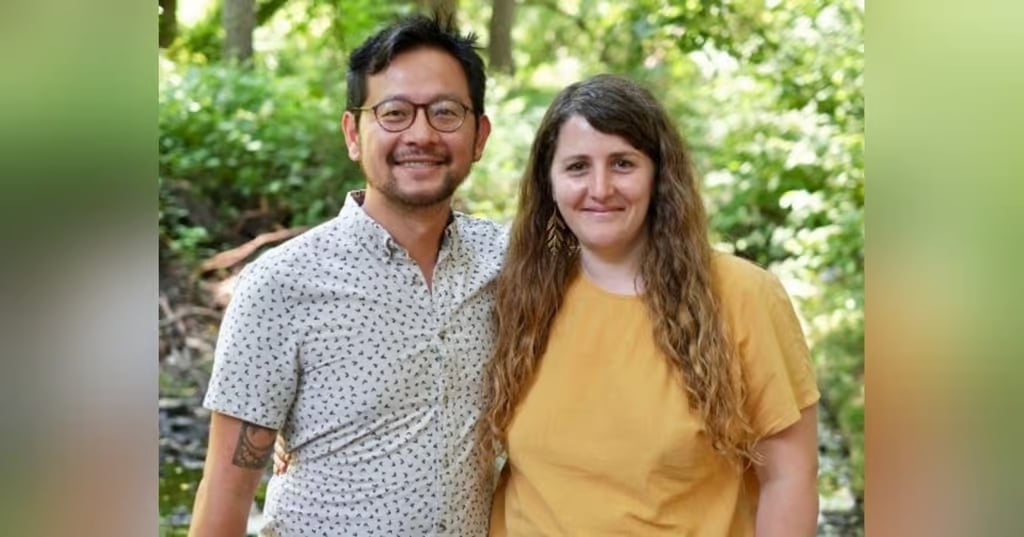
On this episode of Exploring Washington State, host Scott Cowan is joined by guests Ilyssa Kyu and Dave Kyu. They discuss their experiences with campfire storytelling and their book project centered around national parks.
Campfire Stories Episode Transcript
Scott Cowan [00:00:05]:
Hello, friends, and welcome to the Exploring Washington State Podcast. My name is Scott Cowan, and I’m the host of the show. Each episode, I have a conversation with an interesting guest who is living in or from Washington State. These are casual conversations with real and interesting people. I think you’re going to like the show. So let’s jump right in with today’s guest. So I am sitting down today. It’s early for me, but my guests are on the East Coast, and so we’re cooperating. But Dave and Alyssa, welcome. You are the editors of the Campfire Stories, and I’m going to read the subheading, which is Tales from America’s National Parks and Trails.
Ilyssa Kyu [00:00:43]:
Yes, thanks for having yeah, thank you.
Scott Cowan [00:00:46]:
So my question is, how did we get here?
Ilyssa Kyu [00:00:55]:
Well, it goes back to, I think 2015, 2016. Dave and I, I think, were in a little bit of what I at the time was calling a quarter life crisis. I think at that point in know, we went to college, we got the jobs, we were kind of just in a little bit of a rut and wanted something different. And at the time, we were exploring the idea of perhaps moving actually to Portland, Oregon, and also kind of kicking around different ideas of how we could maybe travel more or do something different with our careers or our creative practices. Dave is an artist, a designer. So we were kind of looking for something different. And I think also at that point in time, we were getting into camping. We didn’t grow up camping or I played in the outdoors, like all day, every day when I was a kid. But as a teenager, as a young adult, we kind of re embraced that and accidentally ended up in Acadia National Park after there was a trash strike in Toronto and everything was like the city was shut down. We couldn’t do we just we fell in love with camping in Acadia National Park, even though we did every single thing. We slept on the floor of our tent with no sleeping pads, and we learned very quickly that granite sucks the heat right out of you. So it was a very cold camping trip, but we loved it. And so when we were kind of thinking about what we wanted to do, dave was like, hey, what about that idea you had been kicking around of creating a campfire story collection? And what if we just committed hardcore to doing it? We might have even been hiking in Big Sur or in Olympic at that time. And I thought it was so wild and not typical of Dave to throw out an idea like that. But it happened to be the centennial year coming up of the National Park Service and looking for some kind of structure for the book. We were like, it would be cool to create a collection of campfire stories around national parks.
Dave Kyu [00:03:31]:
That’s giving me too much credit because my first suggestion was like, we should sell our house. We should live nowhere and just go RV. This was five or six years before Van life really became a thing.
Scott Cowan [00:03:43]:
I was going to say, you’re predating the whole Van life.
Dave Kyu [00:03:46]:
I was a trendsetter. But Alyssa, when she heard that version of the suggestion, was like, no, let’s not do that because we’re adults, and that is a terrible idea. So then we put together but the question was, how are we going to tell these stories about these places all over the country with any authority, with any legitimacy? So I think for the first book, we did a little Kickstarter project. We raised a few funds just to see would anybody be interested in this book. And people were. That was the good news. But then we actually had to do it. So we put together a four month travel. Itinerary and just spent. We we determined that we need to spend at least two weeks in every place to get to know the place in our bones, in our feet, and to meet enough people that live there that can give us kind of a really broad perspective, enough of a baseline for us to choose stories that ultimately tell you about these places. So I think that’s what we look for in a campfire story. Not only these are fun stories that you’re going to want to hear and you’re going to want to share around a campfire, but also this group of stories will tell you something essential that you need to know about. Each of these parks either living there or the people that preceded the national park idea, or just what it is like to what’s it like to be a ranger there, what’s it like to kind of live just outside the boundary. All of these details, I think the anthology format really allowed us to tell a diverse group of voices and perspectives and give a reader that broad sense of like, okay, this is a national park in the so I’m going to.
Scott Cowan [00:05:17]:
Pause you because now I have questions to ask about what you just shared with me. First off, congratulations on Camping on Granite, because that’s my experience with camping as well. And so I jokingly say my idea of camping is bad room service. But I have a similar yeah, didn’t do it real well. Wasn’t a lot of fun. I have rain in my story, too, so there’s that. But you said something and you said two words that we normally bleep out on the show, jokingly. But you said Portland, Oregon. Sorry. Why were you thinking about moving to Portland? And I could say that sarcastically, like, what’s wrong with you? No, but I mean, in all sincerity, what was it about Portland that was.
Ilyssa Kyu [00:06:04]:
On the, um I feel like we were delayed in that whole trend of everyone moving to Portland because I was, like, a little bit after. Were we were drawn to, I think, just generally the Pacific Coast and the access to the outdoors and nature in Portland felt like a really good spot to access a lot of different natural spaces while also still an urban area that we know, find jobs and be able to pay a rent or mortgage. Okay.
Scott Cowan [00:06:48]:
All valid reasons.
Ilyssa Kyu [00:06:50]:
Yeah. But yeah, I think ultimately, just thinking through all the logistics and everything going into that move, it was maybe the moving was not the fix to what we were experiencing in life as a couple, and it was more just kind of looking for something that would enable us to travel and be in natural, wild spaces. But it didn’t mean we needed to kind of uproot our lives and our community and everything that we built. We’re in the Philadelphia area to move there.
Scott Cowan [00:07:26]:
Yeah, because that’s a pretty big jump.
Ilyssa Kyu [00:07:28]:
From Philadelphia to I mean, I’ve had lots of friends that make that move before us to the West Coast, and they always come back. And there’s just something I think unique to the culture of the Northeast and something unique to the culture of Oregon that specifically that maybe we kind of saw like, we probably would end up back in Philly or somewhereabouts anyway. So we just kind of started exploring this opportunity to travel more through our creative work.
Scott Cowan [00:08:05]:
Last question to kind of go back to what you both shared prior to the idea of writing a book. Had either of you been involved sorry, folks, bosley has something to say. Have either of you been involved in writing books before or what? Because I think we I think there’s this romanticized notion of right, we all have a great book in us. I think that’s human nature to think that we have the next great American novel. But what, if any, skills did you have before getting started?
Ilyssa Kyu [00:08:46]:
Well, I have zero writing background, but I am a storyteller by nature in my work. I am a design researcher. So I work with companies, nonprofits, different groups on sorry about that. I work with different companies, nonprofits organizations on developing new ideas or fixing current ones, current products, services, experiences. So I talk to people a lot in my day to day. So I do a lot of interviewing and getting to know people and understanding their needs and their challenges. So in some ways I have sort of like, you could say journalism approach. And so that is kind of like one of the divides that we have and ways that we collaborate well together is I talk to the people, kind of get the good stuff out of them, and I can kind know, write with what I learn. And Dave actually has a little bit more of a writing background.
Dave Kyu [00:10:02]:
Yeah. I bring the credentials of being the first grade spelling champion, top of the class at spelling also as I’m of Korean descent. So in Asian culture, we are very much about Sat prep. So I have hours and hours of just like, what does this word mean? Pick the synonym, all of that training. But when I went to school, I wanted to get an English degree. Unfortunately, my college informed me that I had to pick between visual arts and English, so I went with the visual arts route. But I’ve always kind of had an interest in writing, especially in a place like Philadelphia. Our art scene, it’s a non commercial art scene, so artists are often the curators and also doing all the other tasks that are involved. And I was doing a lot of art writing at the time. So I think when we started putting together, I guess, putting together this idea that we wanted to write a book, I also looked for more opportunities to work with editors, to write for periodicals, and I just wanted to make sure that we weren’t batting a zero in the writing department. And luckily, the feedback from the editors was that it was good. I needed a little bit of editing sure, everyone does, but that we weren’t so far off. So we did put in the work to make sure that what we were writing was legible, that we were getting those ideas across. But I think it’s also important to us that we do have a voice that is broadly accessible, and it’s also important that we didn’t have to write 300 pages. That’s also intimidating to us. We’re the editors of this collection. We are seeking out other stories, and certainly I think that’s also the way that we lend legitimacy to our storytelling. We’re not the experts of Olympic National Park. Instead, we get to talk about our experience. We get to read hundreds of hundreds of stories in order to kind of pick the final six that end up making the collection. And then we lift up all those writers to say that these are the ones that we’ve enjoyed the most and that read together, we think gives you a really good sense of what this place is.
Scott Cowan [00:12:10]:
Okay, well, first off, kudos to you for not having any quote unquote official skills and still going forward with it. Well, first grade spelling champion, that’s kind of hard to beat. But I love it when people I want to do something and they don’t let but I’m not qualified stop them. Now, there are certain things that you probably shouldn’t do, like, I’m going to do brain surgery and I’m not qualified. Okay? But writing, being creative, taking photographs, painting, even if you don’t have skills, you can develop your own style and your own voice. So I love it when people don’t necessarily I love it when you take a risk. So that being said, I do have a question based on this. We’re bouncing around a lot, but I think we’re setting the framework to talk about the Volume Two book specifically. But how did you get involved with Mountaineers Press because Dave, was it when you pitched them, was it, I’m the first grade spelling champion. And they said, great, you’re in. But how did you go about getting a publisher for this work?
Ilyssa Kyu [00:13:21]:
So when we started, we had dreams, goals for this to be in stores like Rei, Ll. Bean, all those outdoor organizations, but we know very aware that we are a bunch of nobodies who have never written anything before. So part of the strategy of doing a Kickstarter, as Dave mentioned earlier, was really like getting the word out and also proving that there was a market and an interest for this book. Because I think as the concept of the book started to formalize, we realized it was a very ambitious project because we were going to be getting the rights to dozens of stories, hiring six illustrators for that book at that time to create work for the book. So we did the kickstarter. It was really successful. And one of our backers, actually, James Edward Mills, is a writer, an outdoors writer who writes a lot about diversity in the outdoors. And we were on our research trip for volume one, and he said, hey, if you’re swinging through Wisconsin, I’d love to meet you and interview you for my podcast, the Joy Trip Project. And it was just really wonderful to meet him in person. And he was really supportive of our project and our work and the intention of it. And he said, hey, I’d love to introduce you to my publisher, Mountaineers Books. And that was really our in. We still had to create a pitch, a proposal for the book. At that point, the work had been mostly complete. We just kind of had to pull it together, but the gears were already in motion for artwork. We have an amazing friend and designer Melissa McPheeters, that was art directing the book. So we kind of like baked her into our pitch. And she’s still our go to creative person for our larger brand, the books and the card decks. But so we had all this cool stuff to show them because we had already gotten so far in the process. We had these illustrations. We could prove that these illustrators had big followings on social media. That’s really what we were hinging on, was our reach on social media. The success of the kickstarter. People want this. We had numbers, we had actual data. And so I think that I’m guessing is the reason why they were willing to kind of take a chance on us for this project, even though we didn’t come with a lot of experience or writing behind us and we had a lot of stories to kind of show and draw from.
Scott Cowan [00:16:31]:
Yeah, once again, there you go. Things work out the way they do. You had somebody sponsoring on the Kickstarter, you met them, they introduced you, doors open for you. That’s awesome. But you have to deliver the work. So the first book comes out. So this is a question I love to ask authors. I don’t know what your answer is going to be. This is going to be interesting. So where was the first time you saw the book? In a store. And what was that like?
Ilyssa Kyu [00:17:03]:
I think the first time we saw it was at a local sort of outdoors store called United by Blue. I think they’re now an ecommerce like online business, but we had an event to celebrate the launch of it and to do a presentation and share pictures and talk about our process. But in Philly it was sort of like the mecca of outdoor community and culture. United by Blue does or did a ton of cleanups around the US. And we were entirely their demographic, like young outdoors folks. And I mean, that to us was like, oh my God, we made it in United by Blue. It was a big deal. But I think the most kind of pinch me moments were more our friends who were getting to travel more than we were at that time because at that point in time we had a newborn baby. So when it came out, we were busy and not traveling. We were busy with a child, right? So we were getting texts from people on, you know, seeing the book on the shelves. I remember a friend sent me a picture of the book at all the checkout lines at Rei. I forget where it was, but yeah, almost experiencing it through other people in.
Scott Cowan [00:18:36]:
Other cool places, that’s a cool spin on it because I asked one author and his answer and I share this every time I tell, so sorry folks, if you heard this one for like the fifth time now. But I was talking to this author and he writes books about Seattle’s prohibition era and kind of history of like CD side during the Prohibition. And I asked him, so first time you saw your book on the shelf, where did you see it at? And he goes, At Bartel Drugs, which you have no reference, but it’s a drugstore. I was thinking he was going to say something like Barnes and Noble or Third Place Books, which is a big book chain or not big book chain, but it’s a big independent and seller at a local drugstore. And I’m like, how did that make you feel? He goes, it was awesome. It was exciting. And I’m like, how cool know you write a book about a topic like prohibition in Seattle or campfire store and you see it at a drugstore that the buyers of the drugstore thought there was enough interest that people going to buy aspirin or whatever would go. I think this book is good to take home with me today.
Ilyssa Kyu [00:19:50]:
That’s how it works. I think for the first year was a lot of that. For us, it was local bookstores, independent bookstores, shout out to those that were excited by the idea. Loved the design, the COVID of our book, and we’re happy to represent local authors, but I think it did take a good amount of time to start getting it into retailers. And I think thanks to Mountaineers Books and taking the chance on us and the great connections and relationships that they’ve built up over the years, eventually it got into the bigger retailers, but it took some time. And whether it’s a small independent bookshop or Rei, no matter what, it’s always exciting to see it somewhere because the fact that anyone wanted to put it on their bookshelves.
Scott Cowan [00:20:46]:
So the volume one and then the card decks, what was the story or what is the story there? Walk me through the high level of the card decks.
Ilyssa Kyu [00:20:59]:
So during the pandemic, we got a similar sort of like well, we could frame it as a creative itch, but probably was just like a little bit of boredom and wanting to keep ourselves busy. But we kind of had this idea of prompting people to tell their own stories around the campfire and we suddenly found ourselves with a lot of time. I mean, we had two young kids, a baby and a toddler at home. But at that time I had to put my business on a hiatus. I couldn’t operate it. It was centered on travel and gathering people, which during a pandemic apparently you can’t do, I guess. So I had a lot of creative energy that I needed to get out. And so I started exploring this and I reached out to our publishers, Mountaineers Books. I was like, hey, I have this idea. Would you entertain it? And they were like, sure, pull together a proposal. And we went through that whole process. So the first card deck, we thought we would just try out the family storytelling concept. So that one is prompts for conversation, for telling stories around the campfire. So there’s different just like outdoor nature themed prompts that get you to think back on the coolest thing you found on a trip while traveling, the strangest thing you experienced in the dark. So all these different prompts for telling stories around the campfire. And then the second one was really inspired by our kids and especially our daughter Lula, who loves to tell stories. And well, her version of stories was she would always sing songs nonstop. She would always write songs out loud, and she still does. But the idea of the kids card deck is there are action cards and character cards and kids draw from each pile and they tell a story about it. So there’ll be like an animal creature and something that happens like accidentally drains the ocean and there’s no specific way to play with it. There’s a suggested way, which is you draw one of each. Our kids do like every other version of the card deck, they just keep drawing animals, they keep introducing new things that happen. But it’s really meant to sort of spark a kid’s imagination to tell stories.
Dave Kyu [00:23:35]:
That’S very think it also I think the card deck is I guess I can say because Alyssa primarily put together the card decks. So I’m speaking from a third person perspective. So when I say it’s brilliant, I’m not saying I was so brilliant. I’m saying Alyssa made this brilliant, and.
Ilyssa Kyu [00:23:52]:
Melissa, melissa and Melissa, melissa and Alyssa. We’re a power team.
Dave Kyu [00:23:58]:
Okay. I think it addresses the central tension of the campfire story as an idea, and that people will pick this up and be like, oh, cool, ghost stories. But we’re not telling any ghost stories in these collections. We’re wimps, and we don’t want to hear ghost stories. But also when people have a very specific idea, and we do also want to encourage the sharing of stories. We have a section at the beginning of the book that tells you it gives you a few tips about if you were to read these, how do you read aloud around a campfire? How do you kind of hold that space? But also, we’ve seen other book projects where they’ve asked people to submit their own campfire stories, and they’ll compile it in a collection, and there are only so many. Like, me and Ted were walking, and we saw a bear, and that’s the story. And it’s interesting if you know everybody involved, but in a general sense, it’s just not that interesting. So I think the card decks are a great way for people to kind of loosen up and tell their own stories, and the books themselves are a better vehicle for, like, okay, this is more of a curated experience. This is acknowledging history. This is acknowledging I guess.
Scott Cowan [00:25:05]:
Yeah.
Dave Kyu [00:25:06]:
It allows us to pick the most entertaining ones that are going to be broadly accessible, whereas the card decks allow a group of people to share their own versions of campfire stories, and I.
Ilyssa Kyu [00:25:16]:
Think that it was highly influenced by being in Quarantine and being stuck in the house and Zooming FaceTiming with family. People were returning to these old novel things like puzzles and just like, family time. There were people who were just like, wow, I haven’t talked to my sister or my brother or my cousin or my friend from elementary school like this in so long, because you just suddenly found yourself with time. And that was definitely a big driver in trying to be quick about creating something that people could use once we were able to be kind of within 6ft of people outside, something they could take with them to campfire and reconnect with people as well. So it was definitely inspired by the time as well.
Scott Cowan [00:26:07]:
Okay, now, volume two, let’s talk about that, because that’s kind of how we got introduced was because of volume two. I have a bunch of questions now based on things you’ve shared. First off, first question I have is, how soon after Volume One did you think about doing another volume?
Ilyssa Kyu [00:26:31]:
I think I thought about it while we were working on Volume One.
Scott Cowan [00:26:34]:
Okay. All right.
Dave Kyu [00:26:36]:
Really? We thought it was never possible.
Ilyssa Kyu [00:26:39]:
Well, I guess he said, think about it. Think about it, not actually pursue it.
Dave Kyu [00:26:45]:
So we traveled for four months to collect five months to collect the stories for Volume One. What we didn’t realize was that we had a stowaway. Three weeks into the trip, we learned that we were pregnant.
Ilyssa Kyu [00:26:58]:
I was pregnant.
Dave Kyu [00:26:59]:
Well, you know, we supported it. We were pregnant. But Alyssa bore the physical. But I was there every step of the way.
Ilyssa Kyu [00:27:12]:
I didn’t bounce cooking from the inside in Zion National Park during a heat wave.
Dave Kyu [00:27:21]:
So we thought we would have to travel and spend time in these places to have the legitimacy to tell these stories. But the actual research process was, like, we sat down with people for hours. We crisscrossed the park. We were driving for one, two, 3 hours at a time, often. So we thought it’s like, boy. And then it was just like, how are we ever going to do that with a kid in tow? It just seemed like it was out of reach, even though even if we were thinking about, hey, this is a framework that allows us to kind of, like, make a volume One and a Volume Two and just kind of see the project keep going. But it just seems like the process was now out of reach for us. For us to have that type of travel and to be able to do that same type of sitting down and talking to interviewing people like this for an hour at a time. Imagine doing it with a cranky toddler behind us.
Scott Cowan [00:28:10]:
I have a puppy in here. Who’s.
Dave Kyu [00:28:13]:
And that’s already tough.
Ilyssa Kyu [00:28:14]:
Yeah. Once the pandemic happened and we have a line in the book that’s, like, our lives turned into one big zoom meeting, really the opportunities kind of just flooded our way in terms of just access to people. Suddenly we could access reach people. People had just, like, more time to answer emails, to be looking around, finding out about projects like this. We realized, hey, we actually could do a volume too, without the travel part, even though that is so important to us and is exciting to us. But I’ll jump back to why I was thinking about it in Volume One is that from the get go of this project, capturing diverse perspectives, experiences, voices, has always, from day one, been important to this project. And even with that goal, that value for Volume One, we were really leaning on existing text in libraries and archives. We went to even, like, university libraries and listened to recordings. But that, in some cases, was just hard to find those diverse experiences and voices, because at some point in time, someone deemed something important or not to save. And while I think we did the best we could with existing text, it was always in my mind if we did this project again, I want to commission writers to write pieces so that we can have more diversity reflected in these stories in this book. So I was thinking of volume two in that way and in doing it differently. And then the pandemic hit, and it forced us to do the book entirely differently and was actually a really cool opportunity to commission works from writers that we found interesting or who applied to be a part of the collection.
Scott Cowan [00:30:27]:
Give me a walkthrough of that process of applying and commissioning them. How did you go about advertising, if you will, for contributions, contributors? And then how did you go about selecting what ultimately became volume two?
Dave Kyu [00:30:46]:
We put out a call for submissions, and you could apply in one of three categories. We have six parks that are featured. So if you had a text that was related to either the Everglades Glacier, Grand Canyon, Joshua Tree, Olympic, or the Appalachian or Pacific Crest Trails, if you had an existing story, we wanted to read it, send it to us. We will consider it for the collection. The second kind of route was like, hey, you don’t have a story about these specific places, but you have knowledge. You have some kind of firsthand knowledge, and you as a writer, would send a couple of writing samples. It’s like, this is the general style. And then we would commission something, a new piece, indie style, about these specific places. The third track that you could apply with was addressing this idea that national parks are great, but they’re a little hard to get to. There’s an accessibility gap. So we wanted to part of the fundraising we did for this round was to create a stipend, a grant that would allow people to travel and experience the place. So it was less about like, you have first hand experience, but it’s like you have interest, you have the time to carve out in your schedule, and the barrier is a little bit of money. So there were six writers. Yeah, we had six places we’re focusing on in this book. So we had six grants that if we liked your writing samples, that we would pay you to go to these places, have an experience, and then write a new story for the book. And that didn’t absolve us from doing a lot of our own research, just going out and trying to read as much as we can about these places and trying to figure it out. But it allows us to kind of fill in this picture. We’re looking for six stories that usually the first story in each of these sections is going to kind of kind of give you a layer of the land, a little more historical background, or just, like, explain the floor and the fauna kind. Of ground you in the place. But these six stories kind of work together, either in style, either in length, and tell you different. Olympic is a place where there are so many different ecosystems that if we already had two rainforest stories, we weren’t going to pick a third and a fourth. We kind of need to bounce around. So I think that we want them to be entertaining, we want them to be informative, and we want them together to tell you the story of a place.
Ilyssa Kyu [00:33:12]:
Yeah, I think the way that we came up with the themes was different between the two volumes. So in the first volume, we were interviewing a lot of people and extracting sort of our takeaways our themes from that and we wrote a lot of blog posts about what we were hearing and learning as we went through the process. And then we would kind of like, scramble in the last few days or a week of being in a place to try to find stories that captured all of those, or at least most of those, to have the most coverage and full picture of what a place is this time around because we were sort of like story first. We were experiencing place through other people’s experiences and stories. Those themes kind of just came to us through story, which was kind of lucky. It kind of took out one step of the process, but it really just allowed us to work with each writer that we wanted to include on what they could capture, where we felt like we had some gaps in sort of talking about a place. So it was really like a nice way to get to know a place through story.
Scott Cowan [00:34:26]:
Okay, so you said you put out a call. Where did you put the call out?
Ilyssa Kyu [00:34:33]:
So one of the priorities of the Coffer submissions was to specifically invite people in the BIPOC or LGBTQ plus communities. So we started with a lot of those communities, different slack groups, Facebook groups, encouraging writers that we know to share within their networks. And the process was really it was open to everybody and the stories were evaluated for all different groups, but we prioritized those groups as they’re often marginalized in the outdoor industry and space. And then I think it just kind of spread from there. Our publisher helped promote it. Am I missing any other I mean, we did another Kickstarter as well for the second book to help fund those travel stipends. So that was a huge help in just getting people who were personally invested and connected. We had writers that we had already had as kind of like anchor writers. We shared it with those networks to share with their writing communities. We also took a look a lot at the artists and residency programs in the national parks and found writers through there, but also emailed some of the people that ran those programs to perhaps share that call for submissions there as well.
Scott Cowan [00:36:07]:
Approximately how many people submitted pitches?
Dave Kyu [00:36:12]:
I think a little over 300.
Scott Cowan [00:36:16]:
Okay, so you had a good reception. There was a lot of reception for this. That’s awesome.
Dave Kyu [00:36:22]:
Yeah, there were a lot of long nights where we were artists as well, so we know what it’s like to put your work out there, so we want to honor that energy. And we spent a lot of time really reading everything, considering everything.
Ilyssa Kyu [00:36:38]:
Yeah. And I’ll say the most we got out of The Call for submissions were our travel grant recipient. So six folks from that. I don’t really think that we selected many, if any, existing stories. They didn’t quite fit within what our collection is about in length and kind of style. But we did find some people whose writing we enjoyed and commissioned them to write the story. But I think it was not what made up the entire book. A lot of it was outreach to writers or people we were aware of and asking them to contribute.
Scott Cowan [00:37:25]:
So from start to publication, how long did this process take?
Ilyssa Kyu [00:37:31]:
I would say about a year. We had to take a hiatus. At one point, my dad had passed away while we were kind of just getting into the groove of taking the Call for submissions, writers commissioning stories, I think around that time, they were actually in the parks, traveling and writing the stories. It was kind of that moment where we were kind of pulling those themes out, trying to understand place through the stories we were collecting. Kind of that heavy editing, but we were really kind of in a moment of grieving. And my aunt had passed away not even a month later from the same disease, lewy Body Dementia, which was all kind of shocking and terrible. So we took a break for a while from the process. That was a tough thing to go through while working on something, on top of being parents and working full time jobs. So I think it took longer than it could have. And then from finishing the manuscript to publication, it’s typically about a year. Exactly.
Scott Cowan [00:38:54]:
All right, I’m kind of at a loss here. First off, condolences. So the book has been published. Your work is not done. Now you have to go out and do book tour. And I’m on your website right now. And this is really kind of, to me, kind of funny because this ties it all into Washington State. But at the time of recording, this is middle of July, and it looks like you guys are going to be in Jenkinstown, Pennsylvania. Where on earth is Jenkinstown, Pennsylvania? I mean, it might be a big community. I have no idea. I’ve never heard of it. So where is Jenkinstown?
Dave Kyu [00:39:41]:
No, Jenkinstown is the proud hometown of one Bradley Cooper. It’s just outside of Philadelphia.
Scott Cowan [00:39:49]:
Okay.
Dave Kyu [00:39:49]:
And what we understand, what we’re excited to join, is a cool little downtown stroll.
Ilyssa Kyu [00:39:55]:
Isn’t it a night market?
Dave Kyu [00:39:56]:
A night market, even better.
Ilyssa Kyu [00:39:59]:
So it’s a neighboring town to where we are now. It’s a brand new bookstore that we stumbled into one day and got to know the owner and decided it’d be fun to do an event. She was happy to carry our book, and we’re sneaking in some local stuff before we head out for our big tour.
Scott Cowan [00:40:26]:
So then the question is, have you done any other before recording this episode with me? Have you been out on tour promoting the book anywhere else yet?
Ilyssa Kyu [00:40:40]:
Yes, for volume one, we went on a couple different book tours. We did events in the Yosemite area over a month. We were there for a different project I was working on. And then we did some New England events as well as Acadia National Park within that volume. For volume Two, we, in the spring were just in Grand Canyon, Joshua Tree, and we did some events in and around the parks there. And we’ve been doing a couple local events. We did an event at Rei in Pennsylvania and Barnes and Noble. There’s a new Philadelphia barnes and Noble. New concept, Barnes and Noble. That’s pretty neat.
Scott Cowan [00:41:29]:
Okay, so we’re going to put links to this in our show notes, but have you ever been to Olympia, Washington?
Ilyssa Kyu [00:41:38]:
We have not in Olympia the town, but we’ve been in the Olympic region before for travel.
Scott Cowan [00:41:45]:
Yeah. All right, so you’re going to be in Olympia. You got one at the Rei flagship store. That’s kind of cool. Have you ever been to that store before?
Ilyssa Kyu [00:41:54]:
I don’t think we have, actually. When we were in Seattle, we flew in. We looked around for like, a day, but we mostly went out to Mount Hood and the coast, Seattle, and went to Oregon.
Scott Cowan [00:42:05]:
I mean, really, you’re killing come on. Just going to you’ve got the Rainier Club in Seattle. You’re in King’s Books in Tacoma, which is my old stomping ground. King’s is an interesting bookstore. It’s cool. It’s eclectic. Now, the one we talked about before we hit record, which is in my neighborhood, and I don’t know where it’s at, which is the Wenatchee River Institute in Leavenworth. Did Mountaineers Press help you book these? Are you booking these?
Ilyssa Kyu [00:42:39]:
No, our publisher takes care of that. Shout out to Marissa, who is organizing all of these events. We used to have to organize our own events, but for this we have help, which has been tremendously helpful.
Scott Cowan [00:42:55]:
And then you’re bouncing up to Bellingham, and there’s one here that I’m going to have to look at the map because I don’t know where Harbor Books is. Oh hoquin, okay, so now you’re getting closer to the national park, and then you’re Lake Quinult Lodge and Lake Crescent Lodge and you’re going to Port Angeles, and then you’re into Glacier Park. And then you’re going to missoula I mean, it’s almost know. Do you get like a green room like a musician. Do you get to tell me you only want, like, red M M’s in the back in the green Room while you’re prepping? I mean, what do you hope? Walk me through what would be successful for you if you and I’m going to randomly scroll my screen and stop on Village Books in Bellingham? You know nothing about that place. I’m going to guess to you what would be a successful book event at a bookstore in Bellingham, Washington. They have a puzzled look on their face, folks.
Ilyssa Kyu [00:43:50]:
Oh, no, I’m happy to answer. I’m just nudging Dave to take this one so he can talk. I’m happy to answer, but you want to sure.
Dave Kyu [00:43:59]:
Let’s see. We stroll in and the red carpet’s out for us. We get to go right back to the green room. It’s fully stocked. No, I think this is an opportunity for us to hone how we talk about the book. We’d love for people in that area to come out and just be able to meet us. We’d love to talk about again, we’re not Washington natives here. We’re not coming in with we’re not local authors in this sense. Right. There are certainly a couple of events where some of the writers, some of the contributors to the book are able to join us. I feel like those are our most successful events where we can in Washington.
Scott Cowan [00:44:44]:
Let me interrupt. I’m going to just not let me I’m just going to interrupt you in your Washington tour. Do you know if some of the contributors are going to be with you?
Ilyssa Kyu [00:44:54]:
We do. I have yet to update our website with this and we’re in the midst of confirming through the flyers that we are creating. But we have Harvest Moon coming out to I think she emailed us last night and there were like five events she’s coming out to. She said she flipped a coin between a paddle or coming to events and coming to our events one. So she’s joining us for, I think, all of the ones in and near the park, like the different lodges. We have Rosette Royale, who’s joining us for the Seattle REIA flagship location. Who else? We definitely have, I think Ali Donaldson, aka Tagoy, I don’t know if I’m pronouncing that correctly, will be in leavenworth with us. Leavenworth.
Dave Kyu [00:45:52]:
I’m going to help you.
Ilyssa Kyu [00:45:53]:
See, I thought I got it right this time.
Scott Cowan [00:45:56]:
I’m totally giving you a hard time.
Ilyssa Kyu [00:45:57]:
So do not leavenworth.
Scott Cowan [00:46:01]:
What’s really fun here, I think I might have told you this when we talked on the phone, is when we get a new newscast on TV, new anchor person or new weather person, and they have to I firmly believe that all the TV stations do this on purpose is they just let the person go up there and stumble and then they laugh at them. There are so many words in Washington State that are of Indian background, tribal background, and all that, that they’re next to impossible to pronounce, even if, you know, and you’ve lived here your entire life, but it’s Lebanon. Thank you for correcting me publicly, too.
Ilyssa Kyu [00:46:45]:
And then, yeah, we have in Glacier, we have some folks joining us there as well.
Dave Kyu [00:46:52]:
And then Rena Priest, the former Washington state poet laureate, will be joining us. I feel like those are the events I’m most excited for. We’re happy to talk about the book, but we’re also here to learn. So we’d love to listen to the contributors share, read their stories aloud. I guess for the first time, we’ll be hearing it.
Scott Cowan [00:47:12]:
Oh, that’s cool. So the contributors can be able to read their pieces. That’s awesome. Okay. That’s really cool.
Dave Kyu [00:47:19]:
We’d love people coming out and just teaching us a little bit about Olympic. And we are happy to share from our perspective, understanding kind of like parks on a national scale and what we’re seeing, what we’re experiencing.
Ilyssa Kyu [00:47:33]:
That’s what I’m most looking forward to are the events where we have our special guests, our writers coming out. We did an event in Flagstaff, Arizona, as our Grand Canyon event, and we had a writer, Melissa Cowan, come out and read her piece. And for the first time, it just occurred to me, hearing it from the writer, being just like this whole other experience. We had read her piece so many times through the selection and editing process, but it just hit in a whole different way, hearing it come out of her mouth and how it wasn’t intended to be shared orally. So I just love that and I’m really looking forward to it, I think to your note about the green room and Dave’s, the red carpet. I feel like that is the perception of what a book tour looks like. But please keep in mind we’re traveling with a three year old and a six year old, and we are 100% reliant on iPads. And then our six year old pretending to babysit our three year old during an event, but then she’ll completely abandon her. As soon as someone’s clapping for us or introducing us, she just makes a beeline towards us and wants to stand in front of a crowd and take all the applause and attention. And then it’s like, Where’s Isla? Where’s the child? So it’s certainly not as glamorous as it sounds, but nonetheless, very exciting.
Dave Kyu [00:49:12]:
I guess add to the list is successful. No injuries.
Scott Cowan [00:49:15]:
No injuries.
Dave Kyu [00:49:16]:
All of us that come into the event, leave the event.
Scott Cowan [00:49:19]:
Right. I’ve talked to a lot of musicians, and the whole glamour of the road means, yeah, there’s five of us in a van with our gear, sleeping, sitting up, willing to kill somebody to get a shower.
Ilyssa Kyu [00:49:36]:
I don’t think we’ll be quite there. But there’s no one to make you feel more kind of like, ashamed than a six year old. Like, why is nobody at your event? Why is nobody coming the complete lack.
Scott Cowan [00:49:49]:
Of filter is just yes.
Ilyssa Kyu [00:49:51]:
I think in her mind, she has the movie star view of having a concert or whatever, and she on paper thinks we’re like a celebrity. But in reality, she’s a bit disappointed with the turnout to book events. But as we have learned and have been told, that it’s really like a big part of it is less so the amount of people that come, but more the relationships that you’re making with the bookstores that are carrying the book and the connections that you make. Even when the turnout is small, the people that are coming are really invested and really interested in the book. So that’s always exciting to get to know people and get to talk about that.
Scott Cowan [00:50:35]:
Right, because they can be your biggest advocate at the local level saying, we’ve all been met by people. Have you seen this book? You’ve got to read this book. As an author, you’re hoping that they’re handing copies of your book to people, but they’re telling everybody, you got to listen to this. You got to read this, you got to go watch that. Those people that are so vitally important to the boots on the ground, the grassroots level of promotion, you can’t be everywhere. You can’t do everything.
Ilyssa Kyu [00:51:09]:
And a big part is like getting the word out, too. So we often find that we have more people turn up when someone has shared something about it. So we definitely have a lot of interviews like this and others on TV and newspaper, all that, that are helping us to promote these events. So hopefully some of you will hear about those elsewhere as well and come out to an event.
Scott Cowan [00:51:38]:
Okay, so this is the part of the show that this is going to be interesting because I ask questions about where my guests live, and my guests almost always live in Washington state or from Washington state, so I can ask them to go back to their past when they lived there. But we’re going to have to break the rules here. And here’s the fun part. You can make up stuff, and I won’t be able to fact check you. So it’s awesome.
Ilyssa Kyu [00:52:05]:
Okay.
Scott Cowan [00:52:05]:
All right. So one of the questions I always ask my guests is, where’s a great place to grab lunch around? Would if I were to come out to see you, I would fly into Philadelphia. Would that be correct?
Ilyssa Kyu [00:52:22]:
Yes.
Scott Cowan [00:52:23]:
Okay, so let’s just use Philadelphia as your home, the base of operations, even if know somewhere else. Where’s a great place in Philadelphia for me to get lunch? I just got off a cross country flight. I’m hungry. It’s lunchtime. I’m in.
Dave Kyu [00:52:42]:
Bet. Well, I’ll give the tourist answer. I bet you’re going to want a cheesesteak right away, and we’re going to.
Scott Cowan [00:52:47]:
Say, I’m coming to Seattle and I want coffee, which is true. But, yeah, you’re right.
Dave Kyu [00:52:51]:
You got to try it. You can’t leave without it, right?
Scott Cowan [00:52:53]:
Exactly.
Dave Kyu [00:52:54]:
We’re going to steer you to cosmet. Don’t jump in line at Pats and Gino’s. Right. The Epicenter go to Cosmet’s Deli around the corner and they have the best cheesesteaks. Okay, that’s one option. But Alyssa has a second option.
Ilyssa Kyu [00:53:10]:
I would send you to the Dutch in South Philly, Passion Square. It is a tiny little well, I was going to say a Brunchette, but in the past year they offer dinner service now, which is also very good. But they have the best breakfast lunch food. I’m assuming it is like Dutch inspired Pennsylvania Dutch, but it’s just really solid food with great atmosphere and just really great experience.
Dave Kyu [00:53:48]:
As usual. I’m going to tell you to listen to Alyssa. That was the better answer.
Scott Cowan [00:53:52]:
Okay. Now I’m kidding. But Philadelphia is known for its coffee culture. I don’t know. I know nothing about Philadelphia. Is Philadelphia a coffee town?
Ilyssa Kyu [00:54:06]:
There are a lot of coffee shops, coffee snobs. I don’t know that it is quite as much as it is in Seattle, though.
Scott Cowan [00:54:14]:
Seattle is kind of the epicenter of those.
Ilyssa Kyu [00:54:17]:
I would say we’re like a foodie mecca right now. There are a lot of really amazing James Beard award winning chefs right now in Philly.
Scott Cowan [00:54:27]:
But I want coffee.
Ilyssa Kyu [00:54:28]:
Yeah.
Scott Cowan [00:54:29]:
Where would you tell me to go for? I like just so you know, I’m just kind of like I’m simple. I like black A. I don’t need all the fancy foo foo stuff. I like just good coffee.
Ilyssa Kyu [00:54:46]:
I would send you to La Cologne, which maybe you’re familiar with because I think they have more of like a geographic spread than they once had. But it is just really good. We might be more basic coffee drinkers also because there’s way more hip coffee shops around Philly now. And yet I still prefer Colomb. I’m thinking specifically of the Fishtown la Colomb. That’s probably like I think it is their literal HQ. They have some offices in the upstairs.
Scott Cowan [00:55:18]:
Okay.
Ilyssa Kyu [00:55:19]:
But it’s just like really wonderful ambiance. The coffee itself is like rich and dark. I do add half and half in sugar to my coffee. I know, but it is just really good coffee. I don’t like this new hip bean variety or roasting technique that’s like it tastes like people put, like Jolly Ranchers in it. It’s got this sour berry flavor. You’re laughing, but that’s what it tastes like to me and I don’t like it. And that’s a lot of the really hip coffee shops in Philly have that type of coffee. And I’ve got to figure out a way to ask, is your coffee this version of coffee? If so, no thanks. But yeah, the Lachlam and Fishtown is really great. I remember when every coffee shop in the city offered Wi Fi so that people would come work and spend money there. They refused. And I always just saw it as this gesture to no, like don’t work. Just sit, have a conversation, enjoy your coffee, have a nice time. And I’ve always appreciated that.
Scott Cowan [00:56:25]:
So you and I could be coffee friends, because that was maybe the best description I’ve ever heard of. What is probably the third wave of coffee is kind of what it is, and I’m not a fan. And so that was awesome. Jolly richer. I’m going to reuse that one. Okay, so I found good coffee, not the whiny stuff. Great. And we’ve got lunch covered. Awesome. All right, so one last specific question bouncing back to the book or the brand, if you will. Do you have anything on the horizon that you’re willing to disclose and I’m nudging you towards? Is there going to be a volume three, or do you will be a new deck of cards or what do you think might be coming next, if anything?
Ilyssa Kyu [00:57:24]:
I think that volume three is definitely on the table. We don’t have anything official. We’ve not written anything to our publisher about it.
Scott Cowan [00:57:34]:
So you’re not burned out. In other words, if you’re willing to entertain the idea of a continuation. Okay.
Ilyssa Kyu [00:57:42]:
Yeah. And I think that we’ve learned some things doing the book two entirely different ways. And I think the next version will be all the more better for creating almost like a blended approach, like a hybrid approach to what we did, because I think both experiences really offered something unique and special. And I think we’re kind of refining our process. Iterating our process as we go. And yeah, the collection is really intended to continue to grow. At one point, we’re probably going to run out of the big name iconic parks. So it’ll be interesting to figure out what happens with maybe volume four, if we’ve got that far.
Scott Cowan [00:58:30]:
I would offer you that I think many of the parks could use. You could go and do more stories. Some of the parks are deep enough, if you will, that there’s more absolutely. More stories and more voices that could be heard.
Ilyssa Kyu [00:58:49]:
Yeah. And we’ve started to kind of explore even back before volume two, we explored different approaches on specific themes, like water, for instance, parks, where that’s like a really important and it didn’t quite work out that we took that approach, but I think we could get creative in that way as well. We’re also in initial conversations, planning conversations about a children’s book that we hope to work with Melissa McFeeters on as well, to continue her amazing illustration and design work. So that one is, again, kind of like more of like a side project of mine within the campfire stories.
Scott Cowan [00:59:40]:
That’s awesome. All right, my last well, I have two questions for you. Last one, though. Well, second last. What didn’t I ask you that I should have what didn’t we touch on that we should have touched on?
Dave Kyu [00:59:57]:
All I can think of is us asking you for Seattle recommendations or Washington recommendations.
Scott Cowan [01:00:03]:
Well, we’ll get right to that. No, I’ll even answer them online, but we’ll get back. But I can’t wait any longer for this last question. This requires individual answers. There is no escaping this question. So you each have your own opinion. All right, very important question. Cake or pie and why? Dave, you go first.
Dave Kyu [01:00:29]:
Cake or pie and why?
Ilyssa Kyu [01:00:34]:
I can jump in while he’s thinking.
Dave Kyu [01:00:35]:
Well, I have an acknowledge while I acknowledge and recognize the pie division that you can have sweet and savory, there’s more variety in the type of pie that you make. I’m a fan of dessert. My parents always told me that mosquitoes are attracted to me because I eat so many sweets and I have sweet blood, and that’s why I get bit so much. Even though pie is probably a deeper and more diverse body of food, I’m always going to go for the cake, especially if it’s a cheesecake. Any variety of cheesecake I am going to jump into.
Scott Cowan [01:01:12]:
So if I had to push you, you could only have one type of cheesecake, what would it? Oh.
Dave Kyu [01:01:21]:
I think just a classic New York cheesecake with a strawberry on top.
Scott Cowan [01:01:25]:
Solid. Super solid.
Dave Kyu [01:01:27]:
Or the one I had?
Ilyssa Kyu [01:01:29]:
Not the mystery strawberry gel on top.
Dave Kyu [01:01:31]:
Oh, definitely the mystery strawberry gel. Yeah.
Ilyssa Kyu [01:01:35]:
Have you been to New York or a northeast diner where they have plain cheesecake with strawberry on top? There’s usually like a strawberry, like, goo on top, regular.
Scott Cowan [01:01:49]:
All right. How about you, Melissa?
Ilyssa Kyu [01:01:54]:
I am 100% on team cake. I cannot stand cooked fruit. It is too sweet.
Scott Cowan [01:02:03]:
Okay.
Ilyssa Kyu [01:02:05]:
So I feel like most pies, unless it’s like a chocolate peanut butter pie, then I’m going full swing to the pie team. But cake tends to be a little bit more savory, a little less sticky, sweet, and I would go with cake.
Scott Cowan [01:02:22]:
Okay. All right. Now, to answer your questions for coffee, I’m just going to answer coffee questions. When you’re in Seattle and you’re going to be at the Rei flagship, it’s worth, in my opinion. I can’t believe I’m saying this publicly, but I’m going to because you’re touristy, you should experience the the imagine if Walt Disney insert name of casino owner got together and created a coffee place because it is over the top. It is like Vegas meets Disneyland, but for coffee. It is not a cheap experience. You will feel your wallet being literally pulled out of your pocket as you walk through the doors. I paid, I think, $15 for a coffee there.
Dave Kyu [01:03:20]:
Wow.
Scott Cowan [01:03:21]:
But it was the best I go so far as to say it certainly was the best coffee I’ve ever had in my life. And it may be the best thing I’ve ever tried in my life. It was iced coffee, and it was whiskey aged Guatemalan coffee that was served iced. It was magnificent. It was absolutely magnificent. Starbucks roastery. You should experience that. Just like you should go to you know, you should go to Vegas and walk through a casino, even if you’re not a gambler.
Ilyssa Kyu [01:03:56]:
Go, we did do that.
Dave Kyu [01:03:58]:
Right?
Scott Cowan [01:03:58]:
They’re like amazing. Right? And at the same time they’re awful. That’s the same thing that the Starbucks Roastery is, only it’s all about coffee. Okay. In Bellingham, of course, you don’t like whiny.
Ilyssa Kyu [01:04:17]:
Like, are you saying like whiny like a bottle of wine or like wine berry flavors?
Scott Cowan [01:04:23]:
It’s whiny. They’re lighter roasts. They’re trying to bring out all the sour berry whiny. A lot of African coffees have a whiny blueberry fruity palate to them, and that’s not my thing. But there’s a place in Bellingham that’s one of the best coffee shops in the world and it’s named Camber. I’ve been there once. That’s enough for me. It was a neat experience. And my favorite coffee shop in Bellingham closed, so I can’t recommend that. But I’ve heard I want to say The Woods is one that I haven’t tried that, but there’s one in Bellingham and I’ve not been to this one, and it is called Narrative Coffee. And Narrative brings in coffees from other roasters. They kind of rotate them through. Like your local tavern has rotating taps. These guys have rotating coffee. Roasters come through. They do a great job with a great thing. In Tacoma, you can go anywhere. You can’t go wrong for coffee in Tacoma. In Olympia. Try Olympia Coffee. You might like their big truck coffee. That’s their darker roast. That’s good. And in oh, I can’t think of the name of one. Hoquium is right across the river from another town called Aberdeen. It’s literally like across the street. One side of the street you’re in Hokum, one side of the street you’re in Aberdeen. So it’s the same town. And for the life of me, I’m drawing a complete blank as to what that place is called. But there’s a really nice little coffee shop in Aberdeen. I will send that to you offline. And the Olympic Park. Not a lot of great options there for you in Leavenworth. J Five? Yeah. Is it J five or J nine? I’m almost positive it’s J five. Doing this on live here. Perfect. I am a fan of J Five, and that’s probably going to be fairly close to where you are in town. So there’s some coffee shops for you.
Ilyssa Kyu [01:06:41]:
We will certainly need it. We’ll be on the road for about a month with two coming up here to Washington.
Scott Cowan [01:06:48]:
You will find an abundance of really good coffee. You’ll find an abundance of good food, too, depending on what bellingham is a great cowan if you have any day off to spend in Bellingham, I recommend you enjoy Bellingham.
Ilyssa Kyu [01:07:05]:
We did protect some time. I think we pushed an event back a bit so we could explore.
Scott Cowan [01:07:10]:
Beautiful up there. Yeah, take a look at it. Leavenworth is great, too. You’ll enjoy that. You don’t look like you have a lot of free time there. It looks like you’re going over. The mountain and coming back. But you will find and Leavenworth is a Bavarian themed town. So it’s very touristy. Very touristy. But J five coffee is super solid.
Ilyssa Kyu [01:07:32]:
Well, thank you.
Scott Cowan [01:07:33]:
Thank you both for doing this. I wish you continued success with this. I think it’s a really cool concept and really cool. The book. I only have volume two. Your publicist sent it to me. It’s a beautiful book. I should first off, people, this is a beautiful book. The layout of it’s great. The art is wonderful, very cohesive throughout. I really can’t recommend it enough. And I think what you’re doing to help give a voice to other authors and curating this is very cool. And so kudos to you for taking the leap.
Ilyssa Kyu [01:08:11]:
Thank you.
Scott Cowan [01:08:12]:
Anyway, I’d be remiss if I didn’t ask this or give you the last word. Where can people find you online?
Ilyssa Kyu [01:08:20]:
So our website is campfirestoriesbook.com. You can purchase our books and card decks there or from Mountaineers Books directly. We’re also available know Amazon and some of the big Barnes and Noble giants, but always support your local bookstores.
Dave Kyu [01:08:43]:
Definitely check out Seattle’s own Mountaineers Books if you’re looking to acquire the book. Yeah, okay.
Scott Cowan [01:08:51]:
Are you on social? Do you do much in the social channels?
Ilyssa Kyu [01:08:55]:
When we find the time, I do do some Instagramming. I’m going to have to figure out this new threads.
Dave Kyu [01:09:03]:
Oh, that’s right.
Ilyssa Kyu [01:09:05]:
I’m sure that we will be on Social, especially during our book tour, sharing some views and event updates on the road.
Dave Kyu [01:09:15]:
Oh, yeah, we got a little support from Hip Camp, and we’re going to get to stay in some cool places throughout Washington through Hip Camp. So we’ll be posting about I think we get to stay on a bus.
Ilyssa Kyu [01:09:26]:
A schoolie.
Dave Kyu [01:09:27]:
A school.
Scott Cowan [01:09:27]:
Oh, really? Where are you doing that at?
Ilyssa Kyu [01:09:30]:
I think that one’s in Olympia.
Scott Cowan [01:09:32]:
Okay, that makes sense. Okay.
Ilyssa Kyu [01:09:35]:
Yeah. So some unique stays along the way.
Scott Cowan [01:09:38]:
That’s very cool. So you’re going to kind of document those a little bit and share. Awesome. Well, thank you both for taking the time this morning to sit down with Hope. Well, don’t take this the wrong way. I hope I can’t come to the Leavenworth thing because that means the Apple Sox are in the playoffs. We have a game. So that would be awesome. But if that’s not the case or the game’s an away game and I can be there, I’ll meet you and I’ll come up and say hello in Leavenworth.
Ilyssa Kyu [01:10:06]:
That would be lovely.
Dave Kyu [01:10:07]:
We’d love to see you, but we’d love to see you, but I also hope that we don’t see, you know, for the same reason.
Ilyssa Kyu [01:10:13]:
Sports go team.
Before you go
That is the whole idea behind the Explore Washington State Card. Free to carry, with a little something waiting at participating places when you visit. Your zip code is a vote for which towns we sign up next, and our weekly Washington travel newsletter starts landing right away.
Get your free card- About the Author
- Latest Posts

The Exploring Washington State Podcast is your go-to source for discovering the diverse wonders of the Evergreen State. Whether you’re seeking inspiration for your next adventure, looking to savor local cuisine, or eager to learn about the businesses and artists that call Washington home, this podcast has something for everyone. Join us as we showcase the splendor of Washington State, reminding you that “there is always more to explore!”


