
Skagit County, Washington · Northwest
Mount Vernon
Every April the Skagit Valley floods with color. Every November it fills with snow geese. Mount Vernon sits at the center of both and earns a visit in any season.
POPULATION
~36,000
FROM SEATTLE
1 hr via I-5
FROM BELLINGHAM
30 min via I-5
COUNTY
Skagit
KNOWN FOR
Tulip Festival, snow geese
TULIP FESTIVAL
Every April
Mount Vernon is the county seat of Skagit County, sitting on the Skagit River about 60 miles north of Seattle on Interstate 5. The city has a population of about 36,000 and functions as the commercial and cultural center of the Skagit Valley, a broad agricultural plain between the Cascade foothills and Puget Sound that produces tulips, daffodils, berries, and vegetables on a commercial scale.
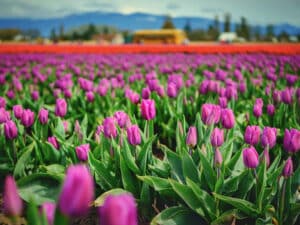
The Skagit Valley Tulip Festival runs every April and transforms the fields around Mount Vernon and neighboring Burlington and La Conner into one of the most photographed spring landscapes in the Pacific Northwest. Roughly a million visitors come during the four-week festival. The fields peak for about two weeks depending on weather, and the RoozenGaarde and Tulip Town farms provide organized access with parking, display gardens, and farm market operations. EWS has a full guide at the Skagit Valley Tulip Festival hub.
Outside tulip season, Mount Vernon is a genuinely good small city. The revitalized historic downtown has a walkable arts district, public sculpture, and a monthly First Thursday art walk. Little Mountain Park on the east side of the city offers 10 miles of trails with summit views across the valley to the Olympics. The Skagit River Brewery has anchored downtown dining since 1995. And from November through March, tens of thousands of snow geese descend on the valley fields, one of the largest concentrations of migratory waterfowl in Washington.
Getting Here
Mount Vernon is 60 miles north of Seattle on Interstate 5. The drive takes about one hour without traffic. From Bellingham, it is 30 miles south on I-5 and about 30 minutes. Take Exit 226 (College Way) or Exit 227 (Kincaid Street) for downtown. I-5 through Skagit County runs north-south with no significant bottlenecks outside of peak tulip festival weekends in April when the SR-20 interchange and downtown approaches can back up significantly.
From Anacortes and the ferry terminal, take SR-20 east to I-5 south. The drive from the Anacortes ferry terminal to downtown Mount Vernon is about 30 minutes. This makes Mount Vernon a practical overnight base for San Juan Islands ferry visitors who want a city with more restaurant and lodging options than Anacortes itself.
Amtrak Cascades stops at the Mount Vernon station on the Seattle to Vancouver BC route. Check current schedules at amtrak.com for northbound and southbound departures.
Downtown parking is free on street and in city lots. During the Tulip Festival in April, parking at the farms is managed independently and separate from downtown. Plan accordingly during peak festival weekends.
Things to Do
Nature
Skagit Valley Tulip Fields
The tulip farms around Mount Vernon, Burlington, and La Conner bloom every April in one of the largest commercial tulip displays in North America. RoozenGaarde and Tulip Town are the two primary farms with organized visitor access, display gardens, and farm markets. The fields peak for about two weeks, typically mid-April, with exact timing varying by spring weather. EWS has a full guide at the Skagit Valley Tulip Festival hub page with planning advice, farm details, and what to expect during peak weekend crowds.
Outdoors
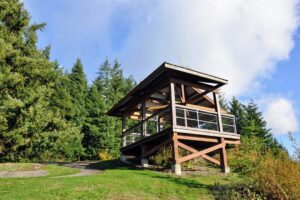
Little Mountain Park
A 540-acre park on a 1,080-foot forested ridge on the east side of Mount Vernon with more than 10 miles of trails and a summit viewpoint. The view from Little Mountain takes in the full Skagit Valley floor from the foothills to Puget Sound, with the Olympic Mountains visible across the water on clear days. The park is accessible year-round with trailhead parking off Little Mountain Road. Allow 2 to 3 hours for a summit loop.
Outdoors
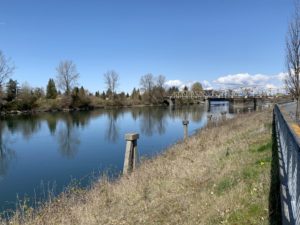
Skagit Riverwalk
A 2.3-mile paved trail running along the Skagit River through downtown Mount Vernon and connecting to the Centennial Trail system. The riverwalk passes under the I-5 bridge and continues through Edgewater Park, with views of the river and the hills beyond. Accessible, flat, and well-maintained. A good morning walk before a downtown breakfast or an evening walk after dinner at the brewery.
Nature
Snow Geese Migration
From roughly November through early March, tens of thousands of lesser snow geese winter in the Skagit Valley agricultural fields, making it one of the largest concentrations of migratory waterfowl in western Washington. Fir Island Road and the Skagit Wildlife Area near Conway provide the best viewing access. The geese lift in massive white flocks at dawn and dusk, circling against the Cascade backdrop. Entirely free, entirely reliable, and almost entirely unknown outside the region.
Culture
Historic Downtown Art Walk
Downtown Mount Vernon has a revitalized commercial district with galleries, public sculpture, and independent businesses along First and Second Streets. The First Thursday art walk runs monthly with extended gallery hours and artist demonstrations throughout the downtown core. The district is compact and walkable, and the combination of arts infrastructure and the Skagit River proximity gives it a character distinct from the commercial strip along I-5.
History
Skagit Valley Heritage Center
The regional history museum covering Skagit County from the Coast Salish Nations through the agricultural and logging eras that shaped the valley. The collection includes farming equipment, pioneer artifacts, and documentation of the Skagit Valley's development as one of the most productive agricultural counties in Washington. [VERIFY: current hours and location at skagitcounty.net]
Food
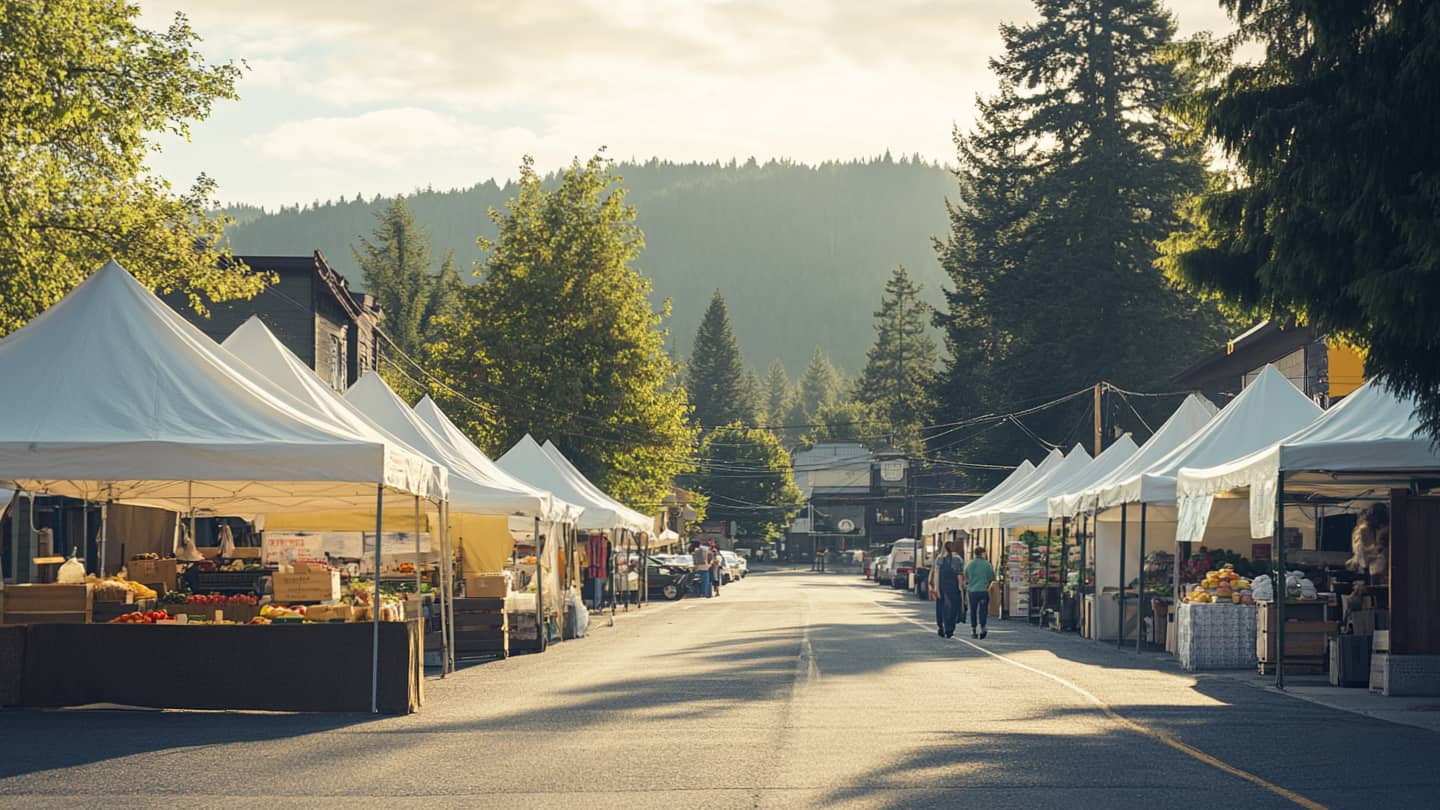
Skagit Valley Farmers Market
A seasonal Saturday market running downtown with Skagit Valley produce, dairy, meat, flowers, and artisan goods. The valley is one of the most diverse agricultural regions in Washington, and the market reflects that: berries, bulbs, specialty vegetables, and the tulip-adjacent flower culture that the valley is known for. Runs late spring through fall. [VERIFY: current season dates at skagitfarmersmarket.org]
Recreation
Cascade Loop Gateway via SR-20
State Route 20 east from Burlington, 5 miles south of Mount Vernon, is the western gateway to the North Cascades Scenic Byway and the full Cascade Loop. The route passes through Sedro-Woolley, Concrete, and the Ross Lake corridor before crossing Washington Pass into the Methow Valley. When the pass is open (late April through mid-November), this is one of the most dramatic drives in Washington. The Skagit Hydroelectric Project dams and Diablo Lake are an hour east.
“The tulip fields are the reason most people come. Little Mountain Park is the reason they come back.”
Explore Washington State
Where to Stay
Tulip Inn Mount Vernon
A full-service hotel in the I-5 corridor convenient to both the downtown core and the tulip farm areas east and west of the city. During April, proximity to the farms and free parking make it a practical base for tulip festival visitors. [VERIFY: current availability and rates]
Book at Tulip InnQuality Inn Mount Vernon
A reliable mid-range hotel on the College Way corridor with easy I-5 access and a location suitable for visitors using Mount Vernon as a base for Anacortes, La Conner, or the North Cascades. Free parking and standard full-service amenities. [VERIFY: current availability]
Book at Quality InnFind a Cabin Near Mount Vernon
Find a Cabin Near Mount Vernon
Food & Drink
Skagit River Brewery at 404 S. 3rd Street has been the anchor of the downtown dining and craft beer scene since 1995. The brewery produces a rotating tap list of Pacific Northwest styles and the kitchen runs pub food with local sourcing. The location a block from the Skagit River and two blocks from the downtown core makes it the natural first stop. [VERIFY: current hours at skagitbrew.com]
Il Granaio Authentic Italian at 100 E. Montgomery Street is the most serious kitchen in downtown Mount Vernon, with housemade pasta, a strong Italian wine list, and a room that operates at a different pace than the brewery corridor. Reservations recommended on weekends. [VERIFY: current hours]
Skagit Valley Food Co-op at 202 S. 1st Street has prepared hot food, a large salad bar, and a full deli sold by weight, making it the best quick-lunch option downtown and a reliable source for local Skagit Valley produce. Open daily. [VERIFY: current hours at skagitfoodcoop.com]
The Skagit Table is the farm-to-table dining option in the downtown district, sourcing directly from Skagit Valley farms and changing the menu with the agricultural season. [VERIFY: current hours and reservation policy]
Festivals & Events
April
Skagit Valley Tulip Festival
A month-long celebration of the spring bulb bloom in the Skagit Valley, centered on the RoozenGaarde and Tulip Town farms outside Mount Vernon and Burlington. The festival includes a street fair downtown, art shows, and community events alongside the farm visits that draw roughly a million visitors during the four-week run. Peak bloom typically falls in the second and third weeks of April. EWS has a full festival guide on the site.
July
Skagit Valley Highland Games
An annual Scottish heritage festival held at the Skagit County Fairgrounds in July with traditional Highland athletic events, pipe and drum competitions, Celtic music, and Scottish food vendors. One of the larger Highland Games events in western Washington. [VERIFY: current year dates at skagithighlandgames.com]
November
Snow Geese Season Opens
From roughly mid-November through early March, lesser snow geese and tundra swans arrive in the Skagit Valley agricultural fields in numbers that can reach 50,000 birds or more at peak concentration. The season is not a scheduled event but a reliable natural phenomenon worth timing a visit around. Fir Island Road near Conway and the Skagit Wildlife Area near the Skagit River delta provide the best viewing access.
Day Trips
La Conner (12 miles west via SR-20): A waterfront arts community on the Swinomish Channel with galleries, the Museum of Northwest Art, and a boardwalk above the water. La Conner is one of the closest things Washington has to a dedicated arts village, and it sits in the middle of the tulip farm corridor. Budget a half-day; plan a full day during April.
Bay View State Park (about 10 miles northwest): Camping, six cabins and a tidal beach on Padilla Bay with sunset views toward the San Juan Islands, plus the Padilla Bay Interpretive Center half a mile up the road. EWS guide at Bay View State Park.
Anacortes (30 miles west via SR-20): The San Juan Islands ferry hub with its own downtown arts district and the Anacortes Community Forest. If visiting Mount Vernon and planning a San Juan Islands day, Anacortes is the logical next step. EWS hub at Anacortes.
Bellingham (30 miles north via I-5): The larger city at the northern end of the Skagit corridor, with craft beer, Larrabee State Park, Galbraith Mountain mountain biking, and Chuckanut Drive. EWS hub at Bellingham.
North Cascades via SR-20 (east from Burlington): Highway 20 east from Burlington and Sedro-Woolley leads into the North Cascades National Park corridor and eventually to Winthrop on the east side. When open (late April through mid-November), the drive through Diablo Lake and Washington Pass is one of the most dramatic road trips in the state. EWS has trail guides for the Rainy and Cutthroat Lake trailheads along the route.
Planning Your Visit
Mount Vernon has two peak seasons separated by character. April is tulip season: crowds, color, and the agricultural festival that draws a million visitors to the valley over four weeks. The fields peak for about two weeks typically in mid-April, though exact timing varies with the spring weather. Visiting mid-week avoids the worst weekend congestion. The farms at RoozenGaarde and Tulip Town manage parking independently and often require advance reservations during peak bloom.
November through March is the snow goose season: tens of thousands of lesser snow geese winter in the Skagit Valley fields from roughly Fir Island south through the flats near the river. Dawn and dusk are the best viewing times. Skagit Wildlife Area and Fir Island Road are the primary viewing locations. The geese are predictable, free to observe, and one of the genuine wildlife spectacles in western Washington.
Summer and fall are the quietest seasons in terms of crowds and the easiest for downtown dining without reservations. The farmers market and berry u-pick season runs June through October. A one-night stay covers the downtown core, Little Mountain, and a meal. Two nights adds La Conner, Anacortes, or a drive up SR-20 toward the mountains.
More Mount Vernon on EWS


Planning a Washington trip?
That is the whole idea behind the Explore Washington State Card. Free to carry, with a little something waiting at participating places when you visit. Your zip code is a vote for which towns we sign up next, and our weekly Washington travel newsletter starts landing right away.
Get your free cardFrequently Asked Questions
What is Mount Vernon, Washington known for?
Mount Vernon is best known as the center of the Skagit Valley Tulip Festival, which runs every April and draws roughly a million visitors to the tulip and daffodil fields around the city. The festival is one of the largest spring flower events in North America. Outside tulip season, Mount Vernon is known for the snow geese migration that brings tens of thousands of birds to the valley fields from November through March, Little Mountain Park, a revitalized downtown arts district, and its position as the gateway to the North Cascades via SR-20.
When is the Skagit Valley Tulip Festival?
The Skagit Valley Tulip Festival runs for the entire month of April. Peak bloom typically falls during the second and third weeks of April, though exact timing varies with the spring weather each year. The RoozenGaarde and Tulip Town farms provide organized visitor access with parking and display gardens. Weekend crowds are substantial at peak bloom; mid-week visits are significantly more manageable. EWS has a full tulip festival guide with planning tips on the site.
How far is Mount Vernon from Seattle?
Mount Vernon is about 60 miles north of Seattle on Interstate 5. The drive takes approximately one hour in normal traffic. During the Tulip Festival in April, Friday afternoon and weekend traffic on I-5 approaching the Skagit Valley exits can add significant time. Allow extra buffer if driving north on Saturday or Sunday during peak bloom weeks.
What is the snow geese migration at Mount Vernon?
From roughly mid-November through early March, the Skagit Valley fields host one of the largest winter concentrations of lesser snow geese in western Washington, with counts reaching 50,000 birds or more at peak. The geese lift from the fields in enormous white flocks at dawn and dusk. Fir Island Road near Conway and the Skagit Wildlife Area near the Skagit River delta are the primary viewing locations. The migration is free to observe and is one of the most impressive wildlife events in western Washington outside of salmon season.
Is La Conner near Mount Vernon?
Yes. La Conner is about 12 miles west of Mount Vernon via SR-20. The drive takes about 15 to 20 minutes. La Conner is a waterfront arts community on the Swinomish Channel with galleries, the Museum of Northwest Art, and a boardwalk above the water. It is often combined with a Mount Vernon visit, particularly during the April tulip season when the fields between the two towns are in bloom.
Hero: Quintin Soloviev, CC BY 4.0, via Wikimedia Commons