
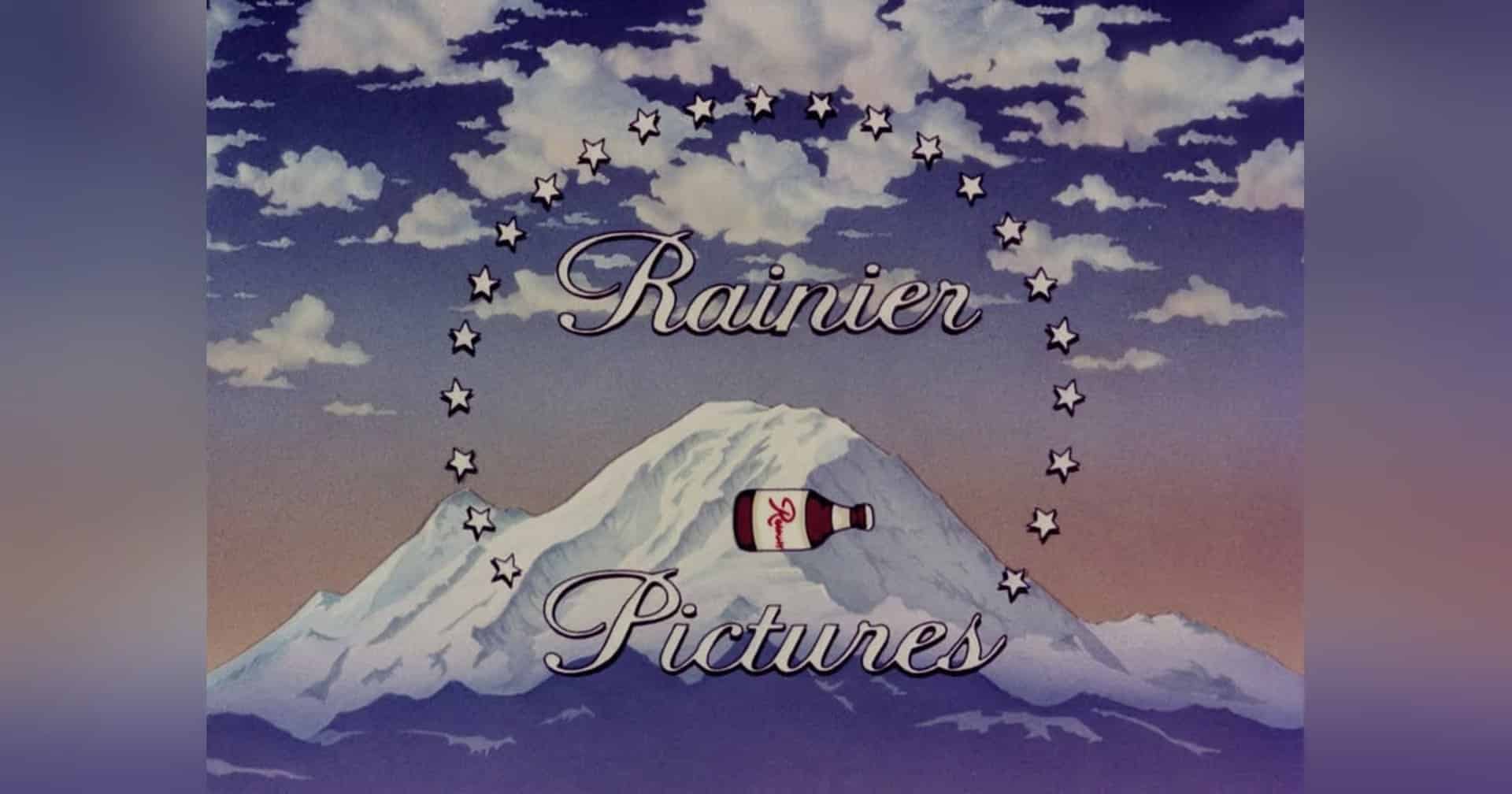
Unearthing the Iconic Rainier Beer Ads: A Pacific Northwest Legacy
The advertising of Rainier Beer spawned many cult classic commercials in the Northwest. Our guests got into the idea of documenting the ads after collecting Rainier Beer swag for their bar and asking the question where can we get the original film of the commercials?
The Petersons describe the origin of the Rainier Room at the bar, after they filled it with all of the memorabilia they could find relating to Rainier Beer. The room has a TV running all of the ads on a loop, and quickly became a fan favorite.
The team described the long adventure to locating the original film of the commercials. From cold calling people who might have been involved, to tracking down agencies, to the final fortuitous encounter with the Washington State Historical Society.
Recorded on location and includes several audio clips from Rainier ads.
People:
- Justin and Robbie Peterson, executive producers
- Isaac Olsen, director
Places:
- The Eleven Eleven Bar
- Washington State Historical Society
Support the project:
You can support the project and get some great Rainier Beer Swag. Check out the Kickstarter Campaign Page.
Rainier Beer The Movie Episode Transcript
Scott Cowan [00:00:00]:
A good cold beer is refreshing. And these new light beers with less calories, well, you could say I’ve discovered how good a light beer can taste. I really get a kick out of those light beer commercials with all those burly guys joshing around. But, you know, you don’t need to be macho to enjoy Rainier light. Hey, Marlene, give me another beer. Get it yourself, Bob. Sometimes it it help, though. Welcome to the Exploring Washington State podcast.
Scott Cowan [00:00:47]:
Here’s your host, Scott Cowan. Hello, and welcome to this episode of the Exploring Washington State Podcast. I’m your host, Scott Cowan. Today you’re going to listen to something I think is amazing. I’m talking to three guys based in Tacoma who are doing Rainier Beer, the movie. For those of you that have lived under a rock for the last 20 years, you’ve probably never heard of Rainier Beer. All those ads that came out in the that were so iconic, in fact, they really changed advertising, not just in the beer industry, but across almost all channels. So today I’m talking to Justin and Rob Peterson.
Scott Cowan [00:01:28]:
They’re the executive producers. They own some restaurants and drinking establishments in the Tacoma area. And Isaac Olsen, who’s going to be the director of the movie editor he is the guy is putting all this footage together. Conversation’s amazing. These guys have worked so hard to get to where they’re at. Now they’ve got a Kickstarter campaign going on that they’re finishing up to get the funding together to be able to put this movie together and get it released and into some film competitions. So if you’re into Washington State, if you’re into Rainier Beer, if you’re into advertising, or you just like to hear the sounds of my voice, you’re going to love this episode. But before we play it, I’d love for you to give us a review on your favorite podcast player.
Justin Peterson [00:02:57]:
I’m Justin Peterson, producer of Rainier a Beer Odyssey, a documentary on Rainier beer commercials.
Robbie Peterson [00:03:06]:
My name is Robbie Peterson. I am also a producer on this project.
Issac Olsen [00:03:11]:
And I’m Isaac Olsen. I edit this thing, direct this thing. Had to do a lot of other nonsense to make this thing happen, but I enjoyed every minute of it.
Scott Cowan [00:03:21]:
All right, guys, so there’s a backstory.
Justin Peterson [00:03:27]:
It’s a quick backstory. Basically, we have this bar in Tacoma called the 1111. My brother and I, the Peterson brothers, and we had this room that we crammed as much Rainier stuff in as possible, along with a TV that played all the original Rainier Beer ads from 74 to 86. And it was poor quality, but they’re really good commercials.
Robbie Perterson [00:03:57]:
So you could look past that on a small TV. They look okay, like a small TV.
Scott Cowan [00:04:03]:
Like you would have seen back in 74. Like, appropriate.
Robbie Perterson [00:04:06]:
Exactly.
Scott Cowan [00:04:07]:
Okay. It wasn’t like a flat screen, so.
Justin Peterson [00:04:09]:
They look okay, but then the only copies you could get have a timecode across the front of it. And we were sitting there one day and Isaac Olsen said, there’s got to be a better quality out there than this. Like, where’s the original film? And that basically spawned this project. And he could tell you a little more after that.
Scott Cowan [00:04:32]:
Well, let me stop. Why did you guys do this? Shrine terrainier beer.
Justin Peterson [00:04:37]:
Well, they have just the years and years and years. They put out really cool schwag.
Issac Olsen [00:04:44]:
They’re a collector’s brand.
Justin Peterson [00:04:46]:
Our bar is a collector’s bar. There’s old beer stuff everywhere. And Rainier, being from the Northwest is pretty acquirable.
Robbie Perterson [00:04:55]:
You can find at least one item of rainier at pretty much every thrift antique store. Okay, well, maybe not now because we might have got it.
Scott Cowan [00:05:04]:
You guys might have bought it. So doing a little reading about you guys at 1111, there’s like a piece of metal that you guys bought when you were little kids.
Justin Peterson [00:05:13]:
Oh, interesting story. Yeah. So we’re pack rats, and that’s probably on our dad’s side and our mom’s side. So even if we see a cool object, that makes no sense. At the time, we were like eight.
Robbie Perterson [00:05:24]:
Years old and we bought a metal rail. It looked like it was out of a submarine or something, and it had paint chipped all over it.
Justin Peterson [00:05:34]:
Probably lead paint, too.
Robbie Perterson [00:05:35]:
Probably lead paint.
Scott Cowan [00:05:35]:
Of course. So what did mom and dad say at that time when you come schlepping a metal thing home? Like, what the hell?
Justin Peterson [00:05:43]:
First we’re at a garage sale and we say, mom, can we have this? She’s like, why do you want it? And we’re like, I don’t know.
Robbie Perterson [00:05:50]:
And then we put it somewhere, and then 25 years later or something, we were like, oh, man, we need a handrail right here. So we clear coated it and popped it up there. Well, we had to go. Do we even have that still?
Scott Cowan [00:06:06]:
So your mom agreed to you bringing this thing home?
Justin Peterson [00:06:12]:
Yeah, she was down with us to buy weird shit.
Scott Cowan [00:06:16]:
So before we go into the Rainier stuff, what other, as you say, weird shit have you guys picked up over the years?
Justin Peterson [00:06:21]:
I remember when I was really little, I really wanted a Mac truck hood ornament, and she got that for me. And I don’t know if I still have it, but I carry around for years.
Robbie Perterson [00:06:32]:
I would say most people, when they walk into our bar, the weirdest thing they see, which is one of the first items that we acquired specifically for 1111, was a giant Ronald McDonald head.
Justin Peterson [00:06:44]:
Yeah, that one freaks people out.
Robbie Perterson [00:06:46]:
People hate it. Actually, most people hate it, but it remains.
Scott Cowan [00:06:54]:
It remains.
Justin Peterson [00:06:57]:
Okay, yeah, we just like junk, but we also like cool stuff. And rainier has a bunch of cool beer items from pins to sheriff badges to bobbleheads boxes. Just anything you could think of. Looks good. It’s cool.
Scott Cowan [00:07:17]:
Do you have like old Seattle Rainiers baseball stuff that was related to we.
Justin Peterson [00:07:21]:
Don’T actually what are you looking for?
Robbie Perterson [00:07:23]:
I might have something our collection pretty much anything we specifically rainier the beer, but ours are similar.
Justin Peterson [00:07:33]:
You’re thinking of the Tacoma rainiers. They were owned the Seattle Rainiers back in the right.
Issac Olsen [00:07:40]:
We’re talking this might be a branch of the collection that’s going to swing.
Robbie Perterson [00:07:43]:
Over that might need a whole nother little corner itself because there was a.
Scott Cowan [00:07:48]:
Series of baseball cards. Yeah, there’s a whole if you guys haven’t explored that, I shouldn’t have said anything because now the closed because you’ll be out.
Justin Peterson [00:07:58]:
Well, Isaac often says if you guys are looking for this, maybe keep an eye out for this old Seattle magazine which also has a connection to the Rainier beer commercials.
Issac Olsen [00:08:11]:
They’re great resources because the Seattle Magazine, that’s a whole different thing. But quickly all the guys that produced the ads met in this thing called Seattle Magazine in 65 okay. 65. 66. And it was kind of a left wing magazine, which was not ubiquitous then in Seattle but like photographers, art directors, they all met at this magazine. So that’s where the that’s the roots of all the guys that went on to do the ads.
Scott Cowan [00:08:43]:
So at 1111 did you guys start off with this rainier room or was.
Justin Peterson [00:08:47]:
That no, that was an addition. Later we had a room that was just plain walls.
Robbie Perterson [00:08:51]:
We could call it uninhabited. Yeah, it was like the last place anybody would want to sit. And sometimes if another table opened up, they would move from that back area to the other table as soon as one opened. Gotcha and it had memorabilia up on the walls and there’s cool beer mirrors and stuff like that, but it just didn’t have a nice feel to it. And Justin was like, what if we just take everything out of here and just put only Rainier stuff in here.
Justin Peterson [00:09:25]:
Call the rainier room.
Robbie Perterson [00:09:26]:
And then it became one of the.
Scott Cowan [00:09:28]:
Popular was it like an overnight success?
Justin Peterson [00:09:31]:
Pretty quickly, yeah.
Scott Cowan [00:09:32]:
Okay. Yeah. All right.
Justin Peterson [00:09:35]:
The TV with the ads playing pretty much sealed the deal on it.
Scott Cowan [00:09:39]:
That was the thing.
Justin Peterson [00:09:40]:
Because then people would sit back there and be like, oh, I remember this.
Robbie Perterson [00:09:42]:
Or it might be that people just gravitate towards TVs, but that’s true. Not sure.
Scott Cowan [00:09:49]:
So the room, it’s popular. You think we got to be better quality.
Issac Olsen [00:09:55]:
What really did it for me was I was making so we’ve been working together for like five years doing all kinds of projects. This one about the band, The Ventures was a big one, but it just gets to be a lifestyle where you’re just working on ten projects at once and you’re doing all kinds of media archiving all the same time. And so they’ll farm stuff out, just stuff, all due for free because we’re just all working together. So one of my duties was make more copies of these rainier discs because I think they were thinking about expanding at that point, like, maybe we’ll have another TV somewhere else.
Justin Peterson [00:10:28]:
We wanted a backup, for sure. Motivation.
Issac Olsen [00:10:31]:
I was just making a copy of this Crummy disc with the timecode on it and stuff, and I hadn’t sat down and just watched all the ads in a while. Like, I’m from here, I know them. But I hadn’t sat down and just watched and I thought, Well, God, how many of these are there? Well, there’s 120 of them.
Scott Cowan [00:10:49]:
Okay, I was going to ask that question. So there’s 120.
Issac Olsen [00:10:52]:
So just one day I had some time to kill, so I just got sucked in. Like, I just watched the whole loop, which I don’t know, it might be about, well, 120 divided by 30 seconds. So it was about an hour. I just sat there and watched them.
Scott Cowan [00:11:07]:
Right.
Issac Olsen [00:11:08]:
And I thought, God, these things are really good.
Scott Cowan [00:11:10]:
Okay, so wait a second. Where did you guys get the 120? Where’d you guys get this original?
Justin Peterson [00:11:16]:
It was a bootleg, and I can’t say for sure.
Scott Cowan [00:11:19]:
You can’t or you won’t?
Justin Peterson [00:11:21]:
Both, because I don’t have the answer. I want to say it was from one of the beer guys.
Issac Olsen [00:11:26]:
Okay. Yeah. There’d be compilations made and someone would smuggle it out of the office. Someone would make a copy so they’re around.
Scott Cowan [00:11:35]:
Okay, you guys didn’t assemble 120, so you obtained this 120. You’ve been tasked to duplicate it.
Issac Olsen [00:11:44]:
Yeah.
Scott Cowan [00:11:45]:
Okay. And then you go, there’s got to be better.
Issac Olsen [00:11:48]:
Yeah. I just got sucked into watching them, and especially the Wild Rainier ones, the naturey ones. I just started thinking, man, I’ll bet these things look very cinematic and what if there’s more? And I thought and as you’re working on stuff together, as you know, most of it is pitching new ideas, like, oh, what if we did a project on this?
Scott Cowan [00:12:10]:
Yeah.
Issac Olsen [00:12:10]:
So we should do that. And you got to do that all the time because one of them could catch and be the next one. You just don’t know. Okay, so I just called him and said, we should really think about the rainier ads. Like, I’ll bet the film’s out there. I’ll bet it wouldn’t be that hard to find.
Scott Cowan [00:12:27]:
Okay.
Issac Olsen [00:12:27]:
I’m assuming it was all shot on 16 millimeter, which when restored properly, looks really good. I just thought we could make a two hour nature documentary.
Scott Cowan [00:12:38]:
So what did you guys think of.
Justin Peterson [00:12:39]:
This, the Wild Rainier into it instantly. I mean, as soon as he brought up the idea of, like, they always say, yes. Where’s the film? Yeah, as soon as he said, Where’s the original film? We’re like, Why didn’t we think of that earlier? I don’t know. Yeah, we should look for it at.
Issac Olsen [00:12:57]:
That time I made some very feeble attempts just to kind of start stabbing in the dark because I didn’t know who made them. I didn’t know who was behind them. I didn’t know which agency. But the story’s not hugely known. People know a few things. They know the name Terry Heckler. He was the guy that drew the Starbucks Mermaid. That’s kind of his claim to fame.
Issac Olsen [00:13:17]:
He had his ad agency that did all these ads. So people kind of know Terry’s name, okay. And they know Bear Creek Studio, which is popular because some famous grunge albums came out of that place, but they recorded all the music, this Bear Creek Studio. So that was basically all I knew. So actually, I talked to this woman, Manny Hadlock, who was one of the founders of Bear Creek. I don’t know why. I thought maybe she would know, but somebody gave me her email. But she was great because she just kind of said, okay, kid, sit know, she didn’t have to do that either because I was just like, oh, yeah, well, thinking about this film.
Issac Olsen [00:13:57]:
Well, what do you know? She said, okay, okay, here’s what you got to know. Like, so and so did the early ones. And then Terry and Gordon Bauker, he founded Starbucks later. You know that it’s like, oh, you don’t know that. She just really schooled me and gave me all she basically gave me the whole story, like in an email paragraph.
Scott Cowan [00:14:14]:
Okay.
Issac Olsen [00:14:15]:
But before I could even follow up on any of her great leads, I found the film.
Scott Cowan [00:14:22]:
I wanted the story to be more, like, difficult. So lie to me. Tell me a story. Like, the film had a journey over a mountain.
Issac Olsen [00:14:29]:
We searched and searched, and nobody knew.
Robbie Perterson [00:14:32]:
It was still kind of by accident, though.
Justin Peterson [00:14:35]:
It was definitely by accident.
Robbie Perterson [00:14:37]:
He found it while not searching for it? Basically, yes. The one time he wasn’t searching for it was when he found it.
Issac Olsen [00:14:44]:
But I am not telling any vibs here. It was like maybe two weeks after I’d been emailing with Manny, right? I found it. It was like two weeks.
Robbie Perterson [00:14:56]:
Yeah, but he didn’t find it in connection with any of the people involved in Rainier.
Issac Olsen [00:15:04]:
Total stab in the dog, completely separate. And if that had not happened, there’d be no project. We would not be sitting here today. There’s no back way that I could have breadcrumbed my way back to this source.
Robbie Perterson [00:15:18]:
That’s what you say. He could have called everybody involved in making the Rainier commercials at any level of their involvement. He would have never found the film.
Scott Cowan [00:15:29]:
But then by dumb luck.
Issac Olsen [00:15:32]:
It sounds so cheesy.
Justin Peterson [00:15:34]:
You got to give Ed his due here because this origin is a little further back.
Issac Olsen [00:15:39]:
There’s this guy. His name’s Ed Nolan. He’s in special collections at the museum, the Washington State Historical Society, which is hard to say fast, and their acronym’s not much better. WSHS. But that’s where the stuff was. And Ed Cowan was the found.
Justin Peterson [00:15:58]:
I mean, he’s the one that saved.
Scott Cowan [00:16:00]:
The so he you know Ed outside of the Rainier project.
Issac Olsen [00:16:05]:
I met him and found the film. All this happened in two weeks. I cold called him through a recommendation of Art Chantry, the famous graphic designer who’s from here too.
Scott Cowan [00:16:17]:
Okay?
Issac Olsen [00:16:18]:
We were talking about something and he just said, you know, you should really call my buddy Ed at the museum. He’s a great guy and he might have some of this rock and roll stuff you’re looking for. We were in Ventures Mode at that time. Okay, well, we’re still in Ventures Mode, but we still were in it back then. But he said, you should call Ed, he’s a good guy. So I just called him and I said, hey, my name’s Isaac and I’m doing these movies and I wonder if you guys have a film department, if you have any film in your archives in there? And he said, well, we don’t have a department, we have a lot of film. Well, why don’t you come over, I’ll show you around. So I went over and he showed me what he had, which was like a lot of news film.
Issac Olsen [00:16:59]:
And I said, wow, that looks really interesting. And he said, well, if you want to volunteer, let’s make you a volunteer. And I say, I’d love to do that. So we went through all the steps. I got the background check and got all hooked up. This is a state organization, so I got all set up to be a volunteer. And so I was seeing Ed every once in a while, but only a couple of weeks. And we would talk and he would ask about other projects I was doing.
Issac Olsen [00:17:24]:
I mentioned Rainier and he said, oh, Rainier, yes, we have posters. We even have our own wild rainier. We even have some tapes. And I said, Tapes? Really?
Scott Cowan [00:17:35]:
He’s like, did you try to stay calm?
Issac Olsen [00:17:37]:
Well, I still didn’t know.
Scott Cowan [00:17:39]:
Okay.
Issac Olsen [00:17:39]:
I thought maybe just more of these subpar videotape versions like we’ve been dealing with. But I kind of took him up on him. So, yeah, what do you have? How many tapes are we talking? He said, well, maybe I should just show you. And he took me up to the vault and showed me a shelf with hundreds of film cans on it. And I said, well, this isn’t tapes. And he’s like, I know.
Scott Cowan [00:18:05]:
So you found the Holy Grail of this quest, what you call these guys? Do they believe you?
Issac Olsen [00:18:17]:
I think I just went out to the car afterwards. My 2 hours of volunteer time was up. So I went out and called Justin. I said okay. Found it. Rainier is a go. I think we’re going to have to think about this.
Justin Peterson [00:18:29]:
Yeah, I mean, I was blown away for sure. I believed him instantly because the way he told me. But I was just like, what? How did that happen?
Issac Olsen [00:18:38]:
Like that? And it has to be everything because it’s these ancient cans and yeah, there’s 87 cans and 130 boxes.
Scott Cowan [00:18:48]:
Okay.
Issac Olsen [00:18:49]:
And I was seeing things like motorcycle, beer, cross. I mean, all the little hints were right there on the boxes. And so the next step was to get these guys as certified volunteers at WSHS, which we did. And once we got through that process, then we could all go up and observe. And then they knew for sure.
Justin Peterson [00:19:11]:
I mean, we took notes.
Robbie Perterson [00:19:13]:
We kind of logged what was there and maybe what we would want if we could get some.
Issac Olsen [00:19:19]:
The agreement with the museum took a year to finesse because since it’s government run, it had to go all the way to the assistant attorney general. And it was this yeah, it’s a big deal to get these agreements done. But, I mean, it’s to their credit that they thought this experimental deal with us was something worthwhile to do.
Scott Cowan [00:19:43]:
So it took a year to hammer out an agreement to allow you to.
Issac Olsen [00:19:48]:
Do what the agreement was for us to be able to take the film off site, to log and scan. And that was crucial because they didn’t have a film department per se there, which they didn’t have rewinds just a way to safely because you can’t be just spooling film out. You can. But this was a little beyond that. And also, these cans, it’s not like one can equals one reel. Each can had dozens of little rolls, little cords.
Scott Cowan [00:20:21]:
I saw some of the photos, and.
Issac Olsen [00:20:22]:
It was like so it’s just not a straightforward thing at all.
Scott Cowan [00:20:27]:
So they allowed you to take the film off site, took the film off.
Issac Olsen [00:20:31]:
Site, got it all insured, set up a film department.
Justin Peterson [00:20:35]:
Sure, that was also difficult too, but.
Issac Olsen [00:20:45]:
Rainier, rainier, rainier, rainier, rainier, rainier, rainier, rainier, radio rainier, rainier ear.
Scott Cowan [00:21:06]:
Oh, absolutely. I’m just what? I’m going nobody’s cared about these things for 40 years.
Justin Peterson [00:21:15]:
No one even knew they existed.
Scott Cowan [00:21:16]:
Exactly. Nobody cared except for Ed. And then they set the value. All right, so we get through all of that.
Issac Olsen [00:21:25]:
Yeah, we get all that done. In the meantime, what I could do was I could go to the museum and I could log stuff. Basically, just open up each can and count how many things were inside.
Scott Cowan [00:21:39]:
Okay. How long did it take you guys to completely log this inventory?
Issac Olsen [00:21:44]:
Well, on site, that only took a few days.
Scott Cowan [00:21:46]:
Okay.
Issac Olsen [00:21:47]:
Then I came home and crunched the numbers. Because you can measure a core. It’s not a reel. It’s just like a little plastic doodad that film is wound around.
Scott Cowan [00:22:01]:
Okay?
Issac Olsen [00:22:02]:
You can then put that on a thing called a split reel, which kind of transforms it into a reel that you can use, but you’re dealing in cores. So what you have to do is measure each diameter, subtract the circumference of the core and you can plug the number in and find out how much running time one roll is. So I had to do that for thousands and thousands of rolls and just get to a point where I could tell the museum, this is how much footage we’re talking about, because it’s all in feet. And then this is my estimate running time just to try and quantify the stuff somehow.
Scott Cowan [00:22:39]:
So there was math involved.
Issac Olsen [00:22:41]:
There was a lot of math was.
Justin Peterson [00:22:42]:
Important also, because when you go to transfer stuff like this, you pay by the second or foot.
Issac Olsen [00:22:49]:
The foot.
Justin Peterson [00:22:50]:
The foot.
Scott Cowan [00:22:50]:
By the foot. Okay.
Justin Peterson [00:22:52]:
So if you can imagine what a foot of film looks like and then rolled into a roll, you get quite a bit of feet in there.
Scott Cowan [00:22:59]:
So you’ve cataloged it. It’s still at the museum.
Issac Olsen [00:23:03]:
Yeah. That was very rough. And all the parties knew that that was just kind of but you get.
Scott Cowan [00:23:10]:
Everything lined up so you can take it off site.
Issac Olsen [00:23:12]:
Yeah. So we quantified it so we knew what the collection in quotes was comprised.
Scott Cowan [00:23:18]:
You had an estimate at that point.
Issac Olsen [00:23:19]:
Yeah.
Scott Cowan [00:23:20]:
And then ultimately you guys had an actual you knew how many feet you had, ultimately.
Issac Olsen [00:23:25]:
Right, right.
Scott Cowan [00:23:25]:
So how close was your estimate?
Issac Olsen [00:23:27]:
Well, I’ve never even tried to compare the two because that first list was so spitbally. The main thing was, luckily, nothing was loose and that there were 87 cans, there were 130 boxes that never changed. And nothing could be simplified, because that’s the archival rule, is even if it didn’t make sense, how they were cataloging stuff back then, you can’t change it. I mean, the museum could, if they decide. But not you. Not me. No way. So once we got it back here, which was in was Election Day 2020.
Scott Cowan [00:24:08]:
Okay.
Issac Olsen [00:24:09]:
That’s when we got it out. And it was between bouts of COVID shutdowns, so that was a miracle that got done. We kind of had to act fast because I believe they went back into another lockdown the next week and we would have been out of luck for taking it off site for another six months, maybe.
Scott Cowan [00:24:27]:
But you guys didn’t scan the film here. So part of the insurance and the agreement was that you were allowed to send it to a third party to do that work.
Issac Olsen [00:24:37]:
That’s right. And I believe they approved that third party also, who we were starting to communicate with. So yeah. Anyway, November 2020, the stuff came back here where we are, and I got it all on the shelves. And I spent two months where all I did was I got up at eight in the morning and came down and went through stuff and went home at 07:00 p.m or whatever, and it was the most delightful experience I’ve ever had. That’s the reason I do these projects. Not even like the premiere, any of that stuff, just that two months that two months, just being all by myself and finding out every day that, oh, we do have a movie. Oh, yeah, we this oh, yeah.
Scott Cowan [00:25:23]:
So, you guys, what were you doing about the movie during this period of time?
Justin Peterson [00:25:29]:
Just getting excited about Isaac’s reports, for the most part. I mean, we came down and saw the film and saw what he was doing and all that.
Issac Olsen [00:25:36]:
I’d take a phone picture and I’d say, yeah, we found the such and such. Whoa.
Justin Peterson [00:25:40]:
So, yeah, he’d send a little picture of the film segment so we could see like, oh, that’s cool.
Issac Olsen [00:25:48]:
And there were really only maybe two or three things that I was disappointed that we didn’t find in there.
Scott Cowan [00:25:53]:
Okay.
Issac Olsen [00:25:54]:
But then I found out later the reason why. So actually, we had everything.
Scott Cowan [00:25:57]:
Okay.
Robbie Perterson [00:25:58]:
We were basically waiting for Isaac to compile a few key boxes of the most important or what we thought was the most important of the time of the reels so that we could drive them down to La. Real quick.
Issac Olsen [00:26:13]:
Yeah. So the next step was once I got everything cataloged and I had a big list that could be searched so everything was known, then it was easy to prioritize. What’s going to be in our first batch has to be just the cream of the crop. Like, all the Mickey Rooney stuff went in batch.
Scott Cowan [00:26:37]:
Why? Why is that the determination? Why not just send it money?
Issac Olsen [00:26:43]:
That’s an easy question when you don’t.
Justin Peterson [00:26:45]:
Have a big budget, you basically do what you can to create hype. And then we could take these, like so we get a batch done, and then we could show the people that were involved what we’re doing, and then they get to see what it looks like before and after. And then it’s a lot easier to get people coming your way if you got you prioritizing.
Issac Olsen [00:27:09]:
A really nice first batch was important for the movie because it’s stuff that we know is going in no matter what.
Scott Cowan [00:27:16]:
Right.
Issac Olsen [00:27:17]:
It’s the best stuff to show investors and just kind of as a hype tool. Like, we’ll check this out and there’s more.
Scott Cowan [00:27:26]:
But wait, there’s more.
Issac Olsen [00:27:26]:
But the other thing about that, see, if we just indiscriminately sent the whole collection to be scanned, it’d be like $5 million.
Robbie Perterson [00:27:35]:
We would also be paying first for footage that we weren’t planning on using.
Issac Olsen [00:27:39]:
Okay, well, and something else to remember is there’s so much redundancy in this? Because these aren’t just finished ads, these are working copies. Yeah, I mean, the editors were the people that put this in the cans, and it’s totally like working documents, so there’s work print, so you’d get so much redundancy if you just did the whole thing.
Scott Cowan [00:28:06]:
Approximately how much footage was there in minutes, we know it boils down to.
Issac Olsen [00:28:14]:
An hour’s worth of I think my best estimate is probably 60 hours of stuff.
Scott Cowan [00:28:19]:
60 hours of stuff to boil. It down to an hour of what you guys originally started with. Was that hour long disc. Okay.
Issac Olsen [00:28:28]:
Yeah, that generally would be the ratio.
Scott Cowan [00:28:30]:
The ratio, okay.
Justin Peterson [00:28:32]:
Yeah.
Issac Olsen [00:28:35]:
But there’s more.
Robbie Perterson [00:28:36]:
There’s always more.
Issac Olsen [00:28:37]:
This is the whole thing. We found stuff in there that I mean, I thought we were going to find elements of the classic 120 ads and some outtakes, hopefully a lot of outtakes, but we found stuff in there we had no right to expect to find making of. Yeah, like somebody trailed the production for one whole year, 1982, and just got hours and hours of behind the scenes broll of the ads being made. Now, of course you want that, but who could expect that was in there, right? These were internal things or things they would show their investors or sales films. That’s another big one.
Scott Cowan [00:29:21]:
Okay.
Issac Olsen [00:29:21]:
These are special films. They would just make for fun, to show the salespeople. And they were the only ones that ever saw it. So, like, every year, on top of all their production work, they’d just make a really cool little sales film just.
Justin Peterson [00:29:36]:
For the salesman, the same ad company. So the same humor and everything, but just for in house. Yeah, it’s just another cool thing that no one’s seen before.
Issac Olsen [00:29:44]:
Another secret clue, another piece of continuity.
Scott Cowan [00:29:48]:
So that first batch that you pulled together and you sent away, how long before it came back?
Issac Olsen [00:29:55]:
Oh, very fast. But Rob can take the story up at this point because we didn’t want to ship the first batch. We just thought it’d be much safer. And the guy we worked with is this guy, Reed Beauvet. He works at a place or founded a place called Reflex Technologies, and he’s in Burbank. So we said, Rob, want to go to Burbank?
Robbie Perterson [00:30:19]:
So when I said dropped it off real quick in La. I meant the time it takes to get from Tacoma, Washington to La. Driving with the least amount of stops. Also, again, we’re working in the middle of COVID right? And I’m like, I don’t know what’s going to be shut down or if I can go in anywhere on the way. So I just was like, I’m just going to drive straight there and straight back. I’ll check out a couple hotels on the way and that’s all I’m going to be doing. And once I got to the front door of the why am I freeing Reflex Technologies? I pretty much was like, here’s the film. See you later.
Robbie Perterson [00:31:05]:
Hop back in my car and immediately start driving back.
Scott Cowan [00:31:07]:
No way.
Robbie Perterson [00:31:08]:
Yeah. Actually, they gave me a water. Did they give you a receipt at least or something? No, they were already ready for me. They knew I was showing up. We had called ahead of time, gave them our time frame.
Issac Olsen [00:31:21]:
Yeah.
Robbie Perterson [00:31:21]:
And I rolled a card into their front door.
Issac Olsen [00:31:23]:
I was orchestrating everything back here from the puppet master. Oh, yes, I love doing that. Stuff.
Scott Cowan [00:31:29]:
So you dropped the film off, grabbed.
Robbie Perterson [00:31:31]:
A water and drive, jumped back in the car, drove another 5 hours, put.
Issac Olsen [00:31:35]:
On your dope diaper, and hit the road.
Justin Peterson [00:31:38]:
That was like a twelve hour drive day.
Scott Cowan [00:31:41]:
All right.
Robbie Perterson [00:31:41]:
And then another 12 hours.
Scott Cowan [00:31:43]:
So that original batch of film. So you dropped off at Burbank. How did you get back here?
Issac Olsen [00:31:48]:
It was shipped.
Scott Cowan [00:31:49]:
They shipped it back. So you were okay with them once you got the cleaned up copy, you’re okay with shipping it?
Issac Olsen [00:31:54]:
Well, yeah. It’s a safety measure. Right?
Robbie Perterson [00:32:01]:
They sent us the newly copied it’s.
Issac Olsen [00:32:06]:
Very safety conscious because he’s a pro and he knows how these projects work. But how it would work is the stuff would be down there in their highly insured film chamber that they have on site, and so he’d make all the digitized copies, and then he’d FedEx overnight hard drives. Then I’d crack open the hard drives. Actually, that was probably the part that was beyond, like, even more so than finding out what we had to work with for the very first time. Seeing the stuff come off the press was just really amazing.
Scott Cowan [00:32:40]:
So did he clean the footage up?
Issac Olsen [00:32:43]:
He did very minimal color correction to kind of bring it to a middle point so that we can do all our regular post production color stuff.
Scott Cowan [00:32:51]:
Okay.
Issac Olsen [00:32:51]:
But no.
Scott Cowan [00:32:53]:
So he just digitized the film into a format that you can work with exactly. To create this.
Issac Olsen [00:32:59]:
But yeah, just a little color, little color correction is really all that’s needed. The stuff has held up amazingly well. It was shot great, and it just looks great.
Robbie Perterson [00:33:10]:
Basically, once we got the hard drive confirmed, everything was there, backed it up ourselves, then we called back down there and we were like, okay, good to ship.
Issac Olsen [00:33:19]:
So it was always this process. Yeah. I would get the hard drives, I would check the stuff out, we’d get another set of hard drives and make an off site backup here. Once all that was done and it was in two locations here, I would say, OK, send the film. Then he would FedEx the film overnight. It would arrive here, we’d get it safely back on the shelf, and only then would I give him the purge order to get rid of his files.
Scott Cowan [00:33:48]:
Okay.
Issac Olsen [00:33:48]:
Because batch one was probably, let’s see, dozens of terabytes. I can’t remember how many. But these files that you get back are huge.
Scott Cowan [00:34:01]:
Okay. Hard drives are cheap now, at least.
Issac Olsen [00:34:04]:
This project 30 years ago, well, the files they were generating wouldn’t have been that great either.
Scott Cowan [00:34:12]:
Yeah.
Justin Peterson [00:34:12]:
So, I mean, we’re getting pretty much the best of the best right now.
Scott Cowan [00:34:16]:
How many times did you guys have.
Issac Olsen [00:34:18]:
To there were four batches altogether, and the fourth one was pretty small. The first three were quite hefty hefty.
Justin Peterson [00:34:27]:
All right, we could get into that later. But the reason why we’re getting the public the public involved is to restore the rest of.
Scott Cowan [00:34:41]:
Have. So at this point, you have the original films back here in Tacoma that are going to go back to the library? Yes, as of today, they’re back at the library.
Issac Olsen [00:34:51]:
They are safe.
Scott Cowan [00:34:52]:
But then you also have digitized copies of the film.
Issac Olsen [00:34:55]:
Yes.
Scott Cowan [00:34:55]:
That’s all the work that’s been done. Yeah, you got it backed up in a couple of places.
Robbie Perterson [00:35:02]:
We’ve done more work, though, besides that.
Scott Cowan [00:35:05]:
Well, at that point, though oh, yeah, at that point. Right. At that point, all you’ve done is modernize the format of the film and stabilized it so that you can now manipulate it and begin to make your movie and give the film back to the museum. So you’re no longer the stewards of this stuff. Okay.
Issac Olsen [00:35:22]:
Precisely.
Scott Cowan [00:35:24]:
Now what?
Issac Olsen [00:35:26]:
Well, see, that sounds like a lot of work, but it does. In a normal documentary, you would just go shopping and you would just buy all this stuff. But see, when you’re working with subjects that are untapped like this, that require a little more tender loving care, that’s a whole year and a half just to get to the point where now we can put all this stuff and make a movie like you regularly, regularly do.
Scott Cowan [00:35:57]:
A year and a half. The timeline here was a year and a half from finding the film to digitizing the film. Correct.
Issac Olsen [00:36:08]:
Yeah.
Scott Cowan [00:36:08]:
Okay.
Justin Peterson [00:36:09]:
Maybe a little more like two years.
Issac Olsen [00:36:12]:
Yeah.
Robbie Perterson [00:36:12]:
Still ongoing.
Scott Cowan [00:36:13]:
Still. Okay. Never going to end.
Issac Olsen [00:36:16]:
Never.
Justin Peterson [00:36:16]:
We’re greedy.
Scott Cowan [00:36:17]:
All right.
Justin Peterson [00:36:18]:
We want it all.
Scott Cowan [00:36:19]:
So now I know nothing about filmmaking.
Robbie Perterson [00:36:26]:
So besides the archival footage, we’re including interviews with the people who are responsible for the genius behind the commercials.
Issac Olsen [00:36:38]:
Are they still yes, yes. With a few exceptions, they are all still among us. And they’re all, with only a few exceptions, still local, I think. The farthest anybody lives. Island, I think.
Justin Peterson [00:36:53]:
Well, we did have one guy come.
Issac Olsen [00:36:54]:
In from yeah, yeah, he was one exception.
Robbie Perterson [00:36:57]:
There will be more exceptions.
Issac Olsen [00:36:59]:
There’ll be a few more.
Robbie Perterson [00:37:00]:
For the most part, we lucked out, being that the Northwest is still the home to many of these people and.
Scott Cowan [00:37:09]:
How’S the response been when you’ve reached out to them and saying, hey, we want to do a documentary on the work that you created.
Issac Olsen [00:37:18]:
I have never had a better experience just getting at people out of the blue and having a positive response. Everyone on this project has just been a dream to work with, and they’re like our friends now, so it’s, like, even better.
Scott Cowan [00:37:32]:
Well, it’s because you guys have a bar form to go to.
Issac Olsen [00:37:35]:
There’s some perks. Perks.
Justin Peterson [00:37:36]:
We do offer our bar services upon all interviews.
Issac Olsen [00:37:41]:
But you also got to remember that these people are unique because it’s not like we’re getting at a bunch of artists and asking to use their personal work in something which is always a little presumptuous. This is a little different because their life’s work, or a lot of it, was made for companies. And so it is their work. But essentially they kind of signed it all away.
Scott Cowan [00:38:05]:
Right. They gave everything to, in this case, Rainier.
Issac Olsen [00:38:09]:
Yeah, right. Yeah. And all these other clients. So it’s just a slightly different feeling that people have when they hear that their work is going to be showcased. Because in most cases they were so anonymous. Some of them sought the anonymity, but it’s just a whole different approach.
Scott Cowan [00:38:30]:
Yeah.
Justin Peterson [00:38:31]:
These are the people behind the camera. I mean, the people that put this all together. No one probably knew anything about it over the years except for a few articles here and there. These are the people that made this culture. It’s like they kind of created an ad campaign that also became Northwest culture.
Scott Cowan [00:38:59]:
Absolutely. So how many interviews have you guys had so far?
Issac Olsen [00:39:05]:
Maybe twelve or 13.
Scott Cowan [00:39:07]:
And anything you’re willing to share that was interesting out of any of those?
Issac Olsen [00:39:12]:
Oh, sure. Well, everyone is like their own field of study, almost. And my favorite, this was another great find, besides the finding the film and that whole origin story, this guy, Frank Denman, he started also as a staff photographer at Seattle Magazine, where he met all the other guys. So he shot photographs for just about all the print ads Rainier did that would kind of accompany the commercials. Every campaign would have an ad and some stills and some other stuff.
Robbie Perterson [00:39:46]:
Posters.
Issac Olsen [00:39:47]:
Yeah. So to me, he’s this legendary photographer guy who had 30, 40 years of just amazing commercial work in the area. But when I got a hold of him and said, gee, I’d love to see if you have any old negatives, this was a pretty much untapped resource, too. He kind of got out of the photography thing maybe 2030 years ago, boxed all his stuff up and nobody knows about it.
Robbie Perterson [00:40:20]:
They will.
Justin Peterson [00:40:21]:
Okay.
Issac Olsen [00:40:25]:
But he’s approachable to the idea of so approachable.
Justin Peterson [00:40:28]:
Super nice guy, super great guy. Just very welcoming and accepting of the project we want to do.
Issac Olsen [00:40:37]:
But once again, see, I think I started by showing him some of the scans, right. And it didn’t hurt that I was showing him images of him and Mickey Rooney from 1974 on set together that he hadn’t ever seen, that probably had a role that had a little show.
Justin Peterson [00:40:57]:
And tell is always really good when you’re trying to interview someone you’re like, hey, we’ve done some legwork already, so it’s not like we’re just coming at you with nothing.
Issac Olsen [00:41:07]:
Yeah, it kind of diffuses the flakiness anxiety, which I don’t blame anybody because often this is a very flaky business. Like, I got a great idea. It’s like, yeah, sure you do. I overcompensate because I know what they’re thinking and I know I have to show them. No, I’m serious.
Scott Cowan [00:41:32]:
Right.
Issac Olsen [00:41:32]:
I’ll bet you haven’t seen this in a while. And usually they go, okay, well, I see what you mean.
Scott Cowan [00:41:39]:
So how has this been received? When you guys are out there talking to potential investors and just people of the area, is there a default response when you guys say you want to do a movie?
Robbie Perterson [00:41:55]:
There is a default response, barely with very few words. You immediately hear. Oh, yeah. Rainier beer. And you have to wait for them to go through the whole thing. And then you’re like, yes, that is part of what I’m talking about. And then you can begin your conversation after that.
Scott Cowan [00:42:17]:
You’ve learned that there’s like a minute here. I’m going to have to wait.
Justin Peterson [00:42:20]:
But everybody’s been really excited about it, and then they’ll tell us stories or maybe give us a lead to something else, like, oh, my dad was the distributor of that back in this time. Or you just get all these stories, which are really cool too, because everybody’s been touched by the Rainier Beer in some way. They have, like, an object that was a Rainier Beer, like Bobblehead, or they.
Robbie Perterson [00:42:51]:
Still have one of the old posters.
Justin Peterson [00:42:53]:
Or they found an old beer can that’s up on their shelf forever. Or they have pictures of them when they were kids next to their dad’s rainier Beer.
Robbie Perterson [00:43:02]:
They’re a third generation former employee of the Rainier Brewery.
Justin Peterson [00:43:08]:
Everyone has some connection. So when we start telling them about this project yeah, everybody gets really excited. We’ve had great response.
Robbie Perterson [00:43:17]:
I’ve often been like, no, I don’t want to bother you for very long. I just wanted to tell you about this project for 1 second. Here’s a postcard. I’ll tell you about it a little bit. And then they’re like, no, tell me about it. And then I’m like, okay, well, let me grab my beer and I’ll come back over here and tell you about it.
Issac Olsen [00:43:36]:
It’s real grassroots stuff.
Scott Cowan [00:43:40]:
Well, here’s a question. The ad agency that created these ads, do you guys know how they kind of came up with the initial concept here? Because these were very different than what ads were like in that period of time.
Justin Peterson [00:43:55]:
Difference a good word. They wanted to be different. Like the beer ads prior to them were boring. And what they call it isaac. They call it reward spots, where it’s like, I got done working in my yard, now I’m going to sit down and my wife’s going to bring me this beer because I deserve it.
Scott Cowan [00:44:16]:
Okay.
Justin Peterson [00:44:17]:
So they were like, that’s boring. Or it’s like, this beer has the best grains and hops, and you’re like, cool. But is it fun?
Issac Olsen [00:44:26]:
Yeah, they would kind of sell you beer like they’d sell a car. Like they tell you all the great components that went into this beer. And it has airbags and ABS brakes. Exactly.
Scott Cowan [00:44:36]:
I want to know if it comes in red.
Issac Olsen [00:44:38]:
Yeah.
Justin Peterson [00:44:39]:
Are the people having fun when they drive this car?
Scott Cowan [00:44:41]:
Yeah, but to give Rainier credit, then they were willing to take a risk and not do this.
Justin Peterson [00:44:48]:
Traditional advertising, they deserve a lot of credit for.
Robbie Perterson [00:44:53]:
Usually you’d pitch or in my brain, you’d pitch a commercial to a company and they’d be like, no way we were ever going to consider that idea. Try again.
Issac Olsen [00:45:04]:
And we’ve also heard a lot that internally, people continued to want to go back to the old way, but they couldn’t argue with the sales increases. And so they just kind of kept their mouth shut. It was good for business, so they couldn’t really argue about it.
Scott Cowan [00:45:23]:
Now, you guys have done a lot more research on the topic of beer in the. Can you think of ads from other beer companies in the that you remember?
Justin Peterson [00:45:33]:
It’s kind of hard to say now because everything’s so present from watching commercials, but I don’t recall personally, I liked.
Robbie Perterson [00:45:42]:
The hams cartoon bear.
Issac Olsen [00:45:45]:
Yeah, you had the ham. The hams bear. I can’t remember what I think at this very moment. Jingles were a big thing. Everybody had their song. I think Budweiser at that time had this thing called when you say Bud was kind of this Oompa song.
Robbie Perterson [00:46:04]:
I would say my most memorable is actually Spuds McKenzie.
Scott Cowan [00:46:12]:
But the point is, nobody else was doing things. I’m granted, Rainier was right here local, but it did transcend outside of this.
Justin Peterson [00:46:22]:
They started these ads in 74, though I was going to say the cool.
Robbie Perterson [00:46:26]:
Commercials that I remember were after Rainier completely changed the dynamic of how commercial.
Scott Cowan [00:46:33]:
Too young to be looking at beer.
Justin Peterson [00:46:34]:
Commercials in the weren’t born yet.
Issac Olsen [00:46:36]:
Yeah, we weren’t even here.
Scott Cowan [00:46:37]:
Exactly. Come on.
Justin Peterson [00:46:41]:
But we do look back now.
Issac Olsen [00:46:43]:
Any other stuff we’re talking about, like we’re seasoned experts, it’s all acquired.
Scott Cowan [00:46:48]:
But the point, though, is that if you look back like Olympia Beer was a big beer around. I mean, it’s the water that was their tagline. But I can’t think of an Olympia Beer ad to save my life. I can’t think of a Coors ad. I just remember when Coors finally was available in Washington state. That was a big deal. It was like we got electricity or something. It’s like, oh, my God.
Scott Cowan [00:47:11]:
We can get coors.
Justin Peterson [00:47:12]:
Yeah.
Robbie Perterson [00:47:12]:
People did tap the Rockies.
Scott Cowan [00:47:14]:
Yeah. Rainiers before I left today, well, yesterday I was talking to my mom, who’s she’s 86 years old. I don’t know if my mother’s ever had a beer in her life. Probably not. And I said, I’m going to go talk to these guys about the rain. And she goes, you mean like rain? Yeah. And it’s like, yeah, mom, that’s it. And she’s like, okay.
Scott Cowan [00:47:38]:
My mother remembers those and she was not their audience. Yeah.
Issac Olsen [00:47:45]:
I know this from working on other documentary subjects, but there’s something really powerful about reminding somebody of something they thought they forgot. But this is the scary power of advertising. And it’s another reason it’s like you should be careful, like what you allow in because this stuff never leaves. It’s just baked in there.
Scott Cowan [00:48:06]:
This movie is completely safe to be watched by all ages.
Issac Olsen [00:48:09]:
Oh, sure.
Scott Cowan [00:48:10]:
There we go.
Issac Olsen [00:48:11]:
Well, I don’t know. It might be a little disturbing at times. We make a very thorough study of so this movie has very lofty aspirations.
Robbie Perterson [00:48:25]:
Okay.
Issac Olsen [00:48:26]:
It’s not only about this region and the rainier thing. It’s about beer advertising and just advertising.
Scott Cowan [00:48:35]:
Okay.
Issac Olsen [00:48:35]:
That’s what it’s about, how it works. The tricks people have tried over the years, the things that have worked haven’t worked. Things that haven’t worked. Yeah, we spend a lot of time with that.
Scott Cowan [00:48:47]:
So the basic premise is walk me through kind of like a high level overview of what the movie is going to be like because it’s not going to be just commercials because that’d be a really short movie.
Robbie Perterson [00:48:59]:
Well, it’d still be a very long movie.
Justin Peterson [00:49:02]:
Isaac could go into this a little further, but we plan on using as much of the commercial content as possible. And when I say that, I’m not saying we’re going to show each commercial from beginning to end, but having that visual when you’re working with a there’ll.
Robbie Perterson [00:49:18]:
Be a remnant from, like Isaac says, every commercial in some way.
Issac Olsen [00:49:23]:
Yeah, every single commercial you remember. There’s nothing that I’ll just leave out. And it’s like Justin says, it doesn’t have to be that there’s a scene about every commercial. Some commercials have their own scene, sure, but some are just set dressing or a punctuation or an image, but they’re all going to be represented.
Scott Cowan [00:49:45]:
And you’re going to have the interviews from people that were in this.
Issac Olsen [00:49:49]:
We’ve interviewed people that’s a component of.
Justin Peterson [00:49:52]:
But we’ve interviewed some actors, too. Most of our stuff is editors, directors, cinematographers.
Scott Cowan [00:50:00]:
Other than Rooney, was there any actors or actresses that were in these commercials that went on to any that we might know from something else?
Justin Peterson [00:50:07]:
Well, one of our first actors was a guy named Mac McDonald, and he actually was in Apocalypse Now in American Graffiti before he did the Reigneer commercials.
Issac Olsen [00:50:17]:
His commercial involves they’re out there. Willis. Do you remember that one? He looks through binoculars vaguely.
Robbie Perterson [00:50:25]:
They’re really he’s on an outdoor living set driving through basically.
Issac Olsen [00:50:31]:
He’S in a motorized vehicle that looks like a living room in the desert. And he pulls on a lampshade and that’s the clutch and they’re chasing wild. Okay, but no, Rooney is the big I mean, I would love to build this as like Mickey Rooney’s last movie. We’d have to work with the estate in some capacity. But I mean, I’d love to see like a marquee at some point. It just says Mickey Rooney in rainier.
Robbie Perterson [00:50:59]:
Beer.
Issac Olsen [00:50:59]:
Odyssey. But the key to this is I wanted to call it a beer odyssey for a reason because that’s what we’re getting at. Mean, it’s a story, epic tale. You’re going to learn a lot, but it is an odyssey. I like to think of documentaries as climates sometimes.
Scott Cowan [00:51:17]:
Okay?
Issac Olsen [00:51:17]:
It’s like you’re just going to spend some time in the rainier bowl, swirling around, orbiting. Does that sound like a good experience? We might want to cut that out, believe me.
Scott Cowan [00:51:33]:
Work on that one. Work on that.
Issac Olsen [00:51:38]:
Immersive.
Justin Peterson [00:51:38]:
There you go.
Scott Cowan [00:51:41]:
Not the swirling.
Justin Peterson [00:51:45]:
Glass beer. It might not.
Scott Cowan [00:51:48]:
So we’re sitting here today and you guys are doing a fundraiser, kickstarter. Once that is successful, then what?
Issac Olsen [00:52:02]:
Then we think about festivals and we think about distribution.
Scott Cowan [00:52:07]:
Okay.
Justin Peterson [00:52:07]:
But along with this fundraiser, it allows us to move faster so you could go right into stuff that you were kind of waiting to pay for so the rest of the film better sound quality, color correction, the ability to travel and get more interviews. So when you have the budget there, things move a lot quicker. So that’s one reason. The second reason is this is advertising thing. It’s like get people involved with the project, with a project that they like.
Robbie Perterson [00:52:47]:
We want the fans to be involved. And even if it’s a small donation or their name in the movie, whatever we can do to get them involved and excited about the project, even though we’re possibly a year out, get them excited now and then get them excited again later.
Justin Peterson [00:53:05]:
It’s kind of like ultimate breaking rights because one of our levels of funding is for $30. You get your name in the movie.
Robbie Perterson [00:53:14]:
And updates and a cool reinier patch.
Justin Peterson [00:53:16]:
Yeah, a cool reindeer patch. So a small donation, you could still be a part of it and then also be able to tell your friends, like, yeah, you hear about that movie? I helped that out.
Scott Cowan [00:53:28]:
All right, so that’s at $30. What’s the top end?
Justin Peterson [00:53:32]:
Executive producer.
Scott Cowan [00:53:34]:
That sounds like work.
Justin Peterson [00:53:36]:
You put somebody to work kind of work. We give them the ability to see what we’re doing as we do it. Okay, so they’re in on the project a little more than someone that spent less.
Scott Cowan [00:53:50]:
And what dollar amount is that at?
Justin Peterson [00:53:53]:
That’s ten grand.
Scott Cowan [00:53:54]:
Ten grand. So from $30 to ten grand? Yeah.
Justin Peterson [00:53:56]:
So there’s stuff all in between there, right?
Scott Cowan [00:53:58]:
There’s some interesting swag that goes along.
Justin Peterson [00:54:02]:
With some shirts, sweatshirts, hats, snowboards.
Robbie Perterson [00:54:07]:
Signed original print run posters.
Issac Olsen [00:54:10]:
Okay, how’d you new design posters, how’d.
Scott Cowan [00:54:12]:
You guys obtain that?
Justin Peterson [00:54:15]:
That’s all within this realm of just meeting people and then just being in their world. They’re like, hey, I have these posters. And you’re like, well, the original want.
Issac Olsen [00:54:27]:
To donate the original posters. Original run came from Frank, the photographer. He just had an old unopened pack.
Robbie Perterson [00:54:33]:
That he got still in the had to we had to cut that open, which I almost didn’t want to do.
Scott Cowan [00:54:39]:
Oh, my God.
Robbie Perterson [00:54:40]:
Get some of the ones out of there.
Issac Olsen [00:54:41]:
That then he so he was willing to donate a small stack off that for the campaign, and then he even signed like, 50 of them.
Robbie Perterson [00:54:49]:
Mint. I don’t even know if you can buy a mint condition Rainier poster off ebay. They are crisp.
Scott Cowan [00:54:58]:
Wow.
Robbie Perterson [00:54:58]:
Not a single.
Justin Peterson [00:55:00]:
That’s a really cool one that we like. And Frank signing them is cool for us, too, because we’re big fans of his now and then Art Chantry, our beloved Northwest graphic designer, designed us a poster, and there’s a lot of work put into that, and it’s really cool.
Robbie Perterson [00:55:21]:
What else?
Justin Peterson [00:55:22]:
Zeke, him and his brother are really big Rainier collectors, and Zeke built us these custom metal r’s that are really cool.
Robbie Perterson [00:55:31]:
And large.
Justin Peterson [00:55:32]:
And large, yes. Spent a long time gathering stuff that was cool. So not only do you donate to a cool project, but you do get something.
Scott Cowan [00:55:43]:
Okay.
Justin Peterson [00:55:43]:
So it’s kind of like a transactional thing. It’s like we tell you about the movie, you donate, you get some stuff, and then we could also make a movie.
Scott Cowan [00:55:50]:
Right.
Justin Peterson [00:55:50]:
Quicker.
Issac Olsen [00:55:51]:
Exactly.
Scott Cowan [00:55:52]:
Yeah. Every good project has a hurdle that you miss the hurdle, you fall in your face type thing. So what’s gone wrong?
Issac Olsen [00:56:04]:
I’ve never had a project go so good.
Justin Peterson [00:56:06]:
Yeah.
Scott Cowan [00:56:07]:
Now I shouldn’t have asked that question because you heard it here.
Justin Peterson [00:56:10]:
We haven’t hit our hurdle yet.
Issac Olsen [00:56:11]:
Okay. Maybe it’ll be down the line.
Scott Cowan [00:56:15]:
Really? Everything’s just kind of come together in a good way.
Justin Peterson [00:56:19]:
Yeah. And everybody’s been so supportive. I think we mentioned that before, but it’s like if you tell someone about this, they’re excited and they want to help. I mean, it’s just how it works.
Issac Olsen [00:56:30]:
It’s just a win win. I think everyone at every step of the way has said, yes, that is a good idea.
Scott Cowan [00:56:37]:
I’ll chime in. Yes, it’s a good idea. It’s a really cool idea.
Issac Olsen [00:56:40]:
But all the people that mattered, okay, the museum, the people we interviewed might.
Justin Peterson [00:56:46]:
Have came out wrong.
Issac Olsen [00:56:47]:
Well, people that could destroy the project, the people that could say no.
Scott Cowan [00:56:55]:
Yes.
Robbie Perterson [00:56:56]:
You want to hear that from everyone. But, yeah, as far as the project going smoothly, all the people that could.
Issac Olsen [00:57:01]:
Have said no and really messed us up said yes.
Scott Cowan [00:57:04]:
That’s awesome. Yeah. And the fact that the footage was here in Tacoma, that’s just well, and.
Issac Olsen [00:57:09]:
The whole thing is like this movie god thing where it’s like they smile on it or they don’t, and if they do, you got to go with it. You just kind of have to say, okay, we got to go for this. And the fact that it was in Tacoma, that also is kind of there’s some good mojo with that, because we’re Tacoma guys and we get to stick it to Seattle a little bit. Just know Tacoma preserved.
Scott Cowan [00:57:36]:
Yeah, that’s true. Again, Tacoma says so again. So questions I always ask during these conversations. And so I’ll ask you guys, for you two, it might be well, it might be hard for you, too, but play along. Best place to get coffee in Tacoma.
Robbie Perterson [00:57:54]:
Well, I did get coffee right before I came here, so I might as well mention that. Bluebeard.
Scott Cowan [00:58:00]:
Okay. What do you get when you go to bluebeard?
Robbie Perterson [00:58:02]:
I got something I’ve never gotten before and it was it was a Mexican spiced. It was a spicy mocha.
Scott Cowan [00:58:13]:
The chocolate with the Mexican chocolate. Okay.
Robbie Perterson [00:58:15]:
I’ve never ever gotten that before and it was really good.
Scott Cowan [00:58:19]:
Okay.
Robbie Perterson [00:58:20]:
We’re also fans of Manifesto, which is our neighbor in Hilltop where our bar is, and those guys are all really cool.
Scott Cowan [00:58:29]:
So for you, what’s your normal go to coffee? What do you normally get?
Robbie Perterson [00:58:33]:
It’s got to be decaf.
Scott Cowan [00:58:35]:
What?
Robbie Perterson [00:58:38]:
The caffeine will mess me up real good.
Justin Peterson [00:58:42]:
I indulge in the caffeine, but I get, should I say this? It’s a spiced chai latte with one.
Scott Cowan [00:58:50]:
Shot or just black?
Justin Peterson [00:58:53]:
I like black coffee. I like the taste of coffee. But then if I’m going to indulge, I’ll get a spiced chai latte.
Scott Cowan [00:59:00]:
Okay.
Issac Olsen [00:59:01]:
I support my neighbors down at the studio here where I spend most of my time, and it’s called Lift Bridge and it’s across the street here on Pacific in the old post office building. And it’s a really cool, convenient place. I’m always going to the post office. It’s right next door and they got great big open areas where you can hang out.
Scott Cowan [00:59:23]:
What’s your go to coffee?
Issac Olsen [00:59:24]:
Just black.
Scott Cowan [00:59:25]:
All right. As it should be.
Robbie Perterson [00:59:26]:
I would say traditionally I just drink black coffee, but decaf, but black decaf, whatever is around. But if you said decaf, man.
Scott Cowan [00:59:37]:
Someone.
Robbie Perterson [00:59:38]:
Says that they have decaf and regular, I’ll just get decaf. If there’s no option, I’ll just drink regular and suffer the consequences later.
Scott Cowan [00:59:45]:
Wow.
Robbie Perterson [00:59:46]:
Maybe I won’t sleep very well.
Issac Olsen [00:59:48]:
I need a little of that edge to stay in.
Justin Peterson [00:59:51]:
I’d have to say I’m not super loyal. I go to a lot of different whatever coffee place is near me when I feel like having a coffee.
Scott Cowan [00:59:59]:
Sure.
Justin Peterson [00:59:59]:
So, Olympia, I even go to Starbucks, maybe get an impossible breakfast sandwich. Valhalla, bluebeard.
Robbie Perterson [01:00:07]:
We might leaving out.
Scott Cowan [01:00:10]:
Well, there’s a lot. There’s a lot.
Justin Peterson [01:00:12]:
Tacoma has good coffee.
Scott Cowan [01:00:13]:
Actually, Tacoma does have good target.
Robbie Perterson [01:00:16]:
There’s one that just opened up too, that I want to support and that’s down on commerce. I think.
Scott Cowan [01:00:27]:
We’Re going to pause while he gets his phone. No, I’m just kidding. So while he’s looking, I always ask this question. Great place to grab lunch in Tacoma. Legos recommend?
Justin Peterson [01:00:35]:
Well, I feel like obligated to say 1111.
Scott Cowan [01:00:38]:
Okay. What’s your go to at your own place? What’s your go to?
Justin Peterson [01:00:42]:
The brutus add peppercini. It’s like an Italian style sandwich with a Caesar dressing, fresh tomatoes, toasted, French.
Scott Cowan [01:00:50]:
So why doesn’t the brutus come with peppercinis if that’s the way you’re ordering it?
Justin Peterson [01:00:55]:
It doesn’t even say add peppercinis on the menu. Why is insane. Because when someone orders it with peppercini, then you’re like, this guy knows.
Scott Cowan [01:01:05]:
So it’s kind of a secret thing. Then the cool kids know. This one is that it only in.
Justin Peterson [01:01:10]:
My head, though, I think.
Scott Cowan [01:01:11]:
Okay. Yeah. How about you for lunch? You can say your own place. It’s okay.
Robbie Perterson [01:01:17]:
Well, we’re always at our own place.
Scott Cowan [01:01:19]:
So what’s your go to at your own place?
Robbie Perterson [01:01:21]:
All right, so the turkey bacon pesto on sourdough.
Justin Peterson [01:01:28]:
It’s one of our best sellers also.
Robbie Perterson [01:01:29]:
And then it has tomatoes on it.
Scott Cowan [01:01:31]:
Okay.
Robbie Perterson [01:01:32]:
That’s probably one I could continue to eat almost every day, but try not to.
Scott Cowan [01:01:39]:
Okay.
Issac Olsen [01:01:40]:
I’m always grabbing on the go. So I like to go to this place called it’s on Division. Just amazing. Huge burritos.
Scott Cowan [01:01:49]:
Yes. All right.
Robbie Perterson [01:01:52]:
I was thinking, where do you method coffee shop earlier?
Scott Cowan [01:01:55]:
The method coffee shop.
Robbie Perterson [01:01:55]:
I’m going to go there after this.
Justin Peterson [01:01:56]:
Oh, yeah. I haven’t been there yet, but I hear it’s good.
Scott Cowan [01:01:59]:
Okay.
Justin Peterson [01:01:59]:
Where do you go to coffee, though? In Tacoma. We’re making this about you now.
Issac Olsen [01:02:06]:
Flipping the tape.
Scott Cowan [01:02:07]:
No, I know. I’m trying to think. Last time where did I have I think the last time I had coffee in Tacoma was at either Valhalla. Yeah, I think it was. I might have met somebody at Cutters Point, which is like saying I drink decaf. Sorry. Cutters Point.
Justin Peterson [01:02:27]:
If we go to Wenatchee, which we’re planning on going for promo, what coffee do we get there?
Scott Cowan [01:02:33]:
Starbucks.
Robbie Perterson [01:02:35]:
Okay.
Justin Peterson [01:02:36]:
Yeah, we drink Starbucks.
Scott Cowan [01:02:37]:
No, and the reason I say that is there is a local coffee roaster in I just I don’t care for their coffee. I like a darker roasted I like if you like a lighter roast, then mela Coffee and Winachi is really good. They’re really nice people. It’s a great company, don’t get me wrong. I just go There’s Starbucks and winachie. Ave has the Clover machine, so you can get all the crazy cool, limited edition Starbucks coffees and pay way too much. Like $9 coffee. All right.
Scott Cowan [01:03:06]:
Just because everyone should have a $9 coffee in Winachee. Yeah.
Justin Peterson [01:03:10]:
It might be to be on our list.
Scott Cowan [01:03:12]:
Yeah. This question is going to take a little while to answer because there’s three of you. So who wants to go first? It’s the same question. You’re going to go first. So you guys get to cheat and think about it. I’d like you to take this seriously, please.
Issac Olsen [01:03:27]:
Okay.
Scott Cowan [01:03:28]:
Cake or pie and why?
Issac Olsen [01:03:32]:
I’m not a sweets guy, but I’ll do some cake with, like, very little increments on the top of it.
Scott Cowan [01:03:40]:
Okay, fair enough.
Issac Olsen [01:03:41]:
Almost dry.
Scott Cowan [01:03:42]:
Almost dry. Okay.
Robbie Perterson [01:03:43]:
I don’t think we got a bunch of sweet skies here.
Issac Olsen [01:03:46]:
We’re salt skies.
Scott Cowan [01:03:49]:
Salt. Okay. All right.
Robbie Perterson [01:03:50]:
I always like key lime pie for some reason with a nice cup of decaf. Perfect. But there’s something about pie in the movie industry. It’s like everyone’s always going out to a diner to get a slice of pie, but you just don’t do that anywhere. I feel like I’ve never come across the time where I go to get a slice of pie, pie and coffee, but I. Want to one day.
Scott Cowan [01:04:19]:
Okay.
Justin Peterson [01:04:21]:
Well, if my grandma was still alive right now, I would say apple pie she made, literally, I think about it, I could taste it. Okay. But I’m also not a sweets guy, but I do like just standard chocolate cake. Not a lot of toppings or anything, just a nice fluffy inside chocolate cake.
Robbie Perterson [01:04:43]:
Oh, my favorite coffee cake. Does that count?
Scott Cowan [01:04:46]:
Cake?
Robbie Perterson [01:04:46]:
Yeah, coffee cake to bring back that coffee.
Scott Cowan [01:04:50]:
All right, man.
Robbie Perterson [01:04:51]:
Love coffee cake.
Scott Cowan [01:04:53]:
Since you guys own a venue that has live music, in your opinion, where’s the best place to see live music in Tacoma?
Justin Peterson [01:05:01]:
Yeah, it’s kind of based on show now because there’s so many places that you could see stuff now, which is good. Yeah.
Robbie Perterson [01:05:12]:
The space, the sound, the size of the band, the draw. It’s going to change everything.
Scott Cowan [01:05:19]:
I know, but there’s got to be a place. Where do you guys like to go.
Justin Peterson [01:05:22]:
See music at the Valley.
Scott Cowan [01:05:26]:
Okay. You can get a brutus with of course.
Justin Peterson [01:05:32]:
I really like seeing shows at my own place because it’s small and it’s intimate and our sounds good. But as far as venues go, like, Alma in Tacoma has one of the coolest looking inside venues, so I’ll give them that. Plaid Pig is like the new punk rock, kind of all black walls bar that has cool shows and seems a little underground. Jazzbones has great sound.
Robbie Perterson [01:06:01]:
Airport does small shows, too.
Justin Peterson [01:06:04]:
Airport is kind of an anomaly because their venue area is really small.
Scott Cowan [01:06:08]:
Yes, it is.
Justin Peterson [01:06:09]:
But they get really good shows there, too. Yeah, tacoma has a lot to offer in the music venue scene. And I think something that’s different from 20 years ago is everybody is kind of friendly. No one’s against each other, they’re not competing. It’s kind of like you get good music, we get good music. So the scene is more approachable in that aspect.
Scott Cowan [01:06:34]:
Who do you guys like to see? Who’s interesting to see these days that’s playing in Tacoma?
Justin Peterson [01:06:39]:
Oh, man. Tacos wild powers.
Robbie Perterson [01:06:44]:
Gold Sweats.
Justin Peterson [01:06:45]:
Gold Sweats. Helms Ali.
Robbie Perterson [01:06:49]:
One of our friends.
Justin Peterson [01:06:50]:
Band the fucking Eagles.
Robbie Perterson [01:06:51]:
If I could say that.
Scott Cowan [01:06:52]:
You can. Okay. It’s okay.
Robbie Perterson [01:06:54]:
Hilltop Rats, a really fun punk rock, punk rock band to see.
Scott Cowan [01:06:59]:
Okay.
Justin Peterson [01:07:00]:
Girl Trouble. You don’t want to miss them. They actually have a show coming up.
Robbie Perterson [01:07:05]:
Our dad’s band. Of course.
Justin Peterson [01:07:07]:
The Twang Junkies and Ball Bag.
Issac Olsen [01:07:10]:
Definitely.
Justin Peterson [01:07:11]:
Oh, ball bag.
Scott Cowan [01:07:11]:
Yep.
Justin Peterson [01:07:12]:
Can’t forget ball bag. But there really is I mean, there’s like in every genre, there’s really good music right now.
Scott Cowan [01:07:22]:
Tacoma really has how do I want to say this because Tacoma seems very self deprecating to me. Yeah. But there’s a lot of really cool stuff happening here, and I couldn’t wait to leave here when I grew up in high school, I couldn’t wait to leave. Then I had to come back and I didn’t want to come back.
Justin Peterson [01:07:42]:
Yeah, there’s a vortex here, though.
Scott Cowan [01:07:44]:
But I lived by stadium when I came back, and I liked living in the North End, and we’ve left and gone to Wenanche and every now and then I find myself going, oh, man, we’d go back to no, I can’t go back.
Robbie Perterson [01:07:54]:
One thing that’s funny that I just thought of was as far as bands and this whole connection with the Rainier thing. So we were on Evening Magazine recently, and the Rainier Room at 1111 was featured. And that was really fun to be able to bring that and the story of the project together. But then I got a call a couple of weeks later, the up and coming or not up and coming, but continually rising in popularity. Band enum Claw was asked to be on evening magazine as well. And they were told to pick a couple of locations around town to go while they were getting interviewed and filmed. And one of them was 1111.
Scott Cowan [01:08:35]:
Nice.
Robbie Perterson [01:08:35]:
And then they were filmed in the rainier room by St. Brian. And that’ll be airing soon, or maybe has already aired. I’m going to find out today.
Scott Cowan [01:08:47]:
Okay.
Justin Peterson [01:08:47]:
I did just buy their new album.
Robbie Perterson [01:08:49]:
That brings the music in the rainy.
Scott Cowan [01:08:50]:
How is the new album?
Justin Peterson [01:08:52]:
I just got it in the mail yesterday. New vinyl. I always like buying local vinyl.
Scott Cowan [01:08:57]:
Okay, give me a couple other local.
Justin Peterson [01:09:01]:
Helms, ali, Wild Powers.
Scott Cowan [01:09:05]:
And what genre are these guys?
Justin Peterson [01:09:08]:
Well, like, Enum Claw is kind of in the like, they call themselves the best band since Oasis. So they have kind of a Seattle grunge thing going for them. But they’re like in that time period when Oasis was coming out, right? But yeah. What was the third kind of stoner metal in some of the stuff I’ve been listening to a lot, kind of on that realm. Or I’ll go like, in the outlaw country stuff.
Scott Cowan [01:09:43]:
Okay.
Justin Peterson [01:09:43]:
There’s other stuff I like right now.
Scott Cowan [01:09:45]:
How about you? What do you listen to? Not rainier commercials. 24/7.
Issac Olsen [01:09:49]:
That’s all I’ve been listening to lately.
Robbie Perterson [01:09:51]:
He’s got the Rainier Waltz in the background.
Issac Olsen [01:09:54]:
I like the Les Baxter arrangement of The Rainier Waltz.
Scott Cowan [01:09:57]:
Okay.
Issac Olsen [01:10:02]:
We’re allowed to use that in the movie, too.
Scott Cowan [01:10:04]:
Yeah. So that’s something I didn’t bring up. Did you have to get permission from the owners of Rainier to use the branding?
Justin Peterson [01:10:16]:
Yes, we did. And once again, early on well, since.
Scott Cowan [01:10:20]:
We’Re talking, I guess I know the answer, but how was it to work with them to get the thumbs up?
Justin Peterson [01:10:26]:
We aren’t really working with them necessarily. We’re completely independent. So the first official thing we did was just say, hey, this is what we’re doing, and we need to make sure that that’s cool. And they said, that sounds cool. I mean, is that easy? Because they know we’re putting money into making a giant. I mean, it’s kind of an ad campaign, but for us it’s a documentary, but for them, what’s better than people hyping Rainier?
Issac Olsen [01:10:59]:
Well, we had a really frank discussion. I just said, I’m not going to try and make just a big ad for Rainier, but it will function that way, so you don’t have to worry about that. It’s not like a hit piece or something. It’s a celebration of how this stuff works, how it functions, and basically, you’re going to have just this great looking, cool rainier thing.
Scott Cowan [01:11:26]:
All right, I’m putting you all three on the spot. It’s my last on the spot question really quick. What’s your favorite commercial? The Rainier commercials. Favorite Rainier commercial at this time? Something cowan change at any point.
Justin Peterson [01:11:40]:
I like anyone where they’re yelling the get it yourself, bob’s really good. Mickey Rooney yells pretty much in all of the stuff, so I like that. And then you can’t go wrong with a beer bottle with.
Issac Olsen [01:11:57]:
I always that’s the stuff that hooked me at first. Just the very subtle, not even a punchline. It’s just a nature documentary about these creatures.
Robbie Perterson [01:12:09]:
All right, I change my mind every time I’ve been asked this question, but right now, as of right in this moment, my favorite is the Bruise Brothers because it looks exactly like the Blues Brothers. The production was such quality that you’re like, oh, is that them? And then all the other SNL ones. And I got to go with Arbo.
Justin Peterson [01:12:37]:
Yeah, arbo is really good.
Robbie Perterson [01:12:39]:
Rainier rambo. I just love seeing that every time.
Justin Peterson [01:12:43]:
It was also filmed on 35 millimeter, so the clarity in some of these later commercials and parodies they did is so clean, it looks like it was filmed today.
Scott Cowan [01:12:53]:
What’s so funny is that I hadn’t thought about half of these ones you guys just said, and then I’m like having these little flashback. Oh, yeah. Okay. What didn’t I ask you that? I should have asked you. What didn’t I bring up?
Justin Peterson [01:13:05]:
I guess we could kind of just say, like, if you do want to support this project, you could go to www.rainierbeermovie.com and that’ll have a link to our Kickstarter, which you could go straight to, which is Rainier Beer. Movie on Kickstarter or check out our social media, which is at Rainier Beer Movie we want to keep it really simple so everything’s Rainier Beer Movie and.
Scott Cowan [01:13:30]:
I’ll put links to it in the show notes so you can just click on it. So that’s that cool. Yeah. Awesome. Well, guys, thank you. I learned a lot about this, and I now have even more questions, but for the sake of our sanity, I want to ask them. But thanks for making the time to meet with me.
Justin Peterson [01:13:43]:
Yeah, thank you.
Issac Olsen [01:13:44]:
Thank you.
Robbie Perterson [01:13:45]:
Thanks.
Scott Cowan [01:13:50]:
So, Audrey, look over a whole herd of Rainier beers.
Issac Olsen [01:13:56]:
Not herds, Audrey.
Scott Cowan [01:13:57]:
Rainiers come in six packs. Wake up. Harley, harley. Harley. Look at the oh, they’re just so fresh and friendly. Join us next time for another episode of the Exploring Washington State Podcast.
Before you go
That is the whole idea behind the Explore Washington State Card. Free to carry, with a little something waiting at participating places when you visit. Your zip code is a vote for which towns we sign up next, and our weekly Washington travel newsletter starts landing right away.
Get your free card- About the Author
- Latest Posts

The Exploring Washington State Podcast is your go-to source for discovering the diverse wonders of the Evergreen State. Whether you’re seeking inspiration for your next adventure, looking to savor local cuisine, or eager to learn about the businesses and artists that call Washington home, this podcast has something for everyone. Join us as we showcase the splendor of Washington State, reminding you that “there is always more to explore!”