
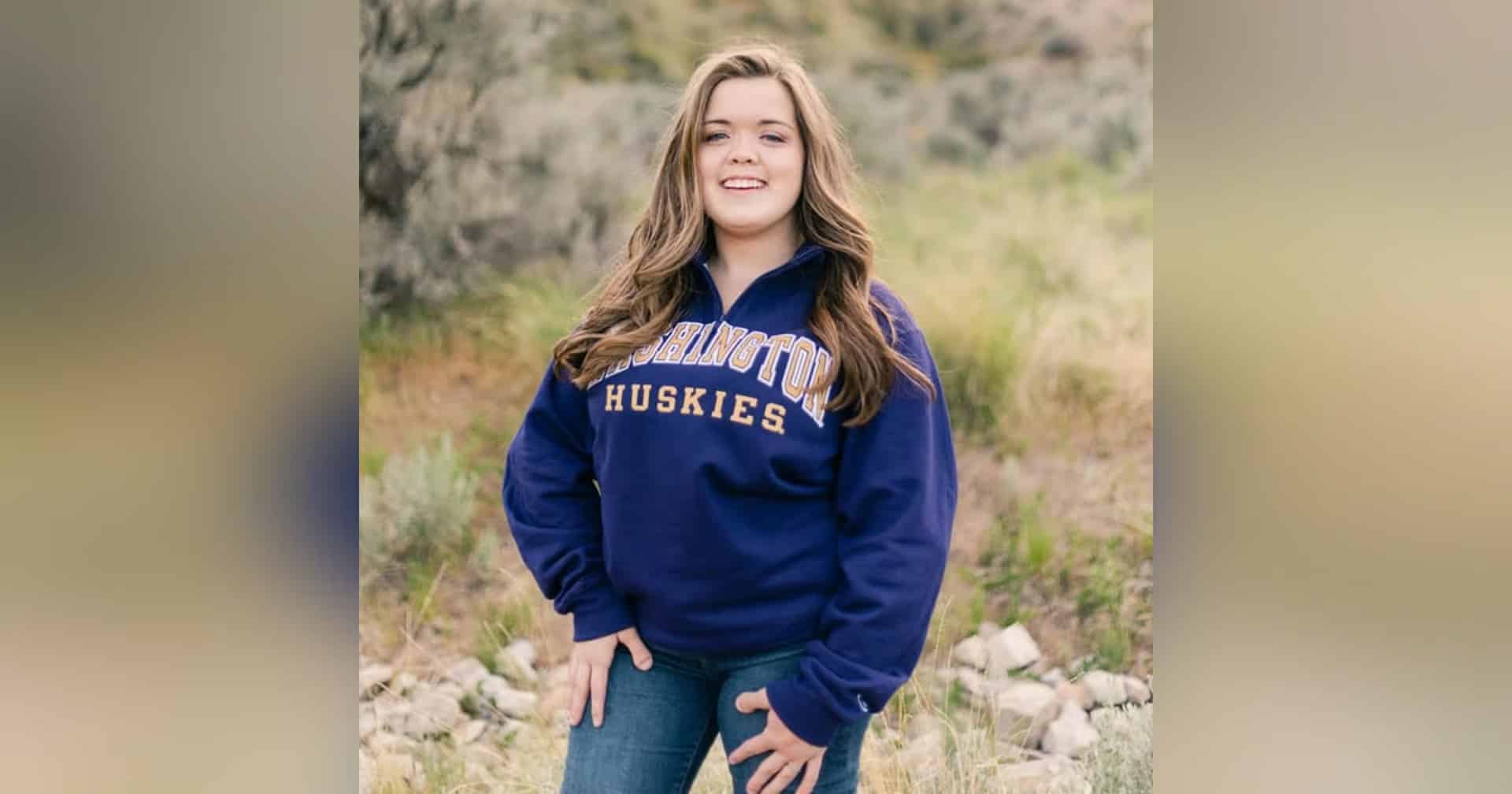
Camp Korey’s Angel: How Makenna Schwab Supports Medically Complex Kids
Meet Makenna Schwab, an inspiring college student at the University of Washington. Makenna is a resilient individual who has faced multiple surgeries due to Larson syndrome, a rare connective tissue disorder.
Despite her challenges, Makenna has not only remained positive but has also dedicated herself to fundraising for Seattle Children’s Hospital through her foundation, Makspire Foundation.
Join us as we delve into Makenna’s journey, her impactful charity work, her experiences with Children’s Miracle Network and Make-A-Wish, and her involvement with Camp Korey.
From her childhood memories to her college adventures, Makenna’s story is truly one of resilience, positivity, and making a difference.
So sit back, relax, and get ready to be inspired by Makenna’s incredible journey on this episode of Exploring Washington State.
Makenna Schwab Episode Transcript
Hello friends, and welcome to the Exploring Washington State podcast. My name is Scott Cowan and I’m the host of the show. Each episode I have a conversation with an interesting guest who is living in or from Washington state. These are casual conversations with real and interesting people. I think you’re going to like the show.
So let’s jump right in with today’s guest, you at the time of recording, it’s about 730 in the morning on a Thursday and I’m talking to a college student so you can expect her to be incoherent and make fun of me the entire time. I’d like to introduce Makenna Schwab. Makenna goes to the University of Washington, per Lucas Banning.It’s because she couldn’t go to WSU.
That’s what I was told. I will fact check that here in a minute with Makenna. But Makenna and I met when she was an intern with the Wenatchee AppleSox and she’s got a really interesting story that I thought we should hear more about. And Makenna, I’m going to let you kind of take it from here. But first off, welcome to the show and thanks for putting up with us and let’s hear your story.
Makenna Schwab [00:01:09]:
Well, first of all, Scott, thanks for having me. I can’t believe you quoted Lucas for my intro, but more than happy to be here. I’ll try and be as coherent as possible at 730 for a college student. I mean, I know when I was in college that wouldn’t have worked.
Makenna Schwab [00:01:27]:
I was maybe regretting the times I told you I was available this morning, but excited to be here and to chat with you. Yeah. So my story, a little context. Well, Scott, you gave great background on my intro. I’m a college student, I’m almost 21. I go to the University of Washington. I’m a junior. I’m a journalism and public interest communications major, which is just essentially journalism and public relations.
Makenna Schwab [00:01:54]:
But my story, I’m going to stop you.
Scott Cowan [00:01:59]:
Journalism and communication major, what do you want to do with that when you graduate from, I almost said WSU and.
Makenna Schwab [00:02:06]:
I really didn’t mean to.
Scott Cowan [00:02:07]:
When you graduate from the University of Washington, go Huskies. What do you want to do with your journalism degree? Let’s talk that first.
Makenna Schwab [00:02:16]:
That’s a really great question, Scott. The funny thing is I don’t think I want to be a journalist here. Journalism and pr combined as one major. I’m definitely more interested in the public interest public relations side. I’m really enjoying right now kind of exploring a bunch of different opportunities. I’ve had different chances to try out different internships in the last couple of years, and I’m still able to do that now. I’m thinking maybe something in marketing, maybe something in nonprofit fundraising, maybe something in job recruiting. My goal this year is to kind of go from broad to narrow down a specific career path.
Makenna Schwab [00:02:53]:
But the nice thing about a communications major is there are a lot of options. It is pretty broad. So I feel like I can hopefully take that degree and potentially do a lot of different things.
Scott Cowan [00:03:05]:
I’m absolutely shocked that at 20 years of age, you don’t know exactly what you want to do with the rest of your life.
Makenna Schwab [00:03:11]:
I know.
Scott Cowan [00:03:11]:
I’m so behind in all sincerity. I think that’s one of the problems with college for so many of us, is that you go there, let’s say at 18, and you go for four or five years, 22, 23 years of age, and you’ve spent this amount of time of your life learning about a subject, communications, pr, accounting, it doesn’t matter. And then for so many of us, you go, wow, yeah, that’s great. But I’d rather go do X or Y. And it’s just interesting to me. But look, you’re a UW student. There’s thousands of UW students that I’ve had on the show. You’re going to graduate in a year.
Scott Cowan [00:03:55]:
Once again, a thousand UW graduates are going to hit the streets in a year. So why am I talking to you? That’s what I think. The guests are like, why are you talking to a college kid? So, Makenna, let’s go back to birth, because you got a really long story. Yeah, let’s go there.
Makenna Schwab [00:04:17]:
Yeah. So I was born with a rare connective tissue disorder called Larson syndrome. And Larson syndrome looks different for a lot of different people, but in my life, that means that all the joints in my body are dislocated. I have instabilities in my spine, my c spine, which is your neck, my airways, and a lot of different mobility issues. My parents took me over to Seattle Children’s hospital at a week old, and it’s been my second home ever since. I’ve had over 20 different surgeries, some for my mobility, some I wouldn’t be alive without. And Seattle children’s can’t say it enough. They’re really cool there.
Makenna Schwab [00:05:01]:
The doctors and nurses there, they’re a part of my heart and a part of my family forever. I wouldn’t be here. I wouldn’t be who I was without my experiences there. And Seattle children’s has just really influenced my life in a really big way. And so when I was eight years old, I asked my parents if I could sell cookies and lemonade and give the proceeds back to the hospital. And so we did make a difference day project, which it was the national day of service, fourth Saturday, sorry. In October. So my friends and I, we were out there in the pouring rain, holding up signs, selling some baked goods for Seattle children’s.
Makenna Schwab [00:05:40]:
And people from our community would come out and they’d donate, and they’d share their story with Seattle children’s. And I realized, like, oh, my gosh, no. Seattle children’s isn’t just cool to me. It’s cool to all these other people, too. And I had hoped that first year that we would raise $100, right? We ended up raising over $6,000. And I was kind of hooked from then on, like, getting to talk to people and hear their stories and be able to make an impact on the hospital. It was an attempt, and I emphasize attempt, to say thank you to the doctors and nurses who saved my life, because I still don’t know how you say thank you for something like. Like, the course of my life has forever changed from my time.
Makenna Schwab [00:06:26]:
And so every year, we would do some sort of project, sometimes for Seattle children’s and sometimes for other organizations that were influencing and impacting the lives of kids and families that were walking through similar circumstances to mine. So we’ve done projects for Seattle children’s. We’ve done projects for make a wish, Alaska and Washington. And we’ve done a couple of projects for Camp Corey, which is a part of the serious fun network started by Paul Newman. It’s a camp up in Mount Vernon, Washington, for kiddos with different medical diagnosis to come and just be a kid for a week. All they have to do is go to summer camp. And I was a camper for, like, ten years. So we’ve done all those different projects.
Makenna Schwab [00:07:08]:
And in 2016, we took the official plunge and became a nonprofit. So the Max Buyer foundation was created, which is McKenna and Inspire put together. And it has given me the platform to continue to be able to help and inspire those kids and families that are walking through what my parents did, what I did, and what we know they can get through. And so being able to help them and kind of be able to encourage along the way has been such a blessing. And so now, twelve years into this, we have been able to raise over, like, $1.2 million.
Scott Cowan [00:07:43]:
Wow. For those kids and families, that’s super impressive. I’m going to start picking that apart. Not in a bad way. Makenna, everyone, you need to understand that. When Makenna and I were working together, I made fun of her constantly. So I think she’s kind of nervous that I’m going know, revert to that. And I will because it’s Makenna.
Scott Cowan [00:08:02]:
But I’m not trying to pick on.
Makenna Schwab [00:08:03]:
You, but I’m trying to be professional.
Scott Cowan [00:08:06]:
No, this show is not professional. See, that’s the thing. This show is casual. This is casual. Makenna, you really got to embrace that. First off, children’s hospital, I have a couple of questions that may sound silly, but actually, I’ve been thinking about this.
Makenna Schwab [00:08:23]:
Okay.
Scott Cowan [00:08:24]:
The name of it is children’s hospital. You are no longer considered legally a child.
Makenna Schwab [00:08:30]:
I’m not.
Scott Cowan [00:08:31]:
So when and if you need future medical care, like another surgery or something like that, do you have to go to a different. Has your time with children’s kind of. As far as a patient come to a close?
Makenna Schwab [00:08:48]:
It has, but not in the way that I for years had thought that it would. So technically, after you turn 21, you aren’t technically allowed to be Seattle children’s patient. There are ways around that. If your surgeons are like, no, we’ll just keep you. They can sign the extension form. And I’ve been telling all my surgeons since, like, understood that I wouldn’t, that there was an end date for this, I’m like, you have to sign my extension. I’m never leaving. Well, then all my surgeons retired.
Scott Cowan [00:09:18]:
Yeah.
Makenna Schwab [00:09:19]:
So I will have to go somewhere else. I’m really lucky right now. My care is kind of at a plateau. I haven’t had an appointment since February of 2022.
Scott Cowan [00:09:28]:
Okay.
Makenna Schwab [00:09:28]:
So kind of in a big stretch. So, yeah, I will have to go to a hospital.
Scott Cowan [00:09:34]:
All right. So what was the very first surgery that was performed on you?
Makenna Schwab [00:09:41]:
You’re asking me the hard questions this morning, Scott. I think it was hip surgery. I was three months old when I had my first surgery. And my parents say all the time they are so thankful that I was so little that I don’t remember any of those first sets of surgeries just because they were kind of intense. In my first four years of life, I had double hip surgery, double knee surgery. I had a club foot when I was born, so adjusting that, my knees bent backwards when I was born. So I did serial cast. They did serial casting to kind of adjust that and then did double knee surgery.
Makenna Schwab [00:10:23]:
I’m trying to think through all the things. Yeah, the big ones are double knee, double hip.
Scott Cowan [00:10:29]:
I know you think about this.
Makenna Schwab [00:10:30]:
They couldn’t make me taller.
Scott Cowan [00:10:32]:
I know. I was going to throw that in because Makenna is less than five foot tall, everyone. McKenna, officially, how tall are you?
Makenna Schwab [00:10:39]:
I’m four ft nine four ft ten on a good day.
Scott Cowan [00:10:42]:
Yeah. 410 on a good day. That’s when she’s wearing heels. No, I was going to say that as an infant, when you didn’t have a voice in the decision making, it was all on your parents. That’s got to have been a very emotional time for them. As a parent, it’s awful. To watch your child suffer for having a cold is gut wrenching, much less having to have knee, hip, foot casting constantly. As an infant, you had no clue why all these things were happening to you, and you just probably acted out in the sense like you were uncomfortable.
Scott Cowan [00:11:28]:
So you probably were an unpleasant infant. I don’t mean that in a mean way. I’m just were. At three years of age, you probably weren’t the coolest kid to hang out with. Not like you are now, Makenna, not like you are. But because you have an amazing. And that’s. That’s one of the things that.
Scott Cowan [00:11:47]:
That’s why we’re talking is I’ve been so impressed with your upbeat attitude about everything that’s been thrown at you. So you’ve had all these surgeries at children’s and they’ve done amazing care for you. I have a couple of other people. I know that their child has gone through drastic surgeries as well. Not like yours, but just drastic procedures that life saving, ongoing care for life, et cetera, et cetera. So you’ve given back to the facility, to the organization that’s helped you live a complete life?
Makenna Schwab [00:12:34]:
Yeah.
Scott Cowan [00:12:36]:
Well, I think people think life’s complete at five foot. So you’re not quite there. Just kidding. Sorry. I was going to get one in one way or the other. But you do that. Okay. You’ve done stuff for camp, Corey.
Scott Cowan [00:13:01]:
You’ve got your own thing. But before we go down those paths, this Larson syndrome. Not that I know everything, because I certainly don’t, but I’ve never heard of that before. You kind of just said it’s connective tissues. But can you kind of explain it in layman’s terms, more?
Makenna Schwab [00:13:20]:
Yeah.
Scott Cowan [00:13:21]:
Okay.
Makenna Schwab [00:13:22]:
I’ll do my best. Okay. So, yeah, Larson’s is very rare. It’s like one in 100,000 people. It’s a gene mutation for most people, that’s what I have. So neither of my parents are curious that one of the genes just kind of, like, flipped. And now here we are. So my joints are dislocated.
Makenna Schwab [00:13:46]:
My right arm, I can’t fully extend it. Because of the way that the joint is positioned or the lack of joint is positioned in my elbow. But I can flip my arm all the way around because of the way that my arm is positioned in my shoulder. The connective tissue, mainly, that’s cartilage. So I have no cartilage. I realize that the podcast is not video, but I’m showing you, Scott. I have no cartilage in my nose, no cartilage in my. Well, no cartilage in my airways, but I have very weak cartilage in my airways, which meant I sounded like Darth Vader when I breathe, or even still.
Makenna Schwab [00:14:19]:
Now, if I’m focused and I’m looking down, you’ll be like, oh, Makenna’s in the other room. I can hear her breathing. It’s just loud. And so that also meant, when I was a little kid, anytime I got a cold, it was not game over, but hospital, I see you now.
Scott Cowan [00:14:38]:
Wow.
Makenna Schwab [00:14:39]:
So I also had my adenoids taken out when I was young to kind of free up some of that space, right? Yeah, those are the big things with me. For Larson syndrome, I had scoliosis and kyphosis. Scoliosis is when your spine is curved. Kyphosis is when your spine is twisted. And so that was corrected when I was in the third grade. Big surgery at that .1 of my lungs had collapsed. The other one was, like, halfway there, and it was putting a lot of pressure on my heart as well. So I was kind of like, okay.
Makenna Schwab [00:15:11]:
And we had been postponing the surgery because I was sick. I had really low pulmonary function test results, and like, wow, got to be careful with anesthesia because you can’t put her under while she can’t breathe very well. And then it was like, okay, no, it’s come to the point where, no, we’ve got to do this now. I look back on these 20 years, and I am thankful all the time. I did not realize the magnitude of what was happening. My spine surgery. I was like, oh, yay. I get a new american girl doll to go into my surgery with me.
Makenna Schwab [00:15:43]:
And I just feel so lucky that I had such. I mean, it does go back to my parents, the things that they went through and carried, so that I had no idea. I’m thankful all the time for that. And, yeah, I was just worried about, no, mom, I don’t want that hairstyle for my surgery. Hairstyle? No, I want two braids, not one. It was just, like, eight year old stuff. I wasn’t worried, like, oh, this is really scary. This is like a life changing surgery.
Makenna Schwab [00:16:13]:
And it’s my parents, it’s the child life specialists, it’s my doctors, my nurses, all of them kind of have come around me to support me and just kind of get me where I need to go.
Scott Cowan [00:16:26]:
The hairstyle thing is. That’s pretty cool. Boy, I want to go with that, but I’m going to rise above. No, I think, see that? Kudos to your parents because it had to be just gut wrenching and devastating. And I can’t speak for them, but I’m imagining if it was me, be terrified. I don’t know that I would have been able to keep up as strong of a public face as they did with you. And so I don’t know if I wouldn’t have broke down if you were asking for two braids instead of one, because I would be thinking about the magnitude of what was happening and how insignificant to me, selfishly, that the hairstyle choice would be. However, to you, it was a way of being comforted and dare I say, a little distracted to help you go in and do this.
Scott Cowan [00:17:26]:
That’s awesome. And children’s has got a great reputation for having great care for parents and for patients, whole family. Absolutely. Absolutely.
Makenna Schwab [00:17:38]:
Totally.
Scott Cowan [00:17:39]:
Now, one of the things we glossed over this is that Makenna grew up in East Wenatchee. And so it’s not that children’s hospital is just down the road. They literally had to go across the cascades to get to Seattle. The physical toll on your parents was significant. And so kudos to them.
Makenna Schwab [00:18:03]:
My parents are awesome.
Scott Cowan [00:18:04]:
Yeah. And so you started out, now we’re going to shift back into this fundraising thing because I think, well, actually, let me ask you this. As an adult now, you’re officially going to be 21 here. You might be 21 by the time this goes live. So, everyone wish Makenna happy 21st birthday. But if you need care for this situation in the future, where will you go, do you think?
Makenna Schwab [00:18:36]:
Maybe. That would be my guess. A lot of my surgeons before they were retired were doing not necessarily, they weren’t necessarily practicing at both, but they were maybe teaching with Mike. That would be the first place I.
Scott Cowan [00:18:57]:
So you should be able to receive some level of care in the Puget Sound Washington state region.
Makenna Schwab [00:19:02]:
Okay, good.
Scott Cowan [00:19:03]:
That’s good. So it’s not like you’re going to have to go off to New York City or Los Angeles.
Makenna Schwab [00:19:06]:
And I don’t know what surgeries I would need next. Most of the surgeries I think that I would need next are relatively not the most. Like, I would maybe need my neck fused and I would have to do halo traction. And while that’s, like a very specialized surgery, a lot of people do it for a lot of different reasons.
Scott Cowan [00:19:27]:
What about femur extensions? A couple of inches in the femur?
Makenna Schwab [00:19:32]:
I looked into that. They told me I wasn’t tall enough to qualify for it.
Scott Cowan [00:19:36]:
Okay. All right. So you started off doing cookies and lemonade in the rain, and you raised six grand, and you’ve raised over a million dollars so far. That’s awesome. That’s super impressive.
Makenna Schwab [00:19:53]:
Thank you.
Scott Cowan [00:19:57]:
What’s next for makespire? Let’s talk about that. Because you’re going to school.
Makenna Schwab [00:20:03]:
Going to school.
Scott Cowan [00:20:06]:
Your grades are good, you’re paying attention in class, you’re doing all the things that you’re supposed to be doing, and you’ve got this nonprofit. What’s next for it?
Makenna Schwab [00:20:16]:
That’s a great question. Max buyer technically is still active. I haven’t done an in person project since my junior year of high school. We did a virtual campaign my senior year because of COVID And then I decided to kind of take a break from the campaign projects, I guess you could say while I was in college, my fair is still open, it still will get donations, and we still do things. One of the consistent things that we’ve done since I’ve been in college is Eastmont youth baseball has, it’s called the buddy Bambino baseball program, which essentially is like unified sports, if you know what that is. But it pairs able bodied kiddos with kiddos that maybe wouldn’t be able to play baseball or t ball, and that’s the team. So we sponsor one of those teams, and I love it. I love baseball.
Makenna Schwab [00:21:07]:
My brother plays baseball or he doesn’t play baseball anymore, but he used to play baseball, and I love getting to watch that. So getting to kind of tie those two loves together has been really cool to watch, even though I haven’t been able to really be in town since we started sponsoring that. Getting to see all the so Mexfire will still do things occasionally. I’d love to continue it post graduation. It will just depend on where all the pieces lay with a job.
Scott Cowan [00:21:34]:
Okay. You were up at Camp Korey sometime during the AppleSox season for a weekend. It was a fundraiser. Were you the MC for that, if I remember correctly?
Makenna Schwab [00:21:52]:
I was, yes. They have their annual grow gala. An auction every year is like their big fundraiser, and they asked me to come and be the MC this year.
Scott Cowan [00:22:04]:
And how was that for you?
Makenna Schwab [00:22:05]:
I had so much fun. I got to read all the auction items. I shared part of my camp story, of course, as well. But got to read all the auction items and talk to all the people that were there. I’m sure, Scott, you’re shocked. I like to talk to people, so I just got to go around the room talking to all these people who love camp, and I got to tell them why I love camp, and they got to tell me why they love camp. And I actually got to go up a couple of weekends ago as well, to be a volunteer counselor for the weekend. And anytime I get to be up at camp, I’m a happy gal.
Scott Cowan [00:22:40]:
How much did you guys raise in that auction, do you know?
Makenna Schwab [00:22:44]:
That’s over a million.
Scott Cowan [00:22:49]:
Over a million?
Makenna Schwab [00:22:50]:
But I don’t remember how much. Over a million. Okay.
Scott Cowan [00:22:52]:
But over a million dollars. So a substantial amount of money. And you were responsible for keeping the crowd engaged and moving along?
Makenna Schwab [00:23:04]:
Something like that, yeah. They gave me a microphone. Who would have thought that was a good idea?
Scott Cowan [00:23:09]:
Did you give it back?
Makenna Schwab [00:23:12]:
They made me give it back.
Scott Cowan [00:23:13]:
Did they? Okay.
Makenna Schwab [00:23:15]:
They probably would have let me keep it if I really wanted it, but I decided that I didn’t need it. I should probably give it back.
Scott Cowan [00:23:21]:
You didn’t need your own? Okay.
Makenna Schwab [00:23:23]:
No.
Scott Cowan [00:23:23]:
Didn’t have enough sparkles on it or something like that. You wanted it to be bedazzled?
Makenna Schwab [00:23:27]:
Yeah, I didn’t have enough room in my suitcase to stuff it in there and take it home.
Scott Cowan [00:23:34]:
Let’s expand on Camp Korey, though, because what little I know of Camp Corey is that I believe it started incarnation.
Makenna Schwab [00:23:41]:
Yes.
Scott Cowan [00:23:42]:
And it’s moved up now to exactly where is it now?
Makenna Schwab [00:23:45]:
Mount Vernon is kind of off of highway nine.
Scott Cowan [00:23:48]:
Okay, so it’s off of highway nine in Mount Vernon. And how long has Camp Korey been in operation?
Makenna Schwab [00:23:54]:
Camp Korey has been in operation since, I believe 2009 was their first summer.
Scott Cowan [00:24:03]:
So not very long in the grand scheme of things.
Makenna Schwab [00:24:05]:
Okay. Yeah.
Scott Cowan [00:24:06]:
All right. And do you know how Camp Korey got its name?
Makenna Schwab [00:24:11]:
Yes, I do. So Camp Korey was started by Tim Rose, who was a Costco executive for a long time. And he and his wife lost their son Korey to cancer when he was a teenager, I believe. And his name was Korey. And so Tim started Camp Korey in honor of Korey to kind of be a place where other kiddos facing different diagnosis, not just cancer, could go and just be a kid and get to focus on that part of.
Scott Cowan [00:24:45]:
Okay, so you’re not the spokesman person for Camp Korey. So the questions I’m asking you, I don’t know that you’re going to know the answer, but how many kids does Camp Korey serve during a summer.
Makenna Schwab [00:25:01]:
During a summer?
Scott Cowan [00:25:02]:
Yeah. Because you said it was kind of like summer camp, so I’m going to guess that’s when they’re the busiest.
Makenna Schwab [00:25:06]:
Yeah. So camp query technically does programming all year.
Scott Cowan [00:25:10]:
Okay.
Makenna Schwab [00:25:10]:
They do summer camper only programming, and then they do four family weekends in the spring, four family weekends in the fall.
Scott Cowan [00:25:17]:
Okay.
Makenna Schwab [00:25:21]:
It’s got to be close to 1000.
Scott Cowan [00:25:23]:
If it’s not more, that’s a significant.
Makenna Schwab [00:25:25]:
Number in a year? In a whole year.
Scott Cowan [00:25:28]:
Right. That’s still a significant number of kids that are being touched by this camp.
Makenna Schwab [00:25:32]:
Yeah, absolutely.
Scott Cowan [00:25:38]:
Do you see yourself being involved with them moving forward? Would you come back? If I’m your booking agent, should I try to be booking you for being the PA announcer for next year’s fundraising?
Makenna Schwab [00:25:51]:
I would do almost anything camp asked me to do. I love it there. I love getting to go back and volunteer there. It’s so fun. I see a little bit of me in so many different campers and watching them gain those experiences. Camp was the first place that I realized one, that I wasn’t alone in what I was walking. I mean, I’m from East Wenatchee, and I love all my friends in East Wenatchee, but there’s not a lot of people with physical disabilities there. At least they weren’t when I was a kid and they weren’t my age and all those things.
Makenna Schwab [00:26:23]:
Right. So Camp Korey gave me that opportunity to kind of meet other people, and now I have some of my closest friends from camp. And also I was kind of shy going into camp my first year. I know Scott’s making this shocked face, which I don’t blame you, and just kind of, like, stuck to my mom when they were dropping me off. And I was like, I don’t know if I want to do this. Then I met my counselor and I was like, okay, bye, mom and dad. See you later. And I did so many fun activities and we played kickball.
Makenna Schwab [00:26:57]:
And I was like, well, I can’t play kickball. And my counselor is like, well, if you don’t want to play, you don’t have to play, but if you want to, we’ll figure it out. And I was like, okay. And so I would kick the ball and then somebody else would run for me, and it was like, oh, wait, I can do a lot of things. I just got to maybe pivot a little bit on how I think I can. And then on Friday for pickup, my parents were the first ones there. And I turned around and I ran away from them because I didn’t want to go home. I was like, how could you have been the first ones there, guys?
Scott Cowan [00:27:31]:
And how old were you?
Makenna Schwab [00:27:35]:
I was eight.
Scott Cowan [00:27:36]:
You’re eight?
Makenna Schwab [00:27:37]:
Okay. Yeah. So they knew better future years.
Scott Cowan [00:27:42]:
How many years have you been a resident in camp, Korey?
Makenna Schwab [00:27:47]:
I was a camper from 2011 to 2019, with the exception of one summer where they didn’t hold camp because they were moving.
Scott Cowan [00:27:54]:
Right.
Makenna Schwab [00:27:55]:
Like, eight summers. Seven or eight summers.
Scott Cowan [00:27:57]:
Okay. So you’ve had a long involvement with Camp Korey. Okay. And what’s your favorite activity that you’ve ever done at Camp Korey?
Makenna Schwab [00:28:06]:
It’s called silio. It’s basically a big food paint fight, and, oh, Scott, that is the best. A as a young camper, I was kind of scared of it. I didn’t want to get messy. And then as I got older, I was like, why not? They have showers. Let’s do this. You have to go around the stations first, and then it goes like bananas.
Scott Cowan [00:28:36]:
What do you mean you have to go around the stations? Walk me through. Because you’ve lost me now. Walk me through.
Makenna Schwab [00:28:40]:
Okay. So when I was a young encamper, they would bring the leftover food out from the week that hadn’t been eaten, and there’d be, like, stations of buckets of it. And you would, like, do different? Well, actually, when I was that young, it probably was just a free for all for most of it. But we’re thinking, like, pasta, noodles, and oatmeal. Do you know how many of my camp friends can’t eat oatmeal now? Because of this, it just grossed everybody out. I can still eat oatmeal, but so many of my camp friends cannot eat oatmeal anymore. But you’re throwing oatmeal at people, you’re putting noodles down them, then the fire truck at the very end comes and hoses you off. But now we have different paint stations.
Makenna Schwab [00:29:19]:
So as a counselor, you get put in as the volunteer to be the paint victim in a lot of these situations. So it’s like, oh, we’re going to tip it back on our heads, and you got to catch it in this cup. But actually, no, we’re just going to throw the paint at you. Or, oh, we’re going to cover you head to toe and paint. Or then there’s, like, this big bubble machine. Anyways, you go around all these different stations, and then at the end, you can kind of just go crazy.
Scott Cowan [00:29:47]:
So how long does this event last?
Makenna Schwab [00:29:49]:
30 minutes, maybe 45. It’ll depend on the diagnosis of that week, like, what that general group can usually do and do we get a.
Scott Cowan [00:30:00]:
Photo op at the end.
Makenna Schwab [00:30:02]:
I have some cilio photos, for sure. I’ll send those your way.
Scott Cowan [00:30:08]:
That sounds pretty wild.
Makenna Schwab [00:30:09]:
Yeah. And then it’s always fun. The local fire department will come and hose us off. And that water is cold.
Scott Cowan [00:30:18]:
Because my mind went. Fire hoses are not exactly gentle.
Makenna Schwab [00:30:24]:
Yeah.
Scott Cowan [00:30:24]:
They bring the truck out and you’re not exactly big. I can see turning the hose on you. It just blasts you, like, 30ft the other direction.
Makenna Schwab [00:30:33]:
Okay, Scott. Well, you’re going the wrong way with this.
Scott Cowan [00:30:38]:
Okay.
Makenna Schwab [00:30:39]:
They spray the water up so that it rains down on all of.
Scott Cowan [00:30:43]:
That’s not as much fun. I would have had more fun.
Makenna Schwab [00:30:45]:
Like, I’m sure you would. I’m sure you would. But it’s cold and it helps get some of the big chunks off before you have to go sit on the tram to get back up to the so. And then if you’re a it, rightfully so, you’re lower on the totem pole for getting a shower. Like, you let the campers go first. And so you’re sitting in that for a moment. So it’s good to kind of have an opportunity to get some of it off with the fire hose.
Scott Cowan [00:31:09]:
Oh, my gosh. I don’t know if you can hear Bosley barking, but Bosley’s expressing his curiosity with the hose.
Makenna Schwab [00:31:16]:
Bosley just wants to say hi.
Scott Cowan [00:31:18]:
Yeah, he just wants to say hi. So that’s actually pretty. So have you ever thought about being a counselor?
Makenna Schwab [00:31:26]:
So I have been a counselor there. Go. I try and go. It’s easier for me to go in the fall or the spring for a family weekend because Seattle is not that far from camp. Korey, maybe a little over an hour. So I’ll go out for a weekend, be a volunteer counselor with a family, come back down. I’ve gone once in the summer for a week. Not this previous summer, but the summer before.
Makenna Schwab [00:31:51]:
So that was a really great opportunity. That was still kind of camp. It wasn’t camper only because there was Covid. So it was kind of family camp, which still awesome. But I would love to get out there this summer for a camper only program.
Scott Cowan [00:32:05]:
So the family camps, for example, did you ever do one when you were a kid? Did your brother go to. Okay, so it was the four of you then?
Makenna Schwab [00:32:17]:
Yeah.
Scott Cowan [00:32:17]:
So how is that different than just only by yourself? What are they trying to do with the families? How are they trying to.
Makenna Schwab [00:32:28]:
Yeah. So as a camper, I always thought family camp. Like, I love my parents, but it’s not as fun because I don’t get to be at camp by myself. And this is not a secret, this is common knowledge. But it is really awesome to have my parents and my brother there now getting to have them as part of those memories at camp. But they do a lot of. Okay, these three families are like a group, and you guys are going to go do all of these camp activities together. But then they’ll also do things that it’s like, okay, campers, we’re eating dinner up here tonight.
Makenna Schwab [00:33:00]:
Parents, you all are going downstairs to eat dinner. And also give the parents a chance to connect and kind of bond over their shared experiences because being a parent of a medically complex child also can be very intense and a little traumatizing, I’m sure. And so while the kids are upstairs giggling, getting into all kinds of not real trouble, but mischief.
Scott Cowan [00:33:23]:
We’ll call it mischief.
Makenna Schwab [00:33:24]:
Yeah, we’ll call it mischief. Then the parents are downstairs getting to create those relationships, which is really cool.
Scott Cowan [00:33:30]:
Well, think about what you said earlier. You said growing up, you were the only kid at school that had. That was like you, right?
Makenna Schwab [00:33:39]:
Yes. And my parents are the same way.
Scott Cowan [00:33:42]:
Your parents were isolated in that respect, too, because they might have been the only parents of a medically complex. That’s a great way of putting it. Medically complex child. That’s got to be, a, scary and b, lonely because you were different than Lucas. And by the way, this Lucas that we’re referring to is somebody that Makenna grew up with who was working with us and is a great guy. And I don’t mean to poke fun at him for going to WSU, but WSU. He’s going to WSU, everyone. So the point, though, is know Lucas’s parents had a different experience of being parents than your parents had and your know had less peers to probably talk about that could empathize with the degree of understanding.
Makenna Schwab [00:34:34]:
Absolutely.
Scott Cowan [00:34:35]:
Yeah. Well, that’s really actually, Camp Korey sounds like an amazing place for kids, and that’s very cool. And organizations like that and nonprofits in general are just so challenging to raise money for because most nonprofits don’t have an income stream coming in automatically. They have to fundraise for everything. So it’s this constant grind of fundraising. And fundraising, in my opinion, can be exhausting. It’s a lot of work, and you almost have to reinvent the fundraising every year because people get Tired of the same. If you would have stuck with lemonade and cookies, people would have begun to get accustomed to you and would maybe not stop in as often.
Scott Cowan [00:35:27]:
So your fundraising efforts would go down. So you need new product. Like, maybe now it’s lemonade and brownies or koolaid and cookies. I mean, you get the idea. You got to constantly reinvent things to keep in front of the public. And that’s challenging. I’m curious. Honestly, this might be a hard question.
Scott Cowan [00:35:55]:
I promise you I wouldn’t ask any hard questions, but I would like to ask you this question in all sincerity. Growing up as a kid, kids can be cruel. And, Makenna, you don’t look like an average kid. Okay, so what was it like for you going and growing up in a relatively small town? What was it like?
Makenna Schwab [00:36:23]:
I feel thankful all the time that I am the anomaly. That’s like, I had a great childhood. I was never picked on. I mean, maybe I was behind my back and I just wasn’t noticing it. But I think that the small town helped in that. Actually, half of the people I graduated with, okay, maybe not half, but a significant amount of the people I graduated with, I was in preschool with know after a couple of years of like, oh, Makenna’s arm funny. Makenna’s arm is funny. Oh, Makenna walks different.
Makenna Schwab [00:36:54]:
It’s like, oh, yeah, duh, that’s just Makenna. And there’s less of that, like, oh, that’s weird. And more of like, oh, that’s just McKenna. And so I’ve had so many of my friends since preschool or kindergarten or a very young age, and it just became kind of, I mean, of course there were moments where I was like, this sucks, or whatever. I did have those moments, but it was never because somebody said anything. It was never because somebody was pointing or looking. And I’ve always been one that’s like, sure, ask me questions. I don’t care.
Makenna Schwab [00:37:28]:
I know it’s different. I’ll answer questions. Sure. So I feel really lucky that I loved living in Wenatchee I loved my childhood. I had wonderful group of friends around me. Most of my family, for most of my childhood, has lived in Wenatchee and had them around me. And it wasn’t bad, man.
Makenna Schwab [00:37:49]:
I mean, yeah, sure, I’d have to miss a field trip or two to go for an appointment, but my teachers were always really great, know, figuring something out so that I didn’t feel like I was missing out. So.
Scott Cowan [00:38:03]:
All kidding aside, I’m going to guess that your classmates that you graduated from Eastmont with, I’m going to guess if we looked at the ones that have gone off to college, that the majority of them have gone to probably eastern WSU or central. That’s my guess.
Makenna Schwab [00:38:21]:
And Grand Canyon, oddly enough, and Grand Canyon.
Scott Cowan [00:38:24]:
Okay, that’s not layer that I would have like. Okay, why did you pick? Because it’s very different on the east side of the state than it is on the west side of the state. So why did you pick uw versus a school on the eastern side of the state or out of state?
Makenna Schwab [00:38:46]:
Yeah, that’s a great question. When I was applying to colleges, I applied to, like, ten different schools. I had no idea where I wanted to go.
Scott Cowan [00:38:54]:
Where did you apply?
Makenna Schwab [00:38:56]:
I flied to Gonzaga, Utah, Biola, pepperdine, UCLA, UCI, Stanford, Arizona State, Syracuse, and another one.
Scott Cowan [00:39:15]:
So I can understand the southern California schools, the draw of southern California. Why Syracuse? No, I don’t mean that. I do, but I don’t. Yeah, but what was it about Syracuse?
Makenna Schwab [00:39:31]:
Actually, my mom had an intern that was working for her that was at Syracuse, and she really liked it. She had graduated a couple of years ahead of me from Eastmont, taken very similar classes, was on a similar ish path at the time. And my mom was like, why just apply? If you don’t go there, you don’t go there, but don’t not apply because you’re scared. And I was like, okay, I applied. I was very lucky in the sense that I only didn’t get into two of those schools, but I had a very hard time making the decision of like, oh, my gosh. Okay, so now I got to pick which. That’s such a nice. I’m aware of what a nice problem that is to have.
Makenna Schwab [00:40:19]:
Right, right. However, in hindsight, maybe I wouldn’t have applied to so many schools. Make my final decision a little easier. But my faith is something that dictates so much of my life. Sorry. And I had kind of narrowed it down to Biola University, which is a private christian college in southern California. And I was kind of still waiting on UW. I had gotten into biola.
Makenna Schwab [00:40:47]:
I had interviewed for the honors program. I had gotten a scholarship, but Biola University is also out of state for me and a private school, so a little expensive. And I had just been praying and praying like, God, please make this answer really easy for me. Please make this really clear. Please don’t make this decision hard. And I had kind of thought, oh, it’s going to be biola. And then the University of Washington gave me an offer, a scholarship offer. I was invited to be a presidential scholar at the University of Washington.
Scott Cowan [00:41:21]:
What does that mean?
Makenna Schwab [00:41:23]:
Right. So that is a group of students who are Washington state in state, students who are doing cool things in their community and cool is such an underrated word. The people that are in my cohort, I am amazed by. I’m like, oh, my gosh, I get to be here with you guys. You guys are awesome. But that are making an impact in their area. And so for me, that was philanthropy for other people, it was like, political things or artistic things or academic things. And so I’m in this cohort with people who have made such incredible differences in their respective fields, and it’s a $10,000 a year scholarship.
Makenna Schwab [00:41:58]:
And I was like, oh, God, this is what you wanted. And in the moment, I was like, thanks for the clear answer. Really was hoping to go to California, but shocker, God knew what he was doing. I’ve had the most incredible experience here. Sorry, are you hearing my.
Scott Cowan [00:42:17]:
Yeah, you’re getting some announcements, but that’s okay.
Makenna Schwab [00:42:21]:
I have had the most incredible experience here. I got to go home this weekend because my brother’s football team made it to playoffs, and I was like, yeah, I’m going to come home. I’m going to come watch him play football. And I got to just get in my car and go home and then come back. I could never have been doing that if I was in southern California. I’m still really close to children’s. While I didn’t really have care last year or this year, I did my freshman year, I had a surgery over winter break. I had an appointment I had to go to in winter.
Makenna Schwab [00:42:51]:
Having that proximity to my care was great. And Seattle has presented itself with a lot of really cool opportunities with Seattle children’s, with Children’s Miracle network, with make a wish. All of those different things have really kind of shown.
Scott Cowan [00:43:06]:
We haven’t even talked about, even I glossed over about the Make a wish in children’s miracle network. So why don’t you explain to the audience what those two programs are all about?
Makenna Schwab [00:43:19]:
Make a wish and children’s Miracle network.
Scott Cowan [00:43:21]:
Yes, please.
Makenna Schwab [00:43:22]:
So Children’s Miracle Network is a network of over 170 children’s hospitals all over the nation. So I think there’s two or three in Washington, but basically they are doing fundraising similar to the hospitals are doing. So, Scott, if you in Wenatchee give money to Children’s Miracle network, it goes to your local hospital, which I think in Wenatchee is Sacred Heart in Spokane. And for Seattle Children’s, that’s fundraising for their uncompensated care fund, which ensures that patients, regardless of their ability to pay, receive the treatment that they need. So Children’s Miracle Network is doing such cool things for all the hospitals all over the country. And each CMN hospital every year individually picks a local champion, kind of a patient ambassador of sorts, to represent the hospital to share their story. So in 2018, I was Seattle Children’s local champion is what they call them. And then in 2019, I was one of the ten national champions.
Makenna Schwab [00:44:32]:
So they look at all of the local champions for the hospitals, and then they have ten come and be national champions and share their story all over in really cool capacities. I feel really lucky all the time.
Scott Cowan [00:44:43]:
I’m like, well, you did r four, correct?
Makenna Schwab [00:44:46]:
I did.
Scott Cowan [00:44:46]:
So r four is remax, the real estate brokerage. That’s global. They have an annual convention called r four.
Makenna Schwab [00:44:57]:
Yeah.
Scott Cowan [00:44:58]:
Okay.
Makenna Schwab [00:44:59]:
I had so much fun at that convention. My dad went down with me and I was just, like, hanging. They do this. I don’t know how you explain. It’s got like, a big kind of marketplace. There’s a bunch of different booths set up, and children’s miracle network had a booth. And so I spent most of my. However many days I was down there just hanging out at the CMN booth, talking to people that would come through.
Makenna Schwab [00:45:20]:
The amount of business cards I walked away from that week with was insane. And everybody was so nice, and they were so excited to be there, and they were so excited to be raising money for CMN. And I had a great time. I’d do that again.
Scott Cowan [00:45:37]:
I’m going to burst your bubble.
Makenna Schwab [00:45:39]:
Oh, no.
Scott Cowan [00:45:40]:
Real estate agents will give their cards to Scott. I know Makenna. I’m a real estate agent. I was a remax broker. No disrespect to remax here, but we will give cards out to anyone I’m.
Makenna Schwab [00:45:56]:
Choosing to live in the world where I was special, to get a card. Okay. And did I maybe know that because I also gave out my card to everybody that gave me a card? Yes. But I still like my little card collection.
Scott Cowan [00:46:12]:
I’m not joking. I came back from my first r four with a stack of cards. It was probably six inches thick. My luggage was overweight because I had business cards in it. Yeah. Anyway, so you did that. So you were a state and a national ambassador. That’s very cool.
Makenna Schwab [00:46:35]:
Yeah. And then shifting over to makeawish. Makeowish is also. I think that they’re an international organization. Don’t quote me on that. But they do separate chapters for different state or state combinations. So Alaska and Washington are one chapter of make a wish, and they give wishes to kiddos with terminal illnesses, basically, like, life altering. And so I got a wish in a time that was really kind of pivotal for me.
Makenna Schwab [00:47:10]:
I was given a wish right before my spine surgery when I was in third grade. And it was great because instead of thinking about all that scary spine stuff, I could. Hmm, what do I want my wish to be? And eventually, I landed, you know, the actor Chris Pratt. So I wanted Chris to help me with the projects that I do for Seattle children’s, and he agreed. And I still can’t totally wrap my head around this experience. Scott, he went above and beyond. He came up to the hospital. I met him at children’s, and he came and met my family, met some of my medical team, and then we chatted and brainstormed.
Makenna Schwab [00:47:58]:
Yeah, what are we going to do for the hospital? What should we do? Crazy. And then we went to go visit some kids on the floor that were inpatient, and I got to go with him, just watch him dance to guardians of the galaxy songs through the hallways. And then we. Such a cool day. Scott, he offered up the opportunity to go visit him on set of Jurassic World two in Hawaii when they were filming that so people could go in and donate and get kind of like an entry into a drawing. We ended up raising over $828,000.
Scott Cowan [00:48:40]:
Wow, that’s very cool.
Makenna Schwab [00:48:42]:
I actually don’t even know how much. I don’t know what that kind of money looks like. I just remember watching this. I was in english class, because I’m in 8th grade, and I’m watching this fundraiser go live, and I’m refreshing it, and the money is just getting higher and higher. I remember texting my mom, going like, are you looking at this? Do you see this? This is crazy. I can’t say enough good things about Chris. Anything that you think he is, from his characters, he’s hilarious. He’s so down to earth.
Makenna Schwab [00:49:17]:
He went way above and beyond for my wish, and I just think he’s, like, the coolest guy.
Scott Cowan [00:49:24]:
That’s awesome. That’s very cool. In our conversations this summer, you mentioned a dance marathon.
Makenna Schwab [00:49:32]:
Yeah.
Scott Cowan [00:49:33]:
And I can’t remember what it’s called, so I’ll just say a dance marathon. But that’s not its official title. But what is it and why are you involved?
Makenna Schwab [00:49:43]:
So, dance marathon is a program of children’s miracle network. So they have these dance marathons at colleges all over the country, and they are programs put on college campuses really intentionally to get college kids involved with volunteering, fundraising, and philanthropy. So, dance marathon. I’m the executive director of dance marathon at the University of Washington this year. So I oversee a team of, like, twelve, three directors and nine chairs and so maybe a little less. Anyways, we put on different programming to raise awareness and funds for Seattle children. So we’re planning, like, a cookie decorating event for December, and we’re going to try and do an uno card drive for Thanksgiving. So we’re doing different things like that to get the campus involved.
Makenna Schwab [00:50:41]:
It will all culminate in February at our big dance marathon, which is a six hour event. We’ll have patient families come and share their stories for different hours, and then we’ll have different activities mixed in throughout the day. We’ll have music, fun, dances to learn, different activities, and then fundraising pushes throughout the day to try and get that number up for Seattle children’s.
Scott Cowan [00:51:05]:
What haven’t we talked about? We should talk about?
Makenna Schwab [00:51:09]:
I don’t know, Scott.
Scott Cowan [00:51:11]:
Okay, well, I’ve got some important questions up. Every episode, I ask three questions of every single guest. And so you’re no different. All right, Makenna, you’re in the Seattle area.
Makenna Schwab [00:51:23]:
I am.
Scott Cowan [00:51:24]:
You know, I love coffee.
Makenna Schwab [00:51:25]:
You do?
Scott Cowan [00:51:27]:
Where should I go to get a cup of coffee? Around the University of Washington.
Makenna Schwab [00:51:31]:
Around the University of Washington.
Scott Cowan [00:51:35]:
Because Makenna would come into the office with these strawberry infused. Starbucks. Yeah, Starbucks.
Makenna Schwab [00:51:46]:
First of all, before anyone is concerned about my caffeine intake, they were venties. And it’s just a strawberry thigh refresher. It’s just refreshing.
Scott Cowan [00:51:54]:
It wasn’t coffee?
Makenna Schwab [00:51:55]:
No, there’s caffeine in them, but that’s okay.
Scott Cowan [00:51:58]:
Okay, so where’s a great place? Where’s a popular spot around the U for coffee? How about that?
Makenna Schwab [00:52:05]:
Popular spot?
Scott Cowan [00:52:06]:
Yeah.
Makenna Schwab [00:52:08]:
Well, we are Seattle, so we do have Starbucks on every corner. I feel like that’s kind of a cop out answer, so I won’t give you that.
Scott Cowan [00:52:16]:
I’m not going to let you off the hook quite that easy on that one.
Makenna Schwab [00:52:18]:
Okay, well, where do I go for coffee? My kitchen? No, there is a place across the street from me called CFAB cafe.
Scott Cowan [00:52:29]:
Cfab.
Makenna Schwab [00:52:30]:
Cfab. S-E-A-F-A-B. It’s right on. I don’t want to say the marina, but it’s on the water and it’s got really good coffee. I’m surprised every time I go, I’m like, oh, yeah. I forget how good this.
Scott Cowan [00:52:43]:
So what type of coffee do you order when you order coffee, what is the drink you order?
Makenna Schwab [00:52:46]:
I order a hazelnut caramel late with oat milk, iced. Yes. I’ve been Seattle corrupted with my fancy drinks. Okay. I know the liqueur well, the drink I used to get in high school from, like, automobile which shout out automoka. I love them. They’re so. They.
Makenna Schwab [00:53:07]:
I tried to order it here, and the barista looked at me like I was crazy. And I was like. And I’m like, trying to change.
Scott Cowan [00:53:14]:
So what’s the drink?
Makenna Schwab [00:53:16]:
I used to get an ice zebra Americano with toddy and a little bit of cream. And I’m trying to explain this to this college barista who probably just got hired a week before early in the school year, right? Like, well, toddy is like cold brew. And I’m like. I’m trying to explain how I think automobile makes this drink for me. And this barista was just looking at me like I’m crazy. She’s like, that’s not a thing. And I was like, okay, well, awesome. So then I spent all of winter quarter trying my freshman year trying to find some new drink.
Makenna Schwab [00:53:48]:
And I tried some weird combos. My friends were like, mcKenna, why would you put that in an iced late? That’s gross. And so finally, I just kind of gave up. And I was like, well, what are you getting? And my friend was like, I’m getting a lavender oat milk latte. I was like, okay, well, I don’t want lavender. So I was like, I’ll get hazelnut. And now. And I’m a creature of habit.
Makenna Schwab [00:54:07]:
So here we are. As a junior, still the only coffee I drink.
Scott Cowan [00:54:12]:
I’m going to get to Seattle around lunchtime and, you know, looking for a good place to eat. Where’s a great lunch spot?
Makenna Schwab [00:54:19]:
Okay, this is a hot take. Burgermaster. Have you been there before, Scott?
Scott Cowan [00:54:25]:
I have.
Makenna Schwab [00:54:27]:
It’s one of my. Oh, my gosh. I used to beg my parents because it’s next to the hostel, and be like, come on, can we. My two choices for lunch in Seattle. Seattle Children’s cafeteria, burgermaster. And my parents are like, come on, Makenna, venture out a little bit.
Scott Cowan [00:54:40]:
No, I don’t think you’re a very adventuresome. You’re. And that’s not. I’m not judging you. Dinosaur shaped chicken nuggets.
Makenna Schwab [00:54:53]:
They’re better when they’re in the dinosaur shape.
Scott Cowan [00:54:56]:
Burgermaster, huh? It’s funny, somebody else mentioned that recent episode, too. That’s interesting to me. And there’s nothing wrong with BurgerMaster. The objection that I have to BurgerMaster is not to BurgerMaster, it’s to eating in my car.
Makenna Schwab [00:55:11]:
Well, if you go to the one.
Scott Cowan [00:55:13]:
By U village, you’re right, you don’t have to. But when I think of places like BurgerMaster or Kidd Valley has nothing to do with the food you don’t.
Makenna Schwab [00:55:26]:
Want to eat in your car.
Scott Cowan [00:55:28]:
Well, then your car stinks like fries all day if you’re me. You’re messy and you got it in your beard and you don’t know. So you get out your next stop and you’ve got like, ketchup in your beard anyway. It’s like, here, I’ll give you a Wenatchee reference. Have you been to Mission Burger?
Makenna Schwab [00:55:46]:
No, but I know where it is.
Scott Cowan [00:55:48]:
Amazing. Great food. Seriously, thumbs up. When you come back to Wenatchee, try Mission Burger.
Makenna Schwab [00:55:59]:
Okay.
Scott Cowan [00:56:00]:
We got to eat in your car and it’s a messy burger. I’m a slob, so I’m stressed out the whole time I’m eating it that I’m going to spill it in my car and then my car is going to stink. Know, fried food. Well, it probably does anyway, so who am I kidding? Okay, so, BurgerMaster. So what are you getting at? BurgerMaster?
Makenna Schwab [00:56:21]:
You’re going to make fun of me for this, too, Scott. I get a plain burger with ketchup, but I like to put salt and vinegar on my fries there. And I get a chocolate peanut butter milkshake.
Scott Cowan [00:56:34]:
Interesting. I’m not going to make fun of just. It just reinforces that you’re not an adventurous and that’s okay. Makenna
Makenna Schwab [00:56:42]:
The legs Scott had to go this summer to get me to try a taco.
Scott Cowan [00:56:46]:
Oh, that’s right. Yeah, we brought tacos to the office and. Yeah, that was funny. You wouldn’t do that. Street tacos, they’re amazing. But yeah. All right, so this question, you have to answer it. You can’t not answer it and you have to explain your reason.
Scott Cowan [00:57:05]:
Okay. All right. It’s a simple question. It really is, honestly. All right, you ready?
Makenna Schwab [00:57:10]:
Okay.
Scott Cowan [00:57:11]:
Cake or pie and why?
Makenna Schwab [00:57:15]:
Easy. Easy. Well, okay, maybe not so easy cake. Unless it’s a flavor I don’t like, but only if it’s pumpkin pie. The only pie I’ll eat is pumpkin pie. So I feel like cake is my better option because I’ve got more options there. There’s nothing that sounds better to me as a dessert than Costco cake. And I stand by that.
Makenna Schwab [00:57:41]:
The frosting is so good. The cake is good. The designs are pretty.
Scott Cowan [00:57:47]:
Okay. There’s no wrong answer here. Although you’ve come close when saying I.
Makenna Schwab [00:57:53]:
Only eat pumpkin pie.
Scott Cowan [00:57:57]:
That’s a non starter for me. Pumpkin pie.
Makenna Schwab [00:58:00]:
Have you had Costco’s pumpkin pie?
Scott Cowan [00:58:02]:
I do not like pumpkin pie. I never liked pumpkin pie.
Makenna Schwab [00:58:06]:
Is it texture? Is it a texture?
Scott Cowan [00:58:10]:
It’s wrong on so many levels.
Makenna Schwab [00:58:12]:
For me.
Scott Cowan [00:58:12]:
And as a child growing up, I’m an only child. I’m also an only grandchild. So I had a very small family, right? So we’d go to my grandparents house for thanksgiving dinner. My grandmother always liked to cook. And every year she’d bake pies and there’d be a pecan pie because my dad liked pecan. There was be pumpkin, God knows why. And there’d be like an apple pie. And every year, every year my grandmother would go, Scott, do you want some pumpkin pie? And I’d be like, no, thank you.
Scott Cowan [00:58:41]:
She goes, so since when don’t you like pumpkin pie? And finally, one year in my teens, I just kind of couldn’t keep it. I’ve never liked pumpkin pie. And she’s like, really? It’s so funny. She could not remember that I didn’t like pumpkin pie. I would starve versus eating pumpkin pie. I do not like pumpkin pie.
Makenna Schwab [00:59:06]:
That’s fine. So sad for you, Scott.
Scott Cowan [00:59:09]:
I’m not. Because here’s why you shouldn’t be sad for me. It’s more for you. More for you.
Makenna Schwab [00:59:14]:
So true.
Scott Cowan [00:59:16]:
My lack of pumpkin pie means more for me. More for you. Okay. So, Makenna, you’ve done a lot. You’re 21 years old. We’re going to bump you up. We elevated you to 21, right?
Makenna Schwab [00:59:32]:
Less than two weeks.
Scott Cowan [00:59:33]:
Yeah, 21. You’re doing all these things. You’re going through life with a disability that is. I think it would shut down a lot of people, to be honest with you. I think a lot of people would become very withdrawn. And you are not withdrawn. And you have been always a very pleasant and upbeat, sometimes too much so. But we’ll track that up to caffeine person.
Scott Cowan [01:00:10]:
And I’ve enjoyed spending time with you. And so I really thank you for taking the time to sit down with us today and talk about Makespire, the children’s miracle Network, the Make a Wish foundation, your stories of Chris Pratt, that was pretty cool. You’ve given me a good coffee recommendation, which I’m going to try, and then I’m going to report back to you. And don’t disappoint. Exactly. And the dance marathon and all this. So I wish you great success in the future in whatever endeavors you decide to go down. And I’m going to give you the last word.
Makenna Schwab [01:00:43]:
Thanks for having me, Scott. I’ve had such a great time chatting and catching up and thankful for you letting me come on the podcast. This is so fun.
Scott Cowan [01:00:53]:
All right, well, thanks again, Makenna.
Makenna Schwab [01:00:54]:
Thanks, Scott.
Before you go
That is the whole idea behind the Explore Washington State Card. Free to carry, with a little something waiting at participating places when you visit. Your zip code is a vote for which towns we sign up next, and our weekly Washington travel newsletter starts landing right away.
Get your free card- About the Author
- Latest Posts

The Exploring Washington State Podcast is your go-to source for discovering the diverse wonders of the Evergreen State. Whether you’re seeking inspiration for your next adventure, looking to savor local cuisine, or eager to learn about the businesses and artists that call Washington home, this podcast has something for everyone. Join us as we showcase the splendor of Washington State, reminding you that “there is always more to explore!”


