RV for Beginners: How to Start RVing in Washington State
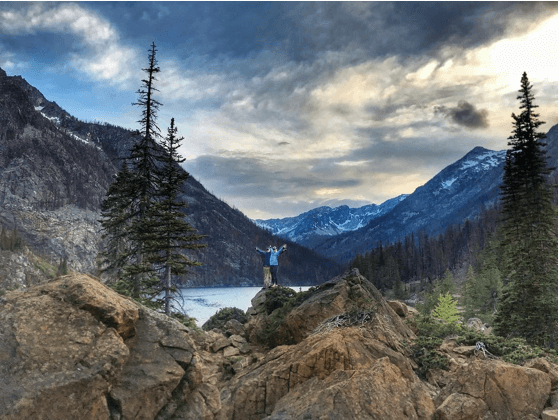
There’s something about waking up to a new view right out your window. It is a simple reminder that life isn’t meant to be lived the same way every day. One morning you’re sipping coffee beside a quiet mountain lake, the next you’re watching the sun rise over the ocean or listening to rain tap gently on the roof beneath a canopy of towering evergreens. Every mile brings another chance to slow down; explore a place you’ve never seen and collect moments that stay with you long after the trip is over.
RV travel isn’t just about getting from one destination to the next. It’s about gathering around a campfire after a day of adventure, sharing meals outside, meeting fellow travelers and making memories with the people who matter most. The best stories often come from the unplanned stops, the scenic backroads and the simple joy of calling almost anywhere home for the night. Once you experience that kind of freedom, it’s easy to understand why so many people choose to explore Washington State and beyond with an RV.
The RV life is filled with adventure while also allowing you to bring along a few creature comforts of home. Perhaps you’ve been thinking about it, maybe you’ve enjoyed watching some YouTubers as an armchair traveler and wondering just how difficult is it to do? Well just like anything, there is a bit of a learning curve, but it is by no means overwhelming. You can do it as a solo traveler, couple or as a family and you can easily start right where you’re at. You don’t need to go invest in a big one-ton diesel pickup or break your bank on one of those bus sized motorhomes.
Every mile brings another chance to slow down.
Brooks Smothers, RV Out West
Choosing the Right RV
Selecting the right RV starts with understanding how different rigs align with your travel style, budget and the kind of trips you plan to take. Factors such as size, towing requirements, sleeping capacity and campground access all play a role in finding the best fit for your adventures.
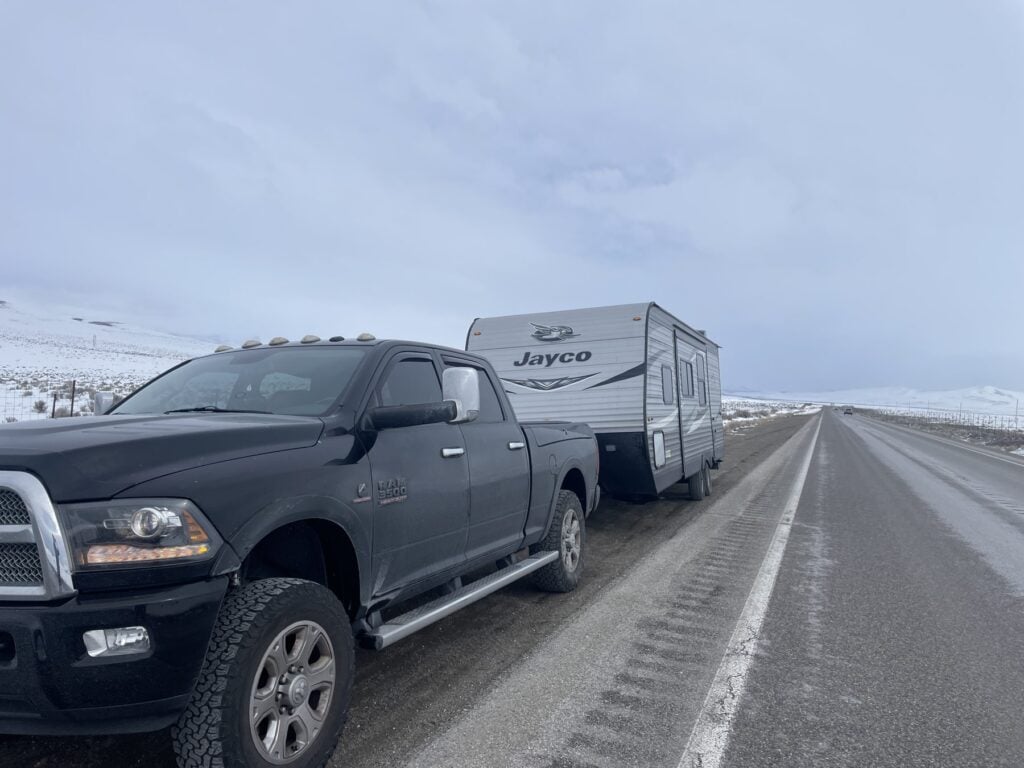
First and foremost, there are two main classifications: motorhome or towable like a travel trailer. There are a few things to consider when trying to decide what will work for you. A motorhome is one that you drive, it could be as small as a Sprinter van or as large as a bus. The one thing to keep in mind about a motorhome is that when you arrive to your campground or location, you may want to have a car to get you to and from trailheads or the activities you plan to do in that area. In the RV world those cars are often referred to as either ‘Toads’ or ‘Dinghies.’ You would need to be able to tow or pull a Toad behind your motorhome, otherwise, you’ll need to break camp each day that you plan to leave to go explore and parking a big motorcoach is a hassle if not impossible at trailheads for example.
On the flip side with a towable you have a lot of different options in various price points that you tow behind your vehicle, thus allowing you to use your tow vehicle as your get around vehicle. The trick here is that you will need to pay attention to matching up what trailer you’re interested in with the towing capacity of your vehicle. This is a big one, it’s important especially here in Washington State and towing mountain passes.
One piece of advice is do not trust what a dealership tells you with regards to answer the question of “I have this vehicle; can it tow this trailer I’m looking at?” There is a lot of information out there on the internet, do your research. Not all F-150s have the same towing capacity, as it depends on the engine choice, gear ratios, and more. You really need to look at the door sticker on your vehicle to get down to the specifics.
One quick note about RV dealerships, they do not operate the same as a car dealership. Meaning that you don’t want to drive across the state to a dealership, because if/when you need to get service work, and especially if it’s warranty work. You will need to go to the dealership that sold you your RV. Just keep that in mind when selecting an RV dealership.
Essential Gear for Your First Trip
Once you have a better idea of the type of RV that fits your travel style, the excitement of planning your first adventure really starts to build. Before you pull out of the driveway, there are a few essential pieces of gear you’ll need to have on hand and budgeting for these items ahead of time will help ensure your first trip is safe, smooth and stress-free.
Wheel Chocks & Leveling Blocks
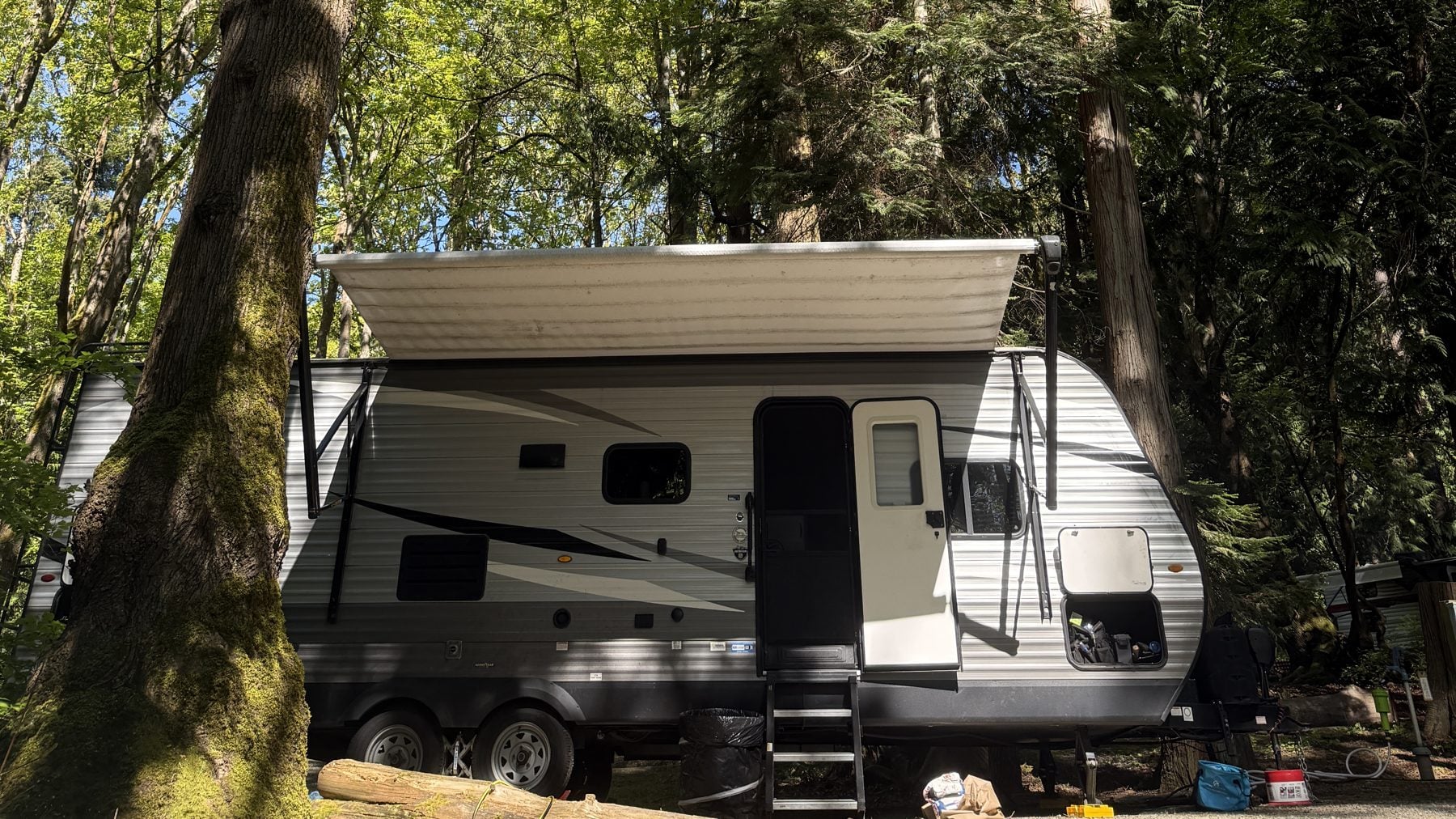
You will always want to chock your RV tires even if it’s a motorhome and you set the parking brake. Avoid the cheap plastic ones, Harbor Freight has some nice black rubber ones that are not expensive and work great. You will also need to purchase leveling blocks. These are often yellow squares that look like 0.5” thick Legos. It’s important to level your RV when you arrive in camp so that your appliances run properly as well as it just feels more comfortable when you’re inside your RV when it’s all level.
Water System
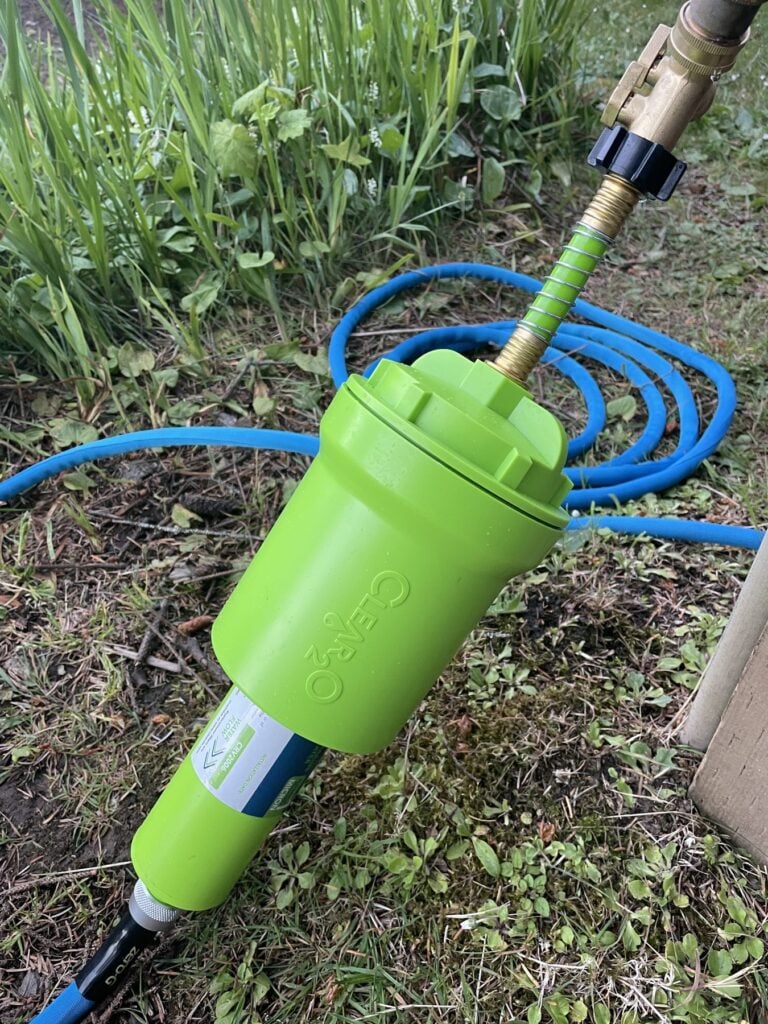
A good water filter that can attach to the campground spigot is a good idea especially if you’re planning on drinking that water. You will also need to get a water pressure regulator as not all campgrounds’ water pressure is created equally, and this device screws onto the spigot and allows you to adjust up or down the water pressure inside your coach. Lastly, you will need potable water hoses, I recommend the Goal Zero blue hose and at 25’ it has handled almost all situations and there has only ever been a rare occasion where I’ve needed to use a second hose due to the location of the spigot and where my water hook up is on my trailer.
Waste System
A sewer slinky or also called a poo tube is a black hose that connects to the waste outlet on the exterior of your RV and connects to the dump so that you can easily manage your grey and black tanks and dump them when necessary. A few things to consider about your tanks. A grey tank collects, sink water, shower water but it doesn’t collect human waste, that is what the black tank is for. When you go to dump your tanks, after you have everything connected it is recommended to open your grey tank valve first just to test and make sure you don’t have any leaks, then promptly shut the grey tank valve once you’ve confirmed proper connection. Then proceed with pulling the black tank valve, when that tank is empty then you’ll pull the grey tank valve last. This also helps to clear out the sewer slinky and give it a little clean. It is also recommended that you pick up some tank treatment to help break down the waste and manage any odors. Personally, Matt’s Liquified is the best.

Electrical System
A surge suppressor is a must. You may have just made quite a large purchase, and you will want to protect that. Not all campground power is consistent, especially when there is a huge draw on the campgrounds as RVers are all running their A/C, as an example. Therefore a quality surge suppressor is critical. The Hughes Power Watchdog is a great one to get, these are not cheap, but they are worth every penny. Don’t skimp here.
The Shakedown Trip
You are standing in your driveway admiring that beautiful RV you just bought, you’ve loaded up the necessary essentials, the bed is made, a few pots and pans are loaded and now what? Well, it’s time for the Shakedown Trip. You want to head to a campground that is close to home preferably not greater than 30 minutes from home. Think of this part as a camping trip to get to know your rig, as well as to relax by the campfire. Here on the shakedown trip, you want to use your oven, stove top, get that fridge cool, and just use all the systems on your rig. I recommend that you use the Notes feature on your phone to keep notes of things you want to add to your trailer. Maybe you didn’t bring tongs? And need them for flipping bacon. Well add a note so next time you can make sure they make it in. Keep in mind, all these things you don’t need to rush out and buy as that can get expensive. Start shopping right at home. You may have a second set of this or that, and you don’t need that much at home so you can just move one of those items into your RV. Start there before rushing out to buy anything. Remember too that every item you add, also adds weight. It’s surprisingly easy to exceed your RV’s Cargo Carrying Capacity so just be mindful of what you’re adding and maybe once a year take stock of items you have on board. Haven’t used that spatula in a year, then take it out.
Common Beginner Mistakes
Every RVer starts as a beginner, and along the way, most people learn a few lessons the hard way. One of the biggest mistakes new RVers make is thinking the adventure starts when they arrive at the campground, when a successful trip begins before you ever leave the driveway. Forgetting a pre-trip inspection, skipping tire pressure checks, failing to secure items inside the RV, or not confirming your route can turn an exciting getaway into a stressful situation. Taking a few extra minutes before every trip can prevent many common problems down the road.
Another mistake many first-time RVers make is trying to bring everything they own or expecting the first trip to go perfectly. RV travel comes with a learning curve, from figuring out tank management and campground hookups to understanding how your RV handles in different conditions. The best way to gain confidence is to get out there, learn from each experience, and remember that every seasoned RVer was once setting up their first campsite and figuring it all out for the first time.
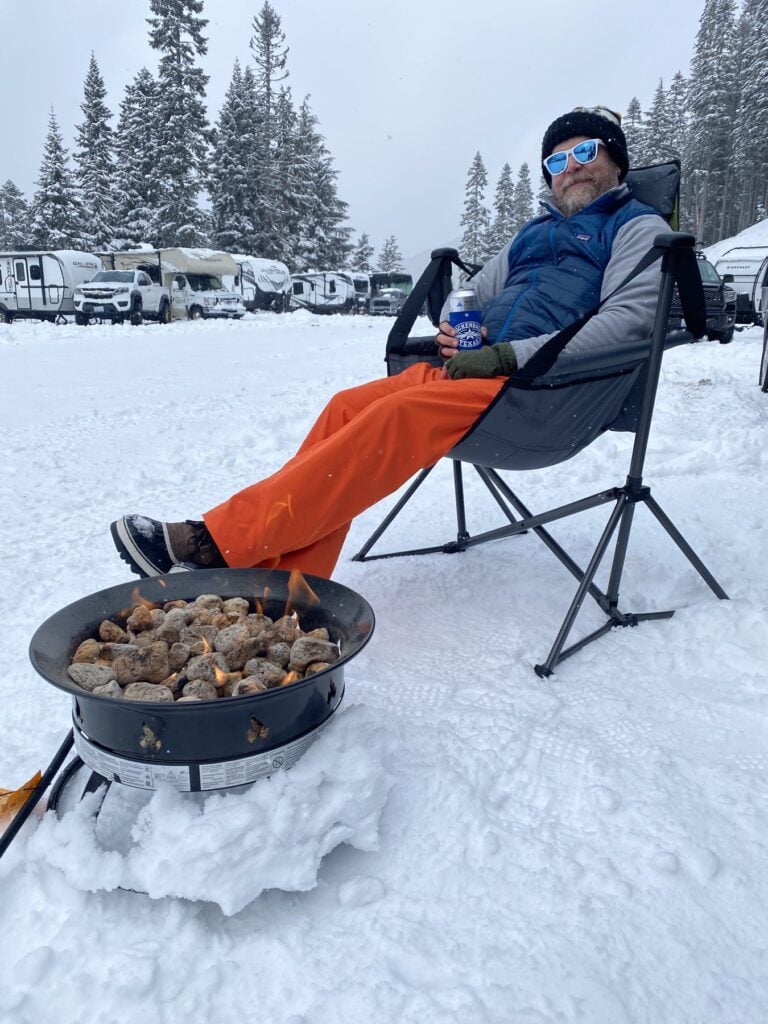
RVing is more than just a way to travel, it’s an invitation to experience the world around you and create memories that last far beyond the miles you drive. From your first campground setup to the adventures that take you hundreds of miles from home, every trip builds confidence and adds another chapter to your story. The small challenges along the way become part of the stories you’ll share around a campfire laughing with your fellow RVers.
If you’re just getting started, remember that every RVer was once learning the basics, asking questions and figuring things out one trip at a time. Don’t wait for the perfect setup or the perfect plan. Start where you are, keep learning and embrace the adventure ahead. The open road is waiting, and there are countless places to explore, stories to tell, and memories to make along the way. That is what the RV life is all about.
Listen: So You Want to RV?
Hear more from Brooks on Episode 36 of the RV Out West podcast, all about getting started with RV life.
Ready to plan your next RV adventure? Go listen to RV Out West wherever you find your favorite podcasts and start discovering your next destination.
- About the Author
- Latest Posts
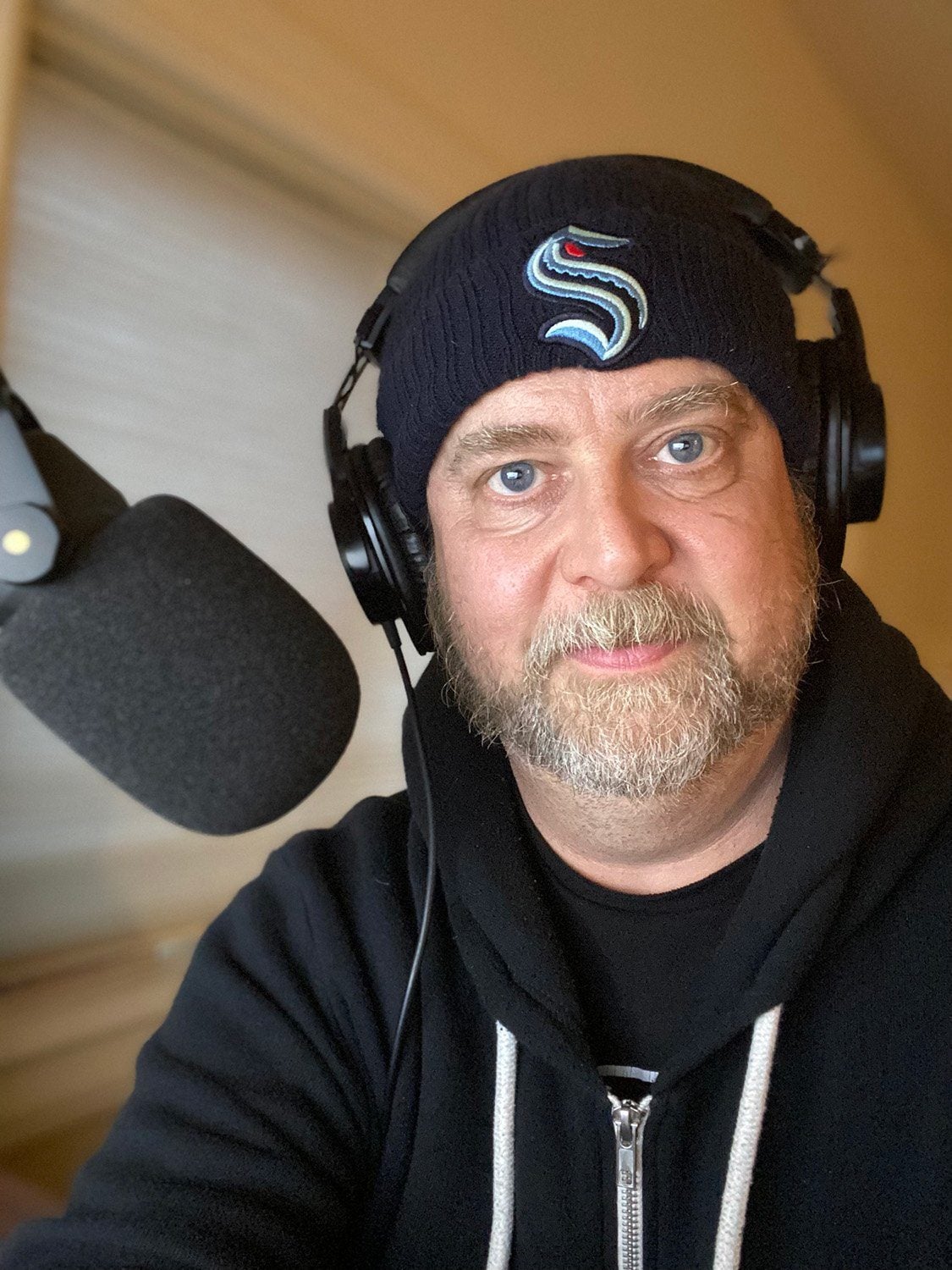
Brooks Smothers is the host of RV Out West, a podcast dedicated to helping RVers explore the Pacific Northwest and beyond through destination inspiration, camping tips, gear recommendations, and stories from fellow travelers. As a weekend RVer himself, Brooks shares the lessons learned from years on the road with his family, proving that adventure doesn’t require unlimited time, just a willingness to get out there and explore.
Ready to plan your next RV adventure? Go listen to RV Out West wherever you find your favorite podcasts and start discovering your next destination.