Wenatchee Valley Museum & Cultural Center
Photo: Wenatchee Valley Museum & Cultural Center via Google Maps
The Wenatchee Valley Museum and Cultural Center has been telling the story of North Central Washington for more than 85 years, from Ice Age floods and Clovis points to the apple orchards that made Wenatchee famous. Its longtime home is a pair of historic federal style buildings on South Mission Street that once served early Wenatchee as the post office and its annex.
Right now the museum is in the middle of a major transformation. The main buildings closed for construction after a groundbreaking celebration on May 16, 2026, as part of the Branch Out campaign, and the renovated and expanded museum is scheduled to reopen in 2028. You can still visit in the meantime: the Downtown Branch at 30 South Mission Street, just down the street from the main buildings, runs an art gallery with rotating exhibits and is the place to stop when you are downtown.
What You’ll See
At the Downtown Branch, expect a gallery of rotating exhibits rather than the full permanent galleries, which are in secured storage during construction. Check the featured exhibits page on the museum website to see what is showing when you plan to go.
The permanent collection is the reason to keep this museum on your list. Highlights the museum has long shown include:
- Clovis points: stone points the museum dates to about 11,500 years ago, from a find made in East Wenatchee in 1987.
- The 1919 Wurlitzer pipe organ: a theater organ from Wenatchee’s Liberty Theater, donated on the condition that it be fully restored, maintained and played; museum volunteers keep it in working order.
- The Great Northern Railway diorama: a coin operated HO gauge model railroad that runs over trestles and through two historic tunnels, with exhibits recalling the 1910 Wellington avalanche, which the museum calls one of the worst railroad disasters in US history.
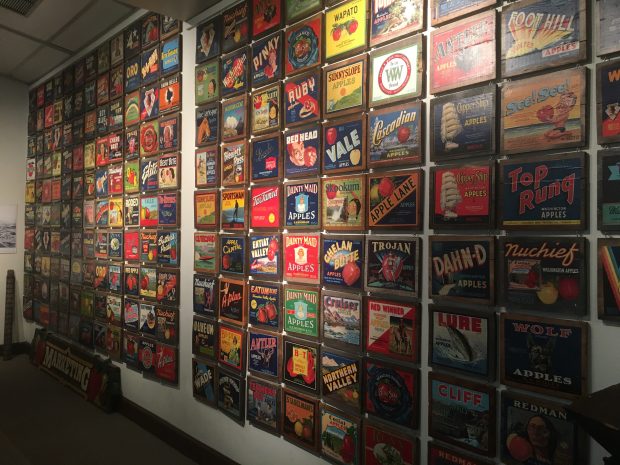
- Washington’s apple industry: exhibits on the orchards and packing houses that shaped the valley, including a 1920s apple packing line.
- The first nonstop flight across the Pacific: the story of the 1931 flight of Miss Veedol, which ended with a skid landing in East Wenatchee, told with a propeller from the plane.
The Branch Out plans call for completely new interactive and immersive exhibits on the region’s history, art, science and culture, so expect a fresh presentation when the main buildings reopen.
The Story Behind It
The museum was founded in 1939 by the Columbia River Archaeological Society. Today it is a nonprofit that operates with the support of the cities of Wenatchee and East Wenatchee, with a mission to gather, engage and educate people to celebrate and preserve the history, arts, sciences and diversity of the region.
Branch Out is the biggest chapter in its history. The plans add a light filled lobby connecting the two historic buildings, about 14,000 square feet of new interior and exterior space, a new main entrance at the rear with better parking access, and an outdoor plaza for programs. A $2.5 million matching gift anchored the fundraising, and in 2026 the museum reported that it had exceeded its goal with gifts from 179 donors across five states.
Tips for Your Visit
- Head to the Downtown Branch at 30 South Mission Street. The main buildings at 127 South Mission Street are closed for construction until the planned 2028 reopening.
- Lectures, camps and annual events are being held at various locations around the Wenatchee Valley during construction, so check each event page for where it meets.
- The branch gallery rotates its shows, so look at the featured exhibits page before you go.
- Pair your visit with the Rocky Reach Discovery Center at Rocky Reach Dam, about 7 miles north of Wenatchee, where some pieces from the old Museum of the Columbia now live.
The museum’s programs are spread across several sites until 2028; check the website before you go.
Plan Your Visit
Address: 30 S Mission St, Wenatchee, WA 98801
Phone: 509.888.6240
Website: wenatcheevalleymuseum.org
Hours and admission: Check the museum website for current days, hours, and admission before you visit.
Directions: View on Google Maps