
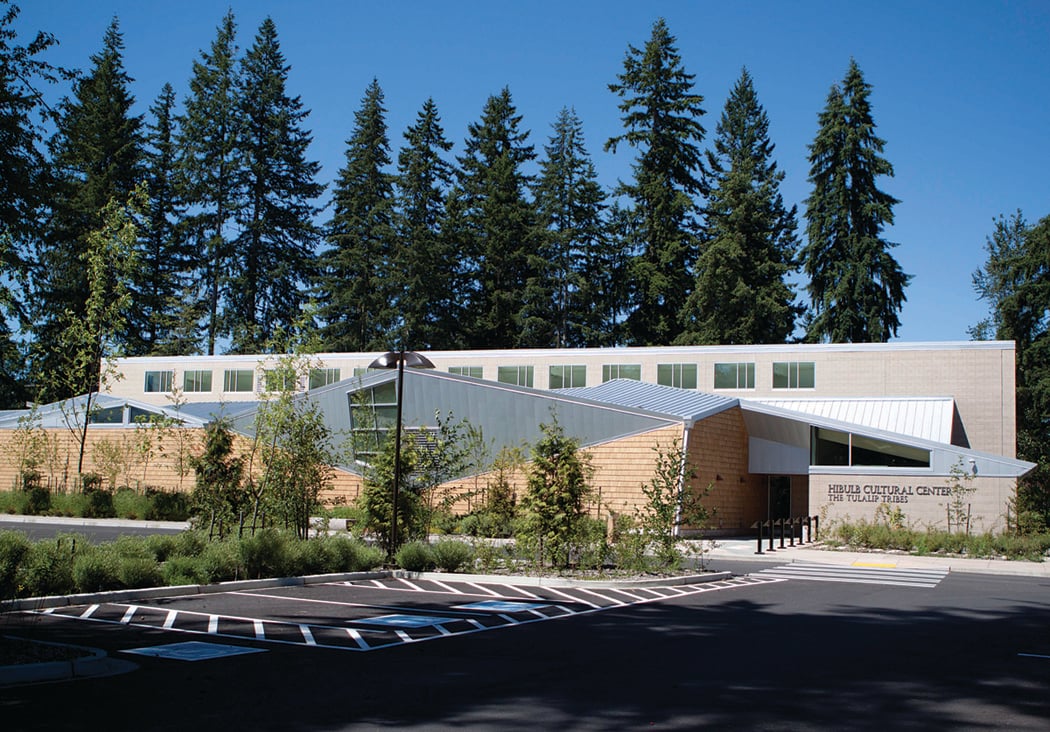
Hibulb Cultural Center and Natural History Preserve
Photo: Hibulb Cultural Center & Natural History Preserve via Google Maps
The Hibulb Cultural Center and Natural History Preserve, on the Tulalip Reservation just west of Marysville, is where the Tulalip Tribes tell their history in their own words. The tribes opened the center in 2011, and its stated mission is to revive, restore, protect, interpret and collect the history, traditional cultural values and spiritual beliefs of the Tulalip Tribes.
It sits about half a mile west of I-5 at Exit 199, which makes it an easy cultural stop for anyone traveling north of Everett. Inside, the galleries give the ancestral perspectives of the bands that make up the Tulalip Tribes, along with contemporary and time honored art. Outside, a natural history preserve of forest and wetland surrounds the building.
What You’ll See
A walkway leads you through the building’s permanent spaces, which together trace the journey of the Tulalip people from their ancestral villages to the present day.
- Canoe Hall. Historic canoes greet you near the entrance, along with larger than life cedar carvings of two Coast Salish figures.
- The Longhouse. A full size reconstructed longhouse room, with video presentations, brings the traditional Coast Salish home to life.
- The Main Gallery. Displays on cedar and salmon, the Point Elliott Treaty and the boarding school era explain how the Tulalip Tribes came to be and what they have carried forward.
- Language and family history. Lushootseed, the traditional language, runs throughout the exhibits, with audio stations where you can hear words spoken, and interactive genealogy walls trace Tulalip families.
- Warriors We Remember. A veterans wall honors Tulalip members who served in the military.
The center also hosts rotating exhibits alongside these permanent galleries, so repeat visits often turn up something new.
The Story Behind It
The Tulalip Tribes opened Hibulb on August 19, 2011, after more than 30 years of planning. The name refers to the principal winter village of the Snohomish Tribe and is said to mean “the place where the white doves live.” Portland firm StastnyBrun Architects designed the 23,000 square foot building around a river theme.
The driving force behind the project was Hank Gobin, a Tulalip artist who led the planning and insisted on professional staffing, full accreditation and the tribe’s authority to tell its own story. Today the center includes a collections facility that is a federally certified archaeological repository, and it was the first tribal facility certified by Washington State as an artifact repository. It is also home to the Tulalip History Project, which records oral histories from tribal members and elders.
Tips for Your Visit
- From I-5, take Exit 199 (Marine Drive NE) and head west about half a mile. Parking is free on site.
- Save time for the outdoors. The natural history preserve covers about 50 acres of forest and wetland around the center.
- Check the events calendar before you go. The center hosts workshops in beading, weaving and ribbon skirt making, plus community events such as its annual salmon bake.
- Coming with a group? The center offers group tours, which you can request through the form on its website.
Plan Your Visit
Address: 6410 23rd Ave NE, Tulalip, WA 98271
Phone: 360.716.2600
Website: hibulbculturalcenter.org
Hours and admission: Check the museum website for current days, hours, and admission before you visit.
Directions: View on Google Maps