
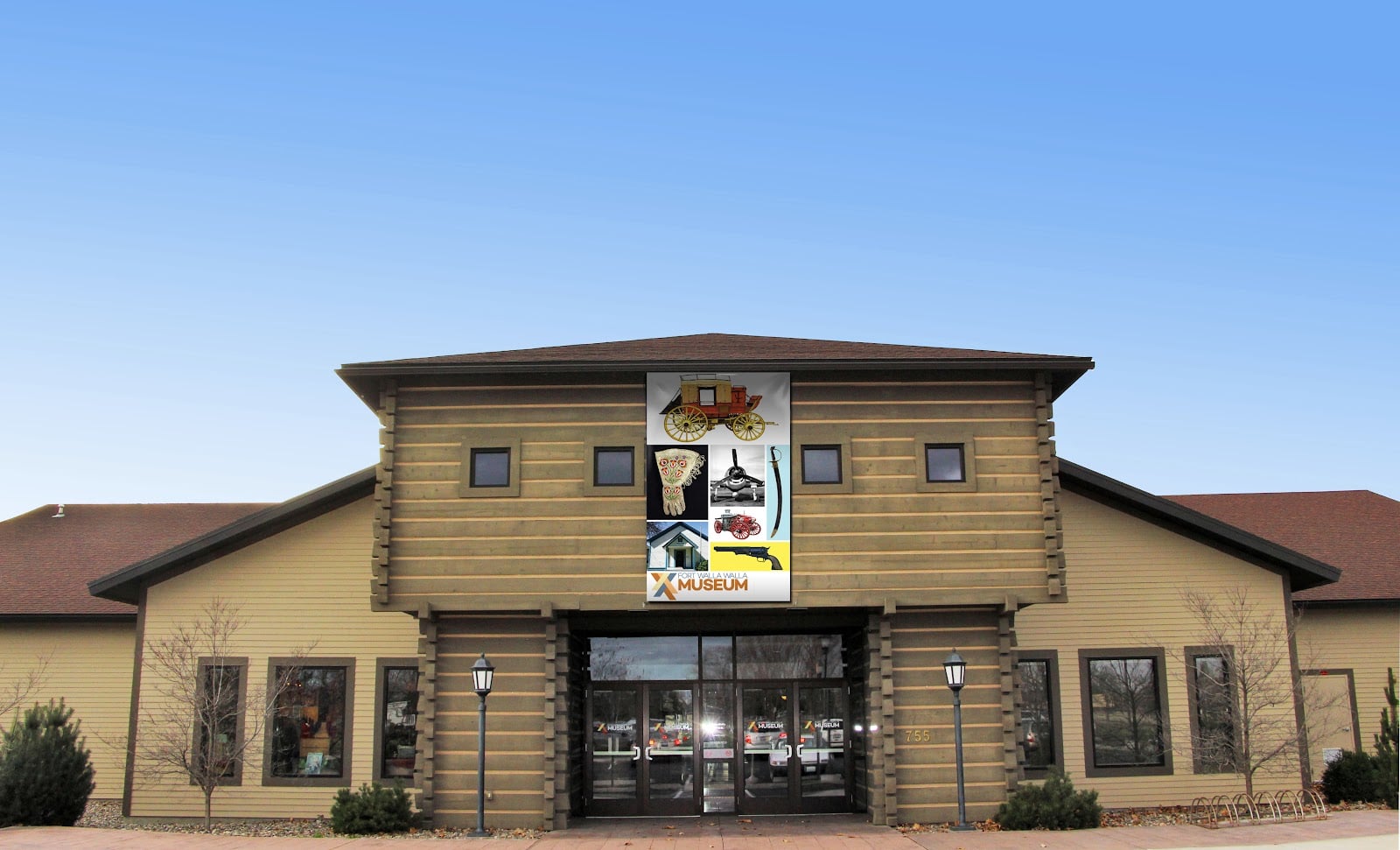
Fort Walla Walla Museum
Photo: Fort Walla Walla Museum via Google Maps
Fort Walla Walla Museum sits on the grounds of the city’s 19th century military fort, inside Fort Walla Walla Park. The campus covers 15 acres of the original 640 acre military reservation and holds five exhibit halls, a 17 building Pioneer Village, and a collection the museum puts at more than 60,000 artifacts and photographs telling the story of the many people who have lived in the Walla Walla Valley.
This is the place to get the valley’s backstory. The Oregon Trail, the Lewis and Clark expedition, the fort itself, farming in the horse era and the Washington State Penitentiary all get their turn here. The museum pitches the experience to the whole family, and the mix of big indoor halls with an outdoor village of real pioneer buildings makes it an easy stop to share with kids.
What You’ll See
- Pioneer Village. Of the 17 structures, 15 are original buildings moved from within 30 miles of Walla Walla and two are replicas. Look for the 1867 Union School, a one room schoolhouse that taught grades one through eight until it closed in 1930; the Ransom Clark log house, begun in 1859; an 1880s Northern Pacific railroad depot from near Eureka; and the 1903 Prescott jail, which survived a 1915 fire that destroyed the rest of that town’s business district.
- The 33 mule team. Exhibit Hall 3 holds life size replicas of a 33 mule team hitched to a modified 1919 Harris combine, one of the most memorable sights on the campus.
- Horse era farm equipment. Exhibit Hall 2 houses what Visit Walla Walla calls one of the nation’s largest collections of horse era agricultural equipment, covering 1859 to 1930.
- The Blue Mountain locomotive. Standing outside the Entrance Building, it is billed by the museum as Washington’s oldest surviving locomotive.
- The Entrance Building and beyond. An Abbot-Downing Company stagecoach from around 1903 greets you, alongside permanent displays on fashion, military history and the fort’s years of operation from 1856 to 1910. Elsewhere on the grounds you will find a bucket cell from the Washington State Penitentiary and a Native American collection gathered by the Lloyd family.
The Story Behind It
The museum traces its lineage to 1886, when the Walla Walla Valley Pioneer Historical Society was formed. The military post it is named for operated here from 1856 to 1910, and the museum opened to the public at its current home in Fort Walla Walla Park in 1968.
It has kept growing ever since. A headquarters building with climate controlled storage and a research library was completed in 2001, and a new Entrance Hall followed in 2010. The Lloyd family collection carries its own history: Albert Lloyd negotiated with the Palouse people in the 1850s, and the family and the Palouse kept up a good relationship and exchanged gifts over the years, which became the basis of the museum’s Native American collection.
Tips for Your Visit
- Visit Walla Walla suggests budgeting at least an hour just to stroll the grounds, before you count the five exhibit halls.
- Bring your camera but leave the flash off: flash photos are not allowed inside the exhibit halls.
- Check the museum calendar for Living History presentations, where local performers portray figures from the valley’s past, and for Heritage Skills classes such as Dutch oven cooking and genealogy research.
- If walking the grounds is a challenge, Visit Walla Walla notes that golf cart rides can be arranged by calling the museum ahead of time.
Plan Your Visit
Address: 755 NE Myra Rd, Walla Walla, WA 99362
Phone: 509.525.7703
Website: fwwm.org
Hours and admission: Check the museum website for current days, hours, and admission before you visit.
Directions: View on Google Maps