
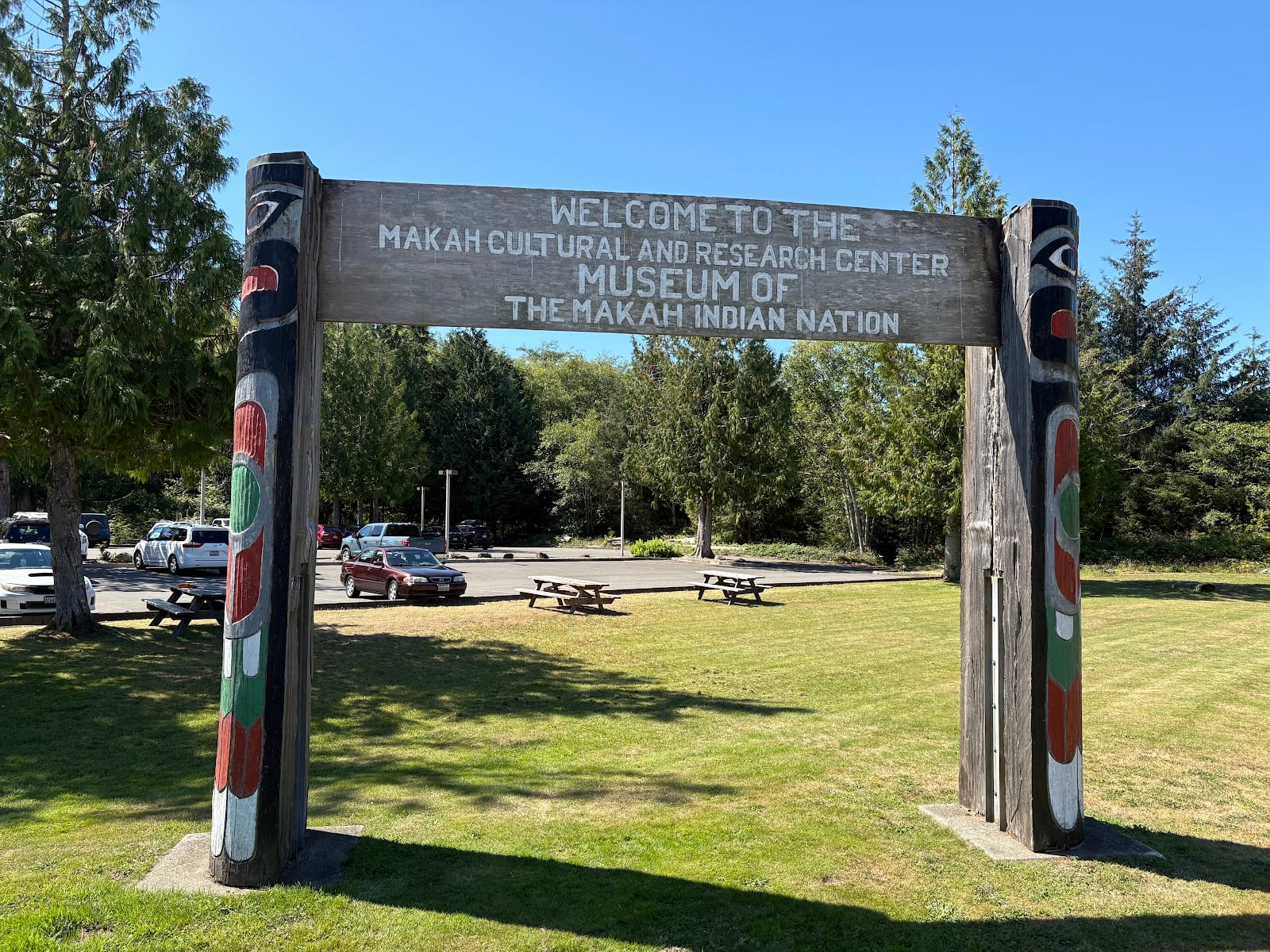
Makah Cultural and Research Center
Photo: Josh Kennedy via Google Maps
At the northwest tip of the Olympic Peninsula, in the Makah village of Neah Bay, the Makah Cultural and Research Center holds the artifacts of Ozette, a Makah village that a mudslide buried centuries ago. Most people simply call it the Makah Museum. The Makah Tribe owns and operates it, and the exhibits tell the story of a whaling, fishing and seafaring people from the tribe’s own point of view.
Neah Bay sits at the end of the road on the Makah Reservation, and getting here takes some commitment. That is exactly why the museum is worth building a trip around. The objects inside are hundreds of years old, they come from a village site on this same stretch of coast, and they are cared for by the descendants of the people who made them. Add the trails and beaches of the reservation and you have a full, memorable day on the far edge of Washington.
What You’ll See
The Ozette collection is the reason people make the drive. In February 1970, a storm and the tidal erosion that followed exposed hundreds of wooden artifacts at the old village site on the coast near Lake Ozette. Because the houses had been buried so suddenly, wood, basketry and other materials that normally decay survived in good condition. The Makah Tribe dates the artifacts at 300 to 500 years old, and Atlas Obscura reports that about 500 of them are on display.
- Whaling and fishing equipment. Gear recovered at Ozette shows how Makah families made their living from the ocean, from hunting whales and seals to fishing offshore.
- Basketry and everyday objects. Baskets, tools and household items give you a close look at daily life in the village before European contact.
- A full size longhouse. A replica longhouse gives you a feel for the scale and construction of a traditional Makah cedar house.
- Canoes. Replica whaling, fishing and sealing canoes show the craft that made life on this coast possible.
- Photographs and contemporary work. Historic photographs and contemporary pieces connect the ancient village to the living Makah community.
The Story Behind It
Archaeologists first tested the Ozette site in the 1960s, but the 1970 storm changed everything. For 11 years, Makah tribal members worked alongside university students under the direction of Washington State University archaeologists to recover the buried houses, and the dig produced more than 55,000 artifacts, roughly 30,000 of them made of wood. The collection stayed with the Makah people.
The Makah Cultural and Research Center opened in 1979 under the direction of tribal chairman Edward Eugene Claplanhoo, soon after the Ozette village was unearthed. Its mission reaches beyond the galleries: the center works to protect and preserve the language, culture and archaeological resources of the Makah Nation, and it runs education programs that include Makah language instruction.
Tips for Your Visit
- Call ahead before you make the long drive. The museum’s own website has continued to show an old pandemic closure notice, while the Makah Tribe’s website lists the museum as open, so a quick call to 360.645.2711 is the surest way to confirm.
- Leave the camera in the car. Photography is not allowed inside the museum.
- If you plan to hike, walk the beaches or sightsee elsewhere on the reservation, you need a Makah Recreation Pass displayed in your vehicle. The museum is one of the places that sells it, and you can also buy it online from the Makah Tribe.
- Make a day of it. The museum pairs naturally with the Cape Flattery Trail and the beaches around Neah Bay, which the same recreation pass covers.
Plan Your Visit
Address: 1880 Bayview Ave, Neah Bay, WA 98357
Phone: 360.645.2711
Website: makahmuseum.com
Hours and admission: Check the museum website for current days, hours, and admission before you visit.
Directions: View on Google Maps