
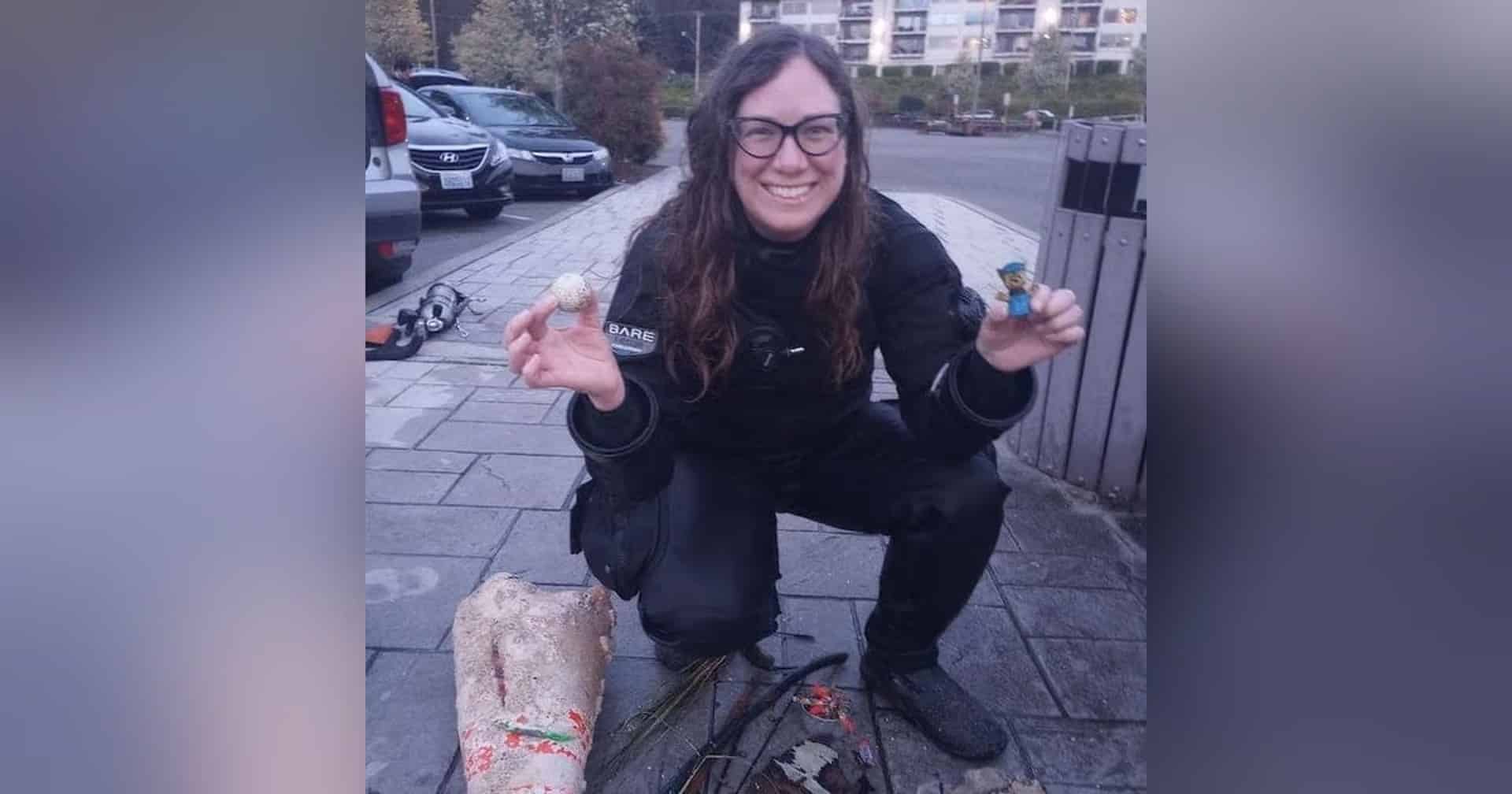
Discover the Alien World Underwater with Scuba Jess
When Scuba Jess moves to Seattle and discovers a passion for the mysterious underwater world, she sets out to explore it, facing danger and unexpected challenges along the way in her quest to become a ‘trekkie’ of the sea.
I feel like scuba diving was the passion that I was missing in my life or my purpose. – Scuba Jess
My special guest is Scuba Jess
Meet Scuba Jess, an avid underwater photographer with a passion for exploring the marine life in Washington State. Born in New York and raised in Utah, Jess moved to Bellevue, Washington in 2008, where she discovered her love for scuba diving. Since then, she has accumulated over 1300 dives, exploring her favorite dive locations and capturing stunning photographs of the local sea creatures. A self-proclaimed Trekkie and coffee enthusiast, Jess has turned her underwater adventures into a lifestyle, sharing her knowledge and love for diving with fellow enthusiasts.
This is Scuba Jess’s story:
Scuba Jess, was living in Utah, made the journey to Bellevue, Washington in pursuit of adventure and a newfound passion – scuba diving. Born Jessica Alexanderson, she quickly adopted the moniker “Scuba Jess” as her enthusiasm for diving grew. Her love for nature, the ocean, and underwater photography blossomed as she immersed herself in the vibrant marine life of the Pacific Northwest. Scuba Jess’s first dive in cold water opened a whole new world for her, and she began to see herself as an underwater explorer, embarking on countless adventures with her fellow divers. Over the years, she has developed a deep appreciation for the local marine critters, such as the Pacific Spiny Lumpsucker and hermit crabs. Scuba Jess’s dedication to capturing the beauty of underwater life has not only made her a part of a tight-knit diving community but also an advocate for marine conservation.
In this episode, you will be able to:
Dive into captivating scuba diving experiences in Puget Sound and Vancouver Island. Recognize the vital role of ocean conservation, pollution reduction, and cleanup dives in preserving marine ecosystems. Grasp essential scuba equipment, safety measures, and useful diving tips for novice adventurers. Uncover the enchanting world of underwater photography, marine life, and top dive locations on the planet. Explore Scuba Jess’s personal interests, hobbies, and how Star Trek shaped her passion for the underwater realm.
Scuba Diving in Puget Sound Good scuba diving in Puget Sound requires proper planning due to its strong currents and the presence of ferry lanes. By staying aware of these challenges, divers can experience an incredible underwater world filled with fascinating marine life. However, divers must remain cautious and follow safety guidelines to avoid dangerous situations. Scuba Jess emphasizes the importance of being mindful of the currents and ferry lanes when diving in Puget Sound. During the podcast, she describes her experiences overcoming these difficulties to access breathtaking dive sites. She notes that divers who manage to navigate these hazards can witness an amazing underwater environment teeming with life.
Scuba Jess episode Transcript
Hello, friends, and welcome to the Exploring Washington State podcast. My name is Scott Cowan and I’m the host of the show. Each episode, I have a conversation with an interesting guest who is living in or from Washington State. These are casual conversations with real and interesting people. I think you’re going to like the show. So let’s jump right in with today’s guest. Well, my guest today is someone who goes by the name of Scuba Jess. Jess, I’m going to let you introduce yourself a little bit more than that. I apologize, everyone. Bosley has entered in the room. My puppy has decided to grace us and open my office door. So now we’ll have outdoor Ambiance music in the background. So, scuba. Jess. Welcome to the show.
Scuba Jess [00:00:49]:
Thank you. Thank you so much for having me. Hi, everybody. It’s so nice to be here. Yeah. My full name is Jessica Alexanderson, but it’s kind of a mouthful, especially when you’re at the beach diving with 90 pounds of dive gear on your back and you’re trying to explain Alexanderson. So I just changed it to Scuba Jess, and that’s a lot easier to remember. Yeah, and I’ve been moving west my whole life. So I was born in New York. I lived there till I was five, and then we moved to Utah. So I grew up in the country and I moved out here to Bellevue, Washington, in 2008 for my job. And I just loved it just from the airplane. The first time I came to Seattle, just looking down, seeing all the water and the trees was so green and blue and beautiful. And I’m like, I need to move here. And the craziest thing is, I love coffee. And so in Utah, there’s very limited coffee supply. And when I walked off the airplane in Seattle and I saw everybody holding coffee, I was like, I’m home. These are my people. I’m here. And so I was like, I have to move here.
Scott Cowan [00:01:52]:
Just to interrupt you, to help paint a picture, jess just held up a photo of but first coffee. Not a photo, but a mug with butt first coffee on it. I’ve got my Washington State coffee mug in my hand. We’re enjoying coffee, but I have to ask because your story is not quite believable to me.
Scuba Jess [00:02:09]:
Oh, really?
Scott Cowan [00:02:10]:
Well, this is what you said. You said from the plane, I saw the blue water, the green, blah, blah, blah. So you arrived in 2008, if memory serves me, only three days. Didn’t have rain in Seattle.
Scuba Jess [00:02:23]:
Actually, I came up here in 2007 before I moved here. That was my first time. So I worked for a company called Evergreen Shipping. Ship containers all over the world, big cargo ships. Like to get our ships stuck in the Suez Canal. That’s us.
Scott Cowan [00:02:39]:
That’s you.
Scuba Jess [00:02:40]:
I started there in the Salt Lake office, which just seems funny to me.
Scott Cowan [00:02:44]:
That a shipping company would be in Utah. I’m sorry.
Scuba Jess [00:02:47]:
They had a logistics cell. It was like documentation and traffic team because it’s like cheaper labor probably to outsource it to Utah. And so after I worked there for six months, they sent me up here, and I actually got to go to the port to see our huge cargo ships, which was amazing. And I got to go to my very first Mariners game. And up until that point, I was like, a huge Yankees fan because my family’s from New York, and my mom’s a Mets fan and my dad’s a like, my mom lived near Shea Stadium, and my dad was from Manhattan, so I was always Yankees. And then as soon as I got to Seattle, I got to go to a Mariners game, and I saw Ichiro, and I was just like, oh, my gosh, this is amazing. And so, yeah, when I got back from this business trip back to Utah, I was like, I need to move to Seattle. Like, this is amazing. And so, yeah, I luckily moved here in 2008. I convinced my little sister to come with me because I didn’t want to move alone. And she was still in college, but it was probably not the smartest thing. But she just dropped out right then and just moved with me. She should have came like, six months later when she finished the semester or whatever, but she’s like, no, I’ll just come. So, yeah, I just picked an apartment where I could walk to work without getting lost. And, yeah, I ended up downtown Bellevue, and it was amazing. So that’s just a real that’s your.
Scott Cowan [00:04:03]:
Story to how you got to Washington. And I tease you about the three days because I grew up on the west side of the state. I went to college in the center of the state, which college I went to. It’s state school, middle of the state called Central. And then I moved back to Seattle. And the person that introduced us, Ron Church yeah, Ron was what we called a local in Ellensburg when we went to school. And we met Ron, and he was a local kid a couple years younger. Ron’s two or five years younger than us. I don’t quite remember us being this group of people. So after college, we all kind of migrated west to the Seattle market. And I lived there up until in the Seattle Tacoma area, up until 2017. And then I had enough. I couldn’t take the traffic. The gray sky got to me. Yeah, the traffic in the gray was not a good combo. And I was spending a lot of time in my car.
Scuba Jess [00:05:06]:
Oh, yeah.
Scott Cowan [00:05:06]:
So we moved to Wenatchee, where we were promised 300 days of sunshine. And that was a lie. No, I’m just kidding.
Scuba Jess [00:05:14]:
I know.
Scott Cowan [00:05:14]:
Shoot, I love living in Wenatchee. Let’s not talk about you for a second. Let’s talk about Ron. How did you because I think this is going to tie in.
Scuba Jess [00:05:25]:
So I actually started scuba diving in 2014. Before that, I had no idea you could dive in cold water. I always just thought it was warm water, like turtles and stuff. I grew up in Utah, so I was landlocked, so I didn’t really know about the cold water diving. And we have the most amazing diving here, and so when I first got into it, we go to Redondo Beach down in Federal Way every Thursday night. So we do Thursday night diving, and that’s where I met Ron, was at Redondo, and then my dive buddy Eric, he’s known Ron for a long time, too, so, yeah, he’s just a really nice gentleman. Came up, gave me some tips as a new diver back in 2014. And ever since then yeah, I have 2300 dives.
Scott Cowan [00:06:07]:
What?
Scuba Jess [00:06:08]:
Wait a second. No, wait. I’m sorry. I did my math wrong. Hold on 1 second. That was a total miscalculation on my part because I log all of my away missions, and I definitely need to drink more coffee because I had a really late night last night.
Scott Cowan [00:06:24]:
All right, hold on. We will be fact checking everything you say from this point forward.
Scuba Jess [00:06:28]:
1300 dives, not 2000. Holy moly. 1300 dives in eight years. There we go. So definitely need the coffee today. Holy cow. But, yeah, I basically go scuba diving two or three times a week, and I just fell in love with the amazing sea creatures that we have here. I’m a huge trekkie, and so every time I go scuba diving, I feel like I’m on an away mission underwater in a whole other world, and I’m just seeing all these aliens. It’s just fascinating, the amazing, beautiful sea creatures we have here. And so I wanted to just go around and take pictures of every single one and find out what everything I saw on the dive was. I’d come up after the dive and look through my guidebook and just like, oh, these are all the new to breaks I saw. These are the different fish.
Scott Cowan [00:07:15]:
So I just did some quick math.
Scuba Jess [00:07:17]:
Okay.
Scott Cowan [00:07:18]:
And over the course of your dive career, you’ve averaged 2.25 dives a week.
Scuba Jess [00:07:23]:
Yeah, that sounds right.
Scott Cowan [00:07:25]:
That’s insane to me.
Scuba Jess [00:07:27]:
It is so fun.
Scott Cowan [00:07:29]:
I’m not saying it wouldn’t be fun. I’m just saying 2.25 dives a week over eight years.
Scuba Jess [00:07:40]:
Yeah. I feel like scuba diving was, like, the passion that I was missing in my life or my purpose. I always knew I was missing something. And before I was a diver, I would go to lots of concerts, comedy shows, and I’m also a big, huge trekkie, so I go to a lot of Star Trek conventions and then obviously trying all of the different coffee shops that I can get to. So those were always my things before I was a diver. And then once I just was underwater in that swimming pool for the first time, breathing underwater, I was like, this is the most amazing thing I’ve ever done in my life. This is what was missing.
Scott Cowan [00:08:13]:
Interesting. Okay. And yeah, I’ve never tried scuba diving, to be transparent. I mean, I think it’s cool, but it’s not a thing I want to try, really. But no, it’s just not for I don’t know. Nothing against it.
Scuba Jess [00:08:28]:
It’s just like, are you comfortable in.
Scott Cowan [00:08:30]:
The water or have you comfortable in the water? But I’m just not interested. And I think now maybe you can help me, though, because one of the things that I think is a massive limitation of scuba diving is the inability to drink coffee while you’re scuba diving.
Scuba Jess [00:08:46]:
Oh, gosh. I’ve talked about this, actually, underwater. That would be so amazing because you’re cold after, like, an hour down there. I’m like, if I had an underwater coffee device.
Scott Cowan [00:08:57]:
You invent that. I will agree to learn to dive and be a beta tester. But until I can drink coffee underwater, I’m probably just yeah, but I have.
Scuba Jess [00:09:07]:
Like, a really nice thermos. So as soon as I get up out of my dive, I have my nice hot coffee right there waiting for me. I also am pretty famous because I bring my coffee machine with me in the car to the beach, so whatever dive site, because we go to some remote areas like Salt Creek or whatever, there’s no coffee shops around. Right. And so I’ll just go look for a plug on the beach, plug in my Mr. Coffee Maker, and just make a fresh pot of coffee right there for everybody. I’ve also, unfortunately, blown out a couple of fuses from my friend’s cars because you know how they have a little plug in thing where you can plug it into your cigarette lighter and have, like, an actual plug? So I plugged my coffee machine into that thing because I thought the voltage was okay and it was not okay.
Scott Cowan [00:09:47]:
I need to invest in an inverter. An inverter would be your friend in this situation.
Scuba Jess [00:09:54]:
Yeah. So I feel bad, like, I’m sorry I broke your car trying to coffee.
Scott Cowan [00:09:58]:
I mean, coffee coffee trumps yeah. So you met Ron.
Scuba Jess [00:10:02]:
Yeah.
Scott Cowan [00:10:02]:
And Ron had already been diving. But one thing well, there’s lots of things about Ron I don’t know, but I don’t know. When he started diving, there was this period where he was never a diver, and then there’s been this life after that, which is how I think he identifies is he scuba dives? His vacations are dive trips.
Scuba Jess [00:10:24]:
Yeah, like, diving changes your life. It’s like pre dive and post dive. Like, that’s how I, like, categories my life, like, everything. Before scuba, Jess was like a whole other person. I, unfortunately haven’t dove with Ron very much. He didn’t show up to our dive sites when we were diving. I think our schedule is probably done in a line, and then I think recently he got injured or something, but he’s going to be getting back in the water soon. So I really hope to dive with him and hear more of his story because I’m not actually sure when he started diving, but I know he was definitely diving before I was because I remember he gave me some tips as a new diver.
Scott Cowan [00:10:58]:
Right.
Scuba Jess [00:10:58]:
But, yeah, the dive community is amazing. Whenever there’s new, fresh dive blood, we’re always just, like, swarm them and give them tips and take them out diving because it’s definitely a group activity, which is so nice. I just met my tribe. Like, these are my people. And a lot of divers also love coffee, so that’s fantastic.
Scott Cowan [00:11:16]:
Okay. All right, well, you haven’t sold me on it, but you’re doing a good job.
Scuba Jess [00:11:21]:
Yeah. Your viewers can’t see my pictures, but we just have, like, the cutest sea creatures around. I’m wearing one of my very favorite fish, is called the Pacific Spinny Lumpsucker. So they’re about the size of a quarter. Well, in this picture, this lumpy was, like, a quarter size. It’s one of my pictures, but they’re just so cute. They’re like these little puffer fish, and they have suction cups on their base, so they can stick to rocks or kelp. And they come in all different colors. They come in red, orange, green, if you’re lucky, like, a kind of blue. And they’re very feisty fish. So when they pop up off the rock, they get mad at you if you’re taking their picture too much. They’ll come, like, charge your camera. And they’ll swim around kind of like bumblebees and, like, zigzag pattern. And sometimes they’ll come sit on my strobe so I can’t take that picture.
Scott Cowan [00:12:04]:
But you’re like scuba paparazzi, then.
Scuba Jess [00:12:08]:
Yeah, we’re definitely scuba paparazzi. But I feel like it’s good to bring the attention to these amazing sea creatures that we have down there and try to help protect so because people would usually never even know what a Pacific Spinny lumpsucker was. And this is, like, the local rock star of the Seattle area.
Scott Cowan [00:12:28]:
That’s interesting. So what little I know about scuba diving is because I am a large fan of the band the Grateful Dead, and Jerry Garcia, who’s deceased later in his life, as his weight escalated, his drug habit escalated, was famous for saying the only place he felt comfortable was in the water. And so he became a scuba diver. Yeah, and I read an article where he said, I love going to Puget Sound, and it’s one of the best places to dive that I’ve ever been to. And he could go anywhere he wanted in the.
Scuba Jess [00:13:16]:
Mean. Yes. It really does feel like you’re getting a mean, because we wear our dry suits. We wear very warm undergarments underneath. It’s like a personal sleeping bag that I wear from England called the Weasel Extreme Plus, which is such a great name. The weasel extreme. The weasel extreme plus. Yes. So cool. So you wear a dry suit. So you stay dry and you’re having, like, this personal sleeping bag under, so it’s just super cozy. And then when you’re in the water, the pressure, it just feels like you’re getting a hug. It just really relaxes you. And you’re just focused on your breathing. Like you don’t hear anything else. The whole world just disappears. And you’re just focused. You’re just in the moment, like looking at the fish that just swam up to you, or the crab that just walked by, or the hermit crabs are adorable. They’re running around like crazy. And you just forget all of your worries. And the only thing you’re focused on, really, is looking at your computer, like, how much air do I have left? Like, how much time do I have left? How deep am I? And yeah, it’s just so peaceful until a ferry boat goes by, then it’s super loud, but other than that, it’s just like yeah, it’s just very calm, relaxing, and you just forget everything. And it’s basically like therapy, just diving there and yeah, I love it.
Scott Cowan [00:14:22]:
So let me ask you some very I know nothing questions, so they may seem very ridiculous, but if I don’t know it, I’m going to guess that somebody else listening to this is probably like, I didn’t know this. So let’s just go back to Redondo. You go there every Thursday, right? All right, walk me through what a typical dive at Redondo takes. From prep.
Scuba Jess [00:14:46]:
From prep?
Scott Cowan [00:14:48]:
Yeah, from prep, from the time in the water depth, all of that. And then after you’re done, what does it take? So what’s a dive?
Scuba Jess [00:14:58]:
Diving is definitely a dedicated like, you have to be pretty dedicated to the sport, for sure. First of all, once you have all your own dive gear, you have to go get your tanks filled. So I go to the dive shop two or three or four times a week. Just no, a couple of times a week. So you have to drop off your empty tanks. It takes like a day to get them filled, and then you have to go back. So I don’t have any kids, so we have twelve tanks between me and my boyfriend. So we have twelve kids. So we’re like a Mormon family them.
Scott Cowan [00:15:26]:
So does the back of your car have like, you and your boyfriend and then little tanks?
Scuba Jess [00:15:30]:
Yeah, I have a picture with them all lined up. And then we also have two pony bottles, like little sling bottles for emergency, for extra air. So we actually have 14 tanks. So I’m like a soccer mom. I’m always driving my kids to the dive, or they’re very hungry, so I always go to the dive shop. I’m like, I got some hungry babies for you. And then when I come pick them up, they’re like fat and happy.
Scott Cowan [00:15:47]:
So anyways, first let me interrupt you. Let me interrupt. Do. What does it cost to fill a tank?
Scuba Jess [00:15:54]:
So if you just want regular air, it’s like $10. If you want nitrox, it’s about 15. And we usually always use nitrox, so it’s definitely an expensive hobby.
Scott Cowan [00:16:04]:
Why nitrox?
Scuba Jess [00:16:05]:
So nitrox is enriched air, so it has a higher level of oxygen in the less nitrogen. And so if you’re diving deeper I don’t like to dive super deep, but you can stay down at, like 60ft or 70ft for longer because less nitrogen will build up in your system.
Scott Cowan [00:16:22]:
Okay.
Scuba Jess [00:16:22]:
So it’s just a little healthier, especially if you’re doing repetitive diving. If you’re doing, like, multiple dives in a day, it’s better to be on nitrox just so you’re getting less nitrogen build up in your system. Okay. Yeah. And I feel like it gives you extra energy. I don’t know, it’s kind of like a caffeine boost, but through extra air.
Scott Cowan [00:16:39]:
So maybe Starbucks should be selling anyway.
Scuba Jess [00:16:42]:
Okay. Yeah. Okay, so you get your tank.
Scott Cowan [00:16:44]:
So it’s $15 to fill up a tank. Okay.
Scuba Jess [00:16:49]:
So we drive through rush hour traffic because we leave at five, usually 05:00 on Thursday night. Get to redondo about six to 630, because from Bellevue, the traffic is that bad, but it’s totally worth it. So you get there, say hi to all your friends in the parking lot. Then we all start setting up our gear. So you get your tanks out, you put your BCD on, like, your backplate and wing, or it’s like kind of like a vest that goes over your tank so you can strap on your tank. You put your regulator on, then you want to make sure you turn your air on and check your pressure, see how much air you have in there. Sometimes you get so many tanks from the dive shop and they accidentally forgot to fill one. So you get all the way there and your tank is empty, like, oh, crap. So definitely want to check that before you get in the water. Okay. Yeah. Breathe off your regulator, make sure everything’s functioning. Then you want to put on your undergarment and your dry suit. So it’s a process. And then once you got everything, you get your mask, put your gloves on, your hood, and make sure you didn’t forget your fins. So usually since all of this stuff is about 90 pounds for all mine, plus the camera, I usually walk down to the beach first to just check out the water, make sure it’s not wavy or see what’s going on. And I put my sins and my pony bottle down there first. So I take two trips. Yeah. And then okay, so we’re all geared up. We’re all chitchatting about all the sea creatures we want to see.
Scott Cowan [00:18:09]:
Let me interrupt. About how long does it take you to put all this gear on?
Scuba Jess [00:18:14]:
Probably like 20 minutes, 1520, half hour? Depends on how much we’re chitchatting with our friends.
Scott Cowan [00:18:21]:
Okay. No, the social aspect is awesome, but this isn’t just like slip the stuff on and go.
Scuba Jess [00:18:27]:
No, it’s like warm water diving where you’re just, like, wearing a wetsuit and that’s it. And you just can run into the ocean super fast. Or like, when you do tropical diving, you only have, like, maybe six pounds of lead. Like, you don’t wear anything. It’s crazy here. We wear so much weight because of the undergarments we’re wearing and the dry suits. You need extra weight to sink in the ocean because you’re so buoyant. So I wear, like, 24 pounds of lead.
Scott Cowan [00:18:52]:
So what is your boyfriend how much.
Scuba Jess [00:18:57]:
Lead does he I think he’s like 30 pounds of lead.
Scott Cowan [00:19:00]:
Okay. So it is kind of based on ratio of yeah, I would wear more than you would wear. You would wear more than a child would wear?
Scuba Jess [00:19:08]:
Yeah, because he’s like, 63. He’s a big tall guy. And he has a bigger tank, too. His tank is like I use the high pressure 117 still tank, which is pretty big. Like, most of my friends use still 80s. But I like to have a lot of extra air for emergency, and I like to do, like, 90 minutes dives and stay down longer. And my boyfriend, he uses, like, a 133, which is, like, the hugest tank. It’s crazy. I could barely lift that thing up. But, yeah, I got some pretty good scuba guns, man, lifting all the dive gear. But it’s so fun. So, yeah, then you waddle to the beach basically like a penguin. I feel like if you want a good entertaining time, just drive by Redondo Beach on a Thursday night and watch all the divers just, like, shuffling into the ocean.
Scott Cowan [00:19:51]:
On average, how many divers do this redondo on Thursday?
Scuba Jess [00:19:54]:
Oh, we have a really good turnout on Thursday nights. We usually have about 15 divers there, probably.
Scott Cowan [00:19:59]:
Okay.
Scuba Jess [00:20:00]:
Hit or miss? It depends on the time of the year. In the summer, when it’s six gill season, the sharks come out in August. The whole parking lot is packed with divers. Like, it’s amazing. And the visibility is terrible because the plankton blooms in the summer and there’s sharks down there. But everybody wants to see a six gill. So it’s just really cool in the winter when it’s, like, the best visibility. And it’s so cold outside. We love that because the parking lot is empty, so we can park wherever we want. And we’re maniacs because it’s like, 30 degrees outside and we’re headed into the ocean to warm up. But the water temperature is, like, 43 to 45 something right now. In the summer, it gets about 50 on the top, so it’s pretty consistent. I don’t know, it doesn’t fluctuate too much. So you always kind of know if you wear the right clothes, you don’t get too cold underwater. Just mostly my hands. After an hour, I can barely move my fingers. I’m like, okay, it’s probably time to go.
Scott Cowan [00:20:57]:
So using your words, you waddle?
Scuba Jess [00:21:03]:
Yes. We waddle into the ocean holding my camera in one hand.
Scott Cowan [00:21:08]:
So let me stop you. Let’s stop what’s? The camera. It’s not like you’re walking in with your iPhone.
Scuba Jess [00:21:15]:
I should show you my camera. But it’s a Nikon camera. It’s a DSLR. And then I have a big, huge housing for it underwater, so it’s waterproof. And then it has big, huge strobes like flashes.
Scott Cowan [00:21:26]:
Right.
Scuba Jess [00:21:27]:
And the big arms, so you can move your arms all around to adjust your lighting so you can get the shadows where you want it on your sea creature and try to get rid of the back scatter.
Scott Cowan [00:21:36]:
Are you using just a standard Nikon.
Scuba Jess [00:21:40]:
Nikon D 7200? Yeah, and then I use a macro lens, 60 millimeter macro. And then I also have a flip diopter on there so I can get super zoom so that the little sea creatures look extra big.
Scott Cowan [00:21:52]:
So the 7200 is not all that heavy of a camera.
Scuba Jess [00:21:56]:
Yes, I mean, once you have all the stuff on there, it probably weighs about, I don’t know, probably 1520 pounds.
Scott Cowan [00:22:03]:
I have a D 750, which I was wondering if you were going in with something like a D 750 Ad 850.
Scuba Jess [00:22:15]:
Your scuba guns would be bigger.
Scott Cowan [00:22:16]:
Because you’d be lifting 25 pounds worth of gear.
Scuba Jess [00:22:19]:
Yeah, I went from a D 300 to a D 7200, and I feel like it’s a little lighter. But after you have all the huge strobes and all that kind of stuff, the actual camera body doesn’t really make.
Scott Cowan [00:22:30]:
Too much of a difference every single dive. Are you taking the camera in?
Scuba Jess [00:22:36]:
Yeah, unless I’m doing cleanup dives. So I like to do cleanup dives a lot to clean up the ocean. Because especially at Redondo, I see so much garbage.
Scott Cowan [00:22:43]:
And we’re going to come back to that one. We’re going to say for your recreational dives, you always take the camera.
Scuba Jess [00:22:51]:
Yeah, I always take the camera. And then my boyfriend Eric does wide angle, mostly, and I’m usually on macro, so I could be the dive model in his pictures. Which is nice because then he takes pictures of me. And I usually sometimes put my camera down underwater, which is kind of crazy if there’s current, but make sure it doesn’t fly away. Put the camera down because he doesn’t like me to be holding the camera in the pictures. I know. We were just at this place called Skucumchuk Rapids last weekend, the world’s fastest current. But we were there on a very calm day because the moon was in the right spot. Everything was aligned. And he’s like, Put the camera down. And I was like, really hesitant. I’m like, okay, we’ll put it down. Like, find a patch of rock with no life on it. Stick your camera there, make sure it doesn’t float away. And then I’ll swim over and be the dive model and pose with the jellyfish or whatever.
Scott Cowan [00:23:39]:
That’s cool.
Scuba Jess [00:23:40]:
It’s really fun.
Scott Cowan [00:23:41]:
So let me ask you this. On a typical day at Redondo, you’ve got 15 people.
Scuba Jess [00:23:46]:
Yeah.
Scott Cowan [00:23:47]:
How many of them are taking their cameras in?
Scuba Jess [00:23:52]:
Most of our friends. So we have a group on Facebook called Thursday Night Diving at Redondo. We’re mostly underwater photographers, but some people will show up without a camera too, just to dive. And that’s fine. But usually we’re all like camera geeks. So we’re always comparing cameras and taking notes and try to help each other out. Like, oh, we wouldn’t just start.
Scott Cowan [00:24:14]:
This is not just I don’t want to say it is recreation, but you’re also adding another layer to all of this gear. You’re also adding another layer of awareness that you need, because not only are you trying to watch your oxygen, be aware of what your environment is as far as your safety. Now you got a camera, and you’re now trying to frame the shot and find the thing you want to take.
Scuba Jess [00:24:46]:
A picture over with. Yeah. My boyfriend, he’s been diving, like, 20 years, like, way longer than me. So when I first started up, I will let you borrow my camera, but not until you have 100 dives first so that, you know, make sure you know what you’re doing. You got everything dialed in, because as soon as you have that camera, your skills go out the window. Like, your buddy skills. You don’t know where your buddy is anymore because you’re, like, looking at this little fish, and then you look up and you’re like, where did they go? It’s a whole other layer of awareness, definitely. And so he waited till I had all my skills dialed in. And that’s also why we use Pony bottles, like, the extra air that we sling. So it’s a whole other separate tank that I clip on right under my arm so that if any problem happens with my main regulator or tank, I have a backup right there that I can switch to. I don’t have to go find a buddy and be like, I’m out of air. Give me your and so we all do that. Since we’re photographers, we all have Pony. Oh, yeah. So back to the story. So we waddle into the beach. So usually we split up. Redondo is kind of two different dive sites in one. So out by the Mass Aquarium is kind of like where most of the divers go, like, classes, and there’s, like a couple shipwrecks, like, boat wrecks down there, sunken boat at the carousel, boats down at 90ft, and there’s, like, an old observation pipe, so a lot of people go that way. We actually go to the south of the boat ramp, boat launch side, which is not technically the dive site, but we call it lumpy land. And that’s where the lump suckers are usually hanging out. And they’re very shallow. They’re in, like, 15ft of water or even less. But I usually look for them towards the end of. The dive. So we’ll dive down probably to like 70 or 80ft. There’s an old bottle filled out. There were thousands of bottles because there used to be a pier out there and I guess everybody would just throw all their bottles off the pier and so there’s bottles everywhere and all the sea creatures like to hide in them. So there’s always like little Octos in the bottles or little grunt sculptons, which are super cute fish gunnels, which are long fish that kind of almost look like snakes, but they have like real smiley faces. So, yeah, we’ll swim down to the bottle field at about 80ft, do that for a while and then come up the slope a little bit. There’s three rock piles that we call Bob’s Reef, which he was one of my dive instructors, bob Bailey, he lived just down the street from Redondo and he would sneak out there in the middle of the night and just move rocks from land and build big rock piles. And all the sea creatures really love them. So sometimes you’ll find Octos down there. Rockfish, they like structure because usually there’s not too much underwater structure on that side of it. And then we’ll go up shallower to about 15, 20ft and start looking for lump suckers on every single rock or every single piece of kelp. You just go super slow with your flashlight and you look and see if anything’s moving and it’s a lot of fun. And every dive is different. You just never know what secrets you’re going to find. And depending on the time of the year, different things are blooming like new to Brinks will be in season or the pinpoint gunnels will come out. I don’t just it’s really like this is one of my other favorite fish that I found at Redondo. This is the pinpoint gunnel and he was actually up towards the surface. It almost looked like he was like moon gazing or snorkeling. So I got his reflection in the water column, which was pretty cool.
Scott Cowan [00:28:00]:
That’s very cool.
Scuba Jess [00:28:01]:
It’s like this bright green fish.
Scott Cowan [00:28:03]:
Interesting.
Scuba Jess [00:28:04]:
Yeah. Every dive is just you never know what you’re going to get, so it’s really fun.
Scott Cowan [00:28:09]:
So how long on a Thursday night is the typical dive, I think you said? Is it an hour and a half?
Scuba Jess [00:28:14]:
Usually an hour to 90 minutes. We usually try to do maybe 7d because if it’s like a really epic dive but then by the time we come up, we go straight after work and we don’t eat dinner and then we’re, like, chatting for so. Long. We probably get in the water at seven, get out of the water at eight, take all our gear off about 830, and we usually get to the pub at nine. We go to an Irish pub after the dive. That’s dive, too. And yeah, so we’re eating dinner at like 10:00 at night, so we’re still hungry by the time we get there. But yeah, it’s a lot of fun. And then a lot of times when it’s warmer weather out, we’ll actually barbecue at the beach after the dive. So we’ll bring all of our dive gear plus our barbecue and everybody will bring side dishes. And Eric’s usually the barbecue master, so we’ll do like T bone steak tacos one time. I don’t eat seafood because they’re my friends, but sometimes when it’s crab season, some people divers will go catch crabs and then they’ll just boil the crabs right there. So we had T bone steak tacos with crab, Dungeonous crab right there. And then we’ll also do like burgers or whatever. So it’s really nice. When the summer is out, we cowan just barbecue right there at the beach. It’s really great.
Scott Cowan [00:29:22]:
So I’m starting to reevaluate my position here. Earlier in the episode I said this is not my but to kind of recap from my lens what I’m hearing, what’s sticking in my head is a coffee.
Scuba Jess [00:29:39]:
Yes.
Scott Cowan [00:29:41]:
B, photography, which is I collect cameras thinking I’m going to use them, but no, I don’t collect them like a collector. I go, oh, this would be good, I could use this. So I kind of accumulate them is a better word.
Scuba Jess [00:29:55]:
Yes, that’s good.
Scott Cowan [00:29:57]:
And then now we’re talking T bone steak tacos.
Scuba Jess [00:29:59]:
Yes.
Scott Cowan [00:30:01]:
If you look at me, I don’t miss many meals. I’m starting to reevaluate and plus it’s.
Scuba Jess [00:30:06]:
Exercise for a taco. You’re totally invited.
Scott Cowan [00:30:08]:
Yeah, it’s an exercise. I could be exercising. So in all seriousness though yeah. How much physical work is this? Say for an hour?
Scuba Jess [00:30:24]:
Yeah, I mean just getting in and out of the water is definitely the most exercise part of it. Once you’re in the water, you’re weightless, there’s no gravity, you’re just floating around. Your fins are very powerful. So if there is any current, you can just swim so fast.
Scott Cowan [00:30:37]:
So I wouldn’t really have gain a lot of exercise.
Scuba Jess [00:30:41]:
It’s not a ton of exercise unless there’s a lot of current and you’re like fighting the current, like you’re swimming into it pretty hard. That’ll tire you out for sure. But for the most part we plan the dives with the tides and the currents so that we’re not going into anything crazy. You definitely want to check that before you go in. Sometimes when we dive Deception Pass, that’s like a whole other story. Or Sunrise Beach. That’s like mountain climbing. So you’re doing a switchback of gear down the hill and back up the hill with all your dive gear on. So that’s definitely more of a workout. Redondo is a very easy entry. You just walk down a nice flight of stairs right into the water. So it’s super easy. If you’re lucky enough to go on a dive boat, that’s really great too. But then just climbing back up the ladder with your dive gear on is kind of tiring. But then you just sit down and you’re fine. It’s not too bad.
Scott Cowan [00:31:32]:
Okay, so because this is all about Washington State, we have a completely related but different topic I want to cover. But so let me ask you some of the type of questions I ask guests. So when it comes to scuba diving, where’s your favorite dive in Washington?
Scuba Jess [00:31:50]:
Oh, man, that’s such a hard question because there’s so many top ones. But I think deception pass is my number one. It’s a very advanced dive site, but it’s just beautiful down there. Everything is just bright pink. There’s huge tubeworms. There’s just so much life there. So that’s probably my favorite, but it’s very challenging dive and so you want to plan it just right. If you can’t go to Deception Pass, my next favorite would probably be Keystone on Woodbee Island. I just love going to Keystone. It’s an amazing dive site. It’s right next to the ferry that goes to Port Townsend. And there’s a big huge jetty, like a big rock pile. And underwater all those rocks are just covered with life. So they’re like pink and orange and yellow, like all these sponges little tunicates growing on there. The whole top layer of surface is a field of plumos anemones which look like big huge cauliflowers or something like these big long white anemones with a puffy flower at the top. And then it’s a no fishing zone. So there’s actually some fish there which is really great. So there’s usually like a nice school of rockfish and big huge ling cods. I call them megalings or lingzilla. Sometimes these ling cods are like five or 6ft long, like just huge fish sitting on the bottom. And it’s just so funny to see these big fish and they’re just chilling out, sitting there. And sometimes they’ll have it’s like going to the dentist. It’s like a cleaning station. So they’ll be sitting there with their mouth wide open with these big sharp teeth in there and you’ll see these little sculptures, these little cute fish and they’ll go jump inside the Lincoln’s mouth and eat the stuff in their parasites or whatever and then just jump out. It’s a really great dive site. Keystone is amazing. And then also another really good one I have a huge love hate relationship with because it always tries to kill me, but it’s so beautiful, is Salt Creek. That’s out by Angeles. It’s at a campsite, so it’s just like a really beautiful park. And it has a really nice kelp forest.
Scott Cowan [00:33:43]:
Okay?
Scuba Jess [00:33:44]:
So you have to climb down these super slippery rocks to get in. And it’s usually pretty wavy there, so it’s kind of hard because it’s like a three it’s like a four hour drive to get there. And if you get all the way there and then there’s big waves, you can’t dive it. So then you’re like, oh man. But if it’s perfect conditions, it’s just like so beautiful because there’s these big, huge fish eating anemones, these big bright red anemones, and sometimes you’re really lucky and you can see sunflower stars there, which are now an endangered species. But that’s like one of the places we can see them is there or also I really love to dive out at SeaQ, which is almost in the bay. It’s like out on the peninsula. That’s another nice, really nice kelp forest.
Scott Cowan [00:34:27]:
Okay.
Scuba Jess [00:34:28]:
Those are some of my favorite places. They all just have different sea creatures. And so it’s just kind of like, well, which one are we lucky enough to see at Salt Creek? One of our most favorite fish, we call them Rocky. I call them the leprechaun of the sea. But that’s this one. I’m showing you all my pictures from my wall here, but Eric took this picture. This is rocky, the rock greenling, okay? So they’re bright red, and you can’t really see right here, but their fins are like yellow and green and orange. And you wouldn’t think this fish would be so camouflaged because they like to hang out in this green grass, and they’re a bright red fish, but like, man, they are hard to find. But as soon as you shine your flashlight on them, the color will come out. And these guys like to stay very shallow, but they love the surf zone, so they love it when it’s really wavy or wherever the most surge is, they’re just going like this. And so you’re trying to take a picture. So you go with the surge and take one picture, and then the surge will pull you away, and then you’re like, oh, I got to go back. It’s a lot of fun.
Scott Cowan [00:35:29]:
All right, two other scuba questions about places. Now this putting you on the spot with this. I’m going to ask you to be a little negative. What’s the most overrated place to go dive?
Scuba Jess [00:35:45]:
I think. Cove two. I mean, I know everybody loves Cove Two in Alkai West Seattle, that’s where most divers learn to dive. And it’s a very beautiful view when you come up and down. Like, the whole Seattle skyline is right there. It’s really nice, but it’s just really sad because it’s so polluted and there’s not very many sea creatures there. It’s very hit or miss, and so it’s very easy training site. But I don’t know. I usually go to places with high current, so I’m a total snob now because I like to go places where there’s tons of sea creatures in life. And then you go to a cove, too, and it’s just like so much garbage down there. There’s like old railroad tracks, just so much stuff, and it’s covered in brown slime, so it’s not the best. I don’t know. Okay, I did see baby octopus hatch there once, so that was pretty magical. So it just depends on what you’re lucky enough to see. They do have giant Pacific octopus there, and it’s a very easy place to learn. That’s where I did my first day of open water, and I learned during seafare. So I remember, like, the blue angels flew over us when we were getting in the water, so that was really cool. And when I learned to dive in 2014, that’s right when the sea star wasting disease started, so all of our sea stars started dying. But I was lucky enough to actually see some sea stars in the class. Like, there were sea stars everywhere, and we passed them around. Just my instructor was like, hey, look at these. Now, if you see one sea star per dive, you’re happy. So it’s pretty depressing. Another one that I think is a little overrated is Edmunds. It’s a really nice dive. It’s an underwater park, so it’s really nice, but I think it’s just because I’m lazy. That’s why I don’t like it as much, because it’s a lot of swimming to swim out to the buoy. So there’s your exercise. You have to surface swim. And I don’t know why there’s always so much current at Edmunds. It’s right by the ferry terminal, so you’re scared that if there’s too much current, you might get swept into the ferry lane, and then you’ll get a very expensive ticket. So just a little sketchy when you’re there. So you just want to drop underwater and not end up by the ferry. But it’s a lot of swimming, and it doesn’t get very deep. It gets to like 30, maybe 40ft, if you’re lucky. Okay. But yeah, it’s nice, though, once you’re out there. Once you’re out there, it’s great. It’s just getting in and out. It’s just a very long swim.
Scott Cowan [00:37:55]:
Okay, so now, once again, a negative question. What are you most afraid of with regards to diving?
Scuba Jess [00:38:08]:
Yeah, I’m not afraid of any of the sea creatures. That’s probably surprising. I was so excited when I saw my very first six scale shark. I saw my very first shark on my eight year anniversary of diving at, like, 85ft at Redondo. It was amazing. I am most scared of the lack of sea creatures. Lately, I’ve just been noticing way less fish, and it’s just so sad. And there’s 500,000 tires in the Puget Sound that the government sunk in the 1970s to make artificial fishing reefs, and the tires are leaching chemicals, and it’s actually harming all of the sea creatures. And so I think that what scares me is just how much garbage I’m seeing down there and the lack of over these years that I’ve been diving just way less sea creatures in life. And it’s just pretty sad. And so I’m just trying to bring this awareness of what we’re seeing down there and trying to clean it up and get it out of there and help these amazing fish and animals that need our mean. I guess I’m scared of boats going overhead, but usually you’re aware of that because you can hear why?
Scott Cowan [00:39:12]:
Why would you be scared? Mean if you’re close to the boat, like the prop or something, if you’re.
Scuba Jess [00:39:19]:
Close to the boat, just at Redondo, because we dive right by the boat launch. So when you’re getting out, you just want to make sure a boat’s not going to run you over if you’re super shallow or something.
Scott Cowan [00:39:27]:
But okay.
Scuba Jess [00:39:28]:
On that note, I’m not really scared of anything underwater of the sea creatures, just of the lack of life and the garbage I’m seeing.
Scott Cowan [00:39:36]:
Okay, well, that lets segue into you had mentioned to me when we talked on the phone you do a lot of cleanup dives.
Scuba Jess [00:39:44]:
Yes.
Scott Cowan [00:39:45]:
On the surface, no pun intended. That makes perfect sense. You’re diving and you’re removing garbage from wherever it is you’re diving. But I’m curious about how what type of garbage are you guys removing? How do you go about doing it? And are there any regulations? Does the county or city get in the way? I mean, not in the way, but.
Scuba Jess [00:40:10]:
Do they require yeah, I don’t I mean, we just go for fun. We just bring like a tote bag down with us or like a big blue Ikea bag, and we’ll fill that up. And then after the dive, so we won’t take our cameras, we’ll just take like one or two bags with us because they get very heavy on the way up full of water and as soon as you get to the beach, you dump the water out. And then we usually dump all of our garbage on a big tarp so we can see what we found down there. But mostly we’re seeing we usually do our cleanup dives at Redondo because there’s just so much garbage there. I think because of the boat launch, I think a lot of boaters come right before they bring their boat back on land. They just throw everything overboard. Also, there’s so many golf balls down there. Like crazy amount of golf balls. And so I think that people are just shooting golf balls off the boardwalk. And then another thing that is just like everywhere, which is so sad and depressing is all this yard waste we’re seeing. We think people are dumping truckloads of yard waste. There’s all these plastic plant ID cards that tell you how much to water your flowers or whatever. There’s like everywhere, thousands of them. And then all these bark chips and mulch that are in the garden, they’re dumping them off the boat launch. And you can just see all of the down slope. It’s usually just rocks and gravel and stuff. You can see all this mulch and bark just coming from the boat launch down deeper, and then the current spreads it everywhere and so it’s just covering up the whole entire dive site now. And the sea creatures don’t like it. And that wood is anaerobic, so it takes some of the oxygen now and it’s not good for the animals and there’s no easy way to get the bark out there’s. Just like just thousands of pounds of that stuff down there. And so I’ll fill my bag up as much as I can. It’s not even making a dent, but I usually just try to take out as much plastic as I can find. There’s so much plastic down there. And then beer cans everywhere. Aluminum cans. I usually leave the glass bottles because the animals like to hide in those. Anything plastic or metal, I’ll take out because the metal is very easy to recycle. So much. There are, like, fishing gear, fishing hooks everywhere, crab pots. And I don’t know what the deal is with the toilet bowls, but there’s toilet bowls at most of the dive sites. Like, who is putting toilet bowls in the ocean? I don’t really know, but there’s toilet bowls everywhere, which is so gross. Like, the other day I was doing a night dive, and there’s, like, all these shrimp running around in the toilet. And I’m like, but yeah, just shoes. Thousands of shoes from years ago. It’s just shoe soles that are left now. And I think just plastic forks, spoon, straws, ketchup packets. I think a lot of people eat their food on the beach, and then they just leave their garbage there. And then the tide comes and it takes it down. And then also, I think that the current there’s like a flat spot at Redondo, and I think that’s where most of the garbage ends up. So it might just be moving in from other areas and just kind of lands there. But yeah, just so much plastic. And one time, the creepiest thing I ever found in the ocean was a pair of fake teeth. It was like some dentures on a night dive that was super terrifying. Find my flashlight on there. And I’m like, what is this? Why are there teeth down here? And then I’m, like, looking around for the rest of the body. I’m like, this is so scary. Um, and then the craziest part. So I was like, okay, I’m going to put these in my bag and take these out. And I get out, and I’m, like, telling all my friends. I’m like, I found teeth, you guys. And then we dumped it out to look at all of our stuff, and the teeth were missing. And I’m like, oh, my gosh, do they swim out of my bag? Like, where did they go? And then two weeks later, I found them again on another cleanup dive. So I made sure I got them out, like, closed my bag really good, and I got pictures of the teeth, and they were next to the little fluster sticks, too. Like, there’s so many of those little plastic individual flossers. They’re everywhere. And toothbrushes. I don’t know if people are, like, brushing their teeth on their boats and they just throw their toothbrush over that. I don’t really know where all this stuff is coming from, but it’s just crazy.
Scott Cowan [00:44:01]:
The creepiest thing you found. I’m going to go with teeth for 200, I think. Creepy. Fake teeth. Dentures. Okay. So have you guys ever found anything cool?
Scuba Jess [00:44:18]:
Yeah, my friend found a box of burned money, so that was random. At Muckletillo, right off the ferry launch there. We always die by ferry boats. We don’t know the story of that. But he found a box that was like when he opened it up, there was some cash inside that was like, halfway burned. He was actually able to cash in some of I think he got like, $800. Another day, we found a little glass bottle that had a dollar inside. He found money in the ocean. I found a little mermaid statue. I found a little pikachu. All right. I found a mirror down there, which is really weird. Like a big huge mirror that was actually really heavy to get out. And it had like a hex or something creepy, like, carved into it. I don’t really know what the deal was with that. Another really funny was I found a broom. And so I’m, like, coming out with my bag of my big, huge, heavy bag of garbage, and I’m like, holding this broom, and there’s this guy at the boat launch, and he’s like, that’s my broom. Like, I was looking for that. So I reunited him with his broom. Lots of cell phones, but those are the saltwater that’s dead.
Scott Cowan [00:45:25]:
Okay.
Scuba Jess [00:45:26]:
Yeah. Just so much random junk down there. It’s just so weird. But yeah, so many golf balls.
Scott Cowan [00:45:33]:
Okay.
Scuba Jess [00:45:34]:
I wish that golf balls were made out of, like, kelp roots.
Scott Cowan [00:45:38]:
I’m going to help you out here. I got a couple of ideas for you. Number one, golf balls can be sold. So if you collect enough of them, go to the local driving range and you can sell golf balls. People buy them for like, a buck. A golf ball.
Scuba Jess [00:45:52]:
Really? Yeah.
Scott Cowan [00:45:54]:
And what a lot of people do is put them in a cartons. I’m not sure. And they sell like, twelve golf balls for ten or $12. Okay. So if you do that enough, you can maybe get a tank of gas or not gas, air. Okay. Number two, the metal. You can recycle it. That’s all good.
Scuba Jess [00:46:08]:
That’s all good.
Scott Cowan [00:46:09]:
All of that’s good. Those are my two ideas for that.
Scuba Jess [00:46:13]:
Yeah. And then just oh, my gosh. The other day I got a tire out of the ocean. I mean, there’s 500,000 down there, but I wanted to get one test tire out to take around to tire recycling places to see if hey, when we get these 500,000 tires out, I think it’s Department of Ecology, they just want to put it in a hazardous waste landfill. They don’t think they can recycle them. And since I’m in the recycling industry now, I’m like, okay, there’s got to be somebody that can recycle these tires. My boss knows somebody in India that can do it, but then we would have to ship them in a container all the way to India. So I’m like, it would be great if we could find somebody local. So I got one tire out, which was so hard, I was like, rolling this tire up the hill with my bag of garbage in the other hand, and I got it out, and it’s full of barnacles. Like, the only thing that grows on tires is barnacles. And so it had like one C star. I took the C star off and put on a rock pile, and I got it out. And then I’ve been calling all these tire recycle places, and they’re like, we can’t take it since it has barnacles on it. What are we going to do with all these 500,000 tires? So maybe they do have to go to hazardous wastelandfill. I don’t know. It’s pretty sad.
Scott Cowan [00:47:19]:
And that’s $7 a tire.
Scuba Jess [00:47:22]:
Really? Oh, man.
Scott Cowan [00:47:24]:
Yeah. So there’s a whole nother obstacle. If you got 500,000 tires, it’s $7 a tire.
Scuba Jess [00:47:33]:
Yeah. That’s expensive. I mean, the government is the one that put them down there. They should be paying to get them back out.
Scott Cowan [00:47:40]:
Yes. That’s three and a half million. You would think you’d get a little bit of a discount if you brought in half a million tires, but I’m of the opinion as well that whoever put them there, they should be responsible for the disposal of getting them out.
Scuba Jess [00:47:57]:
Yeah. I’m part of a team of divers called the Washington Scuba Alliance. And so one of their main missions is getting the tires out. And so what they’re doing right now is they have a boat that they’re teamed up with that has a side scanner and sonar, and it has an underwater ROV, which is like an underwater drone, which is super cool. And so they’ll put that down and they use like a PlayStation joystick to drive this underwater drone around with big lights on. And they’ll go and they’ll map where all the tire piles are, because when the government sunk them, they didn’t actually keep track of where all these tires are. And then over all the years, the bundles have broken up, so the tires are scattered all over. So what we’re doing right now is just marking them on maps like every time we see some tires, like documenting it, so that when they actually get the funding and figure out after these 50 years of talking about it, actually do something, then they know where the tires are. And another thing that they’re going to do is if they get the crane to lift up these tires up and they just hover off the boat in like five or 10ft of water, then we can dive down there shallow. And if there’s any sea creatures, like anemone or sea star, take it off before they pull it out, just so we can save those sea creatures. That’s what the Washington Scuba alliance is doing. They just do a lot of buoy maintenance and critter removal. If they know that they’re going to be pulling pilings out of a dive site or not a dive site, like a Marine or whatever, they’ll just take the critters off and relocate them. And anybody can join. Even if you’re not a diver, it’s $25 for the year, and the money just goes towards this kind of stuff, helping the sea creatures.
Scott Cowan [00:49:32]:
Okay. You mentioned just a minute ago that you are now in the recycling industry.
Scuba Jess [00:49:39]:
Oh, yeah.
Scott Cowan [00:49:41]:
You’re doing something kind of interesting there, so I’d like you to share that.
Scuba Jess [00:49:46]:
Okay, thanks. So I used to work at Evergreen Shipping for 15 years. That’s the job that brought me out here. And working there, I shipped so much. Our top exports are like waste paper, metal scrap, plastic scrap, and then the raw commodities. And so all of that stuff we would ship to Asia, and they would recycle it for us. Turn the paper into cardboard boxes, turn the metal into your old cans into a bicycle or whatever, or into a new can, or your steel into a car. Anyway, so I saw the whole circle of recycling that way, and I was doing that for so long. One of my favorite customers. That’s how I met my new business partner, Brad. He shipped used car batteries, or he still does, to Korea to be recycled. And he was always the nicest guy, never yelled at me, which is very rare in shipping. I don’t know what the deal is with people. They get very angry and worked up about container delays or out of containers or the ship is too early, the ship is too late. People are just freaking out at me of stuff I have no control over. And so I was like, 15 years. I’m like, if I don’t leave now, I’m going to be here forever. And I knew I wanted to change, but I didn’t know what I wanted to do with my life. And I knew I wanted to help the oceans, and I wanted to help with this garbage. I keep seeing all this garbage, and I’m like, this is the time to make a change. Sea stars are dying. Like, the ocean needs our help. And so I was chatting with Brad, and I showed him a picture from my cleanup dive, and he’s like, you know, all of that metal can be recycled, right? And I’m like, I know the cans. Like, I grew up in Utah where they don’t recycle anything. It sucks. I didn’t even know about a scrap yard, really. Like, I knew I shipped scrap metal, but I didn’t really know about scrap yards when I grew up in Utah. So people would just pay to take all of their garbage to the landfill, and meanwhile they could go down the street to the scrap yard. They’ll actually pay you for it. And so I was. Like, this is amazing. I don’t know if I’m the only one that didn’t know about this or a lot of people didn’t know about it. And so that’s what inspired me to ask him. I’m like, well, are you hiring thing? And he’s like, I would hire you in a minute to run my shipping department, but is that what you want to do with your life? And I’m like, no, I want to help the oceans. I want to help the planet. I don’t even know what this job is, though. And he’s like, that’s pretty interesting because I feel the same way. And I’m like, I know it has to start with kids. I think that if we can teach little kids about recycling and taking care of our planet, then they’re going to teach their parents. And so he’s like, well, this is amazing, because I already had this story idea written out for a book called The Girl Who Recycled 1 Million Cans based off his Daughter Ellie. And so he hired me, and we started a new company. It’s called Scrap University, kids. So we’re teaching kids that all metal can be recycled. And we wrote a kids book called The Girl Recycle 1 million cans. And it’s about Ellie and this little girl, she loves unicorns, and she finds out she can get ten cents per aluminum can that she recycles at her scrap yard. Or they actually live up in Canada where they have, like, a really amazing deposit system where you could just go to a vending machine and put your can, and you get your ten cents.
Scott Cowan [00:52:38]:
Oh, wow.
Scuba Jess [00:52:39]:
So Ellie and her sister just hanging out, and they just see cans everywhere. And so the first line of the book says, hi, I’m Ellie. My daddy has been teaching me about recycling. He told me to look for aluminum cans so we can help save the planet. And then we have a really cute little adorable magnet spokesperson named Mr. Ferris Maglio. And he says that cans are 100% recyclable. And so he’s just like this adorable mascot, and he’s on every page of the book giving little recycling facts. So here’s my magnet of my picture of Mr. Magnet Maglio. And he loves to hang around the fridge giving out recycling tips. Hang around the fridge. Anyways, Ellie’s on this journey to recycle. She decides she wants to recycle a million cans so she could buy a unicorn. And then my other co author, Shazia, she’s an elementary school teacher, so we got some math equations in our book. So she’s, like, sitting here on every couple of pages, counting her cans to see how many she needs to get to a million, and she decides she needs help, so she gets her whole school involved. And they’re doing a Cowan recycling event, so it’s just really cute. And towards the end of the book, they’re getting all these cans, but she’s having a hard time finding a unicorn. And so she’s like talking to her mom, and she’s like, mommy, I don’t know where to get a unicorn. And her mom’s like, I haven’t seen one either. You might want to think about changing your goal. So she goes outside and it’s a really hot day, and she’s like, you know what? It would be really great if we had a swimming pool. So they kind of changed their goal, and they decide to get they recycle their million cans. They get a lot of money, and they actually donate a swimming pool to their school so they can all play together and learn to scuba dive in their pool. And she also gets her unicorn floaty.
Scott Cowan [00:54:19]:
So it’s really cute floaty.
Scuba Jess [00:54:20]:
Awesome. So I just decided that I’m like, hey, I know. Whenever I do my cleanup dives and I put all this garbage out on the tarp out right by the aquarium where I dive, there’s always a lot of little kids in the parking lot, and they’ll always just run over and start looking at all of the stuff we’re seeing. And they’re, Where did you get this? And I’m like, right there in the ocean. And so I feel like I wanted to bring this awareness. I don’t want it to be doom and gloom or anything for little kids. I want to make it fun and happy. And so my crazy idea is that since a lot of people don’t know about a scrap yard or they’re kind of like lazy or busy or set in their ways, they don’t have time to drive over there. I’m like, well, how about we have scrap yards bring a bin to their local elementary school in town so that everybody in town can bring their metal to the school parking lot, fill up the bin, and then when it’s full, they take it away, they weigh it and they give the money from that metal to the school for school supplies because all metal has value. So we want to just teach kids, like, hey, it’s not going to be a ton of money, but it’s worth something, and it’s for a good cause. And if we make it super easy for them to recycle, there’s no reason not to. That’s kind of what we’re doing is we’re trying to teach kids never ever throw a can in the garbage ever again. And also, if you have the option to say no to plastic and choose metal instead, first reduce as much as possible. Do you really need to buy the thing that’s covered in like, 30 wrappers of plastic and just reuse everything? You can reduce what you’re buying. And then if you do have to buy something, buy the metal option and then take it to your local scrap yard and cash it in, you can actually make some money, right? Yeah, that’s just what we’re doing now.
Scott Cowan [00:55:56]:
Are you going around to schools in person and delivering this message?
Scuba Jess [00:56:01]:
Yeah. So I’ve gone around to a couple, we just started this company. I just had my one year anniversary, I think I’ve read at four schools so far. And I’ve been setting up metal recycling events. So I did the first one at my friend’s school out Ocean Shores, Washington, like very on the very coast. And the closest scrap yard was in Aberdeen, which is where Nirvana is from. It was an hour and a half drive. And I called the scrap yard and I’m like, hey, this is what we want to do. And they were willing to donate the bin and all of their trucking and everything. This is when gas was like $6 a gallon. And they brought the bin and they left it there for a month in the school parking lot and they recycled 1000 pounds of metal in one month. And the kids actually voted on what they wanted to do with the money. I thought they were going to have a pizza party or something, but they actually voted to donate the money to a charity for pets to help the cats and dogs. So I thought that was super cute. And I just helped a school in Pittsburgh set up a recycle event and they recycled. Holy cow. Hold on, let me just double check my numbers here before I tell you more. I didn’t drink all of the coffee again.
Scott Cowan [00:57:00]:
What?
Scuba Jess [00:57:01]:
I know, right? My gosh, it was like 4000 pounds of metal in one day.
Scott Cowan [00:57:08]:
Wow. Okay, well, Pittsburgh is the iron city, so I mean, they’ve got metal and.
Scuba Jess [00:57:13]:
They actually made the CBS News with their Green team. It was so cute. These little kids are on the news talking about all the different kinds of metal that could be recycled. Like your headphones, your USB chargers, all your old wires have metal inside. A lot of people just throw those in the garbage. I want to help. People are very confused about recycling metal and stuff because your Blue bin says like, hey, you could put cans, but you can’t put in your wire, hangers your tinfoil. And then people are like, well, if I can’t recycle it, I’ll just throw it away. Not like, no, save it, save all that metal and you can actually cash it in. So we’re just trying to make recycling a little easier. And yeah, figured. Start with the kids and hopefully they can change the ways of their parents and their grandparents.
Scott Cowan [00:57:54]:
That’s admirable. I really think that’s a wonderful thing that you’re doing.
Scuba Jess [00:57:58]:
Thank you. It’s so fun too. And I get thank you letters from these little kids and they’re so adorable and they’re like, thank you for teaching us about recycling. So I go to school, oh, and I bring magnets with me so they can tell if the metal is like ferrous or non ferrous and just little games we have like, coloring pages and worksheets on our website that anybody can print off. Yeah, I feel like it’s just a lot of fun. If we can make it really fun and exciting for kids and not scary, I think that’s the way to help the planet.
Scott Cowan [00:58:26]:
That’s very cool.
Scuba Jess [00:58:27]:
Yeah. I want to do like a cleanup dive book as one of my next books. So the kids are actually going to learn to scuba dive and go down there and see the sea creatures and see the garbage and help out the ocean. Very cool for that one.
Scott Cowan [00:58:39]:
So normally I ask my guests what they do when they’re not doing the thing that we were talking about. In your case, scuba cleanup and now recycling thing. But earlier on, you kind of gave those answers. You used to go to a lot of concerts.
Scuba Jess [00:58:53]:
I go to a lot of concerts.
Scott Cowan [00:58:54]:
You drink coffee?
Scuba Jess [00:58:55]:
I do lot, a lot of coffee.
Scott Cowan [00:58:57]:
You’re a Trekkie. So let’s just unpack those concerts. What type of music do you like?
Scuba Jess [00:59:04]:
So I’ve seen Willie Nelson like 25 times. I love Willie. I also really love rock music. My favorite band is Snow Patrol from Ireland, so I actually got to go see them play in Belfast, Northern Ireland, and I saw them in Dublin, which is really fun. And I’ve seen them all over the US. And I also like another band called the Jamestown Revival from Texas. They’re actually coming here next Friday to Portland. So I’m going to drive down to Portland, see them.
Scott Cowan [00:59:30]:
I’ve heard that name. Okay, cool. I’ve heard the other names, but that one I was like, wait a.
Scuba Jess [00:59:37]:
I mean, I’ve been to so many concerts. My dad we got to go see The Who. I’ve seen the who twice. Saw Crosby, Stills, Nash, and Young saw oh, my gosh, I don’t even know. I’ve been to so many concerts. It’s so fun. Me and my little sister just love to go to concerts and we will road trip all. I I went saw Snow Patrol at the Red Rocks Amphitheater in Colorado that was really used to go to a lot of comedy shows because in Bellevue there used to be a really amazing comedy club right by my house called the Parlor. And so we would go for open mic night every Wednesday and just see the local comedians. And me and my sister were like, the only non comedians there, so we were like the fans and so then the hosts and we always get us free tickets to go see the headliners. So I got to see like, Michael Winslow and just like, Jeff Dye, Adam Ray, like, just so many amazing comedians that are just hilarious. And so it’s just such a good way to de stress after work, especially if you’re doing evergreen and getting yelled out all day. You just want to go laugh and have fun. And then I love exploring, trying coffee shops.
Scott Cowan [01:00:38]:
That’S near and dear to my heart.
Scuba Jess [01:00:40]:
Yeah, I get to tell you my favorite one bigfoot java called Bigfoot Java. So it’s a drive through coffee shop. They’re open 24 hours, which is fantastic. And I love their coffee beans. They use delano’s coffee roaster down in Sumner, Washington. And I actually got to go to Coffee Fest a few years ago. It was like a big, huge coffee expo in Seattle. Oh, my gosh, it was like heaven. I was so caffeinated. It was amazing. And I got to meet some of the growers from Delano’s. Like, the farmers came up from Panama and Costa Rica and everything, and I got to meet them, and they were so nice, and I was like, oh my gosh, I love Delano so much. And so I like the organic dark roast coffee.
Scott Cowan [01:01:20]:
So what’s your coffee drink of choice? Do you just black coffee or just.
Scuba Jess [01:01:25]:
Drip coffee with a little cream in it, no sugar, and then I like to have it with, like a chocolate chip or some sort of sweet treat on the side, maybe a piece of cherry pie.
Scott Cowan [01:01:34]:
Okay. All right, well, what’s your favorite? Man, it’s going to be awful to say this, so we’re recording this on April 13. Yesterday was my birthday.
Scuba Jess [01:01:51]:
Oh, happy birthday.
Scott Cowan [01:01:53]:
Thank you.
Scuba Jess [01:01:53]:
Awesome.
Scott Cowan [01:01:54]:
And I was at the office, and there needed to be a meeting that I didn’t need to be involved with. So I was jokingly dismissed, and I went down to the local Starbucks and had a Frappuccino, which is almost embarrassing to admit. I haven’t had a Frappuccino in so long. And I was like, it sounded good.
Scuba Jess [01:02:16]:
Sometimes you just need that sweet drink.
Scott Cowan [01:02:21]:
It missed. And I’m not trying to be disparaging about Starbucks. It just missed. I used to work for Starbucks back in the day when Frappuccinos first came out, and we could make them in the corporate offices, and we had all these things, and I liked them back then until I realized that Frappuccino had as many calories as a Big Mac.
Scuba Jess [01:02:38]:
Yeah.
Scott Cowan [01:02:40]:
Anyway, but my go to is drip coffee. If I can’t have drip coffee, I’ll do an Americano, which is fine.
Scuba Jess [01:02:51]:
I do Americano, too. Like, if they don’t have drip, I’m like, okay.
Scott Cowan [01:02:54]:
But normally when they do in places that don’t do drip, and then they go, oh, I can do an Americano, kind of it’s never good.
Scuba Jess [01:03:00]:
Yeah, it’s never good. I usually get it iced. I don’t know why. For some reason, it tastes better iced Americano.
Scott Cowan [01:03:05]:
But my guilty pleasure for coffee and this is a Starbucks thing, I love their nitro cold brew with sweet. Oh, that’s like drinking ice cream. And I really like that a lot. But I’m a brewed coffee, drip coffee. I use an aeropress at home to make my coffee. Yeah. And so that’s my go to, but all right, so I’ve got two last questions for you as we wrap this up. So two last questions. I’m going to reverse the order that I normally ask. So this is a very important question.
Scuba Jess [01:03:33]:
Okay.
Scott Cowan [01:03:34]:
Cake or pie?
Scuba Jess [01:03:36]:
Pie, 100%.
Scott Cowan [01:03:38]:
Well, okay, you cut me off. No, I’m kidding. Cake or pie and why?
Scuba Jess [01:03:44]:
Oh, yeah. And why? Okay, so the problem is that I can’t eat dairy lactose free situation here. And so I love pie because cake usually, I mean cake is delicious, but they always have like whipped cream on top or like so much dairy attached. And I love just a good old slice of like cherry pie or apple pie, peach pie, but yeah, okay. I just love pie with coffee. I think it tastes so good together. Obviously a piece of nice dark chocolate.
Scott Cowan [01:04:11]:
Cake with some there’s no wrong answer here.
Scuba Jess [01:04:15]:
Yeah. And pumpkin pie. Oh my gosh.
Scott Cowan [01:04:17]:
Oh, no, that’s the wrong answer. Okay, sorry.
Scuba Jess [01:04:20]:
You don’t like it?
Scott Cowan [01:04:21]:
No, I do not like pumpkin pie. No.
Scuba Jess [01:04:23]:
Holy moly.
Scott Cowan [01:04:24]:
Sad.
Scuba Jess [01:04:24]:
No.
Scott Cowan [01:04:25]:
And you know what’s funny? Jokingly. We ran a poll on explore Washington State and pumpkin pie, yes or no? And I had an opinion of what the answer was going to be and it wasn’t. I expected it to be like, predominantly yes and pumpkin. We had like 500 votes and it was like 55% yes, 45% no. I mean, it was like split.
Scuba Jess [01:04:52]:
I think that also it really depends on where you get the pie from. There’s such a huge range, especially in pumpkin pie. Like if you’re just getting a safeway Alberson’s or something like a $2 pie, that’s just terrible. Don’t even do it. No, surprisingly, costco pumpkin pie is really good even though it’s like $5 for this huge pie. It’s like they actually have really good pumpkin pie, I think, but right. Yeah.
Scott Cowan [01:05:12]:
I’ll just go get three of the dollar 50 hot dog things instead.
Scuba Jess [01:05:15]:
Well, one of my favorite places for pie, I call it the Pie Farm. It’s on Whidbey Island. It’s called Green Bank Farms. And so we usually hit up that place when we’re headed up to Keystone on Whidbey Island. So yeah, I stop at my favorite lunch spot, which I don’t know if that was a good what?
Scott Cowan [01:05:34]:
That’s completely fine. No. The Green Bank’s. Great.
Scuba Jess [01:05:36]:
So there’s an amazing deli on Whidbey Island. I just am obsessed with it. It’s called pickles deli. The owner, Kim, is from the East Coast and she just makes the most amazing sandwiches and then they have this big huge barrel of pickles that you can get for a dollar. Yeah, really good sandwiches. And then they also sell pie there. That’s really good. But we usually just head over to the Pie Farm and get a whole pie and then we’ll bring it to the beach for in between dives or after the dive. So we usually barbecue on the beach and then bust out the pie and the coffee.
Scott Cowan [01:06:03]:
All right.
Scuba Jess [01:06:04]:
Yeah.
Scott Cowan [01:06:04]:
All right. So last question is what? Didn’t I ask you that I should have asked you during this conversation?
Scuba Jess [01:06:10]:
Holy moly. That’s a good question. Oh, you didn’t ask me who my favorite character from Star Trek was.
Scott Cowan [01:06:15]:
You’re right, I didn’t.
Scuba Jess [01:06:19]:
I’m Spock Leonard Nimoy all the way to Spock original series. But, yeah, I actually got to meet him at a Star Trek convention a few years a few years ago, like, right before he died, unfortunately. But he was the nicest guy. Oh, my gosh. And I met William Shatner. He was so great. Hora Chekhov. I met the whole original series cast except for Scott and Dr. McCoy, because they passed away before I had a chance. But I think the only one, after I met, I, like, had to wait till I was like, the next room over and then just busted out. Just, just he was like, my hero. I’ve just loved him my whole entire life. And so, yeah, that was one of the best days of my life. And then also meeting William Shatner. Oh, my gosh, the day I met William Shatner was great, too, because he was out at the Hilton by the CTAC airport, and he was so nice. Oh, my gosh. And then right after I met him, I met Jordy LaForge LaVar Burton in the lobby, and he taught me this really cool thing. I’ll teach you over the camera, but you do a fist bump, and then you go into live long and prosper. So Levar Burton taught me that right after I met William Shatner. And then we headed from that epic event all the way up to Bellingham to see the Jamestown Revival. They had a show that night in Bellingham, so that was, like, one of the best days of my life because I was like, oh, my gosh, like, amazing star Trek action. And then a concert. So it was really pre dive. That was pre dive days.
Scott Cowan [01:07:39]:
Pre dive days.
Scuba Jess [01:07:40]:
All right, well, actually, one more question you didn’t ask, even though we’re probably talking a lot. Sorry. My favorite, most insane dive, because we talked a lot about diving in the Puget Sound, which I love, but I didn’t get to talk about Vancouver Island, and Vancouver Island is just magical. It is so beautiful. It’s like the Puget Sound, but on steroids. There’s even more life and color up there, so it’s still cold water diving, but I’d say learn to dive and practice in Puget Sound and then head up to Campbell River or Port Hardy or Port McNeil, and your mind is going to be blown. So if you’re a diver, definitely check it out.
Scott Cowan [01:08:15]:
Okay. Thank you so much. I’ve learned a lot about scuba diving.
Scuba Jess [01:08:19]:
Thank you.
Scott Cowan [01:08:20]:
I’ve also learned a lot about the mean, unless you’ve lived under a rock. I think we’re all aware that the oceans have become a dumping ground for many, many years, and we probably have tipped beyond critical mass of a problem, but I wasn’t aware of some of the things that you shared, like the sinking of the tires. I’m also fascinated by teeth. Sorry, that was just kind of a really weird thing that you disclosed. I mean, finding teeth, that would just be creepy.
Scuba Jess [01:08:53]:
It was so creepy.
Scott Cowan [01:08:54]:
Oh, my gosh.
Scuba Jess [01:08:55]:
Yeah.
Scott Cowan [01:08:55]:
And the other thing that I was really surprised by that you shared was that you’re not afraid of underwater creatures. I’m sorry, you said the word shark, and I looked over my shoulder because I heard dunn, and so the fact that sharks don’t bother you no, sharks are amazing.
Scuba Jess [01:09:12]:
And humans have killed so many sharks. And I mean, the percentage of sharks killing humans versus human killing shark, that doesn’t even compare at all. That movie Jaws just destroy the shark population. It’s just terrible. And I mean, sharks eat fish. If you’re a human, like, you’re a surfer, up at the surface, you look like a seal or food, but once they take a bite out of you, you’re like, you don’t taste good. Like, you’re not a fish. Like, they know, right.
Scott Cowan [01:09:40]:
But they’re still portrayed as very aggressive and maybe predatory. And so my awareness currently would be that if I were underwater with you snapping my fingers and we’re down 60ft over redondo and a six skill showed up, I probably wouldn’t be your dive buddy at that point.
Scuba Jess [01:10:01]:
I’d probably be like, up yeah, don’t go too fast. But we’re wearing so much dive gear. We have all these bubbles coming out of our tanks. Every time you breathe, so many bubbles come out. We have big, huge lights. They think we’re aliens, and they’d, like, swim up and like, what the heck are you? And then they’ll just swim off. Like, I’ve never heard of attacking a human.
Scott Cowan [01:10:22]:
I mean, I believe you, but I’m just telling you my personal yeah, I know.
Scuba Jess [01:10:26]:
I think most people are very scared of sharks, and it’s pretty unfortunate because they’re just such magical, majestic creatures. Don’t touch the shark. But I really just want to pet the shark. But don’t touch it.
Scott Cowan [01:10:37]:
Yeah, no, they’re very cool looking, don’t get me wrong, but they also just very much yeah.
Scuba Jess [01:10:41]:
And also the giant Pacific octopus. I forgot to talk about that. But we have the world’s largest octopus here, and so the only time I don’t think an octopus has ever heard a human. But if you are hanging out with a really huge one, like, I’ve seen, like, a ten foot octo before, if they get very interactive, sometimes curious, they’ll start filling you with their tentacles. You just want to make sure you hold your regulator in your mouth so that they don’t pull your air out. But I think, actually my friend got his camera stolen by a giant Pacific octopus before, and he stole the whole camera and put it in his den. And yeah, they’re very strong. So definitely don’t touch the sea creatures. Don’t harass them or anything, but I’ve never had any bad interactions with sea creatures before. They’re just really nice.
Scott Cowan [01:11:22]:
Well, thank you very much for taking the time to sit down and talk with me today. I had a lot of fun with this one. This is great. I always get to learn new stuff when I talk to people. And again, thanks to Ron for putting us together and thank you for making the time to do this. I’ll leave you with the last word. What do you want to say?
Scuba Jess [01:11:44]:
Yeah. Thank you so much. And I just say, let’s all protect our amazing planet and our oceans. And if you’re ever just walking on the beach and you see garbage, pick it up. If you ever walking near your storm drain, pick it up. All that trash by your storm drain on your street will actually go down into the ocean or your rivers and yeah, just let’s all help each other and help our sea creatures. And I always like to leave it at the very end with a live long and prosper.
Scott Cowan [01:12:07]:
Here we go. Awesome.
Scuba Jess [01:12:09]:
Thank you.
- About the Author
- Latest Posts

The Exploring Washington State Podcast is your go-to source for discovering the diverse wonders of the Evergreen State. Whether you’re seeking inspiration for your next adventure, looking to savor local cuisine, or eager to learn about the businesses and artists that call Washington home, this podcast has something for everyone. Join us as we showcase the splendor of Washington State, reminding you that “there is always more to explore!”


