
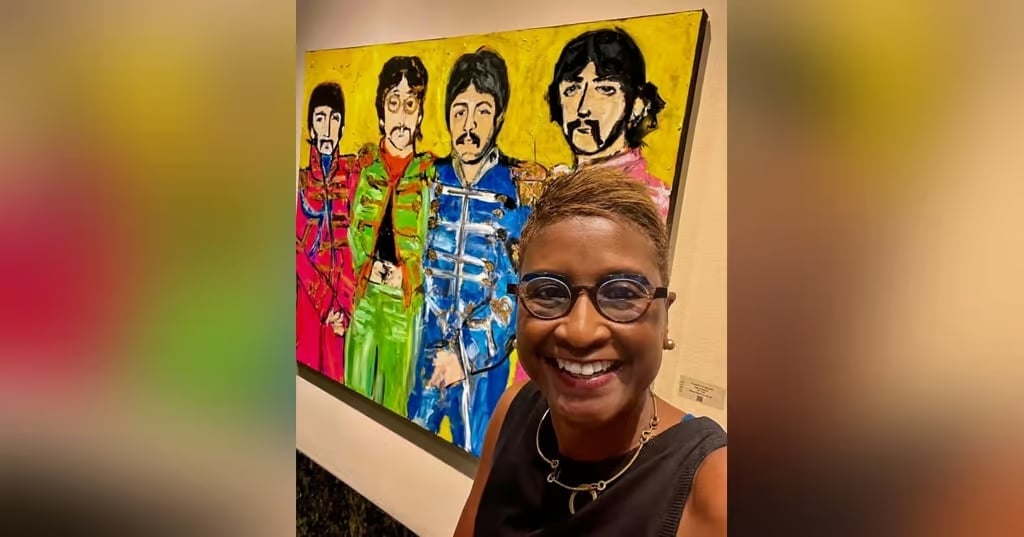
Tune In and Turn Up: Uncovering the Power of Music in Paula’s Boggs Narrative
In this episode, we explore music in Washington State through the inspiring journey of Paula Boggs, musician, activist, and former Starbucks executive.
Paula Bogg’s journey is a fascinating one that spans a wide range of experiences, from growing up in a segregated south to working at the Pentagon and the White House. But what really caught my attention is Paula’s deep connection to music.
From her early experiences with different religious traditions and diverse music styles to her love for folk rock and jazz, Paula’s life has been shaped by the power of music.
Join us as we dive into Paula’s inspiring story, from humble beginnings to a life-changing decision to pursue music. So sit back, relax, and get ready to be inspired by Paula Boggs on this edition of Exploring Washington State!
Paula Boggs Episode Transcript
Hello, friends, and welcome to the Exploring Washington State podcast. My name is Scott Cowan, and I’m the host of the show. Each episode, I have a conversation with an interesting guest who is living in or from Washington State. These are casual conversations with real and interesting people. I think you’re going to like the show. So let’s jump right in with today’s guest. Well, welcome to this episode. The exploring Washington state podcast.
Scott Cowan [00:00:29]:
My guest today is Paula Boggs. Paula’s back for a second visit with me, which is really exciting for me. And I have some follow up questions to our original conversation. Paula, you and I sat down in early 2022 when we were still kind of in the COVID thing. We were all kind of stretching our arms, coming out of the cave, trying to figure out what the heck was going on post pandemic. So that leaves me with some questions, but I’m going to do a quick recap so that my guests kind of know who you are. So here we go. So Paula was raised in Virginia, did her high school years in Europe, went to Johns Hopkins University, got her law degree from Berkeley.
Scott Cowan [00:01:18]:
She ended her corporate career we’re just going to skip over the whole corporate career, but she ended her corporate career as the chief legal counsel for Starbucks coffee so far, right, Paula?
Paula Boggs [00:01:29]:
So far so good.
Scott Cowan [00:01:30]:
All right, so here’s the questions that pop up for me on this. Okay, but one last thing. So she retired, I’ll call it retired from Starbucks to pursue her musical career full time. Okay, so I have a couple of questions. You mentioned in our original episode that you grew up in a house. Music was there, but you didn’t give me the impression that it was a real musical household. I mean, the music was a component, but it was not the major feature of home. Is that right?
Paula Boggs [00:02:05]:
That’s absolutely right. I was in a household of parents who valued music enough to make sure their kids got lessons. But no, I could not describe my house as a musical household.
Scott Cowan [00:02:26]:
So the way you described your earlier childhood was in the segregated in Virginia, and then you moved to Europe, which seems very jarring to me. And in our earlier conversation, you mentioned listening to when you moved to Europe and in Germany, you mentioned the band Craft Work, which is kind of you said EDM, and I’m thinking electronica. So where I’m going with all this, I have two questions. So your musical influences and how they influence your music today and what exposure did you have as a young person to instruments? When did you learn to play guitar? Do you play any other instruments?
Paula Boggs [00:03:13]:
Great question. I just mentioned my parents valued us taking their kids, taking music lessons, and that was absolutely the case for me. I’m the oldest of four kids, and the thing about my parents was they wanted each of us to play piano and started me at age six with that instrument. I didn’t like it. Scott and the adult me understands better. It was more the teacher I didn’t like than the instrument. But nonetheless, I was not happy with that instrument as a six, seven year old, et cetera. Meanwhile, I was attending Catholic school, yes, in the south, but Catholic school nonetheless, and was doing so at a time when folk music was emerging in the Roman Catholic Church right after Vatican II.
Paula Boggs [00:04:32]:
So what that meant for music was, for the first time, catholic churches were not only playing music in the native tongue of whatever country that Mass was taking place in, but began to embrace folk music. And so music that was certainly secular, the music of Peter Paula and Mary, Simon and Garfunkel, Bob Dylan, folks like that, the Birds. But that music was finding its way into Catholic schools and Catholic churches, certainly across America. And so I got exposed to that things. There are two things about that kind of music that really spoke to little Paula. One was almost all of them featured a guitar, okay? The guitar was a prominent sound in the music of these bands. And the second thing was the message these musicians were delivering. I mean, this was message music for the most part.
Paula Boggs [00:06:04]:
And it really didn’t matter whether you were talking about Simon and Garfunkel or The Birds or somebody else. It was right. I was captured by that. And so by age ten, I had sort of cycled through a couple of different instruments. There was a period of me and the clarinet that was short lived. By age ten, I was begging my parents to allow me to take guitar lessons. And after purchasing a couple instruments they could little afford, and here’s this ten year old kid saying, hey, how about guitar? They were cautious, let’s say that, and made a deal with me, which was, if I was going to own a guitar, I was going to have to pay for half of it, which I internalized. Scott as I learned chords and stuff on the guitar, I would teach the neighborhood kids and charge them a nickel, right? And before too long, I had amassed $20.
Paula Boggs [00:07:34]:
And so I went to my mom and I said, I’ve earned $20. I’m ready to buy a guitar. And so we went to this pawn shop, really, in downtown Richmond, and there was an ad about this used guitar that lured us in. And of course, that guitar was gone by the time we got there. But there was another guitar, and I ended up playing it. The guy let me play it. I loved it. It was more than $40, but my mom could see that I really loved it.
Paula Boggs [00:08:20]:
And so we bought the guitar with it was probably $50, right? So my mom chipped in 30 and I chipped in 20. And it was a Yamaha that was my very first guitar. And soon after learning guitar, I started writing music. So I started playing guitar at age ten, and I started writing music at age ten, too.
Scott Cowan [00:08:50]:
Okay, so that’s a great set up. Let’s go fast forward to today adult Paula.
Paula Boggs [00:09:01]:
Yes.
Scott Cowan [00:09:02]:
Do you play any other okay. Other than a guitar, say a mandolin or things like that? Do you play piano now at all?
Paula Boggs [00:09:10]:
I do not.
Scott Cowan [00:09:11]:
You do not? So you’re strictly a guitar player.
Paula Boggs [00:09:15]:
That’s it.
Scott Cowan [00:09:16]:
Okay, that’s fine. You mentioned The Birds, Peter Paul and Mary Simon and Garfunkel in those influences of the early seventy s. And then let’s bounce over here. Here’s Paula with her guitar, moving to Europe, and you’re hearing craft work, not real guitar friendly music. Right. What did you think of music in Europe during your high school years?
Paula Boggs [00:09:54]:
That’s a great question, but for the village, the petri dish I was living in, I don’t think I would understand and love the diversity of music I do before we even left the segregated south, my dad was Catholic, my mom was African Methodist, Episcopal. So as a kid I would toggle between these very different religious traditions, so I would hear the folk music and the sort of Gregorian chant like music of the Roman Catholic Church. But then the next week I would be in the AME Church with gospel and spirituals and that sort of thing, and shouting and a very exuberant worship. And so I went back and forth, and that was my normal. When we moved to Europe, a couple of dramatic things beyond being in a different country and within cultures we knew nothing about, including the US military before we got there, we got exposed to and I got exposed to a lot of different kinds of music. My best friend who became the girl then woman now who became my best friend, her parents were jazz heads. I mean, they were totally into jazz, but also in a broader range of what I would call folk rock music. And so I was hanging out with my friend Christine, and her parents would play stuff like Miles Davis and John Coltrane and Keith Jarrett, that Ella Fitzgerald stuff that I wasn’t hearing in my own home, but I was in theirs.
Paula Boggs [00:12:24]:
And then the other thing about this family that was just foundational for me and what music is for me is when I was a teen, there were a lot of perhaps it’s still the case, but there were a lot of expat American musicians. So these were folks who hoped to do stuff with music and earn a living through music in Europe that they couldn’t do in the United States, Americans. And for whatever reason, my friend’s family was a magnet for a number of these people. So for the first time in my life as a teen, I was hanging out with professional jazz musicians and professional classical musicians mostly, and that affected me. Right. That affected what music was for me, not just listening, but also performing. Meanwhile, there was a sort of brand of rock music that was emerging in Europe while I was a teen, and so all of those forces came together. And I guess I must add a final one, which is, okay, so we’re living within military communities and among GIS, post Vietnam, Top 40 was really cool for them.
Paula Boggs [00:14:11]:
And so as a music form catered to the American GI, there was a heavy dose of Top 40 music. So, for example, I don’t think but for living in that place, I would know who bands like Journey and Foreigner and stuff like that, I wouldn’t know those bands, but because I was living within this community, I do know those bands.
Scott Cowan [00:14:48]:
Okay. There’s this sonic booyah base that you are exposed to that’s absolutely. If you were to look at the ingredient list, you go, this isn’t going to work well, but you go ahead and you mix it all together, and it does form this very kaleidoscope of sound. All right, so we’re going to pause music for a second because we’re going to pick this music back up. But I still have questions from the previous episode that I need you to answer for me. So after Europe, you go to Johns Hopkins?
Paula Boggs [00:15:26]:
Yes.
Scott Cowan [00:15:29]:
Why Law?
Paula Boggs [00:15:31]:
Oh, that’s a great question because Law was not on my radar at all. I mean, there were a number of things that mean I came to Hopkins as an Army ROTC cadet. So the army was paying for my college education, and in exchange, I was signing up for serving four years of active duty. So that was the bargain I cut with the army.
Scott Cowan [00:16:07]:
Well, in the first episode, you mentioned that they kind of changed the terms on you and said, hey, here’s this airplane we want you to jump out of. There was there was that component that you shared with me last was I still chuckle when I think about that. Okay.
Paula Boggs [00:16:23]:
Yeah.
Scott Cowan [00:16:24]:
So I did ROTC.
Paula Boggs [00:16:26]:
I did the paratrooper thing between my junior and senior year of college with ROTC, I think for all of the armed services, they send their cadets to what they call advance camp, and it basically is six weeks of playing army in my case. Right.
Scott Cowan [00:16:54]:
Okay.
Paula Boggs [00:16:56]:
The whole nine yards. And so because I had gone to airborne school, paratrooper school, immediately before that, I had lived nine weeks of someone telling me when to get up, when to go to bed, when to eat, how to eat, what to wear, how to wear it. So much so that and I was so programmed that way when I got back to Baltimore and Hopkins at the beginning of my senior year, I was struggling. I would stand in front of my closet and not be able to make a decision on what to wear. I found myself paralyzed in many ways after that. Experience. And so I concluded, I’m not ready for active duty yet. I need a delay.
Paula Boggs [00:18:00]:
So, you know, I started fishing around. For folks like me at Hopkins, going to graduate school is not a radical idea. Most people back then certainly did. They went to some form of graduate school, medical school, graduate school, law school, something. And so I said, okay, that’s what I’m going to try to do. I’m going to go to graduate school for a couple of years and delay the inevitable. If it’s a master’s, then it’ll be two years of delay, and then I’ll go in. But law is three years of delay.
Paula Boggs [00:18:42]:
And if I can pull that gig, then not only will I delay the inevitable for three years, but I’ll go in as a lawyer rather than a quartermaster officer or field artillery or something, right? And so that was my thinking. It was a bit of a scam. It was a delay strategy. And so when I left Starbucks almost 30 years after being a lawyer, that was the joke. I mean, this thing that started as a scam, as a delay strategy, I had stayed in for more than a quarter of a century.
Scott Cowan [00:19:29]:
All right, one of the questions that I have is, what type of law did you practice?
Paula Boggs [00:19:39]:
That changed over time. Initially, I was assigned to the Pentagon and was doing a variety of what lawyers call administrative law. But I guess the best way to describe it, there were a variety of things I were doing that, in one way or another, helped the army run better. Okay. And so one example of that is one of the jobs they give junior lawyers who they figure it’s safe enough for us is to review the applications of those families who wish their loved ones to be buried at Arlington National Cemetery. There are certain requirements that fall, and not everyone who meets the requirements is able to be buried there. And so one of the things I was doing was reviewing applications and seeing if someone was eligible, and if so, helping those higher ups figure out who to choose. Second thing I was doing initially as a very junior army lawyer was, citizens of the United States have the right to get a lot of information from our federal government, and the tool to do that is the Freedom of Information Act.
Paula Boggs [00:21:47]:
And so, as you might imagine, people are often interested in what the army is up to presently or what the army has been up to in the past. And so we weren’t the first level of review, but if someone had been denied documents, the office I was in was reviewing those denials to see if they were legit, really, and whether there was a way to release more. And so I was doing that. And the third main thing I was doing, which I ended up doing much more of in my military career, was treaty related work. So the United States of America has treaty relationships with all kinds of countries and international organizations and the like. And within sort of that definition of the United States, there are defense. And sometimes the army is the main actor in determining whether we’re getting everything out of the treaty that we’ve bargained for or whether we’re doing what we’ve agreed to do. I was doing that kind of work, too.
Scott Cowan [00:23:33]:
All right, that’s very interesting to me. Okay, all of that. But in an effort to keep this more on your musical, we’re going to fast forward about 25 years to Starbucks chief legal counsel.
Paula Boggs [00:23:49]:
Sure.
Scott Cowan [00:23:50]:
What on earth does that mean? Here’s my interpretation of it, and I don’t think I’m right, but I’ll put it out what I think it is. So the chief legal counsel for a corporation is the head lawyer for the company who probably is overseeing a staff of lawyers who are handling corporate law as needed for the corporation.
Paula Boggs [00:24:19]:
Yeah, that’s pretty good, Scott.
Scott Cowan [00:24:21]:
Okay. We’re going to recap Johns Hopkins stalling treaty law. Starbucks. Yeah, there’s a big gap here, and I’m teasing. I’m kind of kidding, but it’s pretty fascinating to me. How does one career how did you go in that direction?
Paula Boggs [00:24:50]:
Yeah. Well, I’m going to try to truncate what is obviously a much longer story, but suffice it to say, before I left the military, I went from the Pentagon to the White House. And I worked in the White House during the Iran Contra investigation as a military officer. And while there, my boss in the White House persuaded me that I would make a really good trial lawyer. And so that was not on my map before he planted that seed. And because I had already fallen in love with Seattle, even as a law student, after a trip there, he advocated for me to get a job with the US. Attorney’s office in Seattle, which I did for five years. And then I went into private practice in Seattle as a litigator, as a trial lawyer.
Paula Boggs [00:26:09]:
That’s what I was doing. But I realized, Scott, that wasn’t really my calling. I needed to be in a situation, whether as a lawyer or not, that was more mission driven than being in a law firm. And I figured if I was going to continue to be a lawyer, that needed to be in house somewhere inside a corporation or an institution of some sort where not always, but for the most part people have a North Star where they’re rowing for the most part in the same direction. And that was not my experience in the law firm. So with that seed planted and my spouse helped me plant that, started, you know, shopping around and landed at Dell Computer Corporation. We left Seattle. We moved to Austin.
Paula Boggs [00:27:16]:
We were there five years. It was an amazing experience, educational in many ways, beyond being simply at Dell, just living in Austin, Texas, for five years was an eye opening experience that is tattooed on me. However, after five years of being in house at Dell, I applied for the Starbucks top job and got it. So that’s how I ended up at Starbucks and we moved back to Seattle 21 years ago. And if you think about the Starbucks of 2002, which is the Starbucks I joined, it had gotten bigger. It was publicly traded, but it was still hugely entrepreneurial and scrappy and growing like a weed. Right.
Scott Cowan [00:28:34]:
I was there. I know.
Paula Boggs [00:28:35]:
Yeah. That’s the company I joined. Right, right. And the law department I inherited was pretty standard operating procedure in the sense that it was small. Most of the lawyers were from Seattle law firms or other Seattle jobs before coming to Starbucks. So one of the things that happened in the decade I was there, as Starbucks became more global, the law department became more global. And if you think about what Starbucks is, I mean, when you really think about what it is, you won’t be surprised by what the lawyers were doing and how we spent most of our time. So Starbucks, at the end of the day, particularly in the United States, is a real estate company.
Paula Boggs [00:29:44]:
Most of the stores are company. So, you know, every single store is a negotiation. It’s a deal between a landlord and a tenant. And as Starbucks got bigger, Starbucks was a bigger tenant. And Starbucks could demand more things as a marquee tenant, but nonetheless, it was a tenant. So the real estate team globally at Starbucks was huge. Okay? Secondly, Starbucks is a brand and it is highly protective of its intellectual property. So a second thing we spent a lot of time doing was shutting down fake, know, be they in China or the Middle East or wherever, they, you know, so we were sort of know, intellectual know, cowboys and girls in that sense.
Paula Boggs [00:30:59]:
The third thing about Starbucks is most of the people who work at Starbucks are Starbucks employees. So there know a lot. And back then, I suspect it’s still know. Starbucks employees are skew very young. So, you know, hundreds of thousands of people now who are either in their first job or they are managing people for the first time. And invariably, people who manage people for the first time screw up. So there was always a steady diet of labor and employment issues the legal team was dealing with. And then you have the corporate deals.
Paula Boggs [00:32:05]:
So Starbucks was not I mean, it’s done more acquisitions in its later years, but back in the day, Starbucks growth was, you know, it would cut deals with grocery stores and airports and various other things. Right? And so there was a tremendous amount of deal work that was being done too. So there were other things going on, but those were the main things that lawyers for Starbucks were doing.
Scott Cowan [00:32:50]:
I want to ask you a very specific question that if you know the answer to this, I will be shocked. So I don’t expect you to know the answer. This is like the needle in the haystack. Okay. So when I was there and you were there, you may remember because like you said, Starbucks is a brand. And so one of the things that they would sell in the stores were city know, the Seattle city mug. It had artwork about Seattle. They went so far as to when they started these to have Olympia and Portland and Spokane mugs.
Scott Cowan [00:33:23]:
Olympia, 60,000 people, they did a city mug of Olympia. And so this first generation of city mugs was kind of, in my memory, starbucks kind of first attempt at selling something at the store that was local, yet branded to the global to the global brand. Do you remember those mugs by chance?
Paula Boggs [00:33:46]:
Oh, definitely. I own several of them.
Scott Cowan [00:33:50]:
Okay, good. Urban myth, legend. True story. Don’t know. This is what I’m wondering if you know. So one of the mugs that Starbucks created was for Minneapolis, and on it they had a piece representation of a piece of modern art in Minneapolis. And the story that I was told was that Starbucks didn’t get legal permission to use that image, and they were told to remove that mug from the marketplace.
Paula Boggs [00:34:27]:
That’s not ringing a bell at all.
Scott Cowan [00:34:30]:
I didn’t think it would. I would have probably fallen out of my chair if you said, oh, yes, I worked on that. I was just curious because I collected those mugs when I was there. I would travel around and buy the mugs and I would trade them with people. And I ended up with a Minneapolis mug, and I sold that thing on ebay for four figures.
Paula Boggs [00:34:59]:
Wow.
Scott Cowan [00:35:00]:
Because nobody had it. This is like the Honus Wagner baseball card. It had a story attached to it. Whether that story is true or not, at the time that I sold this, which was 25 ish years ago no, let’s see, 23. I probably sold it 20 to 25 years ago. I sold it. It was just interesting to me. I would just have been really funny if you would have said, oh, yeah, that was one of the first things I worked on.
Scott Cowan [00:35:34]:
Was this getting us removed from that? Whether that was true or not, I just don’t know. Okay, so you’ve kind of answered the questions I had from our previous conversation that were kind of open ended there that I realized I didn’t ask you good follow ups when we talked the first time. But we’re going to go back to music now. We’re going to shift gears back to music because to kind of summarize everything. And by the way, you went to law school at Berkeley, so you left the East Coast, you went to California, so for law school, end up at the Pentagon and the White House. Those are not Shabby addresses to call the work pretty, pretty impressive. We could go down that rabbit hole. I’m sure there’s great, interesting stories to talk about, but we’re going to skip those because we ongo music.
Scott Cowan [00:36:29]:
But I got the impression when we talked before that during this period of your life, music kind of went into hibernation a little bit.
Paula Boggs [00:36:41]:
It really did.
Scott Cowan [00:36:43]:
So what brought music back for you?
Paula Boggs [00:36:49]:
That’s a great question and I’m happy to share it. So the first piece of it is, why did music leave? Not the appreciation of music that never left, but why did the the creation and performance of music leave? And there are really two key reasons for that. One is I was in a very demanding career, and it was taking increasing amounts of my time and energy and creative bandwidth. But the second piece of it is I left the Catholic Church. So while I was still Catholic, I was still creating and performing music for the Catholic Church. I was a member of folk Mass choirs wherever I was, whether in Washington, DC. Or Berkeley or Seattle. But when I left the church and I left the church because of what I frame as the bedroom issues, when I met my wife and realized that love was at odds with the teachings of the Roman Catholic Church, and I was in love.
Paula Boggs [00:38:30]:
I left the so with that departure, I was no longer playing in Catholic Masses. So both those things were happening, resulting in for a good ten to 15 years, I didn’t touch a guitar. Right. So what brought me back? For almost anyone, including me, life is never a straight line. There are curveballs that almost every single one of us breathing must navigate somehow. Right? And that was true for me back in 2005. My youngest brother’s sister I mean, my youngest brother’s wife and other members of her family died in a car crash. It was the most horrific thing.
Paula Boggs [00:39:46]:
And my wife and I ended up becoming the legal guardians of my brother’s daughter. That’s another story. But what it also did was cause my wife to encourage me to pick up my guitar as a way to grieve. And though I resisted it initially, I relented ultimately. And once I did Scott, it was the point of no return. It wasn’t a flood right out of the blocks. It was sort of like turning a faucet. It trickled.
Paula Boggs [00:40:40]:
And then that current became stronger and stronger with each passing day. And the hockey stick for me was my wife persuaded me to audition for a one year program offered by the University of Washington, continuing education in songwriting. And so I auditioned for that back in five, not that long after Julie’s death, and got accepted. And by being accepted, I became part of a group of 15 people, a community of songwriters for an entire year. And I’m happy to say a number of those people I first met in 2005 are still in my life. And it was transformative. At the end of that year, one of my teachers, and it was a mentoring moment, said to me, paula, I really think you have something with this songwriting and what a shame it would be if you didn’t keep going. I didn’t know what that meant.
Paula Boggs [00:42:06]:
Scott keep going. I was still Starbucks top lawyer with a hugely demanding job. I didn’t know what that meant, but what I decided it could mean was one open mic a month, doing one open mic in Seattle a month, and that’s what I did in 2007, that entire year.
Scott Cowan [00:42:37]:
Where were you doing the open mics at?
Paula Boggs [00:42:44]:
That’s a great question. And there were a couple of places that became my anchors. There was a tea place in Ballard that no longer exists. I think it’s called Mr. Scott. It was called Mr. Spots Tea House.
Scott Cowan [00:43:10]:
Where in.
Paula Boggs [00:43:13]:
Know, I’m not going to remember the exact street it was on, but it was just off the main drag. And I have met people in recent times who’ve said, I remember you from Mr. Spot. It was a real thing. Right. And then another place I played a lot is near my home, which is in Redmond Soul Food Boggs. It’s a wonderful coffee house bookstore that is I don’t know of any other place like it on the East Side. It really is this countercultural vibe, very warm, inviting place.
Paula Boggs [00:44:16]:
And the great thing about and they still do these open mics once a month is there are some open mics where it’s very competitive and people are, what have you done lately kind of vibe. But that’s not how soul food books is. It really is a warm nurturing people are just so supportive and it doesn’t really matter if this is your first time on anybody’s stage or whether you’ve been doing this forever. People are going to receive you as community. Right, and I loved that because I was fledgling back then and to be in these places like Mr. Spots and Soul Food Books where these communities were just so you can do this, just keep going, was very important to someone like me.
Scott Cowan [00:45:29]:
So you started with open mics?
Paula Boggs [00:45:33]:
Yes.
Scott Cowan [00:45:35]:
Obviously you’re known as the Paula Boggs band now, so we know that there’s more to this story. But I guess what I’d like to get more detail on is how and you described it as a hockey stick and a faucet and things like that. So you started off going just doing one chief legal counsel for a multinational corporation day job. Were you living in the East Side then as well?
Paula Boggs [00:46:07]:
Yeah.
Scott Cowan [00:46:07]:
At that period of time you had the commute from Soto to the East Side. So that was exhausting in and of itself.
Paula Boggs [00:46:14]:
Absolutely.
Scott Cowan [00:46:16]:
What a know. Even back then, that commute wasn’t as bad as it is now, but it still was a grind. So you have all these things, but music started taking it sounds to me. Like music was really taking hold and growing and deepening roots here within you.
Paula Boggs [00:46:39]:
Yes.
Scott Cowan [00:46:40]:
What was next? How did you go from open mics? What was the next step for you?
Paula Boggs [00:46:47]:
Sure. So I accomplished my mission of one open mic a month in seven, and along the way, differently, but harmoniously. I met people who were digging my music and wanted to play music with me. One of them is Tor Diedrichson, who plays percussion for Paula Bike’s band. Tor and I first met in 2006 or seven, actually, and MySpace was a thing then, and I was surfing MySpace, and I saw this photo of Tor with his conga drums and realized he was in Seattle. And so there was back then, Starbucks had a rehearsal space for its partners, its employees, right across the street from Starbucks headquarters, and it was called Sotopop. It had a rehearsal space in Sotopop. I decided to meet Tour for the first time there, but I was scared to death that I had met this guy on the Internet.
Paula Boggs [00:48:30]:
And so I brought one of my Starbucks, Paula, with me, who played, who was tall and big, and he came with me to meet Tor for the first time. And even to this day, Tor will tell people from the stage, yeah, when Paula and I first met, she thought I might be an axe murderer, so she brought this big, goon guy with, you know, we met back then, and we’re still making music together. Another original band member, Mark Shannon, I actually met in Hawaii. Just a crazy sequence of events, but his day job is he’s a law professor at Seattle University, but also plays a mean guitar, and over the course of years with our band, plays a meme banjo. So there were others who, in varying ways, sort of this makeshift group of people came together, so much so that by January of eight, we were playing our first show, and it was at the Triple Door Music Aquarium. The only reason we got that gig was because Tor Diedrichson was a known quantity to the booker, and he vouched for us. And he said, Give this band a chance, I play with them. They’re good, please.
Paula Boggs [00:50:13]:
And they did. And that’s how we got our first gig.
Scott Cowan [00:50:17]:
So that’s in 2008, 2008.
Paula Boggs [00:50:20]:
I’m still with Starbucks.
Scott Cowan [00:50:22]:
You’re still with Starbucks. I get the feeling that there’s this internal tension now.
Paula Boggs [00:50:30]:
Yes.
Scott Cowan [00:50:32]:
And I can’t speak for you because only, you know, your journey and your story, but I’m I’m guessing that I’m going to guess that your spouse had something to do with the ultimate decisions just because the way you’ve mentioned her previously, this is just a hunch I have. But I think you’ve got this tension because chief Legal Counsel International Corporation demanding probably very rewarding, probably financially rewarding as well. Musicians, sometimes you see them on street corners playing for change. Other times, you see them headlining, grand things, but tough road to hoe financially. What led up to in our other conversation, you kind of talked about your conversation with Howard Schultz and how you rehearsed it and your wife actually played the role of, you know, it was a safe bet for me to say that she was involved. But you’re going through this and you’re practicing it. It wasn’t just you didn’t wake up on Monday and walk in and go, thanks, here’s my badge, I’m done. It was a period of months, oh, years actually.
Paula Boggs [00:52:02]:
And there are a couple different themes I think are really important. And the first is before I came back to music, before I became a Starbucks partner employee, while I was still at Dell, dell had been and it still is, but it went through a period like a lot of companies did in the early two thousand s of headwind. And at that time, during the sort of the Y two K fiasco and all of that.com. Bomb is a term that some of us know. Dell, after growing like a weed, had the first layoffs in its history. Scared my wife and I tremendously. And so we went to financial advisors way back then and said, look, if Paula gets laid off, if I get laid off, what do we need to do to live for a year? What do we need to say? How do we need to restructure our lives now so that we could live at some semblance of our current lifestyle while Paula looks for another job? And that was the assignment, right? And so by the time we left Dell in Austin and came back to Seattle, that’s how we, how that was our mindset. And so this know, a decade before I actually leave Starbucks on day one, I had an not, I don’t fear being had built, we had built together as a couple this life that would make it okay if I got fired or I had to leave Starbucks for whatever reason, right? So that’s really important.
Paula Boggs [00:54:30]:
And throughout my time, throughout the decade I was at Starbucks before I came back to music. I knew that and that’s important. So a second thing I think Scott, and I’m pretty sure you’ll appreciate this, is I was at Starbucks. And at the risk of sounding hokey about it, starbucks is a special place. At least it was during the time I was there. And one of the things that made it special were the people I was surrounded by. Many of them were artists themselves. So it’s a place, or at least it used to be a place where artists and actors and photographers and musicians and whatever, they worked at Starbucks, but they also had these other passions and it was a place, I didn’t see that at Dell.
Paula Boggs [00:55:35]:
That kind of vibe, those kinds of people. It’s a very emotional product that Starbucks is selling. Coffee. People wake up to coffee, they romance over. You know, it’s a romantic product, right. And the company attracts more than its share of people who have an artistic bent. So as art was reawakening in me, as music was reawakening in me, I had people who were working for me, with me. And even the people I was working for were understanding of this journey I was on and this return to music and were honestly supportive of it in ways that, I don’t know, I would have found at many other companies, honestly.
Paula Boggs [00:56:47]:
So that, too, was know a third thing, and I may have mentioned this the last time we spoke, but if not, I’ll mention it now. When I had that conversation with Howard Schultz, it was not so long after Steve Jobs died. And the important thing about that is Howard saw Steve Jobs as arrival, but he also saw a lot of himself in Steve Jobs. And so this notion of you must live each moment as if it is your last, I think it sat differently with Howard because of other things that were going on in 2011. Excuse me, not 2011 is when Jobs died, and 2011 is when I was having that conversation with Howard that I plan to leave the company, and not just the company, but leave the practice of law and do this other thing, start this new chapter.
Scott Cowan [00:58:14]:
You’re absolutely correct. My memory of Starbucks in that era was The Island of Misfit Toys in the sense that not everybody, but a lot of people had secondary creative activities that Starbucks, their employment at Starbucks allowed them to fund.
Paula Boggs [00:58:37]:
Yes.
Scott Cowan [00:58:38]:
And yes, people were there was corporate ladder climbing, but there was also a sense of creative development. And people would take jobs laterally because it offered them a creative outlet.
Paula Boggs [00:58:58]:
Yes.
Scott Cowan [00:58:59]:
Or a way to scratch a creative itch that you wouldn’t necessarily have in a traditional corporate environment. And so I don’t know that it’s like my assumption is that the company is not like that as much in 2023, but it was in 1999, in 2005, and things like that. It was that way. So you made the leap. You left corporate, you left law. And so now you are a musician. And your first show, one of the questions I asked you last time is, know where’s your favorite place to play as a musician in Washington? And your answer was the triple door. And then you say, well, that’s also where I played my first show.
Scott Cowan [00:59:54]:
And I’m just kind of like, really? But you also told the story of how you knew somebody who vouched for you and he’s in the band, and it worked and all of that. So now the Polybogs Band is an entity you’re performing. When we talked last, your album, Janice, had just came out. I think it was coming out. You think your first single was out? The album release, I think, was in April of 22. When we talked the other day, you alluded that there’s a new album in the works.
Paula Boggs [01:00:30]:
Yes.
Scott Cowan [01:00:32]:
Okay. So what I want to kind of touch on here is, since we last talked, so let’s say from March of 22 to October of 23, one of the other things that you mentioned was that like I said earlier, we were coming out of the cave from the pandemic, if you will. So what are you seeing as a musician, as a performer now when the band is performing live? Are the audiences getting larger? Are more people coming out to see music in your experience?
Paula Boggs [01:01:07]:
Yeah, it depends. We just did a show in Snow Kwame, Washington, and it was a little venue, but it was packed and people were having a great time. They were dancing, they were tipping was, you know, this incredibly joyous experience. About a month and a half ago, we were in Portland, Oregon, and barely anyone was there. Right. So we’ve seen both during this this period from April 2022 to now. I think we were just short of selling out the triple door earlier this year, which has a 250 person capacity. I mean, it felt packed and we definitely had over 200 people there.
Paula Boggs [01:02:32]:
Summer of 2022, we were in Westport, Connecticut, at Levitt Pavilion, and there were over 1000 people on the lawn in front of us. So it really depends on the place, the time, what’s happening. I think the band is becoming better known and people, more people know who we are and like what we do. So that’s a great thing. I think there are still people who are concerned about being in crowds, and unfortunately, COVID is having an uptick in some places and people are mindful of that, particularly if they are immunocompromised in some way. And so we’re still dealing with that reality.
Scott Cowan [01:03:47]:
One of the things that I’ve always thought was a little curious about your band, I’ll go look on your website and I’ll see you’re performing at X, Y and Z. And I don’t have your website up in front of me right now, but I believe sometime in the month of October, you’re heading to California for a handful of shows.
Paula Boggs [01:04:09]:
Yes.
Scott Cowan [01:04:11]:
And then you’re going to Yakima on November 11. Yes, I know, because I have to buy tickets for that one. That’s how I know, because that’s fairly close to me. And it’s a great little venue that you’re playing out there. Yes. But you just mentioned Connecticut. I don’t understand how are you booking shows? And what I mean by that is a lot of local bands stay local. They don’t tour.
Scott Cowan [01:04:43]:
And it seems like you kind of make these forays down south or east. How are you guys doing that? How are you pulling that off?
Paula Boggs [01:04:55]:
Yeah, well, there are some venues. Like Philadelphia’s World Cafe Live. We’ve played probably five times. When we when we come to Philadelphia, we have a following because we’ve played that venue several times. There’s a venue in New York City. We’ve rockwood music hall. We’ve also played that venue, I don’t know, four times, something like that. One of the ways we’re able to book these places and come back to them, because people show up.
Scott Cowan [01:05:51]:
Right.
Paula Boggs [01:05:54]:
Sometimes a venue is going to take a chance on a band, but you got to produce. Right. And so a lot of these venues for us are repeats because people show up. And I think people show up for a combination of reasons. One is the best one, of course, is that people have discovered us and like what we do. I speak across the country. And so sometimes it’s because people have heard me speak, they know I’m a musician, and when they see that I’m playing in their town, they show up. Sometimes they’re just showing up because they’re curious.
Paula Boggs [01:06:43]:
It’s like, what is this about? And hopefully they’re pleasantly surprised. And other times they really have checked us out, but it’s because they first heard me speak. And then there’s a third cohort of people, I think, who know of me because of my past career, and so when they see I’m coming to town, they show up, too.
Scott Cowan [01:07:22]:
Okay. All right. You and I are of an age where you mentioned Europe top 40 pop music. Radio played a big influence in who made It and Who Didn’t. If you could get on the airwaves, you could make it. If you couldn’t crack the radio, you didn’t. Where are people finding the Paula Boggs band music these days? How do you get the music out?
Paula Boggs [01:07:59]:
Yeah, that’s a great question. We have been very fortunate to capture the imagination of some very important and long standing public radio, college radio DJs. And some of them are here and some of them are in other places in the United States, and they consistently play our music, particularly when we’ve got something new to offer. And I’m very grateful for that. Cohort of Paula Bug’s band gets virtually zero play on commercial radio. Yeah, any radio airplay we get is coming in the form of community public college radio. Like 99.9% of it. Right.
Paula Boggs [01:09:18]:
And so we’re very grateful. Over the course of years, we’ve been able to do a number of in studio performances at some of these places. And these public radio stations are across the United States. Right. So that has been great. We have a pretty healthy social media presence, so that is helpful to us. And we are a touring band. And so people come to invariably, I will meet people at a show who came to that show because of the venue, not because of us, per se, but they trust the venue.
Paula Boggs [01:10:21]:
They trust the curatorial voice of the venue. And by so doing, they discovered us. Right, right. We have the good fortune of gaining fans that way, too.
Scott Cowan [01:10:38]:
Okay, how about streaming services? Are you cashing those big.
Paula Boggs [01:10:53]:
Mean? It’s one of those things, Scott, where you got to do spotify. Right. But for whatever reason, our band hasn’t gained a lot of traction on Spotify. YouTube is a different story. Interesting entirely. I mean, our YouTube following is maybe, I don’t know, not quite ten times the following of Spotify, but it is sizably larger than Spotify. And perhaps there’s certain platforms that work better for certain guess. I mean, we have an okay following on Instagram, but our following on Facebook is several times larger.
Paula Boggs [01:11:53]:
Right.
Scott Cowan [01:11:54]:
Interesting. Okay.
Paula Boggs [01:11:55]:
Our following on Twitter is about the same as our Facebook following. So those are know, if I think about the platforms, where we do bets for whatever now, I guess now X Twitter, formerly known as Twitter and Facebook, and I think at least on the Facebook piece of it, perhaps it’s true for the Twitter piece too. People are better able to engage with us on Facebook and actual conversations take place, and we’re able to say more on the Facebook platform and other people are able to say more on that platform. And so we’re a band of storytellers. So I think perhaps that’s why that platform works and perhaps that’s why YouTube works better for us than.
Scott Cowan [01:13:06]:
We’Re going to. I want to wrap this up. I have some questions I want to ask you, but before I ask you the specific questions, new album?
Paula Boggs [01:13:13]:
Yes.
Scott Cowan [01:13:14]:
On the how how close how close are we?
Paula Boggs [01:13:19]:
I’m writing for that album now. We will record it next May in Portland with Tucker Martine, who produced our last album, Janice. And I’m really excited about well, that’s.
Scott Cowan [01:13:43]:
That’S so far off on the horizon that I can’t ask you any really specific questions yet because a lot could change between the next six months. So that’s exciting though. So you’re going to go in the studio in May, okay. Performances for the band, like I mentioned earlier, you’re doing this little jaunt down to California and then you’re playing a show in Go. Are you guys going on the road anywhere else in the near?
Paula Boggs [01:14:14]:
We as we gear up for recording this fifth album, a lot of our bandwidth is in early 2024 is going to be devoted to honing those songs and getting them studio ready because we want to hit the ground running when we get to the studio and be as creative as possible, but also as efficient as we can be. Because time is money, right?
Scott Cowan [01:14:59]:
Right.
Paula Boggs [01:14:59]:
Among others.
Scott Cowan [01:15:00]:
Exactly.
Paula Boggs [01:15:01]:
But having said that, we are already in conversation with local venues for that first quarter of 2024 and we’ll be announcing shows for that quarter very soon. And we’re very excited about that. And most of those will be in Western Washington, right? Sure.
Scott Cowan [01:15:34]:
Nobody comes to Eastern Washington. You guys just avoid us. Just kidding.
Paula Boggs [01:15:38]:
No, we really do want to return. It’s been many years now since we were last well, actually that’s not true. We were just in the Tri Cities over Labor Day. We were a headliner for the Tumbleweed Festival in Richmond and had a wonderful time there. So, yeah, we’ve been to Eastern Washington, and we want to go even more east. It’s been a while.
Scott Cowan [01:16:18]:
Okay. All right, well, I’ve got some questions here that I ask I’ve asked you a couple of these questions before, so we’re going to see if things have changed, okay? You and I both worked at Starbucks. I know you drink coffee. Do you remember what you told me you were drinking last time we talked?
Paula Boggs [01:16:33]:
I must have said Komodo dragon.
Scott Cowan [01:16:36]:
No, you did not.
Paula Boggs [01:16:38]:
Really? Did I?
Scott Cowan [01:16:38]:
You were talking no, you were mixing Pete’s and Starbucks.
Paula Boggs [01:16:45]:
Well, I do that, too.
Scott Cowan [01:16:50]:
And I wanted to know if you were still doing that. I went and I tried that. I tried that, and it’s really quite good. I like it. I like it. I’m too lazy to do it regularly.
Paula Boggs [01:17:05]:
But.
Scott Cowan [01:17:08]:
It was good. So you were blending Starbucks French roast with Pete’s, Major Dickinson and about 50 50 ratio. It’s a really good cup of coffee. So I’m coming over to Seattle where’s a great place for me to go get coffee around you. Where are you frequenting these days? Any place you want to.
Paula Boggs [01:17:32]:
Know. And I think this is a byproduct of COVID most of the coffee I drink is coffee made here at home.
Scott Cowan [01:17:48]:
Yeah, but I’m not going to show up to your house, knock on the door and ask for a cup of coffee. That’s just bad manners. You can get a bad manners.
Paula Boggs [01:17:57]:
Great cup of coffee at Soul Food Books in Redmond.
Scott Cowan [01:18:02]:
Soul food, books. You’re going to say that for coffee? Okay.
Paula Boggs [01:18:05]:
Great music, great coffee.
Scott Cowan [01:18:08]:
All right, once again, I’m going to show up to the East Side area of Seattle around lunchtime. I’m always looking for a good place for lunch. Got any recommendations for me there? Because I’m not showing up to your house for lunch either. I mean, it’s just.
Paula Boggs [01:18:21]:
Know there are a number of really cool places on the East Side, but there’s a gosh. I’m blanking on the name of it, but there’s a wonderful farm to table restaurant in Redmond, on Redmond Way. And if you can, with that level of information, find it. It is amazing.
Scott Cowan [01:19:00]:
I’ll find it and I’ll put it in the show notes. All right? I will. All right, so we’re down to last two questions.
Paula Boggs [01:19:06]:
Okay?
Scott Cowan [01:19:07]:
Last question or the second to last question? What didn’t I ask you this time? That we probably should have talked about anything, that we overlooked this go round?
Paula Boggs [01:19:16]:
I’m writing a memoir.
Scott Cowan [01:19:23]:
He says, tell me more. Tell us more.
Paula Boggs [01:19:26]:
Yeah. So I have completed a second draft. I’ve had a memoir coach from Hugo house in Seattle. Anastasia. Renee. And Hugo House continues to be a great resource for me. It really is an amazing institution, literary institution here in Seattle, offering classes and mentoring and workshopping for writers. And I’ve been a beneficiary of all of that.
Paula Boggs [01:20:13]:
So I’m excited about getting to a point where I can shop this thing to publishers, and I’m probably a couple months off from that, but I’m in the zone.
Scott Cowan [01:20:32]:
Scott that’s awesome. That’s awesome. I’m glad you brought that up. I had no awareness of that, so otherwise I would have brought it up. But I think that’s fantastic.
Paula Boggs [01:20:44]:
Thank you.
Scott Cowan [01:20:45]:
Awesome. All right, you ready for the last question? I didn’t ask you this one before. This is a new one. All my guests must answer this. So first off, you have to answer it, and you have to give me the complete answer that I’m asking for. Okay.
Paula Boggs [01:21:00]:
Okay.
Scott Cowan [01:21:01]:
So I want you to listen to the question, and then you need to answer it. All right. Cake or pie? And why.
Paula Boggs [01:21:13]:
Pie?
Scott Cowan [01:21:15]:
Why?
Paula Boggs [01:21:17]:
One of the songs I have written that will be on this new album is called making hay. And there’s a lyric there’s a lyric in that song that says, I sing ain’t smart enough to know the math behind pie.
Scott Cowan [01:21:58]:
Okay. All right.
Paula Boggs [01:22:01]:
That’s why I’m choosing pie.
Scott Cowan [01:22:05]:
You’re choosing pie. All right, one follow up question. What type of pie?
Paula Boggs [01:22:11]:
Well, that pie is pi.
Scott Cowan [01:22:15]:
I know, but I have to choose.
Paula Boggs [01:22:19]:
A pie to eat.
Scott Cowan [01:22:21]:
Yeah.
Paula Boggs [01:22:27]:
It’S going to be lemon meringue pie.
Scott Cowan [01:22:31]:
Solid. Solid choice. Okay, why lemon meringue?
Paula Boggs [01:22:37]:
Well, a close second would be key lime, actually, depending on the day. But there’s something about the tartness of those two flavors that do something otherworldly for me.
Scott Cowan [01:22:54]:
You will get no pushback from me on those choices. Those are remarkably good choices. Yeah, those are solid. Yeah. Lemon meringue is right there for me. I do like a good strawberry pie because I just remember as a kid, my grandmother took me to bob’s big boy restaurant, and they had what seemed like, to a seven year old, these giant slices of strawberry pie that know, and that was a very rare treat for me. If I were to try it now, I probably wouldn’t like it, but the seven year old, scott, really thought it was cool, and so that has stuck with me through all these years. Strawberry pie is kind of like the elusive holy grail.
Scott Cowan [01:23:43]:
And as an adult man, I can get strawberry pie whenever I want, but I still think of it as unobtainable. But lemon meringue my mother loves lemon meringue, and I grew up with that. My father hated it, hated lemon. My mother loves it. I’m full on in camp. Lemon meringue. That’s a really solid choice. Paula, thank you so much for taking even more of your time this time to sit down with us and share more of your story.
Scott Cowan [01:24:17]:
I think what you’re doing is encouraging. I think what you’re doing creatively is amazing. I love your music, and I am really looking forward to seeing you in the band perform in yakima later, almost a month from now, assuming that the weather holds for us to get from Winachi to know it’s early enough in winter, we should be fine. But I’m excited to hear the fifth album when it comes out, and I will be getting a copy of your memoir when you publish it as well.
Paula Boggs [01:24:48]:
Thank you, Scott, for having me. I’m just thrilled every time you reach out.
- About the Author
- Latest Posts

The Exploring Washington State Podcast is your go-to source for discovering the diverse wonders of the Evergreen State. Whether you’re seeking inspiration for your next adventure, looking to savor local cuisine, or eager to learn about the businesses and artists that call Washington home, this podcast has something for everyone. Join us as we showcase the splendor of Washington State, reminding you that “there is always more to explore!”


