
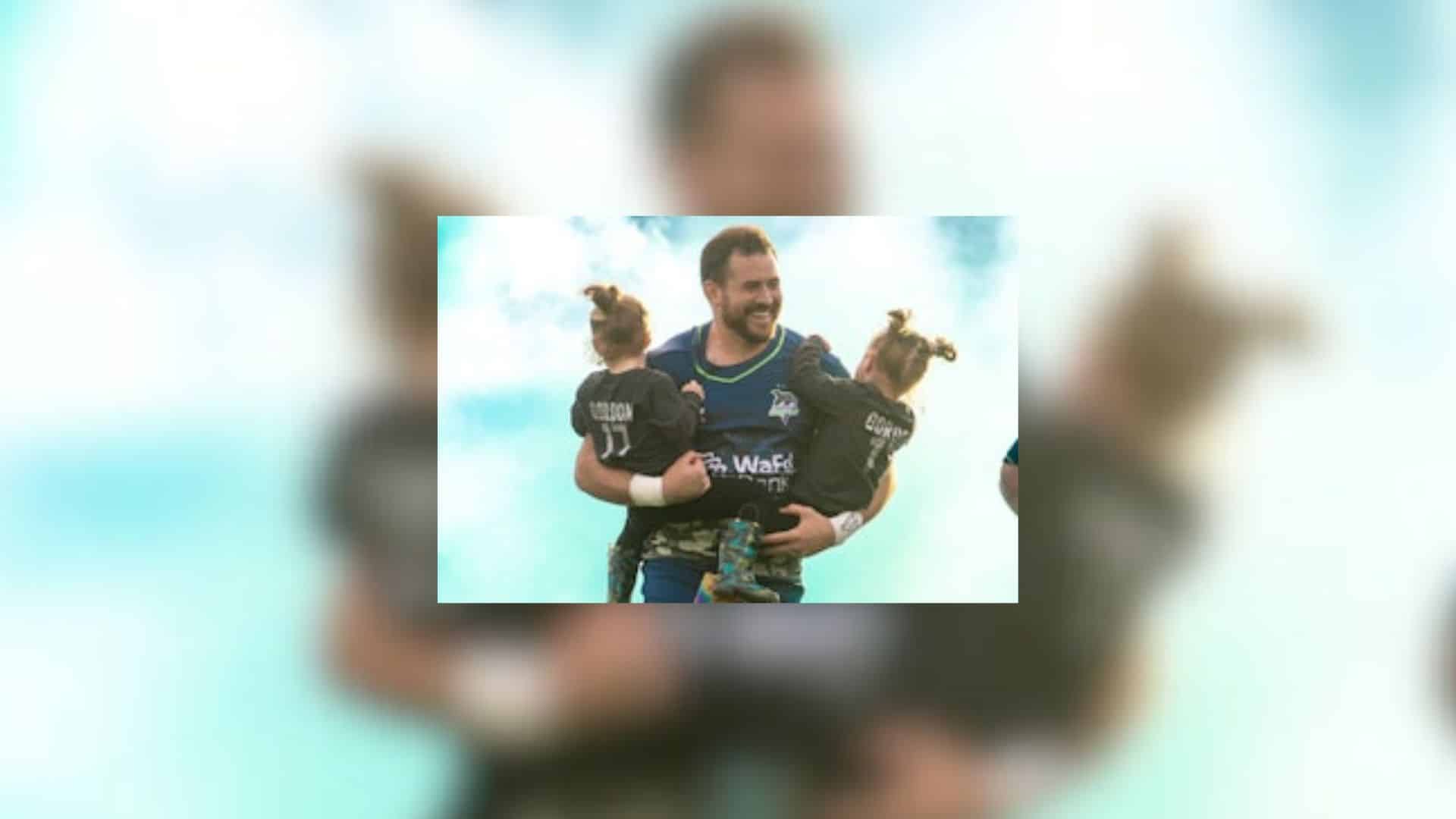
Kellen Gordon: Religion To Rugby: Unconventional Career Paths Seattle SeaWolves
On this episode of Exploring Washington State, we dive into the world of Major League Rugby with a former player Kellen Gordon who shares his experiences on the team and what it’s like to play professionally.
Along the way, we learn about the growth of the sport and how technology is revolutionizing training for athletes of all ages. We also explore the unique culture of rugby, from the camaraderie amongst players to the supportive community that extends beyond the field.
For those unfamiliar with rugby, we break down the rules and terminology while highlighting the unique elements of the sport
Kellen Gordon Seattle Seawolves Episode Transcript
Kellen Gordon [00:00:00]:
They they gave me the ball and said that I could go score. And it’s like I’m sold. This is the sport for me.
Scott Cowan [00:00:25]:
Welcome to the Exploring Washington State podcast. Here’s your host, Scott Cowan. Welcome back to this episode of the Exploring Washington State podcast. This is obviously a retake because you can hear me and my guests laughing. Kellen Gordon is my guest today. And Kellen plays for the Seattle Sea Wolves. Kellen, we’re just going to open it right there. Tell us about you.
Kellen Gordon [00:00:49]:
Sure. Like you said, I play for the Seattle Sea Wolves. And it’s a team that is in the major League Rugby, which is a league that started in 2018. So we’re entering or we’ve just finished our fifth year, roughly really four seasons, because we took one off because of COVID But I’ve played since inception and we won the first two. So 2018, 2019 Seals were champions back to back. Took a year off for COVID. Didn’t do so hot last year. I think they finished. I got injured last year, so I actually didn’t play much, but finished like fourth in the league. And then this year we made the final and lost in the final, unfortunately, to New York. But pretty cool to be in the final for three out of the four years that we’ve had full seasons.
Scott Cowan [00:01:52]:
That’s very cool. And the dreaded New York teams, I mean, I’m sorry, can’t be from Washington State and not dread like the Yankees.
Kellen Gordon [00:02:00]:
Anyway, it was a tough one. They were very good this year.
Scott Cowan [00:02:05]:
Okay, we’re going to come back to rugby because I’ve got questions, but how about you? Where’d you grow up and how did you get into rugby?
Kellen Gordon [00:02:15]:
I grew up in Washington, so I grew up in Kenmore. I went to Kenmore high school. And I actually found rugby because of a friend telling me to come out and just try it. So I’ve played football since the moment that my mom could sign me up for football. So I think I was like, what, seven or eight years old? And I was an offensive lineman. I’ve always been a big kid, especially then. I was a pretty chunky kid growing up. So got into football, offensive lineman. And then my buddy tells me, oh yeah, during the offseason, you should come out and play some rugby. I was like, I don’t know what rugby is, but why not get into another sport? I went out there and they gave me the ball and said that I could go score. And I’m sold. This is the sport for me. They don’t have to block for anybody. I can go have some of the glory. This is great. So I started playing for a little club called the Redmond Rugby Club, practiced over at Marymore Park. And we were very bad. And we were lucky to get enough guys for a team. And I think my junior year of high school, the team folded so I started when I was 14 and my junior year of high school folded because we couldn’t get enough guys out and actually ended up going and playing for the men’s league, which isn’t allowed now. They don’t let you do that. I believe you have to get special waivers and stuff to go play for the adult league as a high schooler. But I started playing for the East Side Axmen, and I loved it there. And then I went off to Central Washington University to play rugby, so I didn’t actually really want to go to college. I wasn’t that interested. My mom kind of pushed me to go, or at least to apply. Everybody told me to apply, and I was like, my grades weren’t great. School wasn’t exactly my favorite thing in the world, mainly homework. I was great at testing, but, man, I couldn’t do homework to save my life, or I just was more interested in other things. But they convinced me to go to Central Washington and play rugby there, and so, I mean, I spent most of my life in Seattle or in Washington State. All right, so between there and then.
Scott Cowan [00:04:49]:
After, I’m laughing because I went to Central. I went to Central as well. And I was going to give you a hard time about well, it’s not like you really went to college. You went to Central. But yeah, it’s not fair because I went there, too. All right. My bio actually says my freshman year was the best six years of my life, so that kind of shows my educational.
Kellen Gordon [00:05:10]:
Yeah, I did five years at Central. I did my victory lap. I actually finished my degree in three and a half years.
Scott Cowan [00:05:19]:
Good for you.
Kellen Gordon [00:05:20]:
And stuck around to play rugby. Well, it took a while. I mean, the degree didn’t take a while to figure out. School took a while. Actually, my freshman year, I got kicked out for low grades and my rugby coach had to get me back in and had to have a sit down with me and be like, education is important, and I actually finished with, I think, at 3.4 and was able to bring it back up from like, 1.2. So I dug myself in.
Scott Cowan [00:05:51]:
I freshman year, what did you graduate in?
Kellen Gordon [00:05:55]:
Theology. So I got degree in religious studies and philosophy.
Scott Cowan [00:06:01]:
Yeah, okay.
Kellen Gordon [00:06:04]:
Yeah, I was originally going out.
Scott Cowan [00:06:06]:
How does that pertain to rugby?
Kellen Gordon [00:06:07]:
Well, honestly, it was a pretty easy degree. Obviously, I finished in three and a half years, so it wasn’t crazy tough, but it was kind of just a fun degree for me. I originally went there to I started out wanting to do engineering, then realized that I didn’t really like that as much. And then I went into I was going to do teaching, really like teaching. In fact, I do a lot of coaching now, so it’s kind of been a passion of mine. But I got into theology because I grew up in an atheist household, and my mom always just religion wasn’t for her, but she always, you know, pushed me to go and explore other religions and see what’s out there before deciding on anything. And so growing up, I was actually not teased, but I was always amazed by the reactions that I got from telling people I didn’t have a religion. So a lot of people would get either upset or get mad, and I found that fascinating. And I started studying, reading the Bible through high school and going through different other religious texts because I was interested in why people were getting upset with me. And then I started realizing that a lot of people didn’t understand their own religions. They’re getting upset, but they didn’t actually have a full grasp of what it is that they believed in. And so I started looking to that more, and then that’s what drew me later on to going through the religious studies and philosophy course at Central is because I was like, well, if I could eventually teach this to other people, we could eliminate a lot of this aggression. And so that was the original goal, was going through college. I was like, okay, maybe I can teach religion somewhere, and that would be a cool occupation and something that I can do and help out. Life has other plans as it does, so Switch didn’t go into that career, but still enjoy teaching and coaching when I can and going through that stuff.
Scott Cowan [00:08:39]:
Okay, so you mentioned I need some clarification here. So you played football from as early age as you could be allowed to play football, and then you started rugby. Did you play both sports for a while or did you just was the glory of you could score in rugby enough to make you quit football?
Kellen Gordon [00:08:59]:
No, it was exciting, but luckily, rugby and football in high school were offset seasons. So football was the fall and into the winter, whereas rugby was end of winter, spring for the most part, so I was able to do both. So I’d play football for high school and then go on and play rugby for the club teams. So it was nice being able to do both. And I think I actually became a better athlete because of it. Again, I was a very large kid. I was pushing 282 90 as a high schooler, but by the time I got to college, I was down to 252 45. And I attributed a lot of that to playing rugby and learning to actually be athletic. Football didn’t require that as much as an offensive lineman, I just need to be able to stand there and block somebody. Okay, but it was very nice to be able to do both. And then after high school, I thought I might be able to push on somewhere for football, but realized that rugby was a passion of mine, and so I wanted to go somewhere where I could continue that passion and grow in that sport.
Scott Cowan [00:10:23]:
All right, so now this is where I’m going to pause you, and I’m going to admit total ignorance about the sport of rugby, other than what I know is it looks like a bunch of guys pushing against each other. This football shaped object comes flying out, and there’s weird rules. I don’t understand the sport because I haven’t paid any attention, so that’s fair for my sake. Before we talk about rugby anymore, can you give me an overview of what’s going on in a rugby match?
Kellen Gordon [00:10:55]:
Yeah, in rugby, we call it a try, and it’s basically the original touchdown. So in rugby, you have to cross the line into the end zone, and instead of just crossing the line and being a score, you actually have to put the ball down on the ground. So if you ground the ball, then it’s a score. And instead of the normal field goal, like in football, which is directly in front of the post, wherever you touch the ball down at, the kicker has to kick from that position on the field. So if I score all the way on the sideline, the kicker gets to bring the ball back and has to kick along that same line. So it’s a little bit tougher. Right. So it changes the dynamic of where you score rather than just crossing the line. Okay, yeah, it’s a little bit different, but it adds a bit more of a bit more difficulty to it. Right. And then I always tell people that we grew up playing football or seeing football here in the US. So everybody knows the rules. But the rules of football, there’s so many, right? There’s different positions, right, and they all have different things that they can and can’t do, and all the positions have different jobs. So I actually say that rugby overall is much easier to learn because the rules are the same across the board, right? Everybody can do the same things. Everybody has the same rules that apply to them. There are different positions, but for the most part, you have similar skill sets. And so, really, the rules of rugby, you have to pass the ball backwards so it can only travel laterally or directly behind you. So you pass the ball back, you run forward, and that’s how you gain position. And then if there’s a tackle so once there’s a tackle, basically wherever that tackle happens, it creates like a new line of scrimmage. So all the defenders have to get behind the spot where the tackle is made. Now, the play doesn’t end when the tackle happens, so if, say, I make a tackle on somebody, I’m allowed to try and get the ball. So it’s almost like there’s a wrestling match that happens over that period, so I can try and go get it, and the opposing team will have somebody come over and they’ll hit me or wrestle me off the ball to try and make sure that it’s still available for their team so the play doesn’t end. So everybody else on the new line of scrimmage has to get back, and then the moment that the ball is picked up, they can all come forward again. So it’s almost like having a down, right? The moment the ball is snapped, then everybody can play. There’s just no break in between. So in a nutshell, I mean, that’s basically rugby, right? It’s just pass the ball backwards, run forward. If you get tackled, you can pick it up and keep on going. And the defense has to get back behind where the tackle is made.
Scott Cowan [00:14:13]:
All right, some questions.
Kellen Gordon [00:14:15]:
Yeah.
Scott Cowan [00:14:16]:
When you score, how many points is it?
Kellen Gordon [00:14:19]:
Yeah, so it’s five points for a try or a touchdown, and then the kick after is worth two points. Okay. And then you can also do what is it? Pardon me?
Scott Cowan [00:14:36]:
Go ahead.
Kellen Gordon [00:14:37]:
So you can also have something similar to a field goal. So if we do it with what would be basically a penalty kick, which is worth three points, so if somebody does something illegal, then the attacking team can have an opportunity to kick for the posts so they can get a field goal.
Scott Cowan [00:14:57]:
All right, we’ll come back to that. How big is a rugby field?
Kellen Gordon [00:15:02]:
Same size, basically, as a soccer field. So it’s 100 meters long rather than 100 yards. So a little bit longer than a football field. And then the width can range, technically, because lots of rugby pitches are different, but usually it’s between I think the shortest it can be is like, 56 or 58 meters by 65. So anywhere between there. So it kind of changes the game in that you can have one place that’s a little bit narrower of a field versus a wider, and it changes the way you play a little bit. But, yeah, it’s usually about the same size as a soccer field.
Scott Cowan [00:15:47]:
All right, so what I know about soccer, I have learned from watching Ted Lasso. That explains about where my knowledge of soccer is.
Kellen Gordon [00:15:56]:
That’s fair, too.
Scott Cowan [00:15:57]:
And I did not realize that soccer yeah, it’s a great show. I did not realize that soccer pitches could be different sized until I watched Ted Lasso. So that was interesting that rugby falls the same.
Kellen Gordon [00:16:10]:
Yeah. So you can have different ranges.
Scott Cowan [00:16:13]:
Now, you said you could do a penalty kick if the other team does something illegal.
Kellen Gordon [00:16:21]:
Right.
Scott Cowan [00:16:24]:
Where are you kicking from? Where the infraction was. Where the infraction took place.
Kellen Gordon [00:16:31]:
Whatever the infraction took place. Same thing as getting a yellow card in soccer. Right. You get a kick from that or you get a restart from that point. So technically, in rugby, as soon as a penalty happens, you can restart it basically like soccer, where you tap it with your foot and you begin again. Right. Or you can choose to take a kick at goal. So if, for instance, you get a penalty within your own half, you’re probably not going to try and kick four points. You may try and keep the ball in play and keep going, or you can actually kick it out of bounds and then they do like a throw in.
Scott Cowan [00:17:17]:
Okay, you mentioned when you were tackled, the place starts there. How does one get tackled in rugby? Because when I watch little snippets of rugby, you guys are like mauling each other. Do they have to stop your forward progress for a tackle or what is a tackle?
Kellen Gordon [00:17:40]:
As soon as a knee or a hip touches the ground. So you bring somebody down. Same general rules as in football, right? If a knee touches the ground with somebody in contact, then it’s a tackle.
Scott Cowan [00:17:56]:
All right, last rudimentary rugby knowledge question for me. Are you wearing pads of any sort?
Kellen Gordon [00:18:05]:
No. So some guys will wear you’re allowed up to an padding of an inch thick. So some guys who have some shoulder injuries might wear like a small piece of foam on their shoulder. There are some guys who wear what’s called a scrum cap, which is basically a piece of headgear that has some padding in it, but like I said, it can only be up to an inch thick. So, yeah, you’re not normally wearing much, and that’s beyond a mouth guard. That’s the only other piece of equipment they can wear for protection.
Scott Cowan [00:18:45]:
Okay, so I’ve got kind of the super high level basic views of the game, except for how many players are on each team?
Kellen Gordon [00:18:56]:
- So a normal game of rugby, and there’s a couple of different styles similar to how football has normal football, and then they have six man, and then they have seven on seven and stuff. The normal game of rugby is 15 on 1523 rostered players. So you have a couple of subs there. And then the other variation of the game is what’s called sevens, which would be seven guys per side, but it’s a bit of a different game. We won’t get into that too much.
Scott Cowan [00:19:34]:
Yeah, don’t overwhelm me. How long is a rugby match?
Kellen Gordon [00:19:38]:
80 minutes. So you have 40 minutes halves, 40 minutes wolves.
Scott Cowan [00:19:45]:
Can you substitute in and out? Or if you substitute out, or are you done for the day?
Kellen Gordon [00:19:49]:
If you’re substituted out, you’re done for the day. There are specific positions that you can sub a guy back on for injury reasons, but those are only a couple of guys. So, like my position, I’m what’s known as a prop, and I’ll get into another fun subject there, which is the scrum. So anytime a ball is dropped forward or passed forward, they have to have a way of restarting play. So basically it’s what they would consider a jump ball or I can’t remember what it’s called in hockey, but where they drop the puck and they have to kind of fight over it, right? So in rugby, you have eight forwards and then seven backs. So the backs are usually like the faster guys who are good at kicking the ball better passers. Usually your eight forwards are usually the bigger guys who carry the ball more often, do a large majority of the tackling, but to restart. So we’ve dropped the ball forward. Now we do what’s called a scrum. So you have basically three layers of players who bind together. So you have three up front, another two behind them, and then two guys on the side and one guy behind. So the names of the players kind of correlate with their position. So you have two props whose job is being the front of the scrum and then the hooker in the middle of those two. So you’re propping up a hooker, and the hooker’s job is to hook the ball, and I’ll explain that in a second. Behind them are these two tall fellows that they call the locks. And their job is to lock out and push. And then you have flankers on the side and then eight man directly behind. So they do this whole binding thing where everybody kind of gets really close and tight. And this is probably something you’ve seen or they’ve mentioned in football games about looking like a scrum. Basically, both teams will set up roughly a meter apart. They’ll all bind together, and then they’ll hit each other, and it’s a pushing contest. So the ball will be put underneath the front row crew. The hooker’s job is to try and use his foot to hook the ball backwards, and then everybody else is trying to push the other team over until the ball comes out the back or the eight man is able to get in there and grab it out. So that part of the game is a little bit more complicated. But you only get probably eight to ten scrums a game for a high level game, but it’s a way of restarting. But those guys who are in that scrum, usually they can be going back to the original question. They can be substituted because they’re a specialty position. Not anybody can just go in there and do that. There’s a lot of technique involved. There’s a certain body type that’s required. And to be able to handle that kind of pressure, you need to be a certain position. So if one of those guys gets, say, subbed off, and then the guy who subbed on for him gets injured, they’ll put the original guy back on, and it won’t count against your substitutions.
Scott Cowan [00:23:21]:
All right. I still have a question about this whole thing.
Kellen Gordon [00:23:25]:
Yeah.
Scott Cowan [00:23:25]:
Who’s putting the ball who’s putting the ball between all you guys?
Kellen Gordon [00:23:31]:
Yeah. So that’s one of our backline players. So he’s what’s, considered the scrum half. So his job is to be the connecting link between the backs and the forwards. So he’s the guy who’s usually going to be passing the ball the most often. Anytime that the tackle is made and they’re doing that fight over the top, he’s the one going and getting the ball and passing it off. He’s usually a pretty small scrappy player, but, yeah, his job there for a scrum is going to be to. So if the other team knocks on the ball, then our scrum half gets to put the ball in, which is considered a bit of an advantage because we know when it’s going, and he can usually feed it a little bit or put it towards our side a little bit more. And then if the ball comes out the back of the scrum, then he’s the one who’s picking it up and passing it.
Scott Cowan [00:24:26]:
Okay.
Kellen Gordon [00:24:26]:
All right. Yeah.
Scott Cowan [00:24:31]:
It’s interesting fun learning new sports. It’s right fun.
Kellen Gordon [00:24:35]:
Yeah.
Scott Cowan [00:24:37]:
All right, so we got 40 minutes halves, we’ve got 80 minutes total. If you get subbed out, you’re done for the day. Unless you’re a specialty position, you said in higher level play. So at the level that you’re playing at, what is a typical score.
Kellen Gordon [00:24:57]:
You’Re looking at between the for each team? It’s similar to football. I mean, the better teams planning each other is going to be lower scoring. Right. You’re looking at maybe two to three scores in a game. Okay. And then there’s obviously mismatches that are going to happen. I think the Seawolves set the record this year playing against Dallas, which was one of our new franchises that came in and we beat them. Gosh, I think it was, like 74 to seven, and it was a record for number of tries scored and number of points scored against a team in our league.
Scott Cowan [00:25:45]:
Okay. Now, I’m a fan of American sports in the sense that I grew up watching baseball, football and basketball, where the United States is kind of the pinnacle of those sports. The NFL is the best American football in the world, if you will. Baseball. Best baseball. Okay. But with soccer and with rugby and hockey, they originated outside of the US and were not the gold standard. Where does this league stand globally as far as talent?
Kellen Gordon [00:26:20]:
So I think we’re gosh 15th or 16th in the world. We’re down there a bit.
Scott Cowan [00:26:28]:
The Seawolves?
Kellen Gordon [00:26:29]:
No. Sorry. The US. If that’s it. So as far as the Seawolves, we would be a lower level team. I mean, there are some leagues that have been around for years and years and definitely have some very high caliber players. Also, those leagues have quite a bit more money. I don’t think anywhere else in the world has NFL level money, but on that scale, you’re looking at some pretty large contracts.
Scott Cowan [00:27:02]:
Okay. Now, how many teams are currently in your league?
Kellen Gordon [00:27:11]:
There are 17 teams now.
Scott Cowan [00:27:16]:
17?
Kellen Gordon [00:27:17]:
Yeah. All right. No, yeah. They keep on changing. Yeah. Gosh, we had I’m sorry, we have 14 teams. I have to go back and look, I can’t remember.
Scott Cowan [00:27:34]:
Okay. At least a dozen teams. Yeah, there’s at least a dozen teams.
Kellen Gordon [00:27:42]:
Yeah. We started out with eight teams, I think, in 2018. We gained three more in 2019. And then it’s grown each year. Okay.
Scott Cowan [00:27:58]:
Who are the Seawolves natural rival? Who’s the rivalry team?
Kellen Gordon [00:28:03]:
We have some pretty good battles with a couple of different teams, but the biggest one has always been San Diego. We’ve met San Diego and every playoffs we’ve been in. So they’re definitely the most known team for the Seawolves fan base and for us. We play them quite often.
Scott Cowan [00:28:30]:
Okay.
Kellen Gordon [00:28:30]:
All right.
Scott Cowan [00:28:33]:
Where did the seawolves play?
Kellen Gordon [00:28:36]:
Starfire Stadium. So we took over the old Sounder Stadium where they started out at. We’ve actually done how old is that Sea technically seats? I think close to 3000, maybe 2800.
Scott Cowan [00:28:58]:
I thought I read 3800. I think I read 3800.
Kellen Gordon [00:29:02]:
I think we can get that many people in. Okay. We’ve sold out the stadium, especially the first two years, multiple times. I think the first two years we did it, we sold it out almost every game. The last couple, not as much, but it’s growing back. We sold out a couple of games this year. But, yeah, we’ve we’ve actually started to outgrow it almost. But yeah, so we usually fill all the seats and then their standing room. So I think we can usually pack between 36 to 3800 people in the stadium itself. But I’m pretty sure it’s like, maybe 3000 is actual seating.
Scott Cowan [00:29:52]:
I think that’s so awesome that you guys are let’s just say 3000 people can come and watch this. And they’re all new fans in the sense that none of us grew up watching rugby on TV or anything like that in the United States. So these are all people who have found the sport and they’re finding it entertaining and competitive. And that’s so impressive to me.
Kellen Gordon [00:30:19]:
I think there’s 13 teams. Sorry, 13 is what we’re at.
Scott Cowan [00:30:23]:
13 teams.
Kellen Gordon [00:30:24]:
Okay. Yeah. All right.
Scott Cowan [00:30:32]:
So how many matches do you play in a week? Is it just one a week?
Kellen Gordon [00:30:37]:
Yeah. So we’ll usually play on a Saturday or Sunday.
Scott Cowan [00:30:42]:
So you’re playing in Dallas? Is there a team in Dallas?
Kellen Gordon [00:30:47]:
Yeah, Dallas is actually the one that we put our the new frame. I’m sorry.
Scott Cowan [00:30:56]:
Walk me through what is traveling to Dallas look like for you guys? Are you flying? You’re not driving individual cars here?
Kellen Gordon [00:31:04]:
No. So we’ll usually fly and we’ll fly commercial. So depending on where we’re going, a place like Dallas, we may fly in on if we’re playing on Saturday, we may fly in on that Friday early, kind of have a walk through of their stadium that evening and then play Saturday. Sometimes, especially on the East Coast. If we’re playing on a Saturday, we’ll fly in maybe a day ahead of that. So we’ll go in Thursday, have the day to Acclimate on Friday and then play on that Saturday. And then usually we’re coming back. How tall are you the day after? Six foot.
Scott Cowan [00:31:48]:
So you’re six foot and 250, right?
Kellen Gordon [00:31:51]:
Yeah.
Scott Cowan [00:31:53]:
Commercial first coach seats are comfortable, aren’t they? I mean, how do you guys fit in these things?
Kellen Gordon [00:31:57]:
It’s rough, especially when they and I’m not the biggest guy on the team by any means. I mean, there are guys quite a bit bigger than I am. No, and I mean, yeah, we’re crammed in those things and yeah, some of those flights, especially to the East Coast, are not fun, but yeah, it’s been interesting. It’s just been part of it though. Especially when they do group seating. So it means that all of us are in the same sections, not really spread out.
Scott Cowan [00:32:32]:
Yeah. Oh, man. Okay, we could go down this, the whole professional thing, but let me ask you this, when did the idea that you might play professionally present itself to you?
Kellen Gordon [00:32:54]:
So, I mean, 2017 was when everything started happening with MLR and it started to grow, especially finding out that there was going to be a Seattle team. I mean, I’ve always had aspirations to play professionally. I’ve traveled quite a bit, I’ve gotten to play down in New Zealand, gotten to play some games over in England, so I’ve had opportunities to play elsewhere. Rugby is pretty cool in that I’ve gotten to travel all over for it and I’ve always known that I wanted to play at a high level, but I always also thought that I may need to travel to do that. So 2017 came along and they started talking about this new league and I got contacted by the coaches there, or what was the original coaches, which we could go down a whole nother rabbit hole, but our first two seasons, our coaches got the coaches that they hired were denied visas. So we actually played the first two seasons without a coach or with player coaches, basically, or an interim coach, our second season, but even then, yeah, so we were very much coached by ourselves. But yeah, it was kind of brought up and I was kind of on the I learned from it or learned about it. I mean, the rugby community is very small and pretty tight knit, so I’d heard that people were starting to invest and it was becoming a thing, and then I got the call asking to come and play, and so it was pretty exciting to be able to do it in my own backyard rather than having to travel somewhere.
Scott Cowan [00:34:44]:
All right, I want to touch on that, but you said something and I want to go explore something. So you said you played in England and you played in New Zealand. In international rugby, where’s the best competition.
Kellen Gordon [00:35:00]:
You’Ll get different answers from every person you talk to. My experiences playing New Zealand were pretty amazing. I went down there in college and played for they have basically would be called what they. Call an international high performance academy. And so I was playing for one of the professional teams down there, one of their academy sides. I went down there and was playing, and the competition was far and above anything that we have in the United States. And that’s just because they grew up playing rugby, right. When everybody else here is watching football and learning that from an early stage or basketball or baseball, there it is pretty much only rugby. That’s what guys grew up dreaming about playing. It’s like a religion to them. You go out on a Saturday and there are no shops open anymore. People go out and just go to the field and watch rugby. Whether it’s a youth game, a club game, or professional, it doesn’t matter. It’s huge.
Scott Cowan [00:36:18]:
What’s the name of that New Zealand team that’s really famous?
Kellen Gordon [00:36:22]:
The All Blacks.
Scott Cowan [00:36:24]:
It’s all blacks.
Kellen Gordon [00:36:26]:
Yeah.
Scott Cowan [00:36:27]:
So would they be considered, like, the highest level of rugby globally?
Kellen Gordon [00:36:35]:
Yeah, they actually just got beaten by Ireland this last weekend. So Ireland jumped to the number one in the world. Okay. But they’re definitely one of the highest caliber teams. Yeah.
Scott Cowan [00:36:48]:
Okay.
Kellen Gordon [00:36:49]:
All right. So New Zealand, the All Blacks came to the US, I think, two years ago and played against the US team. And so just, you know, just so you understand, where where that’s at the I think All Blacks won by 70 points. 80 points.
Scott Cowan [00:37:12]:
Oh.
Kellen Gordon [00:37:12]:
And this is internationally. Right. So it’s not like us beating Dallas, which in the same league. This is like your country’s team, so we are not quite there as a country at their level.
Scott Cowan [00:37:27]:
Okay, all right. But that’s got to start somewhere, right?
Kellen Gordon [00:37:31]:
Yeah. And like I said, their guys have been playing since they could walk.
Scott Cowan [00:37:37]:
Okay. Going back to when you were approached to play for the Seawolves, how does one practice rugby? Once again, I referenced my lack of knowledge here, but like football, most of us have seen football drills and all this stuff. What goes on at a rugby practice?
Kellen Gordon [00:38:02]:
It varies between coaches, but it’s similar to any other practice, right. You have a specific amount of time set aside for skills. So we work on our passing, or it might be our tackling scrummaging stuff. And then once that portion is done, you’ll move on to gameplay and tactical learning. And then usually there’s a free play aspect in there somewhere. But, yeah, I would say similar to what you’d go to in a football practice, you go and watch, and you have the D line practicing over here. You have the linebackers here, DBS there, quarterbacks throwing the ball, and then they may sort into units where now quarterbacks are working with wide receivers to run routes. And then at the end of practice, they all come together and run a scrimmage of some kind or work on plays or schemes. So rugby is run very similarly. It’s usually 45 minutes to an hour at least high level practice. For our high level teams, we’ll practice usually shorter just because guys don’t have to spend so much time on skills. If you’re looking at a club team, guys who do it just for fun, you’re looking at like a two hour long practice just because you have to spend more time on technique and the different skills required to actually play a game.
Scott Cowan [00:39:32]:
During the season. How often do you guys practice.
Kellen Gordon [00:39:37]:
In season? It’s usually four days a week, I would say. Let’s say we play a game on a Saturday. Monday would be sunday would be a travel rest day. Monday again, would be coming into the gym for a little bit and doing like, a flush just to get the bodies back in order, maybe do a recovery session. And then we would train Tuesday, Wednesday, take Thursday off, and then do something Friday, like a captain’s run or a walk through, then play Saturday.
Scott Cowan [00:40:17]:
All right. And then how many matches are there during a regular season?
Kellen Gordon [00:40:23]:
So this year, let’s see, in the regular season, I believe we played 16. Yeah.
Scott Cowan [00:40:36]:
16.
Kellen Gordon [00:40:37]:
Yeah.
Scott Cowan [00:40:38]:
All right. So I’ve danced around the question I really want to ask getting hurt. This seems like, I don’t want to say violent, but okay, you’re six foot 250. You said you’re not the biggest guy on the team. So these are big men throwing themselves at each other without pads, without helmets, without, you know, what’s a what’s the typical rugby injury?
Kellen Gordon [00:41:11]:
I mean, you get a lot of shoulder injuries. Knees, ankles are usually the biggest ones that you’re going to pick up throughout a season. Those joint injuries are going to happen especially depending on what surfaces you play on, because some teams have a grass field, some teams have turf fields. It changes the way you play and the types of injuries you can get. So it depends. Injuries are common in rugby just as they are in football. You’re usually going to get one or two in the game. It happens. I think this year we were pretty fortunate not to have very many serious injuries, so we were pretty lucky, and we had some really good preparation that.
Scott Cowan [00:42:03]:
Helped along with that. In your career, what’s the worst injury that you sustained?
Kellen Gordon [00:42:13]:
That would probably be last year, actually. So last year in the very first game, I tore my pectoral tendon, so I had to have surgery immediately after that, and that took me out for the entire season.
Scott Cowan [00:42:28]:
Wow. Okay.
Kellen Gordon [00:42:30]:
Yeah.
Scott Cowan [00:42:33]:
I’m actually surprised that there’s not more injuries because once again, you don’t really have protective gear.
Kellen Gordon [00:42:45]:
Yeah. Concussions are also just as common as they are in football. Those happen quite often, but that’s the nature of a tackle sport.
Scott Cowan [00:42:56]:
Well, it’s a contact sport. All right. We could go down. I mean, I could keep peppering you with questions about the seaweeds, the history of the seawolves. Let’s walk through what, you know, the origin to where we are today. What’s its origin story?
Kellen Gordon [00:43:20]:
How did it come about?
Scott Cowan [00:43:23]:
Yeah, for the most part who’s the ownership group? Is it local Seattle area owners?
Kellen Gordon [00:43:29]:
There are a few, so it shifted hands over the course of the years. The two, I guess there’s three probably main owners now. Let’s see, there’s Brian Jones, who is our owner, also the chief operating officer, so he works pretty hands on with the team. There’s Chris Prentice, who’s an owner, and then Adrian Belfort are probably the three most known to the team. There are quite a few others that also have their hands in it in some way, but those three probably interact with the team the most as well, or have been around the longest.
Scott Cowan [00:44:22]:
Okay. And the league, I saw something online. I don’t know if you’re going to know the answer to this, but.
Kellen Gordon [00:44:31]:
The.
Scott Cowan [00:44:31]:
Name of the rugby league is owned by the city of Glendale. Does that ring a bell with you?
Kellen Gordon [00:44:38]:
That’s a different team. Yeah, that’s Colorado. Yeah.
Scott Cowan [00:44:43]:
But they own the rights to the name of the league.
Kellen Gordon [00:44:47]:
I don’t know if they still do. The league did like the original league offices were in Glendale, Colorado, so there’s actually a stadium there that was built by the city. The specific for rugby, they play international matches there and it’s one of the biggest stadiums for rugby in the US. And so they originally had a team in there. So the Glendale Raptors, the Colorado Raptors, but they’ve since ended that program. So they actually opt out after year three, I think. And now I believe the league offices have moved to Dallas and I’m not sure if they still own the rights of the league name. I’m sure that the league at some point has bought them out of it.
Scott Cowan [00:45:42]:
Okay. I haven’t asked you this very direct question. How old are you?
Kellen Gordon [00:45:50]:
34.
Scott Cowan [00:45:51]:
You’re 34. If you’re in the NFL, you’d be an old player.
Kellen Gordon [00:45:55]:
Yeah, I’m an old player in rugby.
Scott Cowan [00:45:57]:
An old player in the NFL. Oh, yeah, you are.
Kellen Gordon [00:45:59]:
Okay. Yeah. And actually this was my last season as a professional player, so I’ve done the whole retirement thing now. Retired? Yeah.
Scott Cowan [00:46:09]:
Okay. Did you do your final tour of all the state, your goodbye tour?
Kellen Gordon [00:46:15]:
I did.
Scott Cowan [00:46:16]:
Okay, so at 34, you retired at 34. So what’s the average age of a player in this league, in your opinion?
Kellen Gordon [00:46:23]:
It depends. I mean, some of the backline guys, you usually see them in their careers. Around 3031-3536 is pushing it. I’m at the high end as far as where rugby player goes.
Scott Cowan [00:46:44]:
Okay.
Kellen Gordon [00:46:45]:
Yeah. You don’t usually see a ton of guys who make it beyond their their early 30s.
Scott Cowan [00:46:51]:
Okay, well that kind of makes sense. I mean, really, any high level sport, you just begin to slow down just a little bit.
Kellen Gordon [00:46:59]:
There are a few outliers for sure. We have a guy on our team, I think he’s 37 now 38, and he’s still a phenomenal player, but he’s also one of the biggest human beings I’ve ever met.
Scott Cowan [00:47:13]:
Okay, how big is this guy.
Kellen Gordon [00:47:19]:
Gosh? Someone was probably 6673. Gosh, I think he came into camp at like 333, 40, but I think he dropped weight.
Scott Cowan [00:47:32]:
Okay. That’s a big human being.
Kellen Gordon [00:47:34]:
Yeah, he’s a big dude.
Scott Cowan [00:47:35]:
That’s a really big human being.
Kellen Gordon [00:47:37]:
Yeah.
Scott Cowan [00:47:37]:
Okay, so you’ve retired. What’s the future for you? You’re still going to be involved in rugby?
Kellen Gordon [00:47:45]:
Oh, yeah. Rugby has always been a passion of mine. It’s tough to envision life without it. So actually, last year while I was injured, I took on the role of director of rugby for the Seattle Rugby Club. And speaking in other sports terms, it’s almost like a general manager role. So basically, I help operate and run. It’s a nonprofit club. So Seattle Rugby Club has been around since 1966.
Scott Cowan [00:48:20]:
Oh, wow.
Kellen Gordon [00:48:20]:
Yeah, it’s got a pretty good history, and it’s known as the best rugby club in the Northwest, and it has been for a long time and supplies the Seawolves with a lot of their players. The club has gone through some struggles, obviously, with COVID I mean, you lose a lot of guys, you lose some coaching. It was kind of a tough period for everyone. So we’re in a rebuilding phase and trying to get back into that position where we’re known as the best club team in the Northwest or in the US. In general. So I’m working with them, building schedules, recruiting players, working with our coaching team. And then I’m sure I’ll still play a couple of games here and there because I’m not quite ready to stop playing, too. Eventually my body will tell me that I’m done with that, but I still enjoy playing too much to give that up.
Scott Cowan [00:49:24]:
So the Seattle Rugby Club, how old are those players, typically? Are those just recent college kids? They’re 18 and over, right?
Kellen Gordon [00:49:31]:
First off, 18 and over. Okay. Yeah. And they’re typically young guys. We’re looking at guys just as fresh out of college or guys who decided not to go to college, who want to keep going with their rugby career. It’s probably one of the cool things about rugby that I really enjoy is for a lot of people, if you don’t get into the sport outside of college that you’re playing, so in high school, you can be an all star basketball player, football, whatever. Let’s say you don’t go on a college, then there’s not much for you other than maybe some general rec leagues. Right? If that right. And then same thing once you get out of college. If you don’t make the next level, very few people continue with their sport. So one of the great things about rugby is that you get to continue playing no matter what your level is. And there’s clubs all over the country, all over the world that you can go and step into no matter your skill level, size, age, whatever. Yeah, we have a bunch of young guys usually we’ll get a couple fresh out of college. We have a couple who just enjoy having a contact sport that they can go play that’ll stick around. So we’ll have some guys that are in their late twenty s, and then we’ll have a few that are pushing almost 40 who just aren’t willing to let go yet and want to keep playing and having fun. So it all depends.
Scott Cowan [00:51:09]:
Where does the Seattle Rugby Club play?
Kellen Gordon [00:51:15]:
For the last couple of years we’ve played in BC, so there aren’t a ton of club teams that are at our level here in Washington or even in Oregon. So we play up in BC. They have a really good rugby program up there with quite a few clubs that play. So we’ll play in their league and then we usually try and have two to three teams if we have enough players. So we’ll play with what we consider like a premier team that plays in BC along with a premier reserve for a second side who plays up there as well against their second side team. So we’ll usually travel with anywhere between 38 to 40 guys. And then we’ll have this year, it’s going to be one of the first years that we’ll be back in the US. Playing. So we’ll have a Division Two team, so all the other clubs in Washington are all Division Two or Division Three, so we’re entering one of our teams into that league so that we can have a US presence as well.
Scott Cowan [00:52:27]:
So where would those teams be playing at?
Kellen Gordon [00:52:31]:
Well, all the BC ones would be up in Vancouver, Victoria, so they play throughout there. But the US. One, yeah, so they’ll play are there.
Scott Cowan [00:52:44]:
Any more in Washington State?
Kellen Gordon [00:52:45]:
Yeah, so they’ll play against Washington State teams. So there’s a team up in Bellingham Ferndale area, there’s a couple in Tuckwilla, so I think there’s two teams kind of in that area. There’s another team in Bellevue, which is my old club when I played in high school, the East Side Axmen played there. There’s a team down in Olympia and then they’ll play against a team. There’s one in Oregon in Portland area, and another one in Boise. So that makes up the Pacific Northwest Union.
Scott Cowan [00:53:25]:
Okay. Do you do any coaching or mentoring for young kids getting into the sport?
Kellen Gordon [00:53:36]:
I have in the past. When I originally started with the company I’m at now, it had a presence in rugby and so I used to do a lot of youth coaching across the state. I haven’t been able to do as much. Now I’m looking to get back into it just because between Seawolves, my current job, and then I have three kids at home of my own, so there’s not a lot of time for extra things, but hopefully this will open up a few more hours of my day.
Scott Cowan [00:54:07]:
I don’t understand why yeah. I don’t understand why. Three kids? Come on.
Kellen Gordon [00:54:13]:
Yeah.
Scott Cowan [00:54:16]:
I’d like to reference you alluded to your current job because at the time we’re recording this, you’re sitting somewhere in Texas.
Kellen Gordon [00:54:23]:
Yeah. San Antonio.
Scott Cowan [00:54:24]:
And your day job sounds kind of cool. Why don’t you share that with my listeners?
Kellen Gordon [00:54:32]:
Yeah. So I work for a company called Adams Football. I’ve worked here for close to eleven years. But at the moment what we do is we work with youth high school professional college football teams, and we coach tackling primarily to other coaches. So we work with coaches, we explain to them how to tackle properly, and we help build out practice plans to teach tackling properly. And then we do analytics. So a team that wants to dive further into it will contract us to come in, watch their film, so they’ll send us their games and then we’ll break down every single tackle, provide them back a report with how well they’re doing, how well they’ve done throughout the course of the season, and how they can improve.
Scott Cowan [00:55:33]:
So at the moment, I’m oversimplifying this.
Kellen Gordon [00:55:37]:
Yeah.
Scott Cowan [00:55:38]:
You watch a lot of film?
Kellen Gordon [00:55:39]:
I watch a ton of film, yeah.
Scott Cowan [00:55:44]:
Because you can watch film anywhere. Why are you in San Antonio? Are you actually working with a team right now? Hands on?
Kellen Gordon [00:55:51]:
No. So one of our cooler projects, I mean, all of it’s cool, so working with those teams is great, but one thing that I really enjoy is that we actually created a curriculum for coaches to get certified in tackling. So right now, we’re at what’s called the Texas High School Coaches Association Conference. So the Sea and they host a conference every year around July, and we are one of the main sponsors for it. And in order to coach in the state of Texas, they have to go through our training program. So they’ve created a deal with us where all of their coaches have to go through the program, which is awesome. So now everybody coaching tackling the same way, has the same language, and we hope that it makes the game safer.
Scott Cowan [00:56:53]:
Well, Texas doesn’t take its football very seriously, though.
Kellen Gordon [00:56:57]:
Yeah. Yesterday I did one of a series of trainings. Basically, I think yesterday was just 400 coaches, so it’s pretty small. Yeah. This is what we consider a coach’s certification lasts for two years. So this is what we consider a non certification year in that the main bulk isn’t being certified, it’s just the new and incoming coaches. But last year when I run these, we’re looking at three to four presentations to anywhere between 1000 to 2000 coaches. And overall, in the state of Texas, we have to certify, I think, 25,000. And I don’t have to do all those in person. They can do them online as well, but for the most part they prefer when they get to do it in person.
Scott Cowan [00:57:59]:
That’s crazy. Okay. Oh my gosh, okay. I love talking to people when they say stuff that I would have never imagined. I just think it’s the coolest thing. That’s wild.
Kellen Gordon [00:58:16]:
Yeah, it’s a lot of fun, and especially to see where it’s come over the last couple of years. Like I said, we originally started out with rugby stuff, so the company that I came into eleven years ago was mainly focused on youth rugby and growing rugby in the country. And after gosh, probably three years of that, they realized that there’s not much money in it. There was no professional league around, so there’s nothing cool to watch that excited people to get their kids into the sport, so it wasn’t growing a ton. And then we started having these conversations with the Seahawks, actually, and the Seahawks were coming into our office, some of their coaching staff were coming in. A guy named Rocky setto, who at the time was like the secondary pass coach. He had some crazy title, but eventually became the DC. But he would come in and he went to a rugby game when he was visiting the pacific islands. So he was in Tonga, I think, and watched a rugby game, and he immediately came back to Washington and found us because we were the only rugby company. And he’s like, what’s the difference between the tackling in football compared to the tackling that I saw in rugby? He’s like, what’s the injury rate? Are my guys getting injured more often than a rugby team? What’s the deal here? And so we kind of discovered a business there, because at the time, too, concussions was all the rage. Everybody was big on CTE. I think the movie concussion had just come out and everybody was freaking out. Youth sports as a whole, but mainly youth football was down massively, and people were losing it. Texas was one of them. When we had conversation with Texas, they were freaking out because they didn’t know what to do, and pop Warner was down more than it had ever been. We started to build a business around it. We started looking at tackling, trying to understand tackling, what was the difference between rugby and football, if there was a difference? And then we realized that tackling shouldn’t be different between football or rugby, it’s just tackling. The objective is to get someone to the ground right, in a powerful and controlled manner. So we started building a curriculum and built out a whole entire system of how to tackle properly, along with drills, with videos, with all sorts of stuff to help out coaches and give them resources. And then we start having these more conversations with the Texas schools and then the coaching association. And yeah, we are where we are today now. And then beyond the curriculum portion, we started building out our analytics piece, which everybody loves data now. I mean, if you go to an a sport, everything’s about data. So we realized that we could take tackling and break it down to its individual pieces and make those data points and then start creating a data analysis company. So we have a whole database now on tackling, and I’ve watched thousands, thousands of hours of film. And because of that, we now have the ability to go back and show this type of tackling. One improves teams and players in their efficiencies, but also has a safety aspect. So now all of a sudden, guys are staying on the field longer and able to make more tackles.
Scott Cowan [01:02:12]:
Your whole career arc makes perfect sense with a degree in religious studies to going to tackling data.
Kellen Gordon [01:02:21]:
Yeah.
Scott Cowan [01:02:29]:
That’s so cool. I had no idea. I had no idea. Okay, well, I want to respect your time, so I have a couple of other questions to ask you, but they’re not terribly long ones. So do you drink coffee?
Kellen Gordon [01:02:44]:
Oh, yeah. Probably more than water.
Scott Cowan [01:02:47]:
All right. As it should be.
Kellen Gordon [01:02:50]:
I mean, coffee has water in it, so it’s still hydrating. Right. That’s how I see it at this point.
Scott Cowan [01:02:55]:
Right, exactly as any Washingtonian should. So currently, what area of the state do you live in?
Kellen Gordon [01:03:06]:
Right now? I live in Auburn.
Scott Cowan [01:03:08]:
Are you kind of still up north of Seattle?
Kellen Gordon [01:03:10]:
No, I’m sorry. My wife is from Auburn, and like any good husband, you move where your wife’s family is.
Scott Cowan [01:03:21]:
So in the Auburn area. Where’s a good place for coffee in.
Kellen Gordon [01:03:26]:
The Auburn area gosh? My favorite place is a little stand called Gibbs coffee shop. It’s just a little drive through, and then down the street, there’s actually two coffee shops exactly the same distance from my house, walking distance, which is great for me, not so great for my wallet, but I go to Gibbs. And then usually in the evening, I might go to Zola, which is another little coffee shop bakery down the street. And those are probably the two most commonly visited places that I go to in Auburn. And then one of my favorite places, too, is because we train in Tuckwilla written for the Seawolves. So I think we’ve actually kept this. So it’s a coffee shop called Boon Buna, and I’m pretty sure you’ve been there. You know of it?
Scott Cowan [01:04:22]:
I’ve been there.
Kellen Gordon [01:04:23]:
All right. Yeah, I do. Great coffee shop, great coffee, great staff.
Scott Cowan [01:04:27]:
Yeah.
Kellen Gordon [01:04:28]:
But I’m pretty sure that the seawolves have bumped up their income by quite a bit. I mean, we go there every chance we get as a team.
Scott Cowan [01:04:41]:
Okay. All right. Now, as a retired professional rugby player, you’ve got all the time in the world. I’m going to overlook the fact that you have a day job and three kids and you’re married. What do you guys like to do for fun when you’re not doing tackling or rugby?
Kellen Gordon [01:05:02]:
I do a lot of hiking, so when I can it’s been a while since I’ve gotten to go. I’ve also taken up golf, which I always hated golf growing up, but when the pandemic hit, I needed a sport or something to compete in of some kind. All right, so I picked up golf and started doing that with one of my buddies and found that I actually kind of enjoy it. So I may do that a little more now, but those are probably two things that I do most often or enjoy the most.
Scott Cowan [01:05:37]:
All right, I got to ask. Where’s a great hike that you like to go to? Where’s something that you’ve done in the past you thought, this is a cool spot?
Kellen Gordon [01:05:44]:
Oh, man, there’s a bunch. I have a tendency, too, to go on hikes on my own and then get lost and end up in a different place than I meant to go.
Scott Cowan [01:05:55]:
But I shouldn’t laugh. I will.
Kellen Gordon [01:05:59]:
I enjoyed snow Lake is a great one. It’s a beautiful hike. There’s another one that’s kind of off beaten path, but it’s called now. I can’t remember the name of it. I have to think of it. It’s been a while, but all through Snow quality, I’ve done a ton of hikes through there. I climbed Mount Rainier when I was younger, and that was probably one of the coolest experiences of my life.
Scott Cowan [01:06:26]:
Oh, you did?
Kellen Gordon [01:06:27]:
Yeah, I did quite a few.
Scott Cowan [01:06:31]:
How was that? I mean, seriously, how long did it take you?
Kellen Gordon [01:06:33]:
We did it in three days. We probably could have done it in two, but I went with some family members and so we hiked up to Camp Mirror, slept there the night, and then we went to Ingram Flats, which is just a bit further. Up and again, took another night and then climbed up in the morning summited, which all right, that was one of the coolest experiences of my life, going up there. But, I mean, I’ve done Mount Adams. I didn’t make it to the top of Mount Baker. We had somebody get sick in our crew, but I’ve tried to hike as many of the peaks as I could, and then yeah, whenever I can, I go off and I have, like, a little app that just has the Northwest Trails app or something like that, and I’ll just pick one out and go when I can. Yeah. And about to start getting my kids into it. They’ve been a little young. My daughter has turned three next month, and I’m going to start trying to get them into it.
Scott Cowan [01:07:44]:
Nice. Yeah, that’ll be fun.
Kellen Gordon [01:07:46]:
Yeah.
Scott Cowan [01:07:47]:
All right. Going back to golf. Do you have a handicap?
Kellen Gordon [01:07:53]:
It’s nothing good. It’s like 24.
Scott Cowan [01:07:57]:
That’s okay, but 24 all right, so where do you normally golf at? Where’s the home course?
Kellen Gordon [01:08:05]:
It’s either Riverbend or Auburn, my two spots. Riverbend is great because where’s the best court? Where’s the best no?
Scott Cowan [01:08:15]:
Okay, go on with the Riverbend.
Kellen Gordon [01:08:16]:
And then I like Riverbend. My buddy Mike Shepherd, who lives down the street from myself, we’ve played rugby together for quite a while. And our families have become really close to the point where he moved down to Auburn with me, but him and I go to Riverbend because they have very early start time. So, like, 05:36 a.m. We start, and it’s pretty cheap. It’s like $30 to go and golf for 18 holes. Right.
Scott Cowan [01:08:49]:
All right. Where’s the most challenging course that you’ve played so far?
Kellen Gordon [01:08:54]:
Washington national kicked my butt.
Scott Cowan [01:08:58]:
Okay. All right.
Kellen Gordon [01:09:00]:
Yeah. Again, that one’s not too far away from my house, a couple of miles. But, man, it’s a tough course, at least for me. I know there are quite a few people who probably think it’s easy, but.
Scott Cowan [01:09:15]:
I’ve never golfed well, I haven’t golfed in decades, but I’ve never golfed that one, and I’ve heard it’s challenging. All right, bucket list golf course. Where do you want to go in golf? Is there one on the list that you’re like? I want to go insert course here.
Kellen Gordon [01:09:30]:
I mean, I don’t know golf courses that well. I’ve had quite a few friends who have gone to Chambers Bay, and I’ve seen that one. I’ve wanted to do that one.
Scott Cowan [01:09:38]:
Okay.
Kellen Gordon [01:09:39]:
Because it looks like a beautiful golf course.
Scott Cowan [01:09:42]:
Yeah, it’s cool. It’s a cool yeah.
Kellen Gordon [01:09:44]:
I’m more interested now in not so much my golf course, but the actual act of just going out and playing and then the scenery that I get to see. So it’s how nice the golf course is. I think I’d enjoy some of those.
Scott Cowan [01:10:02]:
Okay.
Kellen Gordon [01:10:03]:
All right.
Scott Cowan [01:10:03]:
My get out of jail free question. What? Didn’t I ask you that? I should have.
Kellen Gordon [01:10:08]:
I think you’ve hit on the majority of it. I mean, I can’t I can’t think of anything at the moment that okay. Super exciting. Outside of sports. I’d be remiss if I didn’t mention that I have, like I said, three kids. So I have twin daughters. We got the two for one deal with our first pregnancy and then a son who’s one who has spina bifida. Yeah, it’s been an interesting journey. And then my wife, Bailey, she actually has quite the sports history herself, being a softball player at university of Washington and winning national championship there.
Scott Cowan [01:11:07]:
Well, okay. I had made an assumption, and so I was wrong, which most of the time when I make an assumption, I am I assumed that maybe you and your wife met at college, but you went to two different schools, so how did you meet your wife?
Kellen Gordon [01:11:20]:
Actually, we met here in San Antonio, so it’s always fun coming back here because it’s where we first met. Okay. She used to work for a company called Volt athletics, and they’re still around. They’re a pretty cool company. They’re basically an app for training athletes. So it’s like a fitness workout program that a school or any sports team can use that would then provide training for all of their athletes without having to have, say, an SNC coach directly there. Or if you. Have players who are coming in from different areas, you can make sure that they’re working out and getting the right program in. So it’s pretty cool they’re still around, and I think they’re still based out of Fremont, but, yeah, she was at a football conference down here, and we actually ended up meeting in San Antonio because we were from the same state and it was pretty cool to have two companies there. And we hit it off and started hanging out. I mean, we met down here, but I was currently in a relationship, so I think it was another three months before we actually met up in Washington.
Scott Cowan [01:12:37]:
Okay.
Kellen Gordon [01:12:38]:
Yeah. As soon as we started hanging out and chatting with each other and getting to know each other, we’ve been inseparable since.
Scott Cowan [01:12:47]:
Awesome. All right, well, we’ll put some links in the show, notes to the Seawolves in the Seattle Rugby Club.
Kellen Gordon [01:12:54]:
Yeah.
Scott Cowan [01:12:57]:
Because I think that’s cool. Last question.
Kellen Gordon [01:13:02]:
Okay.
Scott Cowan [01:13:03]:
Share with my audience one takeaway about rugby that they won’t know that you think people should know about rugby.
Kellen Gordon [01:13:11]:
I mean, rugby is a family, which I think is one of the most amazing parts of the sport. So when my son was born, for instance, we had to actually move down to Houston for three months because he had to have some operations, and he was born down there. What was great is I got down there even before I got down there, some of the Houston Major League Rugby team reached out to me and they asked how they could help. And so they helped provide food for us, they helped provide transportation. They were willing to help with anything that we needed. They provided a place to train for me. Even though I was from a rival team, they let me train with them. And then that’s just one example, but I can go anywhere in the States, anywhere in the country, and go find a rugby field and immediately have a whole new set of friends. And what’s cool is that that’s the case everywhere, is if somebody moved here from another country and needed someone to live, guys would open up their houses to allow them to stay there until they got on their feet. It’s a pretty cool network, pretty cool family. I don’t think I’ve really experienced it in any other sport where you can go anywhere in the world and just immediately find somebody who wants to help you just because you play rugby too. Right. I think that’s one of the coolest things about the game.
Scott Cowan [01:14:59]:
That’s very cool. That’s very cool. All right, well, Kellen, thank you for taking the time to sit with me and talk about rugby, because I’ve learned a lot and actually I’m looking forward to learning more. And then the whole football tackling thing is kind of mind boggling, too, the fact that, well, we could go down that rabbit hole of watching hours of tackling, I don’t know not for me. I don’t think I’d want to watch that. But I also kind of do want to watch it now to see what it is you’re watching. I mean, there’s just like, oh, my gosh. But that’s awesome. And yeah, thank you so much for taking the time.
Kellen Gordon [01:15:35]:
Yeah, absolutely. Thanks for having me.
- About the Author
- Latest Posts

The Exploring Washington State Podcast is your go-to source for discovering the diverse wonders of the Evergreen State. Whether you’re seeking inspiration for your next adventure, looking to savor local cuisine, or eager to learn about the businesses and artists that call Washington home, this podcast has something for everyone. Join us as we showcase the splendor of Washington State, reminding you that “there is always more to explore!”


