
Clallam County, Washington · Olympic
Port Angeles
Olympic National Park at the back door, a 90-minute ferry to Victoria, and 25 inches of rain a year instead of Seattle's 38. Most people treat it as a gas stop. That is the wrong call.
Location
Clallam County, northern Olympic Peninsula, Washington State
Population
Approximately 20,000
From Seattle
2.5 to 3 hours by car via US 101, or Edmonds to Kingston ferry
From Olympia
Approximately 2 hours via US 101 along Hood Canal
Rainfall
~25 inches per year (Olympic rain shadow, drier than Seattle)
Best seasons
May to October for outdoor access; Nov to Apr for off-season rates
Port Angeles does not advertise itself well. The town sits at the base of the Olympic Mountains on the south shore of the Strait of Juan de Fuca, with one of the most diverse national parks in North America at its back door and a 90-minute ferry to Victoria, BC departing from its waterfront. It gets about 25 inches of rain a year compared to Seattle’s 38, putting it in the Olympic rain shadow, which means the weather is genuinely better than most visitors expect. And yet most people treat it as a gas stop on the way to Hurricane Ridge.
That is the wrong way to do Port Angeles. The city has a working-class waterfront character that has evolved in the last decade, with a serious restaurant and brewery scene, a genuinely good arts infrastructure anchored by Field Hall, and one of the most compelling ecological recovery stories in the country unfolding along the Elwha River. Give it two nights and it earns them.
This guide covers the full picture: how to get here, what to do once you arrive, where to sleep, where to eat, and which day trips are worth the drive.
Getting Here
Port Angeles is about as far northwest on the Olympic Peninsula as you can drive before you hit the Strait. There are two reasonable approaches from Seattle, and neither is fast.
Driving from Seattle via Hood Canal
The most direct car route from Seattle follows US 101 around the south end of Hood Canal and north through Shelton, Potlatch, and the small towns along Hood Canal’s western shore. Expect 3 to 3.5 hours from downtown Seattle depending on traffic. From Olympia, head north on US 101 through Shelton and along Hood Canal through Hoodsport and Brinnon, then inland through Quilcene before dropping into Sequim. Port Angeles is 17 more miles west. Total from Olympia: approximately 2 hours. Parking downtown is metered but manageable. The Lincoln Street parking garage has free parking within walking distance of the waterfront.
The Edmonds to Kingston Ferry Shortcut
Visitors from the Seattle area who want to skip the Hood Canal loop can take the Washington State Ferries Edmonds to Kingston crossing, then drive north through Poulsbo, over the Hood Canal Floating Bridge on Hwy 104, and west on US 101. This cuts roughly 45 minutes off the Hood Canal route. Check ferry wait times at wsdot.wa.gov before committing. Friday afternoon crossings at Edmonds can run 30 to 60 minute waits in summer.
The Coho Ferry from Victoria, BC
If you are combining Port Angeles with a trip to Victoria, the Black Ball Ferry Line runs the MV Coho between Port Angeles and the Inner Harbour year-round. The crossing takes 90 minutes. Vehicle reservations sell out weeks ahead in summer. Walk-on passengers have more flexibility but reservations are still worth booking. Check current schedules and reserve at cohoferry.com.
Things to Do
National Park
Hurricane Ridge
Seventeen miles south of Port Angeles, the Hurricane Ridge Visitor Center sits at 5,242 feet. Alpine meadows, black-tailed deer, and views north to Vancouver Island. The wildflower bloom peaks in late June and July. Hurricane Hill Trail is 3.2 miles round trip. Parking lot fills by 9am on summer weekends.
History
Elwha River Restoration
The largest dam removal project in US history unfolded here between 2011 and 2014. Walk the former reservoir sites and watch salmon return to stretches of river they have not reached in a century. The Elwha River Trail follows the river corridor from the national park boundary upstream.
Coast
Salt Creek Recreation Area
Twenty-five minutes west on Highway 112. Tongue Point's rocky shelves expose purple sea urchins, giant green anemones, sea stars, and occasional Pacific octopus at low tide. WWII bunkers and artillery emplacements are intact and open to explore. Bald eagles nest above the point.
Waterfront
Port Angeles City Pier
The covered lookout tower at the end of the Lincoln Street pier gives four-direction views: Olympics south, Vancouver Island north, Ediz Hook west, working harbor below. The Feiro Marine Life Center at the base focuses on what lives in the Salish Sea. Kayak tours launch from Hollywood Beach nearby.
Sports
Port Angeles Lefties Baseball
From June through August, the Lefties play wood-bat collegiate baseball at Civic Field, a stadium in use since 1939 competing in the West Coast League. The Olympic Mountains fill the horizon behind the outfield wall. Tickets are inexpensive and the games are unhurried.
Arts
Fine Arts Center and Webster's Woods
The Port Angeles Fine Arts Center has free admission and rotating regional contemporary art. Behind the building, Webster's Woods is a five-acre outdoor sculpture park with large-scale works along forest walking paths. Free and worth the drive up the hill.
History
Port Angeles Underground Tour
Weekend tours through the subterranean network beneath the original downtown streets, departing from the Visitor Center. The history: a town rebuilt at a higher street grade after a 1914 fire, leaving the original level intact below. About one hour.
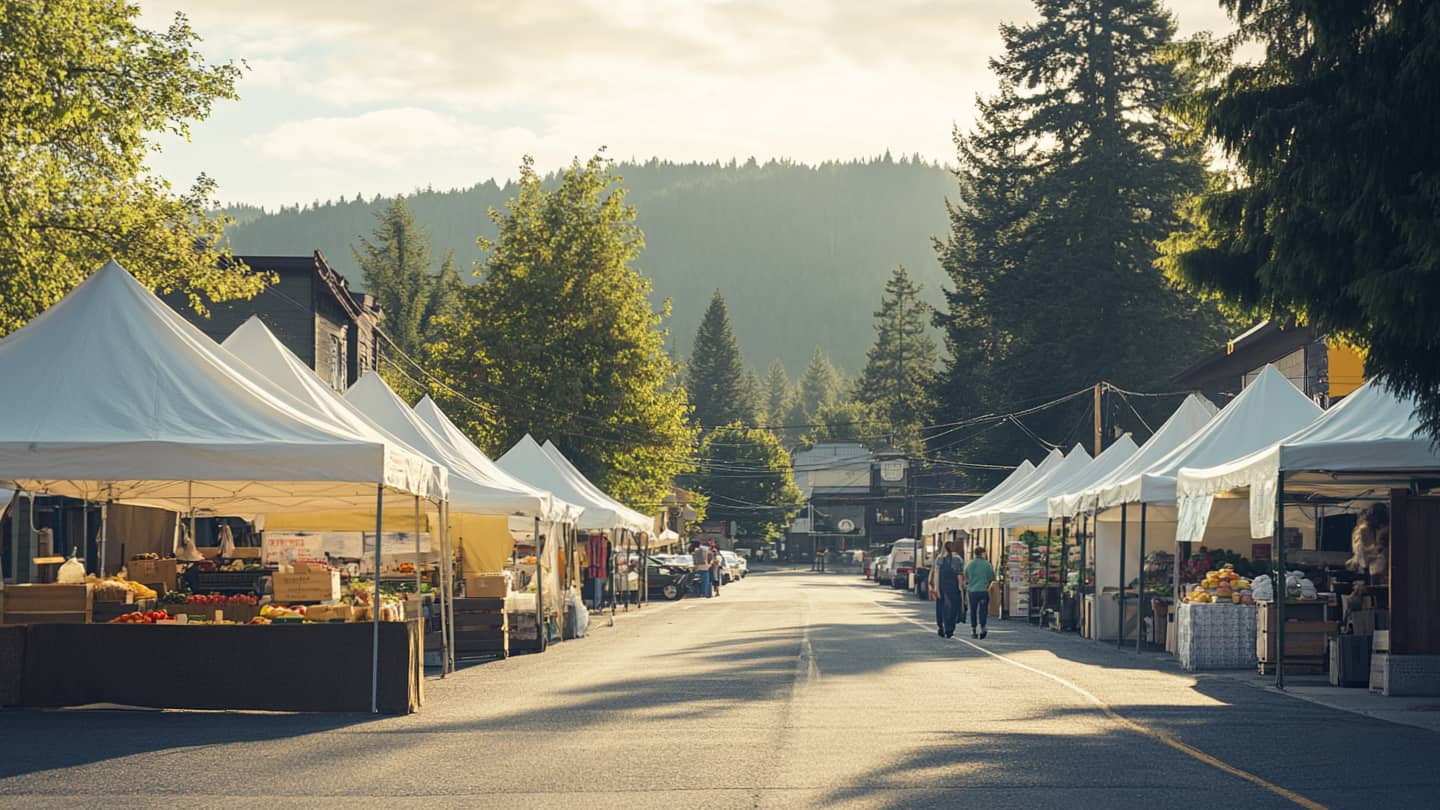
“The city has a working-class waterfront character that has evolved in the last decade. Give it two nights and it earns them.”
Explore Washington State
Where to Stay
Domaine Madeleine
Bed and breakfast on 5 acres of Strait-front property east of downtown. Rooms are individual cottages set on a bluff above the water. Multi-course breakfasts timed to the morning ferry schedule. Books out well in advance for summer and fall.
Visit websiteThe George Washington Inn
A full-scale replica of Mount Vernon east of town. Fifteen rooms each named for a founding-era figure, with upper-floor views taking in the Strait and the Olympics together. A specific choice rather than a default one.
Visit websiteHeart O' the Hills Campground
Inside Olympic National Park, 5 miles south of the Hurricane Ridge Visitor Center at 1,807 feet elevation. Generally available without advance reservations but cold at night even in summer.
Reserve at recreation.govSalt Creek Recreation Area Campground
Ninety-two sites with hookups plus a tent-only area near the tidepools. The best-situated campground in Clallam County. Reserve well ahead for summer weekends.
Reserve via Clallam CountyFind a Cabin Near Port Angeles
Washington Staycations features cabin rentals and vacation properties across the Olympic Peninsula. Find your base camp for exploring Olympic National Park, Lake Crescent, and the coast.
Food & Drink
Seafood and Sit-Down Dining
Bella Italia has been serving Italian food in Port Angeles since 1996, and yes, it is the restaurant from Twilight. Beyond the literary tourism angle, the food earns the visit: fresh halibut, homemade pasta, a wine list running to over 400 bottles, and a housemade tiramisu. Make a reservation.
New Day Eatery runs one of the better breakfast and brunch menus on the Peninsula. The smoked salmon frittata with a buttermilk biscuit is a consistent standout. First Street Haven, in a narrow downtown storefront since 1976, does Benedicts with seasonal local ingredients including fresh Dungeness crab in season. Get there early on weekends; the line forms before 9am. For waterfront seafood, Moby Dick Chowder and the Fish and Crab Shack both do fresh Dungeness crab well. Hook Line and Pub next to the waterfront has good jambalaya and a patio that puts you directly in the path of ferry traffic.
Breweries and Wineries
Port Angeles has built a real brewery corridor over the last decade. Barhop Brewing is the anchor: a downtown taproom with rotating taps and a wood-fired pizza kitchen that makes it a full evening rather than a stop. Angeles Brewing on the east side is smaller and focused on Pacific Northwest styles. Mighty Pine Brewing is the newest of the three and worth checking for experimental releases.
For wine, Harbinger Winery operates two locations: the original winery east of town and a wine bar downtown with Strait views. PNWonderland Wine‘s pink-painted storefront on the waterfront has a patio and frequent bottle releases. Bourbon West handles the whiskey end with high-end flights and live music on weekends.
Coffee
Silver Lining Cafe at the Port Angeles Harbor puts you where you can watch the morning Coho departure while finishing your drink. The Great Northern Coffee Bar a few blocks inland is the slower-morning option: wood-heavy interior, strong coffee, and breakfast burritos. Cloudy Bay Bakery is a short walk away for pastries.
Festivals & Events
October
Dungeness Crab and Seafood Festival
Three days along the waterfront in early October. Live crab cooking demonstrations, a seafood market with fresh local product, wine and beer gardens, and live music across multiple stages. One of the defining fall events on the Olympic Peninsula. crabfestival.org has dates and details.
October
Olympic Peninsula Fungi Festival
Third weekend of October during peak fall mushroom season. Foraging walks led by mycologists, cooking demonstrations using wild foraged mushrooms, a vendors market, and programming for both beginners and experienced foragers. olypenfungifest.com has the full schedule.
December
Wintertide Festival of Lights
Port Angeles's winter solstice event: a lantern walk through the forest with lighted art installations, fire performers, live music, and a makers market. Mid-December. Draws a local crowd more than a tourist one.
Year-Round
Field Hall Performing Arts
Live music, theater, and film in the renovated historic Lincoln Center closer to the waterfront. Touring acts, regional performers, and recurring events including Free Jazz Sunday once a month.
Day Trips
Hurricane Ridge (17 Miles South)
The Hurricane Ridge road climbs from sea level to 5,242 feet in 17 miles, taking about 35 minutes from the Port Angeles Visitor Center. From the ridge, trails fan into the alpine zone. The parking lot fills by 9am on summer weekends. The unpaved Obstruction Point Road, summer only and high clearance recommended, extends beyond the visitor center to remote ridgeline walking with almost no other hikers.
Lake Crescent (30 Minutes West)
Lake Crescent is 30 minutes west inside Olympic National Park. The water chemistry, almost no nitrogen or phosphorus, keeps it so clear that underwater visibility reaches 60 feet and the surface reads as a saturated blue-green. The Spruce Railroad Trail on the lake’s north shore runs 4 miles one-way on a former WWI-era railway grade, passing through two tunnel bores and over a suspension bridge above the Devil’s Punchbowl cove. The Lake Crescent Lodge dates to 1916 and is a reasonable stop for lunch.
Sequim and the Lavender Farms (17 Miles East)
Sequim receives only 16 inches of rain per year, the deepest part of the Olympic rain shadow, which makes lavender farming viable in the Pacific Northwest. Peak bloom is typically mid-July around the Sequim Lavender Weekend. Outside lavender season, Dungeness Spit is a 5.5-mile natural sand spit with a beach walk out to the New Dungeness Lighthouse that takes about 90 minutes each way at a reasonable pace.
Victoria via the Coho Ferry (90 Minutes)
The Coho Ferry arrives in Victoria’s Inner Harbour 90 minutes after leaving Port Angeles, walking distance from the Fairmont Empress, the Royal BC Museum, and the waterfront. A day trip is feasible: take the first morning departure, walk the Inner Harbour, visit the Royal BC Museum’s Indigenous history collection, have lunch on the water, and catch the afternoon return sailing. Book ahead in summer and plan the whole day rather than half of one.
Cape Flattery and Neah Bay (75 Miles West)
Cape Flattery is the northwesternmost point of the contiguous United States, on the Makah Reservation and requiring a Makah Recreation Pass. The 0.75-mile trail ends at elevated viewpoints over sea stacks, arched sea caves, and the open Pacific. Neah Bay has the Makah Cultural and Research Center, which holds materials from the Ozette site, a coastal village preserved by a mudslide roughly 500 years ago and excavated between 1970 and 1981. The collection includes approximately 55,000 artifacts.
Planning Your Visit
When to Go
July and August are peak season: reliable weather for Hurricane Ridge, full campgrounds, crowded parking at the ridge, and higher hotel rates. Book accommodation 3 to 6 months out for summer weekends.
May, June, and September are the practical alternatives. Wildflowers peak at elevation in late June and early July. The Strait delivers whale sightings in spring. September gives the best combination of settled weather, reduced crowds, and the Dungeness Crab Festival approaching in October. The shoulder season lodging rate difference is significant enough to factor into the decision.
November through April is off-season: reduced hours at some businesses, Hurricane Ridge closes during storms, and the ferry schedule compresses. Prices drop substantially. The Elwha trail and Salt Creek are accessible year-round and look completely different in winter light.
Getting Around
A car is necessary for Hurricane Ridge, the Elwha Valley, Salt Creek, Lake Crescent, and every day trip on this list. Downtown parking is metered but not difficult outside of major festival weekends. The Olympic Discovery Trail connects downtown to the Elwha River bridge and east toward Sequim and is viable for cycling. Elevate Outdoors rents e-bikes for visitors who want to extend their range without a car.
How Long to Stay
One day gets you Hurricane Ridge, a waterfront walk, and dinner. Two nights is the version that lets the place settle: Elwha River trail, Salt Creek, a real meal, and time to not rush the morning. Three nights opens a day trip to Victoria or a full day at Lake Crescent. Beyond four nights, the trip becomes a national park base-camp stay rather than a Port Angeles visit.
More Port Angeles on EWS
Planning a Washington trip?
That is the whole idea behind the Explore Washington State Card. Free to carry, with a little something waiting at participating places when you visit. Your zip code is a vote for which towns we sign up next, and our weekly Washington travel newsletter starts landing right away.
Get your free cardFrequently Asked Questions
How far is Port Angeles from Seattle?
Port Angeles is about 2.5 to 3 hours from downtown Seattle by car via US 101 around Hood Canal. The Edmonds to Kingston ferry cuts roughly 45 minutes off the drive for those starting from the north end of Seattle.
What is the best time to visit Port Angeles?
June through September is peak season with the best weather for Hurricane Ridge and outdoor activities. May and October are excellent shoulder months with fewer crowds and lower rates. The Dungeness Crab Festival in early October is a reason to consider fall specifically.
Do I need a National Park pass for Hurricane Ridge?
Yes. Olympic National Park charges a per-vehicle entrance fee, or you can use an America the Beautiful annual pass. The fee is collected at the park entrance on Race Street south of downtown Port Angeles.
Can you take a ferry from Port Angeles to Victoria?
Yes. The Black Ball Ferry Line’s MV Coho runs year-round between Port Angeles and Victoria’s Inner Harbour. The crossing takes 90 minutes. Vehicle reservations sell out weeks ahead in summer. Walk-on passengers have more flexibility but reservations are still recommended.
Is Port Angeles worth visiting without going to Olympic National Park?
Yes. The Elwha River restoration trail, Salt Creek Recreation Area tidepools, the Port Angeles Fine Arts Center, the underground tour, and the food and brewery scene all stand on their own. The national park is the obvious draw, but the city earns a two-night visit on its own terms.