North Cascades National Park
Washington's least visited national park has more glaciers than anywhere in the lower 48, zero entrance fee, and a two-lane highway that closes every winter and reopens to a crowd that knows exactly what it came for.
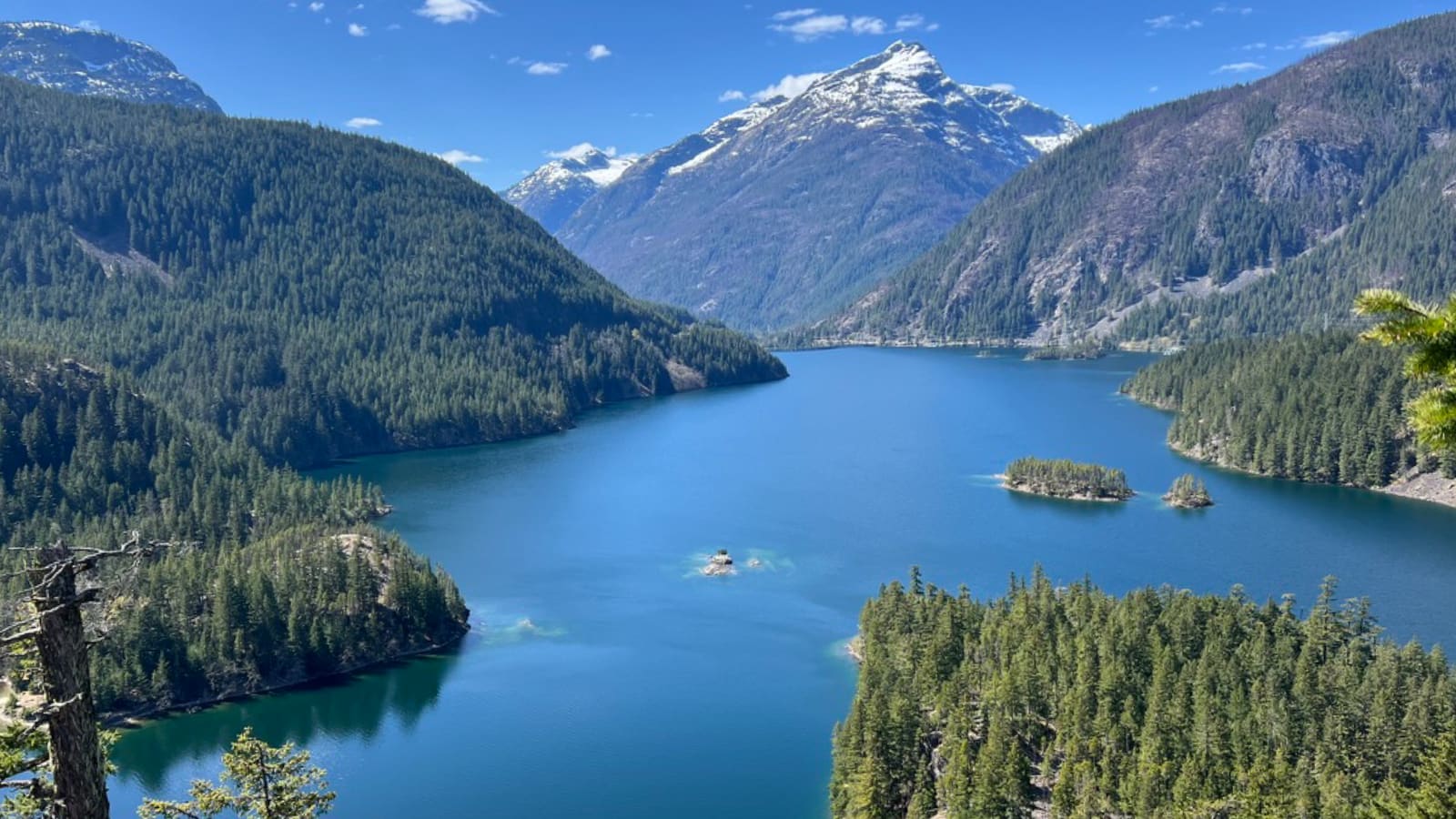
North Cascades National Park holds more glaciers than any park in the lower 48 states. That single fact explains everything about why the Skagit River runs milky blue, why Diablo Lake glows that improbable shade of green, and why the park’s 504,781 acres feel more like interior Alaska than a two-hour drive from Seattle. The park was established in 1968 and has never been the one people talk about first. That is its main advantage.
With roughly 47,000 annual visitors compared to the nearly two million who pass through Mount Rainier each year, North Cascades is genuinely uncrowded. Trails that would have a line at other parks are empty on weekday mornings here. Campgrounds that book out in March at Rainier can be had on shorter notice. The tradeoff is a narrower weather window and a highway that shuts down every winter, locking the park’s interior under snow until late spring.
State Route 20, the North Cascades Highway, is the spine of the whole experience. It crosses two mountain passes, threads past Diablo and Ross Lakes, and connects the Puget Sound lowlands to the Methow Valley in one 140-mile run. The drive alone is worth making. But the real reason to stop is the wilderness on either side: 312 glaciers feeding rivers that have carved this landscape for millennia, 200 miles of trail, and a roadless backcountry that most visitors never reach.
Entry to the park is free. No fee station, no pass required to pull off at the overlook and watch the light change on the water.
North Cascades holds more glaciers than any park in the lower 48 states. That single fact explains everything about why Diablo Lake glows that improbable shade of green.
Hiking in North Cascades National Park
Heather-Maple Pass Loop: The Best September Hike in Washington
Thunder Knob: Diablo Lake Views Without the Miles
Rainy Lake Trail: A Half-Mile Walk to a Cirque
Hidden Lake Lookout: The View That Makes the Climb Worth It
Desolation Peak: Where Jack Kerouac Spent the Summer
Diablo Lake Trail: Walk the Shore of the Most-Photographed Lake in the Park
Camping in North Cascades National Park
Newhalem Creek Campground
Goodell Creek Campground
Colonial Creek South Campground
Gorge Lake Campground
North Cascades entry is free, but the pass still pays for itself
Unlike Mount Rainier and Olympic National Park, North Cascades charges no entrance fee. But if you are planning a trip that includes any of the trailheads on adjacent national forest land along Highway 20 such as Rainy Lake, Blue Lake, or the Heather-Maple Pass area, those require a Northwest Forest Pass for day-use parking, which runs $30 per year. The America the Beautiful interagency annual pass at $80 covers all of them, plus entrance fees at both Rainier and Olympic if this is part of a bigger Washington trip. It also covers every national monument, recreation area, and fee-charging federal land in the country.
Where to Base Yourself for North Cascades National Park
Marblemount
The closest full-service stop before entering the park from the west, about 10 miles from the Newhalem entrance. Marblemount has gas, a small market, and the last cell service before the highway heads into the mountains. The NPS Wilderness Information Center here issues backcountry permits in person during summer. Stop here to stock up before you lose signal.
Sedro-Woolley
The largest town on the west side of the park and the best base for multi-day trips, about 50 miles and 1 hour west. Sedro-Woolley has groceries, gear shops, motels, and the headquarters visitor center for the park complex. It is also the starting point of the official North Cascades Scenic Byway. Worth stopping on the way in to stock up before you lose signal.
Winthrop
Winthrop anchors the Methow Valley on the east side of the park, about 35 miles and 1 hour east of Washington Pass. It offers a full range of lodging, good restaurants, and easy access to the Methow Valley trail system. East-side Highway 20 trailheads like Heather-Maple Pass and Blue Lake are 30 to 35 miles back up the road.

Getting to North Cascades National Park
North Cascades National Park is accessed almost entirely via State Route 20, the North Cascades Highway. From Seattle, take I-5 north approximately 65 miles to Burlington, then head east on SR-20. The drive from downtown Seattle to the Diablo Lake overlook at milepost 132 is roughly 2 hours and 20 minutes under normal conditions. To reach the park’s east side and Washington Pass, plan for about 3 hours from Seattle.
There is no public transit to the park. A car is required for any visit.
Seasonal road closure: SR-20 closes every winter between Newhalem and Mazama, typically from late November through late April or early May, depending on snowpack. The closure gates are at Newhalem on the west side and Early Winters on the east. WSDOT posts current road status at wsdot.com. Do not plan a spring trip without checking the opening date. The highway can stay closed into May in heavy snow years.
Planning Your Visit
The usable window at North Cascades is July through October. Highway 20 closes in late November and does not reopen until late April at the earliest. Even after the highway opens, high-elevation trails hold snow into late June, and the Cascade Pass trail can be impassable until mid-July in a heavy snow year.
August and September are the peak months for trail access. September brings the added advantage of larch color at Washington Pass and fewer crowds throughout the park. The park itself is free to enter, but some trailheads on adjacent national forest land require a parking pass. Bring a Northwest Forest Pass or an America the Beautiful interagency pass to cover those.
Bear canisters are required for all backcountry overnight trips. Download offline maps before you enter the park. Cell service ends near Marblemount on the west side and Mazama on the east.
Seasonal Events and Highlights
Find a Cabin Near North Cascades National Park
Skip the campground lottery. Browse privately owned cabins close to the park on Washington Staycations.
More from EWS on North Cascades National Park
Frequently Asked Questions
Is there an entrance fee for North Cascades National Park?
No. North Cascades National Park is one of the few national parks in the United States that charges no entrance fee. You can drive Highway 20 through the park, stop at overlooks, and hike day trails without paying anything. Some trailheads on adjacent national forest land, like Rainy Lake and Blue Lake, require a Northwest Forest Pass for parking, which is separate from a park entrance fee.
When does Highway 20 open through North Cascades?
State Route 20 through North Cascades closes every winter, typically in late November, and reopens between late April and mid-May depending on snowpack and avalanche conditions. WSDOT posts current road status and the reopening date at wsdot.com. Do not assume the road is open in spring without checking. Late-snow years can push the opening into May.
How do you get to North Cascades National Park from Seattle?
Take I-5 north to Burlington, then head east on State Route 20. The drive from downtown Seattle to the Diablo Lake overlook at milepost 132 takes about 2 hours and 20 minutes under normal conditions. There is no public transit to the park. A car is required. The highway closes in winter, so visit between May and November for full access.
What are the best hikes in North Cascades National Park?
Cascade Pass is the park’s most celebrated trail, a 12-mile round trip to a historic mountain pass with views of hanging glaciers. For a shorter option, Thunder Knob (3.1 miles) delivers Diablo Lake views with manageable elevation gain. The Heather-Maple Pass Loop at Washington Pass is one of the best moderate hikes in the state, especially in late September when the larch trees turn gold. Rainy Lake is the most accessible trail, a 2-mile paved path to a glacial cirque that works for all fitness levels.
When is the best time to visit North Cascades National Park?
July through September gives you the widest trail access and the most reliable weather. August and September are peak months. Most high-elevation trails are snow-free by mid-August, and September brings fall color at the Washington Pass trailheads without the summer crowds. Highway 20 closes in late November and does not reopen until spring, so most visitors plan trips between May and October.
Do you need a permit to hike in North Cascades National Park?
Day hikes do not require permits. Overnight backcountry trips require a wilderness permit year-round, available through Recreation.gov. The permit system operates on a quota: 60 percent of permits are available for advance reservation and 40 percent are held for walk-up visitors. Backcountry permits cost $8 per person per night. A bear canister is required for all overnight backcountry trips.
What wildlife can you see at North Cascades National Park?
Black bears, deer, and bald eagles are the most commonly sighted animals. The park also has populations of wolves, wolverines, lynx, and moose, though these are rarely seen. The Skagit River between Rockport and Marblemount hosts one of the largest concentrations of wintering bald eagles in the contiguous United States, typically visible from January through February. At higher elevations, pikas and marmots are common near the boulder fields above treeline.